
Research article · 2026 · Full text
International Journal of Agriculture and NutritionAssessment of morphological genetic diversity in groundnut genotypes through Dus descriptors
Volume 8(6) · Pages 145–150 · DOI: 10.33545/26646064.2026.v8.i6b.664 ↗
Research areasPeanut Plant Research StudiesGenetics and Plant BreedingAgricultural Practices and Plant Genetics
Abstract
Author-writtenThe study evaluated the Distinctness, Uniformity, and Stability (DUS) characteristics of 27 groundnut (Arachis hypogaea L.) genotypes for varietal identification under the PPV&FR Act, 2001. The experiment was conducted during Kharif 2025 at S.V. Agricultural College, Dry land Tirupati, using a Randomized Block Design. Assessment of eight qualitative morphological descriptors revealed considerable variability among genotypes. Most lines exhibited tall stature, medium leaflet size, green elliptic leaflets, erect growth habit, sparse stem pubescence, and sequential flowering and medium 100-kernel weight. The observed diversity confirms the effectiveness of DUS descriptors for varietal identification, registration, and selection of diverse parental lines in groundnut breeding programs under dryland conditions. Substantial variability was observed among the breeding lines for all the traits studied, indicating the presence of a broad genetic base. The clear expression and stability of these morphological traits facilitated effective discrimination among genotypes. The study confirms the usefulness of qualitative descriptors in establishing varietal distinctness and maintaining genetic purity. The findings provide a scientific basis for varietal registration, intellectual property protection, and selection.
Summary
Source-checkedPlain-language reading of the full paper, prepared with AI and checked against the text. Each point links to the authors' own words.
Why it matters
- Groundnut, also known as peanut, is a significant self-pollinated legume crop. View evidence ↗
- Using Distinctness, Uniformity, and Stability (DUS) criteria is necessary for registering varieties and protecting intellectual property under the PPV&FR Act 2001. View evidence ↗
The question
- The study aimed to evaluate 27 groundnut genotypes using standardized DUS descriptors to assess their genetic purity and varietal distinctiveness. View evidence ↗
What they did
- The research was conducted during the Kharif 2025 season at S.V. Agricultural College in Tirupati using a Randomized Block Design. View evidence ↗
- Genotypes were planted in 4m rows with 30x10 cm spacing, and gypsum was applied at a rate of 500 kg ha⁻¹ during peg initiation. View evidence ↗
- The researchers measured eight qualitative traits: plant stature, leaf size, leaf color, leaf shape, growth habit, stem pubescence, flower arrangement, and 100-kernel weight. View evidence ↗
What they found
- Regarding plant height, tall plants were most common (44.44%), followed by medium (33.33%) and short (22.22%) plants. View evidence ↗
- Medium-sized leaflets were the dominant trait, appearing in 66.66% of genotypes, while small leaflets appeared in 22.22%. View evidence ↗
- Green leaflet color was most frequent (48.14%), followed by dark green (40.74%) and light green (11.11%). View evidence ↗
- The most common leaflet shape observed among the genotypes was elliptic (29.62%). View evidence ↗
- Erect growth habit was predominant at 59.25%, while semi-spreading habit was found in 40.74% of genotypes. View evidence ↗
- Sparse stem pubescence was the most frequent trait (59.25%), followed by absent (33.33%) and medium (7.40%) pubescence. View evidence ↗
- Sequential flower arrangement on side branches was most common (59.25%), followed by irregular (22.22%) and alternate (18.51%) arrangements. View evidence ↗
- The majority of genotypes exhibited a medium 100-kernel weight (88.88%), with only 11.11% showing high weight. View evidence ↗
What it means
- The authors conclude that DUS descriptors are effective tools for identifying varieties, ensuring genetic purity, and selecting diverse parental lines for breeding. View evidence ↗
- The authors state that DUS characterization helps in selecting superior parents to develop climate-resilient and sustainable breeding programs. View evidence ↗
Visual summary
3 visualsIllustrations explain the paper; charts are replotted from the paper's own table values.
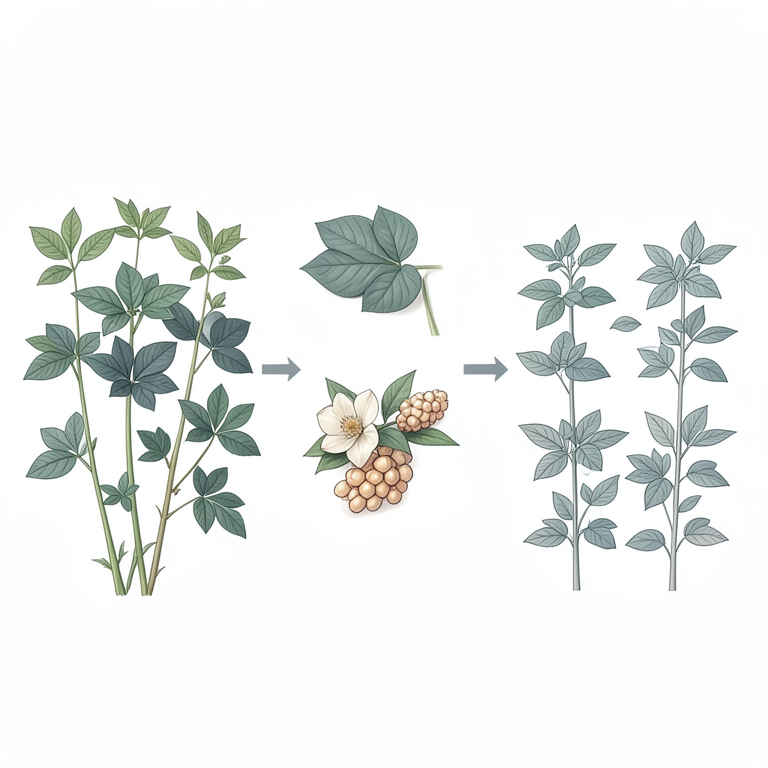
DUS Assessment Workflow
AI-generated conceptual illustration (groundnut plants (Arachis hypogaea)). It explains the idea and does not show study data.
View source evidence ↗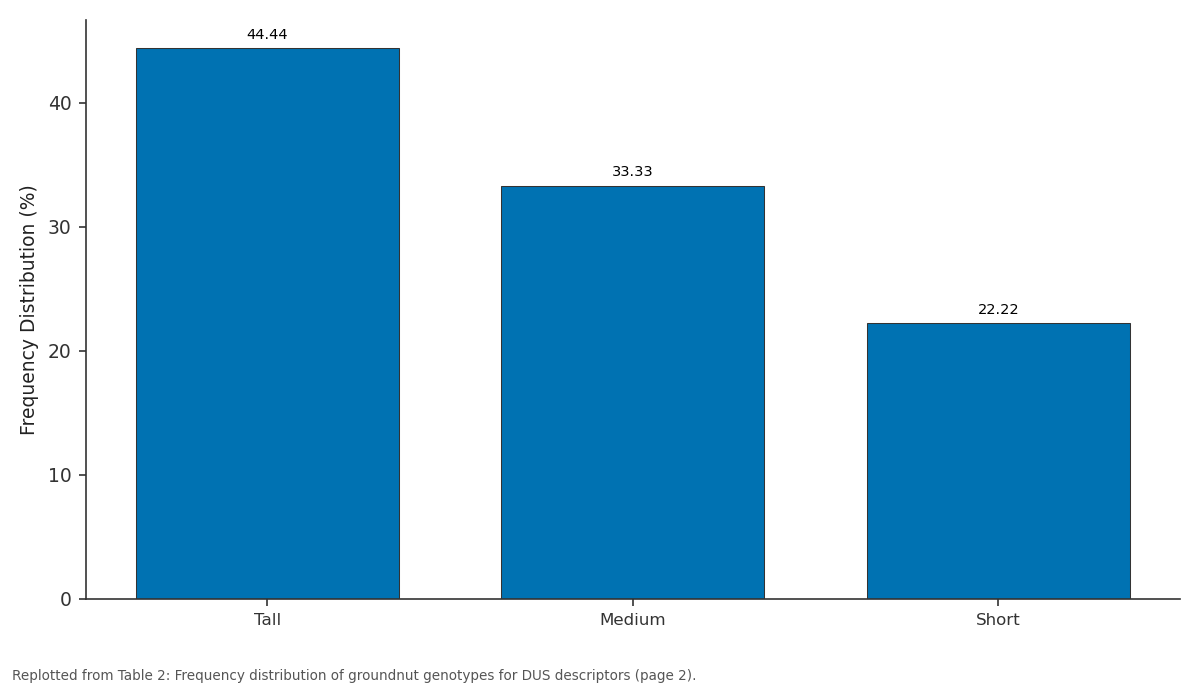
Frequency Distribution (%): Tall vs Medium vs Short
Replotted from Table 2 (page 2) of the original paper. Every bar is the paper's own table value.
View source evidence ↗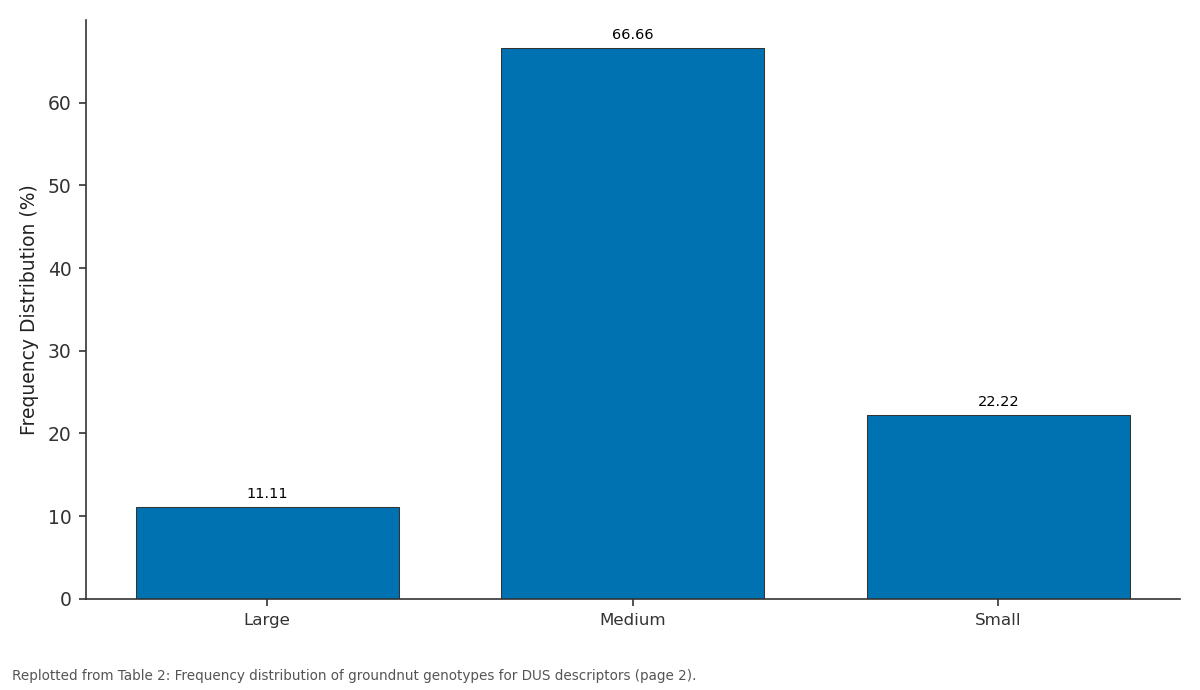
Frequency Distribution (%): Large vs Medium vs Small
Replotted from Table 2 (page 2) of the original paper. Every bar is the paper's own table value.
View source evidence ↗Figures & tables
From the original paper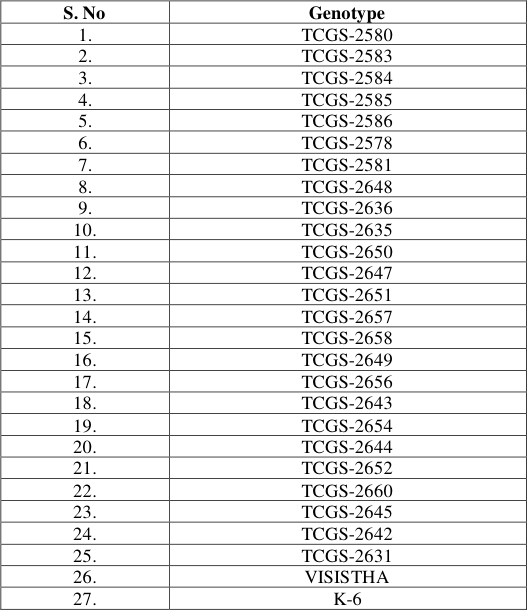 Table 1
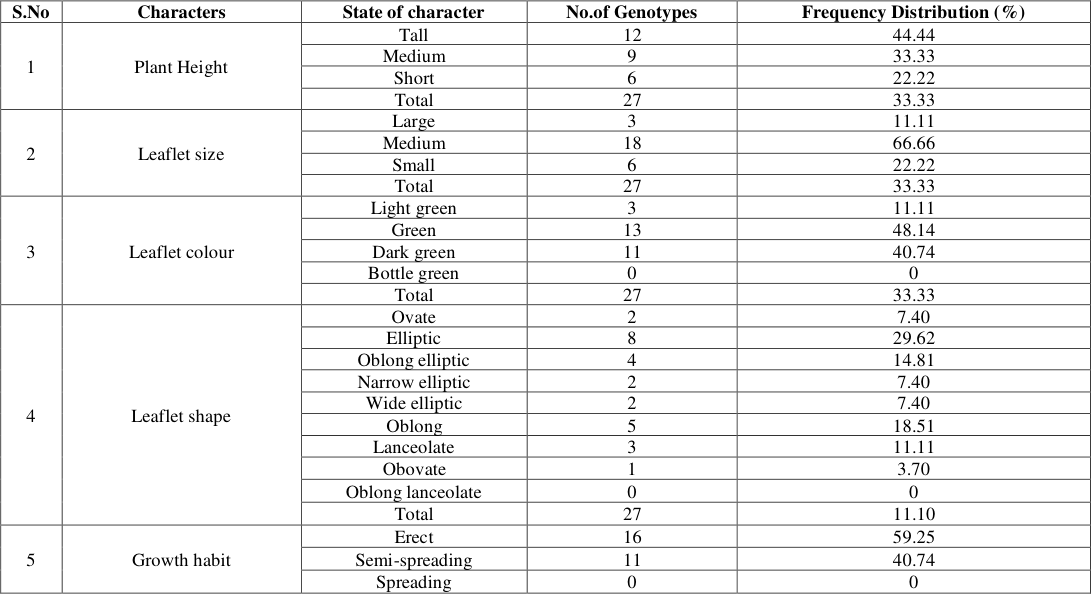 Table 2
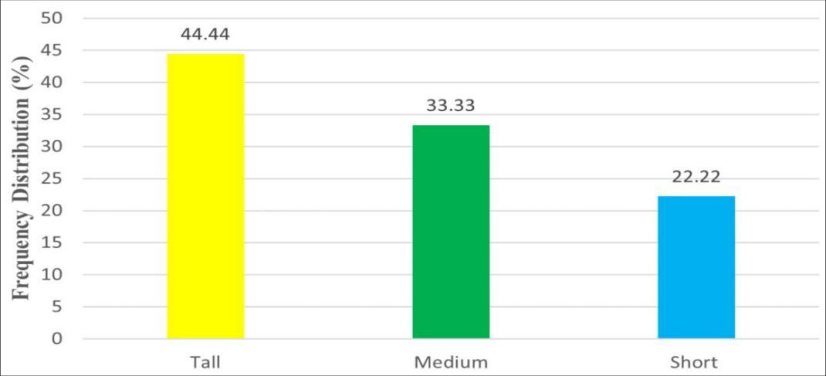 Figure 1
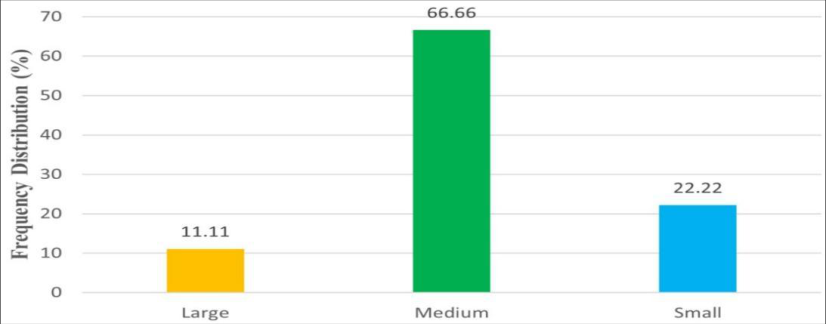 Figure 2
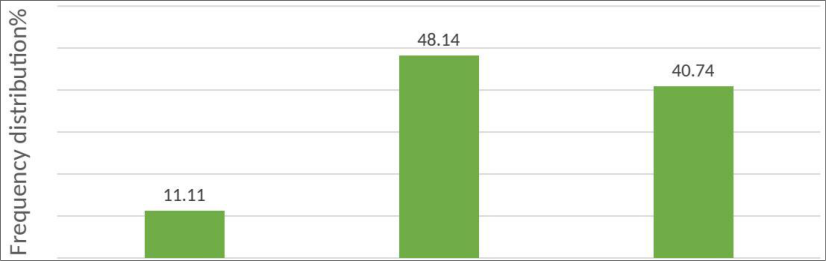 Figure 3
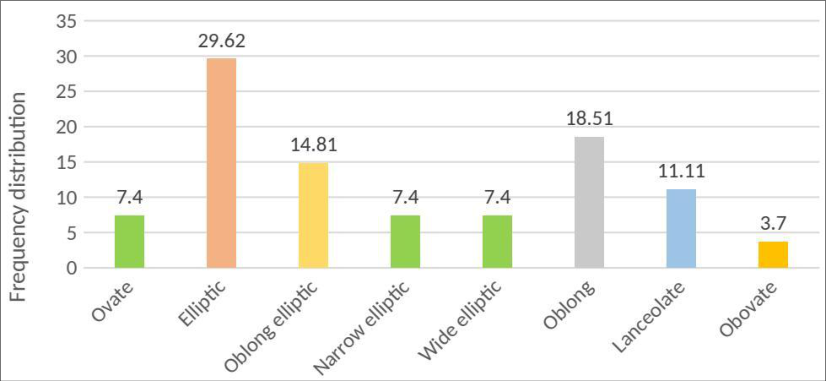 Figure 4
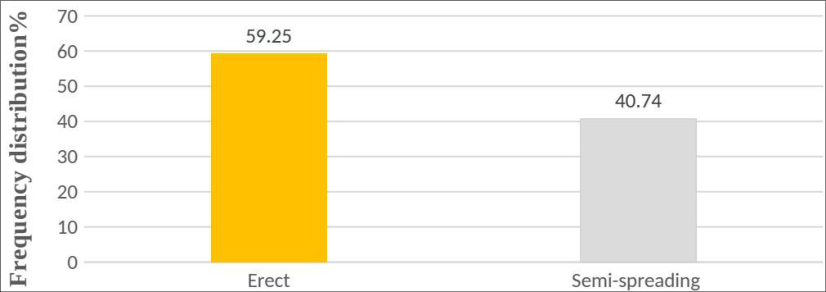 Figure 5
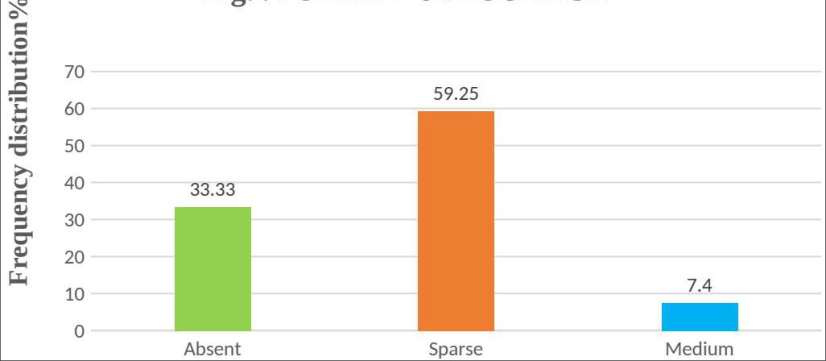 Figure 6
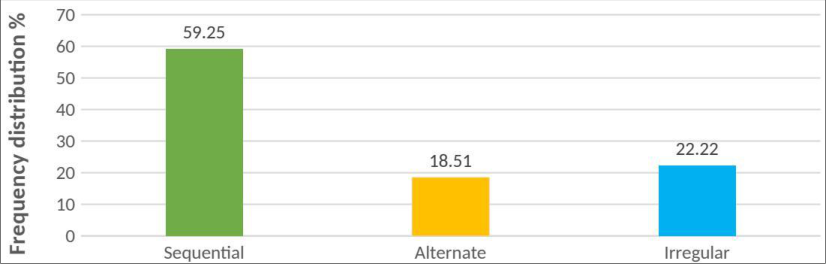 Figure 7
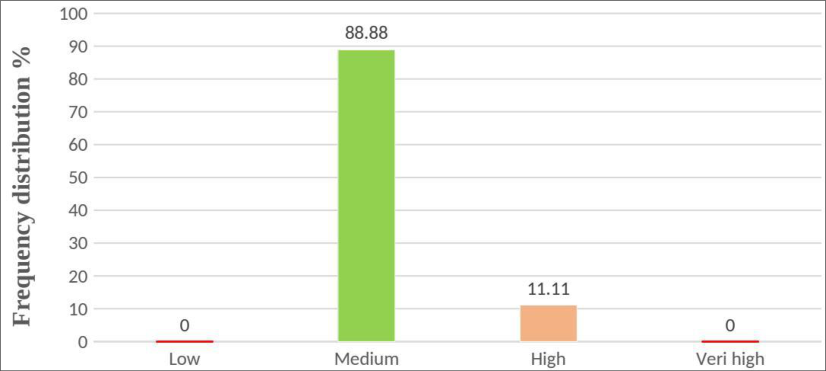 Figure 8
Introduction
Groundnut (Arachis hypogaea L.) commonly known as peanut is a major self-pollinated legume crop belonging to the family Leguminosae and sub-family Papilionaceous. It is a selfpollinated allotetraploid species with a chromosome number of 2n = 4x = 40. The crop originated in South America. Groundnut is also known as the "King of Oilseeds" because it contains a high proportion of polyunsaturated fatty acids (PUFA) (40-50%) and monounsaturated fatty acids (MUFA). Characterization of varieties based on DUS (Distinctness, Uniformity, and Stability) criteria is essential for varietal registration and intellectual property protection under the Protection of Plant Varieties and Farmers' Rights (PPV&FR) Act 2001. DUS testing ensures that a candidate variety is clearly distinguishable from existing varieties, sufficiently uniform in its characteristics, and stable across successive generations. Morphological descriptors such as Plant stature, leaf colour, size, and shape, growth habit, stem pubescence, flower arrangement and kernel weight among genotypes. A well-characterized groundnut germplasm represents an essential genetic resource, offering diverse genetic material to support effective breeding initiatives. Systematic characterization not only facilitates varietal protection and registration but also aids breeders in selecting diverse parental lines for crop improvement programs. In the present study 27 groundnut genotypes were evaluated using standardized DUS descriptors for assessing varietal distinctiveness and genetic purity.
Materials and Methods
The experiment was conducted using 27 genotypes of groundnut along with standard and distinct varieties such as Visistha and K-6. The genotypes were grown in three rows of 4 m length each, maintaining a spacing of 30×10 cm in a Randomized Block Design (RBD) during Kharif 2025 at the dryland farm of S.V. Agricultural College, Tirupati, and Andhra Pradesh. The recommended dose of fertilizers was applied uniformly, and gypsum was applied at 500 kg ha ¹⁻ during the peg initiation stage. Observations were recorded for qualitative traits including plant stature, leaf size, leaf colour, leaf shape, growth habit, stem pubescence, and arrangement of flowers on side branches and 100-kernel weight The study was undertaken to assess the extent of morphological variability among the breeding lines and to identify promising genotypes with desirable qualitative characteristics suitable for southern agro climatic zone.
Results and Discussion
Significant variability was observed among the qualitative characters studied (Table 2) with respect to plant height three categories were recorded namely tall, medium and short plants. Among these tall plants was the most frequent accounting for 44.44% of the total genotypes. This was followed by medium plant height with 33.33% while short plants constituted 22.22% of the genotypes. The mean frequency for plant height classes was 33.33% (Table 2 Fig. I). Leaflet size also exhibited noticeable variation among the genotypes. The majority of the lines possessed medium-sized leaflets (66.66%) indicating that this trait was highly dominant among the evaluated materials. In contrast small leaflets were observed in 22.22% of the genotypes, while the remaining proportion was represented by other size categories. The mean frequency for leaflet size was 33.33% (Table 2 Fig. II). Variation was also observed in leaflet colour, which ranged from light green to dark green. Most of the genotypes showed green leaflet colour (48.14%), followed by dark green (40.74%), while light green leaflets were observed in only 11.11% of the genotypes. The mean frequency across categories was 33.33% (Table 2 Fig III ).The distribution of leaflet colour classes is illustrated in Figure III. Considerable variation was also observed for leaflet shape. Among the different shapes recorded, elliptic leaflet shape was the most common (29.62%), while other shapes occurred at comparatively lower frequencies, with an overall mean frequency of 11.10% (Table 2 Fig. IV). In terms of plant architecture, erect growth habit was found to be predominant, accounting for 59.25% of the genotypes (Table 2 Fig. V). The maximum frequency for erect growth habit was recorded 59.25% followed by 40.74% semi-spreading (Table 2, Fig V ). The overall frequency distribution for growth habit is 33.33%. The maximum frequency for stem pubescence was recorded sparse is 59.25% followed by 33.33% for absent and 7.40% for medium (Table 2, Fig. VI). The overall frequency distribution for stem pubescence is 33.32%.
| S.No | Characters | State of character | No.of Genotypes | Frequency Distribution (%) |
|---|---|---|---|---|
| 1 | Plant Height | Tall | 12 | 44.44 |
| Medium | 9 | 33.33 | ||
| Short | 6 | 22.22 | ||
| Total | 27 | 33.33 | ||
| 2 | Leaflet size | Large | 3 | 11.11 |
| Medium | 18 | 66.66 | ||
| Small | 6 | 22.22 | ||
| Total | 27 | 33.33 | ||
| 3 | Leaflet colour | Light green | 3 | 11.11 |
| Green | 13 | 48.14 | ||
| Dark green | 11 | 40.74 | ||
| Bottle green | 0 | 0 | ||
| Total | 27 | 33.33 | ||
| 4 | Leaflet shape | Ovate | 2 | 7.40 |
| Elliptic | 8 | 29.62 | ||
| Oblong elliptic | 4 | 14.81 | ||
| Narrow elliptic | 2 | 7.40 | ||
| Wide elliptic | 2 | 7.40 | ||
| Oblong | 5 | 18.51 | ||
| Lanceolate | 3 | 11.11 | ||
| Obovate | 1 | 3.70 | ||
| Oblong lanceolate | 0 | 0 | ||
| Total | 27 | 11.10 | ||
| 5 | Growth habit | Erect | 16 | 59.25 |
| Semi-spreading | 11 | 40.74 | ||
| Spreading | 0 | 0 |
Table text extracted from the original PDF; superscript letters are shown inline. The original table image is below.
View original table image
The maximum frequency for flower arrangement of flowers on side branches was recorded as sequential 59.25% followed by 22.22% irregular and 18.51% for alternate (Table 2, Fig. VII). The overall frequency distribution for flower arrangement is 33.32%. 100-kernel weight was observed mostly medium frequency of 88.88% followed by high 11.11% (Table 2, Fig. VIII) and the overall frequency distribution for 100-kernel weight was observed as 24.99%. TCGS-2580 2.
Conclusion
The study revealed considerable morphological variability among the 27 groundnut genotypes across eight DUS descriptors indicating a broad genetic base for all DUS traits such as tall stature, medium leaflet size, green colour, erect growth habit, sparse pubescence, and sequential flowering and medium 100-kernel weight. The results confirm that DUS descriptors are effective for varietal identification, ensuring purity, and selecting diverse parents for future breeding and varietal registration. The predominance of tall plant stature, medium leaflet size, green leaflet colour, elliptic leaflet shape, erect growth habit, sparse stem pubescence, sequential flower arrangement and medium 100-kernel weight highlights the common morphological patterns, while the presence of diverse trait expressions confirms the distinctness of genotypes and also help in identification of varieties. DUS characterisation aid in the selection of superior parents for key economic traits focussed on climate resilient and sustainable breeding programs.
Figures and tables from the paper
| S. No | Genotype |
|---|---|
| 1. | TCGS-2580 |
| 2. | TCGS-2583 |
| 3. | TCGS-2584 |
| 4. | TCGS-2585 |
| 5. | TCGS-2586 |
| 6. | TCGS-2578 |
| 7. | TCGS-2581 |
| 8. | TCGS-2648 |
| 9. | TCGS-2636 |
| 10. | TCGS-2635 |
| 11. | TCGS-2650 |
| 12. | TCGS-2647 |
| 13. | TCGS-2651 |
| 14. | TCGS-2657 |
| 15. | TCGS-2658 |
| 16. | TCGS-2649 |
| 17. | TCGS-2656 |
| 18. | TCGS-2643 |
| 19. | TCGS-2654 |
| 20. | TCGS-2644 |
| 21. | TCGS-2652 |
| 22. | TCGS-2660 |
| 23. | TCGS-2645 |
| 24. | TCGS-2642 |
| 25. | TCGS-2631 |
| 26. | VISISTHA |
| 27. | K-6 |
Table text extracted from the original PDF; superscript letters are shown inline. The original table image is below.
View original table image
References
21 in the original paper- Amarasinghe YPJ, Jeewani DGC, Rasara AGHC, Wijesinghe G, Pushpakumara RW. Genetic variability, character association and heritability of advanced breeding lines of groundnut. Journal of Agro-Technology and Rural Sciences. 2024;4(1):21-27.
- Anothai J, Patanothai A, Jogloy S, Pannangpetch K, Boote KJ, Hoogenboom G. A sequential approach for determining the cultivar coefficients of groundnut lines using end-of-season data of crop performance trials. Field Crops. 2008;108:169-178.
- Bhale VM, Deshmukh SN, Deokar AB. Morphological characterization of groundnut (Arachis hypogaea L.) genotypes using DUS descriptors. Journal of Oilseeds Research. 2013;30(2):204-207.
- Bishi SK, Lokesh K, Mahatma MK, Khatediya N, Chauhan SM, Misra JB. Characterization of groundnut (Arachis hypogaea L.) germplasm using morphological descriptors. Indian Journal of Agricultural Sciences. 2015;85(6):774779.
- Darshini TK, Sai Harini K, Konareddy S, Patel M, Mamtha M. Morphological Characterisation of Groundnut (Arachis hypogaea L.) Accessions Using DUS Descriptors. Journal of Advances in Biology & Biotechnology. 2025;28(10):401-411.
- Food and Agriculture Organization of the United Nations (FAO). FAOSTAT: Statistical database for global groundnut production. 2024.
- Hong Y, Pandey MK, Lu Q, Liu H, Gangurde SS, Li S, Liu H, Li H, Liang X, Varshney RK, Chen X. Genetic diversity and distinctness based on morphological and SSR markers in peanut. Agronomy Journal. 2021;113(6):4648-4660.
- Janila P, Pandey MK, Manohar SS, Varshney RK. Groundnut improvement: Use of genetic and genomic tools. Frontiers in Plant Science. 2016;7:289.
- Karthikeyan AR, Ezhilkumar S, Karthikeyan P. Characterisation of Groundnut (Arachis hypogaea L.) varieties as per DUS Guidelines. Ecology, Environment and Conservation. 2023;29(2):758-762.
- Malik SK, Chaudhury R, Dhariwal OP, Bhandari DC. Descriptors for groundnut (Arachis hypogaea L.). New Delhi: National Bureau of Plant Genetic Resources (NBPGR); 2011.
- Motagi BN, Gowda MVC, Naidu GK. Groundnut production and genetic improvement strategies. Legume Research. 2022;45(6):701-709.
- Nigam SN. Groundnut breeding: Achievements and future challenges. Plant Breeding Reviews. 2014;38:1-48.
- Pandey MK, Monyo E, Ozias-Akins P, Liang X, Guimarães P. Advances in Arachis genomics for peanut improvement. Biotechnology Advances. 2012;30:639-651.
- PV&FR Authority. Guidelines for the conduct of test for distinctness, uniformity and stability on groundnut. Plant Variety Journal of India. 2007;1(1):1-25.
- Sharma S, Sikarwar RS, Sonaniya P, Mishra R, Sanu K, Shukla S, Choubey A, Dangi D, Mishra G, Pandey A, Tripathi MK. Exploring genetic variability for yield attributes in groundnut (Arachis hypogaea L.) genotypes. Journal of Advances in Biology & Biotechnology. 2025;28(10):1440-1454.
- Singh AL, Basu MS, Singh NB. Groundnut research in India: Present status and future strategies. Indian Journal of Agricultural Sciences. 2004;74(8):413-419.
- Singh KN, Nigam SN. Morphological characterization and varietal identification in groundnut using DUS testing. Journal of Oilseeds Research. 2008;25(1):36-40.
- Sravanti K, Ram Reddy V, Mamatha K, Navatha N, Shankar M, Vanisri S, Malla Reddy M. Evaluation and characterization of groundnut germplasm lines following DUS guidelines. Journal of Experimental Agriculture International. 2024;46(12):889-894.
- Upadhyaya HD, Bramel PJ, Singh S. Development of a groundnut core collection using taxonomical, geographical and morphological descriptors. Genetic Resources and Crop Evolution. 2002;49:139-148.
- Yadav RS, Rathnakumar AL, Singh R. Characterization of groundnut genotypes using DUS testing guidelines. Indian Journal of Agricultural Sciences. 2010;80(7):617-620.
- Yeasmin F, Begum M, Sikder MR, Kamruzzaman M, Sultana MR, Rahman MA. Assessment of groundnut genetic diversity through DUS descriptor. Bangladesh Journal of Nuclear Agriculture. 2025;39(1):1-12.