
Research article · 2026 · Full text
International Journal of Geography Geology and EnvironmentWater Resources and Utility Management in Tanzania: A Review of Challenges, Reforms, and Opportunities
Volume 8(6) · Pages 148–153 · DOI: 10.22271/27067483.2026.v8.i6b.797 ↗
Research areasWater Governance and InfrastructureWater Resource Management and QualityEnvironmental Science and Water Management
Abstract
Author-writtenTanzania's water sector faces significant challenges in meeting the growing demand for safe and reliable water services across urban and rural areas. This paper provides a comprehensive review of the current state of water resources and utility management in Tanzania, examining the institutional framework, policy reforms, and operational challenges. The study employs a mixed-methods approach, combining literature review, policy analysis, and stakeholder interviews to assess the effectiveness of recent reforms and identify key opportunities for improvement. Findings reveal that while Tanzania has made notable progress in water sector reforms, including the establishment of regulatory frameworks and decentralization initiatives, significant gaps remain in service delivery, infrastructure development, and financial sustainability. Key challenges include inadequate funding, weak institutional capacity, aging infrastructure, and limited technical expertise. The paper concludes with recommendations to strengthen water governance, enhance public-private partnerships, and implement innovative financing mechanisms to achieve sustainable water service delivery. These findings contribute to the broader discourse on water sector management in sub-Saharan Africa and provide insights for policymakers and development practitioners working in similar contexts.
Summary
Source-checkedPlain-language reading of the full paper, prepared with AI and checked against the text. Each point links to the authors' own words.
Why it matters
- Water is essential for human survival, the environment, and economic growth. View evidence ↗
- Tanzania, with about 62 million people, struggles to balance increasing urban water needs with ongoing gaps in rural access. View evidence ↗
- Access to safe water is a major issue, with estimates showing 43% of the population lacking basic access and potentially up to 88% lacking truly safe services. View evidence ↗
The question
- The study aims to review the current state of Tanzania's water resources and utility management, focusing on policy reforms, institutional frameworks, and operational hurdles. View evidence ↗
What they did
- The researchers used a mixed-methods approach involving policy analysis, a literature review, and interviews with stakeholders. View evidence ↗
- The study included 25 semi-structured interviews with a diverse group of sector participants, including government officials and community representatives. View evidence ↗
What they found
- There is a significant gap in water coverage, with urban areas at approximately 70% compared to 45–50% in rural areas. View evidence ↗
- Non-revenue water (NRW) losses remain high; while Dar es Salaam saw a decrease from 57% in 2014/15 to 44% by 2018, Mwanza still records losses between 37% and 50% in some areas. View evidence ↗
- Financial sustainability is hindered by tariffs that are roughly 20–30% below the levels needed for full cost recovery. View evidence ↗
- Revenue collection is inconsistent across utilities, with rates ranging from over 85% to less than 70% of billed revenue. View evidence ↗
- The Sustainable Rural Water and Sanitation Program provided improved water access to over 4.7 million people (including 2.3 million women) in less than five years. View evidence ↗
- Aging infrastructure is a major barrier, requiring frequent replacement and rehabilitation to maintain service. View evidence ↗
What it means
- The authors recommend creating balanced tariff structures that allow for cost recovery without compromising affordability for the poor. View evidence ↗
- The authors suggest prioritizing the expansion and maintenance of infrastructure using designs that are resilient to climate change. View evidence ↗
Visual summary
2 visualsIllustrations explain the paper; they do not show study data.
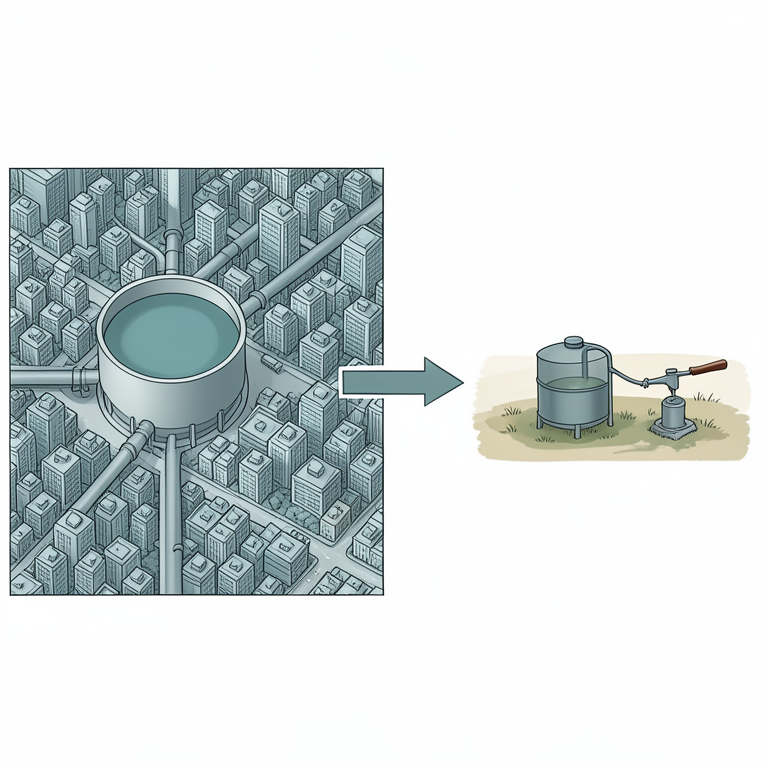
Urban vs Rural Water Coverage Gap
AI-generated conceptual illustration (Water infrastructure in urban and rural Tanzanian landscapes). It explains the idea and does not show study data.
View source evidence ↗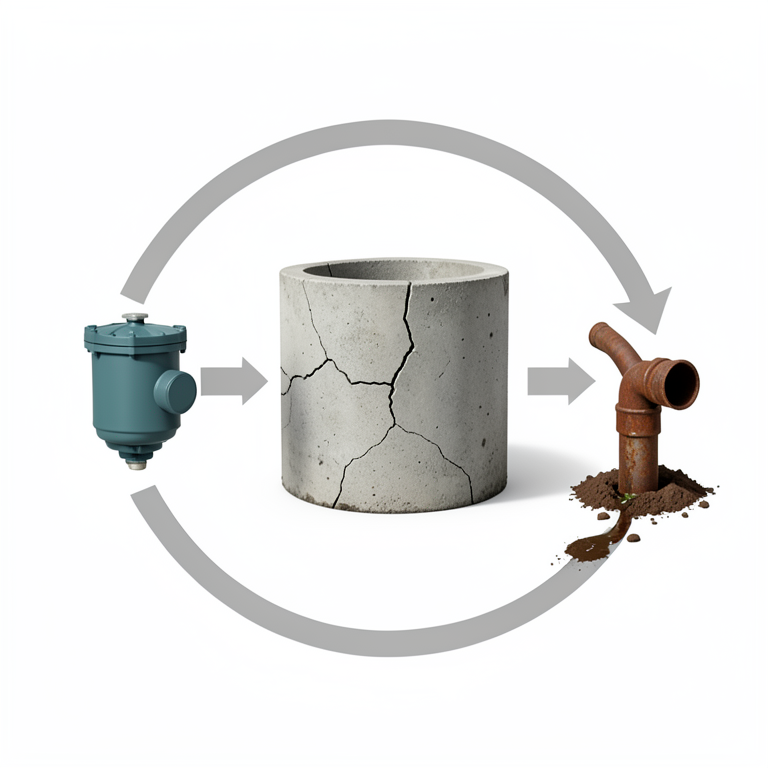
Financial Sustainability Cycle
AI-generated conceptual illustration (Water utility infrastructure in Tanzania). It explains the idea and does not show study data.
View source evidence ↗Introduction
Water is fundamental to human survival, economic development, and environmental sustainability. In Tanzania, a country with abundant water resources but uneven distribution, the challenge of providing universal access to safe and reliable water services remains a critical development priority. With a population of approximately 62 million people, Tanzania faces the dual challenge of meeting growing urban water demand while addressing persistent rural water access gaps. Current estimates indicate that 43% of Tanzanians lack basic access to safe water, with some sources suggesting that up to 88% lack truly safe water services (World Bank, 2023; World Health Organization [WHO], 2024) [30,31,32] . The Tanzanian water sector has undergone significant transformation over the past two decades, marked by policy reforms, institutional restructuring, and increased investment in infrastructure development (United Republic of Tanzania, 2002; World Bank, 2023) [23,30,31] . The National Water Policy of 2002 and subsequent reforms established a framework for decentralized water management, private sector participation, and improved service delivery across urban and rural areas (United Republic of Tanzania, 2002; African Development Bank, 2024) [23,1] . However, despite these efforts, water coverage remains inadequate, with rural communities continuing to experience limited access to reliable and safe water services due to weak infrastructure, insufficient financing, and operational inefficiencies (World Bank, 2018; WHO, 2024) [28,32] . The United Nations Sustainable Development Goal 6 calls for ensuring the availability and sustainable management of water and sanitation for all by 2030 (United Nations, 2015; UN-Water, 2024) [20,25] . For Tanzania, achieving this goal requires addressing persistent challenges in water resources management, utility performance, climate resilience, and equitable service delivery mechanisms (Salim et al., 2025; World Bank, 2023) [17,30,31] . The country's water sector involves multiple stakeholders, including government ministries, regulatory authorities, basin water boards, water supply and sanitation authorities, community-based organizations, and private sector actors, all of whom play critical but sometimes overlapping roles in water governance and management (United Republic of Tanzania, 2023; African Development Bank, 2024) [24,1] . This paper aims to provide a comprehensive analysis of water resources and utility management in Tanzania by examining the sector's current status, key operational and institutional challenges, policy reforms, and opportunities for sustainable improvement (World Bank, 2023; United Republic of Tanzania, 2023) [30,31,24] . The study contributes to the broader understanding of water sector dynamics in developing countries and provides insights into improving water service delivery, governance efficiency, and resource sustainability in similar contexts (UN-Water, 2024; WHO, 2024) [25,32] . Specifically, the research seeks to analyze the institutional framework governing water resources and utilities in Tanzania; identify key challenges affecting water service delivery; evaluate the effectiveness of recent policy reforms and governance initiatives; examine opportunities for sectoral improvement and climate adaptation; and propose evidencebased recommendations for sustainable water sector development (Salim et al., 2025; United Nations, 2024) [17,21,22] .
Literature Review
Tanzania's water sector reforms gained momentum in the 1990s as the government sought to improve water service delivery, strengthen institutional efficiency, and address longstanding governance challenges within the sector (United Republic of Tanzania, 2002; World Bank, 2023) [23,30,31] . The introduction of the Water Sector Development Program (WSDP) in 2006 marked a major milestone in sector transformation through institutional restructuring, infrastructure investment, decentralization, and capacity building initiatives (United Republic of Tanzania, 2023; African Development Bank, 2024) [24, 1] . The reforms established a governance framework involving the Ministry of Water for policy formulation and oversight, basin water boards for water resources management, regional and urban water utilities for service delivery, and the Energy and Water Utilities Regulatory Authority (EWURA) for utility regulation and performance monitoring. Recent studies have further emphasized that sustainable water governance in Tanzania requires stronger policy coordination, institutional accountability, and integration of climate resilience and water quality management into sector planning (Karia & Chanzi, 2025; Salim et al., 2025) [7,17] . Scholarly literature examining decentralization reforms in Tanzania indicates that while decentralized governance has created opportunities for enhanced local participation, accountability, and ownership of water projects, implementation challenges continue to limit effectiveness in many rural and peri-urban areas (Jiménez & Pérez-Foguet, 2010; Nganyinwa et al., 2014) [6,15] . Weak institutional coordination, limited financial autonomy, and inadequate technical capacity among local water authorities have constrained the sustainability of decentralized systems (World Bank, 2018; Karia & Chanzi, 2025) [28,7] . Furthermore, climate variability and declining water quality have intensified pressures on decentralized water management systems, particularly in regions already experiencing water stress and contamination challenges (Salim et al., 2025) [17] . Water utility management in Tanzania involves both public and private sector participation, with major utilities such as the Dar es Salaam Water Supply and Sanitation Authority (DAWASA), Arusha Urban Water Supply and Sanitation Authority (AUWSA), and regional water utilities playing central roles in urban water service delivery (World Bank, 2023; United Republic of Tanzania, 2023) [30,31,24] . Research on utility performance has consistently demonstrated disparities in service coverage, operational efficiency, and financial sustainability across different utilities and regions (Barraqué et al., 2018; Mwamaso, 2019) [12,2] . Persistent challenges include high levels of non-revenue water, intermittent water supply, aging infrastructure, inadequate maintenance systems, and insufficient financing for network expansion and modernization (African Development Bank, 2024; WHO, 2024) [1,32] . Community-based water management approaches have also received considerable attention in the literature. While studies indicate that community participation can strengthen ownership and improve sustainability of rural water schemes, limitations related to technical expertise, weak governance structures, and inadequate financial support continue to undermine long-term effectiveness (Nganyinwa et al., 2014; Karia & Chanzi, 2025) [15, 7] . The literature further identifies infrastructure deficits and institutional weaknesses as major barriers to sustainable water service delivery in Tanzania (Wambura et al., 2015; Kessy et al., 2018) [26,8] . Many water supply systems operate below optimal capacity due to deteriorating infrastructure, limited rehabilitation programs, and insufficient investment in maintenance and expansion (World Bank, 2018) [28] . Financial sustainability remains a critical concern, as low tariff structures, poor revenue collection systems, and limited cost recovery affect the operational viability of many water utilities (Mwamaso, 2019; World Bank, 2023) [12,30,31] . Institutional capacity constraints, including shortages of skilled personnel, weak management systems, and fragmented coordination between agencies, continue to affect sector performance and service quality (Wambura et al., 2015; African Development Bank, 2024) [26,1] . In addition, environmental pressures such as climate change, water pollution, fluoride contamination, and ecosystem degradation are increasingly recognized as significant threats to sustainable water resource management in Tanzania (Salim et al., 2025; Hossein et al., 2024) [17,5] . Recent policy analyses emphasize that addressing these challenges requires integrated governance approaches that combine institutional reform, environmental protection, and long-term investment planning (Karia & Chanzi, 2025) [7] . Recent literature also highlights several opportunities for improving water sector performance and sustainability in Tanzania. Public-private partnerships (PPPs) have been explored as viable mechanisms for mobilizing private investment, enhancing technical expertise, and accelerating infrastructure development in underserved regions (Mwanza & Mbohwa, 2017; World Bank, 2023) [14,30,31] . Technological innovations such as smart water management systems, digital metering, remote monitoring technologies, and mobile payment platforms are increasingly being recognized for their potential to improve operational efficiency, reduce water losses, and strengthen revenue collection systems (Ngwenya & Kgathi, 2020; African Development Bank, 2024) [16,1] . Furthermore, integrated Water, Sanitation, and Hygiene (WASH) approaches are gaining prominence as holistic strategies for improving public health and water service delivery outcomes by recognizing the interconnectedness of water supply, sanitation infrastructure, hygiene education, and environmental sustainability (UN-Water, 2024; WHO, 2024) [25,32] . Emerging studies further emphasize the importance of climate-resilient and community-centered approaches that integrate water quality management, sustainable financing, and behavioral change interventions to ensure equitable and sustainable access to safe water services across Tanzania (Salim et al., 2025; Karia & Chanzi, 2025) [17,7] .
Methodology
This study adopted a mixed-methods research approach that integrated both qualitative and quantitative techniques to provide a comprehensive assessment of water resources and utility management in Tanzania. The research design was exploratory and descriptive in nature, enabling an in-depth examination of institutional frameworks, policy reforms, utility performance, and challenges affecting water service delivery across the country. The mixed-methods approach was considered appropriate because it allowed the study to capture both statistical trends and stakeholder perspectives regarding Tanzania's water sector. Data collection involved multiple complementary methods to enhance the reliability and comprehensiveness of the findings. A systematic literature review was conducted to establish the theoretical foundation and contextual understanding of Tanzania's water sector. The review included peer-reviewed journal articles, government publications, policy documents, development partner reports, and sectorspecific studies related to water governance, utility management, institutional reforms, and sustainable water resource management. In addition, document analysis was undertaken to examine key sector policies, legislative frameworks, and strategic plans, including the National Water Policy (2002), Water Sector Development Program (WSDP) reports, utility performance reports, regulatory frameworks, and institutional guidelines governing water service delivery in Tanzania. The study also utilized semi-structured stakeholder interviews to obtain practical insights from individuals directly involved in the water sector. A total of 25 interviews were conducted with government officials, water utility managers, regulatory authorities, development partners, and community representatives from different regions of Tanzania. These interviews provided valuable information on sector reforms, operational challenges, institutional coordination, financing issues, and opportunities for improving water service delivery. Secondary quantitative data on water coverage, utility performance indicators, non-revenue water, sector financing, and infrastructure development were collected from government databases, utility reports, and international development agency publications. A purposive sampling strategy was employed to select participants for the interviews. Participants were chosen based on their expertise, institutional roles, and experience within Tanzania's water sector to ensure representation from policy, operational, regulatory, and community perspectives. The sampling approach also ensured inclusion of participants from both urban and rural contexts to capture regional variations in water service delivery and management challenges. Data analysis was conducted using both qualitative and quantitative approaches. Qualitative information obtained from interviews and document reviews was analyzed through thematic analysis, where recurring themes, concepts, and patterns were identified through systematic coding and categorization. Quantitative data were analyzed using descriptive statistics and trend analysis techniques to assess patterns in water coverage, utility performance, and sector financing over time. The integration of qualitative and quantitative findings allowed for triangulation of results and enhanced the validity of the study conclusions. Despite the comprehensive nature of the study, several limitations were encountered. Access to recent financial and operational data from some water utilities was limited, particularly for smaller regional and community-managed systems. Challenges in reaching remote rural areas constrained the extent of field engagement in certain locations. In addition, the rapidly evolving nature of water sector reforms and policy implementation in Tanzania means that some findings may require continuous updating as new initiatives and institutional changes emerge.
Results and Discussion
The findings of this study reveal that Tanzania possesses substantial water resources; however, their uneven spatial and temporal distribution continues to constrain equitable and sustainable water service delivery. Regions such as the northern and southern highlands receive relatively high rainfall and maintain more stable water availability, whereas the central plateau and parts of the coastal belt experience recurring water stress and seasonal shortages. Although national water resources are generally sufficient to meet current and future demand, disparities in accessibility, infrastructure, and management capacity significantly affect service provision across regions. Groundwater remains a critical source of water supply, particularly for rural communities and smaller urban centers. Nevertheless, inadequate understanding of aquifer systems, limited hydrogeological monitoring, and concerns regarding unsustainable abstraction threaten the longterm sustainability of groundwater resources. These findings highlight the need for stronger groundwater management systems, improved monitoring technologies, and integrated water resource planning to support sustainable utilization. The analysis further demonstrates substantial inequalities in water service coverage between urban and rural populations. Urban areas currently achieve an estimated water coverage of approximately 70%, while rural coverage remains significantly lower at around 45-50% (Statista, 2021; World Bank, 2023) [18,30,31] . In addition to coverage disparities, service reliability and water quality vary considerably, with many communities experiencing intermittent supply, infrastructure breakdowns, and water safety concerns. In response, the Tanzanian government has established ambitious national targets aimed at achieving 85% rural and 95% urban access to safe drinking water by 2030 (The Water Diplomat, 2024) [19] . Despite these commitments, operational inefficiencies continue to undermine utility performance. One of the most critical challenges identified is the high level of non-revenue water (NRW), which represents substantial losses of treated water and utility revenue. In Dar es Salaam, NRW declined from 57% in 2014/15 to 44% by 2018, indicating some progress in utility management reforms. However, significant losses persist, while utilities such as Mwanza continue to record NRW levels ranging from 37% to 50% in some district metering areas (Ministry of Water, 2018; Mwanza et al., 2021) [11,13] . These losses reduce financial sustainability and limit investments in infrastructure rehabilitation and expansion. The study also examined the performance of the institutional framework established through water sector reforms. Findings indicate that the reforms have contributed to a more structured governance system through the establishment of regulatory institutions, basin water authorities, and regional water utilities. However, several implementation challenges continue to affect institutional effectiveness, including overlapping mandates, unclear institutional responsibilities, inadequate coordination mechanisms, and weak regulatory enforcement. Although the Water Resources Management framework has improved water allocation systems and monitoring processes, institutional capacity constraints continue to limit effective implementation. Similarly, while regulatory institutions such as EWURA have introduced utility performance standards and monitoring mechanisms, enforcement remains constrained by limited technical, financial, and human resource capacity. These findings suggest that institutional reforms alone are insufficient unless accompanied by sustained investment in governance strengthening, coordination, and regulatory capacity development.
Infrastructure deficits emerged as one of the most significant barriers to effective water service delivery. Many water systems operate with aging infrastructure that requires frequent maintenance, rehabilitation, and replacement. Rapid population growth, urbanization, and increased water demand have outpaced infrastructure expansion in several regions, particularly in urban and peri-urban areas. Maintenance practices across utilities vary considerably, with many utilities relying primarily on reactive maintenance approaches rather than preventive asset management systems. This contributes to increased operational costs, more frequent service interruptions, and declining customer satisfaction. The study observed that utilities with stronger preventive maintenance programs, better asset management systems, and improved technical planning achieved comparatively higher service reliability and operational efficiency. Financial sustainability remains another major challenge affecting the performance of Tanzania's water utilities. Most utilities continue to operate under tariff structures that fail to achieve full cost recovery, resulting in significant financing gaps for operations, maintenance, and infrastructure investment. The findings indicate that existing tariffs remain approximately 20-30% below full cost-recovery levels, limiting the ability of utilities to sustain operations and expand services. Revenue collection performance also varies widely among utilities, with some achieving collection rates above 85%, while others collect less than 70% of billed revenue. Weak billing systems, inadequate customer databases, illegal connections, and limited enforcement mechanisms contribute significantly to low revenue recovery. These financial constraints negatively affect utility operations, infrastructure maintenance, and longterm sector sustainability. Institutional and human resource capacity limitations were also identified as critical constraints across the sector. Many utilities experience shortages of qualified technical personnel, high staff turnover, and limited opportunities for professional development. Existing training programs are often insufficient to meet the growing technical and managerial demands of the sector. The findings demonstrate that utilities investing in staff training, human resource development, and institutional strengthening generally achieve better operational and service delivery outcomes. This underscores the importance of longterm investment in technical education, workforce retention strategies, and continuous professional development within the water sector. The study further revealed that governance and coordination challenges continue to hinder effective sector performance. Weak coordination among institutions leads to duplication of responsibilities, fragmented planning, conflicting mandates, and inefficient resource utilization. Community participation in water management also varies significantly across regions. While some localities have demonstrated successful community ownership and participation in water management, others continue to face limited community engagement, weak local governance structures, and inadequate support systems. The findings suggest that effective community participation requires sustained institutional support, clearly defined responsibilities, and adequate technical and financial resources to strengthen local water governance systems. Despite these challenges, the Water Sector Development Program (WSDP) has contributed significantly to improving water access and strengthening institutional systems in Tanzania. Evidence from recent implementation reports indicates that more than 4.7 million people, including approximately 2.3 million women, gained access to improved water supply services through the Sustainable Rural Water and Sanitation Program within a period of less than five years (World Bank, 2023) [30,31] . The program has facilitated the construction of new infrastructure, rehabilitation of existing systems, and institutional capacity-building initiatives. Furthermore, projections indicate that achieving universal water and sanitation access could reduce economic losses by approximately US\1.9 billion annually while creating nearly 24,000 skilled jobs by 2030 (World Bank, 2024) [32] . However, implementation challenges persist, including delays in project completion, cost overruns, and concerns regarding long-term sustainability of interventions. Projects characterized by strong community engagement, adequate technical support, and effective institutional coordination were found to achieve better and more sustainable outcomes. Decentralization reforms have also created opportunities to strengthen local ownership, accountability, and responsiveness in water service delivery. Transferring certain management responsibilities to local government authorities has enabled more localized decision-making and service provision in some regions. Nevertheless, decentralization has simultaneously introduced challenges related to weak local capacity, inadequate financial resources, and limited oversight mechanisms. The findings indicate that successful decentralization requires sustained institutional support, strengthened local governance systems, and clearly defined accountability structures to ensure effective implementation and service sustainability. Private sector participation in Tanzania's water sector remains relatively limited but presents important opportunities for improving service delivery and infrastructure financing. Existing evidence suggests that private sector involvement can contribute technical expertise, operational efficiency, and additional investment resources when supported by strong regulatory frameworks and transparent contractual arrangements. Small-scale private water providers continue to play a particularly important role in periurban and rural areas where formal utility services are inadequate. However, many of these providers operate informally and lack standardized quality assurance mechanisms. The findings suggest that formalizing and strengthening small-scale private providers through regulatory support, technical assistance, and improved oversight could contribute significantly to expanding access to safe and reliable water services in underserved communities.
Opportunities for Sector Improvement, Conclusion, and Recommendations
The findings of this study indicate that Tanzania's water sector presents significant opportunities for improvement through technological innovation, integrated management approaches, institutional strengthening, and sustainable financing mechanisms. Technological advancements such as smart water management systems, remote monitoring technologies, digital metering, and mobile payment platforms have demonstrated considerable potential for improving operational efficiency, reducing non-revenue water, strengthening revenue collection, and enhancing customer service delivery. Several water utilities that adopted these technologies reported improvements in water loss reduction, customer management, and operational performance. However, successful adoption of these innovations depends heavily on adequate technical expertise, reliable infrastructure, and sustained investment in maintenance, system upgrades, and staff training. The study further highlights the importance of integrated water resources management (IWRM) approaches in promoting efficient and sustainable utilization of water resources. Coordinated management of water supply, irrigation, environmental conservation, and climate adaptation strategies can reduce conflicts over water allocation while improving long-term resource sustainability. Utilities and institutions that incorporate climate-resilient infrastructure and adaptive management strategies are better positioned to maintain reliable service delivery under increasing climate variability and changing environmental conditions. These findings emphasize the need for integrated planning frameworks that combine water resource management, environmental protection, and infrastructure development to strengthen national water security. Financing remains a central issue within the sector, and the analysis identifies innovative financing mechanisms as critical opportunities for addressing persistent funding gaps. Approaches such as blended financing, results-based financing, public-private partnerships, and private-sector investment can provide additional resources for infrastructure expansion and system rehabilitation. Utilities that maintain diversified funding sources, stronger financial controls, and improved financial management systems generally achieve better operational and sustainability outcomes. The development of local capital markets, improved credit-enhancement mechanisms, and stronger utility financial governance could further increase access to long-term financing for water infrastructure projects. Overall, the findings reveal that Tanzania's water sector is undergoing a significant transition characterized by important achievements in policy reform, institutional restructuring, and service expansion, while simultaneously facing persistent operational, financial, and governance challenges. Although the country possesses substantial water resources capable of supporting universal access to safe water services, realizing this potential requires addressing major constraints related to infrastructure deficits, institutional capacity limitations, weak coordination systems, and inadequate financing. The study demonstrates that decentralization reforms and institutional restructuring have created opportunities for improved local ownership and accountability in water management. Nevertheless, these reforms require continuous support through capacity building, resource mobilization, and stronger institutional coordination to achieve sustainable outcomes. Financial sustainability emerged as one of the most critical constraints affecting the long-term performance of water utilities. Most utilities continue to operate below full costrecovery levels under current tariff structures, limiting their ability to finance infrastructure maintenance, expansion, and modernization. This creates a cycle in which inadequate revenue generation contributes to poor service quality, increased infrastructure deterioration, and declining customer satisfaction. At the same time, the study identifies considerable opportunities for improving sector performance through innovation, integrated management strategies, institutional reforms, and diversified financing approaches. Utilities that successfully implemented reforms, strengthened financial management systems, and adopted modern technologies demonstrated that improved performance and sustainability are achievable under supportive policy and institutional conditions. Based on these findings, the study recommends several strategic interventions for strengthening water resources and utility management in Tanzania. Strengthening institutional capacity should remain a priority through investment in technical, managerial, and leadership development across all levels of the sector. Establishing performance management systems with clear accountability frameworks and measurable indicators would improve governance and operational efficiency. Enhanced coordination among sector institutions is equally important to reduce duplication, improve policy implementation, and optimize resource utilization. Improving financial sustainability requires the development of balanced tariff structures capable of supporting cost recovery while maintaining affordability for vulnerable populations. Diversification of funding sources through blended finance mechanisms, private-sector investment, local capital markets, and innovative financing arrangements should be prioritized. Utilities must also strengthen financial management practices through improved accounting systems, investment planning, and regular financial audits to enhance accountability and longterm operational sustainability. The study also recommends prioritizing infrastructure maintenance, rehabilitation, and expansion using climateresilient designs capable of supporting long-term service delivery under changing environmental conditions. Comprehensive non-revenue water reduction strategies and efficient asset management systems are essential for improving operational efficiency and minimizing water losses. In addition, empowering local communities through training, technical support, and strengthened local governance structures can improve ownership and sustainability of rural and peri-urban water systems. Promoting innovation and technology adoption remains essential for modernizing the water sector and improving service delivery. Pilot projects, technical training, and institutional support mechanisms should be expanded to facilitate the adoption of appropriate technologies across utilities and local water authorities. Furthermore, integrated water resources management strategies that incorporate climate change adaptation, environmental sustainability, and multisectoral coordination are necessary for balancing competing water demands and ensuring long-term resource security. Finally, strengthening policy and regulatory frameworks is critical for ensuring effective enforcement of standards, improving sector responsiveness, and attracting sustainable investment into the sector. Clear regulatory guidelines for private-sector participation, supported by transparent contractual arrangements and strong oversight mechanisms, can improve both investment confidence and service delivery performance. The establishment of robust monitoring and evaluation systems will further support evidencebased decisionmaking, performance tracking, and continuous sector improvement. Achieving sustainable water service delivery in Tanzania will ultimately require long-term commitment and coordinated action among government institutions, development partners, private-sector actors, and local communities to address emerging challenges and adapt to evolving sector needs.
References
32 in the original paper- African Development Bank. Water security and climate resilience in East Africa: Progress report 2024. African Development Bank; 2024.
- Barraqué B, Kistin E, Neto S. The role of water utilities in urban water security: A comparative study of innovative urban water utilities in sub-Saharan Africa. Urban Water Journal. 2018;15(5):398-407.
- EWURA. Annual performance report for water utilities in Tanzania. Energy and Water Utilities Regulatory Authority; 2020.
- Hossein M, Rwiza MJ, Nyanza EC, Bakari R, Ripanda A, Nkrumah S, Selemani JR, Machunda RL. Fluoride contamination: A silent global water crisis-A case of Africa. Scientific African. 2024;26:e02485.
- Jiménez A, Pérez-Foguet A. Building the role of local government authorities towards the achievement of the human right to water in rural Tanzania. Natural Resources Forum. 2010;34(2):93-105.
- Karia AO, Chanzi G. Governmental strategies, policies, and initiatives for combating fluoride impacts in northern Tanzania: A policy analysis framework for sustainable water governance. International Journal of Multidisciplinary Research and Growth Evaluation. 2025;7(7).https://doi.org/10.22271/multi.2025.v7.i7a.720
- Kessy J, Mwamaso A, Mdemu M. Water governance and institutional capacity challenges in Tanzania's water sector. Water Policy. 2018;20(5):942-958.
- Lifewater International. The Tanzania water crisis: Facts, progress, and how to help.https://www.lifewater.org/blog/tanzania-water-crisisfacts/;2022.
- Mbonile MJ. Water resources management in Tanzania: Identifying research gaps and priorities (REPOA Research Report No. 05.3). 2005.
- Ministry of Water, Tanzania. Non-revenue water reduction achievements in Dar es Salaam.https://duwasa.go.tz/biographies/bio1;2018.
- Mwamaso A. Performance assessment of water utilities in Tanzania: A benchmarking approach. Water Resources Management. 2019;33(10):3385-3401.
- Mwanza A, Kimwaga R, Jenssen PD. Managing nonrevenue water in Mwanza, Tanzania: A fast-growing subSaharan African city. Water-Energy Nexus. 2021;4:104114.
- Mwanza BG, Mbohwa C. Public-private partnerships in water infrastructure development in Tanzania. Procedia Manufacturing. 2017;8:523-530.
- Nganyinwa F, Mwamaso A, Kessy J. Decentralization and water service delivery in Tanzania: The role of local government authorities. Local Government Studies. 2014;40(3):478-492.
- Ngwenya B, Kgathi D. Digital technologies and water utility management in Africa. Physics and Chemistry of the Earth, Parts A/B/C. 2020;115:102810.
- Salim C, Chanzi G, Mpayo N. Climate change impacts on water quality in Tanzania: A comprehensive review for sustainable water resource management. Journal of Environment and Earth Science. 2025;15(3).https://doi.org/10.7176/JEES/15-3-05
- Statista. Tanzania: Access to drinking water by residents 20152020.https://www.statista.com/statistics/1266634/accessto-drinking-water-in-tanzania-by-residence/;2021.
- The Water Diplomat. Tanzania invests heavily in water infrastructure to meet 2030 targets.https://www.waterdiplomat.org/story/2024/06/tanz ania-invests-heavily-water-infrastructure-meet-2030targets;2024.
- United Nations. Transforming our world: The 2030 Agenda for Sustainable Development. United Nations General Assembly; 2015.
- United Nations. The Sustainable Development Goals Report 2024: Leaving no one behind. United Nations Department of Economic and Social Affairs; 2024.
- United Nations Educational, Scientific and Cultural Organization. The United Nations world water development report 2024: Water for prosperity and peace. UNESCO; 2024.
- United Republic of Tanzania. National Water Policy Review and Implementation Strategy 2023-2030. Ministry of Water; 2023.
- UN-Water. The SDG 6 synthesis report 2023 on water and sanitation. United Nations; 2024.
- Wambura P, Mwamaso A, Kessy J. Institutional capacity assessment in Tanzania's water sector: A framework for improvement. Water Resources and Rural Development. 2015;6:34-48.
- Water.org. Safe water in Tanzania: Our mission.https://water.org/our-impact/where-wework/tanzania/;2024.
- World Bank. Reaching for the SDGs: The untapped potential of Tanzania's water supply, sanitation, and hygiene sector. World Bank Group; 2018.
- World Bank. Tanzania water sector review. World Bank Group; 2019.
- World Bank. Expanded access to water supply, sanitation, and hygiene services in Tanzania.https://www.worldbank.org/en/results/2023/11/2
- /expanded-access-to-water-supply-sanitationandhygiene-services-in-tanzania;2023.
- World Bank. Tanzania economic update: Universal access to water and sanitation could transform social and economic development. World Bank Group; 2023.
- World Health Organization. Progress on household drinking water, sanitation and hygiene 2000-2022: Special focus on gender. World Health Organization/UNICEF Joint Monitoring Programme; 2024.
- World Health Organization, UNICEF. Progress on household drinking water, sanitation, and hygiene 20002020. WHO/UNICEF Joint Monitoring Programme; 2021.