
Research article · 2026 · Full text
International Journal of Biology SciencesSignificance of Birds in Maintaining Ecosystem Balance: The Silent Guardians of Nature
Volume 8(6) · Pages 202–206 · DOI: 10.33545/26649926.2026.v8.i6c.887 ↗
Research areasAvian ecology and behaviorPlant and animal studiesWildlife Ecology and Conservation
Abstract
Author-writtenBirds play a crucial yet undervalued role in maintaining the health and stability of ecosystems and act as silent guardians of natural systems. They contribute remarkably to seed dispersal, pollination, pest control, and nutrient cycling, thereby supporting agriculture and reducing the need for chemical interventions. As pollinators and seed dispersers, they facilitate plant reproduction and forest regeneration, ensuring the continuity of diverse habitats. Scavenger species aid in the decomposition of waste, preventing the spread of diseases and maintaining environmental hygiene. Additionally, birds serve as important bioindicators, reflecting changes in environmental conditions and signalling ecological disturbances. However, rapid urbanisation, climate change, and habitat destruction pose serious threats to bird populations worldwide, disrupting the delicate balance they help maintain. This paper highlights the ecological importance of birds and explains how they support the functioning and sustainability of natural systems. The study also underscores the need for conservation efforts and sustainable practices to protect avian diversity, emphasising that preserving bird populations is integral to safeguarding the stability and resilience of ecosystems.
Summary
Source-checkedPlain-language reading of the full paper, prepared with AI and checked against the text. Each point links to the authors' own words.
Why it matters
- Birds are essential for the stability and health of natural ecosystems, though their contributions are often undervalued. View evidence ↗
- Avian contributions to pollination, seed dispersal, nutrient cycling, and pest control support agricultural productivity and decrease reliance on chemicals. View evidence ↗
- Bioindicators are organisms used to monitor ecological health and detect environmental changes that physical or chemical tests might miss. View evidence ↗
The question
- The review aims to clarify the role of birds within agroecosystems and highlight their benefits to humans to encourage conservation. View evidence ↗
- The study specifically seeks to analyze why birds are effective bioindicators and evaluate their utility in monitoring climate change and sustainable environmental management. View evidence ↗
What they did
- The authors conducted a review to synthesize existing scientific knowledge regarding birds' roles as bioindicators. View evidence ↗
What they found
- Birds are more effective at distributing seeds over long distances compared to other media like wind. View evidence ↗
- Approximately 920 bird species globally participate in pollination, including hummingbirds and sunbirds. View evidence ↗
- About 60% of known bird species are insectivorous, allowing them to act as natural pest managers. View evidence ↗
- In California strawberry farms, insectivorous birds were found to reduce insect damage by 3.8%. View evidence ↗
- In commercial apple orchards, Great tits reduced insect damage by 19% and increased fruit yield by 66%. View evidence ↗
- Birds in California agricultural landscapes killed an average of 41% of overwintering codling moths. View evidence ↗
- In Borneo oil palm plantations, avian pest control prevented between 9% and 26% of fruit losses. View evidence ↗
- Declines in sparrow and pigeon populations (80% in Andhra Pradesh and 20% in Kerala, Gujarat, and Rajasthan) serve as indicators of increasing air pollution. View evidence ↗
What it means
- The authors conclude that conserving habitats and reducing human impact is essential to preserve the critical ecosystem services birds provide. View evidence ↗
- The authors recommend prioritizing habitat preservation, sustainable practices, and ecological awareness in future research and conservation. View evidence ↗
- The authors note that traditional monitoring methods are often limited in capturing long-term ecological impacts, which is why bioindicators are necessary. View evidence ↗
Visual summary
1 visualsIllustrations explain the paper; they do not show study data.
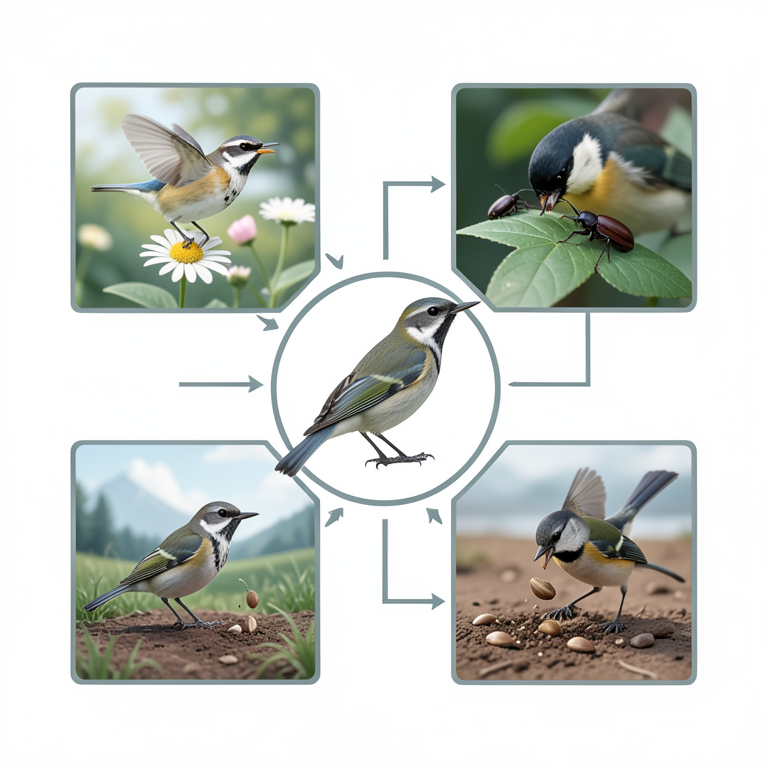
Avian Ecosystem Services Map
AI-generated conceptual illustration (various bird species (hummingbirds, insectivorous songbirds) and a mixed landscape of flowering plants, crops, and soil). It explains the idea and does not show study data.
View source evidence ↗Introduction
Bioindicators are living organisms used to detect changes in ecological conditions and to assess the ecological health. They can tell us about the cumulative effects of different pollutants in the ecosystem and about how long a problem may have been present, which physical and chemical testing cannot (Siddig et al, 2016) [34] . Rapid industrialisation, urban expansion, deforestation, and climate change have intensified pressures on ecosystems, making regular monitoring critical for sustainable management. Ecosystem monitoring, necessary to preserve and manage the natural environment, can be assessed using an ecological indicator. Monitoring helps detect early signs of environmental degradation, assess the effectiveness of conservation and restoration strategies and protect biodiversity and ecosystem services. Traditional monitoring methods provide valuable data but are often limited in their ability to capture long-term ecological impacts. Bioindicators complement these methods by offering biologically relevant insights into ecosystem health. Birds are among the most widely used and reliable bioindicators due to several ecological and practical characteristics. They are the most noticeable and dynamic elements of the natural world present in nearly every habitat and perform a wide range of functions that contribute to ecological balance. Based on the Millennium Ecosystem Assessment, ecosystem services have been 68 categorized into four categories as provisioning services, regulating services, supporting services, and 69 cultural services (MEA 2005), and birds contribute to all four types of ecosystem services, namely provisioning, regulating, cultural, and supporting (Whelan et al. 2008) [42] . Through their interactions with plants, insects, other animals, and the physical environment, birds play a vital role in maintaining ecosystem stability. Although they are relatively small in size, their contributions to biodiversity and the proper functioning of ecological processes are significant. Though birds provide appreciable ecological and economic benefits, they are often undervalued due to limited awareness and information. This review article, therefore, seeks to clarify the role of birds in agroecosystems and highlight their benefits to humans, encouraging their conservation. A clear understanding of their contributions is essential for recognising their importance in maintaining the balance of nature. They occupy a broad range of habitats from forests and wetlands to grasslands and urban environments, making them useful for monitoring diverse ecosystems. As many bird species occupy higher trophic levels, making them particularly susceptible to bioaccumulation and biomagnification of pollutants, changes in their populations can therefore signal the presence of toxic substances in the environment. Birds are relatively easy to observe and identify, and their vocalisations and migratory behaviours are well documented, enabling efficient monitoring through field surveys. Their diversity among birds indicates the species richness of that ecosystem, and therefore, many conservation biologists have used bioindicators to understand the ecosystem (Asefa et al, 2018) [1] . Furthermore, birds often have well-established ecological roles, such as pollination, seed dispersal, and pest control. Changes in their populations can therefore indicate broader disruptions in ecosystem functioning. This review aims to synthesise existing knowledge on the role of birds as bioindicators in environmental assessment. The objectives of this review are to analyse the ecological characteristics that make birds effective bioindicators, evaluate their usefulness in detecting climate change impacts, assess their role in supporting ecosystem monitoring, conservation strategies, and sustainable environmental management, identify limitations and challenges associated with their use and highlight future research directions in this field.
Role of Birds in the Ecosystem
Bird populations directly and indirectly affect human health by serving as bioindicators, pollinators, seed dispersers, predators, scavengers, and ecosystem engineers through their behaviour. (Wenny et al. 2011). They provide multifaceted environmental services, including nutrient cycling through droppings, pest and bug management, scavenging, and seed dispersion, as well as behaviour-driven services (Dinesh 2017). Seed dispersal is a crucial phenomenon affecting the biodiversity in an area. Birds such as hornbills, bulbuls and jays have been regarded as expert seed dispersers because of their ability to cover much longer distances. As an essential part of the food web and nutrient cycling, birds play an important role in human life culturally, socially, scientifically, and as a food source (Siva and Neelanarayanan, 2021). The role of birds in nutrient transfer and soil formation has also been well studied, as seabirds help in nutrient cycling and fertilising marine ecosystems through their droppings. Birds such as raptors act as scavengers by removing carcasses of dead animals and providing natural sanitation services. Furthermore, the birds' contribution to controlling pest populations helps preserve a delicate balance in agricultural settings. In addition to providing an excellent solution to pest management in agricultural systems, birds reduce the risk of insect-borne diseases.
Seed Dispersal
Birds help in the propagation of plant species by acting as seed dispersers (Balasubramanyam and Khan, 2016). They are recognised as the main dispersal agent of many invasive plant species (Glyphis et al., 1981; Dean and Milton, 2000; Stansbury, 2001; Renne et al., 2002). Among the regular methods of seed dispersal, birds play a vital role because of their fruit-eating habits and the long distances travelled (Ridley, 1936). Many birds feed on fruits and berries and carry seeds from one place to another. They spread the seeds of many tree and plant species which are useful to humans, whether for medicine, food, timber, or other purposes (Asep and Hesti, 2011). Fruits comprised a major proportion of the diet for Pycnonotus luteolus and Pycnonotus cafer (Vijayan, 1975), which act as important seed dispersers (Kitamura et al., 2002) and are responsible for a large proportion of seed dispersal (Weir and Corlett, 2007). Birds distribute seeds over much greater distances than other dispersal media such as wind (Clark et al. 2005). Through this process, they help grow new plants and trees in different locations and thus assist in the regeneration of forests and plants in general, through connecting different habitats (Traveset and Willson 2020). Passage through the avian digestive tract enhances germination rates by scarifying seed coats or removing inhibitory fruit pulp. Moreover, seeds deposited in nutrient-rich faecal matter may benefit from improved microsite conditions that support early seedling establishment. This supports forest regeneration and helps maintain plant diversity. Without birds, many plant species would struggle to spread and grow naturally.
Pollination
Pollination is an essential mechanism for the survival of angiosperms as it enhances sexual reproduction and directly influences plant population structure and persistence. During feeding on nectar, pollen adheres to the bird's beak or feathers and is deposited on the stigma of another flower, enabling cross-pollination. While insect pollination (entomophily) is the most widespread globally, bird pollination (ornithophily) represents an important and specialised strategy in many ecosystems. Globally, approximately 920 bird species are involved in pollination, among which are sunbirds, mynas, starlings, oriental whiteeyes, hummingbirds, flower peepers, white-eyes, honeyeaters, and honeycreepers, which are frequent visitors and probably the most important pollinators among the avifauna (Whelan et al. 2008; Mahendiran and Azeez 2008) [42] . Birds help in pollination by feeding on nectar from flowers as they possess morphological features that enhance pollination efficiency, such as elongated bills and specialised tongues adapted for nectar extraction. Bird pollination is most prevalent in tropical and subtropical regions where flowers and nectar are available year-round to support pollination by nectarivorous birds (Merino and Nogueras 2003). As they move from one flower to another, they transfer pollen, which helps in plant reproduction. This process supports the growth of flowering plants and contributes to ecosystem health. In India, many studies also show that birds such as Black Drongo, Mynas, Crows, Thrushes, Rose-Ringed Parakeets, Golden-backed Woodpeckers, Bulbuls, Flower-peckers, and lorikeets visit and pollinate flowers (Solomon and Rao, 2006). The role of birds as pollinators has tremendous positive impacts on the ecosystem and agroecosystem by maintaining biodiversity through pollination behaviours that sustain plant species that have direct and indirect benefits to humans and other organisms.
Natural Pest Control
Birds play an important role in controlling insect populations. Birds are the most efficient insect predators among vertebrates and serve as excellent natural insect pest managers because they can rapidly gather in great numbers upon a pest outbreak and protect various crops (Dhindsa 1994). In an era marked by growing concerns about pesticide resistance, environmental contamination, and biodiversity loss, the ecological function of birds as natural pest-control agents has gained renewed scientific and practical importance. As they are flying vertebrates recognised as sources of Ecosystem Services (Sekercioglu 2006), they function as an effective alternative to chemical pesticides (Mols and Visser 2007). Many species feed on harmful insects, larvae, and pests that damage crops and plants. By reducing the number of pests, birds help protect agricultural fields and maintain ecological balance naturally. Approximately 60% of known species are insectivorous (Morse 1971), such as the Tawnyflanked Prinia, Bush-shrike, Kingfisher, Cattle egret, Common wood shrike, Hoopoe, Black Drongo, Indian roller, Indian Pond Heron, Common Sandpiper, Red Wattled Lapwing, White-browed Wagtail, starlings, thrushes and green bee-eater are well-known across agroecosystems. Several studies have been conducted to measure the function of birds in pest management. Many avian species, ranging from insectivorous to raptors, actively reduce populations of agricultural and urban pests. A study on strawberry farms in California found that 3.8% of insect damage was reduced by insectivorous birds (Gonthier 2019). It was found that Great tits (Parus major) reduced the insect damage by 19% and increased fruit yield by 66% in commercial apple orchards (Benayas et al. 2017). Birds killed an average of 41% of overwintering codling moths in agricultural landscapes of California (Heath 2018). Researchers in Borneo reported that pest control by birds prevented 9 to 26 per cent of fruit losses in oil palm plantations (Koh 2008).
Nutrient Cycling
In agriculture, bird droppings have significant value and are used as fertiliser because they contain potassium, nitrogen, phosphate and other nutrients. Aquatic and marine birds produce guano, which is beneficial as phosphorus fertiliser (Wenny et al., 2011) [43] . As highly mobile organisms with the ability to fly and move through different habitats, birds are capable of traversing terrestrial, freshwater, and marine environments. Birds act as biological vectors transporting nutrients from one place to another and redistributing essential elements such as nitrogen, phosphorus, and carbon (Commoner 1971) [8] . Through their feeding, excretion, nesting, and migratory behaviours, they act as a link between otherwise disconnected ecosystems and influence nutrient availability, primary productivity, and overall ecosystem functioning. Bird droppings act as natural fertilisers, adding nutrients to the soil, improving soil fertility and supporting plant growth. In this way, birds contribute to nutrient recycling in ecosystems. Birds' contribution to nutrient cycling is more magnificent in aquatic habitats (Anderson and Polis, 1999) [3] . In marine environments, seabirds transport nutrients from oceanic feeding grounds to terrestrial nesting colonies. (Ellis, 2005) [15] reported that seabirds are more likely to be found in coastal areas, where they transport nutrients from the aquatic zone to the terrestrial zone. Their guano deposits enrich soils with bioavailable nitrogen and phosphorus, often transforming nutrient-poor islands into highly productive habitats. This process can enhance plant growth and stimulate invertebrate communities, thereby creating cascading ecological effects. Similarly, in freshwater and terrestrial systems, birds contribute to nutrient cycling through predation, scavenging, and movement between habitats. Waterfowl facilitate nutrient exchange between aquatic and terrestrial ecosystems, while migratory species transport nutrients across continental scales. Raptors and scavengers redistribute nutrients spatially by consuming prey in one location and excreting waste in another, influencing patterns of soil fertility and decomposition.
Maintaining Food Chain Balance
Birds are an important part of the food chain by acting as both predators and prey. By feeding on insects and small animals and, in turn, becoming food for larger animals, they help maintain population balance in nature. Birds affect relative abundance and species richness at trophic levels higher than their own by acting as both predators and prey (Mariyappan et al. 2023) [24] . Certain birds feed on dead animals and organic waste. By scavenging, vultures and other carnivorous vertebrates contribute to waste removal, disease regulation, and nutrient cycling (DeVault et al. 2003) [12] . This ability of birds to scavenge is an important means of waste disposal, helping to prevent disease outbreaks that can occur when animal carcasses accumulate (Markandya et al., 2008) [25] and helps in keeping the environment clean. By removing decaying matter, they help in the sanitation of natural surroundings. Birds of prey are common in agroecosystems and play an important role in nutrient cycling and waste removal (Whelan et al., 2008) [42] . Diurnal raptors such as eagles, hawks, and kites, and corvids such as ravens and crows are common scavengers (Read and Wilson, 2004) [30] .
Indicators of Environmental Health
Birds are good indicators of environmental quality, playing a primary role as bio-indicators (Francis, 2017) [16] to monitor environmental and ecosystem health (Canterbury, 2000). Birds are sensitive to even the slightest changes in the environment and therefore indicate early warnings. Changes in bird diversity and abundance can signal environmental health because birds are highly sensitive to changes in their habitat, including factors like food availability, vegetation structure, pollution levels, and climate, making them valuable bioindicators (Judit, 2012) [20] . The presence or absence of certain bird species and the diversity and richness in their populations serve as a strong indicator of the overall health of an ecosystem (Dendup et al. 2021) [10] . A rich diversity of birds often reflects a healthy and stable environment, while their decline may signal ecological problems. Most waterfowl are used as bioindicators of wetland conditions at both local and regional scales (Zhang and Ma 2011) [45] . The populations of sparrows and pigeons have declined by 80% in Andhra Pradesh and by 20% in states such as Kerala, Gujarat, and Rajasthan (Dandapat and Chakrabarty, 2021), indicating rising air pollution. The Canaries are more sensitive to toxic gases than human beings. If the canary became sick or died, the coal workers knew it was time to exit the coal mine immediately (Bernal, 2019) [5] . Their responses to habitat disturbances and pollution reflect broader ecological dynamics, making them essential for monitoring ecosystem integrity (Smits, 2013) [37] . Several birds, such as Northern Cardinal, Oak titmore, Eastern bluebird, and purple martin in the USA, leave cities due to noise pollution (Senzaki et al., 2020) [35] .
Implications for conservation and restoration
The findings of this study highlight significant implications for the conservation and restoration of avian communities.
Conclusion
Birds play an indispensable role in maintaining the balance and functionality of ecosystems globally. Their contributions as pollinators, seed dispersers, scavengers, and predators support biodiversity, enhance habitat regeneration, and regulate populations of other organisms. Birds also serve as sensitive indicators of environmental change, reflecting ecosystem health. Therefore, threats such as habitat loss, climate change, pollution, and human interference continue to impact bird populations worldwide. Despite their vital contributions to ecosystem health, bird populations worldwide face significant challenges from habitat loss, climate change, and other threats. Climate change is altering the distribution and abundance of many bird species, making it harder for them to find food, breed, and migrate. Additionally, many bird species face threats from hunting, poisoning, collision with structures such as wind turbines or buildings, and other human activities. To help protect bird populations and preserve the crucial services they provide, it is essential to conserve their habitats and reduce human impacts on ecosystems. This can involve efforts like habitat restoration, conservation planning, and monitoring of bird populations. Thus, future research and conservation efforts must prioritise habitat preservation, ecological awareness, and sustainable practices to ensure that birds can continue to fulfil their vital ecological roles. It's also important to educate the public about the critical roles of birds in ecosystems and promote sustainable practices that support their conservation.
References
45 in the original paper- Asefa A, Mengesha G, Sori T, Mamo Y. Local and landscape level effects of land use change on bird diversity in Abiata Shalla Lakes National Park, Ethiopia. Afr J Ecol. 2018;57(1):51-58.
- Asep A, Hesti L. Ecosystem services provided by birds in different habitats. Proc Int Conf Indones For Res. 2011;11:P002.
- Anderson WB, Polis GA. Nutrient fluxes from water to land: Seabirds affect plant nutrient status on Gulf of California islands. Oecologia. 1999;118:324-332.
- Balasubramanyam VV, Imran Khan YD. Avian fauna of the proposed wind power project area at Chillavaripalli and Ellutla reserve forests. J Entomol Zool Stud. 2016;4(6):722-728.
- Bernal K. How can birds help monitor the health of ecosystems? Let's Talk Science. 2019.
- Canterbury GE, Martin TE, Petit DR, Petit LJ, Bradford DF. Bird communities and habitat as ecological indicators of forest condition in regional monitoring. Conserv Biol. 2000;14(2):544-558.
- Clark CJ, Poulsen JR, Bolker BM, Connor EF, Parker VT. Comparative seed shadows of bird, monkey, and wind dispersed trees. Ecology. 2005;86:2684-2694.
- Commoner B. The closing circle. New York: Knopf Press; 1971.
- Dandapat A, Chakraborty D. The case of the disappearing house sparrow (Passer domesticus indices). Core.ac.uk. 2021.
- Dendup P, Wangdi L, Jamtsho Y, Kuenzang P. Bird diversity and conservation threats in Jigme Dorji National Park, Bhutan. Glob Ecol Conserv. 2021;30(2):e01771.
- Dean WRJ, Milton SJ. Directed dispersal of Opuntia species in the Karoo, South Africa: Are crows the responsible agents? J Arid Environ. 2000;15:305-311.
- DeVault TL, Rhodes OE, Shivik JA. Scavenging by vertebrates: Behavioural, ecological, and evolutionary perspectives on an important energy transfer pathway in terrestrial ecosystems. Oikos. 2003;102(2):225-234.
- Dhindsa MS, Saini HK. Agricultural ornithology: An Indian perspective. J Biosci. 1994;19:391-469.
- Dinesh GK. Ecology of birds and insects in organic and inorganic rice ecosystem [doctoral dissertation]. Tamil Nadu: Tamil Nadu Agricultural University; 2017.
- Ellis JC. Marine birds on land: A review of plant biomass, species richness, and community composition in seabird colonies. Plant Ecol. 2005;181:227-241.
- Francis E. Paramount roles of wild birds as bioindicators of contamination. Int J Avian Wildl Biol. 2017;2(6):1-8.
- Gonthier DJ, Sciligo AR, Karp DS, Lu A, Garcia K, Juarez G, et al. Bird services and disservices to strawberry farming in Californian agricultural landscapes. J Appl Ecol. 2019;56(8):1948-1959.
- Glyphis JP, Milton SJ, Siegfried WR. Dispersal of Acacia cyclops by birds. Oecologia. 1981;48:138-141.
- Heath SK. Avian diversity, pest reduction services, and habitat quality in an intensive temperate agricultural landscape: How effective is local biodiversity enhancement? [doctoral dissertation]. California: University of California, Davis; 2018. International Journal of Biology Sciences https://www.biologyjournal.net
- Judit EG, Smits JE, Fernie KJ. Avian wildlife as sentinels of ecosystem health. Comp Immunol Microbiol Infect Dis. 2012;36(3):333-342.
- Kitamura S, Yumoto T, Poonswad P, Chuailua P, Plongmai K, Maruhashi T, et al. Interactions between fleshy fruits and frugivores in a tropical seasonal forest in Thailand. Oecologia. 2002;133:559-572.
- Koh LP. Birds defend oil palms from herbivorous insects. Ecol Appl. 2008;18(3):821-825.
- Mahendiran M, Azeez PA. Ecosystem services of birds: A review of market and non-market values. Entomol Ornithol Herpetol. 2008;7:209-213.
- Mariyappan M, Rajendran M, Velu S, Johnson AD, Dinesh GK, Solaimuthu K, et al. Ecological role and ecosystem services of birds: A review. Int J Environ Clim Change. 2023;13(6):76-87.
- Markandya A, Taylor T, Longo A, Murty MNM, Murty S, Dhavala KK. Counting the cost of vulture declineAn appraisal of the human health and other benefits of vultures in India. Ecol Econ. 2008;67(2):194-204.
- Merino S, Nogueras I. Loquat (Eriobotrya japonica) as a winter nectar source for birds in central Spain. Ardeola. 2003;50(2):265-267.
- Millennium Ecosystem Assessment. Ecosystems and human well-being: synthesis. Washington (DC): Island Press; 2005.
- Mols CMM, Visser ME. Great tits (Parus major) reduce caterpillar damage in commercial apple orchards. PLoS One. 2007;2(5):e202.
- Morse DH. The insectivorous bird as an adaptive strategy. Annu Rev Ecol Syst. 1971;2:177-200.
- Read JL, Wilson D. Scavengers and detritivores of kangaroo harvest offcuts in arid Australia. Wildl Res. 2004;31:51-56.
- Renne IJ, Barrow WC, Randall LAJ, Bridges WC. Generalised avian dispersal syndrome contributes to Chinese tallow tree (Sapium sebiferum, Euphorbiaceae) invasiveness. Divers Distrib. 2002;8:285-295.
- Ridley HN. The dispersal of plants throughout the world. London: L Reeve & Co; 1936.
- Sekercioglu CH. Increasing awareness of avian ecological function. Trends Ecol Evol. 2006;21(8):464471.
- Siddig AH, Ellison A, Ochs A, Villar-Leeman C, Lau M. How do ecologists select and use indicator species to monitor ecological change? Insights from 14 years of publication in Ecological Indicators. Ecol Indic. 2016;60:223-230.
- Senzaki M, Barber J, Phillips J, Carter N, Cooper C, Ditmer M, et al. Sensory pollutants alter bird phenology and fitness across a continent. Nature. 2020;587(7835):605-609.
- Siva T, Neelanarayanan P. Diversity of avifauna observed and recorded in Thinnanur Lake in Tiruchirappalli District, Tamil Nadu, India. Asian J Conserv Biol. 2021;10(2):308-316.
- Smits JE, Fernie KJ. Avian wildlife as sentinels of ecosystem health. Comp Immunol Microbiol Infect Dis. 2013;36(3):333-342.
- Solomon RAJ, Rao SP. Pollination by bees and passerine birds and seed dispersal by monkeys in the white teak (Gmelina arborea) Roxb., a commercially important timber tree species in the Eastern Ghats. Curr Sci. 2006;90(2):232-236.
- Stansbury CD. Dispersal of the environmental weed bridal creeper (Asparagus asparagoides) by silvereyes (Zosterops lateralis) in southwestern Australia. Emu. 2001;101:39-45.
- Traveset A, Willson MF. Ecology of seed dispersal and seed predation in the wildland-urban interface. J Ecol. 2020;108(4):1659-1672.
- Vijayan VS. Ecological isolation of bulbuls with special reference to Pycnonotus cafer and Pycnonotus luteolus at Point Calimere, Tamil Nadu [doctoral dissertation]. Mumbai: University of Bombay; 1975.
- Whelan CJ, Wenny DG, Marquis RJ. Ecosystem services provided by birds. Ann N Y Acad Sci. 2008;1134:25-60.
- Wenny DG, DeVault TL, Johnson MD, Cagan DK, Sekercioglu CH, Tomback D, et al. On the need to quantify ecosystem services provided by birds. Auk. 2011;128(1):1-14.
- Weir JES, Corlett RT. How far do birds disperse seeds in the degraded tropical landscape of Hong Kong, China? Landsc Ecol. 2007;22(10):4521-4532.
- Zhang WW, Ma JZ. Waterbirds as bioindicators of wetland heavy metal pollution. Procedia Environ Sci. 2011;10:2769-2774.