
Research article · 2026 · Full text
International Journal of Horticulture and Food ScienceFarmers\' perceptions of climate change and natural disaster risks and their adaptation responses in the upper Arpa River Basin, Chhattisgarh
Volume 8(6S) · Pages 01–06 · DOI: 10.33545/26631067.2026.v8.i6sa.767 ↗
Research areasClimate change impacts on agricultureAgricultural risk and resilienceClimate Change Communication and Perception
Abstract
Author-writtenClimate change poses one of the most serious and complex challenges to agricultural systems in developing countries, particularly in rain-fed regions of central India. The Upper Arpa River Basin in Bilaspur district, Chhattisgarh, is a predominantly agrarian zone where smallholder farmers depend heavily on seasonal monsoon rains and river water for their livelihoods. This study was conducted to assess farmers' perceptions of climate change impacts, their level of awareness about natural disaster risks, and the adaptation strategies they employ to sustain agricultural productivity. A structured interview schedule was administered to 200 farmers selected from 10 villages in the Kota block using simple random sampling. Data were analyzed using frequency and percentage statistics. Results revealed that the majority of respondents perceived rising agricultural costs, declining yields, and degraded soil fertility as the most significant effects of climate change. Awareness about natural disasters such as floods, irregular rainfall, and drought was predominantly at a medium level. Judicious use of pesticides and fertilizers, crop rotation, and adoption of horticultural crops as alternative ventures were the most widely practiced adaptation strategies, while income diversification and greenhouse farming remained largely absent. The findings underscore the urgent need for targeted extension services, climate-smart agricultural training, and institutional support to enhance adaptive capacity among farming communities in the region.
Summary
Source-checkedPlain-language reading of the full paper, prepared with AI and checked against the text. Each point links to the authors' own words.
Why it matters
- Climate change is a major and complex threat to agricultural systems in developing nations, especially within the rain-fed areas of central India. View evidence ↗
- Smallholder farmers in the Upper Arpa River Basin of Chhattisgarh rely heavily on river water and seasonal monsoon rains for their livelihoods. View evidence ↗
- Understanding farmer perceptions is critical because these perceptions drive the adoption of adaptive agricultural practices. View evidence ↗
The question
- The study aimed to assess farmers' perceptions of climate change impacts, their awareness of natural disaster risks, and the adaptation strategies they use in the Upper Arpa River Basin. View evidence ↗
What they did
- The researchers used simple random sampling to select 200 farmers from 10 villages within the Kota block of the Upper Arpa River Basin. View evidence ↗
- Participation was limited to cultivating farmers with at least five years of farming experience. View evidence ↗
- Data were collected via a structured interview schedule covering climate change perceptions (Likert scale), disaster awareness (four-category format), and adaptation strategies (yes/no responses). View evidence ↗
What they found
- The most strongly perceived impact of climate change was the rise in agricultural costs, with 90.50% of farmers agreeing or strongly agreeing. View evidence ↗
- A combined 89.50% of respondents recognized declining yields as a significant effect of climate change. View evidence ↗
- Degraded soil fertility was recognized as a climate change impact by 67.00% of the farmers. View evidence ↗
- Awareness of natural disasters was predominantly at a medium level, specifically for floods (78.00%), irregular rainfall (72.50%), and drought (61.00%). View evidence ↗
- Awareness of epidemics was notably low, with 23.50% of farmers reporting they had no information. View evidence ↗
- The most common adaptation strategies were the judicious use of pesticides (99.00%) and fertilizers (97.00%). View evidence ↗
- Other widely used strategies included adopting horticultural crops (67.00%) and practicing crop rotation (65.50%). View evidence ↗
- Certain advanced strategies had zero uptake, including greenhouse use, non-agricultural income diversification, and community discussions on climate-smart agriculture. View evidence ↗
What it means
- The authors recommend that extension services prioritize climate literacy to increase disaster awareness, promote resistant crop varieties, and encourage income diversification beyond farming. View evidence ↗
- The authors state that future research should investigate how gender, land holding size, and information access influence adaptation decisions. View evidence ↗
Visual summary
3 visualsIllustrations explain the paper; charts are replotted from the paper's own table values.
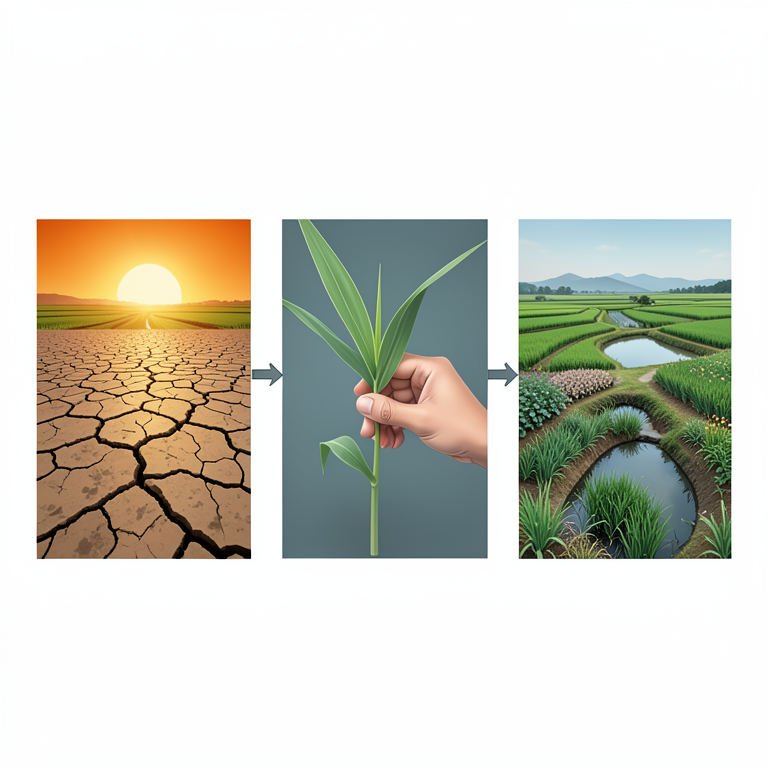
Conceptual Framework of the Study
AI-generated conceptual illustration (Rice fields and traditional crops in the Upper Arpa River Basin, Chhattisgarh). It explains the idea and does not show study data.
View source evidence ↗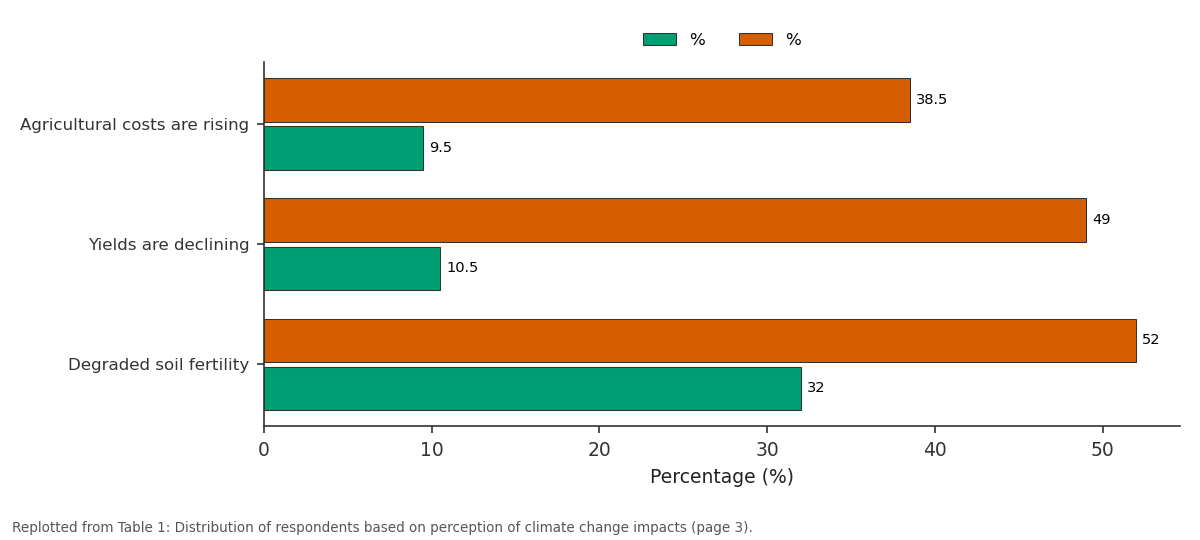
% and %: Agricultural costs are... vs Yields are declining vs Degraded soil fertility
Replotted from Table 1 (page 3) of the original paper. Every bar is the paper's own table value.
View source evidence ↗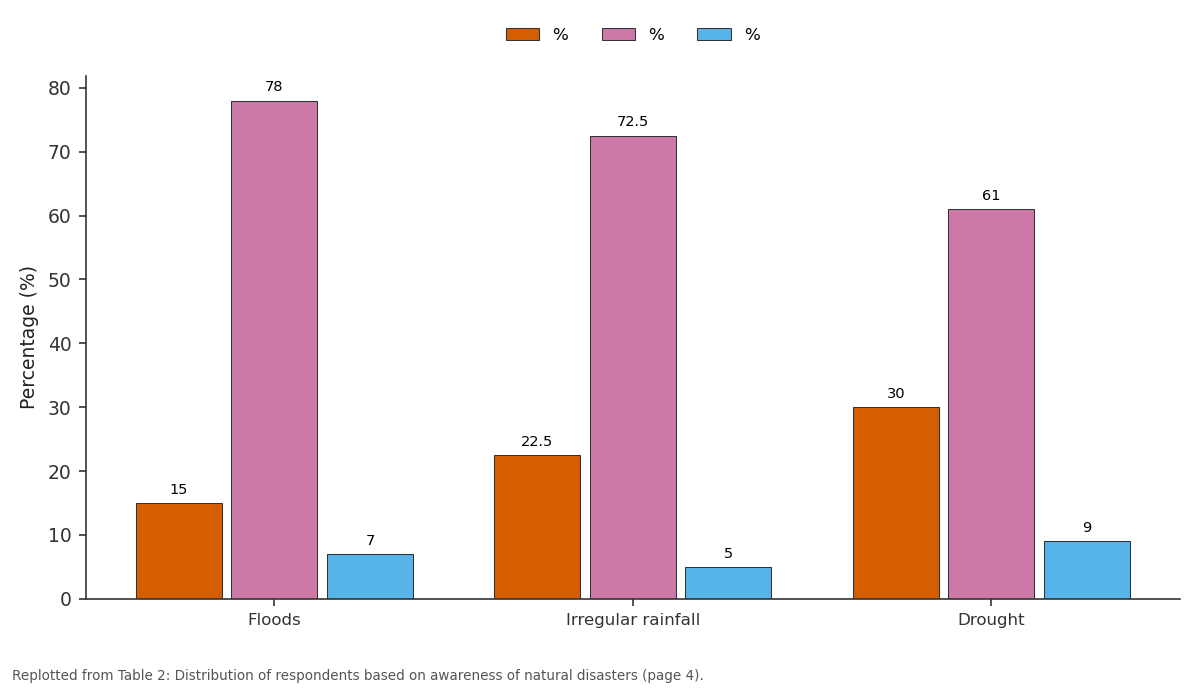
% and % and more: Floods vs Irregular rainfall vs Drought
Replotted from Table 2 (page 4) of the original paper. Every bar is the paper's own table value.
View source evidence ↗Figures & tables
From the original paper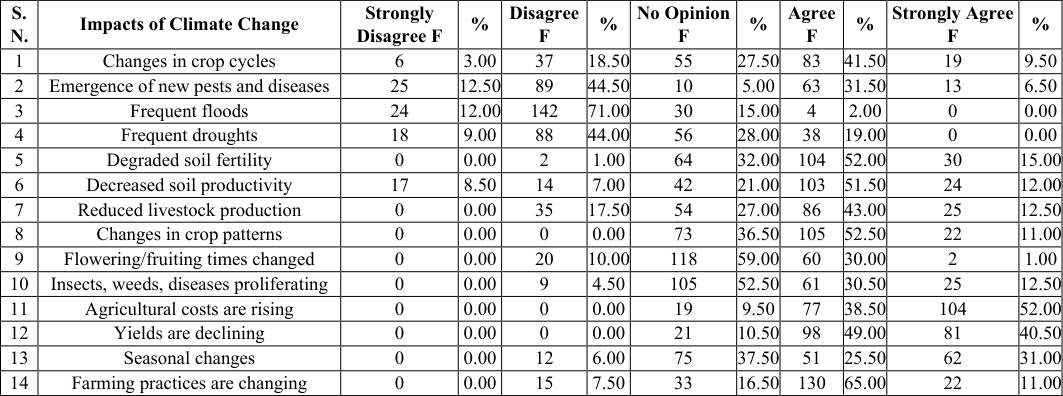 Table 1
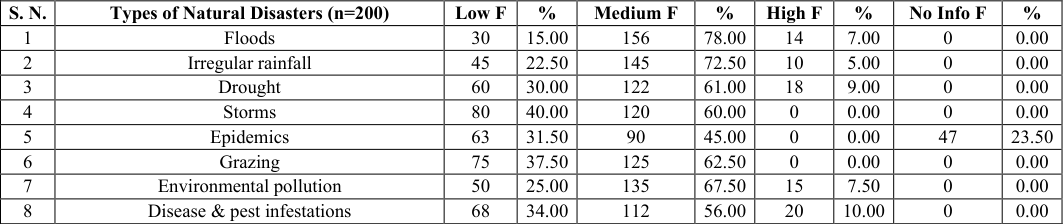 Table 2
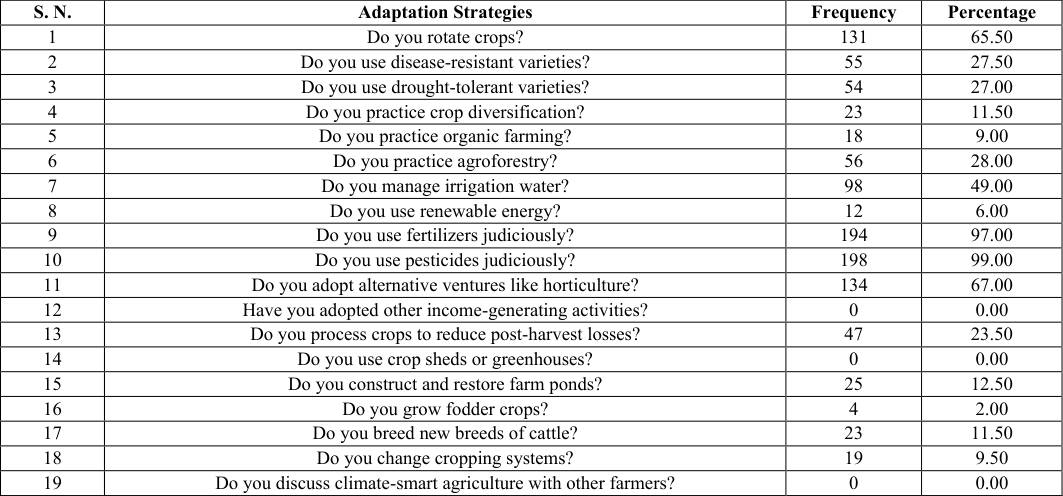 Table 3
Introduction
Climate change is increasingly recognized as a fundamental threat to global food security and rural livelihoods, particularly in tropical and subtropical agricultural zones of South Asia (IPCC, 2022) [10] . India, with more than 55% of its population dependent on agriculture, is among the countries most exposed to the adverse impacts of shifting climatic conditions, including erratic rainfall, rising temperatures, and greater frequency of extreme weather events (Ministry of Agriculture and Farmers Welfare [MAFW], 2021). These changes disrupt crop calendars, alter water availability, reduce soil productivity, and amplify the spread of pests and diseases, with disproportionate consequences for subsistence and smallscale farmers who possess limited financial, technological, and institutional resources to cope (Birthal et al., 2015) [4] . The state of Chhattisgarh, often referred to as the 'rice bowl of central India,' has a large agricultural population that relies on monsoon-fed farming systems and is directly exposed to climatic variability (Government of Chhattisgarh, 2022) [9] . The Arpa River, one of the major water bodies originating in the Maikal Hills and flowing through the Bilaspur district, supports a significant area of irrigated and rain-fed agriculture in its upper basin. Farmers in this region have historically cultivated paddy, pulses, and oilseeds, but evidence suggests that changing precipitation patterns, rising temperatures, and irregular seasons are progressively undermining agricultural productivity and household food security (Singh & Patel, 2019) [24] .
Understanding farmers' perceptions of climate change is a critical prerequisite for designing effective, locally appropriate adaptation policies (Deressa et al., 2011) [6] . Perception drives behavior; if farmers perceive climate change as real and consequential, they are more likely to adopt adaptive practices (Maddison, 2007) [15] . However, the nature, extent, and accuracy of farmers' perceptions vary considerably with socioeconomic status, access to information, years of farming experience, and proximity to extension services (Mabe et al., 2014) [14] . In many rural communities of central India, farmers' climate perceptions are shaped primarily by long-term observation of local environmental changes rather than formal scientific data, making it essential to study grassroots-level awareness (Banerjee, 2010) [3] . Natural disasters, including floods, droughts, storms, and pest outbreaks, constitute a growing dimension of climatic risk for Indian farmers (National Disaster Management Authority [NDMA], 2020) [17] . The Upper Arpa Basin has experienced recurrent episodes of irregular rainfall and drought over the past two decades, resulting in crop failures and economic distress among farming households (Sahu & Verma, 2020) [23] . Despite governmental disaster risk reduction programmes, studies indicate that awareness and preparedness at the farm level remain insufficient, particularly in tribal and remote village clusters (Tripathi & Bhattacharya, 2017) [25] . A deeper understanding of how farmers perceive, evaluate, and respond to these disaster risks is therefore necessary to bridge the gap between policy intent and field-level outcomes. Adaptation to climate change in the agricultural sector encompasses a wide range of practices, from crop diversification and the adoption of improved varieties to water management, agroforestry, and livelihood diversification (Lobell et al., 2011) [13] . Studies conducted across Indian states have documented varying levels of adaptation practice adoption, influenced by factors such as land holding size, access to credit, availability of improved seed varieties, and the reach of agricultural extension (Kumar & Sharma, 2018; Jain et al., 2015) [12,11] . In Chhattisgarh specifically, limited studies have examined the full spectrum of adaptation strategies employed by farmers in the face of both slow-onset climatic changes and sudden natural disaster events. There remains a notable gap in the literature regarding the intersection of climate perception, disaster risk awareness, and adaptation behavior among farmers in the Upper Arpa River Basin. Climate-smart agriculture (CSA) has emerged as a globally recognized framework for guiding agricultural development in the context of climate change (Food and Agriculture Organization [FAO], 2013) [7] . CSA promotes practices that simultaneously increase productivity, enhance resilience, and reduce greenhouse gas emissions. In the Indian context, government programmes such as the National Adaptation Fund for Climate Change (NAFCC) and the Pradhan Mantri Krishi Sinchayee Yojana (PMKSY) have been operationalized to support climate adaptation in agriculture, though their uptake at the field level remains uneven (Planning Commission of India, 2014) [20] . Agricultural extension systems play a pivotal role in translating policylevel climate adaptation goals into farm-level practices by building farmers' knowledge and capacity (Anderson, 2007) [2] . However, the effectiveness of extension outreach depends substantially on prior understanding of local perceptions and existing adaptive behaviors. Empirical evidence from studies in comparable agroclimatic regions highlights the complexity of climate adaptation at the farm level. Gbetibouo (2009) [8] found that South African farmers who perceived increased temperatures and reduced rainfall were significantly more likely to alter crop choices and adjust planting dates. Similarly, Nhemachena and Hassan (2007) [18] demonstrated that in sub-Saharan Africa, access to climate information and extension services were the strongest predictors of adaptation decision-making. Closer to the present study's context, research in Madhya Pradesh and Odisha has shown that while farmers broadly acknowledge climate variability, gaps in technical knowledge and market access continue to constrain meaningful adaptive action (Chauhan et al., 2016; Panda et al., 2013) [5,19] . These findings reinforce the importance of grounding adaptation programming in locally validated perceptions and needs assessments. The biological and physical dimensions of climate change are inseparable from their social consequences. Reduced agricultural output diminishes household incomes, increases debt burdens, and forces labor migration, eroding the social fabric of rural communities (Adger et al., 2003) [1] . In Chhattisgarh, the connection between agricultural distress and rural poverty is especially acute, as many farming households operate at or near subsistence levels with minimal safety nets (Rao & Bhanja, 2019) [22] . Women and marginalized caste groups face amplified vulnerabilities, often bearing a disproportionate burden of labor intensification and food insecurity when harvests fail (Rao, 2005) [21] . A comprehensive understanding of farmers' perceptions and adaptive responses must therefore incorporate these social dimensions to be truly relevant for policy and program design. Within this broader context, the present study was undertaken with the specific objectives of: (a) assessing farmers' perceptions of the impacts of climate change on agriculture in the Upper Arpa River Basin; (b) evaluating the level of awareness among farmers regarding different types of natural disasters; and (c) documenting the adaptation strategies currently practiced by farmers to respond to climate change and associated risks. By addressing these three interrelated dimensionsperception, awareness, and action -the study aims to provide an integrated empirical foundation for strengthening climate adaptation extension programs in the Bilaspur district and comparable agrarian regions of central India. The findings are expected to be of direct relevance to agricultural extension workers, district-level planners, state agricultural departments, and researchers working at the interface of climate science and rural development.
Research Methodology
The study was conducted in the Upper Arpa River Basin located in the Kota block of Bilaspur district, Chhattisgarh, India. The Arpa River originates in the Maikal Hill range and the upper basin area is characterized by a mix of irrigated and rain-fed paddy cultivation, making it ecologically and agriculturally representative of the broader region. A purposive sampling technique was used to select the Arpa River Basin as the study area due to its agrarian significance and documented exposure to climatic variability. From the Kota block, which forms the core of the upper basin, 10 villages were selected using simple random sampling. Subsequently, 20 respondents were selected from each village through simple random sampling, yielding a total sample of 200 farmers. Only cultivating farmers who had been engaged in farming for at least five years were included as respondents. A pre-tested and structured interview schedule was used as the primary data collection instrument. The schedule covered three thematic areas: (i) perception of climate change impacts on agriculture, measured using a five-point Likert scale (Strongly Disagree to Strongly Agree) across 14 impact items; (ii) awareness of natural disaster risks, assessed using a four-category response format (Low, Medium, High, No Information) for eight disaster types; and (iii) current adaptation strategies in agriculture, documented through yes/no responses across 19 strategy items. The interview schedule was pilot-tested on a sub-sample of 20 farmers not included in the final study and refined for clarity and relevance before formal data collection. Data were collected through personal interviews with selected farmers conducted in the local dialect with the assistance of trained field investigators. Collected data were tabulated, classified, and analyzed using descriptive statistics, specifically frequency counts and percentage distributions. All data analysis was performed using Microsoft Excel and the results are presented in tabular form.
Results and Discussion
Results and Discussion
Farmers' Perceptions of Climate Change Impacts
Table 1 presents the distribution of respondents based on their perceptions of the impacts of climate change. The results indicate that rising agricultural costs were perceived most strongly, with 52.00% of respondents strongly agreeing and 38.50% agreeing, giving a combined positive perception of 90.50%. This finding is consistent with Singh and Patel (2019), who reported that input cost escalation was the most cited climate-related agricultural challenge in central Indian farming communities. Declining yields were likewise strongly recognized, with 40.50% strongly agreeing and 49.00% agreeing, a combined rate of 89.50%. Changes in farming practices were acknowledged by 76.00% of respondents (65.00% agree + 11.00% strongly agree), while degraded soil fertility was recognized by 67.00% (52.00% agree + 15.00% strongly agree). These perceptions reflect ground-level observations of long-term soil health deterioration associated with changing rainfall patterns and over-reliance on chemical inputs (Kumar & Sharma, 2018) [12] . Decreased soil productivity was perceived positively by 63.50% of respondents (51.50% agree + 12.00% strongly agree), suggesting that farmers are sensitive to soil quality changes even without formal scientific measurement. Interestingly, a majority of respondents (71.00%) disagreed that frequent floods were a major impact, and 44.00% disagreed about frequent droughts. This may reflect that the upper basin area is not primarily flood-prone, and multi-year drought conditions have not consistently manifested in recent years. However, the emergence of new pests and diseases showed a more divided perception, with 44.50% disagreeing and 38.00% agreeing, possibly reflecting variation in farm types and crop systems across sampled villages. The findings broadly corroborate Chauhan et al.
| S. N. | Impacts of Climate Change | Strongly Disagree F | % | Disagree F | % | No Opinion F | % | Agree F | % | Strongly Agree F | % |
|---|---|---|---|---|---|---|---|---|---|---|---|
| 1 | Changes in crop cycles | 6 | 3.00 | 37 | 18.50 | 55 | 27.50 | 83 | 41.50 | 19 | 9.50 |
| 2 | Emergence of new pests and diseases | 25 | 12.50 | 89 | 44.50 | 10 | 5.00 | 63 | 31.50 | 13 | 6.50 |
| 3 | Frequent floods | 24 | 12.00 | 142 | 71.00 | 30 | 15.00 | 4 | 2.00 | 0 | 0.00 |
| 4 | Frequent droughts | 18 | 9.00 | 88 | 44.00 | 56 | 28.00 | 38 | 19.00 | 0 | 0.00 |
| 5 | Degraded soil fertility | 0 | 0.00 | 2 | 1.00 | 64 | 32.00 | 104 | 52.00 | 30 | 15.00 |
| 6 | Decreased soil productivity | 17 | 8.50 | 14 | 7.00 | 42 | 21.00 | 103 | 51.50 | 24 | 12.00 |
| 7 | Reduced livestock production | 0 | 0.00 | 35 | 17.50 | 54 | 27.00 | 86 | 43.00 | 25 | 12.50 |
| 8 | Changes in crop patterns | 0 | 0.00 | 0 | 0.00 | 73 | 36.50 | 105 | 52.50 | 22 | 11.00 |
| 9 | Flowering/fruiting times changed | 0 | 0.00 | 20 | 10.00 | 118 | 59.00 | 60 | 30.00 | 2 | 1.00 |
| 10 | Insects, weeds, diseases proliferating | 0 | 0.00 | 9 | 4.50 | 105 | 52.50 | 61 | 30.50 | 25 | 12.50 |
| 11 | Agricultural costs are rising | 0 | 0.00 | 0 | 0.00 | 19 | 9.50 | 77 | 38.50 | 104 | 52.00 |
| 12 | Yields are declining | 0 | 0.00 | 0 | 0.00 | 21 | 10.50 | 98 | 49.00 | 81 | 40.50 |
| 13 | Seasonal changes | 0 | 0.00 | 12 | 6.00 | 75 | 37.50 | 51 | 25.50 | 62 | 31.00 |
| 14 | Farming practices are changing | 0 | 0.00 | 15 | 7.50 | 33 | 16.50 | 130 | 65.00 | 22 | 11.00 |
Table text extracted from the original PDF; superscript letters are shown inline. The original table image is below.
View original table image
(2016) [5] , who found that Indian farmers with longer agricultural experience exhibit stronger recognition of gradual productivity-related climate impacts compared to episodic event-based changes.
Awareness of Natural Disaster Risks
Table 2 presents the distribution of respondents based on their awareness of different types of natural disasters. The findings reveal that awareness of floods was predominantly medium, with 78.00% of respondents in this category and 15.00% at a low level. Irregular rainfall awareness was similarly concentrated at the medium level (72.50%), followed by drought (61.00% medium). These findings suggest that while farmers are broadly aware of hydrometeorological hazards, their awareness is not at a high level that would typically translate into proactive risk mitigation behavior (Tripathi & Bhattacharya, 2017) [25] . Grazing as a land use risk was known at medium levels by 62.50% of respondents, pointing to farmers' recognition of uncontrolled grazing as a form of agricultural disruption, particularly during seasonal crop rotation periods. Environmental pollution awareness was medium for 67.50%, with 7.50% reporting high awareness. Disease and pest infestation awareness was reported at medium levels by 56.00% and high by 10.00%, reflecting farmers' practical engagement with crop protection challenges in day-to-day farming (NDMA, 2020) [17] . Overall, the results suggest that while general awareness exists, significant gaps remain in translating awareness into high-level risk preparedness, a finding consistent with Banerjee (2010) [3] and Panda et al.
| S. N. | Types of Natural Disasters (n=200) | Low F | % | Medium F | % | High F | % | No Info F | % |
|---|---|---|---|---|---|---|---|---|---|
| 1 | Floods | 30 | 15.00 | 156 | 78.00 | 14 | 7.00 | 0 | 0.00 |
| 2 | Irregular rainfall | 45 | 22.50 | 145 | 72.50 | 10 | 5.00 | 0 | 0.00 |
| 3 | Drought | 60 | 30.00 | 122 | 61.00 | 18 | 9.00 | 0 | 0.00 |
| 4 | Storms | 80 | 40.00 | 120 | 60.00 | 0 | 0.00 | 0 | 0.00 |
| 5 | Epidemics | 63 | 31.50 | 90 | 45.00 | 0 | 0.00 | 47 | 23.50 |
| 6 | Grazing | 75 | 37.50 | 125 | 62.50 | 0 | 0.00 | 0 | 0.00 |
| 7 | Environmental pollution | 50 | 25.00 | 135 | 67.50 | 15 | 7.50 | 0 | 0.00 |
| 8 | Disease & pest infestations | 68 | 34.00 | 112 | 56.00 | 20 | 10.00 | 0 | 0.00 |
Table text extracted from the original PDF; superscript letters are shown inline. The original table image is below.
View original table image
(2013) [19] . [16] . Adoption of horticultural crops as an alternative venture alongside the main crop was practiced by 134 respondents (67.00%), indicating awareness of income diversification within the agricultural sector. Crop rotation was practiced by 131 respondents (65.50%), a strategy with welldocumented benefits for soil health maintenance and pest management under variable rainfall (Lobell et al., 2011) [13] .
Adaptation Strategies
Irrigation water management was practiced by 98 respondents (49.00%), suggesting moderate but incomplete uptake of water conservation strategies despite the region's dependence on seasonal rainfall. Agroforestry was practiced by 56 respondents (28.00%), and disease-resistant varieties were used by 55 (27.50%), while drought-tolerant varieties were adopted by 54 respondents (27.00%). These levels of uptake are consistent with findings by Jain et al. (2015) [11] , who identified limited access to certified seeds and inadequate extension support as major barriers to variety adoption in central Indian states. [7,2] .
Conclusion
Conclusion
Figures and tables from the paper
| S. N. | Adaptation Strategies | Frequency | Percentage |
|---|---|---|---|
| 1 | Do you rotate crops? | 131 | 65.50 |
| 2 | Do you use disease-resistant varieties? | 55 | 27.50 |
| 3 | Do you use drought-tolerant varieties? | 54 | 27.00 |
| 4 | Do you practice crop diversification? | 23 | 11.50 |
| 5 | Do you practice organic farming? | 18 | 9.00 |
| 6 | Do you practice agroforestry? | 56 | 28.00 |
| 7 | Do you manage irrigation water? | 98 | 49.00 |
| 8 | Do you use renewable energy? | 12 | 6.00 |
| 9 | Do you use fertilizers judiciously? | 194 | 97.00 |
| 10 | Do you use pesticides judiciously? | 198 | 99.00 |
| 11 | Do you adopt alternative ventures like horticulture? | 134 | 67.00 |
| 12 | Have you adopted other income-generating activities? | 0 | 0.00 |
| 13 | Do you process crops to reduce post-harvest losses? | 47 | 23.50 |
| 14 | Do you use crop sheds or greenhouses? | 0 | 0.00 |
| 15 | Do you construct and restore farm ponds? | 25 | 12.50 |
| 16 | Do you grow fodder crops? | 4 | 2.00 |
| 17 | Do you breed new breeds of cattle? | 23 | 11.50 |
| 18 | Do you change cropping systems? | 19 | 9.50 |
| 19 | Do you discuss climate-smart agriculture with other farmers? | 0 | 0.00 |
Table text extracted from the original PDF; superscript letters are shown inline. The original table image is below.
View original table image
References
25 in the original paper- Adger WN, Huq S, Brown K, Conway D, Hulme M. Adaptation to climate change in the developing world. Progress in Development Studies. 2003;3(3):179-195. https://doi.org/10.1191/1464993403ps060oa
- Anderson JR. Agricultural advisory services. Background paper for the World Development Report. Washington, DC: World Bank; 2007.
- Banerjee R. Farmer perception of climate change, impact and adaptation: A case study of four villages in the semi-arid regions of India. South Asian Network for Development and Environmental Economics (SANDEE); 2010. Working Paper No. 49-10.
- Birthal PS, Negi DS, Khan MT, Agarwal S. Is Indian agriculture becoming resilient to droughts? Evidence from rice production systems. Food Policy. 2015;56:112. https://doi.org/10.1016/j.foodpol.2015.07.005
- Chauhan R, Mishra B, Singh K. Farmers' perception and adaptation to climate change in Madhya Pradesh, India. Indian Journal of Agricultural Sciences. 2016;86(4):514-520.
- Deressa TT, Hassan RM, Ringler C, Alemu T, Yesuf M. Determinants of farmers' choice of adaptation methods to climate change in the Nile Basin of Ethiopia. Global Environmental Change. 2011;19(2):248-255. https://doi.org/10.1016/j.gloenvcha.2009.01.002
- Food and Agriculture Organization. Climate-smart agriculture sourcebook. Rome: FAO; 2013.
- Gbetibouo GA. Understanding farmers' perceptions and adaptations to climate change and variability: The case of the Limpopo Basin, South Africa. Washington, DC: IFPRI; 2009. Discussion Paper 00849.
- Government of Chhattisgarh. Agriculture statistics Chhattisgarh 2021-22. Raipur: Directorate of Agriculture; 2022.
- Intergovernmental Panel on Climate Change. Climate change 2022: Impacts, adaptation and vulnerability. Contribution of Working Group II to the Sixth Assessment Report of the IPCC. Cambridge: Cambridge University Press; 2022.
- Jain M, Naeem S, Orlove B, Modi V, DeFries RS. Understanding the causes and consequences of differential decision-making in adaptation research: Adapting to a delayed monsoon onset in Gujarat, India. Global Environmental Change. 2015;31:98-109. https://doi.org/10.1016/j.gloenvcha.2014.12.008
- Kumar S, Sharma A. Climate change perceptions and adaptations among smallholder farmers in Rajasthan and Madhya Pradesh. Indian Journal of Extension Education. 2018;54(2):1-8.
- Lobell DB, Schlenker W, Costa-Roberts J. Climate trends and global crop production since 1980. Science. 2011;333(6042):616-620. https://doi.org/10.1126/science.1204531
- Mabe FN, Sienso G, Donkoh S. Determinants of choice of climate change adaptation strategies in Northern Ghana. Research in Applied Economics. 2014;6(4):7594.
- Maddison D. The perception of and adaptation to climate change in Africa. Centre for Environmental Economics and Policy in Africa; 2007. CEEPA Discussion Paper No. 10.
- Ministry of Agriculture and Farmers Welfare, Government of India. Annual report 2020-21. New Delhi: Ministry of Agriculture and Farmers Welfare; 2021.
- National Disaster Management Authority, Government of India. National disaster management plan 2019. New Delhi: National Disaster Management Authority; 2020.
- Nhemachena C, Hassan R. Micro-level analysis of farmers' adaptation to climate change in southern Africa. Washington, DC: IFPRI; 2007. Discussion Paper 00714.
- Panda A, Sharma U, Ninan KN, Patt A. Adaptive capacity contributing to improved agricultural productivity at the household level: Empirical findings highlighting the importance of crop insurance. Global Environmental Change. 2013;23(4):782-790. https://doi.org/10.1016/j.gloenvcha.2013.03.005
- Planning Commission of India, Government of India. Report of the task force on climate change and agriculture. New Delhi: Planning Commission of India; 2014.
- Rao N. Displacement from land: Case of Santhal Parganas. Economic and Political Weekly. 2005;40(41):4439-4442.
- Rao S, Bhanja SN. Poverty, agriculture, and climate vulnerability in Chhattisgarh: Challenges and policy responses. Journal of Rural Development. 2019;38(2):287-312.
- Sahu R, Verma A. Impact of changing rainfall patterns on paddy production in upper Arpa river basin, Chhattisgarh. Environmental Monitoring and Assessment. 2020;192(8):1-14. https://doi.org/10.1007/s10661-020-08416-2
- Singh R, Patel S. Farmers' perception and response to climate change in Chhattisgarh. Journal of Agricultural Extension. 2019;23(3):55-64.
- Tripathi A, Bhattacharya P. Disaster risk awareness and preparedness among farming communities in central India. Natural Hazards. 2017;86(2):673-693. https://doi.org/10.1007/s11069-017-2710-3