
Research article · 2026 · Full text
International Journal of Horticulture and Food ScienceAssessing farmers awareness and perceptions of climate change causes and impacts in the lower Arpa River Basin, Chhattisgarh
Volume 8(6S) · Pages 07–11 · DOI: 10.33545/26631067.2026.v8.i6sa.768 ↗
Research areasClimate change impacts on agricultureClimate Change Communication and PerceptionClimate Change and Environmental Impact
Abstract
Author-writtenClimate change represents one of the most pressing challenges to agricultural livelihoods in rural India, particularly in rain-dependent river basin communities of central India. The Lower Arpa River Basin in Bilaspur district, Chhattisgarh, supports a substantial population of smallholder farmers who are directly exposed to shifting weather patterns, rising temperatures, and climate-related environmental stress. This study aimed to assess the level of awareness among farmers regarding climate change, examine their perceptions of how climate change affects surrounding biophysical and socioeconomic systems, and identify the activities they believe contribute to climate change. A structured interview schedule was administered to 200 farmers selected from 10 villages in the Bilha block using simple random sampling. Data were analyzed using frequency counts and percentage distributions. Results showed that awareness of health problems in humans and animals was the highest among all climate change indicators (82.50% at the some awareness level), followed closely by atmospheric pollution (78.00%) and seasonal changes (75.00%). Regarding environmental impacts, the majority of respondents agreed that human health problems are increasing (79.50%) and that the area for pasture is declining (59.00%). Deforestation and burning of fossil fuels were most strongly identified as causes of climate change, with combined agreement rates of 92.00% and 88.00% respectively. The findings highlight the need for structured climate literacy programs, community-level extension interventions, and environmentally sustainable farming support in the region.
Summary
Source-checkedPlain-language reading of the full paper, prepared with AI and checked against the text. Each point links to the authors' own words.
Why it matters
- Climate change is a critical threat to agricultural livelihoods in rural India, especially for communities in central India that rely on rain-fed river basins. View evidence ↗
- In Chhattisgarh, a region dominated by paddy farming, climate change manifests as erratic rainfall, higher summer temperatures, long dry spells, and more frequent pest and disease outbreaks. View evidence ↗
- It is essential to understand how farmers perceive climate change to create adaptation and extension policies that are effective and appropriate for their specific context. View evidence ↗
The question
- The study aimed to evaluate farmers' awareness of climate change, their perceptions of its biophysical and socioeconomic impacts, and their beliefs regarding the activities that cause it. View evidence ↗
What they did
- The researchers used simple random sampling to select 200 farmers from 10 villages in the Bilha block of the Lower Arpa River Basin. View evidence ↗
- Participants were required to be actively engaged in cultivation and possess at least five years of farming experience. View evidence ↗
What they found
- The highest level of awareness among indicators was for health problems in humans and animals, with 82.50% of farmers reporting 'some awareness'. View evidence ↗
- General climate warming had the highest rate of 'full awareness' at 36.50%, suggesting temperature changes are the most tangible signal for these farmers. View evidence ↗
- Farmers most strongly perceived an increase in human health problems as a climate impact, with a combined agreement rate of 79.50%. View evidence ↗
- A majority of respondents (59.00%) recognized the decline of pasture areas as a problem, indicating awareness of land degradation. View evidence ↗
- Deforestation was the most strongly identified cause of climate change, with 92.00% of farmers agreeing or strongly agreeing. View evidence ↗
- Farmers showed high awareness of non-agricultural emission sources, with 88.00% identifying the burning of fossil fuels for transport as a cause. View evidence ↗
- There is a significant knowledge gap regarding agricultural contributions to climate change, as 73.00% of farmers disagreed that puddling rice fields is a cause. View evidence ↗
What it means
- The authors conclude that while farmers are observant of environmental changes, they lack a comprehensive, integrated understanding of climate change as a system. View evidence ↗
- The authors recommend using experiential learning and field demonstrations instead of passive information to move farmers from partial to full climate awareness. View evidence ↗
- The authors state that future research is needed to determine how awareness affects actual adaptation decisions and how socioeconomic factors like education and income shape perceptions. View evidence ↗
Visual summary
3 visualsIllustrations explain the paper; charts are replotted from the paper's own table values.
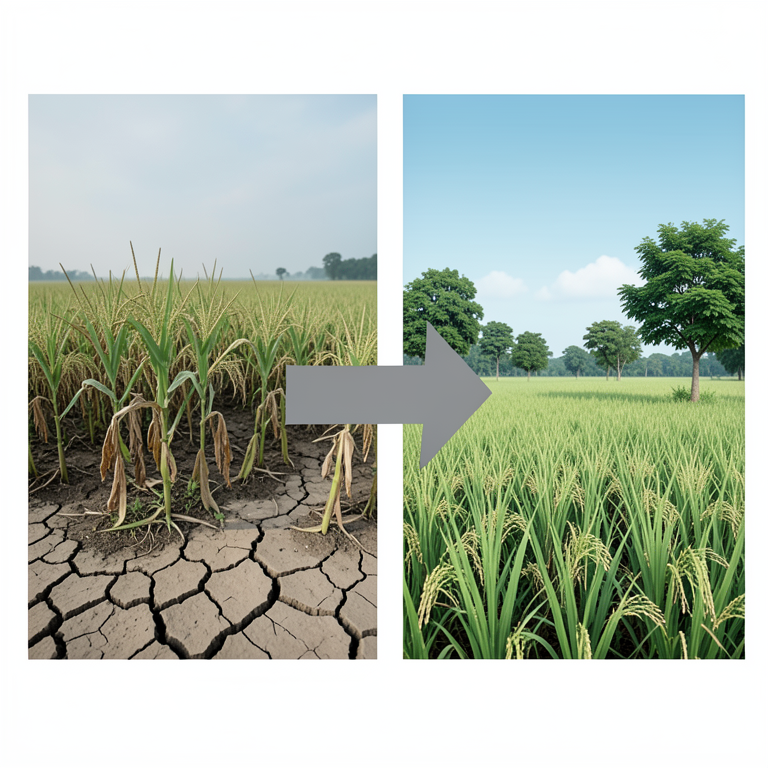
Awareness Gap Concept
AI-generated conceptual illustration (Rice fields and crops in the Arpa River Basin, Chhattisgarh). It explains the idea and does not show study data.
View source evidence ↗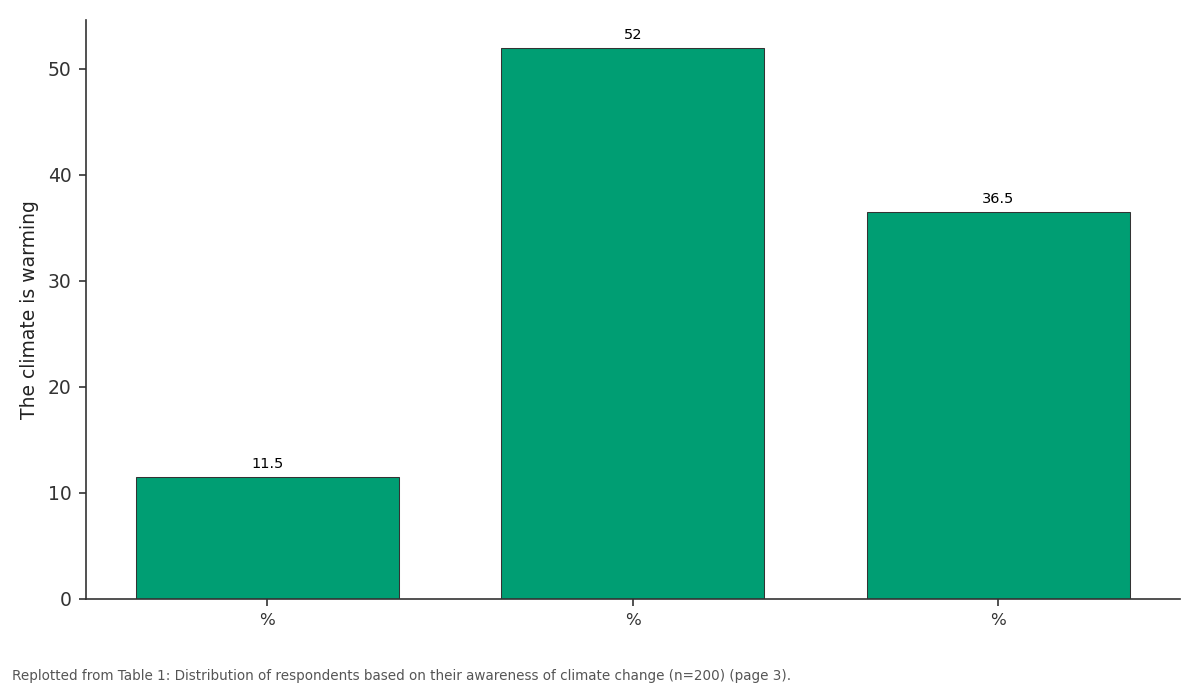
The climate is warming: % vs % vs %
Replotted from Table 1 (page 3) of the original paper. Every bar is the paper's own table value.
View source evidence ↗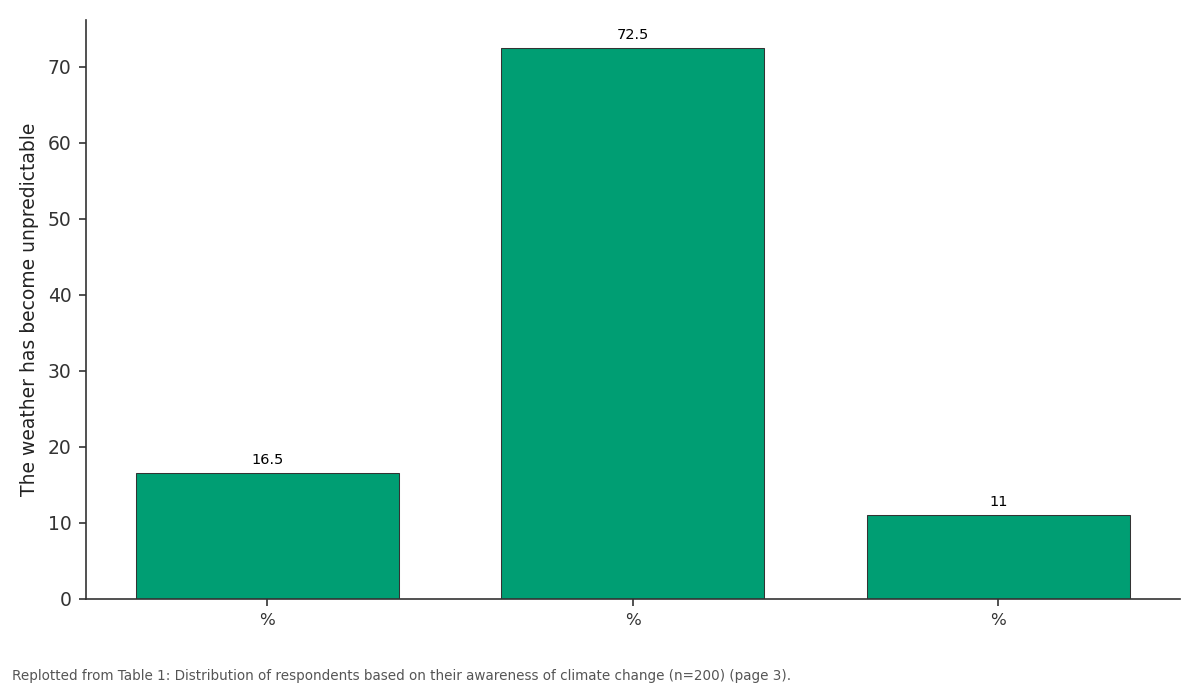
The weather has become unpredictable: % vs % vs %
Replotted from Table 1 (page 3) of the original paper. Every bar is the paper's own table value.
View source evidence ↗Figures & tables
From the original paper Table 1
 Table 2
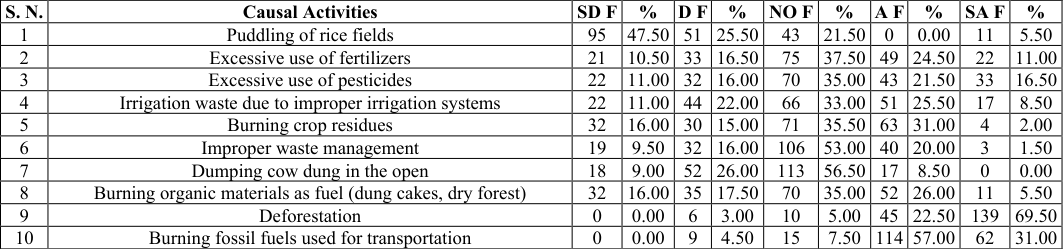 Table 3
Introduction
Climate change is among the most consequential global challenges of the twenty-first century, with particularly severe implications for agricultural systems in developing countries (Intergovernmental Panel on Climate Change [IPCC], 2022). Changes in temperature, precipitation, and seasonal cycles are altering the conditions under which food is produced, threatening the livelihoods of the nearly 600 million smallholder farmers worldwide who depend on rain-fed agriculture (Food and Agriculture Organization [FAO], 2016). In India, where agriculture remains the backbone of the rural economy and employs approximately 42% of the workforce, the adverse consequences of climate variability are becoming increasingly visible through declining yields, shifting crop calendars, and heightened vulnerability to extreme weather events (Ministry of Agriculture and Farmers Welfare [MAFW], 2021). Central India, including the state of Chhattisgarh, is characterized by a predominantly monsoon-dependent agricultural system where even modest changes in rainfall distribution or onset timing can have disproportionate effects on crop production and rural household income (Singh & Patel, 2019) [22] . Chhattisgarh, known for its paddy-dominated agricultural landscape, faces compound risks from climate change: erratic rainfall, rising summer temperatures, prolonged dry spells, and increasing incidence of pest and disease outbreaks (Government of Chhattisgarh, 2022) [9] . These pressures are most acutely felt in river basin communities where water availability, soil health, and agricultural productivity are interconnected through hydroecological processes. The Arpa River, originating in the Maikal Hills and flowing through the Bilaspur district, supports agriculture across both its upper and lower basin areas. The Lower Arpa River Basin, which falls within the Bilha block of Bilaspur district, comprises largely flat agricultural land where paddy, wheat, and pulses are cultivated in sequence through the kharif and rabi seasons. Farmers in this zone are exposed not only to the gradual onset of long-term climatic change but also to sudden hydrometeorological events, land degradation, and ecosystem disruption (Sahu & Verma, 2020) [21] . Understanding how these farming communities perceive and interpret climate change is essential for the development of effective and contextually appropriate adaptation and extension policies. Perception is the cognitive foundation of adaptive behavior. Before farmers can respond to climate change, they must first recognize it as a meaningful and personal risk (Maddison, 2007) [14] . Research has shown that climate perceptions among smallholder farmers are shaped by local environmental observations rather than formal scientific data, making locally grounded empirical assessments especially important for policy design (Banerjee, 2010; Deressa et al., 2011) [2,5] . At the same time, farmers' perceptions can be incomplete or inaccurate, particularly in communities with limited access to information, education, or extension services (Mabe et al., 2014) [13] . Studies in comparable agricultural contexts across India and sub-Saharan Africa have consistently found that while farmers broadly acknowledge climatic changes, significant knowledge gaps exist about the mechanisms and anthropogenic drivers of those changes (Gbetibouo, 2009; Nhemachena & Hassan, 2007) [8,16] . Climate change does not affect only crop production; its impacts extend across ecological, biological, and socioeconomic dimensions of rural life. Changes in temperature and precipitation patterns alter the habitats and migratory behavior of birds and animals, reduce biodiversity, affect surface and groundwater availability, and modify the transmission dynamics of human and animal diseases (Parmesan & Yohe, 2003) [18] . In Indian river basin communities, the degradation of common pool resources such as pasture land, surface water bodies, and forest cover compounds the already fragile resource base on which small and marginal farmers depend (Rao & Bhanja, 2019) [20] . Capturing farmers' awareness of these cross-sectoral impacts is therefore a multidimensional empirical challenge that requires careful survey design and locally validated instruments. An important and often under-examined dimension of climate change awareness is farmers' understanding of its causes. While a growing proportion of rural Indian farmers now recognize the reality of climate change, awareness of its anthropogenic drivers -including greenhouse gas emissions from fossil fuel combustion, deforestation, and agricultural practices -remains limited (Tripathi & Bhattacharya, 2017; Chauhan et al., 2016) [24,4] . Agricultural practices themselves contribute to climate change through methane emissions from paddy cultivation, nitrous oxide from fertilizer use, and carbon dioxide from crop residue burning (Smith et al., 2014) [23] . Building farmers' awareness of these causal linkages is not merely an academic exercise; it is a prerequisite for encouraging climate-smart agricultural practices that simultaneously reduce emissions and enhance adaptive capacity (FAO, 2013) [6] . India's national policy framework for climate action in agriculture includes the National Action Plan on Climate Change (NAPCC), the National Mission for Sustainable Agriculture (NMSA), and the recently expanded Climate-Smart Agriculture (CSA) programs implemented through Krishi Vigyan Kendras (KVKs) and state agricultural universities (Planning Commission of India, 2014) [19] . These programs seek to integrate climate risk awareness with practical farm-level adaptation, but their effectiveness depends heavily on the quality and relevance of grassrootslevel information about what farmers know, perceive, and believe regarding climate change (Anderson, 2007) [1] . Systematic evidence from field surveys is therefore essential to calibrate extension messages, design training programs, and prioritize intervention areas. Previous research on climate change awareness among Indian farmers has revealed important patterns. Birthal et al. (2015) [3] found that farmer awareness of rainfall variability was high in semi-arid regions but did not automatically translate into adoption of resilient varieties. Jain et al. (2015) [11] demonstrated in Gujarat that farmers who received extension information about climate risk were significantly more likely to adjust their planting schedules and irrigation management. In Odisha, a state with agroclimatic similarities to Chhattisgarh, Panda et al. (2013) [17] found that the quality of local environmental observation was the strongest predictor of climate change awareness among tribal and marginal farming households. These findings collectively point to the importance of assessing baseline awareness levels at the community scale before designing any climate-related extension or adaptation program. Despite the policy relevance of understanding climate change awareness at the farm level, empirical studies specifically focused on the Lower Arpa River Basin remain scarce. The area's agro-ecological characteristics, demographic composition, and dependence on seasonal agriculture make it an important and representative case for understanding how climate change awareness manifests in a river basin farming community of central India. This study therefore fills an important gap by systematically measuring three dimensions of farmer climate cognition: awareness of climate change as a phenomenon, perceptions of its impacts on surrounding biophysical and socioeconomic systems, and beliefs about which human activities are responsible for driving climate change. The results are intended to inform extension planners, district agricultural officers, state policymakers, and development researchers working on climate resilience in central India.
Research Methodology
The study was conducted in the Lower Arpa River Basin, specifically within the Bilha block of Bilaspur district, Chhattisgarh. The lower basin area is characterized by flat topography, predominantly paddy-wheat-pulse cropping systems, and direct dependence on the Arpa River and seasonal monsoon rainfall for agricultural water supply. The study area was selected using a purposive sampling technique, as the Bilha block is recognized as a key agricultural zone in the lower portion of the Arpa River Basin. From this block, 10 villages were selected through simple random sampling. From each selected village, 20 farmers were chosen as respondents using simple random sampling, resulting in a total sample size of 200 farmers. Only those individuals who were actively engaged in cultivation and had at least five years of farming experience were included. A pre-tested, structured interview schedule was used as the primary data collection instrument. The schedule was organized into three thematic sections: (i) awareness of climate change indicators, measured through an ordinal scale with three response categories -Not at All, Some Awareness, and Full Awareness -across eight statements; (ii) perceptions of the impacts of climate change on surrounding activities, assessed using a five-point Likert scale (Strongly Disagree to Strongly Agree) across eight impact statements; and (iii) beliefs about activities causing climate change, assessed using the same five-point Likert scale across ten causal activity statements. The instrument was pilot-tested on 20 farmers outside the main sample and refined for linguistic clarity and local relevance. Data were collected through face-to-face personal interviews conducted in the local dialect with the support of trained field enumerators. All collected data were systematically tabulated, classified by response category, and analyzed using descriptive statistics, specifically frequency counts and percentage distributions. Results are presented in three structured tables corresponding to the three thematic sections of the instrument. Note: In Table 2, the label 'n=600' in the original data reflects the total number of responses across all items and all respondents; the actual sample remains n=200 farmers.
| S. N. | Symptoms (n=200) | SD F | % | D F | % | NO F | % | A F | % | SA F | % |
|---|---|---|---|---|---|---|---|---|---|---|---|
| 1 | Some animals and birds are becoming extinct | 10 | 5.00 | 22 | 11.00 | 17 | 8.50 | 117 | 58.50 | 34 | 17.00 |
| 2 | The area for pasture is decreasing | 9 | 4.50 | 7 | 3.50 | 66 | 33.00 | 44 | 22.00 | 74 | 37.00 |
| 3 | Commercial changes are adversely affecting animal health | 20 | 10.00 | 10 | 5.00 | 87 | 43.50 | 62 | 31.00 | 21 | 10.50 |
| 4 | New fish species introduced; old species lost/extinct | 73 | 36.50 | 63 | 31.50 | 47 | 23.50 | 13 | 7.50 | 4 | 2.00 |
| 5 | Expenditure on physical infrastructure is increasing | 2 | 1.00 | 9 | 4.50 | 73 | 36.50 | 104 | 52.00 | 12 | 6.00 |
| 6 | Human health problems are increasing | 0 | 0.00 | 20 | 10.00 | 21 | 10.50 | 121 | 60.50 | 38 | 19.00 |
| 7 | Displacement of birds and animals has increased | 23 | 11.50 | 35 | 17.50 | 60 | 30.00 | 52 | 26.00 | 30 | 15.00 |
| 8 | Availability of drinking water has decreased | 21 | 10.50 | 62 | 31.00 | 59 | 29.50 | 32 | 16.00 | 26 | 13.00 |
Table text extracted from the original PDF; superscript letters are shown inline. The original table image is below.
View original table image
Results and Discussion
Results and Discussion
Farmers' Awareness of Climate Change
Table 1 presents the distribution of respondents based on their level of awareness of key climate change indicators. Health problems in humans and animals recorded the highest level of some awareness (82.50%), indicating that farmers directly observe deteriorating health conditions in their communities and livestock and associate this with environmental change. This finding aligns with Banerjee (2010), who noted that observed changes in animal health are among the most immediate and locally recognizable signals of environmental deterioration in rural Indian communities.
| S. N. | Statements | Not at All F | % | Some Awareness F | % | Full Awareness F | % |
|---|---|---|---|---|---|---|---|
| 1 | The climate is warming | 23 | 11.50 | 104 | 52.00 | 73 | 36.50 |
| 2 | The weather has become unpredictable | 33 | 16.50 | 145 | 72.50 | 22 | 11.00 |
| 3 | Weather patterns are changing | 40 | 20.00 | 145 | 72.50 | 15 | 7.50 |
| 4 | Extreme weather conditions | 100 | 50.00 | 98 | 49.00 | 4 | 2.00 |
| 5 | The risk of crop failure has increased | 55 | 27.50 | 135 | 67.50 | 10 | 5.00 |
| 6 | Atmospheric pollution is increasing | 22 | 11.00 | 156 | 78.00 | 22 | 11.00 |
| 7 | The seasons have changed | 32 | 16.00 | 150 | 75.00 | 18 | 9.00 |
| 8 | Health problems in humans and animals are increasing | 18 | 9.00 | 165 | 82.50 | 17 | 8.50 |
Table text extracted from the original PDF; superscript letters are shown inline. The original table image is below.
View original table image
Atmospheric pollution awareness at the some awareness level was high at 78.00%, followed by seasonal changes (75.00%) and unpredictable weather (72.50%). These findings suggest that farmers in the Lower Arpa Basin are broadly attuned to gradual environmental shifts but may lack scientific framing to interpret these observations as components of a unified climate change phenomenon. General warming of the climate was recognized at full awareness by 36.50% of respondents, the highest rate of full awareness among all items, suggesting that temperaturerelated changes are the most tangible and clearly experienced climate signal for this farming community. This is consistent with findings by Maddison (2007) across African farming systems, who found that temperature change is consistently the most recognized dimension of climate variability by rural farmers. Extreme weather conditions showed the most divided awareness, with 50.00% of respondents reporting no awareness and 49.00% some awareness. This near-even split may reflect the relatively moderate incidence of extreme events in this specific basin zone compared to more floodprone or drought-prone regions, or it may indicate communication gaps in how extreme weather risks are discussed in local agricultural extension programming (Tripathi & Bhattacharya, 2017) [24] . The risk of crop failure was recognized at some awareness by 67.50%, but full awareness was reported by only 5.00% of respondents, suggesting that while farmers sense increased crop risk, they have not fully internalized it as a climate-driven phenomenon distinct from ordinary year-to-year variability.
Perceptions of Climate Change Impacts on Surrounding Activities
Table 2 presents respondents' perceptions of how climate change affects the surrounding environment and society. Increasing human health problems received the highest combined agreement, with 60.50% agreeing and 19.00% strongly agreeing, yielding a combined agreement rate of 79.50%. This is consistent with growing evidence linking climate change to altered disease burden patterns in rural India, including increased incidence of vector-borne diseases, waterborne illnesses, and heat-related health conditions (IPCC, 2022; Kumar & Sharma, 2018) [10,12] . Animal and bird extinction was perceived positively by 75.50% of respondents (58.50% agree + 17.00% strongly agree), reflecting farmers' observations of declining local biodiversity. Declining pasture area was perceived as a problem by 59.00% (22.00% agree + 37.00% strongly agree), indicating recognition of land degradation and the shrinking of common grazing resources, an issue with direct consequences for livestock-dependent households (Rao & Bhanja, 2019) [20] . Increasing expenditure on physical infrastructure was agreed upon by 52.00% and strongly agreed upon by 6.00%, a combined 58.00%, suggesting awareness of the economic costs of climate-related infrastructure wear and repair. Conversely, changes in fish species composition were disagreed with by a majority (36.50% strongly disagree + 31.50% disagree = 68.00%), which may reflect limited fishing activity or access to river fisheries among the primarily agricultural households surveyed. The availability of drinking water showed the most neutral distribution, with 29.50% offering no opinion, suggesting that while water stress is a recognized issue nationally, its manifestation in this lower basin zone may be less severe or less consistently experienced than in more arid parts of the region (Sahu & Verma, 2020) [21] . These mixed findings underscore the importance of locally grounded, site-specific assessments rather than generalized assumptions about farmer perceptions.
Beliefs About Activities That Cause Climate Change
Table 3 presents respondents' beliefs about activities that contribute to climate change. Deforestation was the most strongly identified cause, with 69.50% strongly agreeing and 22.50% agreeing, yielding a combined agreement rate of 92.00%. This very high level of attribution to deforestation may reflect farmers' direct observation of forest clearing in the surrounding landscape and the associated loss of shade, soil moisture, and biodiversity (Chauhan et al., 2016) [4] . Burning of fossil fuels for transportation was identified as a cause by 88.00% of respondents (57.00% agree + 31.00% strongly agree), indicating awareness of non-agricultural emission sources among this rural population. Agricultural practices as causes of climate change showed more divided opinions, consistent with research indicating that farmers rarely view their own practices as contributors to environmental change (Smith et al., 2014) [23] . Burning crop residues received combined agreement from 33.00% of respondents, while excessive fertilizer use was linked to climate change by 35.50% and excessive pesticide use by 38.00%. These relatively low attribution rates suggest that targeted extension communication is needed to help farmers understand the greenhouse gas and environmental pollution dimensions of conventional agricultural inputs and practices. Puddling of rice fields showed the highest disagreement of any item, with 47.50% strongly disagreeing and 25.50% disagreeing, a combined 73.00% disagreement rate. This reflects a knowledge gap about the methane emissions associated with flooded rice cultivation, which is one of the significant sources of agricultural greenhouse gas emissions in India (Smith et al., 2014) [23] . Improper waste management and open dumping of cow dung also received majority neutral responses (53.00% and 56.50% no opinion respectively), suggesting awareness of these practices as hygienic problems but not necessarily as climate-relevant activities. These findings align with Tripathi and Bhattacharya (2017), who found that in central Indian farm communities, the link between on-farm practices and climate change causation is frequently underestimated.
| S. N. | Causal Activities | SD F | % | D F | % | NO F | % | A F | % | SA F | % |
|---|---|---|---|---|---|---|---|---|---|---|---|
| 1 | Puddling of rice fields | 95 | 47.50 | 51 | 25.50 | 43 | 21.50 | 0 | 0.00 | 11 | 5.50 |
| 2 | Excessive use of fertilizers | 21 | 10.50 | 33 | 16.50 | 75 | 37.50 | 49 | 24.50 | 22 | 11.00 |
| 3 | Excessive use of pesticides | 22 | 11.00 | 32 | 16.00 | 70 | 35.00 | 43 | 21.50 | 33 | 16.50 |
| 4 | Irrigation waste due to improper irrigation systems | 22 | 11.00 | 44 | 22.00 | 66 | 33.00 | 51 | 25.50 | 17 | 8.50 |
| 5 | Burning crop residues | 32 | 16.00 | 30 | 15.00 | 71 | 35.50 | 63 | 31.00 | 4 | 2.00 |
| 6 | Improper waste management | 19 | 9.50 | 32 | 16.00 | 106 | 53.00 | 40 | 20.00 | 3 | 1.50 |
| 7 | Dumping cow dung in the open | 18 | 9.00 | 52 | 26.00 | 113 | 56.50 | 17 | 8.50 | 0 | 0.00 |
| 8 | Burning organic materials as fuel (dung cakes, dry forest) | 32 | 16.00 | 35 | 17.50 | 70 | 35.00 | 52 | 26.00 | 11 | 5.50 |
| 9 | Deforestation | 0 | 0.00 | 6 | 3.00 | 10 | 5.00 | 45 | 22.50 | 139 | 69.50 |
| 10 | Burning fossil fuels used for transportation | 0 | 0.00 | 9 | 4.50 | 15 | 7.50 | 114 | 57.00 | 62 | 31.00 |
Table text extracted from the original PDF; superscript letters are shown inline. The original table image is below.
View original table image
References
24 in the original paper- Anderson JR. Agricultural advisory services. Background paper for the World Development Report. Washington, DC: World Bank; 2007.
- Banerjee R. Farmer perception of climate change, impact and adaptation: A case study of four villages in the semi-arid regions of India. South Asian Network for Development and Environmental Economics (SANDEE); 2010. Working Paper No. 49-10.
- Birthal PS, Negi DS, Khan MT, Agarwal S. Is Indian agriculture becoming resilient to droughts? Evidence from rice production systems. Food Policy. 2015;56:112. https://doi.org/10.1016/j.foodpol.2015.07.005
- Chauhan R, Mishra B, Singh K. Farmers' perception and adaptation to climate change in Madhya Pradesh, India. Indian Journal of Agricultural Sciences. 2016;86(4):514-520.
- Deressa TT, Hassan RM, Ringler C, Alemu T, Yesuf M. Determinants of farmers' choice of adaptation methods to climate change in the Nile Basin of Ethiopia. Global Environmental Change. 2011;19(2):248-255. https://doi.org/10.1016/j.gloenvcha.2009.01.002
- Food and Agriculture Organization. Climate-smart agriculture sourcebook. Rome: FAO; 2013.
- Food and Agriculture Organization. The state of food and agriculture: Climate change, agriculture and food security. Rome: FAO; 2016.
- Gbetibouo GA. Understanding farmers' perceptions and adaptations to climate change and variability: The case of the Limpopo Basin, South Africa. Washington, DC: IFPRI; 2009. Discussion Paper 00849.
- Government of Chhattisgarh. Agriculture statistics Chhattisgarh 2021-22. Raipur: Directorate of Agriculture; 2022.
- Intergovernmental Panel on Climate Change. Climate change 2022: Impacts, adaptation and vulnerability. Contribution of Working Group II to the Sixth Assessment Report of the IPCC. Cambridge: Cambridge University Press; 2022.
- Jain M, Naeem S, Orlove B, Modi V, DeFries RS. Understanding the causes and consequences of differential decision-making in adaptation research: Adapting to a delayed monsoon onset in Gujarat, India. Global Environmental Change. 2015;31:98-109. https://doi.org/10.1016/j.gloenvcha.2014.12.008
- Kumar S, Sharma A. Climate change perceptions and adaptations among smallholder farmers in Rajasthan and Madhya Pradesh. Indian Journal of Extension Education. 2018;54(2):1-8.
- Mabe FN, Sienso G, Donkoh S. Determinants of choice of climate change adaptation strategies in Northern Ghana. Research in Applied Economics. 2014;6(4):7594.
- Maddison D. The perception of and adaptation to climate change in Africa. Centre for Environmental Economics and Policy in Africa; 2007. CEEPA Discussion Paper No. 10.
- Ministry of Agriculture and Farmers Welfare, Government of India. Annual report 2020-21. New Delhi: Ministry of Agriculture and Farmers Welfare; 2021.
- Nhemachena C, Hassan R. Micro-level analysis of farmers' adaptation to climate change in southern Africa. Washington, DC: IFPRI; 2007. Discussion Paper 00714.
- Panda A, Sharma U, Ninan KN, Patt A. Adaptive capacity contributing to improved agricultural productivity at the household level: Empirical findings highlighting the importance of crop insurance. Global Environmental Change. 2013;23(4):782-790. https://doi.org/10.1016/j.gloenvcha.2013.03.005
- Parmesan C, Yohe G. A globally coherent fingerprint of climate change impacts across natural systems. Nature. 2003;421(6918):37-42. https://doi.org/10.1038/nature01286
- Planning Commission of India, Government of India. Report of the task force on climate change and agriculture. New Delhi: Planning Commission of India; 2014.
- Rao S, Bhanja SN. Poverty, agriculture, and climate vulnerability in Chhattisgarh: Challenges and policy responses. Journal of Rural Development. 2019;38(2):287-312.
- Sahu R, Verma A. Impact of changing rainfall patterns on paddy production in upper Arpa river basin, Chhattisgarh. Environmental Monitoring and Assessment. 2020;192(8):1-14. https://doi.org/10.1007/s10661-020-08416-2
- Singh R, Patel S. Farmers' perception and response to climate change in Chhattisgarh. Journal of Agricultural Extension. 2019;23(3):55-64.
- Smith P, Bustamante M, Ahammad H, Clark H, Dong H, Elsiddig EA, et al. Agriculture, forestry and other land use (AFOLU). In: Edenhofer O, Pichs-Madruga R, Sokona Y, Farahani E, Kadner S, Seyboth K, et al., editors. Climate change 2014: Mitigation of climate change. Cambridge: Cambridge University Press; 2014. p. 811-922.
- Tripathi A, Bhattacharya P. Disaster risk awareness and preparedness among farming communities in central India. Natural Hazards. 2017;86(2):673-693. https://doi.org/10.1007/s11069-017-2710-3