
Research article · 2026 · Full text
International Journal of Geography Geology and EnvironmentImpact of tourism on local ecosystems with special reference to water resources in Chittorgarh: Planning for a sustainable future
Volume 8(4) · Pages 201–209 · DOI: 10.22271/27067483.2026.v8.i4b.795 ↗
Research areasDiverse Aspects of Tourism ResearchCommunity-based Tourism Development and SustainabilityUrbanism, Landscape, and Tourism Studies
Abstract
Author-writtenTourism is a key driver of economic development in heritage-rich regions like Chittorgarh, Rajasthan. Tourism in Chittorgarh has grown rapidly, attracting visitors to its forts, wildlife sanctuaries and cultural events. However, rapid and often unregulated growth of tourism in recent years has also raised serious concerns regarding environmental sustainability. While this growth brings economic benefits, it also poses challenges to local ecosystems and water resources. The study aims to analyse tourism patterns, spatial distribution and examines the ecological impacts of tourism on local ecosystems and water resources in Chittorgarh district, using a combination of field observations, stakeholder interviews and secondary data. Thus, the research is based on both primary and secondary data sources, including field surveys and official tourism statistics. The findings indicate a significant increase in tourist arrivals, with a high concentration at major heritage and religious sites. The paper also highlights issues related to waste generation, increased pressure on water bodies and uneven tourism development across different locations. Special attention is given to how tourism affects the surrounding water sources through pollution and overextraction. The paper also identifies gaps in existing environmental management frameworks and proposes a sustainable planning model that integrates local community participation, eco-tourism practices and policy-level interventions. The rise of eco-tourism highlights efforts to mitigate these impacts and plan for a sustainable future. Sustainable tourism strategies are required to balance development and environmental conservation in the district. The findings underscore the urgent need for balancing tourism growth with ecological preservation not just in Chittorgarh, but in similar destinations across India.
Summary
Source-checkedPlain-language reading of the full paper, prepared with AI and checked against the text. Each point links to the authors' own words.
Why it matters
- Tourism serves as a primary engine for economic growth in heritage-rich areas such as Chittorgarh, Rajasthan. View evidence ↗
- Despite the economic advantages, rapid tourism growth creates significant challenges for local water resources and ecosystems. View evidence ↗
- Tourism growth exacerbates existing environmental vulnerabilities in Rajasthan, specifically the critical issue of water scarcity. View evidence ↗
The question
- The study aims to investigate how tourism development affects the local ecosystems and water resources within the Chittorgarh district. View evidence ↗
What they did
- The researchers employed a mixed-methods approach, integrating both quantitative and qualitative techniques to assess environmental impacts. View evidence ↗
- Data was gathered from primary sources, such as field surveys, and secondary sources, including official tourist arrival statistics from the Rajasthan Government. View evidence ↗
- Field observations were used to identify visible signs of environmental stress, including crowding and waste accumulation. View evidence ↗
What they found
- Tourist arrivals in Chittorgarh saw massive growth, increasing from 679,567 in 2015 to 24.2 million in 2024. View evidence ↗
- The region has become heavily reliant on domestic tourism, as foreign tourist arrivals dropped from 52,340 in 2016 to 12,283 in 2024. View evidence ↗
- Tourism is spatially concentrated, with the Sanwaliya Ji Temple alone attracting 10.7 million visitors in 2024, or nearly 44% of all arrivals. View evidence ↗
- The district faces severe groundwater stress, with an exploitation rate of approximately 116%, leading most blocks to be categorized as over-exploited. View evidence ↗
- Water quality is poor, with only 55.9% of tested sources being potable; others are contaminated by fluoride, hardness, and high total dissolved solids. View evidence ↗
- Eco-tourism is underdeveloped and declining, with only 2,678 visitors to the Bassi Wildlife Sanctuary in 2024 compared to millions at heritage sites. View evidence ↗
What it means
- The authors conclude that Chittorgarh is nearing a critical threshold where unregulated tourism may destroy both the environment and the quality of the visitor experience. View evidence ↗
- A key limitation identified is the weak implementation of existing policies at the district level due to poor coordination between municipal, forest, and tourism departments. View evidence ↗
Visual summary
1 visualsIllustrations explain the paper; they do not show study data.
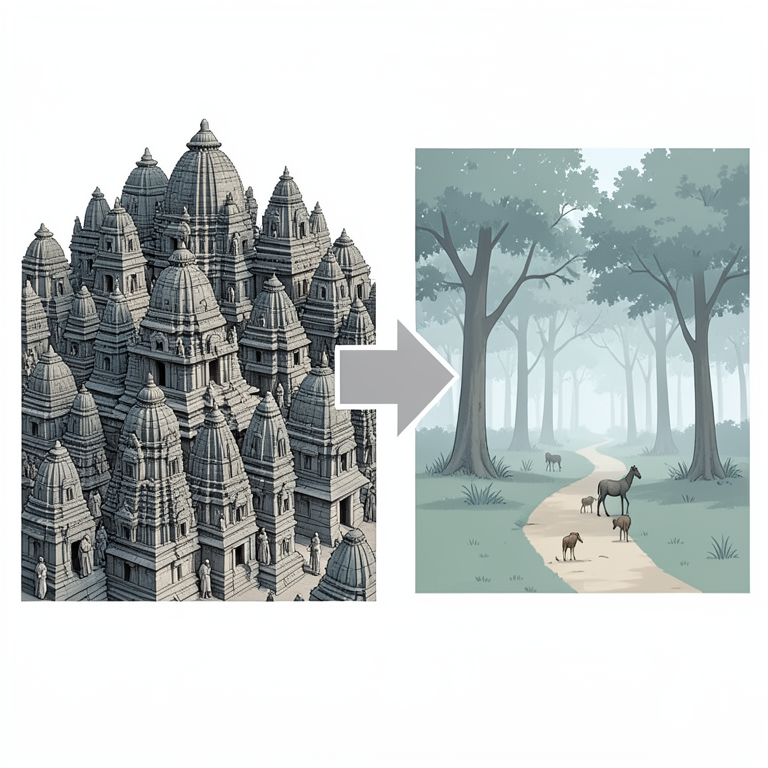
Spatial Imbalance of Tourism
AI-generated conceptual illustration (Heritage temples and wildlife sanctuaries in Chittorgarh, Rajasthan). It explains the idea and does not show study data.
View source evidence ↗Figures & tables
From the original paper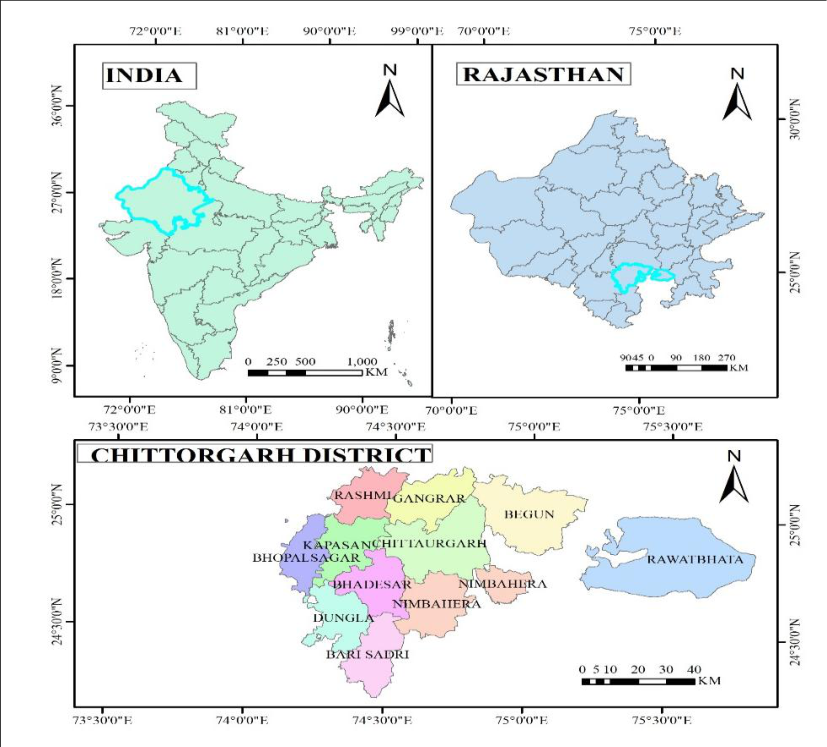 Figure 1
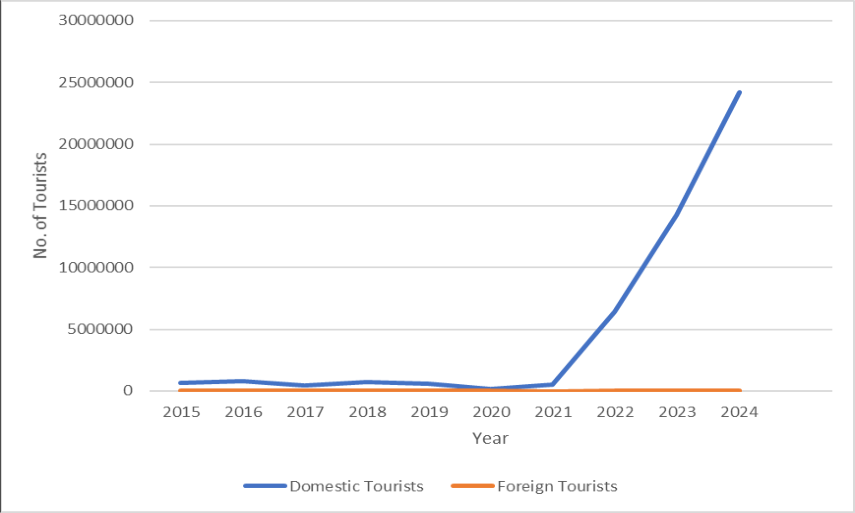 Figure 1
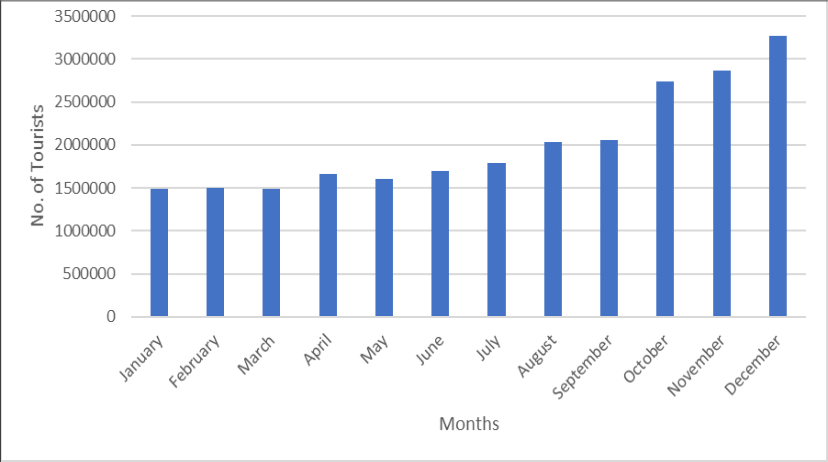 Figure 3
Introduction
Tourism has emerged as one of the fastest-growing industries, playing a vital role in the global economy. Research indicates that the sector contributes nearly 11% to the world's gross domestic product (GDP), while engaging over 20 crores people both directly and indirectly in tourism-related activities, thereby generating around 3% of total global employment (M. K. Singh & Neog, 2020) [21] . Tourism also contributes to infrastructure development by improving transport facilities, accommodation and public services. In developing regions, it acts as an important instrument for regional development by creating alternative livelihood opportunities and supporting balanced economic growth. It supports various allied industries such as hospitality, transportation and handicrafts. Tourism has emerged as a major driver of economic development and cultural exchange in India, contributing significantly to income generation, employment and regional connectivity. Tourism is one of India's largest service sectors (Narayan et al., 2009) [14] , which provides heritage, culture, business, medical and sports tourism. Heritage and cultural tourism has gained significant importance in India due to the country's rich historical legacy, diverse cultural traditions and architectural heritage. Heritage sites such as forts, palaces, monuments and historical towns attract large numbers of tourists and contribute to local economic development. However, increasing tourism activity in heritage areas also influences local communities and the surrounding environment, highlighting the need for careful assessment of tourism development in such areas. Rajasthan, with its rich architectural heritage and cultural vibrancy, is among the most visited states in the country. Tourism plays a vital role in the socio-economic development of Rajasthan. Within Rajasthan, Chittorgarh stands out as a prominent destination known for its historic fort complex, temples, and Rajput-era monuments, attracting both domestic and international tourists (Rajasthan Tourism Department, 2024) [18] . Chittorgarh is an important heritage tourism destination in Rajasthan, primarily known for the Chittorgarh Fort, a UNESCO World Heritage Site. Chittorgarh, as part of the Hill Forts of Rajasthan, has been recognized internationally for its cultural and historical significance (UNESCO, 2013) [25] . Chittorgarh, famed for its historical legacy and natural beauty, experiences high tourist footfall each year (Rajasthan Tourism Department, 2024) [18] , which has led to increased economic opportunities and infrastructure development in the area. Although tourism contributes significantly to regional development, it also exerts increasing pressure on local ecosystems. While positive impacts include employment generation, income growth and infrastructure improvement, negative impacts such as environmental degradation, cultural changes and pressure on local resources have also been observed in many tourist destinations. The tourism sector is largely dependent on the volume of tourist arrivals; however, excessive growth in tourist numbers poses significant threats to wildlife, degrades natural beauty and disturbs the ecological equilibrium of the environment (Chandel, Rai, et al., 2023; Kanga et al., 2014) [5,10] . In the context of Chittorgarh, the rise in tourist inflows has led to growing concerns over its environmental impacts, particularly in terms of ecosystem degradation, pressure on water resources, waste generation and habitat disturbance, making the region suitable for studying the impacts of tourism development. According to the Annual Progress Report of the Rajasthan Tourism Department, Chittorgarh witnessed a substantial rise in tourist visits post-pandemic. In 2023, the district recorded 14,280,751 domestic and 3,469 foreign tourists. These figures surged in 2024 to 24,194,865 domestic and 12,283 foreign tourists, indicating a strong revival in tourism activity. This rapid growth highlights the popularity of Chittorgarh as a heritage destination. Such rapid growth reflects national patterns, as India has experienced expanding tourism flows in recent years (Ministry of Tourism, Government of India, 2023). However, the increasing influx of tourists has also raised concerns regarding its ecological sustainability, necessitating a closer examination of tourism's impact on the local environment and water resources. Such growth intensifies environmental vulnerabilities, particularly water scarcity, which is already critical in Rajasthan. Central Ground Water Board (Central Ground Water Board (CGWB), 2023) [3] has reported critical groundwater depletion in Rajasthan, posing concerns for both residents and the tourism sector. The pressure from increased tourism has direct and indirect effects on its natural environment, necessitating systematic approaches for sustainable management. The recent trends in tourism development have redirected the focus from mass tourism to sustainable tourism (S. K. Singh & Kanga, 2018) [23] , which strictly controls tourism's effect on the environment (Nisa, 2017) [16] . This emerging form of sustainable tourism, which emphasizes the protection of the environment, is known as "ecotourism". Ecotourism represents a form of tourism that integrates economic, environmental and socio-cultural dimensions in a sustainable manner (Chandel, Kanga, et al., 2023) [4] . Scholars argue that tourism growth must be balanced with ecological concerns. Eco-tourism is seen as a corrective strategy, with research highlighting the importance of awareness campaigns and policy interventions to guide public perception and behaviour (Narula & Kapur, 2018, 2009; Shekhar & Kothari, 2025a) [15,20] . Understanding the multidimensional impacts of tourism development is essential for ensuring sustainable tourism development. Therefore, impact assessment studies based on local perceptions and experiences play a crucial role in identifying challenges and guiding appropriate planning and policy measures. This study explores the environmental implications of tourism particularly its impact on local ecosystems and water resources in Chittorgarh. The research aims to assess the extent of these impacts, identify the contributing factors and examine the current sustainability measures being undertaken. By analysing tourism trends, water quality assessments and environmental indicators the study seeks to offer insights into sustainable tourism practices suited for heritage-rich regions like Chittorgarh. The findings are expected to contribute to policy discussions on water management, biodiversity conservation and sustainable tourism planning in the state of Rajasthan. Although several studies have examined the socio-economic benefits of tourism development, limited empirical research has focused on its combined impacts on local ecosystems and water resources in heritage districts such as Chittorgarh. Moreover, community-level perceptions regarding these environmental changes remain underexplored. This highlights the need for a localized assessment to support sustainable tourism planning. The present study aims to analyse the environmental and ecosystem impacts of tourism development in Chittorgarh district. The study also seeks to provide insights for sustainable tourism planning by examining the perceptions of local residents and stakeholders. (Butler, 1980) [1] . Environmental degradation often peaks during stagnation due to overcrowding. Wall and Mathieson (2006) [28] note that tourism causes land degradation, pollution, habitat loss, and water stress. Regarding water, Gössling et al. (2012) [7] underline that tourism increases demand, especially in arid regions, intensifying competition between residents and visitors. Tourist services consume disproportionate water, negatively affecting local availability. Narula and Kapur (2018) [15] further highlight how tourism exacerbates pressure on fragile ecosystems and limited resources.
Objectives of the study
Studies in India reinforce these concerns. Ranwa (2021) [19] examined heritage tourism in Rajasthan, finding that rapid growth without planning accelerates ecosystem degradation. She emphasized that unchecked heritage tourism risks the degradation of tangible resources and the commodification of cultural practices like the Kalbeliyas' performances. Geospatial approaches are increasingly recommended for monitoring and planning tourism in sensitive regions of Rajasthan, including Jodhpur and western desert areas (Chandel, Rai, et al., 2023) [5] . Chandel et al. employed geospatial tools to assess tourism-driven land use change, showing urban expansion at the cost of agricultural and natural land. Inclusive approaches are also emerging in tribal tourism models that integrate community participation and sustainability. Chouhan developed a sustainable tribal tourism model for Rajasthan, showing that social, economic and environmental sustainability, along with infrastructural and institutional support, positively influence the long-term viability of tribal tourism by enhancing livelihoods, preserving native culture and promoting community participation (Chouhan, 2022) [6] . Research by Shekhar and Kothari emphasizes community-based tourism and conservation, showing that local participation can mitigate environmental pressures while ensuring cultural sustainability (Shekhar & Kothari, 2025b) [20] . Tourism growth also interacts with Rajasthan's acute water scarcity. Jain et al. assessed water resource management in Rajasthan, highlighting integrated approaches to balance tourism demand with local sustainability. The study shows how growing visitor numbers in heritage cities exacerbate stress on water resources already strained by climatic variability and over-extraction (Jain et al., 2023) [9] . Reports warned that Rajasthan risks severe water depletion, with Jaipur and Chittorgarh among the most vulnerable (Times of India, 2019) [24] . These insights underline the importance of sustainable tourism frameworks that conserve ecosystems and safeguard scarce water resources critical for Rajasthan's heritage landscapes. International conservation bodies have also raised concerns. UNESCO, in its State of Conservation report, warned of management challenges at Chittorgarh Fort, stressing that uncontrolled tourist inflows threaten both heritage preservation and ecosystem stability (UNESCO, 2023) [26] . These studies highlight the urgent need for integrated planning that incorporates environmental monitoring, water resource management and community engagement to ensure tourism in Chittorgarh supports development and sustainability goals. Research on sustainable tourism highlights the need for balanced development, proper resource management and community participation to minimize negative impacts. Rajasthan's tourism has been the subject of region-specific studies, but in Chittorgarh limited academic work examines environmental and water-related consequences of tourism growth. Rajasthan Tourism Department reports focus on arrivals and infrastructure, leaving ecological impacts and local community perspectives underexplored. This study addresses that gap through field observation, analysing spatial patterns, infrastructure, environmental impacts and planning measures, especially regarding water resources there.
Study area
The study was conducted in Chittorgarh district of Rajasthan, a region renowned for its rich cultural heritage and major tourist attractions such as Chittorgarh Fort and surrounding historical sites. Chittorgarh district, located in southern Rajasthan, is known for its historical significance, dry semi-arid climate and the iconic Chittorgarh Fort -a UNESCO World Heritage Site. The district experiences a significant influx of domestic and international tourists annually. The study area includes major tourist destinations within the district and the surrounding environment, where local communities directly experience the effects of tourism development.
Source: The Map is made by using ArcGIS 10.8
Methodology and Data Sources
This study use a mixed-methods approach by combining quantitative and qualitative techniques to assess the environmental impacts of tourism on ecosystems and water resources in Chittorgarh. The study is based on both primary and secondary data sources. Secondary data on domestic and foreign tourist arrivals were obtained from the Department of Tourism, Government of Rajasthan. Additional information on water resources, groundwater conditions, climate, land use, and environmental characteristics was collected from government agencies, including the Central Ground Water Board (CGWB), Forest Department, and other relevant institutions. Academic journals, government reports, policy documents, and published studies were also reviewed to establish the conceptual and analytical framework of the study. While Primary data were collected through field surveys of major tourist sites in Chittorgarh district. Direct field observations were undertaken to identify visible indicators of environmental stress such as waste accumulation, crowding, pressure on water resources, and degradation of surrounding ecosystems. A structured questionnaire survey was also administered to gather information on awareness, attitudes, and perceptions related to environmental sustainability and tourism impacts. The data is analysed using both quantitative and qualitative methods. Descriptive statistical techniques, including percentages, growth rates, and trend analysis, are used to examine temporal variations in tourist arrivals. Tourismrelated water demand was estimated using established per capita consumption norms reported in relevant literature and government guidelines. Qualitative information obtained from interviews, field observations, and documentary sources was analysed through thematic content analysis. This method is used to identify recurring issues related to water stress, ecosystem degradation, waste generation, and sustainability challenges. The integration of these methods facilitated a comprehensive assessment of tourism-induced environmental impacts in the study area.
Results
The findings of this study provide a multi-dimensional view of tourism's environmental impact on Chittorgarh, focusing on ecosystem stress and water resource usage. The results are based on secondary data analysis, field observations and related academic studies.
Tourist Inflow Trends
Tourist Inflow Trends
Impact on Water Resources Water Demand from Tourism
Parallel to this tourism boom, evidence from hydrological studies indicates severe stress on water resources. According to the Hydrogeological Atlas (2013) [8] ,
Seasonal Stress on Water Availability
Seasonal variation in tourist arrivals has created uneven pressure on local water resources. This seasonal variation puts substantial pressure on Chittorgarh's water resources, especially during peak tourist seasons which coincide with dry months (October-December). Such surges place added pressure on existing surface water sources-notably Bassi, Orai, Ruparel and Bujhara Dams-which already face challenges of erratic rainfall, low percolation due to shallow soils, and frequent droughts that cause seasonal drying of streams (Central Ground Water Board, 2017; Zonal Master Plan, 2023) [2,29] . During my field observations near Chittorgarh Fort and Gaumukh Kund, local guides reported water shortages in nearby settlements coinciding with festival tourism peaks, while shopkeepers in the surrounding wards reported recurring disruptions in piped supply during festival weeks. Studies confirm both quantity and quality issues, Chittorgarh city also faces potable water shortages because of poor quality, uneven distribution and over-extraction (Pathania & Bageshwari, 2011) [17] .
Groundwater Stress
Official records indicate that several blocks within the district fall under the 'over-exploited' groundwater category. Over nine blocks are over-exploited for groundwater, and both Chittorgarh and Nimbahera blocks are notified meaning no new abstraction is permitted (Central Ground Water Board, 2017; Hydrogeological Atlas of Rajasthan, 2013) [8] . While multiple factors contribute to groundwater stress, the growing water demand from tourism activities in high-density visitor zones may add additional pressure on already stressed water resources. Chittorgarh district is experiencing severe groundwater stress, with an estimated groundwater exploitation rate of around 116%, placing most blocks in the over-exploited category (CGWB, 2017). Water quality assessments further reveal that only 55.9% of tested sources are potable, while the remaining sources are affected by fluoride contamination, elevated total dissolved solids (TDS) and hardness (P. Mali et al., 2021) [12] . The groundwater quality assessment of Chittorgarh district highlights significant variation in total dissolved solids (TDS), which ranged from 110 ppm to as high as 2,920 ppm, with a mean concentration of approximately 600 ppm (N. L. Mali & Yadav, 2018) [11] . While values below 500 ppm are generally considered good for drinking purposes, higher concentrations indicate increasing salinity and potential health concerns. Tanker supply is common in summer. If not properly managed, this waste can negatively affect the surrounding ecosystem and the overall visitor experience. Therefore, effective waste management practices and increased awareness among tourists are necessary to minimize the environmental impacts of tourism. Chittorgarh district is not only known for its heritage and religious tourism but also for its rich biodiversity, particularly in and around the Bassi Wildlife Sanctuary and the forested zones near Menal and Bhainsrorgarh. The Bassi Sanctuary, covering about 13,869 ha, harbors species such as panther, hyena, chinkara, jackal, and numerous waterbirds, in addition to dry deciduous forest vegetation (Zonal Master Plan, 2023) [29] . Despite this ecological wealth, eco-tourism in the district remains marginal, with only 2,678 visitors recorded in 2024, a decline from 3,612 in 2023, compared to millions visiting heritage and religious sites.
The limited promotion of biodiversity-based tourism reduces both conservation funding and community incentives to preserve ecosystems. If strategically developed with community-based eco-tourism models, biodiversity tourism could not only diversify the district's tourist portfolio but also contribute to reducing pressure on heritage cores and enhancing sustainable livelihoods.
Stakeholder Perspectives
Stakeholders associated with tourism activities in Chittorgarh play an important role in managing environmental impacts at tourist destinations. Local authorities, tourism department officials, site management staff, shopkeepers and local residents are directly involved in maintaining tourism infrastructure and services. Their perspectives highlight the challenges related to waste management, water availability and maintenance of tourist facilities at major sites such as Chittorgarh Fort and Shri Sanwaliya Ji Temple. Many stakeholders emphasize the need for improved waste disposal systems, better visitor awareness and stronger coordination between tourism authorities and local communities. Their insights indicate that sustainable tourism management requires active participation from both government agencies and local stakeholders to minimize environmental pressure and ensure the long-term conservation of these important tourist destinations. Interviews with local residents, villagers, visitors, shopkeepers, transport operators and hotel owners highlighted:
• Solid waste management remains a major challenge.
• Shopkeepers and local residents indicated that tourist activities lead to increased use of plastic and improper waste disposal. • The need for better awareness among tourists regarding cleanliness and environmental conservation.
• Lack of coordination between different departments was identified as a key issue in effective tourism management. • Limited adoption of eco-friendly practices in the hospitality sector. • Lack of awareness and enforcement regarding waste segregation and water reuse. • The importance of community participation and improved infrastructure planning was strongly emphasized for sustainable tourism development.
Discussion
Analysis of tourism data for Chittorgarh reveals a significant upward trend in visitor numbers in recent years.
The rise in domestic tourism from approximately 14.2 million in 2023 to over 24.1 million in 2024 (Rajasthan Tourism Department, 2024) [18] has significantly increased pressure on Chittorgarh's ecosystem.
The study reveals that tourism in Chittorgarh, while economically significant, is exerting increasing pressure on the region's fragile ecological balance and water resources. Peaks in domestic tourism, particularly during festivals and long weekends, are directly correlated with seasonal spikes in water demand, higher solid waste generation and overcrowding at ecologically sensitive sites. These findings align with national and global concerns regarding the environmental sustainability of heritage tourism, especially in semi-arid zones like Rajasthan.
Unbalanced Growth of Tourism
The analysis of tourist trends indicates a significant increase in tourist arrivals in Chittorgarh district, particularly in recent years. However, tourism activities are highly concentrated at a few major destinations such as Chittorgarh Fort and Shri Sanwaliya Ji Temple. This spatial concentration leads to uneven development, where some sites experience excessive tourist pressure while others remain underdeveloped. While economically beneficial, the growth of tourism underscores the urgent need for sustainable tourism planning to safeguard Chittorgarh's ecological integrity and water security. However, this growth has occurred without corresponding investments in sustainable infrastructure. This supports Butler's Tourism Area Life Cycle (TALC) model, where unchecked expansion can lead to environmental decline and tourist dissatisfaction if not managed proactively.
Environmental Implications of Tourism
The findings of the study highlight that increasing tourism activities have significant environmental implications, particularly in terms of water demand and waste generation. The rising number of tourists contributes to higher consumption of water resources and increased solid waste at major tourist sites. These impacts are more visible during peak tourist seasons, indicating the need for effective resource management and environmental planning.
Stress on Water Resources
Tourism-related water demand is considerable in the context of Chittorgarh's limited water availability. The district's reliance on groundwater, seasonal rivers (e.g., Gambhiri) and tank systems makes it highly vulnerable to water scarcity. Given the ZMP's note of low percolation, seasonal drying of nallahs and erratic rainfall, any increase in tourism infrastructure (hotels, resorts, camping, boating) will raise local water demand particularly in peak seasons and dry months which could compete directly with local households, livestock and wildlife at critical water points (dams, springs). The ZMP's regulation of commercial water extraction and promotion of rainwater harvesting is therefore essential. Water quality concerns further complicate sustainability. Fluoride contamination and nitrate pollution not only endanger public health but also risk alienating higherspending segments of tourists who expect reliable potable water (P. Mali et al., 2021; Hydrogeological Atlas of Rajasthan, 2013) [8,12] .
Ecological and Heritage Site Degradation
The impact of tourism on different types of tourist sites in Chittorgarh district varies significantly. Major heritage sites such as Sanwaliya Ji Temple and Chittorgarh Fort experience high tourist pressure, leading to issues such as overcrowding, waste generation and strain on infrastructure. Field observations at the Chittorgarh Fort and nearby locations revealed littering, especially plastic waste, around viewpoints and shrines. In contrast, ecological sites like Bassi Wildlife Sanctuary receive relatively low tourist inflow. While this reduces immediate environmental pressure, it also indicates underutilization of eco-tourism potential in the district. The limited number of visitors may be due to factors such as lack of awareness, inadequate infrastructure and accessibility issues. Sanctuary area is relatively compact and contains threatened taxa; even well-managed ecotourism (trails, birding) can fragment habitat if trails, parking and campsites are poorly sited. This contrast highlights the uneven spatial distribution of tourism in the district, where certain sites are overburdened while others remain underdeveloped. This imbalance suggests the need for redistribution of tourist flow through better promotion and infrastructure development at lesserknown sites.
Gaps in Local Governance and Policy
The perspectives of stakeholders further support the findings, as local authorities, residents and tourism-related businesses have highlighted challenges related to infrastructure, waste management and resource availability. Stakeholders noted a lack of effective regulation on solid waste management. Though Rajasthan has framed ecotourism and heritage conservation policies, implementation at the district level remains weak, often due to inadequate coordination between the tourism, municipal and forest departments. The lack of coordination and limited awareness among tourists have been identified as key issues. This suggests that sustainable tourism development requires active involvement of stakeholders along with effective policy implementation. This highlights a need for integrated environmental governance, which links tourism planning with ecological zoning, carrying capacity assessments and resource audits.
Conclusion and recommendations
Based on the above analysis, the conclusion can be drawn that tourism development in Chittorgarh district has shown significant growth, particularly at major heritage and religious sites such as Chittorgarh Fort and Shri Sanwaliya Ji Temple. However, this growth is spatially uneven, with certain destinations experiencing high tourist pressure while others, such as Bassi Wildlife Sanctuary, remain underutilized. Tourism in Chittorgarh illustrates the double-edged nature of tourism growth: while it strengthens the local economy and enhances heritage visibility, it also places immense seasonal pressure on water resources, waste management and fragile ecosystems. Bassi Wildlife Sanctuary is surrounded by 42 villages that depend directly on its forests for grazing, fuelwood and non-timber products. The findings clearly indicate that Chittorgarh is approaching a critical threshold where unchecked tourism could compromise both environmental sustainability and the tourist experience itself. Stakeholder interviews further confirmed that despite existing environmental concerns, there is limited institutional action and insufficient enforcement of sustainability guidelines. The study highlights key challenges including increasing demand for water resources, waste generation and infrastructure pressure at major tourist sites. These issues indicate the need for balanced and sustainable tourism development in the district. Effective planning, improved infrastructure and stakeholder participation are essential to ensure long-term sustainability of tourism in the region.
Sustainable Tourism Strategies
This study calls for an urgent shift toward sustainable tourism planning that prioritizes:
• Improvement in solid waste management systems.
• Promotion of eco-tourism at Bassi Wildlife Sanctuary.
Diversification of tourism through eco-tourism and cultural initiatives at under-visited sites like Bassi. By embedding sustainability into every layer of tourism governance, Chittorgarh can preserve its ecological balance while continuing to attract visitors from around the world.
Unless policy measures such as eco-tourism zoning, waste treatment and community-based resource management are operationalized, Chittorgarh may face unsustainable ecological stress despite its tourism success. The lessons from this case are also relevant to other heritage tourism destinations across India, particularly in arid and semi-arid regions.
Figures and tables from the paper
References
28 in the original paper- Butler RW. The concept of a tourist area cycle of evolution: Implications for management of resources. Can Geogr. 1980;24(1):5-12.
- Central Ground Water Board. Ground Water Year Book of Rajasthan and Jaipur Region, 2016-17. New Delhi: Ministry of Water Resources, Government of India; 2017.
- Central Ground Water Board. Ground Water Year Book Rajasthan 2022-23. New Delhi: Ministry of Jal Shakti, Government of India; 2023.
- Chandel RS, Kanga S, Singh SK, Đurin B, Oršulić OB, Dogančić D, et al. Assessing sustainable ecotourism opportunities in Western Rajasthan, India, through advanced geospatial technologies. Sustainability. 2023;15(14):11473-11473.
- Chandel RS, Rai PK, Kanga S, Singh R. An assessment and management of ecotourism based on water and LULC: A geospatial approach of Jodhpur, Rajasthan, India. In: River Conservation and Water Resource Management. Singapore: Springer; 2023. p. 233-251.
- Chouhan V. Developing a sustainable tribal tourism model vis-à-vis the tribal region of Rajasthan. J Tour Herit Serv Mark. 2022;8(1):58-63.
- Gössling S, Peeters P, Hall CM, Ceron JP, Dubois G, Lehmann LV, et al. Tourism and water use: Supply, demand and security An international review. Tour Manag. 2012;33(1):1-15.
- Hydrogeological Atlas of Rajasthan. District Hydrogeological Atlas: Chittorgarh District. Jaipur: Ground Water Department, Government of Rajasthan; 2013.
- Jain DA, Gupta N, Joshi AK. A study on the challenges regarding conservation of water resources in Rajasthan. Middle Eur Sci Bull. 2023;32:36-42.
- Kanga S, Thakur K, Kumar S, Gupta H. Potential of geospatial techniques to facilitate the tourist and administration: A case study of Shimla Hill Station, Himachal. Int J Adv Remote Sens GIS. 2014;3(3):681698.
- Mali NL, Yadav KK. Assessment of groundwater quality and soil fertility status of Chittorgarh district, Rajasthan. Int J Chem Stud. 2018;6(1):1356-1361.
- Mali P, Meena NK, Meena HM, Jat BC. Assessment of groundwater quality using GIS-based WAWQI method for Chittorgarh district, Rajasthan, India. Appl Water Sci. 2021;11:175-175.
- Ministry of Tourism. India Tourism Statistics 2023. New Delhi: Government of India; 2023.
- Narayan B, Rajendran C, Sai LP, Gopalan R. Dimensions of service quality in tourism An Indian perspective. Total Qual Manag Bus Excell. 2009;20(1):61-89.
- Narula S, Kapur K. A study of eco tourism in Rajasthan: Environment issues and its ways of control. Int J Res. 2018;5(7):2694-2974.
- Nisa Z. Potential site selection in ecotourism planning using spatial decision support tool. Int J Hum Cap Urban Manag. 2017;2(3):251-258.
- Pathania MS, Bageshwari A. Urban water supply and demand in Chittorgarh city: Issues and challenges. J Water Energy Int. 2011;68:23-31.
- Rajasthan Tourism Department. Annual Progress Report 2023-24. Jaipur: Government of Rajasthan, Department of Tourism; 2024.
- Ranwa R. Impact of tourism on intangible cultural heritage: Case of Kalbeliyas from Rajasthan, India. J Tour Cult Change. 2021;20(1-2):20-36.
- Shekhar C, Kothari A. Ecotourism awareness in Rajasthan: An empirical study on public perception and support. Am J Tour Hosp. 2025;3(1):144-151.
- Singh MK, Neog Y. Contagion effect of COVID-19 outbreak: Another recipe for disaster on Indian economy. J Public Aff. 2020;20(4):e2171-e2171.
- Singh RB, Mishra D, Rana P. Tourism, waste and water quality in Indian heritage cities: Emerging sustainability challenges. Environ Dev. 2019;32:100456-100456.
- Singh SK, Kanga SS. Assessment of geospatial approaches used for classification of crops. Int J Math Eng Manag Sci. 2018;3(3):271-279.
- Times of India. Rajasthan risks running out of water: Study. Times of India. 2019 Jul.
- UNESCO. State of Conservation Report: Hill Forts of Rajasthan. Paris: UNESCO World Heritage Centre; 2023.
- United Nations World Tourism Organization. Tourism and Water: Interlinkages and Implications. Madrid: UNWTO; 2013.
- Wall G, Mathieson A. Tourism: Change, Impacts and Opportunities. 3rd ed. Harlow: Pearson Education; 2006.
- Zonal Master Plan. Zonal Master Plan of Bassi Wildlife Sanctuary, Chittorgarh District, Rajasthan. Jaipur: Forest Department, Government of Rajasthan; 2023.