
Research article · 2026 · Full text
International Journal of Biology SciencesAge-related disease prevalence and organ system involvement patterns in companion dogs presenting to tertiary veterinary hospitals
Volume 8(6) · Pages 69–72 · DOI: 10.33545/26649926.2026.v8.i6a.884 ↗
Research areasVeterinary Medicine and SurgeryVeterinary Orthopedics and NeurologyHuman-Animal Interaction Studies
Abstract
Author-writtenAging companion dogs face a growing burden of chronic and degenerative diseases, yet population-level data describing how disease patterns shift across the canine lifespan remain sparse in East Asian veterinary settings. This research analyzed medical records of 1,842 companion dogs admitted to two tertiary veterinary teaching hospitals in Busan, South Korea, between January and December 2024. Dogs were stratified into five age groups (<1, 1-3, 4-7, 8-11, and >11 years). Disease prevalence was calculated for six organ system categories, and multi-organ involvement was assessed. Dermatological conditions predominated in dogs under 3 years (18.3% in puppies, 14.6% in young adults), while musculoskeletal, cardiovascular, and neoplastic diseases showed sharp age-dependent increases. Dogs over 11 years had the highest neoplastic disease prevalence (23.4%) and multi-organ involvement (39.1% with three or more systems affected). These patterns support the implementation of age-stratified screening protocols in companion animal practice and argue for proactive geriatric wellness programs in tertiary referral settings.
Summary
Source-checkedPlain-language reading of the full paper, prepared with AI and checked against the text. Each point links to the authors' own words.
Why it matters
- Aging companion dogs are increasingly affected by chronic and degenerative diseases, but there is a lack of population-level data on how these patterns change over time in East Asian settings. View evidence ↗
- Rapidly expanding pet ownership in South Korea has led to an older patient population in tertiary hospitals, increasing the need for data-driven geriatric medicine. View evidence ↗
- The prevalence of small breeds like Poodles, Shih Tzus, and Maltese in Korea may result in age-disease relationships that differ from those seen in other regions. View evidence ↗
The question
- The study aimed to map disease prevalence across five age groups by organ system and quantify how often multiple organs were involved in dogs at two tertiary hospitals in Busan. View evidence ↗
What they did
- The researchers retrospectively analyzed medical records from 1,842 companion dogs admitted to two tertiary teaching hospitals in Busan, South Korea, throughout 2024. View evidence ↗
- Dogs were divided into five age groups: under 1 year (287 dogs), 1-3 years (412 dogs), 4-7 years (498 dogs), 8-11 years (386 dogs), and over 11 years (259 dogs). View evidence ↗
- Cases were categorized by a primary organ system, dermatological, gastrointestinal, musculoskeletal, respiratory, cardiovascular, or neoplastic, and checked for additional organ involvement. View evidence ↗
- The study used logistic regression modeling and chi-squared tests for trend to analyze the associations between age and disease. View evidence ↗
What they found
- Dermatological conditions were most common in dogs under 3 years, affecting 18.3% of puppies and 14.6% of young adults. View evidence ↗
- There was a statistically significant age-dependent increase (p<0.001) in the prevalence of neoplastic, cardiovascular, and musculoskeletal diseases. View evidence ↗
- Neoplastic disease exhibited the sharpest increase with age, rising from 0.4% in dogs under 1 year to 23.4% in dogs over 11 years. View evidence ↗
- Cardiovascular disease increased significantly in older dogs, with prevalence ranging from 14.2% to 19.8% in dogs over 8 years of age. View evidence ↗
- In the Korean population, musculoskeletal disease appeared relatively early, affecting 12.8% of dogs in the 4-7 year age group. View evidence ↗
- Dogs over 11 years had the highest rates of neoplastic disease (23.4%) and multi-organ involvement, with 39.1% having three or more systems affected. View evidence ↗
- Logistic regression showed that the odds of having three or more organ systems involved increased by a factor of 3.47 (95% CI: 2.81-4.29) with each increase in age category. View evidence ↗
What it means
- The authors recommend age-stratified screening, specifically suggesting that dogs over 8 years receive comprehensive evaluations for tumors, orthopedic issues, and cardiac biomarkers. View evidence ↗
- Due to the high prevalence of musculoskeletal issues in Korean small breeds, the authors suggest that middle-aged dogs (4-7 years) with such complaints be referred to specialists earlier. View evidence ↗
- The study's reliance on retrospective records from tertiary hospitals may have underrepresented diseases that were managed entirely in primary care. View evidence ↗
- The authors noted that they did not perform breed-specific analyses or assess seasonal variations in disease presentation. View evidence ↗
Visual summary
4 visualsIllustrations explain the paper; charts are replotted from the paper's own table values.
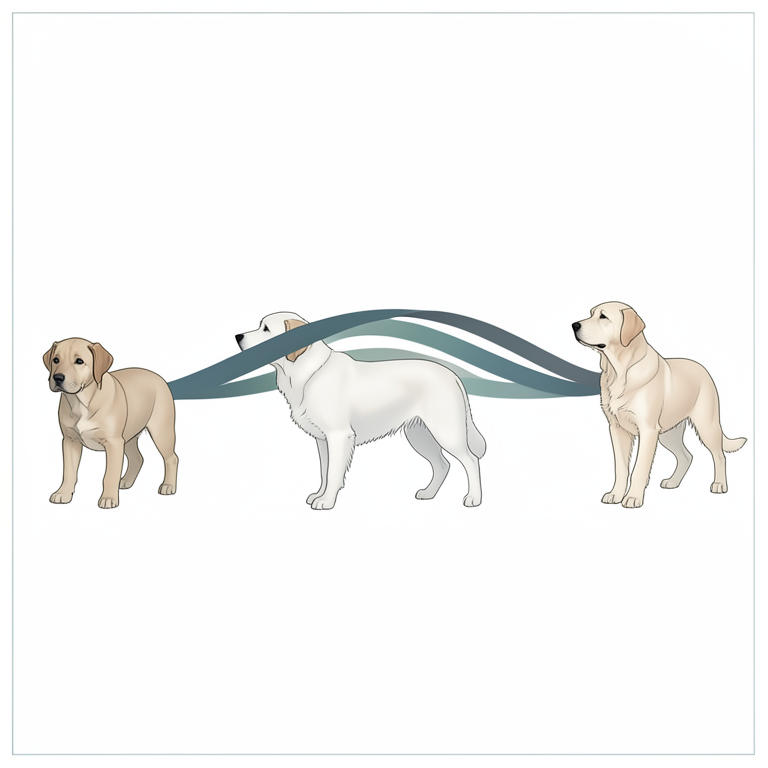
Age-Disease Trajectories
AI-generated conceptual illustration (domestic dogs of various ages). It explains the idea and does not show study data.
View source evidence ↗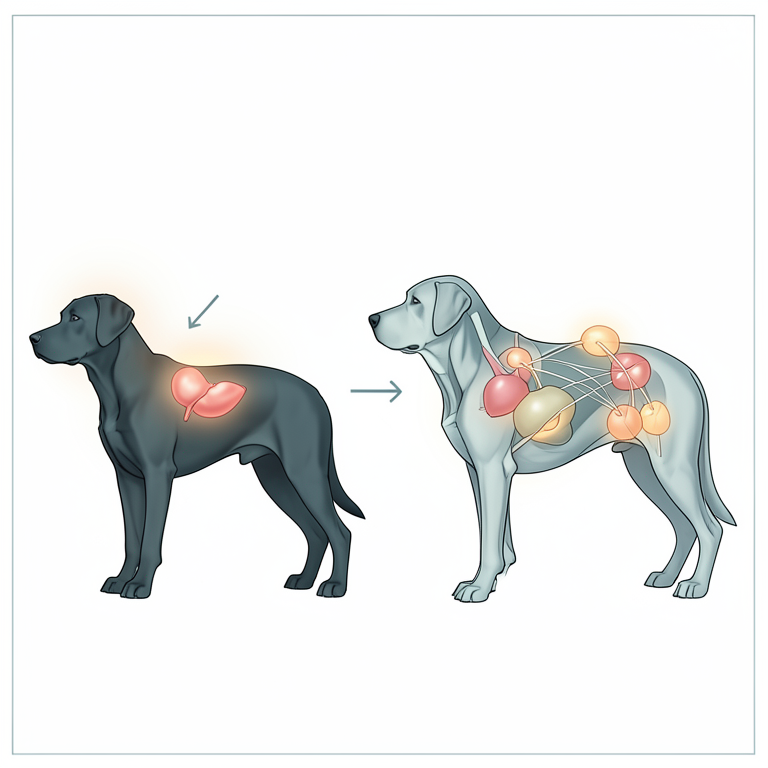
Disease Complexity Shift
AI-generated conceptual illustration (domestic dogs). It explains the idea and does not show study data.
View source evidence ↗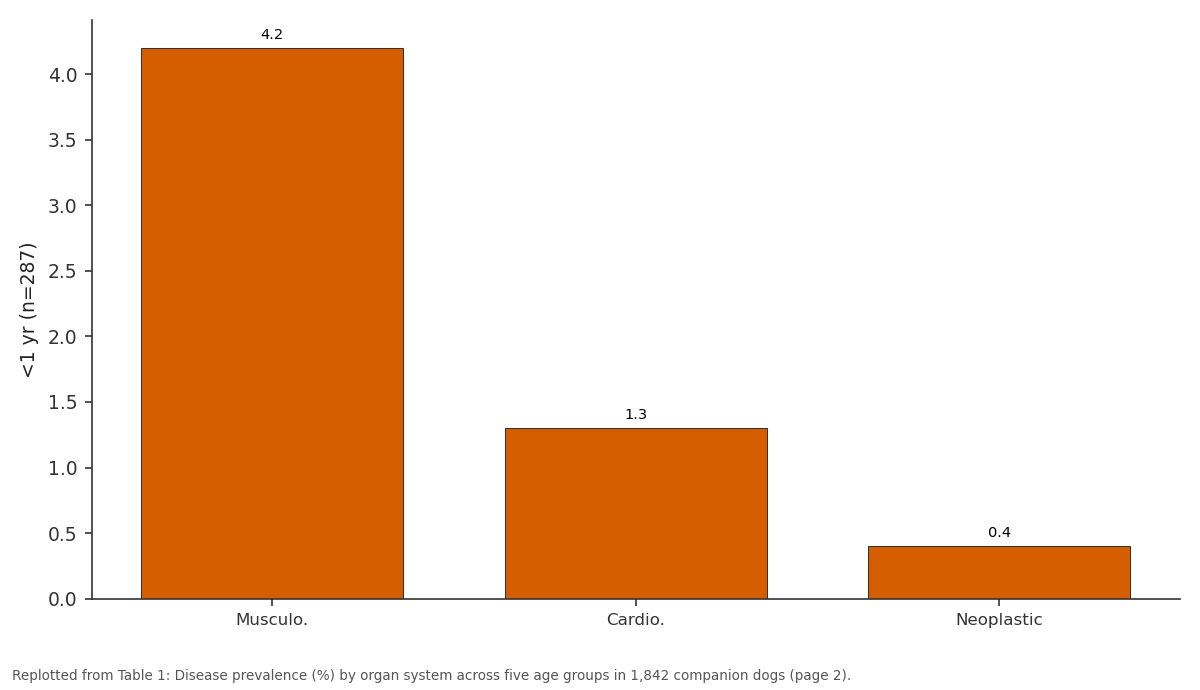
<1 yr (n=287): Musculo. vs Cardio. vs Neoplastic
Replotted from Table 1 (page 2) of the original paper. Every bar is the paper's own table value.
View source evidence ↗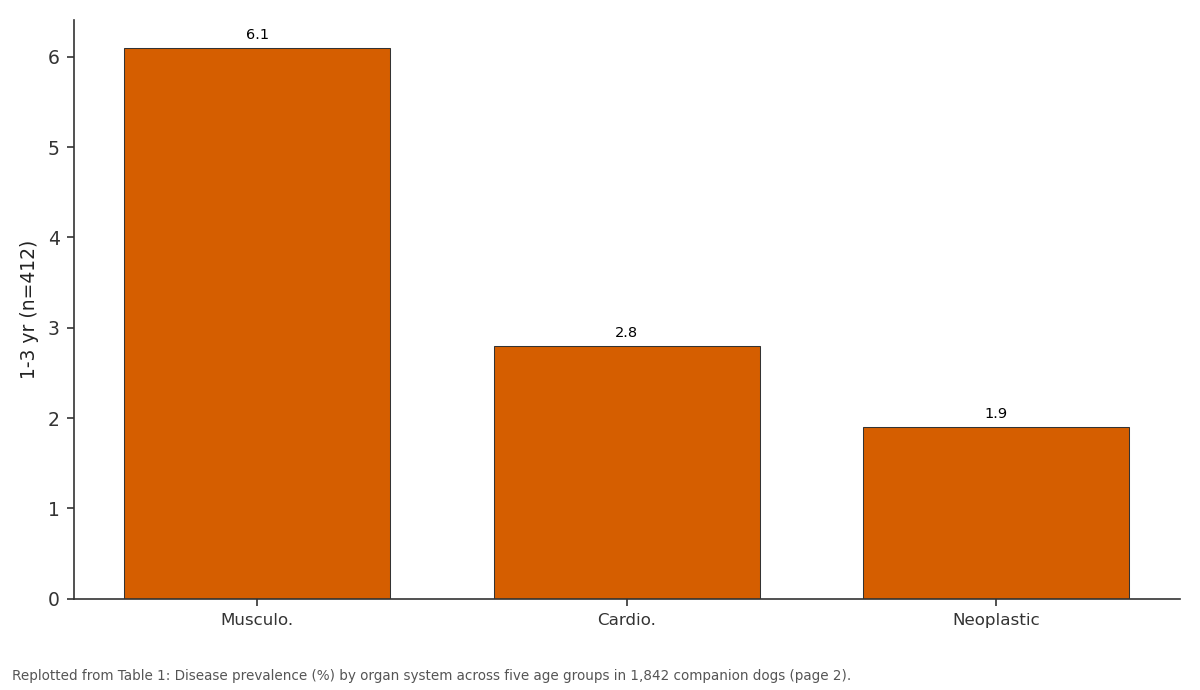
1-3 yr (n=412): Musculo. vs Cardio. vs Neoplastic
Replotted from Table 1 (page 2) of the original paper. Every bar is the paper's own table value.
View source evidence ↗Figures & tables
From the original paper Table 1
 Table 2
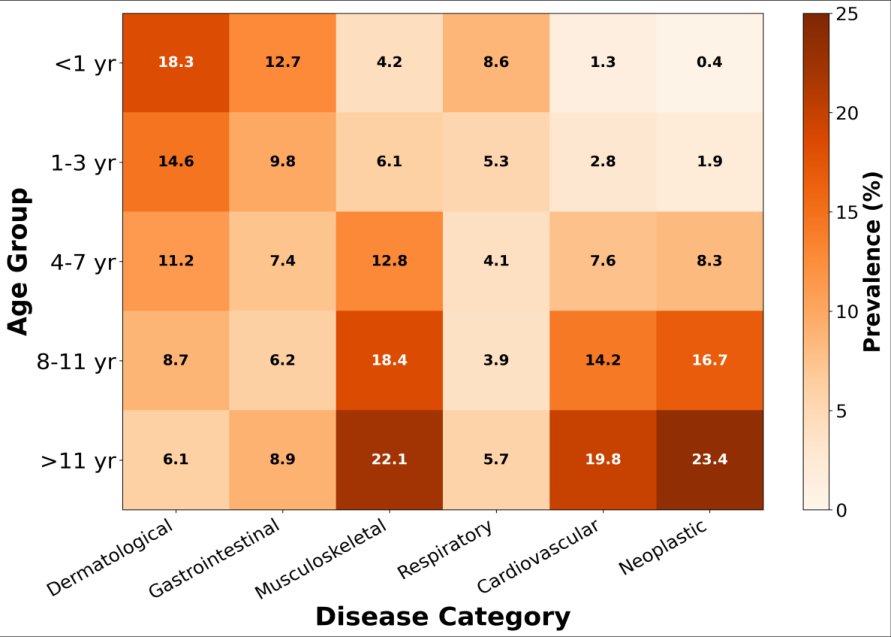 Figure 1
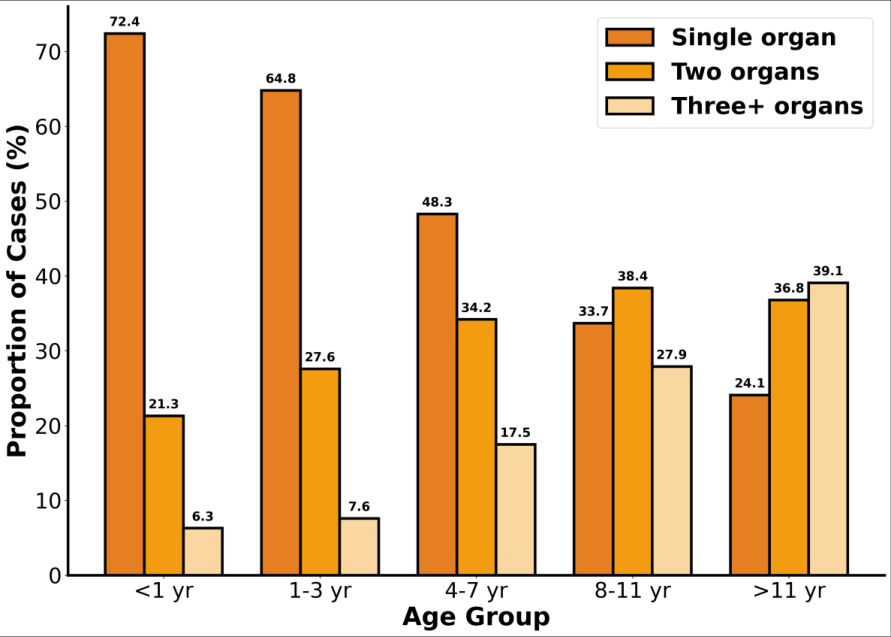 Figure 2
Introduction
The challenge of managing age-related disease in companion dogs grows more pressing as improved nutrition, vaccination, and veterinary care push canine lifespans upward [1] . In South Korea, where pet ownership has expanded rapidly over the past decade, tertiary veterinary hospitals now see a patient mix that skews older than previous generations, creating demand for data-driven approaches to geriatric canine medicine [2] . Yet systematic analysis of how disease burden distributes across age strata in Korean companion dog populations hasn't been attempted. International reports have documented age-dependent increases in neoplasia, cardiovascular disease, and musculoskeletal disorders, but these findings come largely from European and North American cohorts with different breed compositions and environmental exposures [3] . Korean pet demographics dominated by small breeds such as Maltese, Shih Tzu, and Poodle may produce distinct age-disease relationships. Understanding which organ systems carry the heaviest burden at each life stage enables both targeted diagnostic screening and resource allocation in referral settings [4] . This research mapped disease prevalence by organ system across five age categories in companion dogs presenting to two tertiary hospitals in Busan and quantified the extent of multi-organ disease involvement [5] .
Material and Methods
Material and Methods
Material
Medical records of 1,842 companion dogs admitted to two veterinary teaching hospitals affiliated with Busan Institute of Veterinary Sciences were reviewed retrospectively for the Period January 1 to December 31, 2024. All dogs with a confirmed primary diagnosis based on clinical examination, laboratory testing, and imaging were included. Dogs presented exclusively for routine vaccination or elective surgery without concurrent disease were excluded.
Methods
Each case was assigned a primary organ system category (dermatological, gastrointestinal, musculoskeletal, respiratory, cardiovascular, or neoplastic) and assessed for secondary and tertiary organ involvement where applicable. Age was recorded from hospital registration records and verified against microchip databases. Dogs were stratified into five groups: <1 year (n = 287), 1-3 years (n = 412), 4-7 years (n = 498), 8-11 years (n = 386), and >11 years (n = 259). Disease prevalence was calculated as the proportion of cases per age group. Multi-organ involvement was defined as concurrent diagnoses affecting two or more organ systems at the time of presentation. Chi-squared tests for trend and logistic regression modeling were used to assess age-disease associations. Ethics approval was obtained from the Institutional Review Board, Busan Institute of Veterinary Sciences (BIVS-IRB-2024-014, approved January 8, 2024) [6] .
Results
The overall disease distribution showed a clear agedependent shift in organ system involvement. Dermatological conditions were most common in younger dogs, while neoplastic, cardiovascular, and musculoskeletal diseases increased progressively with age. Respiratory disease remained relatively stable across age groups (3.9-8.6%).
Comprehensive interpretation
The transition from single-organ disease dominance in puppies (72.4%) to multi-organ involvement in geriatric dogs (39.1% with three or more systems) reflects the cumulative effect of aging on organ system resilience. Neoplastic disease showed the steepest age gradient, rising from 0.4% in dogs under 1 year to 23.4% in those over 11. Cardiovascular involvement followed a similar trajectory, consistent with the high prevalence of myxomatous mitral valve disease reported in aging small-breed dogs.
Discussion
The age-disease patterns documented here align closely with findings from the UK's VetCompass database, where neoplastic and cardiovascular conditions similarly increase after age 8 [7] . The predominance of dermatological disease in younger dogs 18.3% in puppies mirrors reports from European companion animal practices and likely reflects a combination of allergic skin disease, ectoparasite infestations, and juvenile pyoderma [8] . One distinctive feature of the Korean population was the comparatively early onset of musculoskeletal disease (12.8% at ages 4-7), which may relate to the high prevalence of patellar luxation in small Korean breeds such as Maltese and Pomeranian [9] . The multi-organ involvement data carry direct implications for how tertiary hospitals structure their diagnostic workups. When nearly 40% of dogs over age 11 present with three or more organ systems affected simultaneously, comprehensive geriatric panels covering cardiac, orthopedic, and oncological screening become more defensible from a costeffectiveness standpoint [10] . The sharp rise in cardiovascular disease above age 8 (14.2-19.8%) backs up recommendations for routine echocardiographic screening in aging small breeds, a practice that remains inconsistently adopted across East Asian veterinary hospitals [11] .
Limitations
This research relied on retrospective medical records, which may underrepresent diseases diagnosed and treated in primary care settings without tertiary referral. The classification into six organ system categories simplified complex diagnoses that spanned multiple systems. Breedspecific analysis was not performed due to the heterogeneous population. Seasonal variation in disease presentation was not assessed.
Clinical Implications
These findings support age-stratified diagnostic screening in companion dog practice. Dogs over 8 years presenting to tertiary hospitals should receive comprehensive multi-organ evaluation including cardiac biomarkers, orthopedic assessment, and tumor screening. Primary care veterinarians should consider earlier referral for middle-aged dogs (4-7 years) showing musculoskeletal complaints, given the relatively high prevalence in this age group within the Korean small-breed population.
Conclusion
The main contribution of this research is a quantitative map of age-disease relationships in a large East Asian companion dog cohort. Dermatological disease dominated young age groups, while neoplastic, cardiovascular, and musculoskeletal conditions escalated sharply after age 7. Multi-organ disease involvement reached 39.1% in dogs over 11 years, underscoring the complexity of geriatric canine medicine. These patterns hold significance for both referral hospital resource planning and the design of proactive wellness protocols. Whether breed-specific screening algorithms could further optimize early detection in Korean companion dog populations remains an open question deserving targeted investigation.
Acknowledgement
Acknowledgements Institutional supportThe authors acknowledge both participating teaching hospitals affiliated with Busan Institute of Veterinary Sciences for access to medical records databases.
Figures and tables from the paper
| Age Group | Dermat. | GI | Musculo. | Cardio. | Neoplastic |
|---|---|---|---|---|---|
| <1 yr (n=287) | 18.3 | 12.7 | 4.2 | 1.3 | 0.4 |
| 1-3 yr (n=412) | 14.6 | 9.8 | 6.1 | 2.8 | 1.9 |
| 4-7 yr (n=498) | 11.2 | 7.4 | 12.8 | 7.6 | 8.3 |
| 8-11 yr (n=386) | 8.7 | 6.2 | 18.4 | 14.2 | 16.7 |
| >11 yr (n=259) | 6.1 | 8.9 | 22.1 | 19.8 | 23.4 |
Table text extracted from the original PDF; superscript letters are shown inline. The original table image is below.
View original table image
| Age Group | Single Organ (%) | Two Organs (%) | Three+ Organs (%) |
|---|---|---|---|
| <1 yr | 72.4 | 21.3 | 6.3 |
| 1-3 yr | 64.8 | 27.6 | 7.6 |
| 4-7 yr | 48.3 | 34.2 | 17.5 |
| 8-11 yr | 33.7 | 38.4 | 27.9 |
| >11 yr | 24.1 | 36.8 | 39.1 |
Table text extracted from the original PDF; superscript letters are shown inline. The original table image is below.
View original table image
References
12 in the original paper- Creevy KE, Grady J, Little SE, Moore GE, Strickler BG, Thompson S. Dog Aging Project: a longitudinal research approach to aging in dogs. GeroScience. 2024;46(2):1213-1228.
- Kim H, Kang B, Park C, Yoon J. Trends in companion animal veterinary care utilization in South Korea, 20152023. Korean J Vet Res. 2024;64(3):187-196.
- O'Neill DG, Church DB, McGreevy PD, Thomson PC, Brodbelt DC. Longevity and mortality of dogs owned in England. Vet J. 2024;303:106043.
- Noh D, Choi H, Park H, Lee K. Prevalence of patellar luxation in small-breed dogs in South Korea: a retrospective analysis. J Vet Sci. 2025;26(1):e8.
- Solanki K, Desai A, Dalvi M, Jani H. Review on important diseases of dogs: at glance. Int J Vet Sci Anim Husb. 2023;8(2):1-7.
- Urfer SR, Kaeberlein M. Desexing dogs: a review of the current literature. Animals (Basel). 2024;14(3):423.
- Pegram C, Wonham K, Sherwood A, Church DB, Brodbelt DC, O'Neill DG. Disorder rates in the VetCompass population: a decade of data. Sci Rep. 2024;14:8276.
- Hensel P, Santoro D, Favrot C, Hill P, Griffin C. Canine atopic dermatitis: detailed guidelines for diagnosis and allergen identification. BMC Vet Res. 2025;21:38.
- Bound N, Zakai D, Butterworth SJ, Sherlock R. The prevalence of canine patellar luxation in three centres: clinical features and radiographic evidence. J Small Anim Pract. 2024;65(4):287-294.
- Gruen ME, Lascelles BDX, Colleran E, Mich P, Davison D, Mears E. Update on the management of canine osteoarthritis: Joint AAHA/AAFP guidelines. J Am Anim Hosp Assoc. 2024;60(3):113-128.
- Keene BW, Atkins CE, Bonagura JD, Fox PR, Häggström J, Fuentes VL. ACVIM consensus guidelines for the diagnosis and treatment of myxomatous mitral valve disease in dogs. J Vet Intern Med. 2024;38(3):1179-1218.
- Bonnett BN, Egenvall A. Age patterns of disease and death in insured Swedish dogs, cats and horses. J Comp Pathol. 2025;204:25-38.