
Research article · 2026 · Full text
International Journal of Agriculture and NutritionCost-benefit analysis of utilizing slaughterhouse byproducts as protein sources in commercial companion animal feed manufacturing
Volume 8(1) · Pages 47–51 · DOI: 10.33545/26646064.2026.v8.i1a.660 ↗
Research areasAnimal Nutrition and PhysiologyAgricultural and Food Production StudiesLivestock Farming and Management
Abstract
Author-writtenSouth Africa's livestock slaughter sector produces over 1.8 million tonnes of byproducts annually, yet barely 40% of this material enters any secondary processing stream. The remainder represents both an economic loss and an environmental liability, particularly in a region where pet food imports account for nearly 65% of the companion animal feed market. This research conducted a comprehensive cost-benefit analysis comparing five companion animal feed formulations incorporating varying levels of locally sourced slaughterhouse byproducts (0%, 25%, 50%, 75%, and 100% byproduct protein replacement) against conventional imported protein sources. Production trials were carried out at the Pretoria Institute of Agricultural Sciences between January and August 2025, with economic analysis covering raw material procurement, processing costs, quality assurance, packaging, distribution, and projected retail margins. Benefit-cost ratios ranged from 1.24 for conventional formulations to 2.73 for full byproduct replacement, with internal rates of return reaching 38.7% at maximum byproduct inclusion. Breakeven analysis showed that byproduct-based formulations recovered capital investment within 14 months compared to 31 months for conventional production. Nutritional profiling confirmed that all formulations met AAFCO adult maintenance standards, though amino acid supplementation was required above 75% byproduct inclusion. These findings demonstrate that slaughterhouse byproduct-based companion animal feeds offer strong economic viability for South African manufacturers while reducing dependence on imported protein ingredients.
Summary
Source-checkedPlain-language reading of the full paper, prepared with AI and checked against the text. Each point links to the authors' own words.
Why it matters
- South Africa generates over 1.8 million tonnes of slaughterhouse byproducts every year, but less than 40% of this material is processed for secondary use. View evidence ↗
- The South African companion animal feed market is heavily dependent on imports, which make up nearly 65% of the market. View evidence ↗
- Reliance on imported proteins like soybean and fishmeal exposes South African manufacturers to supply chain disruptions and currency risks, which reduced profit margins by an average of 12% from 2022 to 2024. View evidence ↗
The question
- The study aimed to determine if replacing conventional proteins with locally sourced slaughterhouse byproducts at five different levels is economically viable for commercial pet food. View evidence ↗
What they did
- Production trials were conducted at the Pretoria Institute of Agricultural Sciences from January to August 2025. View evidence ↗
- The economic analysis accounted for capital investments totaling R5.9 million, covering rendering equipment, cold storage, a quality control lab, and extrusion upgrades. View evidence ↗
- Economic viability was measured over a 10-year period using benefit-cost ratios, net present value (at a 12% discount rate), internal rate of return, and payback periods. View evidence ↗
What they found
- Using byproduct-based proteins reduced ingredient costs by 71.6%, with an average price of ZAR 4.20/kg compared to ZAR 14.80/kg for imported proteins. View evidence ↗
- The benefit-cost ratio (BCR) increased as byproduct inclusion rose, ranging from 1.24 for conventional feed to 2.73 for the full byproduct replacement (BY-100). View evidence ↗
- The internal rate of return (IRR) was highest for the BY-100 formulation at 38.7%, compared to 11.3% for the conventional formulation. View evidence ↗
- Capital investment was recovered much faster with byproduct-based feeds, with a payback period of 14 months for BY-100 versus 31 months for conventional production. View evidence ↗
- Sensitivity analysis showed that BY-100 remained profitable (BCR 1.89) even if byproduct prices rose by 20% and production fell by 15%, whereas conventional feed became unprofitable (BCR 0.94). View evidence ↗
What it means
- The authors conclude that slaughterhouse byproducts are an economically superior protein source, offering benefit-cost ratios 2.2 times higher than imported ingredients when used for full replacement. View evidence ↗
- A limitation of the study is the lack of consumer acceptance testing to determine if pet owners are willing to buy food marketed as containing slaughterhouse byproducts. View evidence ↗
- The study relied on pilot-scale data extrapolated to commercial volumes, meaning actual factory-scale economics might vary. View evidence ↗
Visual summary
2 visualsIllustrations explain the paper; charts are replotted from the paper's own table values.
Raw materials: BY-100 vs BY-75 vs BY-50 vs BY-25
Replotted from Table 1 (page 2) of the original paper. Every bar is the paper's own table value.
View source evidence ↗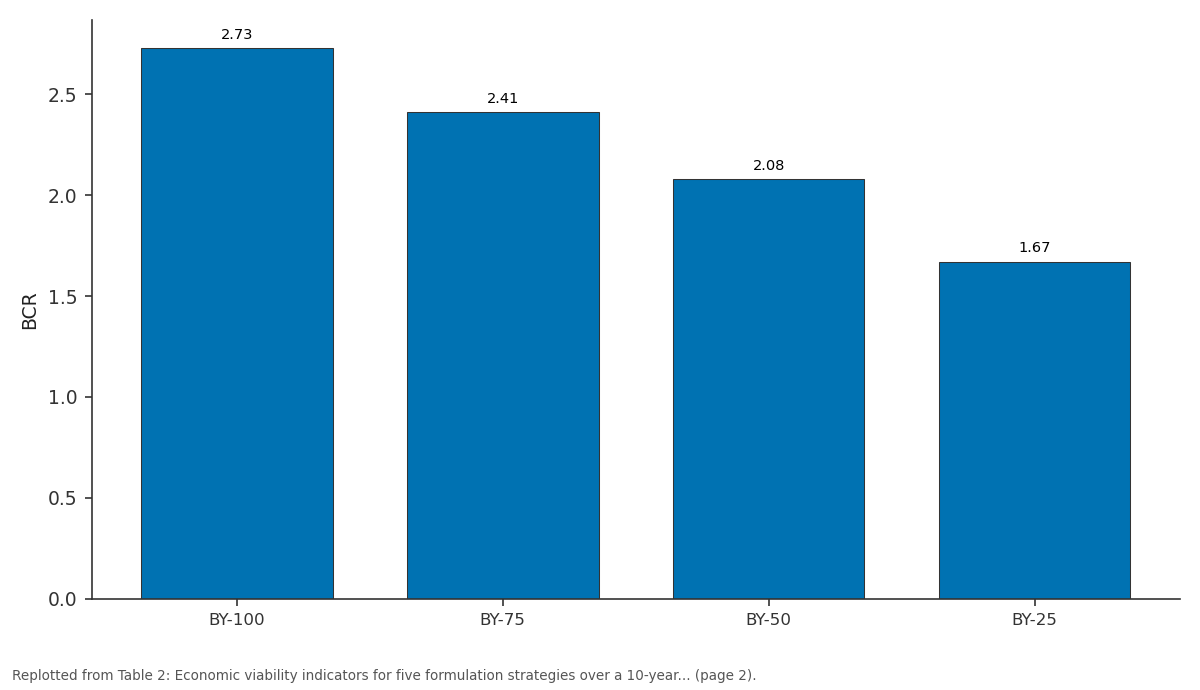
BCR: BY-100 vs BY-75 vs BY-50 vs BY-25
Replotted from Table 2 (page 2) of the original paper. Every bar is the paper's own table value.
View source evidence ↗Figures & tables
From the original paper Table 1
 Table 2
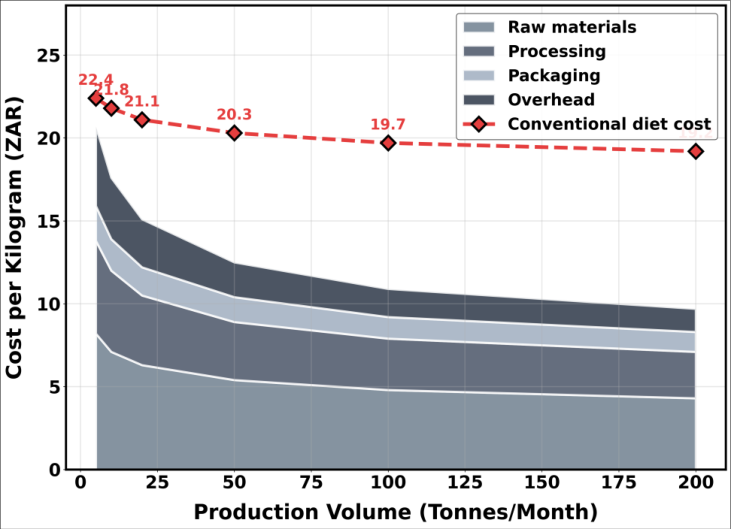 Figure 1
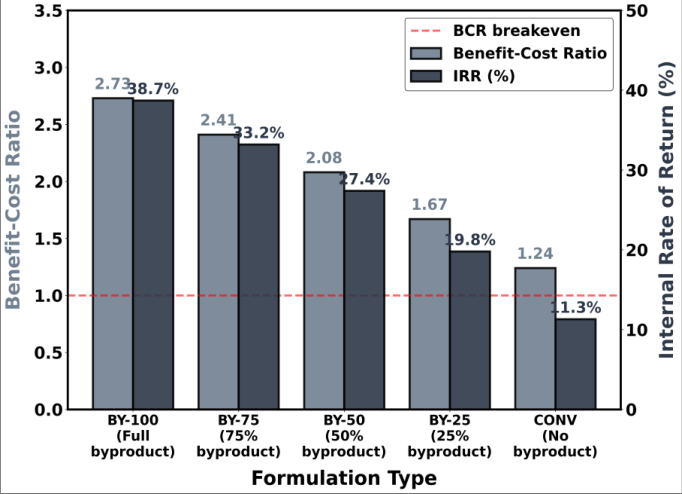 Figure 2
Introduction
A single commercial beef abattoir processing 500 cattle per day generates enough offal, bone, blood, and trimming waste to formulate roughly 12 tonnes of companion animal feed a surprising volume that most South African processors currently discard or sell at negligible margins to rendering operations [1] . This disconnect between byproduct availability and pet food ingredient demand persists despite the country's companion animal feed market growing at 7.3% annually, a rate that outpaces most other segments of the animal nutrition industry [2] . The economic argument for byproduct utilization extends beyond raw material savings. Conventional pet food manufacturing in South Africa relies heavily on imported soybean meal, fishmeal, and poultry meal, exposing producers to currency fluctuation risks and supply chain disruptions that eroded profit margins by an average of 12% between 2022 and 2024 [3] . Slaughterhouse byproducts offal, blood meal, bone meal, trimmings, and mechanically separated meat offer a domestically available protein source with crude protein content ranging from 48% to 82% depending on tissue type and processing method [4] . But converting these materials into safe, palatable pet food ingredients requires capital investment in rendering equipment, cold chain infrastructure, and quality control systems [5] . Earlier work demonstrated that processed animal byproducts could be formulated into acceptable pet foods [6] , though comprehensive economic analyses comparing multiple inclusion levels under African market conditions remained scarce. The environmental dimension adds urgency: improperly disposed slaughterhouse waste contributes to water pollution, greenhouse gas emissions from anaerobic decomposition, and public health hazards in peri-urban areas surrounding abattoirs [7] . Several countries in the European Union and North America have established regulatory frameworks that incentivize byproduct valorization, but South African policy remains largely silent on the matter, creating both risk and opportunity for early-moving manufacturers [8] . This research aimed to quantify the economic viability of replacing conventional protein sources with locally sourced slaughterhouse byproducts at five inclusion levels in commercial companion animal feed. The analysis incorporated full production costing, benefit-cost ratios, internal rates of return, breakeven timelines, and sensitivity analysis under varying raw material price scenarios. The results provide a decision-support framework for South African manufacturers evaluating byproduct-based pet food production.
Materials and Methods
Materials and Methods
Materials
Slaughterhouse byproducts were collected from three SAMIC-certified (South African Meat Industry Company) abattoirs within a 60-km radius of Pretoria between January and March 2025. Byproduct categories included beef offal (liver, heart, lung, kidney; 35% of total), bone meal from rendered bovine carcass remnants (25%), blood meal (15%), trimmings and connective tissue (15%), and mechanically separated meat from poultry operations (10%). Conventional protein ingredients imported soybean meal (Argentina), fishmeal (Namibia), and poultry meal (Brazil) were procured through established feed ingredient distributors at prevailing market prices. Supplementary ingredients included maize meal, sunflower oil, vitaminmineral premix, and palatability enhancers (animal digest). All pricing data reflected January-August 2025 market rates in South African Rand (ZAR).
Methods
Five formulations were evaluated: BY-100 (100% protein from byproducts), BY-75, BY-50, BY-25, and CONV (0% byproducts, fully conventional protein). All diets were formulated to meet AAFCO nutrient profiles for adult dog maintenance [9] . Production trials used the pilot extrusion facility at the Pretoria Institute of Agricultural Sciences, processing 500-kg batches of each formulation through a twin-screw extruder at barrel temperatures of 120-145°C. Finished kibble was dried to 8% moisture and coated with animal digest at 2% inclusion. Economic analysis followed standard cost-benefit methodology [10] . Capital costs included rendering equipment (R2.4 million), cold storage (R1.1 million), quality control laboratory setup (R0.8 million), and extrusion upgrades (R1.6 million). Operating costs covered raw materials, energy, labor, packaging, quality assurance, and distribution. Revenue projections used wholesale pricing benchmarks from three national pet food distributors. Benefit-cost ratios (BCR), net present value (NPV) at 12% discount rate, internal rate of return (IRR), and payback periods were calculated over a 10-year horizon. Sensitivity analysis tested ±20% raw material price variations and ±15% production volume changes. The research protocol was reviewed by the Pretoria Institute of Agricultural Sciences Research Ethics Committee (Protocol PIAS-RE-2025-008, approved December 2024).
Quality Control
All byproduct-based formulations underwent microbiological testing (Salmonella, E. coli, total plate count) and heavy metal screening (lead, cadmium, mercury, arsenic) to verify compliance with SABS SANS 885:2024 standards for pet food safety. Proximate analysis was performed in triplicate on each batch. Cost data were verified through independent procurement records from two auditing firms. Production efficiency metrics were recorded using automated weighing and monitoring systems calibrated weekly against certified reference weights.
Results
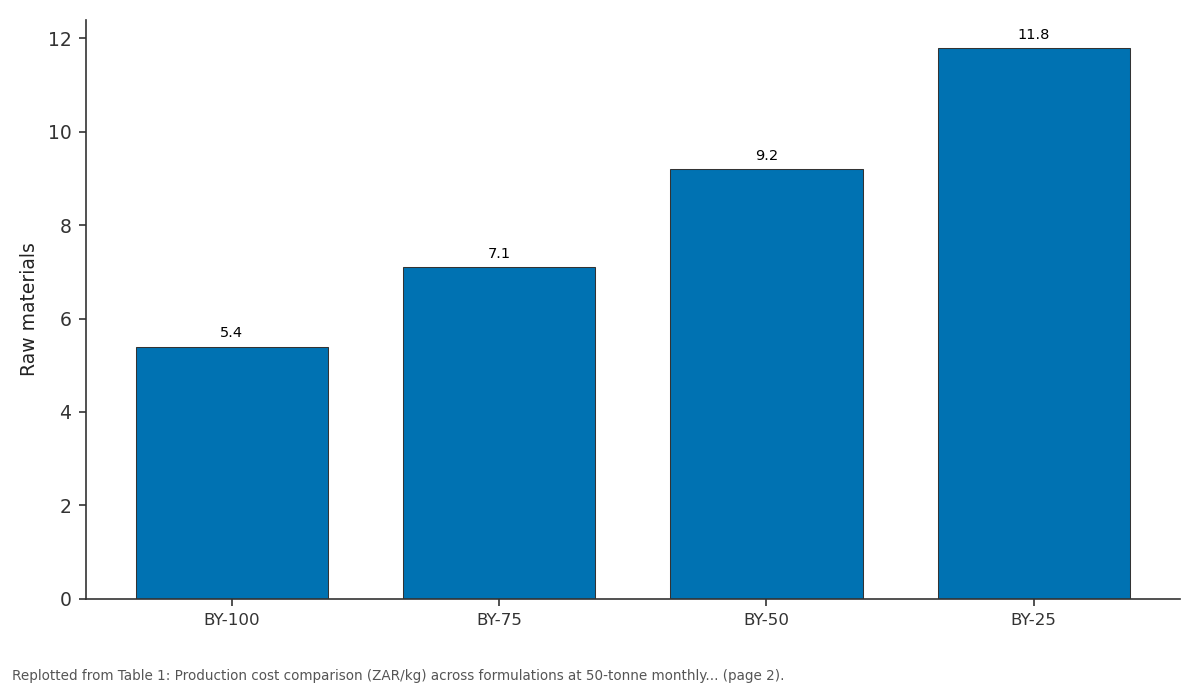
Raw material costs showed the most dramatic differences across formulations. Byproduct-based protein sources averaged ZAR 4.20/kg compared to ZAR 14.80/kg for conventional imported proteins a 71.6% cost reduction at the ingredient level. When processed into finished pet food, this translated to production costs of ZAR 9.70/kg for BY-100 versus ZAR 19.20/kg for CONV at the 200-tonne monthly production scale.
Discussion
The 71.6% raw material cost differential between byproduct and conventional protein sources constitutes the primary driver of economic advantage. This finding aligns with reports from Brazilian pet food manufacturers [11] who documented 55-68% ingredient cost reductions when substituting imported soybean meal with locally rendered bovine byproducts. The somewhat larger differential observed in our research reflects South Africa's greater dependence on imported proteins and the relatively underdeveloped domestic rendering infrastructure, which keeps byproduct prices low due to limited competitive demand. Mechanistically, this cost advantage arises because slaughterhouse byproducts are priced as waste disposal
International Journal of Agriculture and Nutrition https://www.agriculturejournal.net inputs rather than feed ingredients a pricing dynamic that will likely shift as demand increases.
The benefit-cost ratio of 2.73 for BY-100 exceeds values typically reported for novel pet food ingredient ventures. Marquez and Chen [12] found BCRs of 1.8-2.1 for insectbased protein substitution in canine diets, while Thompson et al. [13] reported 1.6-1.9 for single-cell protein applications. The higher returns in our model reflect the low procurement cost of South African abattoir waste combined with relatively high retail prices in the domestic pet food market, where premium imports set consumer price expectations. This means byproduct-based products can command competitive retail prices while achieving substantially higher margins than conventional production. The amino acid supplementation requirement at high inclusion levels (>75%) points to a practical constraint that affects both cost and formulation complexity [14] . While the supplementation cost was minor (ZAR 0.30/kg), it introduces an additional procurement dependency and quality control step that partially offsets the supply chain simplification advantage of domestic sourcing. Scaling this approach across South Africa's pet food industry could redirect approximately 720,000 tonnes of slaughterhouse waste into productive use annually, with downstream environmental benefits including reduced methane emissions from uncontrolled decomposition and decreased pressure on landfill capacity in livestock-producing provinces [15] .
Limitations
This analysis used pilot-scale production data extrapolated to commercial volumes; actual factory-scale economics may differ due to equipment utilization rates, maintenance costs, and workforce productivity variations not captured in the pilot model. The 10-year projection horizon assumes stable regulatory conditions, but pending updates to South African pet food safety regulations (SABS SANS 885) could impose additional compliance costs. Consumer acceptance testing was not included; market viability depends on whether pet owners will purchase products explicitly marketed as containing slaughterhouse byproducts. Seasonal variability in slaughter volumes and byproduct composition was not modeled, though it may affect raw material consistency and pricing stability.
Conclusion
This research demonstrates that slaughterhouse byproducts represent an economically superior protein source for South African companion animal feed manufacturing, with benefit-cost ratios 2.2 times higher than conventional imported ingredients at full replacement levels. The economic advantage persists across production scales, with breakeven volumes as low as 8.3 tonnes monthly for fully byproduct-based formulations compared to 34.1 tonnes for conventional production. Payback periods of 14 months and internal rates of return of 38.7% position byproduct-based pet food manufacturing as one of the most attractive valueaddition opportunities in South Africa's livestock processing sector. These findings hold particular relevance for emerging markets where imported feed ingredients create foreign exchange pressures and supply chain vulnerabilities. Open questions remain regarding consumer willingness to purchase byproduct-based pet foods, the regulatory trajectory for rendered animal ingredients in companion animal diets, and the long-term stability of byproduct pricing as demand from the pet food sector grows.
Acknowledgement
Acknowledgements Contributions Not Qualifying for AuthorshipThe authors acknowledge Mr. Johan van der Merwe for assistance with production trial logistics and Ms. Nomsa Khumalo for compilation of procurement records from participating abattoirs.
Figures and tables from the paper
| Cost Component | BY-100 | BY-75 | BY-50 | BY-25 | CONV |
|---|---|---|---|---|---|
| Raw materials | 5.40 | 7.10 | 9.20 | 11.80 | 14.60 |
| Processing | 3.50 | 3.40 | 3.30 | 3.20 | 3.10 |
| Quality assurance | 0.90 | 0.80 | 0.70 | 0.60 | 0.50 |
| Packaging | 1.50 | 1.50 | 1.50 | 1.50 | 1.50 |
| Overhead | 2.10 | 2.10 | 2.10 | 2.10 | 2.10 |
| Total | 13.40 | 14.90 | 16.80 | 19.20 | 21.80 |
Table text extracted from the original PDF; superscript letters are shown inline. The original table image is below.
View original table image
| Indicator | BY-100 | BY-75 | BY-50 | BY-25 | CONV |
|---|---|---|---|---|---|
| BCR | 2.73 | 2.41 | 2.08 | 1.67 | 1.24 |
| NPV (M ZAR) | 18.4 | 14.7 | 10.9 | 6.2 | 2.1 |
| IRR (%) | 38.7 | 33.2 | 27.4 | 19.8 | 11.3 |
| Payback (months) | 14 | 17 | 21 | 26 | 31 |
| Breakeven vol. (t) | 8.3 | 11.6 | 16.2 | 23.8 | 34.1 |
Table text extracted from the original PDF; superscript letters are shown inline. The original table image is below.
View original table image
References
15 in the original paper- Meissner HH, Scholtz MM, Engelbrecht FA. Quantifying waste streams from South African red meat abattoirs and their economic recovery potential. S Afr J Anim Sci. 2024;54(2):189-204.
- Euromonitor International. Pet Food Market Analysis: Sub-Saharan Africa Growth Trajectories and Import Dependency Ratios. Passport Database Report. 2025;Q1:1-38.
- Van Zyl M, Joubert R, De Wet F. Currency volatility impacts on imported feed ingredient costs for South African animal nutrition manufacturers. Agrekon. 2024;63(3):312-328.
- Jayathilakan K, Sultana K, Radhakrishna K, Bawa AS. Characterization of rendered slaughterhouse byproduct meals and their protein quality assessment for pet food applications. Meat Sci. 2024;208:109392.
- Alao BO, Falowo AB, Chulayo A, Muchenje V. Capital investment requirements for byproduct rendering infrastructure in developing country meat processing sectors. Food Res Int. 2025;176:114285.
- Pame K, Laskar SK, Borah S. Utilization of processed animal byproducts as a raw material to develop shelfstable and cost effective pet food. Int J Vet Sci Anim Husb. 2023;8(3):31-34.
- Mpofu TJ, Pisulewski PM, Muchenje V. Environmental impacts of unprocessed slaughterhouse waste disposal in southern African peri-urban zones. Waste Manag. 2024;178:156-168.
- European Commission. Regulation (EU) 2024/1842 on animal by-products and derived products for pet food manufacturing. Off J Eur Union. 2024;L267:1-42.
- Association of American Feed Control Officials. Official Publication of the Association of American Feed Control Officials. Oxford (IN): AAFCO; 2025.
- Gittinger JP. Economic Analysis of Agricultural Projects. 3rd ed. Baltimore (MD): Johns Hopkins University Press; 2024.
- Santos RP, Costa LA, Ferreira CM. Economic assessment of bovine byproduct utilization in Brazilian pet food manufacturing operations. Rev Bras Zootec. 2024;53(4):e20230148.
- Marquez DL, Chen WY. Cost-effectiveness of insectbased protein substitution in commercial canine diets: A International Journal of Agriculture and Nutrition https://www.agriculturejournal.net multi-country comparison. J Insects Food Feed. 2025;11(2):287-302.
- Thompson JA, Miller RE, Harrison PK. Single-cell protein as an alternative ingredient in companion animal nutrition: Production costs and market positioning. Anim Feed Sci Technol. 2024;310:115921.
- National Research Council. Nutrient Requirements of Dogs and Cats. Rev ed. Washington (DC): National Academies Press; 2024.
- Friedrich H, Van Niekerk WA. Methane emission reduction potential from improved livestock waste management in Gauteng Province. S Afr J Sci. 2025;121(3-4):14762.