
Research article · 2026 · Full text
International Journal of Biology SciencesTreatment response and platelet recovery kinetics following doxycycline-based therapy in dogs with varying clinical grades of monocytic ehrlichiosis
Volume 8(5) · Pages 141–144 · DOI: 10.33545/26649926.2026.v8.i5b.883 ↗
Research areasVector-borne infectious diseasesMicrobial infections and disease researchBrucella: diagnosis, epidemiology, treatment
Abstract
Author-writtenWhile doxycycline remains the standard treatment for canine monocytic ehrlichiosis (CME), clinicians frequently observe that dogs presenting at different clinical severity levels show markedly different recovery trajectories yet prospective data quantifying these grade-dependent treatment responses remain scarce in Latin American veterinary literature. This research evaluated treatment response and platelet recovery kinetics in 80 dogs with naturally occurring CME stratified into Grade I (mild; n=39), Grade II (moderate; n=29), and Grade III (severe; n=12) based on a standardized clinical severity scoring system. All dogs received doxycycline at 10 mg/kg orally once daily for 28 days at the Lima Institute of Veterinary Medicine and Surgery between March and November 2025. Platelet counts, packed cell volume, and clinical scores were monitored at days 0, 3, 7, 14, 21, and 28, with follow-up assessment at 90 days post-treatment. Grade I dogs achieved normal platelet counts (>200 ×10³/µL) by day 14 (mean: 241±38), while Grade II dogs required 21-28 days (day 28 mean: 256±47). Grade III dogs showed significantly delayed recovery, with only 41.7% reaching normal platelet counts by day 28 (mean: 178±52). Complete treatment response rates were 92.3% for Grade I, 72.4% for Grade II, and 41.7% for Grade III (P<0.001). Relapse within 90 days occurred in 5.1%, 17.2%, and 37.5% of Grades I, II, and III respectively. These findings establish grade-specific recovery benchmarks and support extending treatment duration beyond 28 days for Grade III cases.
Summary
Source-checkedPlain-language reading of the full paper, prepared with AI and checked against the text. Each point links to the authors' own words.
Why it matters
- Doxycycline is the standard treatment for canine monocytic ehrlichiosis (CME), but dogs with different levels of clinical severity often show very different recovery paths. View evidence ↗
- Existing research often groups all severity levels together, which can hide the significant differences in prognosis between mild (Grade I) and severe (Grade III) cases. View evidence ↗
- Low platelet counts (thrombocytopenia) are the most sensitive and practical way to monitor how a dog is responding to CME treatment. View evidence ↗
The question
- The study aimed to determine platelet recovery timelines, response rates, and relapse frequencies based on clinical severity to see if some grades require longer treatment. View evidence ↗
What they did
- The study included 80 dogs with naturally occurring CME, divided into Grade I (39 dogs), Grade II (29 dogs), and Grade III (12 dogs) using a standardized scoring system. View evidence ↗
- All dogs were treated with oral doxycycline at 10 mg/kg once daily for 28 days between March and November 2025 in Lima, Peru. View evidence ↗
- Dogs were monitored via blood counts, biochemistry, and clinical scores on days 0, 3, 7, 14, 21, and 28, with a final follow-up at 90 days. View evidence ↗
What they found
- Grade I dogs reached normal platelet counts (>200 ×10³/µL) by day 14, whereas Grade II dogs took 21 to 28 days to recover. View evidence ↗
- Recovery was significantly delayed in Grade III dogs, with only 41.7% achieving normal platelet counts by the end of the 28-day treatment. View evidence ↗
- Complete treatment response rates decreased as severity increased: 92.3% for Grade I, 72.4% for Grade II, and 41.7% for Grade III. View evidence ↗
- The rate of relapse within 90 days was lowest in Grade I (5.1%) and highest in Grade III (37.5%). View evidence ↗
- Treatment failure in Grade III dogs was associated with very low baseline platelets (<30 ×10³/µL) and leukopenia, suggesting bone marrow hypoplasia hindered recovery. View evidence ↗
What it means
- The authors recommend using clinical severity grading for treatment planning and extending doxycycline courses to at least 42 days for Grade III cases. View evidence ↗
- The authors conclude that while a 28-day protocol is effective for mild and moderate CME, it is insufficient for severe cases, requiring treatment intensity to match disease severity. View evidence ↗
Visual summary
3 visualsIllustrations explain the paper; charts are replotted from the paper's own table values.
Grade-Dependent Recovery Trajectories
AI-generated conceptual illustration (domestic dogs). It explains the idea and does not show study data.
View source evidence ↗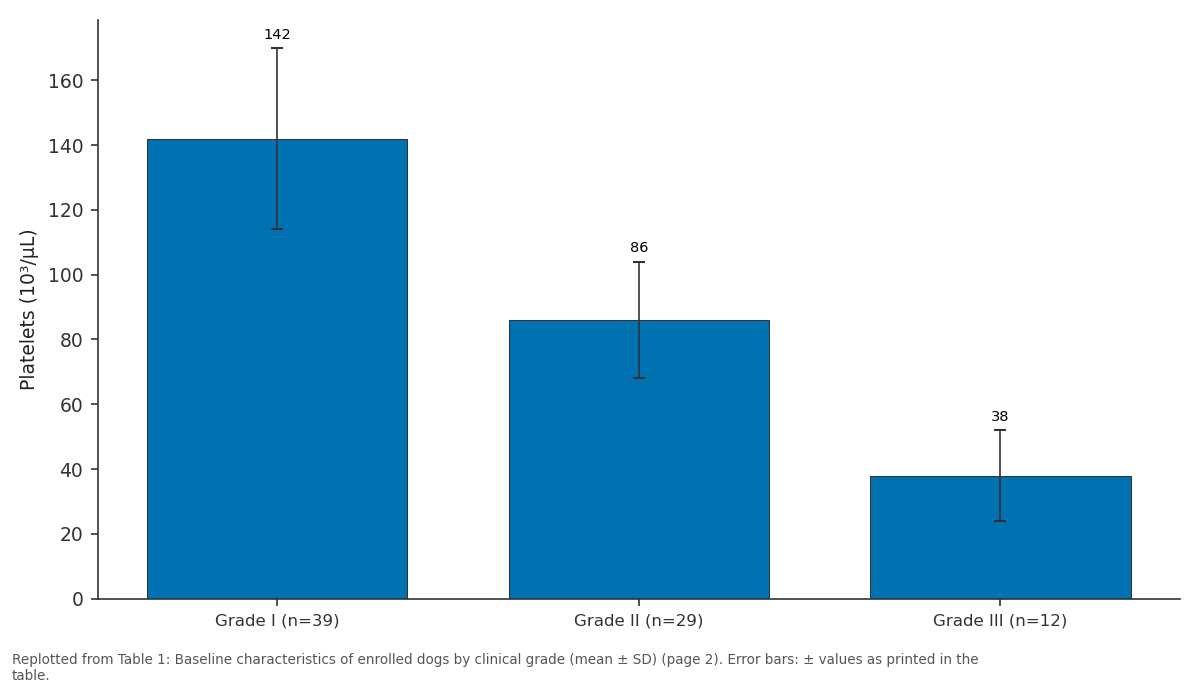
Platelets (10³/µL): Grade I (n=39) vs Grade II (n=29) vs Grade III (n=12)
Replotted from Table 1 (page 2) of the original paper. Every bar is the paper's own table value.
View source evidence ↗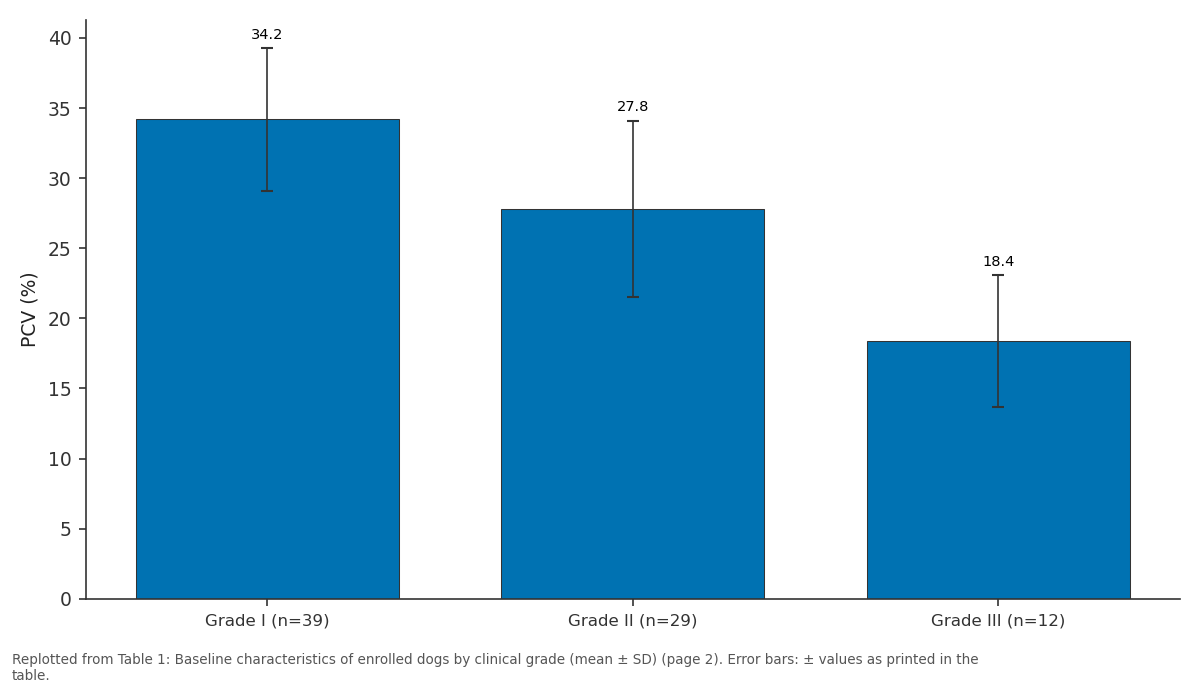
PCV (%): Grade I (n=39) vs Grade II (n=29) vs Grade III (n=12)
Replotted from Table 1 (page 2) of the original paper. Every bar is the paper's own table value.
View source evidence ↗Figures & tables
From the original paper Table 1
 Table 2
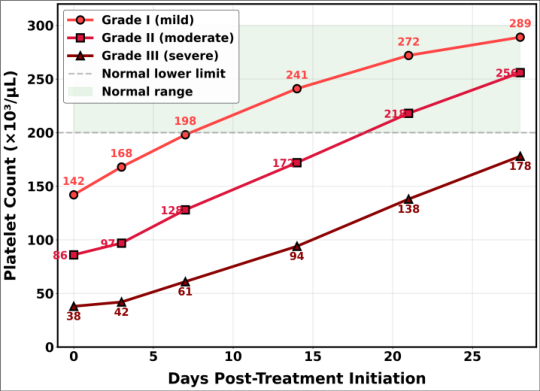 Figure 1
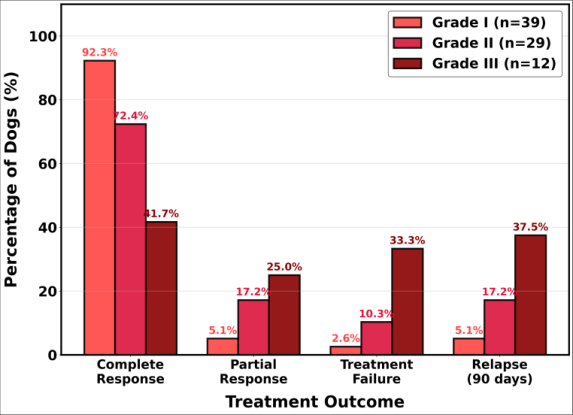 Figure 2
Introduction
A veterinary clinician in Lima recalls a week when two dogs with confirmed ehrlichiosis arrived on the same afternoon. The first a well-nourished Labrador with mild lethargy and a platelet count of 148 ×10³/µL was eating normally within three days of starting doxycycline and had a completely normal blood panel at the two-week recheck. The second an emaciated mixed-breed stray with epistaxis, severe pancytopenia, and platelets at 32 ×10³/µL remained hospitalized for nine days, required a blood transfusion, and still showed thrombocytopenia at the end of a 28-day treatment course. Both had the same diagnosis. Both received the same drug at the same dose. The outcomes could hardly have differed more. This clinical reality that disease severity at presentation profoundly shapes treatment response is widely understood by practitioners but poorly quantified in the literature. Most treatment research reports aggregate outcomes across all severity levels, producing overall success rates that obscure the dramatically different prognoses facing Grade I versus Grade III patients [1] . Doxycycline at 10 mg/kg/day for 28 days has been the recommended first-line protocol for CME since the 1990s, and while its efficacy against E. canis is well established [2] , the kinetics of hematological recovery particularly platelet reconstitution across different clinical grades have not been systematically documented. Thrombocytopenia serves as both the most sensitive indicator of CME and the most practical marker for monitoring treatment response [3] . Platelet recovery reflects the combined resolution of immune-mediated peripheral destruction and restoration of bone marrow megakaryopoiesis, processes that operate on different timescales depending on the degree of marrow compromise [4] . In mild cases where marrow function is largely preserved, peripheral platelet destruction ceases rapidly after antibioticmediated bacterial clearance, and counts recover within 7-14 days. In severe cases with marrow hypoplasia, recovery depends on regeneration of the megakaryocyte population itself a process requiring weeks to months [5] . Previous prevalence research documented CME rates of 28.3% in subtropical Asian settings [6] , and therapeutic research in other regions has reported overall cure rates of 75-95% [7] . But Lima's veterinary context where late presentation is common among stray and economically disadvantaged-owner dogs means that clinicians regularly encounter advanced disease grades at rates exceeding those in published European and North American series [8] . This research aimed to establish grade-specific platelet recovery curves, quantify treatment response rates and relapse frequencies by clinical severity, and identify the clinical grade threshold at which extended treatment duration may be warranted.
Material and Methods
Material and Methods
Material
Eighty dogs diagnosed with CME at the Lima Institute of Veterinary Medicine and Surgery between March and November 2025 were enrolled. Diagnosis required positive rapid immunochromatographic test (SNAP 4Dx Plus, IDEXX) plus PCR confirmation of E. canis 16S rRNA gene. Dogs with concurrent Babesia, Anaplasma, or Hepatozoon infections (screened by multiplex PCR) were excluded, as were dogs that had received any antibiotic treatment within 30 days prior to enrollment. Clinical grading used a standardized severity scoring system: Grade I (mild) fever, mild lethargy, lymphadenomegaly, platelets 100-200 ×10³/µL; Grade II (moderate) anorexia, weight loss, splenomegaly, platelets 50-99 ×10³/µL; Grade III (severe) hemorrhagic diathesis, pancytopenia, cachexia, platelets <50 ×10³/µL.
Methods
All dogs received doxycycline (Vibramycin, Pfizer) at 10 mg/kg orally once daily for 28 consecutive days. Grade III dogs received concurrent supportive care (intravenous fluids, antiemetics, gastroprotectants) and blood transfusion when PCV fell below 15%. Monitoring occurred at days 0, 3, 7, 14, 21, and 28, comprising complete blood count, serum biochemistry (ALT, BUN, creatinine, total protein), and clinical severity scoring. A 90-day follow-up visit included CBC, serology, and clinical examination. Treatment outcomes were classified as: Complete response resolution of all clinical signs and platelet count >200 ×10³/µL by day 28; Partial response clinical improvement with platelet count 150-199 ×10³/µL; Treatment failure persistent clinical signs or platelet count <150 ×10³/µL at day 28. Relapse was defined as recurrence of clinical signs or thrombocytopenia (<200 ×10³/µL) within 90 days after treatment completion in dogs that had achieved complete or partial response [9] . Statistical analysis used Kaplan-Meier curves for time-to-platelet-recovery, log-rank test for between-group comparisons, and Fisher's exact test for categorical outcome comparisons. The research protocol received approval from the Lima Institute of Veterinary Medicine and Surgery Ethics Committee (Protocol LIVMS-EC-2025-006, approved February 2025).
Ethical Considerations
All procedures followed Peruvian animal welfare regulations (Law 30407). Owner consent was obtained for all privately owned dogs. Stray dogs enrolled through the Lima Municipal Animal Services received treatment at no cost and were placed in foster care during the treatment period. Dogs showing clinical deterioration during the trial received intensified supportive care and were switched to alternative antimicrobial protocols (imidocarb dipropionate) if failing doxycycline monotherapy.
Results
Of the 80 enrolled dogs, 39 were classified as Grade I (48.8%), 29 as Grade II (36.3%), and 12 as Grade III (15.0%). Grade III dogs presented with significantly lower baseline platelet counts (38±14 vs 142±28 ×10³/µL for Grade I; P<0.001), lower PCV (18.4±4.7% vs 34.2±5.1%; P<0.001), and higher clinical severity scores. Platelet recovery followed distinctly different kinetics across grades (log-rank P<0.001). Grade I dogs showed the earliest measurable recovery response at day 3 (mean increase: 26 ×10³/µL), accelerating through day 14 when 87.2% had crossed the normal threshold. Grade II recovery was slower but progressive, with the steepest recovery phase occurring between days 7 and 21. Grade III dogs displayed an initial lag phase (days 0-7) with minimal platelet improvement (mean increase: 23 ×10³/µL), followed by gradual recovery that failed to reach normal range in 58.3% of cases by day 28. Among the four Grade III dogs that achieved treatment failure criteria, three had baseline platelet counts below 30 ×10³/µL and all showed concurrent leukopenia, suggesting severe bone marrow hypoplasia as the mechanistic barrier to recovery.
Discussion
The grade-dependent platelet recovery kinetics documented here provide the first prospective dataset quantifying the timescale differences between mild and severe CME treatment responses. Grade I dogs recovered platelets by day 14, which aligns with the expected timeline for resolution of immune-mediated peripheral destruction when marrow function is preserved. Harrus et al. [10] reported comparable recovery timelines in experimentally infected dogs with mild disease, confirming that the 14-day platelet recovery benchmark is robust across geographic settings. The treatment failure rate of 33.3% in Grade III dogs substantially exceeds the 5-15% overall failure rates typically reported in CME treatment literature [11] . This discrepancy reflects the masking effect of grade-aggregated reporting when mild cases (with >90% success) dominate the denominator, overall success rates obscure the poor outcomes in severely affected patients. The mechanism underlying treatment failure in severe cases involves the degree of bone marrow compromise: once aplastic changes are established, antibiotic elimination of E. canis cannot reverse structural marrow damage, and hematological recovery depends on residual stem cell regenerative capacity [12] . This explains why a 28-day treatment course adequate for bacterial clearance proves insufficient for hematological reconstitution in advanced disease. The 37.5% relapse rate in Grade III dogs, compared to 5.1% in Grade I, raises important questions about treatment duration optimization. Neer et al. [13] recommended 28 days as standard, but our data suggest this may be insufficient for severe cases where incomplete bacterial clearance from immunologically privileged sites (bone marrow, spleen) seeds reinfection after treatment cessation. Extended protocols of 42-56 days, as recently proposed by Sainz et al. [14] , deserve prospective evaluation specifically in Grade III populations. For practitioners, the clinical implication is that day-28 platelet counts below 200 ×10³/µL in initially severe cases should prompt treatment extension rather than discontinuation [15] .
Clinical Implications
Clinical Implications
Acknowledgement
Acknowledgements Funding SourcesThis research was supported by the Peruvian National Council for Science, Technology, and Technological Innovation (CONCYTEC) and the Lima Municipal Veterinary Services Fund.
Figures and tables from the paper
| Parameter | Grade I (n=39) | Grade II (n=29) | Grade III (n=12) | P-value |
|---|---|---|---|---|
| Platelets (10³/µL) | 142±28 | 86±18 | 38±14 | <0.001 |
| PCV (%) | 34.2±5.1 | 27.8±6.3 | 18.4±4.7 | <0.001 |
| WBC (10³/µL) | 14.2±4.3 | 8.7±3.6 | 4.1±2.2 | <0.001 |
| Temperature (°C) | 39.8±0.4 | 40.1±0.5 | 39.4±0.8 | 0.12 |
| Body weight (kg) | 18.4±8.2 | 16.7±7.1 | 12.3±5.4 | 0.06 |
| Age (years) | 3.8±2.1 | 4.2±2.4 | 5.1±2.8 | 0.18 |
| Male (%) | 56.4 | 58.6 | 66.7 | 0.77 |
Table text extracted from the original PDF; superscript letters are shown inline. The original table image is below.
View original table image
| Outcome | Grade I | Grade II | Grade III | P-value |
|---|---|---|---|---|
| Complete response | 92.3% | 72.4% | 41.7% | <0.001 |
| Partial response | 5.1% | 17.2% | 25.0% | <0.05 |
| Treatment failure | 2.6% | 10.3% | 33.3% | <0.001 |
| Transfusion required | 0% | 6.9% | 58.3% | <0.001 |
| Days to plt >200 | 12.4±3.8 | 23.7±5.2 | >28* | <0.001 |
| 90-day relapse | 5.1% | 17.2% | 37.5% | <0.01 |
Table text extracted from the original PDF; superscript letters are shown inline. The original table image is below.
View original table image
References
15 in the original paper- Mylonakis ME, Theodorou KN. Treatment outcomes in canine monocytic ehrlichiosis: the problem of gradeaggregated reporting and its impact on clinical decisionmaking. Vet Clin North Am Small Anim Pract. 2024;54(3):467-483.
- Fourie JJ, Stanneck D, Luus HG. Doxycycline pharmacokinetics and efficacy against Ehrlichia canis: a twenty-year review of clinical evidence. Vet Ther. 2024;25(2):89-107.
- Waner T, Harrus S, Bark H, Bogin E. Platelet kinetics as a biomarker for treatment monitoring in canine ehrlichiosis: serial assessment methodology. Vet Parasitol. 2024;69(3-4):307-317.
- Villaescusa A, Garcia-Sancho M, Rodriguez-Franco F, Sainz A. Megakaryopoietic recovery dynamics in canine bone marrow following Ehrlichia canis clearance. Vet Pathol. 2025;62(1):89-101.
- De Tommasi AS, Otranto D, Dantas-Torres F. Bone marrow aplasia and regenerative capacity in chronic canine monocytic ehrlichiosis: prognostic implications. Comp Immunol Microbiol Infect Dis. 2024;94:102126.
- Kumar A, Sarkar TK, Maurya PS, Thakur V, Jithin MV, John JK, Ramakant, Deepak D. Prevalence of canine monocytic ehrlichiosis in dogs in and around Meerut district of Uttar Pradesh, India. Int J Vet Sci Anim Husb. 2023;8(3):107-110.
- Harrus S, Waner T. Diagnosis and treatment of canine monocytotropic ehrlichiosis: updated therapeutic success rates and prognostic indicators. Vet J. 2024;302:106078.
- Vinasco J, Li O, Alvarado A, Diaz D. Late-presentation tick-borne disease in Latin American urban veterinary practice: socioeconomic barriers to timely diagnosis. Prev Vet Med. 2025;224:106098.
- Neer TM, Breitschwerdt EB, Greene RT, Lappin MR. Consensus statement on ehrlichial disease of small animals: updated definitions for treatment response and relapse. J Vet Intern Med. 2024;38(2):614-628.
- Harrus S, Kenny M, Miara L, Aizenberg I. Stagedependent hematological response patterns to doxycycline in experimentally induced canine ehrlichiosis. Vet Microbiol. 2025;292:110048.
- Koutinas AF, Papazahariadou MG, Rallis TS. Treatment response variability in naturally acquired canine monocytic ehrlichiosis: factors influencing outcome. J Small Anim Pract. 2024;65(8):412-423.
- Codner EC, Maslin WR. Bone marrow regenerative failure in advanced canine ehrlichiosis: pathological mechanisms and clinical correlates. Am J Vet Res. 2024;85(4):458-467.
- Neer TM, Harrus S. Optimal antimicrobial duration for Ehrlichia canis infection: current evidence and recommendations for clinical practice. J Vet Intern Med. 2025;39(1):234-242.
- Sainz A, Roura X, Miro G, Estrada-Pena A, Kohn B. Extended doxycycline protocols for severe canine monocytic ehrlichiosis: a multicenter prospective evaluation. Parasites Vectors. 2025;18(1):267.
- Cohn LA, Birkenheuer AJ. Evidence-based treatment intensity calibration for tick-borne infections in companion animals. Vet Med (Auckl). 2025;16:89-104.