
Research article · 2026 · Full text
International Journal of Agriculture and NutritionEvaluation of traditional plant-derived salt sources as alternative mineral supplements to conventional sodium chloride in community diets
Volume 8(6) · Pages 118–123 · DOI: 10.33545/26646064.2026.v8.i6b.659 ↗
Research areasFood and Agricultural SciencesSodium Intake and HealthHeavy Metals in Plants
Abstract
Author-writtenThe increasing prevalence of hypertension and other sodium-related non-communicable diseases has stimulated interest in alternative mineral-rich salt sources. This study evaluated the concentrations of potassium (K), sodium (Na), calcium (Ca), iron (Fe), and zinc (Zn) in plant-derived salts prepared from bean leaves (Phaseolus vulgaris), maize cobs (Zea mays), banana peels (Musa spp.), and Cyperus exaltatus, and compared the effectiveness of dry ashing and wet digestion in mineral recovery. Mineral analysis was performed using flame photometry and atomic absorption spectrophotometry following standard analytical procedures, and data were analyzed by ANOVA at a 95% confidence level. Significant differences (p < 0.001) were observed among plant species and preparation methods for all analyzed minerals. Potassium was the predominant mineral, ranging from 25.00 ± 0.25 to 90.12 ± 0.90 ppm, with the highest concentration recorded in ashed C. exaltatus, while calcium ranged from 8.53 ± 0.09 to 17.93 ± 0.18 ppm, iron from non-detectable levels to 2.51 ± 0.05 ppm, and zinc from 0.105 ± 0.001 to 0.468 ± 0.005 ppm. Dry ashing generally enhanced potassium recovery, whereas wet digestion improved the extraction of calcium and selected trace elements. The favorable potassium-to-sodium ratios observed in most samples suggest potential nutritional advantages over conventional sodium chloride. Overall, bean leaves and C. exaltatus exhibited the most desirable mineral profiles, indicating that traditional plant-derived salts may serve as supplementary mineral sources and potential alternatives to conventional salt in strategies aimed at improving dietary mineral balance and reducing sodium-related health risks.
Summary
Source-checkedPlain-language reading of the full paper, prepared with AI and checked against the text. Each point links to the authors' own words.
Why it matters
- High sodium intake is a significant global health issue linked to chronic conditions like hypertension and cardiovascular disease. View evidence ↗
- Increasing potassium intake can help mitigate the negative effects of too much sodium by improving vascular function and increasing sodium excretion. View evidence ↗
- Indigenous communities in Africa and elsewhere have traditionally used salts derived from plant ashes as alternatives to standard sodium chloride. View evidence ↗
The question
- The study aimed to evaluate the mineral content of four traditional plant-derived salt sources: bean leaves, maize cobs, banana peels, and Cyperus exaltatus reeds. View evidence ↗
- The researchers also sought to compare how dry ashing versus wet acid digestion affected mineral recovery and whether these salts could serve as viable dietary supplements. View evidence ↗
What they did
- To reduce environmental variables, bean leaves, maize cobs, and banana samples were sourced from one farm in Western Kenya. View evidence ↗
- The experiment used 0.5000 g dry weight samples analyzed in triplicate using two methods: dry ashing and wet acid digestion. View evidence ↗
- Zinc and iron were measured using flame atomic absorption spectrometry, while sodium, potassium, and calcium were measured via digital flame photometry. View evidence ↗
- Data were analyzed using one-way ANOVA to find significant differences between species and methods, with a significance threshold of p < 0.05. View evidence ↗
What they found
- Potassium was the most prevalent mineral across all samples, peaking at 90.12 ppm in ashed C. exaltatus. View evidence ↗
- Calcium levels ranged from 8.53 to 17.93 ppm, with the highest concentration found in digested bean leaves. View evidence ↗
- Iron concentrations varied from non-detectable in ashed maize cobs to a maximum of 2.51 ppm in ashed bean leaves. View evidence ↗
- Zinc was the least abundant mineral, with all samples measuring below 0.50 ppm. View evidence ↗
- Dry ashing was more effective than wet digestion for recovering potassium in bean leaves, maize cobs, and C. exaltatus. View evidence ↗
- Wet acid digestion generally provided better recovery for calcium and occasionally for sodium, iron, and zinc. View evidence ↗
- Sodium levels (7.00 to 24.00 ppm) were generally lower than potassium levels, creating favorable potassium-to-sodium ratios. View evidence ↗
What it means
- The authors concluded that bean leaves and C. exaltatus have the most beneficial mineral profiles for use as salt substitutes. View evidence ↗
- The researchers suggest these traditional salts are promising alternatives to conventional salt for reducing sodium intake and improving nutrition. View evidence ↗
- The authors state that future research is needed to assess the safety, bioavailability, taste, and actual health benefits of these salts when consumed. View evidence ↗
Visual summary
3 visualsIllustrations explain the paper; charts are replotted from the paper's own table values.
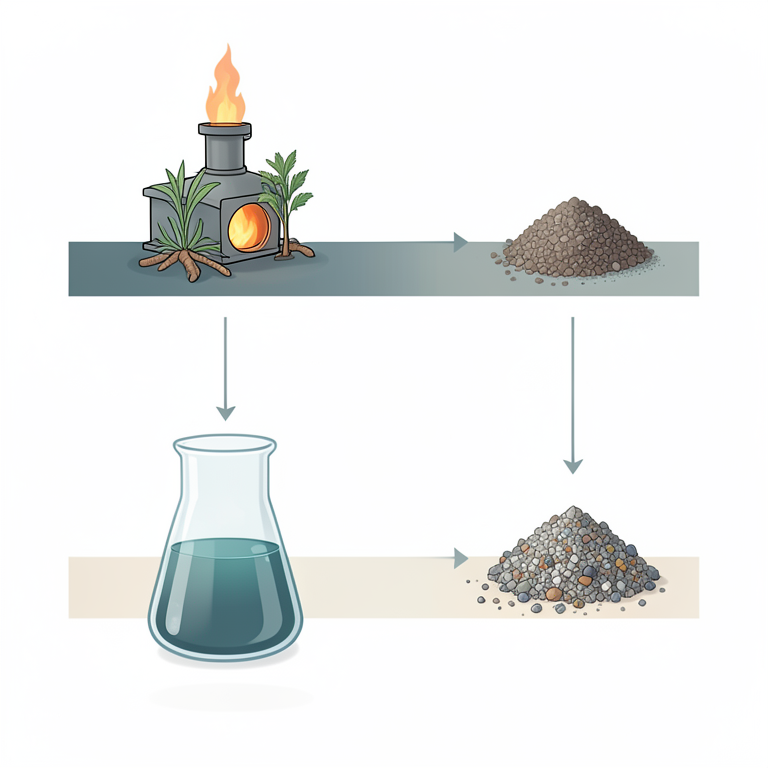
Mineral Recovery Comparison
AI-generated conceptual illustration (dried bean leaves, maize cobs, and C. exaltatus plant stems). It explains the idea and does not show study data.
View source evidence ↗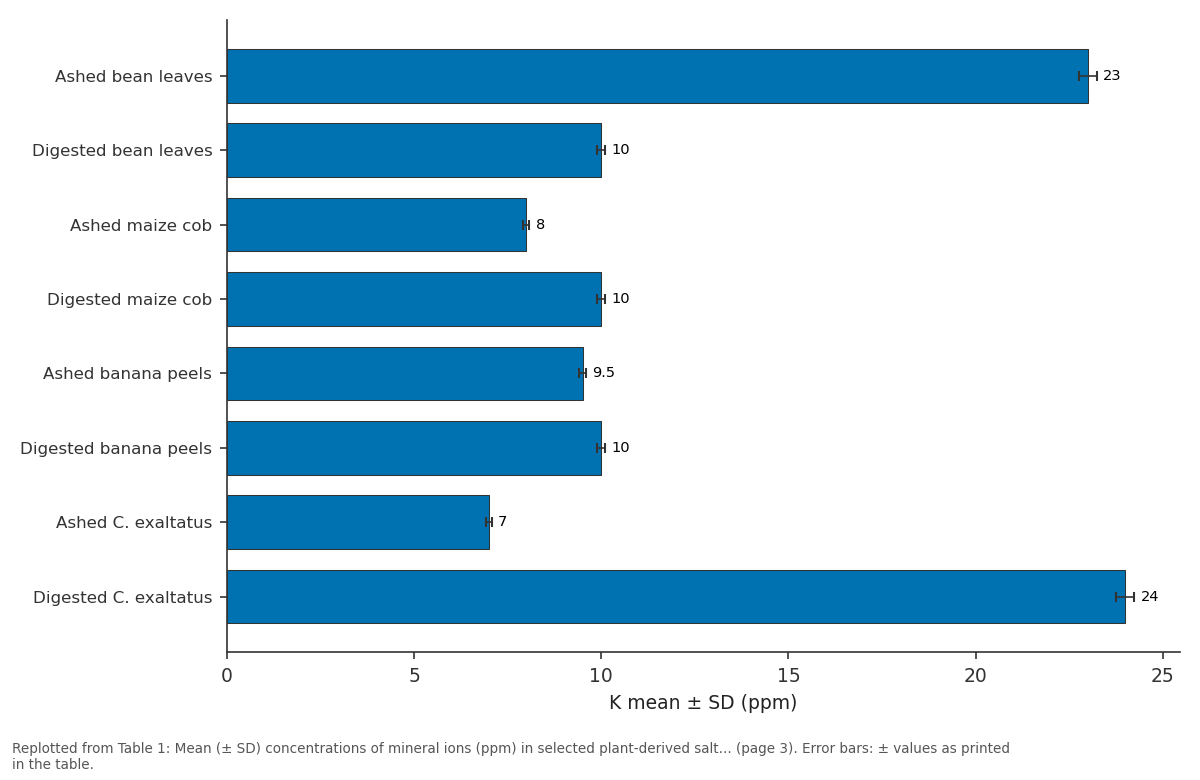
Na mean ± SD: Ashed bean leaves vs Digested bean leaves vs Ashed maize cob vs Digested maize cob vs Ashed banana peels
Replotted from Table 1 (page 3) of the original paper. Every bar is the paper's own table value.
View source evidence ↗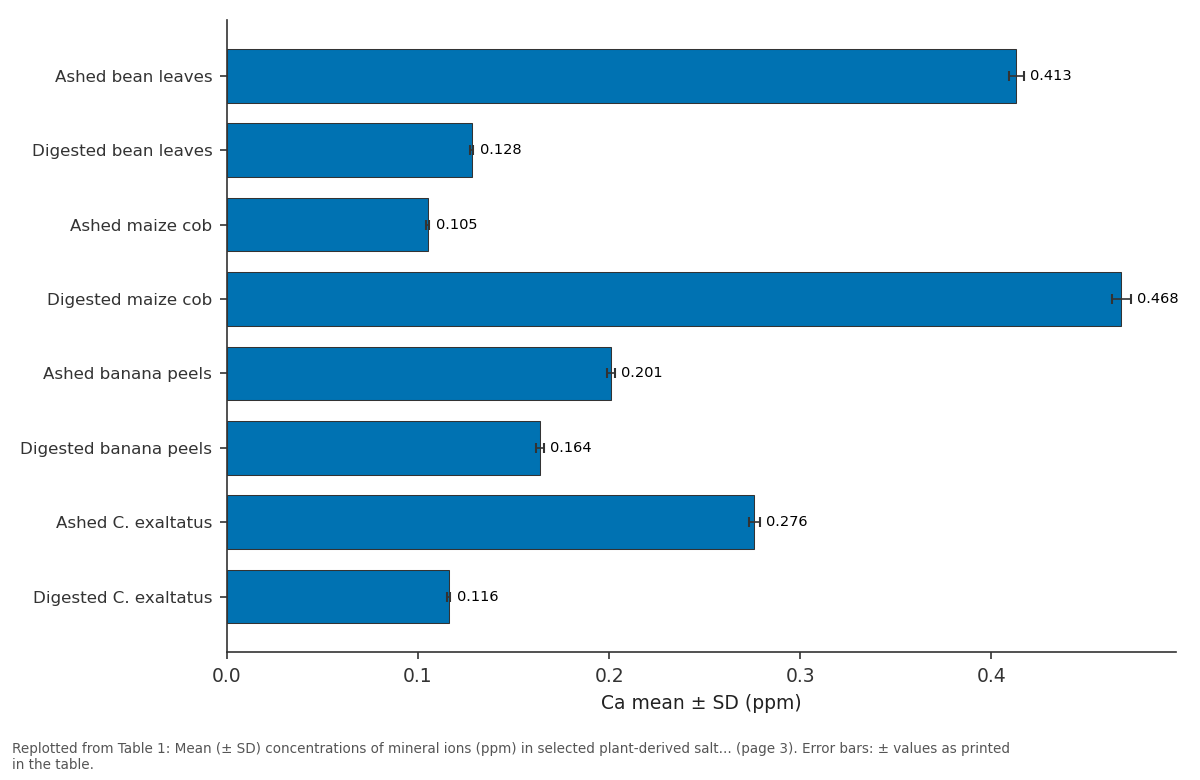
Zn mean ± SD: Ashed bean leaves vs Digested bean leaves vs Ashed maize cob vs Digested maize cob vs Ashed banana peels
Replotted from Table 1 (page 3) of the original paper. Every bar is the paper's own table value.
View source evidence ↗Figures & tables
From the original paper Table 1
 Table 2
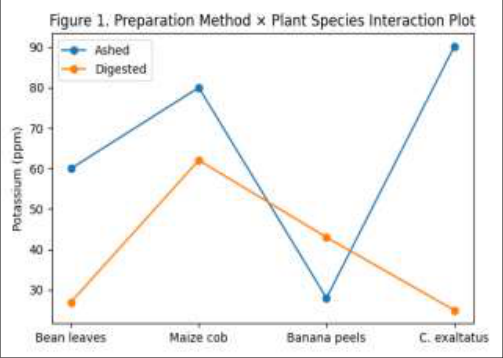 Figure 1
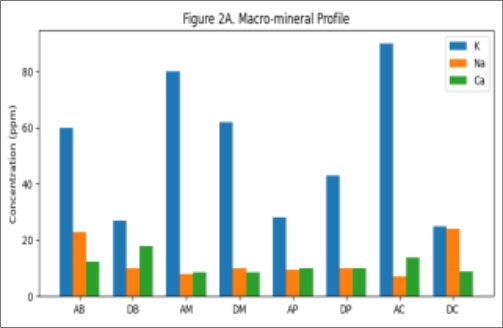 Figure 2A
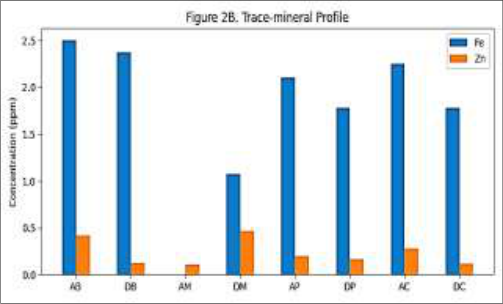 Figure 2B
Introduction
Salt is one of the most widely consumed food additives globally and plays an indispensable role in food preservation, flavour enhancement, and maintenance of physiological processes. Conventional table salt primarily consists of sodium chloride (NaCl), which provides sodium ions essential for fluid balance, nerve impulse transmission, and muscle function. Despite its physiological importance, excessive sodium consumption has become a major global public health concern because it is strongly associated with hypertension, cardiovascular diseases, stroke, and chronic kidney disease (World Health Organization [1] . Consequently, reduction of dietary sodium intake has been identified as one of the most cost-effective interventions for preventing non-communicable diseases and improving population health outcomes worldwide [2] . Growing awareness of the health risks associated with excessive sodium consumption has stimulated interest in alternative mineral supplements capable of providing essential nutrients while reducing dietary sodium intake. Among these nutrients, potassium plays a particularly important role in maintaining electrolyte balance, regulating blood pressure, and supporting cardiovascular function. Increased potassium intake has been shown to counteract some of the adverse physiological effects of excessive sodium consumption through enhanced sodium excretion and improved vascular function [3] Similarly, calcium is required for bone formation, muscle contraction, blood clotting, and nerve transmission, whereas iron is essential for haemoglobin synthesis, oxygen transport, and numerous metabolic processes [4] Therefore, mineral-rich dietary supplements capable of supplying potassium, calcium, and iron may contribute significantly to improved nutritional status and disease prevention. For centuries, indigenous communities throughout Africa and other parts of the world have utilized plant-derived salts obtained from ashes of leaves, stems, reeds, cobs, and other plant materials as alternatives to conventional sodium chloride. These traditional salts are often produced by combustion of plant biomass followed by direct use of the ash or extraction of soluble mineral components [5]. In many rural communities, plant-derived salts serve not only as flavour enhancers but also as mineral supplements used in food preparation and traditional medicine. The mineral composition of these salts depends on plant species, soil characteristics, environmental conditions, and processing methods employed during preparation [6] Previous studies have reported that plant ashes contain appreciable concentrations of potassium, calcium, magnesium, iron, and other trace elements of nutritional importance [7] . Unlike conventional sodium chloride, which contains predominantly sodium ions, plant-derived salts are often characterized by higher potassium concentrations and relatively lower sodium levels. Such characteristics may offer nutritional and public health advantages, particularly in populations where hypertension and cardiovascular diseases are increasingly prevalent [1,5] . However, despite their widespread traditional use, limited scientific information exists regarding the elemental composition of many indigenous plant-derived salt sources and their potential contribution to community nutrition. Accurate determination of mineral elements in plant materials requires efficient sample preparation procedures capable of releasing ions from complex organic matrices. Dry ashing and wet acid digestion are among the most commonly employed preparation techniques in elemental analysis. Dry ashing removes organic matter through thermal decomposition, concentrating inorganic constituents in an ash residue, whereas wet digestion utilizes strong acids to dissolve both organic and inorganic components of the sample matrix [8] . The efficiency of these methods varies depending on the nature of the sample and the target elements, making comparison of preparation methods an important aspect of analytical quality assurance [9]. The present study evaluated selected plant materials traditionally used as sources of mineral-rich salt supplements, namely bean leaves (Phaseolus vulgaris), maize cobs (Zea mays), banana peels (Musa paradisiaca), and Cyperus exaltatus reeds. The concentrations of zinc (Zn²⁺), calcium (Ca²⁺), iron (Fe²⁺), sodium (Na⁺), and potassium (K⁺) were determined following sample preparation by dry ashing and wet acid digestion. Furthermore, the study compared the effectiveness of the two preparation methods in releasing mineral ions from plant matrices and assessed the potential of the selected plant-derived salts as alternative mineral supplements to conventional sodium chloride in community diets.
Materials and Methods
Materials and Methods
Study Materials
Four plant materials traditionally used by local communities as sources of mineral-rich salt supplements were investigated: bean leaves (Phaseolus vulgaris L., Rose Coco GLP-2 variety), maize cobs (Zea mays L., Hybrid H6213), banana peels (Musa paradisiaca L., Matoke variety), and C. exaltatus reeds.
Sample Collection and Preparation
Bean leaves, maize cobs and banana samples were collected from a single farm in Western Kenya to minimize environmental variability. Plant identity was confirmed by an agronomist at the Kenya Agricultural and Livestock Research Organization (KALRO). C. exaltatus reeds were collected from the River Nzoia riparian zone and authenticated by a qualified plant taxonomist. All samples were washed thoroughly with deionized water to remove adhering soil particles and extraneous contaminants. The samples were cut into small pieces and oven-dried at 60°C until constant mass was attained to minimize moisture-related analytical variations [10] . The dried materials were ground using a stainless-steel laboratory mill and sieved through a 0.5 mm mesh to obtain homogeneous powders. The powders were stored in airtight polyethylene containers until analysis.
Experimental Design
The study employed two sample preparation techniques, namely dry ashing and wet acid digestion. To facilitate direct comparison of mineral recovery efficiencies, equal sample masses (0.5000 g dry weight basis) were used for both methods. All analyses were conducted in triplicate (n = 3).
Dry Ashing Procedure
Dry ashing was performed according to AOAC Official Method 985.01 with slight modifications [10] . Briefly, 0.5000 g of each powdered sample was weighed into acid-washed porcelain crucibles and initially charred on a hot plate to prevent losses due to rapid combustion. The crucibles were transferred into a programmable muffle furnace and heated gradually to 550°C. Ashing was continued for 6 h until a light grey or white ash was obtaine d, indicating complete destruction of organic matter [11] . The crucibles were cooled in a desiccator and the ash dissolved in 5 mL of 1 M nitric acid (HNO₃). The solution was quantitatively transferred into a 50 mL volumetric flask and diluted to volume with deionized water. The resulting solution was filtered through Whatman No. 42 ashless filter paper prior to elemental analysis.
Wet Acid Digestion Procedure
Wet digestion was carried out following standard procedures for plant tissue mineral analysis [9; 12 ]. A 0.5000 g aliquot of each dried sample was transferred into a digestion tube and mixed with 10 mL concentrated nitric acid (65%, analytical grade). The mixture was allowed to predigest overnight at room temperature to reduce vigorous reactions during heating. Digestion was subsequently performed on a temperature-controlled digestion block at 120-140°C until evolution of brown nitrogen oxide fumes ceased. Thereafter, 2 mL hydrogen peroxide (30%) was added dropwise and heating continued until a clear digest was obtained. After cooling, the digest was quantitatively transferred into a 50 mL volumetric flask and diluted to volume with deionized water. The solution was filtered through Whatman No. 42 ashless filter paper prior to instrumental analysis.
Instrumental Determination of Mineral Elements 2.6.1 Determination of Zinc and Iron by Atomic Absorption Spectrometry
Zinc (Zn) and iron (Fe) concentrations were determined using a flame atomic absorption spectrometer (AAS) equipped with element-specific hollow cathode lamps and an air-acetylene flame system. Instrumental conditions including lamp current, slit width and burner height were optimized according to manufacturer recommendations and standard analytical protocols [13] . External calibration curves were prepared using certified standard solutions covering concentrations between 0.1 and 10.0 mg L⁻¹. Calibration linearity was considered acceptable when the coefficient of determination (R²) exceeded 0.995.
Determination of Sodium, Potassium and Calcium by Flame Photometry
Sodium (Na), potassium (K) and calcium (Ca) concentrations were determined using a digital flame photometer operated with an air-LPG flame. Instrument calibration was performed using certified multi-element standards at concentrations of 0, 2, 4, 6, 8 and 10 mg L⁻¹ according to standard flame photometric procedures [12] . Quality-control standards were analysed after every ten samples to verify instrument stability. Samples exceeding the calibration range were diluted appropriately with deionized water before measurement.
Quality Assurance and Quality Control
To minimize contamination, all glassware and digestion vessels were soaked in 10% nitric acid for 24 h and rinsed thoroughly with deionized water before use [14]. Method blanks, duplicate samples and calibration verification standards were analysed together with the samples. Analytical accuracy was assessed through spike recovery experiments, while precision was evaluated using relative standard deviation (RSD) of replicate analyses. Recovery values between 90 and 110% and RSD values below 5% were considered acceptable [15] .
Statistical Analysis
Data were analysed using IBM SPSS Statistics version 22.0 (IBM Corp., Armonk, NY, USA). Results were expressed as mean ± standard deviation (SD) of triplicate determinations (n = 3). One-way analysis of variance (ANOVA) was used to evaluate significant differences among plant species and between sample preparation methods. Statistical significance was accepted at p < 0.05. Where significant differences were observed, Tukey's honestly significant difference (HSD) post hoc test was applied for pairwise comparisons. Confidence intervals were calculated at the 95% confidence level [16] .
Results
Potassium was the most abundant mineral ion in all plant materials, (Table 1) with concentrations ranging from 25.00 to 90.12 ppm. The highest potassium concentration was observed in ashed C. exaltatus (90.12 ppm), followed by ashed maize cob (80.00 ppm) and ashed bean leaves (60.00 ppm). Sodium concentrations were generally lower than potassium concentrations, ranging from 7.00 to 24.00 ppm. Calcium concentrations varied between 8.53 and 17.93 ppm, with digested bean leaves exhibiting the highest calcium content. Iron concentrations ranged from non-detectable levels in ashed maize cobs to 2.51 ppm in ashed bean leaves. Zinc was the least abundant mineral among the analyzed ions, with concentrations below 0.50 ppm in all samples. These results indicate that the investigated plant-derived salts are characterized by relatively high potassium content and moderate levels of calcium and iron, suggesting potential nutritional value. < .001 Note. The factor was treatment with eight levels. All ion-specific ANOVA models were significant at alpha = .05.
| Treatment | Zn mean ± SD | Ca mean ± SD | Fe mean ± SD | Na mean ± SD | K mean ± SD |
|---|---|---|---|---|---|
| Ashed bean leaves | 0.413 ± 0.004 | 12.293 ± 0.123 | 2.505 ± 0.052 | 23.000 ± 0.230 | 60.000 ± 0.360 |
| Digested bean leaves | 0.128 ± 0.001 | 17.932 ± 0.179 | 2.374 ± 0.024 | 10.000 ± 0.100 | 27.000 ± 0.270 |
| Ashed maize cob | 0.105 ± 0.001 | 8.534 ± 0.085 | 0.000 ± 0.000 | 8.000 ± 0.080 | 80.000 ± 0.800 |
| Digested maize cob | 0.468 ± 0.005 | 8.534 ± 0.085 | 1.071 ± 0.063 | 10.000 ± 0.100 | 62.037 ± 0.091 |
| Ashed banana peels | 0.201 ± 0.002 | 10.038 ± 0.100 | 2.109 ± 0.021 | 9.500 ± 0.095 | 28.000 ± 0.280 |
| Digested banana peels | 0.164 ± 0.002 | 10.038 ± 0.100 | 1.781 ± 0.018 | 10.000 ± 0.100 | 43.000 ± 0.430 |
| Ashed C. exaltatus | 0.276 ± 0.003 | 13.797 ± 0.138 | 2.249 ± 0.057 | 7.000 ± 0.070 | 90.117 ± 0.126 |
| Digested C. exaltatus | 0.116 ± 0.001 | 8.910 ± 0.089 | 1.781 ± 0.018 | 24.000 ± 0.240 | 25.000 ± 0.250 |
Table text extracted from the original PDF; superscript letters are shown inline. The original table image is below.
View original table image
Potassium exhibited the largest treatment effect (F = 12687.93, p < 0.001), indicating substantial variation attributable to plant species and preparation method. Zinc and sodium also showed pronounced treatment effects with F-values of 7663.75 and 6831.96, respectively. Calcium and iron exhibited comparatively lower but still highly significant variation among treatments. These findings confirm that both plant species and sample preparation procedure significantly influenced mineral recovery and measured concentration.
Interaction between Preparation Method and Plant Species
The interaction plot (Figure 1) illustrates the influence of dry ashing and wet digestion on potassium recovery across the four plant species For bean leaves, maize cobs, and C. exaltatus, dry ashing consistently produced higher potassium concentrations than wet digestion. The magnitude of this increase was particularly pronounced in C. exaltatus, where potassium concentration increased from 25.00 ppm in the digested sample to 90.12 ppm following ashing. In contrast, banana peels exhibited the opposite trend, with digestion producing a higher potassium concentration than ashing.
The non-parallel nature of the interaction lines indicates a significant interaction between preparation method and plant species.
Macro-Mineral Profile
The macro-mineral profile demonstrates that potassium was the dominant mineral in nearly all samples (Figure 2A) The highest potassium concentrations were observed in ashed C. exaltatus (90.12 ppm) and ashed maize cobs (80.00 ppm). Potassium concentrations greatly exceeded sodium concentrations in most treatments, resulting in favorable potassium-to-sodium ratios. Calcium concentrations were relatively stable across samples, although digested bean leaves contained the highest calcium concentration (17.93 ppm). Sodium concentrations remained comparatively low, ranging between 7.00 and 24.00 ppm.
Trace-Mineral Profile
Iron concentrations were consistently higher than zinc concentrations across most samples (Figure 2B) The highest iron concentration was recorded in ashed bean leaves (2.51 ppm), followed closely by ashed C. exaltatus (2.25 ppm). Iron concentrations generally declined following digestion, except in maize cobs where digestion facilitated measurable iron recovery. Zinc concentrations were comparatively low in all samples, although digested maize cobs exhibited the highest zinc concentration (0.468 ppm).
Discussion
The present study demonstrated significant differences in the concentrations of Zn, Ca, Fe, Na, and K among the investigated plant-derived salt materials and between the two sample preparation methods. The highly significant ANOVA results obtained for all minerals (p < 0.001) indicate that both plant species and preparation method significantly influenced mineral recovery and measured elemental composition. These findings confirm that traditional plant-derived salts possess distinct mineral profiles and therefore may contribute differently to dietary mineral intake depending on both botanical origin and processing method. Potassium was the predominant mineral in nearly all samples, with concentrations ranging from 25.00 to 90.12 ppm. The highest concentrations were recorded in ashed C. exaltatus (90.12 ppm), followed by ashed maize cobs (80.00 ppm) and ashed bean leaves (60.00 ppm). This observation agrees with previous reports that combustion of plant biomass concentrates potassium-containing salts within the ash fraction, resulting in potassium-rich traditional salts [3,5] . Potassium is the principal intracellular cation and plays critical roles in osmotic regulation, neuromuscular transmission, acid-base balance, and cardiovascular function [17]. The World Health Organization recommends a minimum potassium intake of 3510 mg day⁻¹ for adults because adequate potassium intake is associated with reduced risks of hypertension, stroke, and cardiovascular disease [1] . Although the measured concentrations cannot be directly translated into dietary intake without consumptionrate data, the consistently high potassium concentrations observed suggest that these traditional salt materials may contribute positively to dietary potassium intake. The predominance of potassium over sodium observed in most treatments has important public-health implications. Excessive sodium intake is strongly associated with hypertension, cardiovascular disease, stroke, and chronic kidney disease, whereas increased potassium intake can mitigate many of the adverse physiological effects of sodium through enhanced natriuresis and improved vascular function [2,3] . Sodium concentrations in the present study ranged from 7.00 to 24.00 ppm and were generally lower than potassium concentrations. The favorable potassium-tosodium ratios observed in bean leaves, maize cobs, banana peels, and C. exaltatus suggest that these traditional salt sources may provide nutritional advantages over conventional sodium chloride and could support dietary strategies aimed at reducing sodium-related noncommunicable diseases [1,2] . Calcium was detected in all samples, with concentrations ranging from 8.53 to 17.93 ppm. The highest concentration occurred in digested bean leaves, indicating that a substantial proportion of calcium remained associated with structural components of the plant matrix and was released more efficiently by acid digestion. Calcium is essential for bone mineralization, muscle contraction, blood coagulation, nerve transmission, and intracellular signaling [18] . Recommended calcium intake for adults ranges from approximately 1000 to 1300 mg day⁻¹ depending on age and physiological status [19] . Although the concentrations observed are modest relative to daily requirements, regular consumption of these traditional mineral salts may provide supplementary calcium, particularly in communities with limited access to conventional calcium-rich foods. Iron concentrations varied considerably among plant species and preparation methods. The highest iron concentration was observed in ashed bean leaves (2.51 ppm), followed by ashed C. exaltatus (2.25 ppm). Iron was also detected in banana peels and digested maize cobs, although at lower concentrations. Iron is indispensable for hemoglobin synthesis, oxygen transport, cellular respiration, cognitive development, and immune function [18] . Adult iron requirements generally range between 8 and 18 mg day⁻¹ depending on age, sex, and physiological status [18] . The measurable iron concentrations detected in most plantderived salts indicate their potential contribution as supplementary dietary iron sources, although they are unlikely to satisfy daily requirements independently. Zinc concentrations were comparatively low across all treatments, ranging from 0.105 to 0.468 ppm, with the highest concentration observed in digested maize cobs. Zinc is required for immune competence, protein synthesis, cellular growth, reproductive health, and the catalytic activity of numerous enzymes [20] . Adult zinc requirements typically range from 8 to 11 mg day⁻¹ [21] . While the measured zinc concentrations were relatively low, regular consumption of these traditional salts may contribute modestly to total dietary zinc intake. One of the primary objectives of this study was to evaluate the influence of sample preparation on mineral recovery. The interaction plot (Figure 1) clearly demonstrated that the effectiveness of a preparation method depended on the plant species analyzed. Dry ashing generally yielded higher potassium concentrations, particularly in bean leaves, maize cobs, and C. exaltatus. This observation is attributable to thermal destruction of organic matter, which concentrates alkali metals in the ash residue and converts them into readily detectable inorganic forms [6] . The enhanced potassium recovery obtained through ashing supports previous findings that plant ash is predominantly composed of potassium-rich compounds [5] . Conversely, wet acid digestion generally improved recovery of calcium and, in some cases, sodium, iron, and zinc. Digested bean leaves exhibited the highest calcium concentration, while digested maize cobs produced the highest zinc concentration. These findings suggest that acid digestion more effectively disrupted plant cell structures and released minerals bound within complex organic matrices. Similar observations have been reported in elemental analysis studies where strong oxidizing acids improved recovery of trace and transition metals by dissolving both organic matter and mineral phases [8,9] . The significant interaction between preparation method and plant species further indicates that mineral recovery depends not only on analytical technique but also on the physicochemical characteristics of the plant matrix. Consequently, selection of a sample preparation method should be guided by the target mineral and analytical objective. Dry ashing appears more suitable for evaluating potassium-rich traditional salts, whereas wet digestion provides a more comprehensive assessment of calcium and trace-element composition [8] . Among the investigated plant materials, bean leaves and Cyperus exaltatus exhibited the most nutritionally favorable mineral profiles. Bean leaves contained comparatively high concentrations of potassium, calcium, and iron, while C. exaltatus exhibited the highest potassium concentration and appreciable levels of calcium and iron. These findings suggest that both plant materials may represent promising raw materials for production of traditional mineral-rich salt substitutes. The observed differences among species likely reflect variations in nutrient uptake, accumulation, translocation, and storage mechanisms within plant tissues [22] . Overall, the present findings provide scientific support for traditional knowledge regarding the use of plant-derived salts as alternative seasoning and mineral sources. The relatively high potassium concentrations and comparatively low sodium levels observed in several samples suggest that these materials may contribute to improved dietary mineral balance while supporting public-health initiatives aimed at reducing sodium-related chronic diseases. Furthermore, the study demonstrates that both plant species and sample preparation method must be considered when evaluating the nutritional potential of traditional plant-derived salts.
Conclusion
The present study demonstrated that traditional plantderived salt materials contain nutritionally important mineral ions, with potassium being the predominant element across most samples. Significant differences in mineral composition were observed among plant species and between the dry ashing and wet digestion preparation methods. Dry ashing generally enhanced potassium recovery, whereas wet digestion improved the extraction of calcium and selected trace elements. Among the investigated materials, bean leaves and C. exaltatus exhibited the most favorable mineral profiles, characterized by high potassium concentrations and appreciable levels of calcium and iron. The favorable potassium-to-sodium ratios observed suggest that these traditional salts may serve as promising alternative mineral sources and could contribute to dietary strategies aimed at reducing sodium intake and improving community nutrition. Further studies are recommended to evaluate mineral bioavailability, safety, sensory acceptability, and potential health benefits under actual consumption conditions.
Figures and tables from the paper
| Ion | SS between | df between | MS between | SS within | df within | F | p |
|---|---|---|---|---|---|---|---|
| Zn | 0.409 | 7 | 0.058436 | 0.000122 | 16 | 7663.749 | < .001 |
| Ca | 226.171 | 7 | 32.310 | 0.217 | 16 | 2380.447 | < .001 |
| Fe | 14.584 | 7 | 2.083 | 0.023 | 16 | 1441.351 | < .001 |
| Na | 961.406 | 7 | 137.344 | 0.322 | 16 | 6831.960 | < .001 |
| K | 13237.576 | 7 | 1891.082 | 2.385 | 16 | 12687.925 | < .001 |
Table text extracted from the original PDF; superscript letters are shown inline. The original table image is below.
View original table image
References
22 in the original paper- World Health Organization. Guideline: Sodium intake for adults and children. Geneva: World Health Organization; 2012.
- World Health Organization. Guidelines for sodium intake and reduction of noncommunicable disease risk. Geneva: World Health Organization; 2023.
- Filippini T, Naska A, Kasdagli MI, Torres D, Lopes C, Carvalho C, et al. Potassium intake and blood pressure: a dose-response meta-analysis of randomized controlled trials. J Am Heart Assoc. 2020;9(12). doi:10.1161/JAHA.119.015719.
- Weaver CM, Heaney RP, editors. Calcium in human health. Totowa (NJ): Humana Press; 2006. doi:10.1007/978-1-59259-961-9.
- Onyango MS, Kojima Y, Aoyi O, Bernardo EC, Matsuda H. Mineral composition and utilization potential of plant ash materials. J Environ Chem Eng. 2019;7(5):103349. doi:10.1016/j.jece.2019.103349.
- Demeyer A, Voundi Nkana JC, Verloo MG. Characteristics of wood ash and influence on soil properties and nutrient uptake: an overview. Bioresour Technol. 2001;77(3):287-295. doi:10.1016/S09608524(00)00043-2.
- Okwu DE, Nnamdi FU. Evaluation of the chemical composition of indigenous spices and flavouring agents. Glob J Pure Appl Sci. 2008;14(3):295-299.
- Hoenig M, de Kersabiec AM, Massart DL, Lambert WE. Sample preparation steps for analysis by atomic spectroscopy methods: present status. Anal Chim Acta. 1998;358(1):85-94. doi:10.1016/S00032670(97)00586-9.
- Jones JB Jr, Case VW. Sampling, handling, and analyzing plant tissue samples. In: Westerman RL, editor. Soil testing and plant analysis. 3rd ed. Madison (WI): Soil Science Society of America; 1990. p. 389427.
- AOAC International. Official methods of analysis of AOAC International. 21st ed. Rockville (MD): AOAC International; 2019.
- Miller JN, Miller JC. Statistics and chemometrics for analytical chemistry. 7th ed. Harlow (UK): Pearson Education; 2018.
- American Public Health Association, American Water Works Association, Water Environment Federation. Standard methods for the examination of water and wastewater. 23rd ed. Washington (DC): American Public Health Association; 2017.
- Welz B, Sperling M. Atomic absorption spectrometry. 3rd ed. Weinheim (Germany): Wiley-VCH; 1999.
- United States Environmental Protection Agency. Method 1669: Sampling ambient water for trace metals at EPA water quality criteria levels. Washington (DC): EPA Office of Water; 1996.
- Magnusson B, Örnemark U, editors. The fitness for purpose of analytical methods: a laboratory guide to method validation and related topics. 2nd ed. Borås (Sweden): Eurachem; 2014.
- Montgomery DC. Design and analysis of experiments. 10th ed. Hoboken (NJ): John Wiley & Sons; 2019.
- World Health Organization. Guideline: Potassium intake for adults and children. Geneva: World Health Organization; 2012.
- World Health Organization. Vitamin and mineral requirements in human nutrition. 2nd ed. Geneva: World Health Organization; 2004.
- Institute of Medicine. Dietary reference intakes for calcium and vitamin D. Washington (DC): National Academies Press; 2011.
- Prasad AS. Discovery of human zinc deficiency: its impact on human health and disease. Adv Nutr. 2013;4(2):176-190. doi:10.3945/an.112.003210.
- Institute of Medicine. Dietary reference intakes for vitamin A, vitamin K, arsenic, boron, chromium, copper, iodine, iron, manganese, molybdenum, nickel, silicon, vanadium, and zinc. Washington (DC): National Academies Press; 2001.
- Marschner P, editor. Marschner's mineral nutrition of higher plants. 3rd ed. London: Academic Press; 2012.