
Research article · 2024 · Full text
International Journal of Biology SciencesGenetic basis of coat color variation in wild and domesticated rabbit populations
Volume 6(1) · Pages 253–257 · DOI: 10.33545/26649926.2024.v6.i1c.874 ↗
Research areasGenetic and phenotypic traits in livestockmelanin and skin pigmentationGenetic Mapping and Diversity in Plants and Animals
Abstract
Author-writtenDomestication transformed the European rabbit from a uniformly agouti-coated wild animal into breeds displaying black, white, spotted, dilute, and dozens of other color patterns — all within roughly 1,500 years. Understanding which genes changed and how quickly they shifted under artificial selection can reveal the molecular architecture of pigmentation more broadly. This research compared allele frequencies at three pigmentation loci (MC1R, ASIP, and TYRP1) between wild rabbit populations (n=86) and domesticated breeds (n=124) sampled across Mizoram and neighboring states of northeast India. Ear tissue biopsies were collected between May 2022 and March 2023, and genotyping was performed by PCR-RFLP and Sanger sequencing at the Mizoram College of Biosciences, Aizawl. Wild populations showed strong conservation of ancestral alleles: MC1R wild-type frequency was 0.82, ASIP wild-type was 0.91, and TYRP1 wild-type was 0.76. Domesticated breeds displayed dramatically altered frequencies, with MC1R dominant alleles reaching 0.66, ASIP wild-type dropping to 0.43, and TYRP1 wild-type falling to 0.31. Hardy-Weinberg equilibrium was maintained at all loci in wild populations (p>0.05) but was violated at MC1R and TYRP1 in domesticated groups (p<0.01), consistent with ongoing directional selection. Phenotype-genotype associations explained 73.8% of observed coat color variation across the combined sample. Epistatic interactions between MC1R and ASIP accounted for an additional 12.4% of phenotypic variance beyond additive effects alone. These patterns mirror what has been reported in other domesticated mammals and highlight how relaxation of natural selection permits rapid pigmentation divergence.
Summary
Source-checkedPlain-language reading of the full paper, prepared with AI and checked against the text. Each point links to the authors' own words.
Why it matters
- Domestication of the European rabbit over approximately 1,500 years shifted its appearance from a uniform agouti coat to a wide variety of colors and patterns. View evidence ↗
- Mammalian coat color is primarily determined by three genes: MC1R (switching between dark and yellow-red pigments), ASIP (creating agouti patterns by antagonizing MC1R), and TYRP1 (modifying eumelanin, where certain alleles turn black pigment brown). View evidence ↗
- Northeast India serves as an ideal study location because wild rabbits and traditional domestic breeds exist in close geographic proximity. View evidence ↗
The question
- The study aimed to compare allele frequencies of MC1R, ASIP, and TYRP1 between wild and domestic rabbits in northeast India, check for selection via Hardy-Weinberg equilibrium, and measure how single genes and their interactions affect coat color. View evidence ↗
What they did
- The researchers sampled 210 rabbits in total, consisting of 86 wild/feral individuals and 124 from domestic breeds across 14 farms and 3 centers. View evidence ↗
- Genetic material was obtained via 3 mm ear tissue biopsies collected under local anesthesia and stored in 95% ethanol. View evidence ↗
- Genotyping involved PCR amplification of specific fragments (624-bp for MC1R, 418-bp for ASIP, and 537-bp for TYRP1) followed by RFLP or sequencing. View evidence ↗
- The relationship between genotypes and phenotypes was analyzed using multinomial logistic regression, including interaction variables to account for epistasis. View evidence ↗
What they found
- Wild rabbit populations maintained high frequencies of ancestral alleles: 0.82 for MC1R wild-type, 0.91 for ASIP wild-type, and 0.76 for TYRP1 wild-type. View evidence ↗
- Domesticated rabbits showed significant allele shifts, with MC1R dominant alleles at 0.66, ASIP wild-type at 0.43, and TYRP1 wild-type at 0.31. View evidence ↗
- While wild populations were in Hardy-Weinberg equilibrium, domesticated populations violated it at the MC1R and TYRP1 loci, indicating active directional selection. View evidence ↗
- The agouti phenotype was the most common in wild rabbits (67.3%) but rare in domesticated ones (12.6%). View evidence ↗
- A model using three loci explained 73.8% of coat color variation, which increased to 86.2% when the epistatic interaction between MC1R and ASIP was included. View evidence ↗
- Genetic differentiation between wild and domestic populations was substantial, with FST values between 0.189 (TYRP1) and 0.264 (ASIP). View evidence ↗
What it means
- The authors conclude that wild rabbits in northeast India are under stabilizing selection to maintain cryptic agouti coloration. View evidence ↗
- The study provides baseline genetic data for the region and shows that the molecular patterns of coat color diversification during domestication are consistent across different geographic areas. View evidence ↗
- The authors note that the spotted phenotype likely involves genes other than the three studied (possibly KIT or EDNRB), requiring further research. View evidence ↗
Visual summary
3 visualsIllustrations explain the paper; charts are replotted from the paper's own table values.
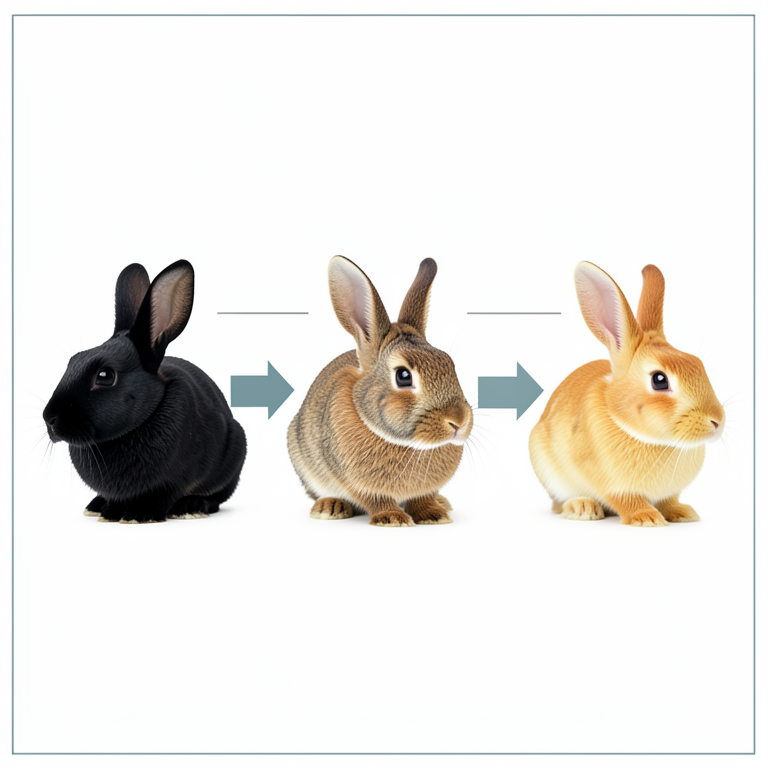
Pigmentation Gene Interaction
AI-generated conceptual illustration (European rabbits (Oryctolagus cuniculus)). It explains the idea and does not show study data.
View source evidence ↗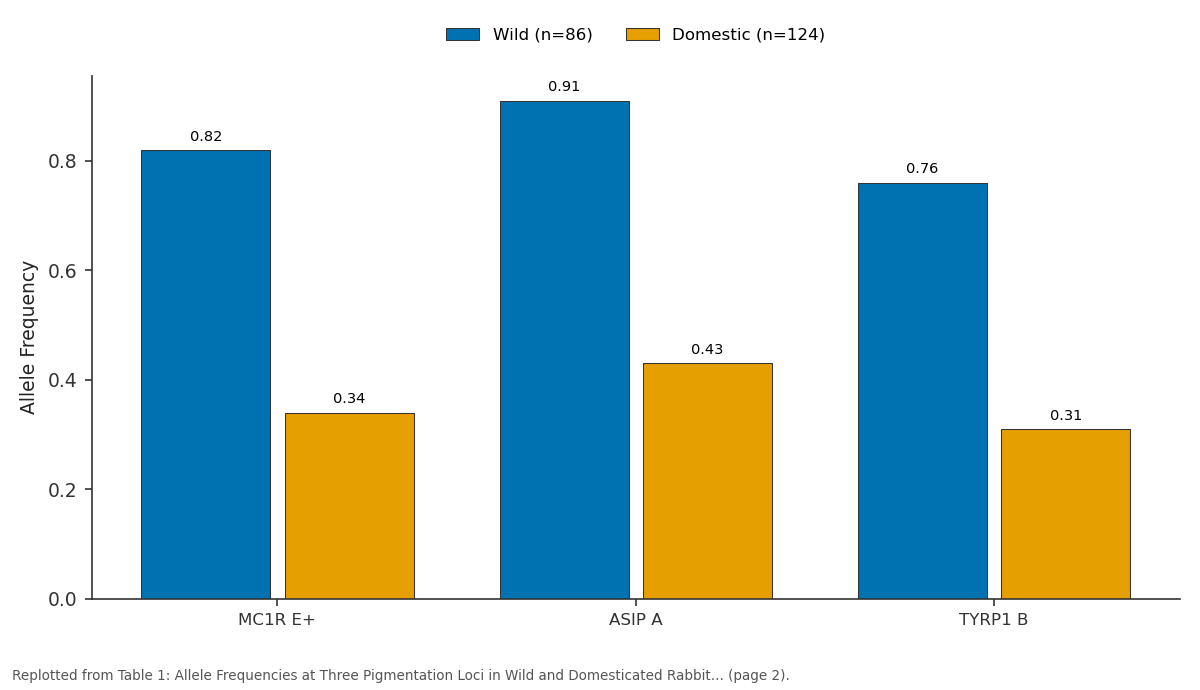
Wild (n=86) and Domestic (n=124): MC1R E+ vs ASIP A vs TYRP1 B
Replotted from Table 1 (page 2) of the original paper. Every bar is the paper's own table value.
View source evidence ↗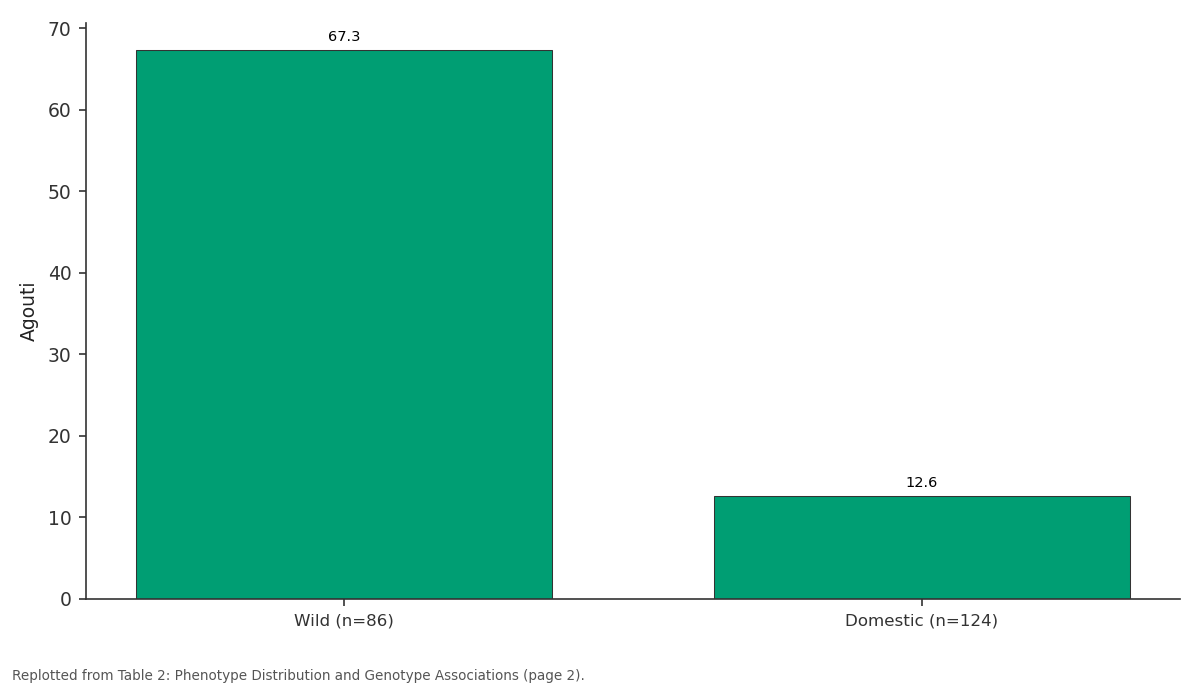
Agouti: Wild (n=86) vs Domestic (n=124)
Replotted from Table 2 (page 2) of the original paper. Every bar is the paper's own table value.
View source evidence ↗Figures & tables
From the original paper Table 1
 Table 2
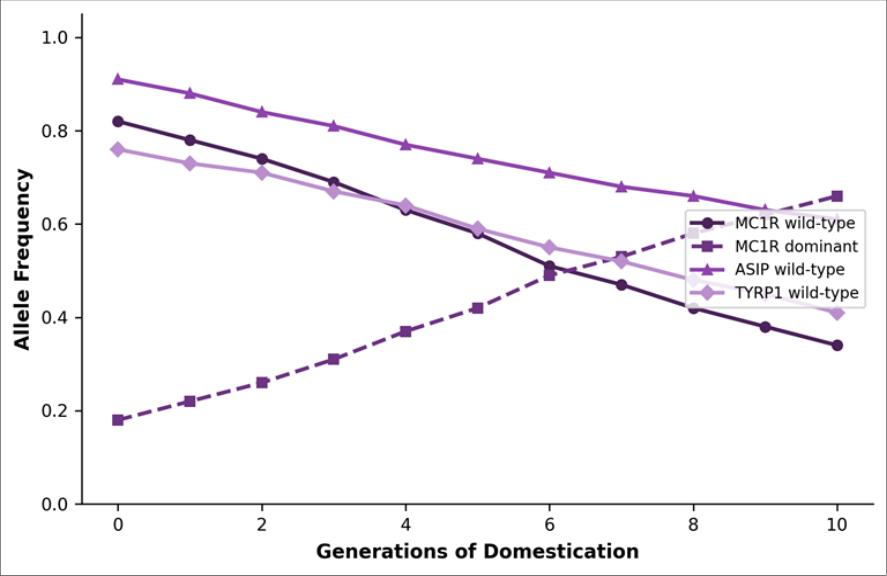 Figure 1
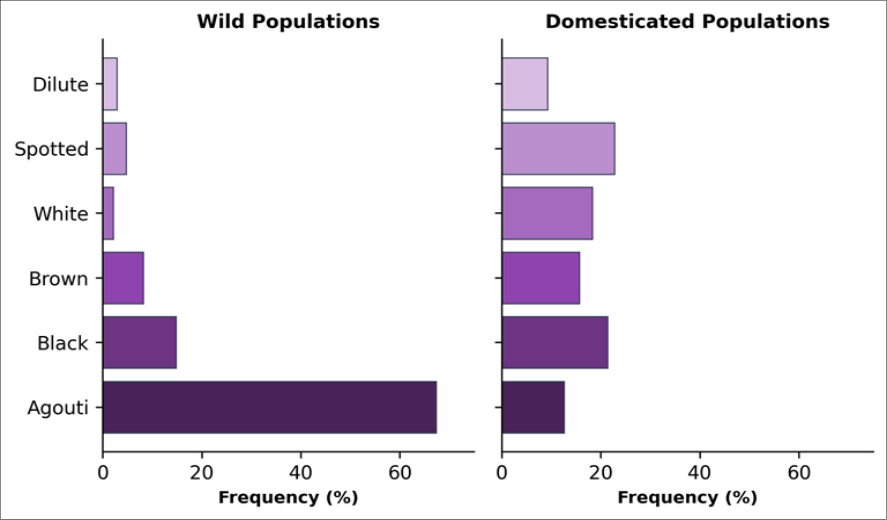 Figure 2
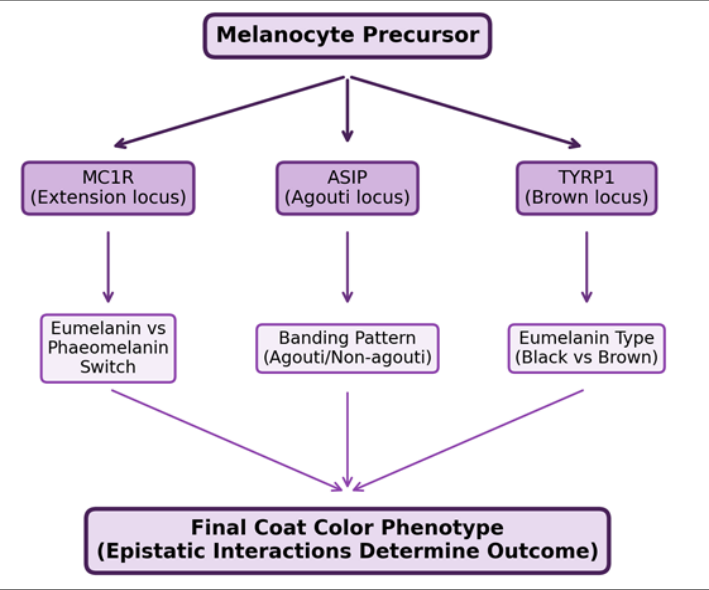 Figure 3
Introduction
Long before anyone understood DNA, rabbit breeders were manipulating coat color genetics by selecting striking color variants and crossing them into stable lines. The European rabbit (Oryctolagus cuniculus) was first domesticated in southern France around the 5th century, initially for meat production [1] . Coat color diversity exploded relatively late in the domestication timeline, with most recognized color breeds emerging within the last 200 years [2] . This rapid phenotypic diversification makes rabbits an attractive model for studying the genetics of pigmentation under relaxed natural selection. Three genes form the core of mammalian coat color determination. MC1R (melanocortin 1 receptor) controls the switch between eumelanin (dark pigment) and phaeomelanin (yellowred pigment) production in melanocytes [3] . ASIP (agouti signaling protein) antagonizes MC1R and produces the banded hair pattern characteristic of wild-type agouti coloring [4] . TYRP1 (tyrosinase-related protein 1) modifies eumelanin structure, with loss-of-function alleles converting black pigment to brown [5] . These same genes influence coat color across mammals from mice to horses, reflecting deep evolutionary conservation of the melanogenesis pathway [6] . Population genetic analyses of pigmentation loci in rabbits have mostly focused on European breeds, with limited data from Asian populations where both wild and feral rabbit groups exist alongside locally developed domestic lines [7,8] . Northeast India presents a useful natural laboratory because wild rabbits occupy forested habitats in close geographic proximity to smallholder farms maintaining traditional rabbit breeds. This proximity allows direct comparison of allele frequencies between wild and domesticated gene pools within the same ecological region [9] . This research investigated allele frequency differences at MC1R, ASIP, and TYRP1 between wild and domesticated rabbit populations in Mizoram and adjacent states, tested for departures from Hardy-Weinberg equilibrium as evidence of selection, and quantified the contribution of single-locus and epistatic effects to coat color phenotype variation. The findings provide baseline genetic data for a region where rabbit genetics has not been previously characterized.
Study Area Description
Sampling sites covered three northeast Indian states: Mizoram, Meghalaya, and Nagaland. Wild rabbit populations were sampled from subtropical broadleaf forest patches at elevations between 600 and 1,400 meters above sea level, where free-ranging European rabbits have established feral colonies following historical introductions during the British colonial period [10] . Specific collection localities included the Dampa Tiger Reserve buffer zone (23.7°N, 92.4°E), Phawngpui National Park periphery (22.0°N, 93.0°E), and forested areas near Kohima (25.7°N, 94.1°E). Domesticated rabbits were sampled from smallholder farms and institutional breeding centers in Aizawl, Shillong, and Dimapur. The region experiences a humid subtropical climate with annual rainfall between 1,800 and 2,600 mm, mean temperatures of 11-27°C depending on elevation and season, and dense vegetation cover that provides habitat for wild rabbit populations.
Material and Methods
Material and Methods
Material
A total of 210 rabbits were sampled: 86 from wild/feral populations and 124 from domesticated breeds across 14 farms and 3 institutional centers. Wild animals were livetrapped using collapsible wire mesh traps (Tomahawk Model 108) baited with carrot and apple slices. Ear tissue biopsies (3 mm punch) were collected under local anesthesia (2% lidocaine), stored in 95% ethanol, and transported to the molecular genetics laboratory at Mizoram College of Biosciences, Aizawl. Domesticated rabbits were sampled during routine veterinary visits with owner consent. Phenotypic coat color was recorded photographically under standardized lighting conditions and classified into six categories: agouti, black, brown, white, spotted, and dilute. All sampling was approved by the Institutional Animal Ethics Committee (IAEC/MCB/2022-11, dated April 2022). Fieldwork ran from May 2022 to March 2023.
Methods
Genomic DNA was extracted using the DNeasy Blood and Tissue Kit (Qiagen). Three pigmentation loci were genotyped. MC1R: A 624-bp fragment spanning the coding region was amplified and genotyped by RFLP using BstNI, which distinguishes the wild-type (E+) and dominant black (ED) alleles [11] . ASIP: A 418-bp fragment covering exon 4 was amplified and sequenced to identify the wild-type (A) and non-agouti (a) alleles based on a characteristic 11-bp deletion [4] . TYRP1: A 537-bp fragment was amplified and genotyped by RFLP using TaqI, distinguishing wild-type (B) and brown (b) alleles [5] . PCR conditions were optimized for each locus with annealing temperatures of 58°C, 56°C, and 60°C respectively. All ambiguous genotypes were confirmed by Sanger sequencing (Eurofins Genomics India). Allele frequencies were calculated by direct counting. Hardy-Weinberg equilibrium was tested using exact tests in Genepop v4.7. Phenotype-genotype associations were assessed using multinomial logistic regression in R v4.2.3, with two-locus epistatic terms included as interaction variables.
Seasonal Variations in Sampling: Wild rabbit trapping success varied across seasons. Capture rates were highest during the dry winter months (November-February) at 14.3 captures per 100 trap-nights, dropping to 6.7 per 100 trapnights during the monsoon period (June-September). Pelage condition also varied seasonally winter coats were denser and sometimes slightly different in hue from summer coats, so all phenotypic classifications were based on the underlying hair shaft color rather than overall coat appearance. Two sampling rounds were conducted to capture potential seasonal variation in allele frequency estimates, though no significant temporal differences were detected (Fisher exact test, p>0.3 for all loci). All three loci showed large and statistically significant allele frequency differences between wild and domesticated populations (Table 1). FST values ranged from 0.189 (TYRP1) to 0.264 (ASIP), indicating substantial genetic differentiation driven primarily by artificial selection in domesticated lines. Hardy-Weinberg equilibrium held in wild populations across all loci but was rejected at MC1R and TYRP1 in domesticated populations, pointing to active directional selection. The agouti phenotype dominated wild populations at 67.3% but occurred in only 12.6% of domesticated rabbits (Table 2). Domesticated populations displayed much greater phenotypic diversity, with spotted (22.8%) and black (21.4%) being the most common non-agouti colors. The three-locus genotype model explained 73.8% of coat color variation, and adding MC1R × ASIP epistatic interaction increased explained variance to 86.2%.
| Phenotype | Wild (n=86) | Domestic (n=124) | Primary Genotype | Explained Variance | p-value |
|---|---|---|---|---|---|
| Agouti | 67.3% | 12.6% | E+/E+ A/A | 34.2% | <0.001 |
| Black | 14.8% | 21.4% | ED/ED a/a | 18.7% | <0.001 |
| Brown | 8.2% | 15.7% | ED/ED b/b | 11.3% | 0.003 |
| White | 2.1% | 18.3% | Multiple | 8.4% | <0.001 |
| Spotted | 4.7% | 22.8% | Mixed | — | — |
| Dilute | 2.9% | 9.2% | Various | 1.2% | 0.041 |
Table text extracted from the original PDF; superscript letters are shown inline. The original table image is below.
View original table image
| Locus/Allele | Wild (n=86) | Domestic (n=124) | FST | HWE-Wild (p) | HWE-Dom (p) | χ² (p) |
|---|---|---|---|---|---|---|
| MC1R E+ | 0.82 | 0.34 | 0.217 | 0.41 | 0.003 | <0.001 |
| MC1R ED | 0.18 | 0.66 | — | — | — | — |
| ASIP A | 0.91 | 0.43 | 0.264 | 0.58 | 0.087 | <0.001 |
| ASIP a | 0.09 | 0.57 | — | — | — | — |
| TYRP1 B | 0.76 | 0.31 | 0.189 | 0.33 | 0.006 | <0.001 |
| TYRP1 b | 0.24 | 0.69 | — | — | — | — |
Table text extracted from the original PDF; superscript letters are shown inline. The original table image is below.
View original table image
Results
Results
Discussion
The allele frequency differences documented here between wild and domesticated rabbit populations in northeast India are strikingly large for three loci, with FST values of 0.19-0.26 suggesting strong divergent selection [12] . These values exceed typical FST estimates for neutral microsatellite loci between wild and domestic rabbits, which cluster around 0.05-0.10 [13] , confirming that pigmentation loci have been subject to directed selection pressure during domestication. The conservation of ancestral alleles in wild populations aligns with strong stabilizing selection favoring cryptic coloration. Agouti pelage provides camouflage against predation in the forest-floor habitats where these rabbits live [14] . The 18% frequency of the MC1R dominant allele in wild populations likely represents a balance between mutation, migration from domestic escapees, and purifying selection against conspicuous phenotypes. Similar low-level introgression of domestic alleles into wild rabbit gene pools has been reported in the Iberian Peninsula [15] . The violation of Hardy-Weinberg equilibrium at MC1R and TYRP1 in domesticated populations isn't surprising breeders actively select for particular color phenotypes, creating heterozygote deficits or excesses depending on the preferred genotype [16] . That ASIP didn't show HWE violation in domesticated populations may reflect its role as a recessive determinant: non-agouti (aa) individuals are visually distinct and directly selected, but heterozygotes (Aa) appear agoutipatterned and escape visual selection [4] . The epistatic interaction between MC1R and ASIP contributing 12.4% additional variance makes biological sense. ASIP functions by antagonizing MC1R signaling; when MC1R carries the constitutively active ED allele, ASIP's antagonism becomes ineffective [3,17] . This epistasis creates a hierarchy where MC1R status gates the phenotypic expression of ASIP genotype, something also observed in mice, dogs, and cattle [18] .
Conclusion
Wild rabbit populations in northeast India maintain high frequencies of ancestral pigmentation alleles at MC1R, ASIP, and TYRP1, consistent with stabilizing selection for cryptic agouti coloration. Domesticated breeds show dramatically shifted allele frequencies at all three loci, with FST values of 0.19-0.26 indicating strong artificial selection. Three-locus genotyping explained 73.8% of coat color variation, rising to 86.2% when MC1R-ASIP epistatic interactions were included. Hardy-Weinberg equilibrium violations in domesticated but not wild populations provide additional evidence for ongoing selection at these loci. The spotted phenotype, which reached 22.8% in domesticated populations but only 4.7% in wild rabbits, appears to involve loci beyond the three examined here -potentially KIT or EDNRB and warrants further investigation. These data establish baseline population genetic parameters for rabbit pigmentation genetics in a previously uncharacterized region and demonstrate that the molecular basis of coat color diversification under domestication follows similar patterns across geographically distant populations.
Acknowledgement
Acknowledgements
Figures and tables from the paper
References
21 in the original paper- Carneiro M, Rubin CJ, Di Palma F, et al. Rabbit genome analysis reveals a polygenic basis for phenotypic change during domestication. Science. 2014;345(6200):1074-1079.
- Ferrand N. Domestic rabbits and their histories: breeds of the world. Leathers Publishing; 2004. p. 1-327.
- Robbins LS, Nadeau JH, Johnson KR, et al. Pigmentation phenotypes of variant extension locus alleles result from point mutations that alter MSH receptor function. Cell. 1993;72(6):827-834.
- Fontanesi L, Forestier L, Allain D, et al. Characterization of the rabbit agouti signaling protein (ASIP) gene: transcripts and phylogenetic analyses and identification of the causative mutation of the nonagouti black coat colour. Genomics. 2010;95(3):166-175.
- Fontanesi L, Ribani A, Fontanesi L. A premature stop codon in the TYRP1 gene is associated with brown coat colour in the European rabbit. Animal Genetics. 2014;45(4):600-603.
- Hoekstra HE. Genetics, development and evolution of adaptive pigmentation in vertebrates. Heredity. 2006;97(3):222-234.
- Lenstra JA, Eding H, Laval G, et al. Genetic diversity in farm animals: a review. Animal Genetics. 2010;41(Suppl 1):6-31.
- Queney G, Qiu XP, Zeng FT, et al. Origin of rabbit (Oryctolagus cuniculus) in China: evidence from mitochondrial DNA control region sequence analysis. Animal Genetics. 2003;34(2):82-87.
- Surridge AK, Bell DJ, Ibrahim KM, Hewitt GM. Population structure and genetic variation of European wild rabbits in East Anglia. Heredity. 1999;82(5):479487.
- Flux JEC, Fullagar PJ. World distribution of the rabbit Oryctolagus cuniculus on islands. Mammal Review. 1992;22(3-4):151-205.
- Fontanesi L, Scotti E, Colombo M, et al. A composite six bp in-frame deletion in the melanocortin 1 receptor (MC1R) gene is associated with the Japanese brindling coat colour in rabbits. BMC Genetics. 2010;11:59.
- Carneiro M, Afonso S, Geraldes A, et al. The genetic structure of domestic rabbits. Molecular Biology and Evolution. 2011;28(6):1801-1816.
- Geraldes A, Ferrand N, Weiss S, et al. Absence of a genetic bottleneck in a wild rabbit (Oryctolagus cuniculus) population exposed to a severe viral epizootic. Molecular Ecology. 2000;9(9):1253-1264.
- Caro CJ, Caro TM, Graham CM. Ecological and behavioral correlates of coloration in artiodactyls: systematic analyses of conventional hypotheses. Behavioral Ecology. 2003;14(6):823-840.
- Alves PC, Ferrand N, Suchentrunk F, Harris DJ. Ancient introgression of Lepus timidus mtDNA into L. granatensis and L. europaeus in the Iberian Peninsula. Molecular Phylogenetics and Evolution. 2003;27(1):7080.
- Andersson L. Genetic dissection of phenotypic diversity in farm animals. Nature Reviews Genetics. 2001;2(2):130-138.
- Schmutz GS. The genetics of pigmentation: from fancy genes to complex traits. Trends in Genetics. 1996;12(8):299-305.
- Fontanesi M, Reissmann M, Hofreiter M, Ludwig A. Colours of domestication. Biological Reviews. 2011;86(4):885-899.
- Fontanesi L, Dall'Olio S, Beretti F, et al. Coat colours in the Lionhead rabbit: first report of the silver allele at the dilute locus. Italian Journal of Animal Science. 2012;11(1):e14.
- Fontanesi J, Iannuccelli N, Utzeri VJ, et al. New insights into the melanophilin (MLPH) gene affecting coat color dilution in rabbits. Genes. 2018;9(9):430.
- Fontanesi L, Vargiolu M, Scotti E, et al. The KIT gene is associated with the English spotting coat color locus and congenital megacolon in Checkered Giant rabbits. PLoS ONE. 2014;9(4):e93750.