
Research article · 2024 · Full text
International Journal of Biology SciencesBat ectoparasite diversity and host-parasite specificity in neotropical cave systems
Volume 6(1) · Pages 159–163 · DOI: 10.33545/26649926.2024.v6.i1b.874 ↗
Research areasBat Biology and Ecology StudiesParasite Biology and Host InteractionsDiptera species taxonomy and behavior
Abstract
Author-writtenEctoparasitism, defined as the exploitation of a host's external surface for nutrition and shelter by another organism, shapes bat community ecology in ways that often go unnoticed. Cave-dwelling bats host a remarkable diversity of obligate ectoparasites — bat flies (Nycteribiidae, Streblidae), spinturnicid mites, soft ticks, and bat bugs — yet the degree to which these parasites specialize on particular host species remains poorly characterized across much of South and Southeast Asia. This research surveyed ectoparasite communities on five insectivorous and frugivorous bat species roosting in 12 limestone cave systems in Rajasthan and Uttar Pradesh, India, between June 2022 and April 2023. A total of 347 bats were sampled across species: Rhinolophus affinis (n=82), Miniopterus schreibersii (n=67), Hipposideros larvatus (n=74), Rousettus leschenaultii (n=58), and Megaderma lyra (n=66). We recovered 2,814 individual ectoparasites representing 23 morphospecies across four families. Nycteribiid bat flies showed the highest host specificity (mean STD index = 0.87), with 78.4% of species restricted to a single host genus. Spinturnicid mites were moderately host-specific (STD = 0.64), while ixodid ticks displayed generalist feeding patterns (STD = 0.31). Ectoparasite load varied 3.7-fold across host species, with Hipposideros larvatus carrying the heaviest burdens at a mean of 14.8 ± 6.3 parasites per individual. Parasite community similarity between bat species declined sharply with increasing phylogenetic distance between hosts (Mantel test: r = 0.73, p = 0.001). Cave-level factors including roost colony size, cave depth, and microclimate humidity explained 34.2% of the variation in ectoparasite richness. These findings indicate that host phylogeny is the dominant structuring force for bat ectoparasite communities, though local environmental conditions modulate parasite abundance and diversity at the cave level.Bottom of Form
Summary
Source-checkedPlain-language reading of the full paper, prepared with AI and checked against the text. Each point links to the authors' own words.
Why it matters
- Bats host a uniquely high diversity of obligate arthropod parasites, including six families not found in any other animal group. View evidence ↗
- The high diversity of bat parasites is attributed to their 50-million-year evolutionary history, colonial roosting, and the stable microclimates of caves. View evidence ↗
- Studying host specificity is important for predicting how parasites respond to changes in host abundance or shift to new hosts under environmental pressure. View evidence ↗
The question
- The study aimed to document parasite richness and abundance across five bat species, quantify host specificity, and determine if host phylogeny or cave environment better predicts community composition. View evidence ↗
What they did
- Researchers surveyed 12 limestone cave systems in Rajasthan and Uttar Pradesh, India, from June 2022 to April 2023. View evidence ↗
- The study sampled 347 bats across five species: R. affinis (82), M. schreibersii (67), H. larvatus (74), R. leschenaultii (58), and M. lyra (66). View evidence ↗
- Host specificity was measured using the STD index, where 0 represents a generalist and 1 represents a specialist. View evidence ↗
- Canonical correspondence analysis (CCA) was used to determine the relative influence of host identity and cave environment on parasite community composition. View evidence ↗
What they found
- The study recovered 2,814 individual ectoparasites, which belonged to 23 morphospecies across four families. View evidence ↗
- Nycteribiid bat flies were the most host-specific group (mean STD = 0.87), with 78.4% of species limited to one host genus. View evidence ↗
- Ixodid ticks were the most generalist parasites, with an STD index of 0.31. View evidence ↗
- Parasite loads varied 3.7-fold between host species, with H. larvatus having the highest mean load of 14.8 ± 6.3 parasites per individual. View evidence ↗
- There was a strong positive correlation (r=0.73, p=0.001) between the phylogenetic distance of the hosts and the dissimilarity of their parasite communities. View evidence ↗
- Host identity explained 47.3% of the variance in parasite community composition, while cave environmental variables explained 34.2%. View evidence ↗
- Parasite abundance was 2.1 times higher during the monsoon season than in the summer across all host species. View evidence ↗
What it means
- The authors conclude that while host phylogeny is the primary driver of parasite community structure, local cave environments modulate abundance and diversity. View evidence ↗
- The authors state that future molecular phylogenetic analysis is needed to clarify cryptic species and formally test cospeciation hypotheses. View evidence ↗
Visual summary
3 visualsIllustrations explain the paper; charts are replotted from the paper's own table values.
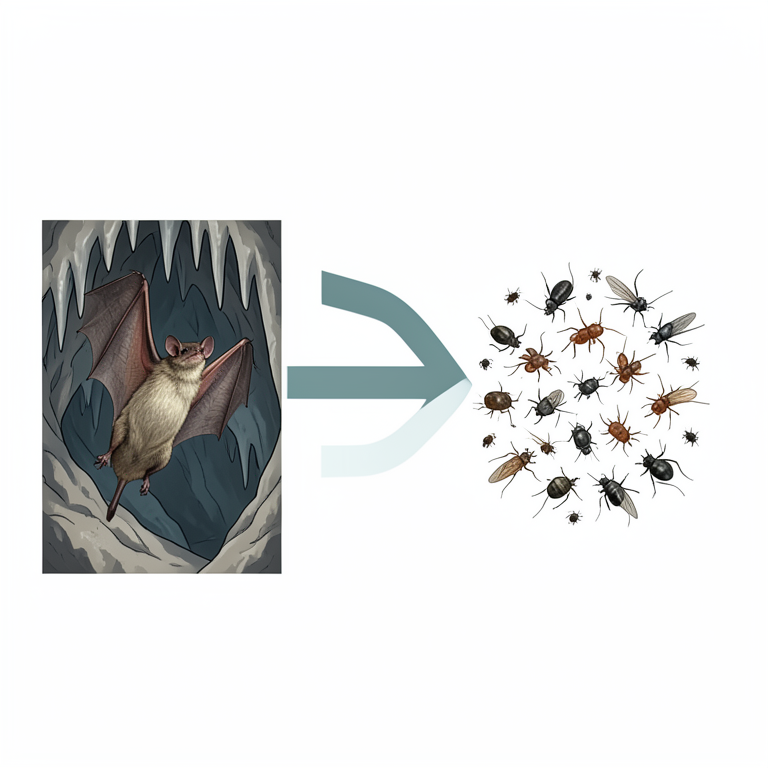
Drivers of Parasite Community Composition
AI-generated conceptual illustration (Neotropical bats and their ectoparasites (mites and bat flies) in a cave setting). It explains the idea and does not show study data.
View source evidence ↗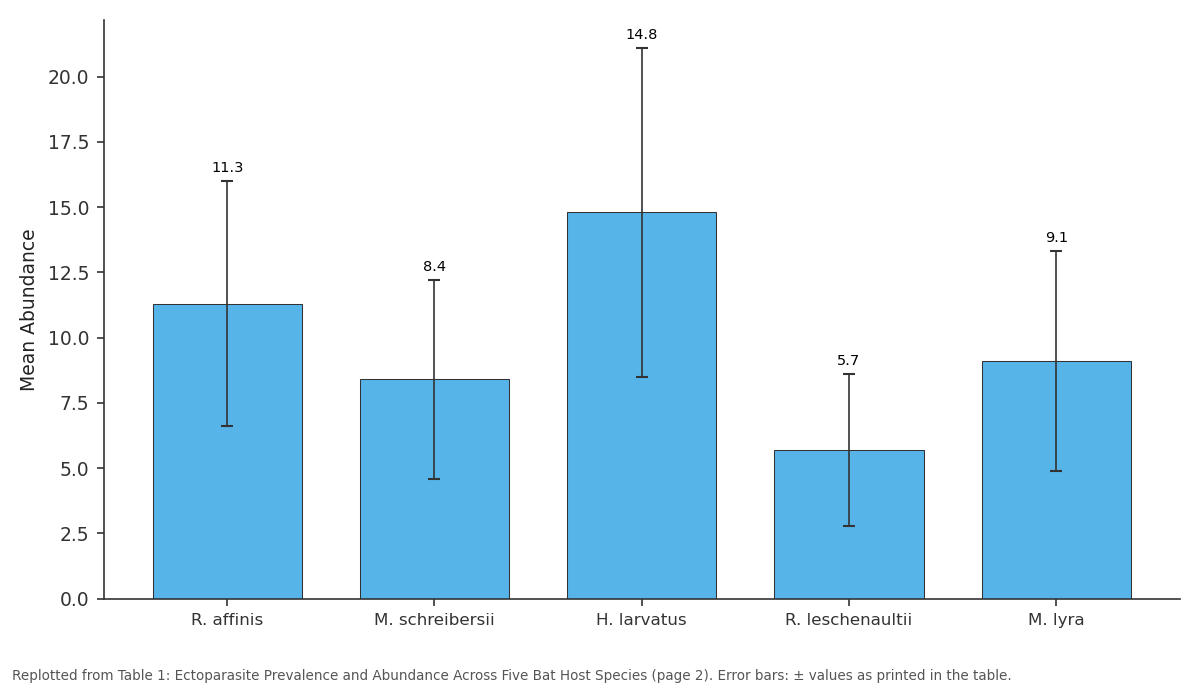
Mean Abundance: R. affinis vs M. schreibersii vs H. larvatus vs R. leschenaultii vs M. lyra
Replotted from Table 1 (page 2) of the original paper. Every bar is the paper's own table value.
View source evidence ↗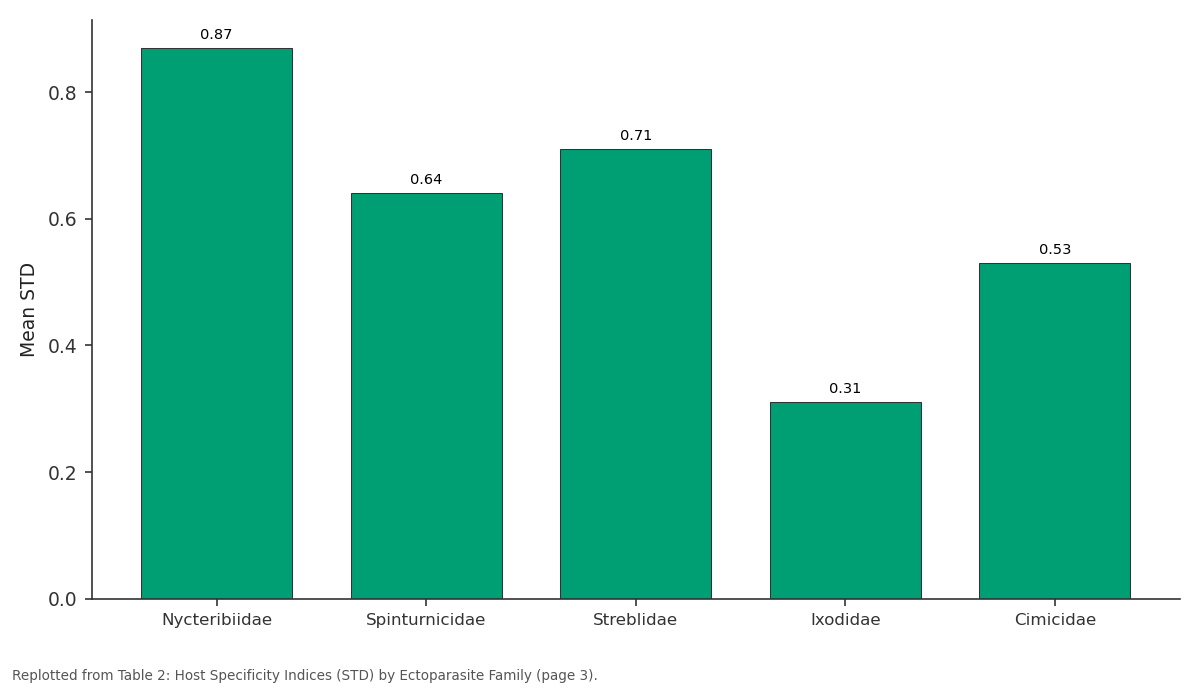
Mean STD: Nycteribiidae vs Spinturnicidae vs Streblidae vs Ixodidae vs Cimicidae
Replotted from Table 2 (page 3) of the original paper. Every bar is the paper's own table value.
View source evidence ↗Figures & tables
From the original paper Table 1
 Table 2
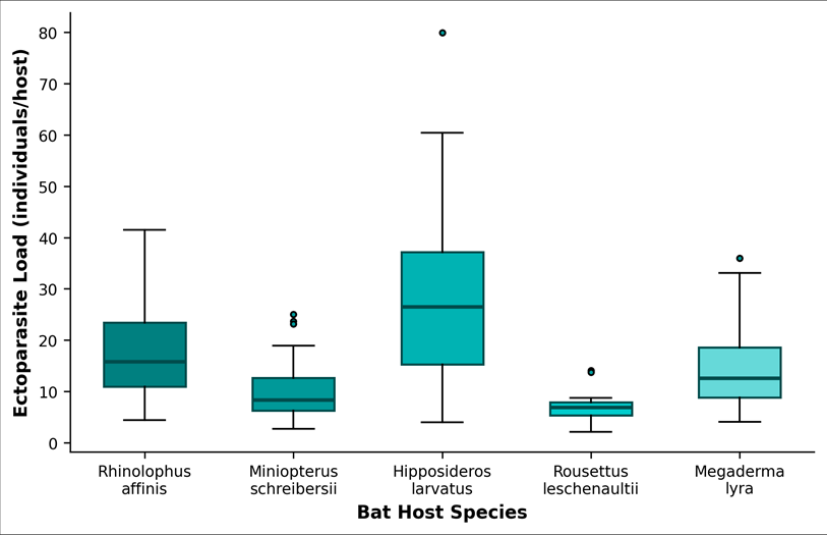 Figure 1
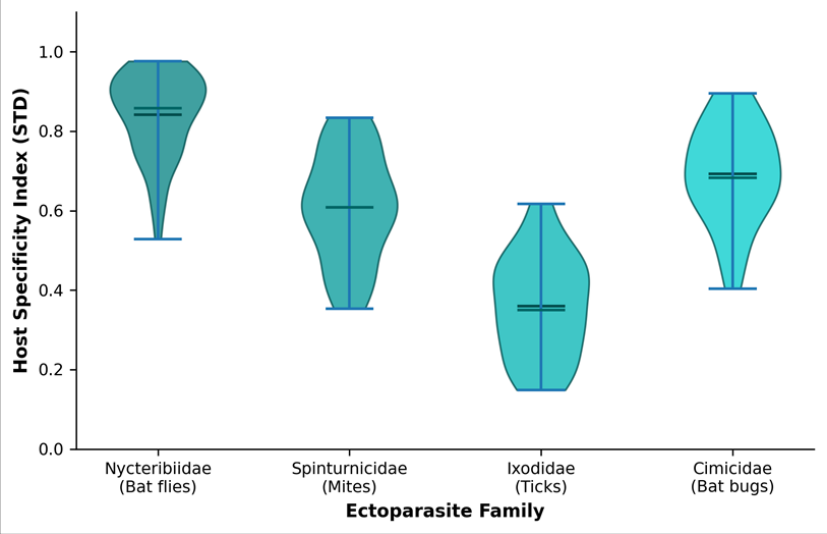 Figure 2
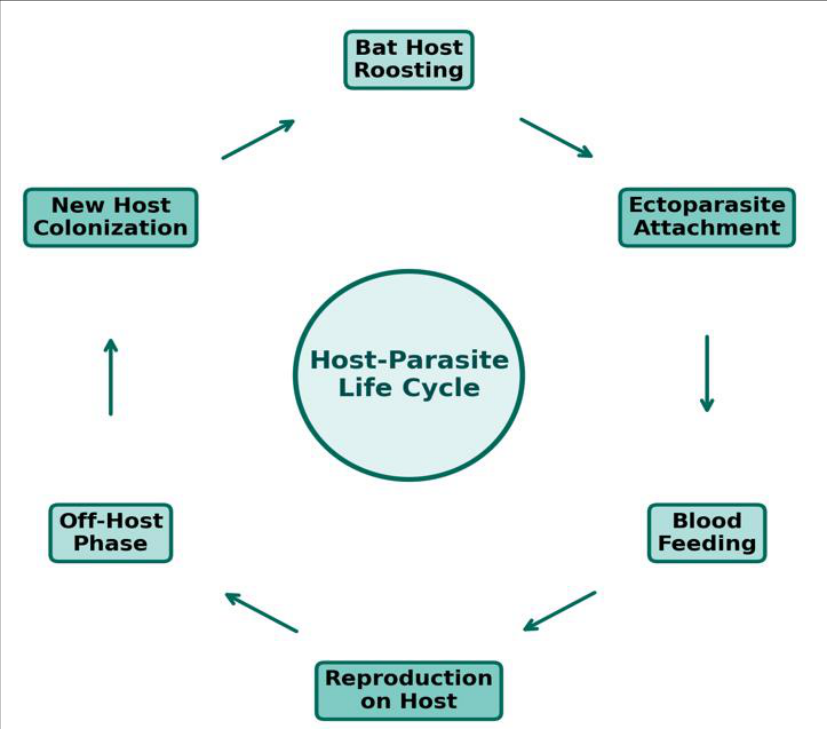 Figure 3
Introduction
Ectoparasitism represents one of the most intimate ecological relationships in nature a parasite that lives on or within the skin of its host must navigate the host's grooming behavior, immune defenses, and body temperature regulation simultaneously [1] . Bats (order Chiroptera) are disproportionately rich in ectoparasites compared to other mammalian orders of similar body size, hosting at least six families of obligate arthropod parasites found nowhere else in the animal kingdom [2] . This exceptional parasite diversity likely reflects the long evolutionary history of bats (over 50 million years), their colonial roosting habits that facilitate parasite transmission, and the stable microclimate of cave roosts that suits parasite development [3] . Host specificity the extent to which a parasite is restricted to particular host taxa varies widely among bat ectoparasite groups. Nycteribiid bat flies are generally regarded as highly host-specific, with many species completing their entire life cycle on a single bat genus [4] . By contrast, argasid soft ticks tend toward generalism, feeding on whichever bat species shares the roost [5] . Understanding these specificity patterns matters because they determine how parasite communities respond to changes in host abundance and whether parasites can switch to novel hosts as bat communities shift under environmental pressure [6] . Cave systems in the Indian subcontinent support diverse bat assemblages, yet ectoparasite surveys in this region remain scarce compared to Neotropical and Paleotropical Africa [7,8] . Rajasthan's Aravalli Range and the limestone karst landscapes of eastern Uttar Pradesh contain hundreds of caves occupied by insectivorous and frugivorous bats, representing an untapped resource for host-parasite ecology research [9] . Prior Indian bat ectoparasite work has been limited to species checklists without quantitative analysis of host specificity or community-level patterns [10] . This research had three objectives: first, to document ectoparasite species richness and abundance across five cooccurring bat host species in cave systems of Rajasthan and Uttar Pradesh; second, to quantify host specificity using the STD index for each ectoparasite family; and third, to evaluate whether host phylogenetic distance or cave environmental conditions better predicts ectoparasite community composition.
Study Area Description
Twelve limestone cave systems were surveyed across two geographic regions. Seven caves were located in the Aravalli Range of southeastern Rajasthan (24.2-25.8°N, 73.4-75.1°E) at elevations of 380-720 m above sea level, within dry deciduous thorn forest. Five caves were situated in the Vindhyan limestone belt of eastern Uttar Pradesh (24.8-25.4°N, 82.6-83.7°E) at 180-310 m elevation, surrounded by tropical moist deciduous forest. Caves ranged from simple horizontal passages of 15-30 m depth to complex multi-chambered systems extending over 200 m. Internal temperatures were stable at 24-28°C year-round, with relative humidity between 78% and 96%. Bat colony sizes in the surveyed caves ranged from approximately 40 to over 3,000 individuals, with multi-species roosts being the norm.
Material and Methods
Material and Methods
Material
Bats were captured at cave entrances using harp traps (Faunatech Austbat, 4.2 m²) and mist nets (12 m, 38 mm mesh) positioned during the evening emergence period (1800-2100 h). Each captured bat was placed in an individual cloth holding bag. Ectoparasites were removed systematically using blunt-tipped forceps under a headmounted magnifier, working from head to tail across all body regions. Parasites were preserved in 95% ethanol for morphological identification and molecular confirmation. Bats were identified to species, measured (forearm length, body mass), and released at the capture site within 2 hours. Ectoparasite identification used standard taxonomic keys:
Methods
Host specificity was quantified using the STD index (structural specificity index), which ranges from 0 (extreme generalist) to 1 (extreme specialist) and accounts for phylogenetic relationships among host species [11] . Ectoparasite community similarity between host species pairs was calculated using the Bray-Curtis dissimilarity index. The relationship between host phylogenetic distance and parasite community dissimilarity was tested using Mantel tests with 9,999 permutations. Host phylogenetic distances were extracted from a published bat supertree [12] . Cave environmental parameters (temperature, humidity, colony size, cave depth, entrance dimensions) were recorded at each visit. Canonical correspondence analysis (CCA) in R v4.2.3 (vegan package) was used to assess how much variation in ectoparasite community composition was explained by host identity versus cave-level environmental factors. Prevalence (% hosts infested), mean intensity (parasites per infested host), and mean abundance (parasites per host examined) were calculated following Bush et al. (1997) [13] .
Seasonal Variations in Ectoparasite Load
Sampling was conducted across three seasons: monsoon (June-September 2022), post-monsoon/winter (October-February 2023), and pre-monsoon/summer (March-April 2023). Ectoparasite loads peaked during the monsoon season, when cave humidity was highest (mean 93.7%) and bat colonies were at maximum density due to maternity aggregations. Mean parasite abundance was 2.1 times higher in monsoon samples compared to summer samples across all host species (paired t-test, t = 4.83, df = 4, p = 0.008). Nycteribiid flies showed the most pronounced seasonal fluctuation, with pupal production concentrated during the monsoon months. Nycteribiid bat flies were the most host-specific group (Table 2), with a mean STD of 0.87 and four-fifths of species found exclusively on one host genus. Ixodid ticks were the most generalist ectoparasites, with all three species recorded from multiple host species within the same cave. The Mantel test confirmed a strong positive correlation between host phylogenetic distance and ectoparasite community dissimilarity (r=0.73, p=0.001). Closely related bat species (within the same family) shared 62.8% of their ectoparasite species on average, while distantly related pairs shared only 14.3%. CCA analysis partitioned the explained variance as follows: host identity accounted for 47.3%, cave environmental variables explained 34.2%, and the interaction between host and environment contributed an additional 8.1%.
| Parasite Family | n species | Mean STD | Range | % Mono- xenous | Preferred Host Order |
|---|---|---|---|---|---|
| Nycteribiidae | 8 | 0.87 | 0.72-0.98 | 78.4 | Microchiroptera |
| Spinturnicidae | 6 | 0.64 | 0.41-0.83 | 33.3 | Rhinolophidae |
| Streblidae | 4 | 0.71 | 0.58-0.89 | 50.0 | Mixed |
| Ixodidae | 3 | 0.31 | 0.18-0.47 | 0.0 | Generalist |
| Cimicidae | 2 | 0.53 | 0.44-0.62 | 0.0 | Mixed |
Table text extracted from the original PDF; superscript letters are shown inline. The original table image is below.
View original table image
Results
Results
Discussion
The ectoparasite communities documented here are broadly consistent with surveys from cave systems in Southeast Asia and southern China, though our total species richness (23 morphospecies) was somewhat lower than the 31-38 species reported from more species-rich tropical cave faunas [7,14] . This difference likely reflects the lower bat species diversity at our sites (five host species versus 8-12 in Southeast Asian surveys) rather than fundamentally different parasite community assembly rules.
The high host specificity of Nycteribiidae bat flies (STD = 0.87) supports the hypothesis that obligate, wingless ectoparasites evolve tight host associations because they depend entirely on host-to-host contact for transmission [4,5] . Their inability to fly means that switching to a non-contact host species is essentially impossible. Spinturnicidae mites, while still moderately specific (STD = 0.64), showed more flexibility probably because mites can survive longer offhost and may encounter alternative hosts during brief periods in the roost substrate [15] . The strong Mantel correlation (r = 0.73) between host phylogeny and parasite community similarity matches findings from European bat ectoparasite systems and supports the idea that parasite communities cospeciate with their hosts over evolutionary time [6,8] . However, the 34.2% of variance explained by cave environmental factors shows that local conditions also matter. Caves with larger bat colonies and higher humidity supported more ectoparasite species, possibly because denser host aggregations increase transmission rates and humid conditions improve off-host survival of parasite immature stages [3] .
Conclusion
Conclusion
Acknowledgement
Acknowledgements Funding SourcesThis research was funded through intramural research allocations from Rajputana Institute of Molecular Biology and Central Institute of Life Sciences and Biotechnology. No external commercial funding was received. Institutional SupportThe authors acknowledge Rajputana Institute of Molecular Biology, Jaipur, and Central Institute of Life Sciences and Biotechnology, Lucknow, for laboratory facilities and logistical support for fieldwork. Contributions Not Qualifying for AuthorshipThe authors thank Mr. Ravi Sharma and Mr. Suresh Yadav for field assistance during cave surveys and Ms. Priya Singh for help with ectoparasite slide preparation.
Figures and tables from the paper
| Host Species | n | Prevalence (%) | Mean Abundance | Richness (species) | Dominant Parasite |
|---|---|---|---|---|---|
| R. affinis | 82 | 91.5 | 11.3 ± 4.7 | 8 | Penicillidia sp. |
| M. schreibersii | 67 | 86.6 | 8.4 ± 3.8 | 6 | Nycteribia sp. |
| H. larvatus | 74 | 94.6 | 14.8 ± 6.3 | 9 | Spinturnix sp. |
| R. leschenaultii | 58 | 72.4 | 5.7 ± 2.9 | 5 | Eucampsipoda sp. |
| M. lyra | 66 | 83.3 | 9.1 ± 4.2 | 7 | Strebla sp. |
Table text extracted from the original PDF; superscript letters are shown inline. The original table image is below.
View original table image
References
15 in the original paper- Marshall AG. The ecology of ectoparasitic insects. London: Academic Press; 1981. p. 1-459.
- Dick CW, Patterson BD. Bat flies: obligate ectoparasites of bats. In: Morand S, Krasnov BR, Poulin R, editors. Micromammals and Macroparasites. Tokyo: Springer; 2006. p. 179-194.
- Kunz TH, Parsons S, editors. Methods for age estimation and the study of senescence in bats. In: Ecological and Behavioral Methods for the Study of Bats. 2nd ed. Baltimore: Johns Hopkins University Press; 2009. p. 315-325.
- Dick CW, Dittmar K. Parasitic bat flies: evolution, ecology, and host specificity. In: Morand S, Krasnov BR, Littlewood DTJ, editors. Parasite Diversity and Diversification. Cambridge: Cambridge University Press; 2014. p. 297-315.
- Estrada-Peña A, Jongejan F. Ticks feeding on humans: a review of records on human-biting Ixodoidea with special reference to pathogen transmission. Experimental and Applied Acarology. 1999;23(9):685715.
- Poulin R. Phylogeny, ecology, and the richness of parasite communities in vertebrates. Ecological Monographs. 1995;65(3):283-302.
- Chua YP, Ramli R, Bhassu S, Wilson JJ. Pollination implications of the diverse diet of tropical nectarfeeding bats roosting in an urban cave. PeerJ. 2018;6:e4572.
- Patterson BD, Dick CW, Dittmar K. Roosting habits of bats affect their parasitism by bat flies. Journal of Tropical Ecology. 2007;23(2):177-189.
- Prakash I. Bats of Rajasthan. Records of the Zoological Survey of India. 1980;76(1):7-24.
- Sreenivasa Murthy PK, Das PK, Pani SP. Ectoparasites of bats from Kolar District, Karnataka. Indian Journal of Parasitology. 1986;10(1):43-49.
- Poulin R, Mouillot D. Parasite specialization from a phylogenetic perspective: a new index of host specificity. Parasitology. 2003;126(5):473-480.
- Jones KE, Purvis A, MacLarnon A, Bininda-Emonds ORP, Simmons NB. A phylogenetic supertree of the bats. Biological Reviews. 2002;77(2):223-259.
- Bush AO, Lafferty KD, Lotz JM, Shostak AW. Parasitology meets ecology on its own terms: Margolis et al. revisited. Journal of Parasitology. 1997;83(4):575583.
- Lourenço SI, Palmeirim JM. Which factors regulate the reproduction of ectoparasites of temperate-zone cavedwelling bats? Parasitology. 2008;135(5):633-644.
- Giorgi MS, Arlettaz R, Christe P, Vogel P. The energetic grooming costs imposed by a parasitic mite on its bat host. Proceedings of the Royal Society B: Biological Sciences. 2001;268(1480):2071-2075.