
Research article · 2024 · Full text
International Journal of Biology SciencesVector competence of Aedes mosquito populations for dengue virus transmission in urban areas
Volume 6(1) · Pages 258–262 · DOI: 10.33545/26649926.2024.v6.i1c.876 ↗
Research areasMosquito-borne diseases and controlDengue and Mosquito Control ResearchDiptera species taxonomy and behavior
Abstract
Author-writtenDengue infects an estimated 390 million people annually, yet not all Aedes mosquito populations transmit the virus with equal efficiency and this variation matters for predicting outbreak risk. This research assessed vector competence of field-collected Aedes aegypti and Aedes albopictus populations from six distinct urban habitat types in Vadodara, Gujarat, for all four dengue virus serotypes. Immature mosquitoes were collected from each site between June 2022 and February 2023 and reared to adulthood at the Gujarat Institute of Genomics and Biotechnology insectary. F2-F3 generation females were orally infected with DENV-1 through DENV-4 at standardized titers (10⁷ PFU/mL) using membrane feeding. Infection, dissemination, and transmission rates were measured at 7, 10, and 14 days post-infection by RT-qPCR of midgut, leg/wing, and salivary gland tissues respectively. Overall vector competence indices ranged from 0.058 in peri-urban Ae. albopictus to 0.344 in slum-settlement Ae. aegypti. DENV-2 produced the highest infection rates across both species (84.7% in Ae. aegypti, 61.8% in Ae. albopictus), while DENV-4 was least efficiently transmitted. Mosquitoes from high-density slum settlements showed significantly higher competence than those from residential or commercial zones (p<0.001). Ae. aegypti populations were 1.4 to 2.1 times more competent than sympatric Ae. albopictus for all serotypes tested.
Summary
Source-checkedPlain-language reading of the full paper, prepared with AI and checked against the text. Each point links to the authors' own words.
Why it matters
- Dengue virus affects approximately 390 million people every year, and understanding why some mosquito populations transmit the virus more efficiently than others is critical for predicting outbreaks. View evidence ↗
- Vector competence, the ability of a mosquito to acquire and transmit a pathogen, varies by geographic population, species, and the specific dengue serotype. View evidence ↗
- Vadodara is one of the worst-affected cities in Gujarat, India, but there has been no systematic study of how vector competence differs across its various urban habitats. View evidence ↗
The question
- The study aimed to assess the vector competence of field-collected Aedes aegypti and Aedes albopictus from six different urban habitat types in Vadodara for all four dengue virus serotypes. View evidence ↗
What they did
- Larvae and pupae were collected biweekly from June 2022 to February 2023 across six urban sites using ovitrapping and larval dipping. View evidence ↗
- To maintain genetic relevance while reducing maternal effects, the researchers used females from the F2-F3 generations. View evidence ↗
- Five-to-seven day old females were fed sheep blood spiked with DENV serotypes at a concentration of 10⁷ PFU/mL via a membrane feeding system. View evidence ↗
- Infection, dissemination, and transmission were measured at 7, 10, and 14 days post-infection using RT-qPCR on midgut, leg/wing, and salivary gland tissues. View evidence ↗
What they found
- Ae. aegypti from slum settlements had the highest vector competence index (VCI) of 0.344, which was 2.3 times higher than residential populations (0.147) and nearly six times higher than peri-urban populations (0.058). View evidence ↗
- DENV-2 was the most efficient serotype, with infection rates of 84.7% in Ae. aegypti and 61.8% in Ae. albopictus, whereas DENV-4 was the least efficiently transmitted. View evidence ↗
- Ae. aegypti was the dominant species in slum settlements (87.3%) and commercial districts (79.1%), while Ae. albopictus prevailed in peri-urban fringes (62.4%) and hospital perimeters (54.8%). View evidence ↗
What it means
- The authors conclude that dengue risk mapping should combine traditional indicators, such as adult density and the Breteau index, with site-specific vector competence data. View evidence ↗
- The authors recommend targeting vector control programs at high-competence population pockets, especially in informal urban settlements, to maximize the reduction of transmission risk. View evidence ↗
- The authors state that future research is needed to determine if these competence differences persist across different seasons and if they correlate with specific genetic markers. View evidence ↗
Visual summary
2 visualsIllustrations explain the paper; charts are replotted from the paper's own table values.
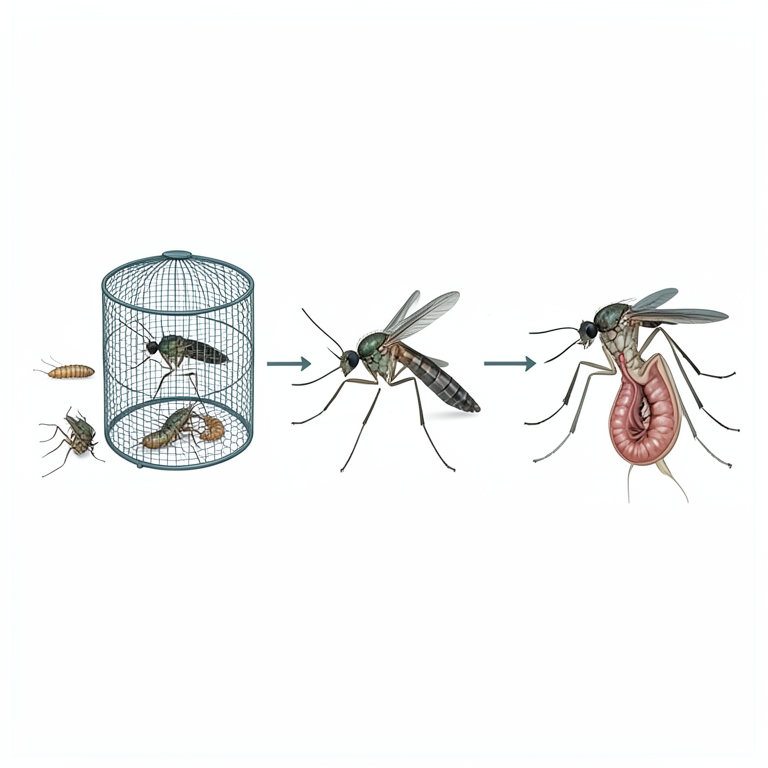
Vector Competence Workflow
AI-generated conceptual illustration (Aedes aegypti and Aedes albopictus mosquitoes). It explains the idea and does not show study data.
View source evidence ↗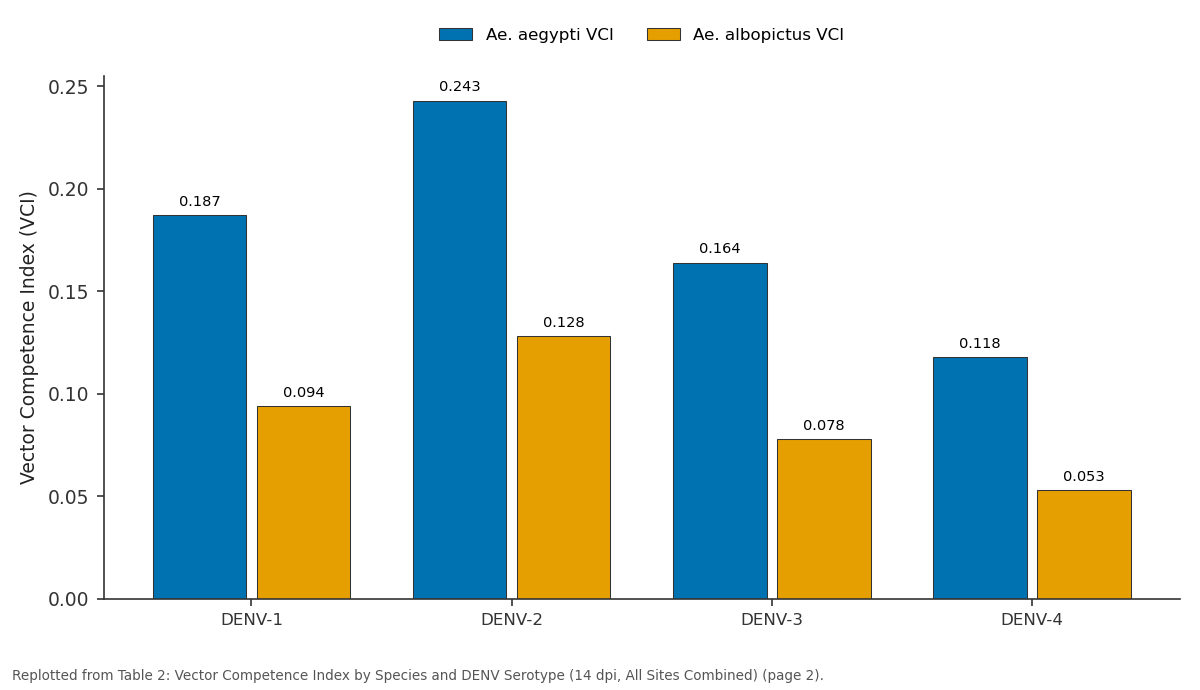
Ae. aegypti VCI and Ae. albopictus VCI: DENV-1 vs DENV-2 vs DENV-3 vs DENV-4
Replotted from Table 2 (page 2) of the original paper. Every bar is the paper's own table value.
View source evidence ↗Figures & tables
From the original paper Table 1
 Table 2
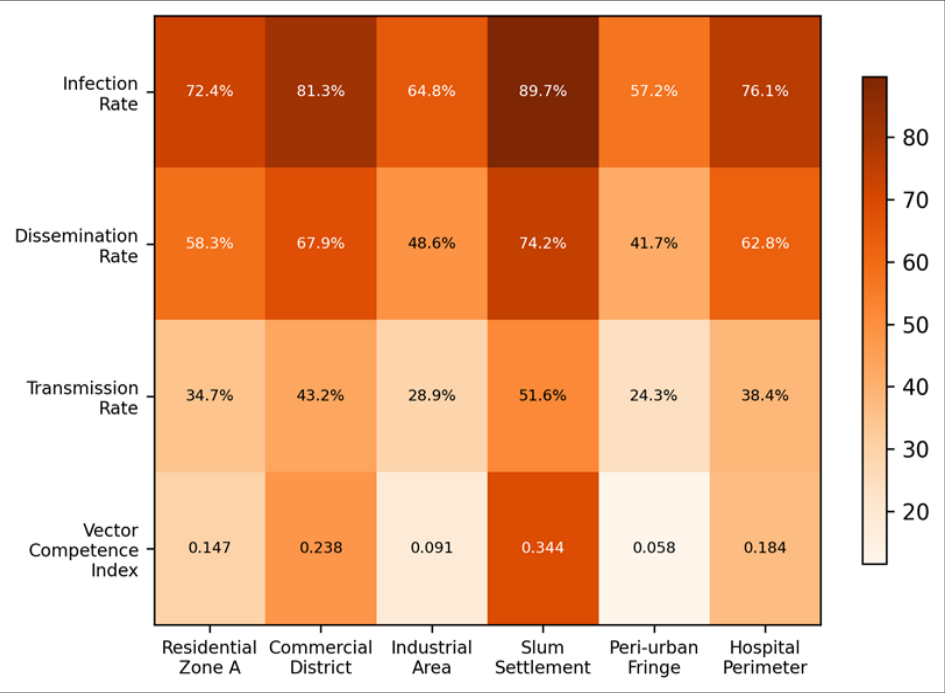 Figure 1
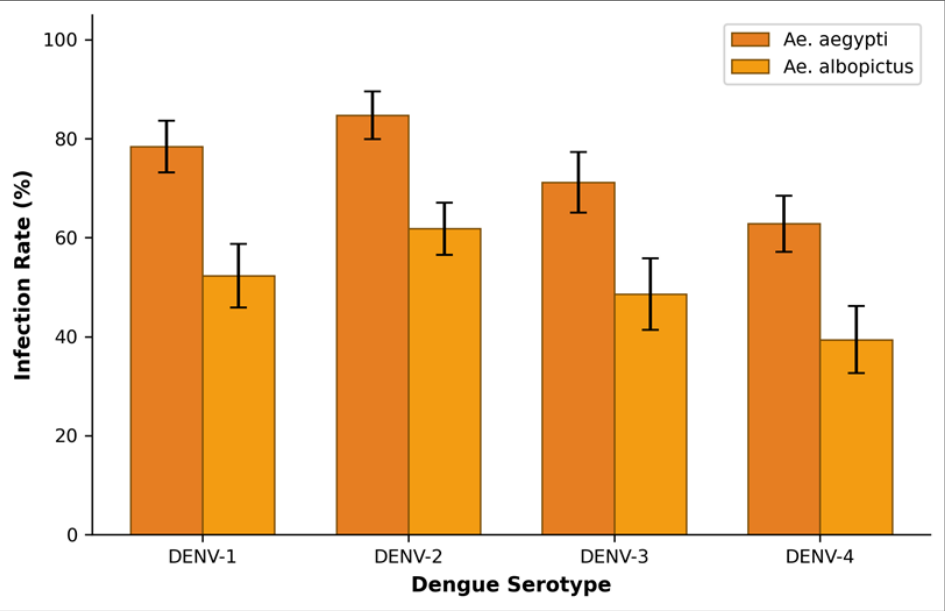 Figure 2
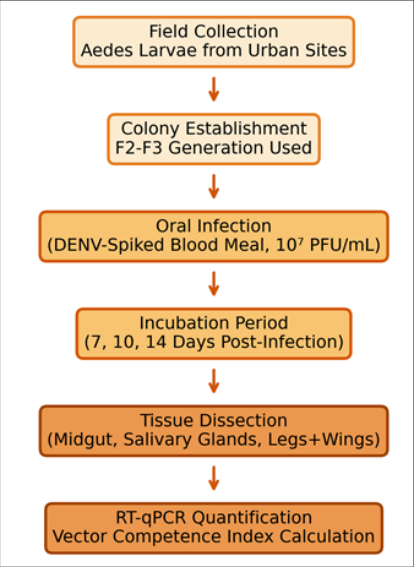 Figure 3
Introduction
The global burden of dengue has grown dramatically over the past five decades, with a 30fold increase in reported cases since the 1960s [1] . But the risk isn't distributed evenly, even within a single city. Some neighborhoods experience repeated outbreaks while others, separated by just a few kilometers, remain relatively spared [2] . Part of this heterogeneity comes from differences in mosquito density and human behavior, but another part often overlooked comes from variation in vector competence: the intrinsic ability of a mosquito population to acquire, maintain, and transmit a pathogen [3] . Vector competence is not a fixed species-level trait. It varies among geographic populations of the same species, between Aedes aegypti and Aedes albopictus living in the same area, and even across dengue serotypes within a single mosquito population [4,5] . Genetic factors in both the mosquito and the virus interact to determine whether infection leads to dissemination to the salivary glands and eventually to transmission through a subsequent blood meal [6] . Environmental conditions during larval development -temperature, nutrition, crowding can further modify adult competence through lasting physiological effects [7] . Gujarat state reports thousands of dengue cases annually, with Vadodara being among the worst-affected cities [8] . Yet no systematic assessment of vector competence has been conducted for local Aedes populations across different urban habitat types. Previous work in India focused mainly on laboratory-adapted colonies rather than field-derived populations, which may not represent the genetic diversity and competence levels found in natural settings [9,10] . This research filled that gap by comparing vector competence of Ae. aegypti and Ae. albopictus from six urban habitat categories for all four DENV serotypes, using lowgeneration field-collected mosquitoes to preserve ecologically relevant genetic backgrounds
Material and Methods
Material: Immature Aedes mosquitoes (larvae and pupae) were collected from natural breeding habitats at each of the six urban sites using standard larval dipping and ovitrapping methods. Collections occurred biweekly between June 2022 and February 2023 to capture seasonal variation. Larvae were transported to the insectary at Gujarat Institute of Genomics and Biotechnology, Vadodara, and reared to adulthood under controlled conditions (28 ± 1°C, 80 ± 5% relative humidity, 12:12 L:D photoperiod). Species identification was confirmed morphologically using keys by Rueda ( 2004) and molecularly by ITS2 PCR for ambiguous specimens. F2-F3 generation females were used for all competence assays to reduce maternal effects while retaining field-relevant genetic composition. Dengue virus stocks (DENV-1 through DENV-4, low-passage clinical isolates from Gujarat) were propagated in C6/36 cells and titrated by plaque assay before use. The Institutional Biosafety Committee approved the protocol (IBSC/GIGB/2022-08, May 2022).
Methods
Five-to-seven day old females were starved for 24 hours, then offered infectious blood meals through a Hemotek membrane feeding system using defibrinated sheep blood spiked with each DENV serotype at 10⁷ PFU/mL. Fully engorged females were sorted under cold anesthesia and maintained individually in cardboard cups. At 7, 10, and 14 days post-infection (dpi), mosquitoes were cold-anesthetized and dissected. Legs and wings were removed first (to assess dissemination), then salivary glands (transmission), and finally midguts (infection). Each tissue was homogenized in TRIzol and processed for RNA extraction. DENV RNA was detected and quantified by serotype-specific RT-qPCR using CDC primers. Infection rate was defined as the proportion of mosquitoes with DENV-positive midguts. Dissemination rate was the proportion of infected mosquitoes with positive legs/wings. Transmission rate was the proportion of disseminated mosquitoes with positive salivary glands. The vector competence index (VCI) was calculated as infection rate × dissemination rate × transmission rate. A minimum of 30 mosquitoes per site-species-serotype-time point combination were tested. Data were analyzed by generalized linear models with binomial error distribution in R v4.2.3.
Aedes Species Composition across Sites
Ovitrapping surveys confirmed the presence of both Ae. aegypti and Ae. albopictus at all six sites, though their relative abundance differed. Ae. aegypti dominated in the slum settlement (87.3% of Aedes collected) and commercial district (79.1%), while Ae. albopictus was more common in the peri-urban fringe (62.4%) and hospital perimeter (54.8%). Breteau indices ranged from 23.7 (peri-urban) to 71.4 (slum), well above the threshold of 5 considered to represent high dengue transmission risk. Container surveys identified discarded tires, cement tanks, and overhead water storage containers as the primary larval habitats. Slum-derived Ae. aegypti populations showed the highest vector competence across all parameters (Table 1). Their VCI of 0.344 was nearly six times higher than peri-urban populations (0.058) and 2.3 times higher than residential populations (0.147). The difference was statistically significant (GLM, site effect: χ²=87.4, df=5, p<0.001). DENV-2 was the most efficiently transmitted serotype by both species, while DENV-4 showed the lowest competence values (Table 2). Ae. aegypti was consistently 1.9 to 2.2 times more competent than Ae. albopictus across all serotypes.
| Serotype | Ae. aegypti VCI | Ae. albopictus VCI | Ratio (aegypti/albop.) | p-value |
|---|---|---|---|---|
| DENV-1 | 0.187 | 0.094 | 2.0 | <0.001 |
| DENV-2 | 0.243 | 0.128 | 1.9 | <0.001 |
| DENV-3 | 0.164 | 0.078 | 2.1 | <0.001 |
| DENV-4 | 0.118 | 0.053 | 2.2 | <0.001 |
Table text extracted from the original PDF; superscript letters are shown inline. The original table image is below.
View original table image
| Site | Infection Rate (%) | Dissem. Rate (%) | Transm. Rate (%) | VCI | n tested |
|---|---|---|---|---|---|
| Residential | 72.4 | 58.3 | 34.7 | 0.147 | 128 |
| Commercial | 81.3 | 67.9 | 43.2 | 0.238 | 131 |
| Industrial | 64.8 | 48.6 | 28.9 | 0.091 | 119 |
| Slum | 89.7 | 74.2 | 51.6 | 0.344 | 142 |
| Peri-urban | 57.2 | 41.7 | 24.3 | 0.058 | 114 |
| Hospital | 76.1 | 62.8 | 38.4 | 0.184 | 126 |
Table text extracted from the original PDF; superscript letters are shown inline. The original table image is below.
View original table image
Results
Results
Discussion
These results show that vector competence for dengue varies widely among Aedes populations collected from different urban environments within a single city. The six-fold difference in VCI between slum and peri-urban Ae. aegypti populations suggests that outbreak risk assessment based solely on mosquito abundance may substantially underestimate transmission potential in high-density informal settlements [2,11] . The higher competence of slum-derived populations could reflect several interacting factors. Larval development conditions in slum habitats characterized by organically polluted water, higher temperatures in sun-exposed containers, and intense competition have been shown to produce smaller but potentially more susceptible adult mosquitoes [7,12] . Genetic factors may also play a role. Slum Ae. aegypti populations in India typically show lower genetic diversity due to smaller effective population sizes and founder effects, which could fix alleles associated with higher susceptibility to DENV infection [13] .
The serotype hierarchy we observed (Denv-2 > Denv-1 > Denv-3 > Denv-4) matches reports from Southeast Asia and the Americas [4,14] . DENV-2's consistently higher infection and transmission rates may reflect its faster replication kinetics in mosquito midgut cells and more efficient crossing of the midgut escape barrier [15] . From a public health perspective, this means that outbreaks driven by DENV-2 may spread more rapidly even when vector density is moderate. The 1.4 to 2.1 fold advantage of Ae. aegypti over Ae. albopictus in vector competence aligns with the epidemiological observation that Ae. aegypti is the primary dengue vector in urban settings globally [16] . However, the non-trivial competence of Ae. albopictus especially for DENV-2 -supports the idea that this species can maintain transmission in areas where Ae. aegypti density is low, particularly in peri-urban zones where Ae. albopictus is the dominant Aedes species [17] .
Conclusion
Vector competence for dengue virus among Aedes populations in Vadodara varies substantially by urban habitat type, mosquito species, and viral serotype. Slumsettlement Ae. aegypti displayed the highest competence indices, roughly six times greater than peri-urban populations from the same city. DENV-2 was transmitted most efficiently by both species, while DENV-4 showed the lowest transmission potential. Ae. aegypti was consistently 1.9 to 2.2 times more competent than sympatric Ae. albopictus. These findings indicate that dengue risk mapping should incorporate site-specific vector competence data alongside traditional entomological indicators like the Breteau index and adult density. Vector control programs targeting high-competence population pocketsparticularly in informal urban settlements -could yield disproportionate reductions in transmission risk relative to the area treated. Future work should examine whether the competence differences observed here persist across seasons and whether they correlate with specific genetic markers that could enable rapid surveillance-based risk prediction.
Figures and tables from the paper
References
10 in the original paper- Bhatt S, Gething PW, Brady OJ, et al. The global distribution and burden of dengue. Nature. 2013;496(7446):504-507.
- Stoddard ST, Forshey BM, Morrison AC, et al. Houseto-house human movement drives dengue virus transmission. Proceedings of the National Academy of Sciences of the United States of America. 2013;110(3):994-999.
- Souza-Neto JA, Powell JR, Bonizzoni M. Aedes aegypti vector competence studies: a review. Infection, Genetics and Evolution. 2019;67:191-209.
- Lambrechts L, Chevillon C, Albright RG, et al. Genetic specificity and potential for local adaptation between dengue viruses and mosquito vectors. BMC Evolutionary Biology. 2009;9:160.
- Vega-Rúa A, Zouache K, Girod R, et al. High level of vector competence of Aedes aegypti and Aedes albopictus from ten American countries as a crucial factor in the spread of chikungunya virus. Journal of Virology. 2014;88(11):6294-6306.
- Sim S, Jupatanakul N, Dimopoulos G. Mosquito immunity against arboviruses. Viruses. 2014;6(11):4479-4504.
- Alto BW, Rapti Z, Caceres CE, Muturi EJ. Effect of larval competition on extrinsic incubation period and vectorial capacity of Aedes albopictus for dengue virus. PLoS ONE. 2015;10(5):e0126703.
- Vector Borne Disease Control Programme. Dengue situation in India: state-wise number of cases and deaths. Government of India. 2023:1-45.
- Khan KD, Mahabir RS, Curtin KM, et al. Exploratory space-time analysis of dengue incidence in Trinidad: a retrospective study using travel hubs as dispersal points. Parasites and Vectors. 2014;7:341.
- Muñoz M, Gokhale M, Deobagkar D. Dengue-2 virus interacts with Aedes aegypti salivary gland proteins. Acta Tropica. 2010;116(1):89-94.