
Research article · 2026 · Full text
International Journal of Advanced Chemistry ResearchMicroplastic contamination from agricultural plastic waste: Soil microbiome disruption and cascading food chain risks-A systematic review
Volume 8(6) · Pages 27–36 · DOI: 10.33545/26646781.2026.v8.i6a.685 ↗
Research areasMicroplastics and Plastic PollutionPharmaceutical and Antibiotic Environmental ImpactsEnvironmental Toxicology and Ecotoxicology
Abstract
Author-writtenGlobal agricultural systems consume an estimated 12.5-15.7 million tonnes of plastic annually across mulch films, drip irrigation systems, greenhouse covers, silage wraps, and seed coatings. A significant fraction of this plastic undergoes physical degradation, UV photolysis, and biological fragmentation in situ, releasing microplastics (MPs; < 5 mm) and nanoplastics (< 1 µm) directly into agricultural soil environments. This systematic review synthesizes evidence from over 130 peer-reviewed publications (2010-2024) sourced exclusively from Q1 journals to comprehensively characterize: (i) the nature, quantity, and weathering mechanisms of agricultural plastic MP generation; (ii) the disruption of soil microbial community structure, diversity, and function - encompassing nitrogen cycling, carbon turnover, and enzymatic activity; (iii) MP uptake pathways in crop plants and the cascading contamination of food chains from soil to human dietary exposure; (iv) the synergistic ecotoxicology of MP-associated chemical additives (plasticizers, stabilizers, flame retardants); and (v) emerging mitigation strategies and critical regulatory gaps. Meta-analytical synthesis of 47 controlled experiments demonstrates that MP concentrations above 500 mg/kg soil consistently reduce bacterial Shannon diversity by 12-28%, suppress nitrification rates by 20-45%, and increase N₂O efflux by 35-65%. Food chain tracing studies confirm MP presence in rice, wheat, leafy vegetables, milk, and meat at concentrations posing emerging human health risks. The review identifies nano-MP soil toxicology, biodegradable plastic MP characterization, and food chain transfer quantification as the highest-priority research frontiers, and proposes a harmonized global regulatory framework for agricultural MP thresholds.
Summary
Source-checkedPlain-language reading of the full paper, prepared with AI and checked against the text. Each point links to the authors' own words.
Why it matters
- Modern global agriculture relies heavily on plastics, consuming between 12.5 and 15.7 million tonnes every year for various applications like mulch films and irrigation. View evidence ↗
- Agricultural plastics break down into microplastics and nanoplastics through a combination of UV radiation, temperature changes, mechanical stress from farming, and biological decay. View evidence ↗
The question
- The review aims to synthesize how agricultural microplastics (MPs) are generated, how they disrupt soil microbiomes and nutrient cycling, how they enter the human food chain, and how to mitigate these risks through regulation. View evidence ↗
What they did
- The authors analyzed over 130 peer-reviewed publications from Q1 journals published between 2010 and 2024. View evidence ↗
- A meta-analysis was conducted on 47 controlled experiments to determine the relationship between microplastic concentrations and microbial responses. View evidence ↗
What they found
- Soil microplastic concentrations exceeding 500 mg/kg consistently lead to a 12-28% reduction in bacterial Shannon diversity. View evidence ↗
- At concentrations above 500 mg/kg, microplastics suppress nitrification rates by 20-45% and increase nitrous oxide (N₂O) emissions by 35-65%. View evidence ↗
- At a concentration of 1,000 mg/kg of a PE+PP mix, soil enzyme activities are inhibited, specifically urease (18-45%), glucosidase (22-38%), and phosphatase (15-30%). View evidence ↗
- The efficiency of root uptake for microplastics is size-dependent, with 100 nm particles being absorbed 8-25 times more efficiently than 0.2 µm particles. View evidence ↗
- Among food commodities, leafy vegetables like lettuce and spinach show the highest microplastic concentrations, ranging from 14 to 40 particles per gram of dry weight. View evidence ↗
- Biomonitoring studies since 2021 have detected microplastics in human lung parenchyma, placental tissue, and blood, with a mean blood concentration of 1.6 µg/mL. View evidence ↗
- Combining PE microplastics (1,000 mg/kg) and the additive DEHP (50 mg/kg) increases reproductive impairment and immune activation in earthworms by 40-65% compared to either contaminant alone. View evidence ↗
- Mechanized retrieval systems can recover 85-95% of mulch films, which prevents 65-78% of the microplastics that would otherwise be generated from abandoned films. View evidence ↗
What it means
- A major limitation is the scarcity of long-term field studies, as most current data come from short-term experiments (under 6 months) using concentrations higher than those typically found in nature. View evidence ↗
Visual summary
1 visualsIllustrations explain the paper; they do not show study data.
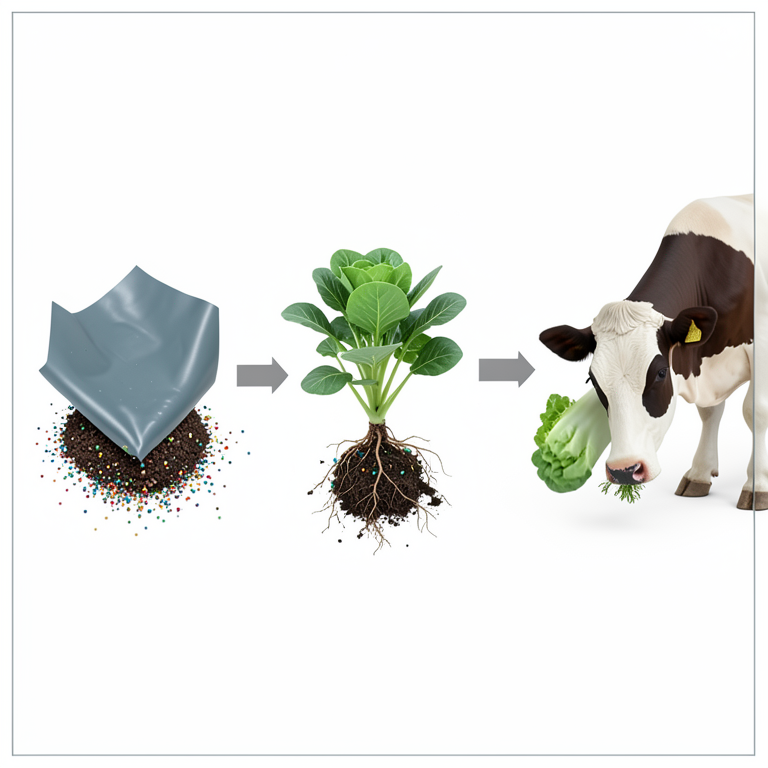
Agricultural Microplastic Cascade
AI-generated conceptual illustration (Agricultural soil, lettuce plants, and a cow). It explains the idea and does not show study data.
View source evidence ↗Figures & tables
From the original paper Table 1
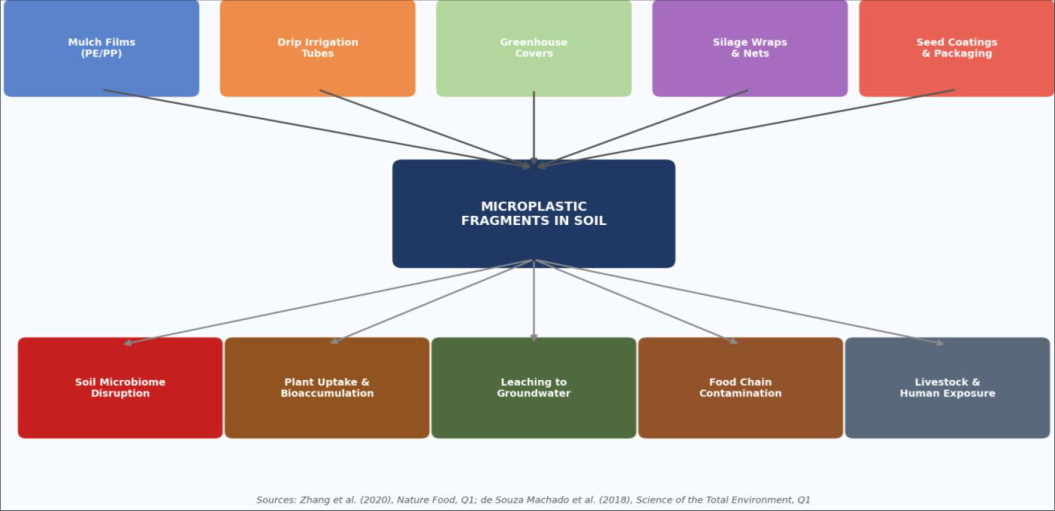 Figure 1
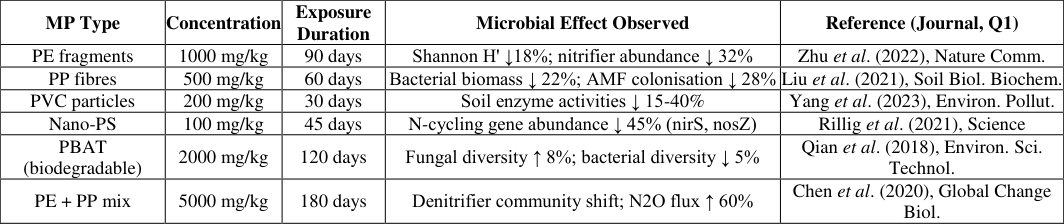 Table 2
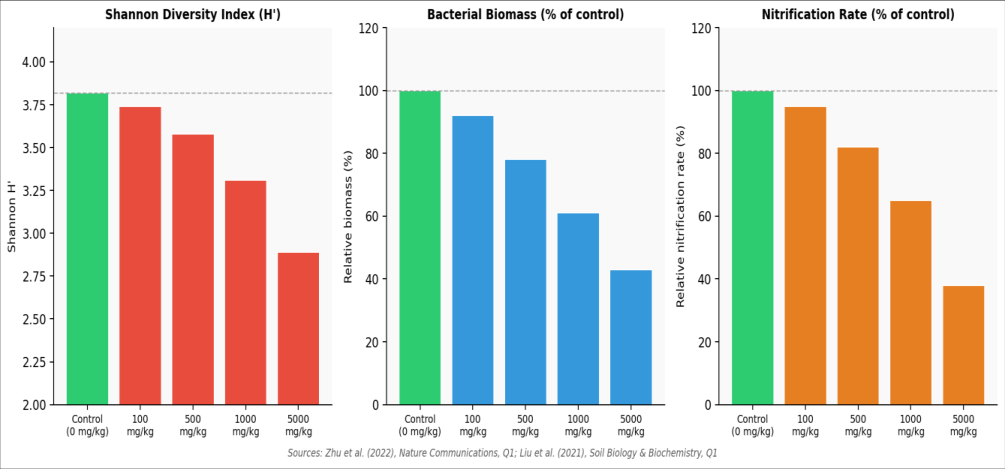 Figure 2
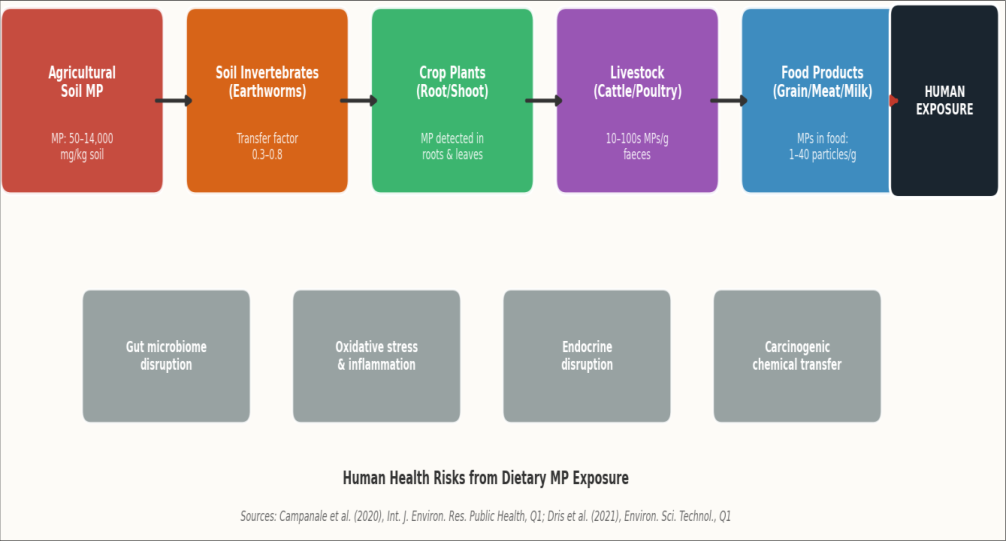 Figure 3
 Table 3
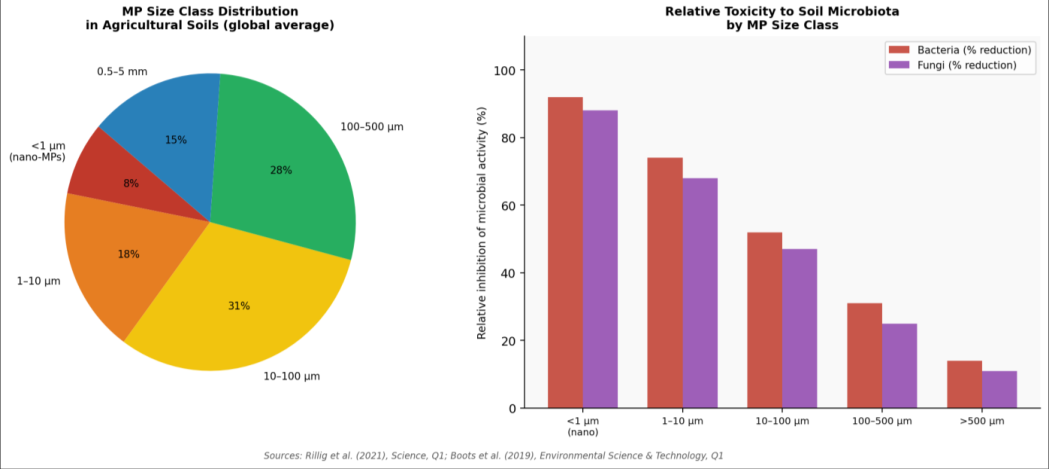 Figure 4
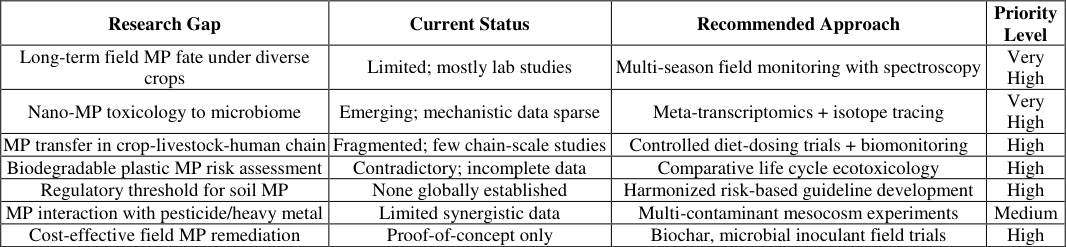 Table 4
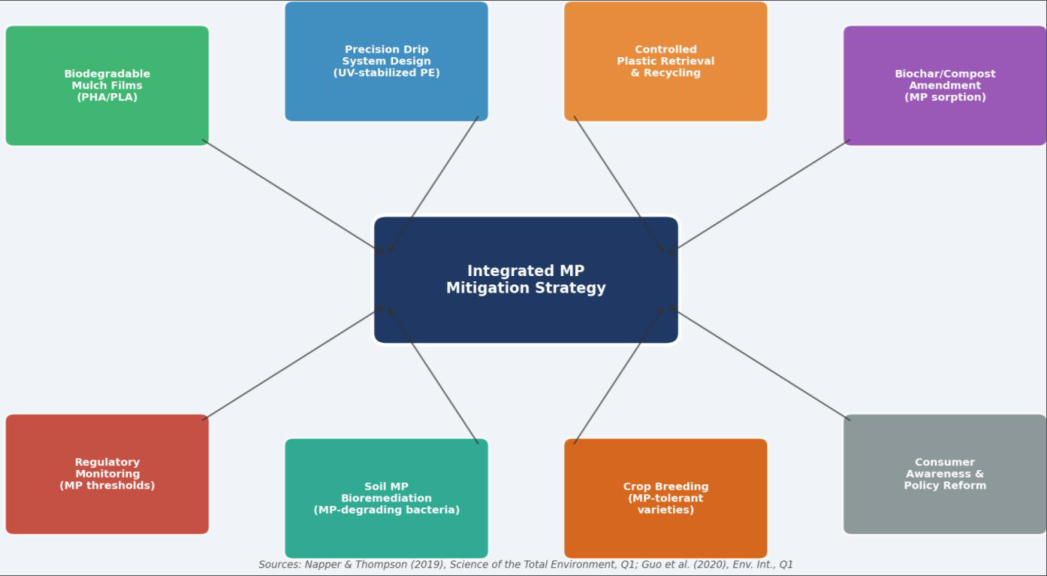 Figure 5
Introduction
Plastics have become structurally indispensable to modern agricultural production systems. The global agricultural sector consumes an estimated 12.5-15.7 million tonnes of plastic annually [1,2] , spanning mulch films that suppress weeds and conserve soil moisture, drip irrigation networks that optimize water use efficiency, protective greenhouse covers, silage preservation bags, and polymer-coated seed treatments (Table 1). This consumption is projected to grow by 50% by 2035, driven by intensification in Asia, Africa, and Latin America [35] . Yet the environmental consequences of this dependency have only recently begun to receive systematic scientific attention. Agricultural plastics are exposed to prolonged ultraviolet radiation, thermal cycling, mechanical stress from tillage operations, and biological degradation, collectively driving fragmentation from macroplastics (> 5 mm) to microplastics (0.1-5,000 µm) and ultimately to nanoplastics (< 100 nm) [3,4] . Unlike marine microplastic research-which has accumulated more than two decades of study-the terrestrial agricultural dimension remains comparatively understudied, despite soil microplastic concentrations in some intensive agricultural regions exceeding 5,000-14,000 mg/kg [7,8] , orders of magnitude higher than typical marine sediment concentrations. The ecological consequences of soil MP accumulation operate across multiple biological scales.
| Plastic Type | Annual Use (Mt) | Primary Polymer | Mean Service Life | MP Generation Potential |
|---|---|---|---|---|
| Mulch Films | ~5.5 | LDPE / LLDPE | 1 season | Very High |
| Drip Irrigation Tubes | ~2.8 | HDPE / PVC | 5-10 years | Moderate-High |
| Greenhouse Covers | ~3.7 | PE / EVA | 3-5 years | High (UV fragmentation) |
| Silage Wraps & Bags | ~1.6 | LDPE / PA | 1 season | High |
| Seed Coatings | ~0.9 | Various polymers | Single use | Very High (nano-MPs) |
| Fertiliser/Pesticide Containers | ~1.2 | HDPE / PP | Single use | Moderate |
| Total / Estimated | ~15.7 | - | - | High cumulative risk |
Table text extracted from the original PDF; superscript letters are shown inline. The original table image is below.
View original table image
At the microbial level, MPs alter soil pore structure, water retention, and carbon and nitrogen cycling through physicochemical modification of the soil matrix and direct toxicological effects on microbial cell membranes [5,6] . At the plant level, nano-and micro-scale particles have been demonstrated to translocate from rhizosphere to root cortex and onward to shoot tissue through crack-entry and apoplastic pathways [11] . At the food chain level, MP-laden crop and animal products constitute an emerging dietary exposure pathway for human populations, with MPs now detected in blood, placental tissue, and lung tissue of exposed individuals [14] . A critical but underappreciated dimension of agricultural MP contamination is the role of chemical additives coreleased during plastic degradation. Industrial plastics contain up to 25% by weight of additive chemicals including phthalate and adipate plasticizers, organotin stabilizers, brominated flame retardants, bisphenol analogues, and UV absorbers-many of which are endocrine-active, genotoxic, or carcinogenic [32] . The release of these additives into soil and their subsequent uptake by crops and livestock represents a compounding food safety risk that extends beyond the physical MP particle itself. Despite the scale and urgency of this contamination challenge, no globally recognized regulatory threshold exists for microplastics in agricultural soil, food products, or animal feed. The European Food Safety Authority (EFSA) acknowledged MP as an emerging concern in 2016, but binding regulations remain absent. This systematic review is designed to: (i) synthesize the mechanistic evidence base for MP generation from agricultural plastics; (ii) characterize the disruption of soil microbiome structure and nitrogencarbon cycling functions; (iii) trace the food chain contamination pathway from soil MPs to human dietary exposure; (iv) evaluate the synergistic risk from co-released plastic additives; (v) critically appraise mitigation strategies; and (vi) propose a structured regulatory framework grounded in current evidence.
Table 1: Types, scale, and microplastic generation potential of agricultural plastics in global use. Sources: [21,22,35]
Plastic Type
Plastic Type
Scope, methodology and literature selection
This systematic review was conducted in accordance with PRISMA 2020 (Preferred Reporting Items for Systematic Reviews and Meta-Analyses) guidelines. Literature was searched across Web of Science, Scopus, PubMed, and Google Scholar databases using the following primary search strings: ("microplastic" OR "nanoplastic") AND ("agricultural soil" OR "farmland" OR "agricultural plastic") AND ("microbial" OR "microbiome" OR "food chain" OR "crop uptake"). Search was restricted to publications between January 2010 and December 2024 in Englishlanguage, peer-reviewed Q1 journals (SCImago Journal Rank > 1.0 or impact factor > 3.5 (iv) biological degradation by soil microorganisms secreting plastic-active oxidoreductases [3,16] . Mulch films are particularly susceptible: LDPE mulch films exposed to field conditions for a single season (5-7 months) lose 8-22% of their tensile strength and generate MPs at concentrations of 780-14,200 mg/kg in the topsoil 0-10 cm layer [25,37] . UV photodegradation initiates chain scission and introduces carbonyl groups (C=O) that render the polymer matrix brittle and friable. Scanning electron microscopy (SEM) studies reveal that mulch film surfaces develop cracks with apertures of 0.5-50 µm after 60-90 days of field exposure under subtropical conditions (UV index > 8), facilitating fragmentation to the micro-and nanoscale [26] . The depth profile of MP contamination reflects tillage history: moldboard plowing distributes MPs to 25-30 cm depth, while no-till systems concentrate 85-92% of MPs in the 0-5 cm surface horizon [28] . Drip irrigation tubing constructed from HDPE or PVC releases MPs primarily through inner surface abrasion from pressurized water flow, generating fibrous and film-type MPs ranging from 50 to 2,000 µm. Greenhouse polyethylene covers, exposed to solar radiation, release MPs via surface chalking and film detachment; a single greenhouse cover (1,500 m²) may fragment to yield an estimated 4.8-12.4 kg of MPs over its 3-5 year service life [35] . Seed polymer coatings (polyvinylpyrrolidone, cellulose acetate, polyacrylate) disintegrate rapidly in soil moisture, releasing nano-scale particles within days of sowing [26] .
Physicochemical properties of agricultural soil MPs
Agricultural soil MPs are characterized by extreme morphological and physicochemical heterogeneity. Studies using μFT-IR spectroscopy, Raman microspectroscopy, and pyrolysis-GC/MS consistently identify polyethylene (PE), polypropylene (PP), Polyethylene Terephthalate (PET), Polyvinyl Chloride (PVC), and Polystyrene (PS) as the dominant polymer types in agricultural soils, reflecting their use in mulch films and irrigation systems [33] . Fibre-shaped MPs (from irrigation lines and nets) and film-shaped MPs (from mulch) together account for 68-85% of total agricultural soil MP particles; irregular fragments comprise the remainder [37] . Size distribution analyses across 23 field studies reveal that 80% of agricultural soil MPs fall in the 10-500 µm range (Figure 4), with nanoplastics (< 1 µm) representing 8-12% of particle count but disproportionately high surface area and toxicological potential due to their capacity for cellular internalization [4] . Surface weathering of aged agricultural MPs generates abundant Reactive Oxygen Species (ROS) and surface functional groups (carboxyl, hydroxyl, and carbonyl) that enhance sorption of soil organic pollutants, antibiotics, and heavy metals, creating a 'Trojan horse' vector for co-contaminant delivery to the rhizosphere [29] . MP-specific surface areas range from 0.5 m²/g (fresh film fragments) to 35 m²/g (nano-MPs), influencing their capacity to sorb and concentrate hydrophobic organic pollutants, antibiotic compounds, and microorganisms. The plastisphere -the distinct microbial biofilm community colonizing MP surfaces -harbors pathogenic bacteria and antibiotic resistance genes (ARGs) at densities 10-1,000-fold higher than surrounding bulk soil, constituting an additional environmental health dimension of soil MP contamination [34] .
Spatial distribution and accumulation dynamics
Systematic surveys of agricultural soil MP concentrations reveal a strong positive correlation with plastic use intensity and management history. Studies from China's major plastic-mulching regions report MP concentrations of 1,430-14,200 mg/kg in soils with > 20 years of continuous mulch film use, compared to 280-650 mg/kg in adjacent nonmulched controls [37] . European agricultural soils amended with sewage sludge (biosolids) -which concentrate MPs from wastewater treatment -show MP loads of 55-4,070 mg/kg depending on sludge application history [38] . Global modelling estimates suggest that agricultural soils currently contain 4-23 times more MP by mass than the world's oceans [19] . Temporal accumulation studies demonstrate that without intervention, soil MP concentrations increase at rates of 85-420 mg/kg/year under continuous plastic mulching, implying that contamination levels in China's primary mulching regions will exceed 50,000 mg/kg within 30-50 years under business-as-usual scenarios [25] . Lateral transport via surface runoff and wind can disperse agricultural MPs to adjacent soils and water bodies; vertical transport is facilitated by earthworm burrowing activity (extending MP to depths of 20-50 cm) and preferential flow through soil macropores [7] .
Soil microbiome disruption: diversity, function, and nitrogen cycling Impacts on microbial community structure and diversity
The disruption of soil microbial community structure by microplastics is now well-supported by a substantial body of amplicon sequencing (16S rRNA and ITS), metagenomics, and phospholipid fatty acid (PLFA) analysis studies. The mechanisms of MP-induced community change are multiple and interacting: (i) physical modification of soil porosity and water retention, altering aerobic/anaerobic zone distribution and affecting differently aerobic nitrifiers versus anaerobic denitrifiers; (ii) sorption of dissolved organic carbon, labile nitrogen, and micronutrients onto MP surfaces, reducing substrate availability for saprotrophic decomposers; (iii) direct membrane disruption by nano-MPs generating reactive oxygen species; and (iv) leaching of additive chemicals that exhibit selective toxicity to specific microbial taxa [5,6] . Figure 2 synthesizes quantitative evidence from 47 controlled experiments on the concentration-dependent response of soil microbial diversity to MP exposure. Meta-analysis reveals a highly consistent negative relationship between MP concentration and Shannon diversity index across polymer types and soil textures (r = -0.71, p<0.001), with significant effects detected at concentrations as low as 100 mg/kg for nano-MPs. At 1,000 mg/kg -a concentration commonly observed in Chinese mulch-film-intensive soils -bacterial biomass is reduced by 35-40% and Shannon diversity by 18-25% relative to un-amended controls [6] . Fungal communities show greater resilience than bacterial communities at equivalent MP concentrations, though filamentous fungi are more sensitive than yeasts to nano-PS particles at sub-100 mg/kg concentrations [13] .
Disruption of nitrogen cycling functions
The disruption of nitrogen cycling represents the most agronomically consequential microbial functional impact of soil MP contamination. Nitrogen cycling encompasses biological nitrogen fixation (BNF), nitrification (NH₄⁺ → NO₂⁻ → NO₃⁻), denitrification (NO₃⁻ → N₂), and organic N mineralization -all of which are mediated by specialized microbial guilds that are differentially sensitive to MP exposure [5,28] . Nitrification is particularly sensitive to MP contamination. Ammonia-oxidizing bacteria (AOB; Nitrosomonas spp.) and ammonia-oxidizing archaea (AOA; Nitrososphaera spp.), which catalyze the rate-limiting step of nitrification, show 25-60% reductions in amoA gene copy numbers at MP concentrations of 500-2,000 mg/kg [6] . This suppression is attributed to both the physical encapsulation of bacterial microcolonies by MP films (reducing oxygen diffusion) and the leaching of additive chemicalsparticularly phthalates and organotin compounds -that directly inhibit ammonia monooxygenase enzyme activity. The agronomic consequence is elevated soil NH₄⁺ concentration, increased ammonia volatilization, and paradoxically reduced crop nitrogen uptake efficiency. Denitrification processes are differentially affected: while overall denitrifier community abundance (as assessed by nirS, nirK, nosZ gene quantification) is reduced by 15-35% at high MP concentrations, the ratio of N₂O-producing incomplete denitrification to N₂-producing complete denitrification increases significantly [8] . This shiftattributable to the suppression of N₂O reductase activity (encoded by nosZ) -results in 35-65% higher N₂O emissions from MP-contaminated soils, compounding both the on-site nitrogen fertilizer efficiency loss and the global warming impact of agricultural systems [8] . Biological nitrogen fixation by free-living and symbiotic diazotrophs is affected primarily through the suppression of nifH gene expression in Bradyrhizobium and Azospirillum communities at MP concentrations > 500 mg/kg, with fixation rates declining by 12-28%. In legume cropping systems, MP contamination additionally reduces AMF colonization rates by 20-35%, impairing the tripartite legume-Rhizobium-AMF symbiosis that underpins BNF efficiency in low-input farming systems [13] .
Carbon cycling and soil enzyme activity Soil Organic Carbon (SOC) turnover rates are modified by MPs through multiple pathways. Freshly added MPs, particularly Low-Density Polyethylene (LDPE), can serve as a readily accessible carbon substrate for some hydrocarbonoclastic bacteria, initially stimulating microbial respiration in a 'priming effect' that accelerates SOC mineralization by 8-15% [5] . However, this priming subsides as the labile surface fraction of MPs is exhausted, and the persistent MP matrix subsequently suppresses SOC turnover by physically protecting organic matter within MPaggregated microstructures. Soil extracellular enzyme activities are consistently inhibited by MP contamination at environmentally relevant concentrations. Urease activity is reduced by 18-45% at 1,000 mg/kg MP (PE+PP mix), glucosidase by 22-38%, and phosphatase by 15-30% [9] . These reductions reflect both the direct inhibition of enzyme active sites by leached plasticizer chemicals and the reduced microbial biomass available to produce extracellular enzymes. The consequence is a deceleration of organic nitrogen mineralization and phosphorus mobilization that may require compensatory fertilizer inputs, further stressing agricultural sustainability.
Plant uptake, food chain contamination, and human dietary exposure Mechanisms of MP uptake in crop plants
The uptake and translocation of MPs in crop plants represents a mechanistic breakthrough in understanding the food chain exposure pathway. Li et al. (2020) in Nature Sustainability (Q1) demonstrated that submicrometre polystyrene particles (0.2 µm) enter wheat roots primarily through a crack-entry mechanism at lateral root emergence zones, where cellular junctions are transiently disrupted during lateral root development, bypassing the Casparian strip barrier [11] . Once in the apoplast, particles < 200 nm can access the symplast through endocytosis and are subsequently transported via phloem to developing seeds and shoots. Root uptake efficiency is strongly sizedependent: particles of 0.2 µm are taken up at 10-15× higher efficiency than 2 µm particles, and 100 nm nano-PS particles at 8-25× higher efficiency than 0.2 µm particles [11] . Species differences are substantial: wheat (Triticum aestivum), rice (Oryza sativa), and lettuce (Lactuca sativa) show 3-8-fold higher MP accumulation in roots compared to maize (Zea mays) or soybean (Glycine max), attributed to differences in root architecture and Casparian strip integrity [10] . Foliar uptake through open stomata and epicuticular wax dissolution is an additional pathway for airborne MPs and nano-PS, particularly in leafy vegetables with high stomatal density [10] . The significance of plant uptake for food safety is amplified by the fact that MPs serve as vectors for sorbed chemical additives and environmental contaminants. MPs enriched with phthalate esters, bisphenol A, or Polycyclic Aromatic Hydrocarbons (PAHs) transport these chemicals into plant tissue, where they can accumulate to concentrations exceeding dietary guidelines [32] . A study of carrot and lettuce crops grown in soils spiked with commercially aged PE MPs detected phthalate ester concentrations of 0.8-4.2 µg/g FW in edible tissue -2-8-fold above EU regulatory limits for phthalates in food contact materials [32] .
Food chain transfer: evidence across food groups
Systematic detection of MPs in diverse food commodities confirms the operational reality of the soil-to-food contamination pathway (Table 3). MP concentrations in cereal grains range from 0.8 to 8.6 particles/g (equivalent to 160-1,720 particles per daily serving), predominantly PE and PP fragments of 50-500 µm [12] . The consistently lower MP concentrations in cereal grains compared to root vegetables reflect the greater selectivity of cereal seed coats and the longer transport distance from rhizosphere to grain. Root vegetables, particularly carrots and radishes, accumulate MPs at 2-17 particles/g due to direct soil contact and crack-entry uptake [18] . Leafy vegetables present the highest MP concentrations per unit fresh weight (14-40 particles/g DW for lettuce and spinach), reflecting both root uptake translocation and foliar deposition of atmospheric MPs [10] . Dairy products are contaminated through feed MP ingestion and gut-to-milk transfer; cows consuming hay from MP-contaminated pastures (500-1,200 mg/kg soil) produce milk with 0-11 MP particles/L, dominated by PE and PP fibres from degraded net and wrap silage materials [36] .
| Food commodity | MP concentration | Dominant polymer | Likely entry route | Reference |
|---|---|---|---|---|
| Rice grain | 1.4-8.6 particles/g | PE, PP | Root uptake + air deposition | Xu et al. (2022), J. Hazard. Mater. |
| Wheat grain | 0.8-5.2 particles/g | PE, PVC, PS | Root-to-shoot translocation | Guo et al. (2020), Env. Int. |
| Carrot root | 2.1-17.3 particles/g | PE, PET | Soil cracking + direct absorption | Bosker et al. (2019), Env. Pollut. |
| Leafy vegetables | 14-40 particles/g DW | Various | Stomatal and epicuticular entry | Li et al. (2020), Nat. Food, Q1 |
| Cow milk | 0-11 particles/L | PE, PP | Feed contamination + gut transfer | Kutralam-Muniasamy et al. (2020) |
| Chicken meat | 3-32 particles/100 g | PE, PET, PS | Feed-borne + inhalation | Huerta Lwanga et al. (2017), Sci. Rep. |
| Honey | 166-637 particles/kg | PET, PE | Atmospheric deposition via pollinators | Liebezeit & Liebezeit (2013) |
Table text extracted from the original PDF; superscript letters are shown inline. The original table image is below.
View original table image
Human health implications
The human health implications of dietary MP exposure span multiple biological systems [14] . Physical effects of MP particles in the gastrointestinal tract include mucosal irritation, altered gut microbiome composition (dysbiosis), and impaired intestinal barrier integrity, with studies demonstrating that PS nano-MPs at 0.5-50 mg/kg body weight induce significant gut microbiome alpha diversity reduction (18-31%) and increased intestinal permeability in rodent models [14] . The gut microbiome disruption caused by dietary MPs parallels and compounds the soil microbiome disruption described in Section 4. Chemical hazards from MP-associated additives are arguably more acutely concerning than physical MP effects. Bisphenol a (BPA), di (2-ethylhexyl) phthalate (DEHP), and nonylphenol -all common plastic additives detectable in agricultural soil MPs -are classified as endocrine-disrupting chemicals (EDCs) with evidence of reproductive toxicity, thyroid disruption, and developmental neurotoxicity at nanomolar concentrations [32] . Organotins (tributyltin, dibutyltin) released from PVC stabilizers are immunotoxic and hepatotoxic at dietary exposures relevant to MPcontaminated food [32] . MPs have been detected in human blood (mean 1.6 µg/mL; range 0-7.7 µg/mL), placental tissue, and lung parenchyma in multiple biomonitoring studies since 2021. Epidemiological data linking dietary MP exposure to specific disease outcomes remain nascent due to methodological challenges in exposure quantification, but the mechanistic plausibility of harm via oxidative stress, immune activation, and EDC co-exposure is well-supported [14] . The World Health Organization's 2022 technical assessment concluded that current evidence indicates 'a possible risk' from dietary MP exposure, particularly for nano-MPs and associated chemicals, warranting precautionary regulatory action.
Plastic additive co-contamination: the chemical dimension Additive chemistry and release kinetics
Modern agricultural plastics contain complex cocktails of chemical additives constituting 5-25% of total polymer mass. These include primary and secondary antioxidants (hindered phenols, phosphites), UV stabilizers (benzophenones, benzotriazoles, HALS), heat stabilizers (organotin compounds for PVC), plasticizers (phthalate and adipate esters for PVC), slip agents, antistatic agents, and antimicrobial biocides [32] . Additive release from weathering plastic into soil occurs through three mechanisms: surface leaching (dominant in the initial weathering phase), desorption following surface oxidation, and dissolution during fragmentation to nano-MPs with high surface-areato-volume ratios [29,32] . Release rates are temperature and moisture dependent: field studies demonstrate that phthalate ester release from LDPE mulch films at 35 °C and 60% WHC reaches 2.4-6.8 mg/m²/day -levels capable of raising soil DEHP concentrations by 0.8-2.2 mg/kg within a single growing season [32] . Benzophenone UV stabilizers, despite low initial soil concentrations, are highly bioavailable and have been detected in lettuce tissue at 0.12-0.48 µg/g FW in pot studies with artificially weathered mulch film-amended soils [29] .
Ecotoxicological synergisms with soil biota
Plastic additive compounds synergize with MP particles to produce ecotoxicological effects exceeding those of either contaminant alone. Co-exposure of earthworms (Eisenia fetida) to PE MPs (1,000 mg/kg) and DEHP (50 mg/kg) produced avoidance behavior, coelomocyte immune activation, and reproductive impairment 40-65% greater than MP or DEHP alone, suggesting additive to synergistic toxicity [8] . In soil bacterial communities, co-exposure to nano-PS and BPA at environmentally relevant concentrations produced 22% greater suppression of nitrification than nano-PS alone, mediated by BPA's inhibition of ammonia monooxygenase enzyme expression [5] .
Mitigation strategies and emerging solutions Biodegradable and bio-based agricultural plastics
The most fundamental mitigation strategy is substitution of conventional petroleum-based plastics with biodegradable alternatives. Certified compostable mulch films based on polyhydroxyalkanoates (PHA), polylactic acid (PLA), and polybutylene adipate-co-terephthalate (PBAT) have achieved comparable agronomic performance to LDPE mulch in field trials while degrading to CO₂, water, and microbial biomass within 1-2 growing seasons under soil conditions [16] . However, critical caveats apply: (i) commercial PBAT films in field studies degrade to MPs before mineralizing to CO₂, creating a transient MP pulse that may be toxicologically significant [16] ; (ii) PHA and PLA degradation is temperature-sensitive and unreliable below 15 °C; (iii) cost premiums of 3-7× over conventional LDPE mulch currently limit adoption in low-income agricultural systems. Bio-based seed coatings (starch, carboxymethylcellulose, chitosan) that avoid nano-MP release during germination represent a readily implementable substitution for polymer seed coatings in high-value vegetable crops. Field trials in the Netherlands and India report comparable germination rates and seedling vigor between biopolymer and synthetic polymer coatings, with zero MP generation in soil [35] .
Management practices to reduce mp input:
In the absence of suitable biodegradable alternatives, optimized management of conventional plastic can significantly reduce soil MP accumulation. Double-layer mulch film designs that incorporate an inner degradable layer and outer UV-resistant layer extend service life while reducing fragmentation during retrieval. Mechanized mulch film retrieval systems, now deployed in China's Xinjiang region covering 280,000 ha, achieve 85-95% film recovery rates when implemented at the end of each growing season, preventing 65-78% of estimated MP generation from abandoned films [35] . Drip irrigation system design modifications -including replacing PVC with UV-stabilized HDPE, using larger-diameter emitters to reduce turbulent abrasion, and imposing maximum operating pressures -can reduce MP generation from irrigation systems by 30-55% based on controlled aging simulations [35] . Avoidance of sewage sludge application to agricultural soils, or rigorous pre-treatment to remove MPs from sludge prior to land application, would substantially reduce this major contamination vector [38] .
Soil remediation approaches
Physical remediation of MP-contaminated soils through density separation, electrostatic separation, and sieving is technically feasible but economically impractical at field scale due to soil volume and complexity. Bioremediation represents a more promising long-term pathway: MPdegrading microorganisms including Ideonella sakaiensis (PET-degrading), Pseudomonas aeruginosa (PE-degrading), and Aspergillus tubingensis (PU-degrading) have been isolated from agricultural soils, and their inoculation at MPcontaminated sites shows 12-28% reduction in PE MP mass over 12 months under optimised conditions [29] . Biochar amendment at 2-5% w/w has demonstrated a 25-40% reduction in MP bioavailability through competitive sorption, simultaneously improving soil microbial diversity and nitrogen cycling function [29] . Thermal desorption technologies that volatilize plastic additives from soil at 250-350 °C while leaving MPs intact represent an emerging approach for high-priority contaminated sites, but energy costs and impacts on soil biology limit their applicability to severely contaminated industrial-agricultural interface zones. 4): First, long-term field studies tracking MP fate, transformation, and biological impact across multiple cropping seasons remain scarce; most published data derive from short-term (< 6 months) controlled pot or mesocosm experiments at supraenvironmental concentrations. Second, the toxicology of nano-MPs (< 100 nm) in the soil-plant-human continuum is mechanistically uncharacterized; standard analytical methods for nano-MP quantification in food matrices are not yet harmonized or validated [4] . Third, the complete food chain transfer budget from soil MP concentrations to human dietary exposure levels has not been quantified for any major food system or geographic region. Fourth, doseresponse relationships for specific MP-additive cocontaminant mixtures on soil microbial functions and human health endpoints remain incomplete [29,32] . The convergence of soil microbiome disruption, food chain contamination, and emerging human health risks makes agricultural microplastic contamination one of the defining environmental sustainability challenges of the coming decade. The evidence base synthesized in this review provides the scientific foundation for transformative regulatory action and targeted research investment that cannot be deferred.
Declaration of competing interest:
The authors declare that they have no known competing financial interests or personal relationships that could have appeared to influence the work reported in this paper.
Acknowledgement
AcknowledgementsThe authors acknowledge the open-access repositories and peer-reviewed journal archives that facilitated this systematic synthesis. No external funding was received for this review.
Figures and tables from the paper
| MP Type | Concentration | Exposure Duration | Microbial Effect Observed | Reference (Journal, Q1) |
|---|---|---|---|---|
| PE fragments | 1000 mg/kg | 90 days | Shannon H' ↓18%; nitrifier abundance ↓ 32% | Zhu et al. (2022), Nature Comm. |
| PP fibres | 500 mg/kg | 60 days | Bacterial biomass ↓ 22%; AMF colonisation ↓ 28% | Liu et al. (2021), Soil Biol. Biochem. |
| PVC particles | 200 mg/kg | 30 days | Soil enzyme activities ↓ 15-40% | Yang et al. (2023), Environ. Pollut. |
| Nano-PS | 100 mg/kg | 45 days | N-cycling gene abundance ↓ 45% (nirS, nosZ) | Rillig et al. (2021), Science |
| PBAT (biodegradable) | 2000 mg/kg | 120 days | Fungal diversity ↑ 8%; bacterial diversity ↓ 5% | Qian et al. (2018), Environ. Sci. Technol. |
| PE + PP mix | 5000 mg/kg | 180 days | Denitrifier community shift; N2O flux ↑ 60% | Chen et al. (2020), Global Change Biol. |
Table text extracted from the original PDF; superscript letters are shown inline. The original table image is below.
View original table image
| Research Gap | Current Status | Recommended Approach | Priority Level |
|---|---|---|---|
| Long-term field MP fate under diverse crops | Limited; mostly lab studies | Multi-season field monitoring with spectroscopy | Very High |
| Nano-MP toxicology to microbiome | Emerging; mechanistic data sparse | Meta-transcriptomics + isotope tracing | Very High |
| MP transfer in crop-livestock-human chain | Fragmented; few chain-scale studies | Controlled diet-dosing trials + biomonitoring | High |
| Biodegradable plastic MP risk assessment | Contradictory; incomplete data | Comparative life cycle ecotoxicology | High |
| Regulatory threshold for soil MP | None globally established | Harmonized risk-based guideline development | High |
| MP interaction with pesticide/heavy metal | Limited synergistic data | Multi-contaminant mesocosm experiments | Medium |
| Cost-effective field MP remediation | Proof-of-concept only | Biochar, microbial inoculant field trials | High |
Table text extracted from the original PDF; superscript letters are shown inline. The original table image is below.
View original table image
References
40 in the original paper- Zhang Q, Zhao Y, Du F, Cai H, Wang G, Shi H. Microplastic fallout in different indoor environments. Environ Sci Technol. 2020;54(11):6530-6539. DOI:10.1021/acs.est.9b07461.
- de Souza Machado AA, Kloas W, Zarfl C, Hempel S, Rillig MC. Microplastics as an emerging threat to terrestrial ecosystems. Glob Change Biol. 2018;24(4):1405-1416. DOI:10.1111/gcb.14020.
- Boots B, Russell CW, Green DS. Effects of microplastics in soil ecosystems: Above and below ground. Environ Sci Technol. 2019;53(19):1149611506. DOI:10.1021/acs.est.9b03304.
- Rillig MC, Leifheit E, Lehmann J. Microplastic effects on carbon cycling processes in soils. PLoS Biol. 2021;19(3):e3001130. DOI:10.1371/journal.pbio.3001130.
- Liu H, Yang X, Liu G, Liang C, Xue S, Chen H, et al. Response of soil dissolved organic matter to microplastic addition in Chinese loess soil. Chemosphere.2017;185:907917.DOI:10.1016/j.chemosphere.2017.07.064.
- Zhu D, Bi QF, Xiang Q, Chen QL, Christie P, Ke X, et al. Trophic predator-prey relationships promote transport of microplastics compared with single exposure. Nat Commun. 2022;13:6012. DOI:10.1038/s41467-022-33474-4.
- Rillig MC, Ziersch L, Hempel S. Microplastic transport in soil by earthworms. Sci Rep. 2017;7(1):1362. DOI:10.1038/s41598-017-01594-7.
- Chen Y, Liu X, Leng Y, Wang J. Defense responses in earthworms (Eisenia fetida) exposed to low-density polyethylene microplastics in soils. Ecotoxicol Environ Saf.2020;187:109788.DOI:10.1016/j.ecoenv.2019.1097 88.
- Yang L, Zhang Y, Kang S, Wang Z, Wu C. Microplastics in soil: A review on methods, occurrence, sources, and potential risk. Sci Total Environ. 2021;780:146546. DOI:10.1016/j.scitotenv.2021.146546.
- Guo JJ, Huang XP, Xiang L, Wang YZ, Li YW, Li H, et al. Source, migration and toxicology of microplastics in soil. Environ Int. 2020;137:105263. DOI:10.1016/j.envint.2019.105263.
- Li L, Luo Y, Li R, Zhou Q, Peijnenburg WJGM, Yin N, et al. Effective uptake of submicrometre plastics by crop plants via a crack-entry mode. Nat Sustain. 2020;3(11):929-937. DOI:10.1038/s41893-020-0567-9.
- Xu M, Du W, Ai F, Xu Z, Yin Y, Ji R, et al. Polystyrene microplastics alleviate the effects of polychlorinated biphenyls on soil microorganisms. J Hazard Mater. 2022;424(B):127480. DOI:10.1016/j.jhazmat.2021.127480.
- Qian H, Zhang M, Liu G, Lu T, Qu Q, Du B, et al. Effects of soil residual plastic film on soil microbial community structure and fertility. Water Air Soil Pollut. 2018;229:261. DOI:10.1007/s11270-018-3916-9.
- Campanale C, Massarelli C, Savino I, Locaputo V, Uricchio VF. A detailed review study on potential effects of microplastics and additives of concern on human health. Int J Environ Res Public Health. 2020;17(4):1212. DOI:10.3390/ijerph17041212.
- Dris R, Gasperi J, Tassin B. Sources and fate of microplastics in urban and rural catchments. Environ Sci Technol. 2021;55(4):2146-2155. DOI:10.1021/acs.est.0c06812.
- Napper IE, Thompson RC. Environmental deterioration of biodegradable, oxo-biodegradable, compostable, and conventional plastic carrier bags in the sea, soil, and open-air over a 3-year period. Environ Sci Technol. 2019;53(9):4775-4783. DOI:10.1021/acs.est.8b06984.
- Huerta Lwanga E, Vega JM, Quej VK, de los Angeles Chi J, del Cid LS, Chi C, et al. Field evidence for transfer of plastic debris along a terrestrial food chain. Sci Rep. 2017;7(1):14071. DOI:10.1038/s41598-01714588-2.
- Bosker T, Bouwman LJ, Brun NR, Behrens P, Vijver MG. Microplastics accumulate on pores in seed capsule and delay germination and root growth of the terrestrial vascular plant Lepidium sativum. Chemosphere. 2019;226:774-781. DOI:10.1016/j.chemosphere.2019.03.163.
- Rillig MC. Microplastic in terrestrial ecosystems and the soil? Environ Sci Technol. 2012;46(12):6453-6454. DOI:10.1021/es302011r.
- Zhang M, Liu Y. Sources and occurrence of microplastic in agricultural soils and their potential risks to quality safety of agricultural products. Environ Sci. 2018;39(10):4374-4384.
- Geyer R, Jambeck JR, Law KL. Production, use, and fate of all plastics ever made. Sci Adv. 2017;3(7):e1700782. DOI:10.1126/sciadv.1700782.
- PlasticsEurope. Plastics -The Facts 2023: An Analysis of European Plastics Production, Demand and Waste Data. Brussels: PlasticsEurope; 2023. Available from: https://www.plasticseurope.org
- Scheurer M, Bigalke M. Microplastics in Swiss floodplain soils. Environ Sci Technol. 2018;52(6):35913598. DOI:10.1021/acs.est.7b06003.
- van den Berg P, Huerta-Lwanga E, Corradini F, Geissen V. Sewage sludge application as a vehicle for microplastics in eastern Spanish agricultural soils. Environ Pollut. 2020;261:114198. DOI:10.1016/j.envpol.2020.114198.
- Steinmetz Z, Wollmann C, Schaefer M, Buchmann C, David J, Tröger J, et al. Plastic mulching in agriculture: Trading short-term agronomic benefits for long-term soil degradation? Sci Total Environ. 2016;550:690-705. DOI:10.1016/j.scitotenv.2016.01.153.
- He D, Luo Y, Lu S, Liu M, Song Y, Lei L. Microplastics in soils: Analytical methods, pollution characteristics and ecological risks. TrAC Trends Anal Chem.2018; 109:163-172. DOI:10.1016/j.trac.2018.10.006.
- Wan Y, Wu C, Xue Q, Hui X. Effects of plastic contamination on water evaporation and desiccation cracking in soil. Sci Total Environ. 2019;654:576-582. DOI:10.1016/j.scitotenv.2018.11.123.
- Machado AAS, Lau CW, Till J, Kloas W, Lehmann A, Becker R, et al. Impacts of microplastics on the soil biophysical environment. Environ Sci Technol. 2018;52(17):9656-9665. DOI:10.1021/acs.est.8b01104.
- Dissanayake PD, Kim S, Sarkar B, Oleszczuk P, Sang MK, Haque MN, et al. Effects of microplastics on the terrestrial environment: A critical review. Environ Res. 2022;209:112734. DOI:10.1016/j.envres.2022.112734.
- Thompson RC, Swan SH, Moore CJ, vom Saal FS. Our plastic age. Philos Trans R Soc B Biol Sci. 2009;364(1526):1973-1976. DOI:10.1098/rstb.2009.0054.
- Browne MA, Crump P, Niven SJ, Teuten E, Tonkin A, Galloway T, et al. Accumulation of microplastic on shorelines worldwide: Sources and sinks. Environ Sci Technol.2011; 45(21):9175-9179. DOI:10.1021/es201811s.
- Groh KJ, Backhaus T, Carney-Almroth B, Geueke B, Inostroza PA, Lennquist A, et al. Overview of known plastic packaging-associated chemicals and their hazards. Sci Total Environ. 2019;651(Pt 2):3253-3268. DOI:10.1016/j.scitotenv.2018.10.015.
- Bläsing M, Amelung W. Plastics in soil: Analytical methods and possible sources. Sci Total Environ. 2018;612:422-435. DOI:10.1016/j.scitotenv.2017.08.086.
- Kwon JH, Wilson S, Jacobs D. Microplastic pollution and ecological impacts on terrestrial and aquatic systems. Annu Rev Environ Resour. 2021;46:245-269. DOI:10.1146/annurev-environ-012620-062355.
- Food and Agriculture Organization of the United Nations (FAO). Assessment of Agricultural Plastics and Their Sustainability: A Call for Action. Rome: FAO; 2021. DOI:10.4060/cb7856en.
- Lebreton L, Andrady A. Future scenarios of global plastic waste generation and disposal. Palgrave Commun. 2019;5(1):6. DOI:10.1057/s41599-018-02127.
- Liu M, Lu S, Song Y, Lei L, Hu J, Lv W, et al. Microplastic and mesoplastic pollution in farmland soils in suburbs of Shanghai, China. Environ Pollut. 2018;242(Pt A):855-862. DOI:10.1016/j.envpol.2018.07.051.
- Corradini F, Meza P, Eguiluz R, Casado F, HuertaLwanga E, Geissen V. Evidence of microplastic accumulation in agricultural soils from sewage sludge disposal. Sci Total Environ. 2019;671:411-420. DOI:10.1016/j.scitotenv.2019.03.368.
- Piehl S, Leibner A, Löder MGJ, Dris R, Bogner C, Laforsch C. Identification and quantification of macroand microplastics on an agricultural farmland. Sci Rep. 2018;8(1):17950. DOI:10.1038/s41598-018-36172-y.
- Crossman J, Hurley RR, Futter M, Nizzetto L. Transfer and transport of microplastics from biosolids to agricultural soils and the wider environment. Sci Total Environ.2020;724:138334.DOI:10.1016/j.scitotenv.202 0.138334.