
Research article · 2026 · Full text
International Journal of Horticulture and Food ScienceComparative effectiveness of stingless bees in the screenhouse pollination of strawberry
Volume 8(6) · Pages 10–15 · DOI: 10.33545/26631067.2026.v8.i6a.755 ↗
Research areasPlant and animal studiesBerry genetics and cultivation researchInsect and Arachnid Ecology and Behavior
Abstract
Author-writtenStingless bees are important pollinators of many tropical crops and have considerable potential for use in greenhouse cultivation systems. However, information regarding the effectiveness of Indonesian stingless bee species in strawberry pollination remains limited. This study evaluated the pollination effectiveness of three stingless bee species, Heterotrigona itama, Tetragonula drescheri, and Tetragonula fuscobalteata, on screenhouse-grown strawberry. The experiment compared pollination treatments using stingless bees, hand pollination, and open pollination. Fruit quantity and quality parameters were assessed, including fruit production and fruit weight. Pollination by H. itama produced the highest number of fruits (3.5 fruits plant⁻¹), followed by T. fuscobalteata (3.2 fruits plant⁻¹), whereas open pollination resulted in the lowest fruit production (2.3 fruits plant⁻¹). In contrast, pollination by T. drescheri produced the highest fruit weight (5.6 g fruit⁻¹), while the lowest fruit weight was recorded in H. itama pollination (3.64 g fruit⁻¹). The findings demonstrate that stingless bees can improve strawberry pollination under greenhouse conditions and highlight the potential use of native stingless bee species as managed pollinators in protected strawberry cultivation systems.
Summary
Source-checkedPlain-language reading of the full paper, prepared with AI and checked against the text. Each point links to the authors' own words.
Why it matters
- Pollination by insects is essential for maintaining the productivity and quality of many fruit crops. View evidence ↗
- Stingless bees are well-suited for protected cultivation systems due to their non-aggressive nature, adaptability to confined spaces, and temperature tolerance. View evidence ↗
- Successful pollination directly impacts the commercial value of strawberries by influencing their weight, size, and shape. View evidence ↗
The question
- The study aimed to evaluate how effectively three specific stingless bee species, H. itama, T. drescheri, and T. fuscobalteata, pollinate strawberries grown in a screenhouse. View evidence ↗
What they did
- The research took place in West Java, Indonesia, at an elevation of 1252 m asl, between November 2023 and October 2024. View evidence ↗
- Researchers measured quantitative traits (fruit set, weight, dimensions, achene count) and qualitative nutritional content (potassium, calcium, and vitamin C). View evidence ↗
What they found
- H. itama was the most effective for fruit quantity, producing 3.5 fruits per plant, compared to 3.2 for T. fuscobalteata and 2.3 for open pollination. View evidence ↗
- T. drescheri produced the heaviest fruits at 5.6 g per fruit, while H. itama produced the lightest at 3.64 g per fruit. View evidence ↗
- T. drescheri pollination resulted in the longest fruits (23.3 mm), whereas hand pollination resulted in the shortest (18.2 mm). View evidence ↗
- Fruits pollinated by T. drescheri had the most achenes (435.9), while those under open pollination had the fewest (236.4). View evidence ↗
- Open pollination yielded the highest potassium (241 mg/100 g) and calcium (29.8 mg/100 g), while hand pollination yielded the lowest of both. View evidence ↗
- Vitamin C levels remained consistently low (less than 0.70 mg/kg) across all pollination treatments. View evidence ↗
What it means
- The authors concluded that T. drescheri is best for improving fruit size and weight, while T. fuscobalteata and H. itama are more effective for increasing the number of normal fruits. View evidence ↗
- The study recommends native stingless bees as viable managed pollinators for tropical greenhouse strawberry production. View evidence ↗
- The authors state that more research with larger experimental replication is needed to further evaluate pollination efficiency. View evidence ↗
Visual summary
3 visualsIllustrations explain the paper; charts are replotted from the paper's own table values.
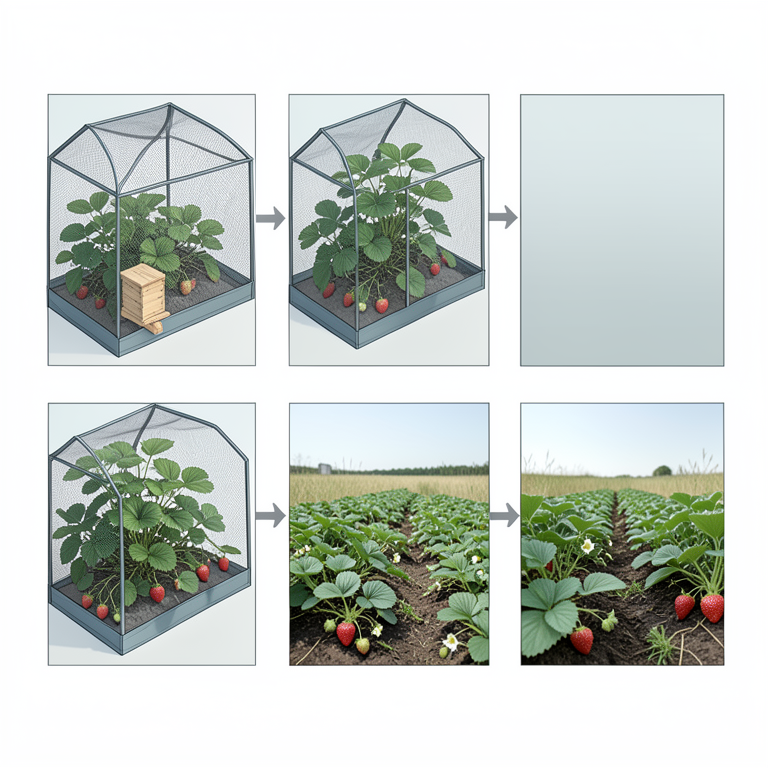
Experimental Setup
AI-generated conceptual illustration (strawberry plants and stingless bee hives in screenhouses). It explains the idea and does not show study data.
View source evidence ↗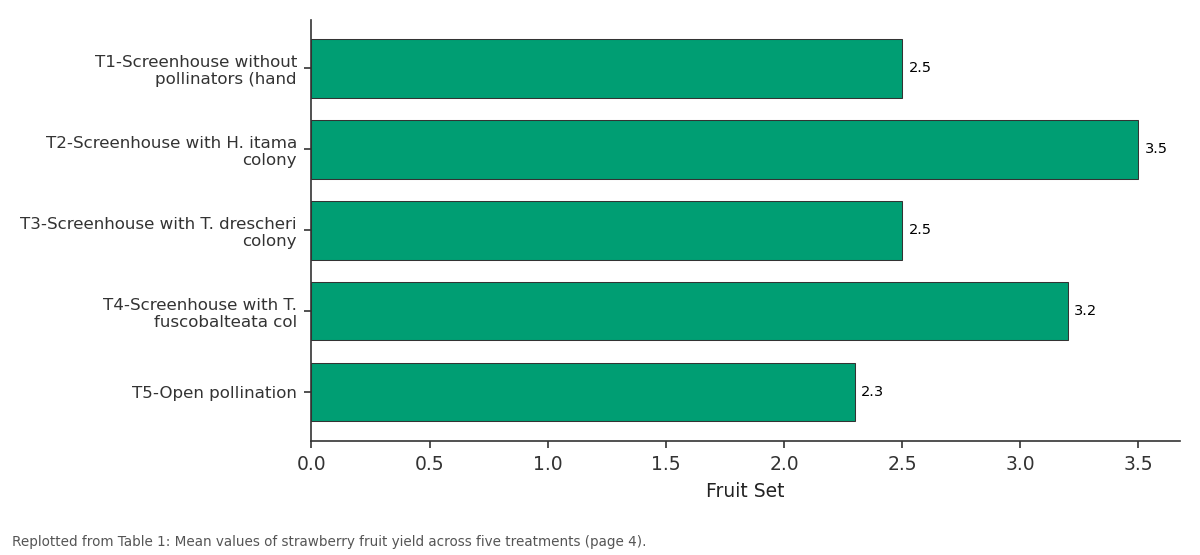
Fruit Set: T1-Screenhouse without... vs T2-Screenhouse with H.... vs T3-Screenhouse with T.... vs T4-Screenhouse with T.... vs T5-Open pollination
Replotted from Table 1 (page 4) of the original paper. Every bar is the paper's own table value.
View source evidence ↗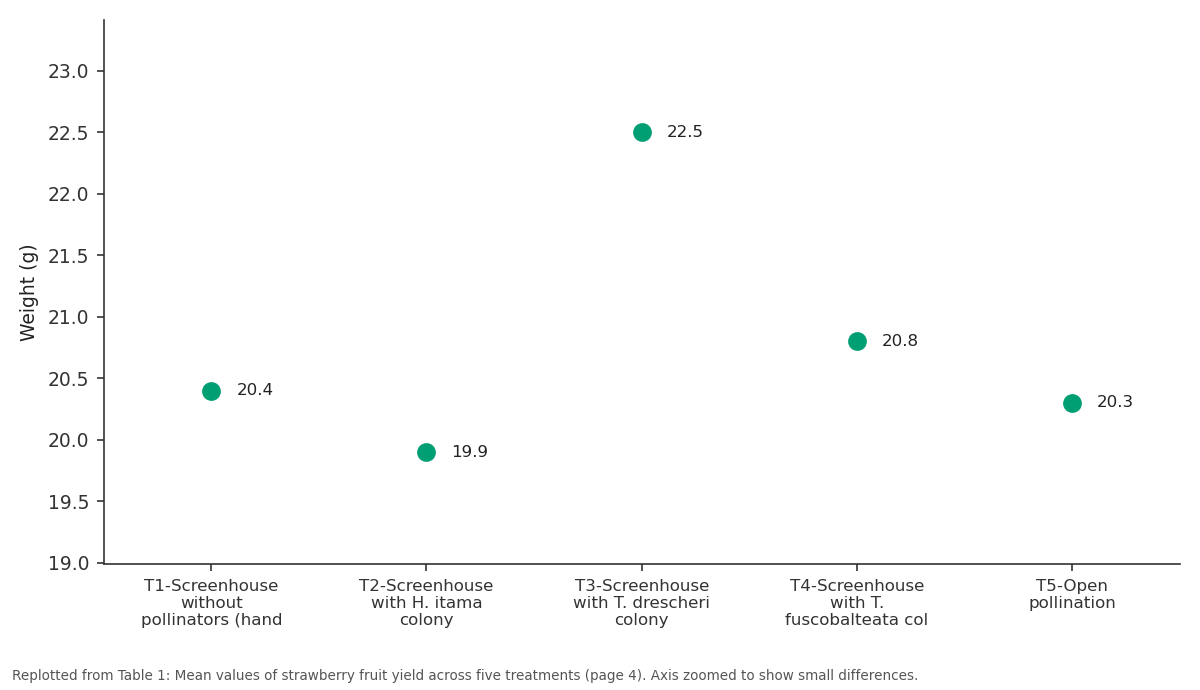
Width (mm): T1-Screenhouse without... vs T2-Screenhouse with H.... vs T3-Screenhouse with T.... vs T4-Screenhouse with T.... vs T5-Open pollination
Replotted from Table 1 (page 4) of the original paper. Every bar is the paper's own table value.
View source evidence ↗Figures & tables
From the original paper Table 1
 Table 2
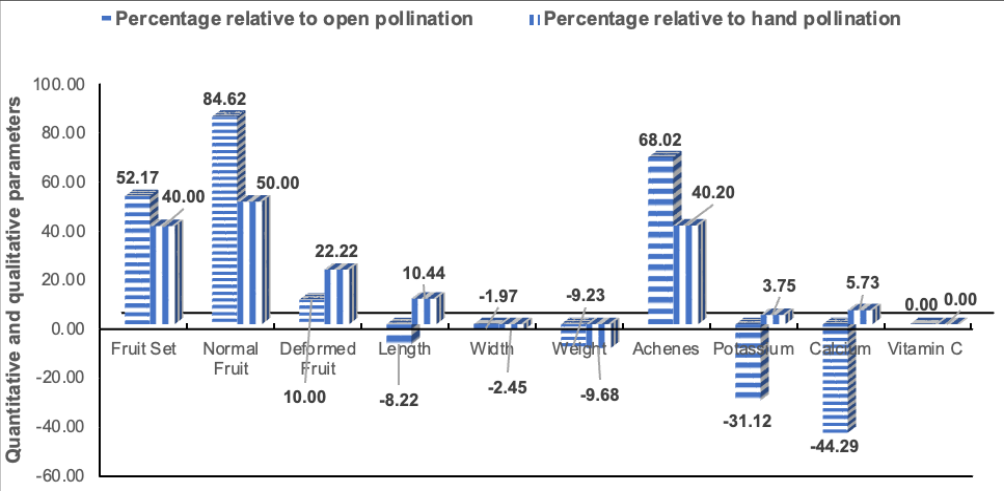 Figure 1
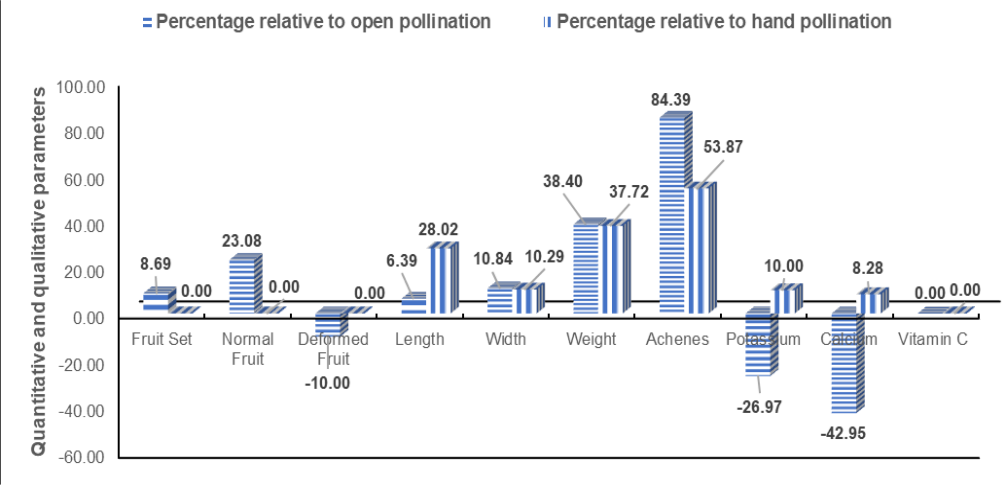 Figure 2
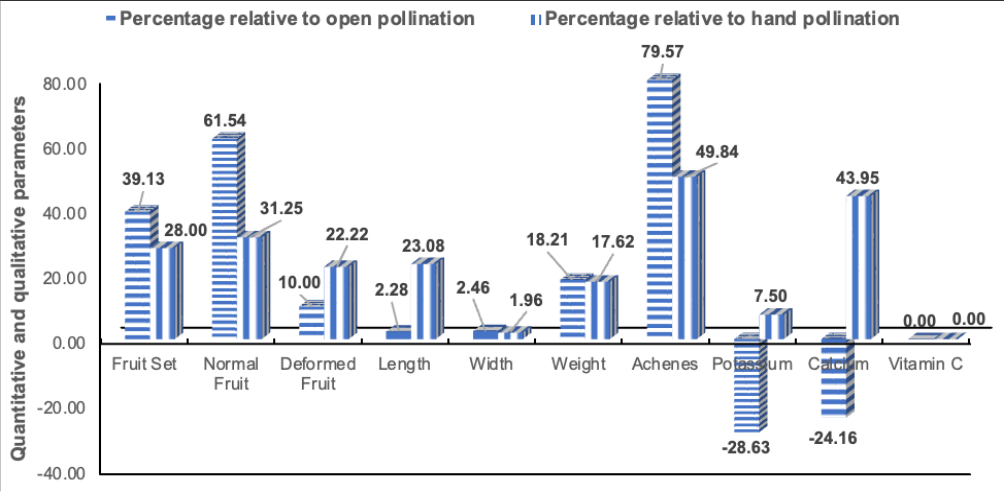 Figure 3
Introduction
Pollinator mediated pollination plays a fundamental role in maintaining the productivity and quality of many crops, particularly in fruit production. Bees are the most important pollinators because of their efficiency in transferring pollen between flowers (Michener, 2007) [13] . Bee-assisted pollination has been reported to increase fruit set, yield, and fruit quality in various crops (Klein et al., 2004) [11] . Among bee groups, stingless bees (Hymenoptera: Apidae: Meliponini) are recognized as effective generalist pollinators that forage on a wide range of flowering plants (Vandame, 2006) [23] . Stingless bees occur widely throughout tropical and subtropical regions (Michener, 2007) [13] and inhabit diverse environments, including forests, agricultural landscapes, urban areas, and rural ecosystems (Trianto and Purwanto, 2022) [22] . In addition to their ecological importance, stingless bees possess considerable potential as managed pollinators in greenhouse cultivation systems. Their non-aggressive behavior, year-round foraging activity, tolerance to relatively high temperatures, adaptability to confined environments, and lower risk of ecological disruption make them suitable for protected crop production systems (Amano et al., 2000) [3] . Consequently, the use of stingless bees as greenhouse pollinators has received increasing attention in recent years. Several studies have demonstrated the effectiveness of stingless bees in improving pollination and crop production in greenhouse and agricultural systems. For example, Tetragonula iridipennis has been reported as an effective pollinator of cucumber in southern India (Kishan Tej et al., 2017) [10] , while Melipona bicolor, Nannotrigona testaceicornis, and Partamona helleri improved pollination efficiency and fruit production in cherry tomato cultivation in Brazil (Moura-Moraes et al., 2021) [16] . In Indonesia, Tetragonula cf. biroi has been documented as a pollinator of bitter melon in South Sulawesi (Suhri et al., 2022) [21] . Other studies also reported the contribution of stingless bees to pollination in Arabica coffee plantations and strawberry cultivation (Roselino et al., 2009; Miranda et al., 2024; Almeida-Dias et al., 2025) [18,14,1] . Strawberry (Fragaria L.) is an economically important horticultural crop cultivated widely for fresh consumption and the food industry. Fruit quality in strawberries is strongly influenced by successful pollination, which affects fruit shape, size, weight, and commercial value (Delaplane and Mayer, 2000) [5] . Strawberry fruits develop from multiple ovaries distributed across the floral receptacle, and incomplete pollination frequently results in malformed or deformed fruits (Simpson, 2006) [19] . Pollinating insects therefore play a critical role in ensuring uniform fertilization of achenes and optimal fruit development. Previous studies have shown that insect pollination can significantly improve both the quantity and quality of strawberry fruits (Liu et al., 2023) [12] . Strawberry flowers are commonly visited by Hymenopteran pollinators, including honey bees (Apis spp.) and stingless bees (Meliponini) (Abrol, 2019 [2] ; Vandame, 2006 [23] ) [2,23] . Several stingless bee species have previously been reported as effective pollinators of strawberry. Roselino et al. (2009) [18] demonstrated that pollination by Scaptotrigona aff. depilis and Nannotrigona testaceicornis significantly improved strawberry fruit quality and yield under greenhouse conditions. Pollination of strawberry by Tetragonula minangkabau, Nannotrigona testaceicornis, and Tetragonula laeviceps has also been documented in previous studies (Kakutani et al., 1993; Silva et al., 2020; Atmowidi et al., 2022) [9,20,4] . However, comparative information regarding the effectiveness of Indonesian stingless bee species in screenhouse strawberry cultivation remains limited. In particular, little is known about the relative contribution of different stingless bee species to strawberry fruit production and fruit quality under tropical screenhouse conditions. Therefore, this study evaluated the effectiveness of the stingless bees Heterotrigona itama, Tetragonula drescheri, and Tetragonula fuscobalteata in improving the quantity and quality of strawberry in the screenhouse. We hypothesized that pollination by stingless bees would enhance fruit production and quality compared with hand pollination and open pollination treatments.
Materials and Methods
Materials and Methods
Study site and stingless bee species
The study was conducted from November 2023 to October 2024 in Panundaan Village, Ciwidey, Bandung Regency, West Java, Indonesia, located at an elevation of approximately 1252 m asl. The experimental area covered approximately 12 m × 12 m and consisted of four screenhouse units and one open field plot. Each screenhouse measured 5.2 m × 5 m × 3.5 m, made by fine organdy mesh fabric to prevent the insect pollinators while maintaining air circulation within the greenhouse. The distance between experimental units ranged from 1 to 1.5 m. The strawberry cultivar used in this study was the local cultivar 'Menciran', a hybrid derived from the Earlibrite and California varieties. Three stingless bee species used were Heterotrigona itama, Tetragonula drescheri, and Tetragonula fuscobalteata. Colonies were maintained in standardized wooden hive boxes throughout the experimental period.
Strawberry cultivation
Strawberry planting materials were prepared through vegetative propagation using runners. The runners were maintained for approximately one month until uniform seedlings were obtained. A total of 1125 seedlings of similar age and size were used in the experiment. Seedlings were cultivated under similar agronomic conditions throughout the study period. Plant maintenance included regular irrigation, fertilization, and weed control following local strawberry cultivation practices. Strawberry plants entered the flowering stage approximately 30-60 days after propagation. Planting and maintenance activities were conducted over a nine-month period until the final fruit harvest. Observations were performed on 100 randomly selected flowers from each treatment during the flowering period. Subsequently, ten mature fruits per treatment were randomly selected for qualitative and quantitative analyses. Harvesting was conducted on the same day at comparable levels of fruit maturity to minimize variation among treatments.
Experimental design, Placement, and management of stingless bee colonies
The experiment consisted of five pollination treatments: (1) screenhouse pollination using H. itama, (2) screenhouse pollination using T. drescheri, (3) screenhouse pollination using T. fuscobalteata, (4) hand pollination in a screenhouse without bee colonies, and (5) open pollination under natural field conditions. Each treatment consisted of 225 strawberry plants. Each screenhouse treatment contained one colony of stingless bees maintained in a standardized wooden hive box. Colonies were introduced into the screenhouse and acclimatized for approximately three weeks prior to flowering observations. Colony monitoring was conducted regularly throughout the experimental period to ensure colony health and activity. Colony assessments included verification of the presence of a functional queen, worker activity, brood development, pollen and honey reserves, and the absence of visible pests or colony disturbance. Colonies showing abnormal behavior or reduced activity were monitored intensively to maintain stable pollination activity during the experiment. The hand pollination treatment was conducted manually using a fine soft brush by gently transferring pollen among flowers during anthesis. Hand pollination was performed daily during peak flowering periods between 08:00 and 10:00 h. The open pollination treatment was conducted under natural environmental conditions and allowed access to naturally occurring insect pollinators.
Evaluation of strawberry fruit quantity and quality
The effects of stingless bee pollination on strawberry production were evaluated using quantitative and qualitative fruit parameters. Quantitative parameters included fruit set, number of normal fruits and deformed fruits, fruit length, width, weight, and number of achenes. The fruit qualitative parameters included potassium, calcium, and vitamin C contents. Fruit set was calculated as the proportion of flowers that successfully developed into mature fruits. Fruits with symmetrical shape and uniform development were categorized as normal fruits, whereas fruits showing asymmetrical growth, incomplete development, or irregular surface morphology were categorized as deformed fruits. The numbers of fruit set, normal fruits, and deformed fruits were recorded manually. Fruit length and width were measured using a digital caliper, while fruit weight was determined using a portable digital balance. The number of achenes per fruit was counted manually using a hand counter. Chemical analyses of potassium, calcium, and vitamin C contents were conducted at the Laboratory of the Center for Industrial Standardization and Services, Bogor, Indonesia. Potassium and calcium contents were analyzed using standard mineral analysis procedures, while vitamin C content was determined following standard analytical protocols for horticultural products.
Statistical analysis
Data were analyzed descriptively to compare the effects of different pollination treatments on strawberry fruit quantity and quality parameters. Mean values were calculated for each observed parameter. Differences among pollination treatments were evaluated using one-way analysis of variance (ANOVA), followed by Tukey's honestly significant difference (HSD) test at a significance level of α = 0.05 when appropriate. Statistical analyses were performed using PAST (Hammer et al., 2001) [7] .
Results & Discussion
Results & Discussion
Comparative effects of pollination treatments on the quantitative and qualitative parameters of strawberry fruits
Stingless bee species exhibited differential effects on the quantitative and qualitative characteristics of strawberry fruits. Pollination by T. drescheri demonstrated the highest effectiveness in enhancing the quantitative parameters of strawberry fruits, as evidenced by the greatest fruit length, fruit width, fruit weight, and achene number compared with the other treatments. Meanwhile, T. fuscobalteata produced the highest fruit set, whereas H. itama resulted in the highest number of normal fruits. The highest fruit set was recorded in the T. fuscobalteata pollination treatment (3.2 fruits), whereas the lowest fruit set (2.3 fruits) was observed under open pollination conditions. The highest number of normal fruits was obtained from H. itama pollination (2.4 fruits), while the lowest (1.3 fruits) was recorded in the open pollination. The greatest number of abnormal fruits was observed in both H. itama and T. fuscobalteata pollination treatments (each 1.1 fruits), whereas the lowest number (0.9 fruits) was recorded in the hand pollination and T. drescheri pollination treatments. Fruit length was highest in the T. drescheri pollination treatment (23.3 mm), while the lowest fruit length (18.2 mm) was observed under hand pollination. Similarly, the greatest fruit width was recorded in the T. drescheri pollination treatment (22.5 mm), whereas the lowest width (19.9 mm) was obtained from H. itama pollination. Fruit weight was also highest in the T. drescheri (5.55 g), while the lowest fruit weight (3.64 g) was recorded in the H. itama pollination. In addition, the highest number of achenes was observed in fruits pollinated by T. drescheri (435.9), whereas the lowest (236.4) was found under open pollination (Table 1). The quantitative nutritional parameters of strawberry fruits revealed that the highest potassium and calcium contents were recorded under the open pollination, reaching 241 mg/100 g and 29.8 mg/100 g, respectively. In contrast, the lowest potassium and calcium contents were observed in the hand pollination treatment, with values of 160 mg/100 g and 15.7 mg/100 g, respectively. Furthermore, all pollination treatments exhibited relatively similar vitamin C contents, with concentrations remaining less than 0.70 mg/kg (Table 2). In contrast, the open pollination treatment consistently showed the lowest for several quantitative parameters, particularly fruit set, number of normal fruits, and achene number, indicating that natural pollination without the assistance of managed bee colonies was less effective in supporting optimal strawberry fruit development. Overall, the findings suggest that the use of stingless bees, particularly T. fuscobalteata, has substantial potential to enhance pollination success and improve both the quantitative and qualitative parameters of strawberry fruits. Previous studies have demonstrated the significant role of stingless bees in improving strawberry fruit quantity and quality. Pollination by T. laeviceps was reported to produce a higher fruit set (3.4 fruits) and greater numbers of normal fruits (2.9 fruits) in strawberry plants (Atmowidi et al., 2022) [4] . In addition, pollination by N. testaceicornis significantly enhanced quantity of strawberry fruit, resulting in increased fruit length (37 mm) and fruit diameter (25 mm) (Silva et al., 2020) [20] . Similarly, T. laeviceps pollination produced an average of 5.11 normal fruits and 1.93 abnormal fruits, with fruit length, fruit width, and fruit weight reaching 105 mm, 92 mm, and 12.99 g, respectively, and the vitamin C content of strawberry fruits was recorded at 1.47 g/100 g. (Harahap, 2013) [8] . Strawberry fruit development is regulated by the achenes attached to the enlarged receptacle surface. The achenes produce auxin, a plant growth hormone that plays a crucial role in regulating fruit growth and development (Nitsch, 1950) [17] .
| Treatments | Potassium (mg/100 g) | Calcium (mg/100 g) | Vitamin C (mg/kg) |
|---|---|---|---|
| T1-Screenhouse without pollinators (hand pollination) | 160 | 15.7 | < 0.70 |
| T2-Screenhouse with H. itama colony | 166 | 16.6 | < 0.70 |
| T3-Screenhouse with T. drescheri colony | 176 | 17 | < 0.70 |
| T4-Screenhouse with T. fuscobalteata colony | 172 | 22.6 | < 0.70 |
| T5-Open pollination | 241 | 29.8 | < 0.70 |
Table text extracted from the original PDF; superscript letters are shown inline. The original table image is below.
View original table image
| Treatments | Fruit Set | Normal Fruit | Deformed Fruit | Length (mm) | Width (mm) | Weight (g) | Achenes |
|---|---|---|---|---|---|---|---|
| T1-Screenhouse without pollinators (hand pollination) | 2.5 | 1.6 | 0.9 | 18.2 | 20.4 | 4.03 | 283.3 |
| T2-Screenhouse with H. itama colony | 3.5 | 2.4 | 1.1 | 20.1 | 19.9 | 3.64 | 397.2 |
| T3-Screenhouse with T. drescheri colony | 2.5 | 1.6 | 0.9 | 23.3 | 22.5 | 5.55 | 435.9 |
| T4-Screenhouse with T. fuscobalteata colony | 3.2 | 2.1 | 1.1 | 22.4 | 20.8 | 4.74 | 424.5 |
| T5-Open pollination | 2.3 | 1.3 | 1 | 21.9 | 20.3 | 4.01 | 236.4 |
Table text extracted from the original PDF; superscript letters are shown inline. The original table image is below.
View original table image
Increasing strawberry fruits by stingless bees pollination
Pollination by the three stingless bee species, H. itama, T. drescheri, and T. fuscobalteata, enhanced the quantitative parameters of strawberry fruits compared with natural pollination under open field conditions (open pollination treatment) and manual pollination (hand pollination treatment). Furthermore, pollination by H. itama, T. drescheri, and T. fuscobalteata also increased the potassium and calcium contents of strawberry fruits relative to the hand pollination treatment. Pollination by H. itama markedly improved several quantitative and nutritional parameters of strawberry fruits compared with open pollination and hand pollination treatments. Relative to open pollination and hand pollination, H. itama pollination increased fruit set by 52.17% and 40.00%, respectively, while the number of normal fruits increased by 84.62% and 50.00%, respectively. Conversely, Fruit length and achene number were also enhanced, with increases of 10.44%, 68.02%, and 40.20%, respectively. In addition, potassium and calcium contents increased by 3.75% and 5.73%, respectively (Fig 1). Pollination by T. drescheri substantially improved several quantitative and nutritional parameters of strawberry fruits compared with open pollination and hand pollination treatments. Relative to the control treatments, T. drescheri pollination increased fruit set by 8.69%, while the number of normal fruits increased by 23.08%. In contrast, the number of abnormal fruits decreased by 10.00%. Fruit length increased by 6.39% and 28.02%, whereas fruit width increased by 10.84% and 10.29% relative to open pollination and hand pollination, respectively. Moreover, fruit weight was enhanced by 38.40% and 37.72%, while achene number increased by 84.39% and 53.87%, respectively. In addition, potassium and calcium contents increased by 10.00% and 8.28%, respectively (Fig 2). Pollination by T. fuscobalteata significantly enhanced several quantitative and nutritional parameters of strawberry fruits compared with open pollination and hand pollination treatments. Relative to open pollination and hand pollination, T. fuscobalteata pollination increased fruit set by 39.13% and 28.00%, respectively, while the number of normal fruits increased by 61.54% and 31.25%, respectively. Fruit length increased by 2.28% and 23.08%, whereas fruit width increased by 2.46% and 1.96%, respectively. Furthermore, fruit weight increased by 18.21% and 17.62%, while achene number increased by 79.57% and 49.84%, respectively. In addition, potassium and calcium contents increased by 7.50% and 43.95%, respectively (Fig 3). Previous studies have demonstrated the effectiveness of stingless bees in improving strawberry fruit quality and development. Pollination by T. minangkabau resulted in a 73% reduction in malformed strawberry fruits compared with the control treatment, which exhibited 90% imperfect fruits (Kakutani et al., 1993) [9] . Similarly, pollination by T. laeviceps increased fruit set by 78.9% and the number of normal fruits by 123.1%, while reducing the proportion of abnormal fruits by 16.7%. In addition, fruit size and fruit weight increased by 3.5% and 5.4%, respectively (Atmowidi et al., 2022) [4] .
Representation of the results
Representation of the results
References
22 in the original paper- quality of strawberry. Saudi J Biol Sci. 2019;26:524-530.
- Amano K, Nemoto T, Heard TA. What are stingless bees, and why and how to use them as crop pollinators? A review. JARQ. 2000;34(3):183-190.
- Atmowidi T, Prawasti TS, Rianti P, Prasojo FA, Pradipta NB. Stingless bees pollination increases fruit formation of strawberry (Fragaria × ananassa Duch.) and melon (Cucumis melo L.). Trop Life Sci Res. 2022;33(1):43-54.
- Delaplane KS, Mayer DF. Crop pollination by bees. Oxon: CABI Publishing; 2000.
- Forney CF, Kalt W, Jordan MA. The composition of strawberry aroma is influenced by cultivar, maturity, and storage. HortScience. 2000;35(6).
- Hammer O, Harper DAT, Ryan PD. PAST: Paleontological statistics software package for education and data analysis. Palaeontol Electron. 2001;4(1):1-9.
- Harahap KK. Pollination effectiveness of Apis cerana Fabricius and Trigona laeviceps Smith (Hymenoptera: Apidae) in Fragaria × ananassa Ealibrite cultivar [thesis]. Bogor: Bogor Agricultural University; 2013.
- Kakutani T, Inoue T, Tezuka T, Maeta Y. Pollination of strawberry by the stingless bee Trigona minangkabau and the honey bee Apis mellifera: an experimental study of fertilization efficiency. Res Popul Ecol. 1993;35:95111.
- Kishan Tej M, Srinivasan MR, Rajashree V, Thakur RK. Stingless bee Tetragonula iridipennis Smith for pollination of greenhouse cucumber. J Entomol Zool Stud. 2017;5(4):1729-1733.
- Klein AM, Dewenter AS, Tscharntke T. Foraging trip duration and density of megachilid bees, eumenid wasps and pompilid wasps in tropical agroforestry systems. J Anim Ecol. 2004;73:517-525.
- Liu J, Chen M, Ma W, Zheng L, Zhang B, Zhao H, et al. Composition of strawberry flower volatiles and their effects on behavior of strawberry pollinators, Bombus terrestris and Apis mellifera. Agronomy. 2023;13:339.
- Michener CD. The bees of the world. 1st ed. Baltimore: Johns Hopkins University Press; 2007.
- Miranda PS, Lima ZCM, Pérez-Maluf R, Monroe PHM, Moreira AA. Assessment of stingless bee densification to improve pollination service: a case study in strawberry cultivation in field conditions. J Ecol Environ. 2024;48:18.
- Mizhen Z, Weimin W, Jiajun L, Yaming Q, Zhuangwei W, Ji Y. Geographical distribution and morphological diversity of wild strawberry germplasm resource in China. Acta Hortic. 2009;842.
- Moura-Moraes MC, Frantine-Silva W, Gaglianone MC, Campos LAO. The use of different stingless bee species to pollinate cherry tomatoes under protected cultivation. Sociobiology. 2021;68(1):e5227.
- Nitsch JP. Growth and morphogenesis of the strawberry as related to auxin. Am J Bot. 1950;37:211-215.
- Roselino AC, Santos SB, Hrneir M, Bego LR. Differences between the quality of strawberries (Fragaria × ananassa) pollinated by the stingless bees Scaptotrigona aff. depilis and Nannotrigona testaceicornis. Genet Mol Res. 2009;8(2):539-545.
- Simpson MG. Plant systematics. Burlington: Elsevier Academic Press; 2006.
- Silva RG, Perez-Maluf R, Ribeiro GS, Gusmao ALJ. Pollination service of Nannotrigona testaceicornis stingless bees in strawberry. Arq Inst Biol. 2020;87:e0292019.
- Suhri AGMI, Soesilohadi RCH, Putra RE, Raffiudin R, Purnobasuki H, Agus A, et al. The effectiveness of stingless bees on pollination of bitter melon plants Momordica charantia L. (Cucurbitaceae). J Trop Biodivers Biotechnol. 2022;7(3):69124.
- Trianto M, Purwanto H. Diversity, abundance, and distribution patterns of stingless bees (Hymenoptera: Meliponini) in Yogyakarta, Indonesia. Biodiversitas. 2022;23(2):695-702.
- Vandame J. Conservation and management of pollinators for sustainable agriculture through an ecosystem approach. Lao PDR: National Agricultural Biodiversity Programme; 2006.