
Research article · 2026 · Full text
International Journal of Horticulture and Food ScienceCultivation, phytochemistry and herbal benefits of chamomile in human wellness
Volume 8(6) · Pages 21–25 · DOI: 10.33545/26631067.2026.v8.i6a.757 ↗
Research areasMedicinal Plant Extracts EffectsMedicinal Plant ResearchPhytochemistry and Biological Activities
Abstract
Author-writtenChamomile (Matricaria chamomilla L. and Chamaemelum nobile, family Asteraceae) is a medicinal plant rich in bioactive compounds such as flavonoids, terpenoids, and phenolic acids. Chamomile is a widely utilized medicinal herb, having a remarkably rich history, cherished for thousands of years across ancient civilizations. It is most commonly used as a soothing tea, over a million cups are consumed daily worldwide. It is also widely used in cosmetics, aromatherapy, and pharmaceuticals. Chamomile is generally considered safe for everyday use, with evidence supporting its anti-inflammatory, antioxidant, antimicrobial, and neuroprotective properties. Further, It is commonly used as a gentle sedative to promote relaxation and sleep, a digestive aid to ease cramps, bloating, and indigestion, and a skin remedy for wounds, burns, and rashes. Recent research also highlights chamomile’s promise in metabolic and cardiovascular health, including lowering blood sugar, blood pressure, and cholesterol. Beyond its medical applications, chamomile carries deep cultural symbolism as a ritual herb representing healing and purity. While widely consumed and generally safe, further toxicity studies are needed to fully validate its therapeutic potential.
Summary
Source-checkedPlain-language reading of the full paper, prepared with AI and checked against the text. Each point links to the authors' own words.
Why it matters
- Chamomile, comprising species like Matricaria chamomilla L. and Chamaemelum nobile, is a medicinal plant valued for its high content of bioactive compounds, including phenolic acids, terpenoids, and flavonoids. View evidence ↗
- The plant is globally utilized in pharmaceuticals, aromatherapy, and cosmetics, with more than one million cups of chamomile tea consumed every day. View evidence ↗
- For thousands of years, chamomile has served as a fundamental element of traditional medicine across various cultures due to its healing, digestive, and calming effects. View evidence ↗
The question
- The paper aims to review the cultivation practices, phytochemical composition, and the resulting herbal benefits of chamomile for human wellness. View evidence ↗
What they did
- Chamomile is primarily propagated through transplanting one-month-old seedlings or by direct sowing of seeds. View evidence ↗
- To maximize the yield of oil and flowers, an ideal planting spacing of 30 cm × 30 cm is recommended. View evidence ↗
- Freshly harvested flowers, which contain 60-85% moisture, must be dried until the moisture content reaches 10%. View evidence ↗
What they found
- Chamomile contains approximately 120 identified secondary metabolites, which include 36 flavonoids and 28 terpenoids. View evidence ↗
- The volatile oil content in the chamomile plant ranges from 0.24% to 1.9%. View evidence ↗
- The flavonoid apigenin promotes sleep by binding to GABA-A receptors in the brain, enhancing the effect of the neurotransmitter GABA to reduce neuronal excitability. View evidence ↗
- In individuals with type 2 diabetes, luteolin and apigenin improve glycemic control by enhancing insulin sensitivity and inhibiting digestive enzymes. View evidence ↗
- Chamomile is associated with reduced systolic and diastolic blood pressure, as well as improved lipid profiles characterized by lower triglycerides and LDL cholesterol and higher HDL cholesterol. View evidence ↗
- Clinical trials indicate that chamomile preparations can be as effective as low-dose hydrocortisone for treating eczema. View evidence ↗
- Cultivating chamomile can be profitable for farmers, with potential annual earnings of up to ₹2.5 lakh per hectare. View evidence ↗
What it means
- The authors conclude that chamomile is a valuable part of modern phytotherapy due to its scientific validation, accessibility, and cultural significance. View evidence ↗
- The authors state that additional toxicity studies are required to fully validate the therapeutic potential of chamomile. View evidence ↗
- Larger clinical trials are needed to confirm long-term efficacy and establish standardized dosages for managing cardiovascular and metabolic diseases. View evidence ↗
Visual summary
1 visualsIllustrations explain the paper; they do not show study data.
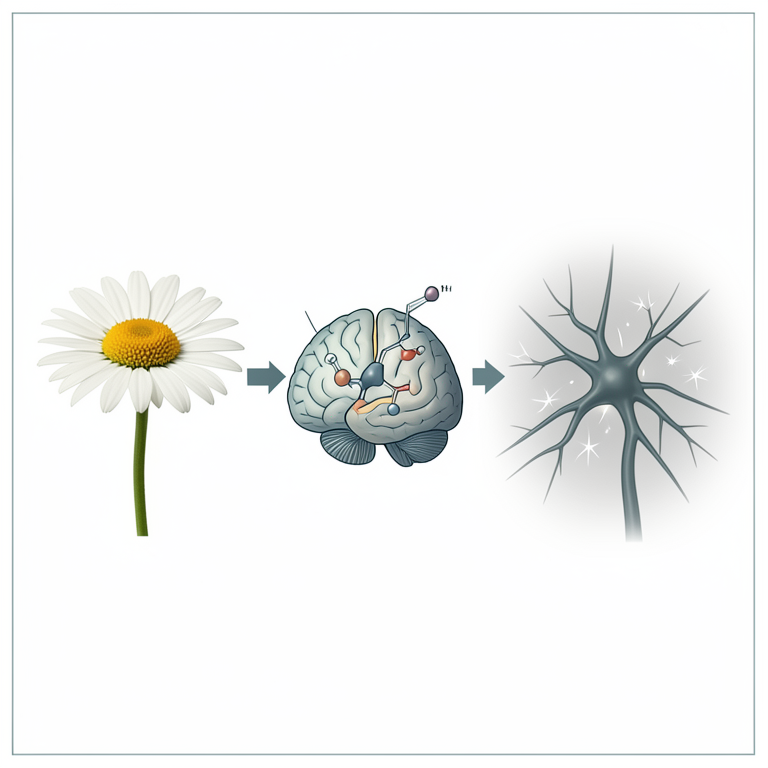
Mechanism of Sedation
AI-generated conceptual illustration (chamomile flowers and human brain neurons). It explains the idea and does not show study data.
View source evidence ↗Figures & tables
From the original paper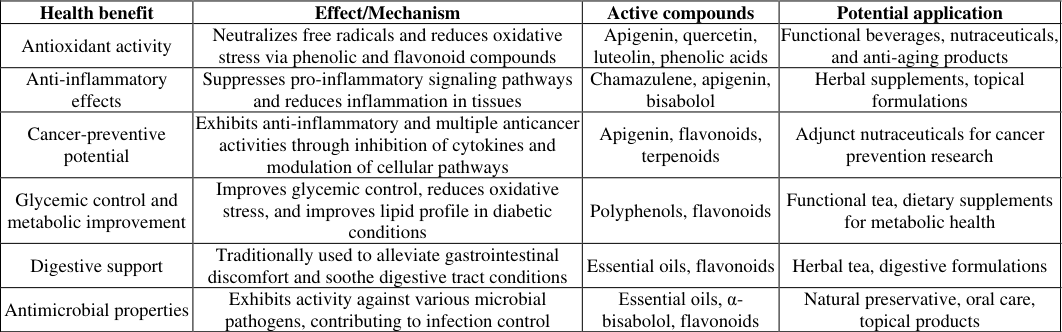 Table 1
Introduction
Chamomile has been a cornerstone of traditional medicine for thousands of years, valued across cultures for its calming, digestive, and healing properties. Ancient Egypt, Greece, Rome, Ayurveda, and Traditional Chinese Medicine (TCM) all incorporated chamomile into remedies for sleep, inflammation, menstrual disorders, and skin ailments. (Tian 2007, Chen 2020) [34] Chamomile bridges traditional healing with modern science, offering benefits for anxiety relief, digestion, blood sugar control and skin health. It is widely consumed herbal teas worldwide. (Sabir 2025) [27] . It have been integral to both traditional and non-traditional forms of medicine dating back at least 5000 years. Chamomile is a native of the old World. Chamomile tea is derived from the daisy-like flowers of the Asteraceae family plants, primarily German chamomile (Matricaria chamomilla) and Roman chamomile (Chamaemelum nobile). Known for a sweet, apple-like aroma, these plants are easy to grow in full sun, require little maintenance, and are highly regarded for their relaxing herbal tea. (Kimura 2023, Sepp 2024, Ubessi 2019) [17,37] . Chamomile (Matricaria chamomilla L. and Chamaemelum nobile) is among the most widely consumed herbal remedies, valued for its therapeutic value and cultural significance. Traditionally employed as a gentle sedative, digestive tonic, and skin remedy, chamomile has been integrated into diverse medical systems across Europe, Asia, and the Middle East. Modern phytochemical investigations have identified key bioactive compounds including flavonoids (apigenin, luteolin), terpenoids (α-bisabolol, chamazulene), and phenolic acids this highlights its anti-inflammatory, antioxidant, antispasmodic, and metabolic regulatory properties. (Tsivelika 2021, Wan 2019) [36,40] . Clinical and experimental studies further highlight chamomile's potential in cardiovascular health, demonstrating reductions in blood sugar, blood pressure, and cholesterol, alongside its established role in mental health and dermatology. Despite its broad safety profile, caution is needed in populations with Asteraceae allergies, during pregnancy due to uterotonic effects of Roman chamomile, and in individuals taking anticoagulant medications. Chamomile's enduring importance lies not only in its scientifically validated therapeutic effects but also in its cultural symbolism of healing and purity.
This dual identity positions chamomile as both a cornerstone of traditional herbal medicine and a promising integrative agent in modern phytotherapy. (Shrivastava 2009, Hussein 2024) [16] .
Key Chamomile Plant Varieties
German Chamomile (Matricaria chamomilla): This is the preferred variety for German Chamomile (Matricaria chamomilla / M. recutita): German Chamomile is an errect annual herb that grows between 10-60 cm tall, with smooth, hairless stems and small daisy-like flowers featuring conical yellow centers. It is the most widely used chamomile variety, prized for its high levels of azulene, which gives its essential oil a distinctive blue color and strong antiinflammatory properties. This makes it especially popular in herbal medicine, aromatherapy, and skincare. (Hajizadeh 2020) [15] .
Roman Chamomile (Chamaemelum nobile / Anthemis nobilis):
A perennial creeping herb with hairy stems and larger white flowers with flat, yellow centers. It is often used as a ground cover and in aromatherapy, with a strong, apple-like fragrance. Roman Chamomile is a low-growing perennial herb, reaching about 25 cm in height, with hairy stems and daisy-like white flowers surrounding flat yellow centers. Known for its strong apple-like fragrance, it is often used as a fragrant ground cover in gardens and valued in aromatherapy for its calming properties. Beyond its ornamental appeal, Roman Chamomile is also used in herbal teas and skin care remedies, making it both beautiful and beneficial. (Valmy 2025) [39] .
Moroccan Chamomile (Ormenis multicaulis):
A third type, is distinct from the more commonly recognized German and Roman chamomile varieties. Unlike those, which are prized in herbal medicine and teas, Moroccan Chamomile is primarily valued in the cosmetics and perfumery industry. It belongs to the Asteraceae family, native to North Africa, especially Morocco. Essential oilis extracted from its flowers, the oil has a warm, herbaceous, slightly fruity aroma. It is often added to skincare products for its soothing and anti-inflammatory properties. Widely used as a fragrance component, lending a soft, floral, and slightly exotic note. (El-Assri 2025) [10] . Chamomile is indeed emerging as one of the most promising medicinal crops in India. Its cultivation pattern reflects both climatic suitability and market demand. (Shrivastava 2010) Chamomile cultivation in India is concentrated in Jammu & Kashmir (Ideal cool climate, long tradition of medicinal herb farming), Uttar Pradesh, Assam, and parts of Himachal Pradesh, with growing interest in expanding to South India due to its high export value and demand in tea, cosmetics, and pharmaceuticals. Farmers can earn up to ₹2.5 lakh per hectare annually, making it a profitable medicinal crop. Further, rising demand for herbal teas and wellness products along with increasing use in natural skincare and aromatherapy makes it highly valuable herb. (Soesilawati 2025) [30] .
Propagation: Primarily propagated by seeds via direct sowing or transplanting (1-month-old seedlings). Most chamomile seeds are light-dependent. Scatter them on the surface of pre-moistened soil and press lightly; do not cover them with soil. In mild climates like parts of India, sow in Winter (Sep-Nov) or Spring (Feb-Mar). Seeds typically sprout within 7-14 days if kept moist.
Spacing: A spacing of 30 cm × 30 cm is considered ideal for maximum flower and oil yield.
Fertilization: Responds well to organic manure, with studies showing that vermicompost and cow manure can significantly increase flower yield, often outperforming or equaling synthetic fertilizers.
Harvesting: Flowers should be picked when they are fully opened, generally at the medium ripening stage. Handpicking or specialized harvesters are used.
Drying: Freshly harvested flowers have high moisture content (60-85%) and must be dried down to 10%. Shaded, air-drying is often recommended to preserve active compounds, though solar drying also yields high-quality results.
Key Bioactive Compounds
Different classes of bioactive constituents are present in chamomile, which have been isolated and used as medicinal preparations and cosmetics. The plant contains 0.24%-1.9% volatile oil, composed of a variety of separate oils. When exposed to steam distillation, the oil ranges in color from brilliant blue to deep green when fresh but turns to dark yellow after storage. Despite fading, the oil does not lose its potency. Approximately 120 secondary metabolites have been identified in chamomile, including 28 terpenoids and 36 flavonoids. (Das 2019, Lu 2024, Alkuraishy 2015) [7,3] .
Flavonoids: These are the most abundant compounds, with apigenin-7-glucoside being the main component and quality marker. Other important flavonoids include luteolin, quercetin, and patuletin.
Terpenoids (Essential Oils):
Chamomile's terpenoid-rich essential oils are one of its most distinctive features, giving both therapeutic value and characteristic aroma. Chamomile flowers contain 0.2-1% volatile essential oils, notably chamazulene (which provides a blue color and has antiinflammatory properties) and -bisabolol. Phenolic Acids such as Caffeic acid acts as an antioxidant, protecting cells from oxidative stress and supporting gut health. p-Coumaric acid provides antimicrobial and antiinflammatory benefits, enhancing chamomile's role in digestive and skin applications. Together, these acids strengthen chamomile's ability to calm inflammations and promote healing. (Pequeno 2018) [23] . Sesquiterpene Lactones such as Matricarin and Matricin are key lactones found in chamomile. These compounds are known for their anti-inflammatory and antispasmodic effects, helping soothe the digestive tract and reduce irritation. They also contribute to chamomile's distinctive aroma and therapeutic potency. (Petronilho 2011, Fen 2021) [24, 11] . Chamomile's medicinal properties are attributed to over 120 secondary metabolites, including terpenoids (like α-bisabolol and chamazulene) and flavonoids (Zhao 2018, Wang 2016) [44,41] .
Herbal Benefits
Digestive Comfort: Chamomile is widely valued for its gentle support to the digestive system. Its natural compounds help relax the gut, ease discomfort, and promote overall digestive balance. It works as a carminative, reducing bloating and helping expel trapped gas (Chauhan 2021) [4] .
Sleep and Relaxation: Sleep & Relaxation Role
Chamomile's calming power largely comes from apigenin, a flavonoid that interacts directly with the brain's receptors. Apigenin binds to GABA-A receptors in the brain. This enhances the effect of gamma-aminobutyric acid (GABA), the neurotransmitter responsible for reducing neuronal excitability. The result is a sedative effect, which promote sleep. (Saadatmand 2024) [26] .
Anti-inflammatory & Anti-allergic:
Chamomile's antiinflammatory and anti-allergic properties make it a powerful natural remedy for skin and immune-related conditions Chamazulene and α-Bisabolol are key terpenoids that reduce inflammation. They inhibit the release of proinflammatory mediators, calming irritation in tissues. This makes chamomile effective for eczema, dermatitis, and skin rashes. Anti-allergic Role Chamomile helps lower histamine release, which is responsible for allergic reactions.
(Sotiropolhu 2020, Al-Dabbagh 2019) [2] . This reduces redness, itching, and swelling in allergic skin conditions. It is often used in topical creams and herbal compresses for soothing flare-ups. It is effective in reducing inflammation and histamines, helpful for eczema, rashes, and dermatitis. (Sabir 2025, Valuga 2019, Akram 2023, Valmy 2025) [2,39] .
Wound healing: Chamomile (Matricaria chamomilla L.) has been extensively studied for its role in wound healing, with evidence showing that topical application accelerates granulation tissue formation and enhances epithelial regeneration. Its bioactive constituents, particularly αbisabolol and chamazulene, exert potent anti-inflammatory and antimicrobial effects, reducing local irritation and preventing secondary infections. (El-Assri 2025) [10] .
Comparative clinical trials have demonstrated that chamomile preparations can perform similarly to low-dose hydrocortisone in the treatment of eczema, highlighting its therapeutic potential as a natural alternative. (Sah 2022) [28] . These findings suggest that chamomile's pharmacological activity is mediated through modulation of cytokine release, stimulation of fibroblast proliferation, and promotion of collagen deposition, making it a valuable adjunct in dermatological and wound-care applications. (Mihyaoui 2022, Ghasemi 2024, Mailander 2022, Drif 2024) [9,12,8] .
Metabolic regulation and cardiovascular health:
Chamomile (Matricaria chamomilla L.) has shown promising effects in metabolic regulation and cardiovascular health, supported by both animal and human studies. Its flavonoid constituents, particularly apigenin and luteolin, appear to modulate carbohydrate metabolism by inhibiting digestive enzymes and enhancing insulin sensitivity, resulting in improved glycaemic control in individuals with type 2 diabetes. Additionally, chamomile's vasodilatory and antioxidant properties contribute to reductions in systolic and diastolic blood pressure, while its influence on lipid metabolism has been associated with decreased LDL cholesterol and triglycerides, alongside elevated HDL cholesterol. (Wang 2021) [42] . These combined actions suggest that chamomile may lower cardiovascular risk factors through mechanisms involving oxidative stress reduction, cytokine modulation, and vascular protection. (Haghi 2014) [14] . While early findings are encouraging, larger-scale clinical trials are required to establish standardized dosages and confirm long-term efficacy in metabolic and cardiovascular disease management. (Dai 2022, Zargaran 2017, Ghosh 2017) [6,43,13] .
Side Effects and Precautions
Allergies: Chamomile is usually safe, but people who are allergic to plants in the Asteraceae family such as ragweed, chrysanthemums, or asters may react to it. This happens because chamomile shares similar proteins with these plants, which can trigger the immune system. Reactions may include skin rashes, itchy eyes, sneezing, or breathing problems, and in rare cases, more serious responses. For this reason, doctors often advise people with known allergies to these plants to avoid chamomile products. (Park 2021, Pooya 2025) [22,25] .
Pregnancy: Roman chamomile (Chamaemelum nobile) should be used carefully during pregnancy because it can cause uterine contractions. These contractions may increase the risk of miscarriage or preterm labor if taken in large amounts. While chamomile is often used for relaxation or digestive problems, pregnant individuals are advised to avoid Roman chamomile tea and essential oils unless guided by a doctor. German chamomile (Matricaria chamomilla) is more commonly used and considered safer, but caution is still recommended. (Trabace 2015) [35] .
Interaction: Chamomile has mild anticoagulant properties, which means it can slightly thin the blood. Because of this, it may interact with blood-thinning medications such as warfarin, aspirin, or clopidogrel. These interactions could increase the risk of bleeding, especially if chamomile is consumed regularly in tea or supplement form. For individuals taking anticoagulants, doctors usually recommend caution and medical supervision before using chamomile products. This highlights the importance of considering herbal remedies alongside prescribed medications to avoid unintended effects. (Lu 2024, Wang 2021) [42] .
Conclusion
Chamomile can be seen as a safe and versatile herb that supports many aspects of health. Research shows it works as a gentle sedative to calm the mind and improve sleep, a digestive aid to ease cramps and bloating, and a skin remedy that helps wounds and rashes heal.
Figures and tables from the paper
References
44 in the original paper- Akram W, Ahmed S, Rihan M, Arora S, Khalid M, Ahmad S, et al. An updated comprehensive review of the therapeutic properties of Chamomile (Matricaria chamomilla L.). Int J Food Prop. 2023;27:133-164.
- Al-Dabbagh B, Elhaty IA, Elhaw M, Murali C, Mansoori AA, Awad B, et al. Antioxidant and anticancer activities of chamomile (Matricaria recutita L.). BMC Res Notes. 2019;12:3.
- Alkuraishy HM, Al-Gareeb AI, Albuhadilly AK, Alwindy S. In vitro assessment of the antibacterial activity of Matricaria chamomile alcoholic extract against pathogenic bacterial strains. Microbiol Res J Int. 2015;7:55-61.
- Chauhan R, Singh S, Kumar V, Kumar A, Kumari A, Rathore S, et al. A comprehensive review on biology, genetic improvement, agro and process technology of German chamomile (Matricaria chamomilla L.). Plants (Basel). 2021;11:29.
- Chen GR, Xin YH. Antiviral traditional Chinese medicine composition and its application. China Patent CN113797266A. 2020 Jun 11.
- Dai YL, Li Y, Wang Q, Niu FJ, Li KW, Wang YY, et al. Chamomile: A review of its traditional uses, chemical constituents, pharmacological activities and quality control studies. Molecules. 2022;28:133.
- Das S, Horváth B, Šafranko S, Joksić S, Széchenyi A, Kőszegi T. Antimicrobial activity of chamomile essential oil: Effect of different formulations. Molecules. 2019;24:4321.
- Drif AI, Yücer R, Damiescu R, Ali NT, Hagar THA, Avula B, et al. Anti-inflammatory and cancerpreventive potential of chamomile (Matricaria chamomilla L.): A comprehensive in silico and In vitro study. Biomedicines. 2024;12:1484.
- El Mihyaoui A, Esteves da Silva JCG, Charfi S, Candela Castillo ME, Lamarti A, Arnao MB. Chamomile (Matricaria chamomilla L.): A review of ethnomedicinal use, phytochemistry and pharmacological uses. Life (Basel). 2022;12:479.
- El-Assri E, Hmamou A, El-Assri Y, Baghouz A, Elrherabi A, Bouhrim M, et al. Phytochemical profiling, In vitro and in silico evaluation of antioxidant, antimicrobial, and insecticidal properties of Moroccan Matricaria chamomilla essential oil. Sci Rep. 2025;15:43620.
- Fen MY. Deciphering chamomile essential oil. Chin Cosmet. 2021;12:120-122.
- Ghasemi S, Yousefbeyk F. A review on phytochemicals and biological properties of golden chamomile (Matricaria aurea). Res J Pharmacogn. 2024;11:79-91.
- Ghosh D, Syed AU, Prada MP, et al. Calcium channels in vascular smooth muscle. Adv Pharmacol. 2017;78:49-87.
- Haghi G, Hatami A, Safaei A, Mehran M. Analysis of phenolic compounds in Matricaria chamomilla and its extracts by UPLC-UV. Res Pharm Sci. 2014;9:31-37.
- Hajizadeh-Sharafabad F, Varshosaz P, Jafari-Vayghan H, Alizadeh M, Maleki V. Chamomile (Matricaria recutita L.) and diabetes mellitus, current knowledge and the way forward: A systematic review. Complement Ther Med. 2020;48:102284.
- Hussein MN, Fajer AN. In vivo evaluation of antioxidant activity of chamomile extract against procyclidine-induced oxidative stress: Potential application in cancer prevention. Asian Pac J Cancer Prev. 2024;25:2919-2928.
- Kimura R, Schwartz J, Bennett-Guerrero E. A narrative review on the potential therapeutic benefits of chamomile in the acute care setting. J Herb Med. 2023;41:100714.
- Lu J, Jiang Z, Dang J, Li D, Yu D, Qu C, et al. GC-MS combined with fast GC E-nose for the analysis of volatile components of chamomile (Matricaria chamomilla L.). Foods. 2024;13:1865.
- Mailänder LK, Lorenz P, Bitterling H, Stintzing FC, Daniels R, Kammerer DR. Phytochemical characterization of chamomile (Matricaria recutita L.) roots and evaluation of their antioxidant and antibacterial potential. Molecules. 2022;27:8508.
- McKay DL, Blumberg JB. A review of the bioactivity and potential health benefits of chamomile tea (Matricaria recutita L.). Phytother Res. 2006;20:519530.
- Mishra B, Chandra M. Evaluation of phytoremediation potential of aromatic plants: A systematic review. J Appl Res Med Aromat Plants. 2022;31:100405.
- Park SH, Kim DS, Oh J, Geum J, Kim J, Choi S, et al. Matricaria chamomilla (Chamomile) ameliorates muscle atrophy in mice by targeting protein catalytic pathways, myogenesis, and mitochondrial dysfunction. Am J Chin Med. 2021;49:1493-1514.
- Pequeno MA, Silvestre MR, Amêndola I, Silva CRG, Leão MVP, Santos SSF. Matricaria recutita extract (Chamomile) to reduce Candida albicans and Enterobacter cloacae biofilms: In vitro study. RGO Rev Gaúch Odontol. 2018;66:1-7.
- Petronilho S, Maraschin M, Delgadillo I, Coimbra MA, Rocha SM. Sesquiterpenic composition of the inflorescences of Brazilian chamomile (Matricaria recutita L.): Impact of the agricultural practices. Ind Crops Prod. 2011;34:1482-1490.
- Pooya J, Mostafa A, Fereshteh A. Development and optimization of chamomile extract pastilles for potential oral ulcer treatment. Acta Biochim Iran. 2025;3.
- Saadatmand S, Zohroudi F, Tangestani H. The effect of oral chamomile on anxiety: A systematic review of clinical trials. Clin Nutr Res. 2024;13:139-147.
- Sabir SM, Shahida S, Iqbal W, Zeb A, Khan MI, Shanableh A, et al. Antioxidant activities and phenolic profile of chamomile (Matricaria recutita): A herbal tea from Pakistan. Lett Org Chem. 2025;22:706-712.
- Sah A, Naseef PP, Kuruniyan MS, Jain GK, Zakir F, Aggarwal G. A comprehensive study of therapeutic applications of chamomile. Pharmaceuticals (Basel). 2022;15:1284.
- Sepp J, Koshovyi O, Jakstas V, Žvikas V, Botsula I, Kireyev I, et al. Phytochemical, technological, and pharmacological study on the galenic dry extracts prepared from German chamomile (Matricaria chamomilla L.) flowers. Plants (Basel). 2024;13:350.
- Soesilawati P, Sutikno A, Adha R. Chamomile (Matricaria chamomilla L.) as an anti-inflammatory agent for oral mucosa: Mechanisms and clinical evidence. Int J Curr Sci Res Rev. 2025;8:3797-3800.
- Sotiropoulou NS, Megremi SF, Tarantilis P. Evaluation of antioxidant activity, toxicity, and phenolic profile of aqueous extracts of chamomile (Matricaria chamomilla L.) and sage (Salvia officinalis L.) prepared at different temperatures. Appl Sci. 2020;10:2270.
- Srivastava JK, Gupta S. Extraction, characterization, stability and biological activity of flavonoids isolated from chamomile flowers. Mol Cell Pharmacol. 2009;1:138.
- Srivastava JK, Shankar E, Gupta S. Chamomile: A herbal medicine of the past with bright future. Mol Med Rep. 2010;3:895-901.
- Tian LJ, Huang TK. Research on the development history of traditional Chinese medicine. Chin Arch Tradit Chin Med. 2007;4:753-755.
- Trabace L, Tucci P, Ciuffreda L, Matteo M, Fortunato F, Campolongo P, et al. "Natural" relief of pregnancyrelated symptoms and neonatal outcomes: Above all do no harm. J Ethnopharmacol. 2015;174:396-402.
- Tsivelika N, Irakli M, Mavromatis A, Chatzopoulou P, Karioti A. Phenolic profile by HPLC-PDA-MS of Greek chamomile populations and commercial varieties and their antioxidant activity. Foods. 2021;10:2345.
- Ubessi C, Tedesco SB, de Bona da Silva C, Baldoni M, Krysczun DK, Heinzmann BM, et al. Antiproliferative potential and phenolic compounds of infusions and essential oil of chamomile cultivated with homeopathy. J Ethnopharmacol. 2019;239:111907.
- Valduga AT, Gonçalves IL, Magri E, Finzer JRD. Chemistry, pharmacology and new trends in traditional functional and medicinal beverages. Food Res Int. 2019;120:478-503.
- Valmy J, Greenfield S, Shindo S, Kawai T, Cervantes J, Hong BY. Anti-inflammatory effect of chamomile from randomized clinical trials: A systematic review and meta-analyses. Pharm Biol. 2025;63:490-502.
- Wan WT, Song YJ, Xu LJ, Xiao PG, Miao JH. Research review and application prospect analysis of Matricaria. Mod Chin Med. 2019;21:260-265.
- Wang GL. Study on active ingredients of chamomile for whitening and moisturizing [Master's thesis]. Wuxi (China): Jiangnan University; 2016.
- Wang Y, Zhou C, Wu Q, Wang YH. An analysis of the medicines for treating heart diseases in Shennong's Herbal Classic. J Tradit Chin Med Lit. 2021;39:26-30.
- Zargaran A, Sakhteman A, Faridi P, Daneshamouz S, Akbarizadeh AR, Borhani-Haghighi A, et al. Reformulation of traditional chamomile oil: Quality controls and fingerprint presentation based on cluster analysis of attenuated total reflectance-infrared spectral data. J Evid Based Complementary Altern Med. 2017;22:707-714.
- Zhao YF, Zhang D, Liang CX, Yang LX, Sun P, Ma Y, Wang K, Chang XQ, Yang L. Study on chemical constituents of Uyghur chamomile I. J Chin Pharm Sci. 2018;27:324-331.