
Research article · 2026 · Full text
International Journal of Horticulture and Food ScienceTransforming guava cultivation through high-density planting and meadow orcharding: A review of recent developments
Volume 8(6) · Pages 26–32 · DOI: 10.33545/26631067.2026.v8.i6a.758 ↗
Research areasPlant Physiology and Cultivation StudiesPsidium guajava Extracts and ApplicationsPlant Growth and Agriculture Techniques
Abstract
Author-writtenGuava (Psidium guajava L.) is a commercially important fruit crop of the tropical and subtropical regions, appreciated for its nutritional value, adaptability, and year-round market demand. Nevertheless, conventional orchard systems are increasingly constrained by excessive canopy vigour, poor light penetration, delayed orchard productivity, labour intensiveness, and suboptimal resource-use efficiency. In this context, high-density planting and meadow orcharding have emerged as viable production strategies for guava intensification, offering opportunities for improved early bearing, yield regularization, and enhanced profitability. These systems derive their effectiveness from coordinated canopy architecture, strategic pruning, crop regulation, and precision management of water and nutrients. Recent advances in fertigation, deficit irrigation, mechanized canopy manipulation, and digital orchard monitoring have further expanded the technical scope of these systems under evolving climatic and economic conditions. This review critically examines the recent progress in high-density and meadow orcharding in guava, with particular emphasis on production system design, canopy management, crop regulation, precision nutrient and water management, fruit quality, economics, sustainability, and emerging research needs. The available evidence indicates that the successful adoption of these systems depends on cultivar suitability, training intensity, site-specific management, and integration of precision horticultural tools. High-density and meadow orchard systems therefore represent an important pathway for sustainable guava production, combining productivity enhancement with improved resource efficiency and long-term orchard manageability.
Summary
Source-checkedPlain-language reading of the full paper, prepared with AI and checked against the text. Each point links to the authors' own words.
Why it matters
- Guava is a commercially significant fruit crop in tropical and subtropical areas, valued for its adaptability and nutritional content. View evidence ↗
- Traditional guava orchards face several limitations, including poor light penetration, excessive canopy growth, and inefficient use of resources. View evidence ↗
- The need for more efficient orchard systems is intensified by factors such as shrinking landholdings, rising land costs, and climate variability. View evidence ↗
The question
- This review aims to examine recent developments in high-density planting (HDP) and meadow orcharding in guava, focusing on productivity, management, and economic viability. View evidence ↗
What they did
- The review synthesizes data from multiple research sources, including studies by Nautiyal et al. and Pal et al., to compare traditional and intensive systems. View evidence ↗
What they found
- Average yields increase significantly with planting density, rising from 12-18 t/ha in traditional orchards to 30-40 t/ha in HDP and 40-60 t/ha in meadow orchard systems. View evidence ↗
- The time to first commercial bearing is reduced from 3-4 years in traditional systems to 2-3 years in HDP and just 1 year in meadow orcharding. View evidence ↗
- For cv. Pant Prabhat at 2.0 x 1.0 m spacing, removing non-fruiting shoots and applying one-leaf-pair pruning in May improves winter fruiting and overall profitability. View evidence ↗
- Specific treatments at close spacing have reported an average total yield of 283.07 q/ha and a benefit:cost ratio of 2.02. View evidence ↗
- The use of drip fertigation in these systems can reduce fertilizer use by 20-30% while enhancing nutrient-use efficiency. View evidence ↗
- Intensive systems are economically attractive due to a benefit:cost ratio of 2.0-2.5 and a relatively short payback period of 3-4 years. View evidence ↗
What it means
- The authors conclude that HDP and meadow orcharding represent a paradigm shift, potentially increasing yields to 40-60 t/ha, which is three to four times higher than traditional systems. View evidence ↗
- Challenges to adoption include high initial costs for infrastructure, a shortage of quality planting material, and the need for skilled labor for precision pruning. View evidence ↗
- Future research should focus on standardizing rootstocks and cultivars for dense planting, as well as developing location-specific pruning and digital monitoring tools. View evidence ↗
Visual summary
1 visualsIllustrations explain the paper; they do not show study data.
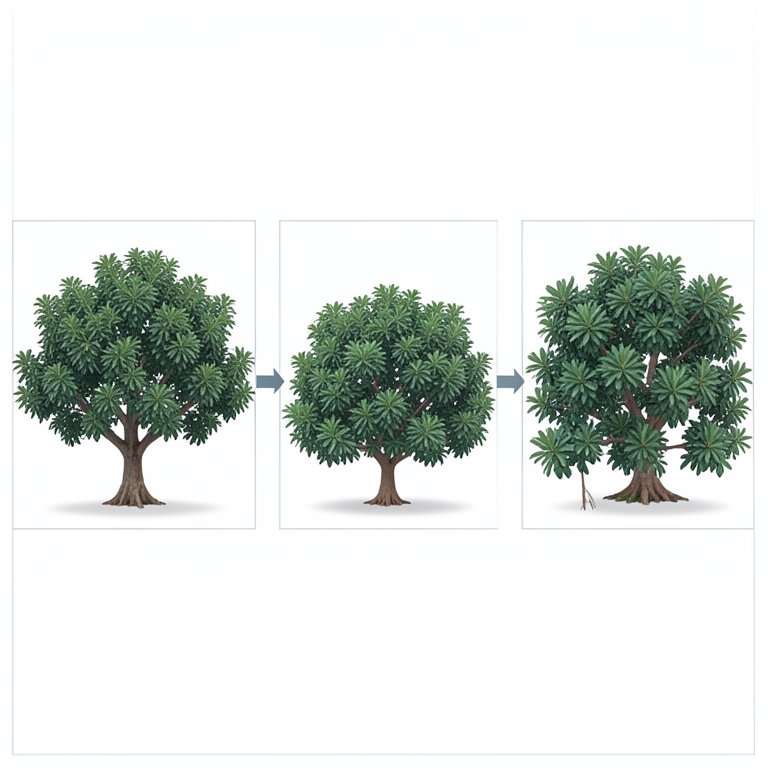
Comparison of Orchard Systems
AI-generated conceptual illustration (guava trees). It explains the idea and does not show study data.
View source evidence ↗Figures & tables
From the original paper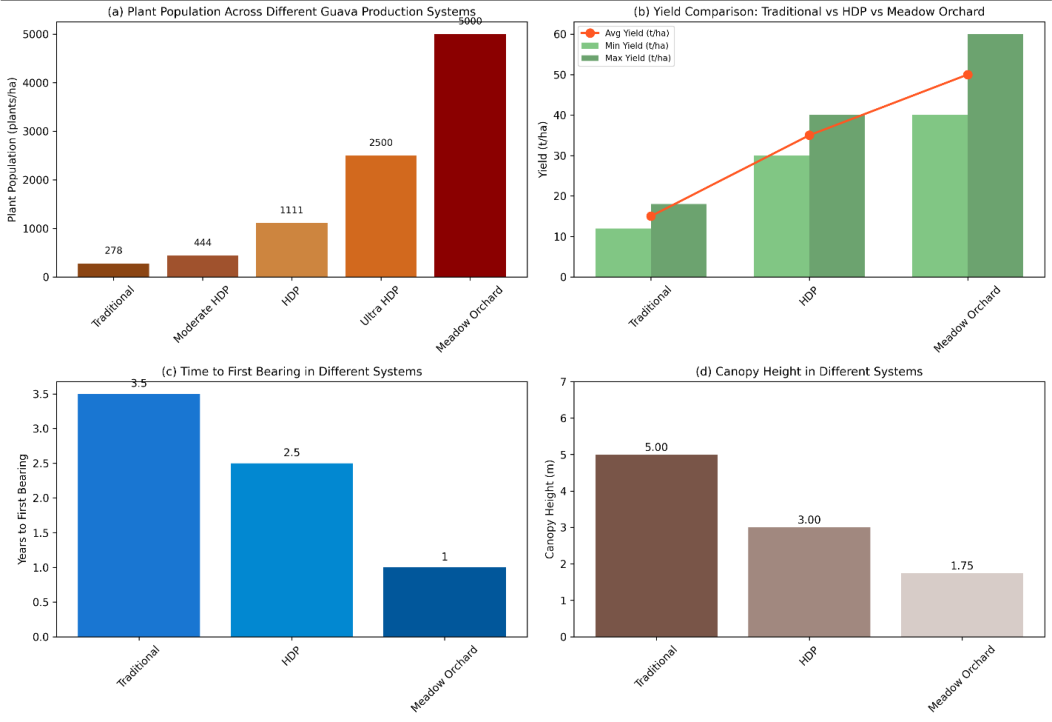 Figure 1
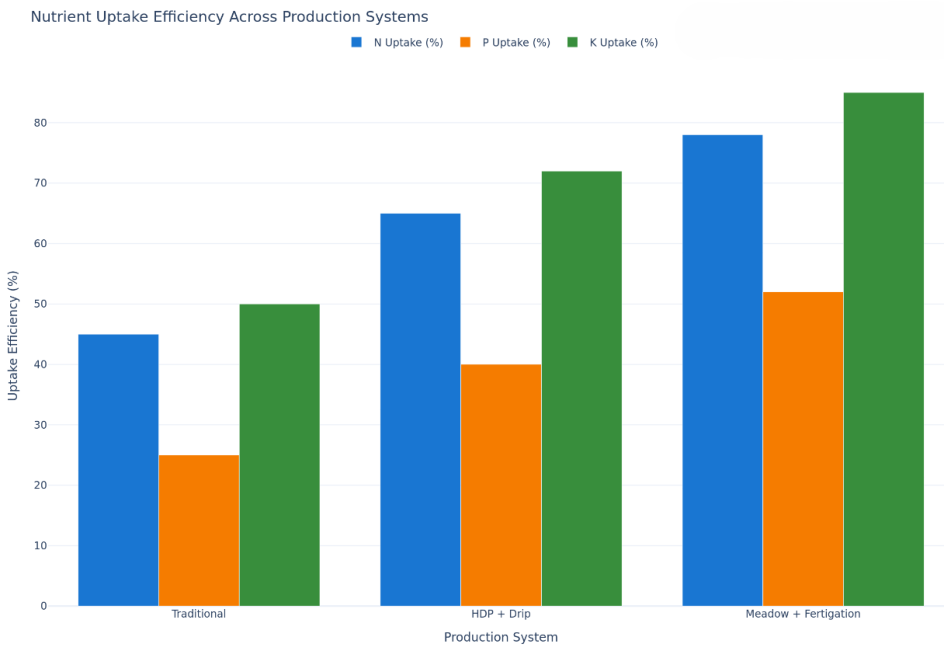 Figure 2
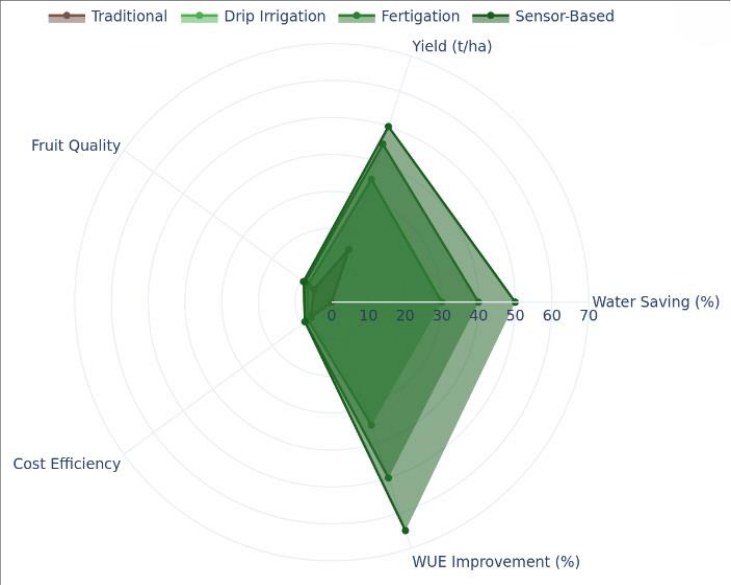 Figure 3
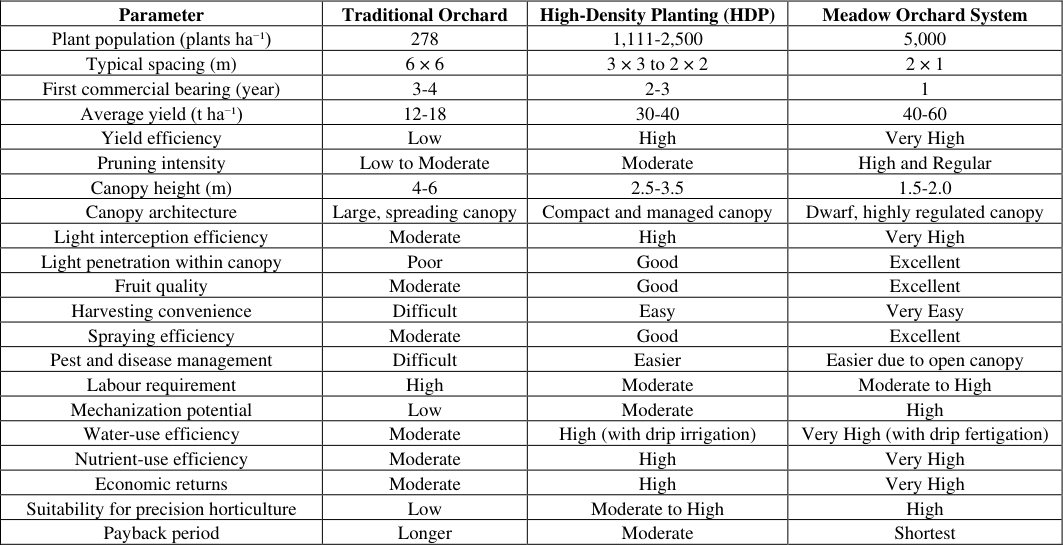 Table 1
Introduction
Guava (Psidium guajava L.), belonging to the family Myrtaceae, is one of the most important fruit crops of the tropical and subtropical regions because of its wide adaptability, prolific bearing habit, high nutritional value, and economic importance (Patial et al., 2020; Nautiyal et al., 2020) [27,12] . The fruit is popularly known as the "Apple of the Tropics" or "Poor Man's Apple" and is highly valued for its richness in vitamin C, dietary fibre, pectin, antioxidants, and essential minerals (Patial et al., 2020; Nautiyal et al., 2020) [27,12] . Guava is consumed both as a fresh fruit and in processed forms such as juice, nectar, jam, jelly, puree, beverages, and dehydrated products, thereby contributing substantially to nutritional security and the agro-processing sector (Patial et al., 2020) [27] . India is one of the leading producers of guava and the crop occupies an important position among fruit crops because of its adaptability, comparatively high productivity, and suitability under diverse agro-climatic conditions (Patial et al., 2020; NHB, 2019) [27] . However, despite expansion in area under cultivation, productivity in many orcharding regions remains below realizable potential because a large proportion of orchards continue to be managed under conventional systems characterized by wider spacing, excessive vegetative growth, poor light penetration, delayed bearing, and inefficient utilization of land, water, and nutrients (Lal et al., 2000; Lal et al., 2007; Nautiyal et al., 2020) [12,8,9] . These limitations have become more serious in the face of shrinking landholdings, rising land value, labour scarcity, rapid urbanization, and climate variability, all of which necessitate the adoption of more intensive and efficient orchard systems (Patial et al., 2020; Singh et al., 2023) [27] .
Traditionally, guava orchards have been planted at wider spacings ranging from 5 × 5 m to 8 × 8 m, resulting in low plant population and delayed economic returns (Lal et al., 2007; Patial et al., 2020) [27,9] . Under such systems, large canopies create mutual shading, reduce photosynthetic efficiency, impair canopy aeration, hinder cultural operations, and adversely affect fruit quality and productivity (Patial et al., 2020; Pratibha et al., 2013) [21] . To overcome these constraints, high-density planting (HDP), ultra-high-density planting (UHDP), and meadow orcharding have emerged as promising approaches for sustainable intensification of guava production (Patial et al., 2020; Nautiyal et al., 2020) [27,12] . High-density planting aims to maximize productivity per unit area through efficient utilization of light, water, nutrients, and canopy space, while maintaining optimum tree architecture by training and pruning (Patial et al., 2020; Singh et al., 2023) [27] . Among intensive orchard models, meadow orcharding represents a particularly important innovation in guava. The system was developed and standardized at the Central Institute for Subtropical Horticulture (CISH), Lucknow, and generally accommodates about 5,000 plants ha-1 at a spacing of 2.0 × 1.0 m with regular topping, hedging, and canopy regulation to maintain compact tree size and sustain fruiting. This production model facilitates early bearing, easier harvesting, better light distribution, and higher yield efficiency than conventional orchards (Nautiyal et al., 2020) [12] . Research on intensive guava systems has consistently shown that canopy management is the central determinant of orchard performance. Pruning severity and timing strongly influence vegetative growth, flowering behaviour, fruit set, fruit retention, seasonal crop distribution, fruit quality, and profitability (Nautiyal et al., 2016; Patial et al., 2020; Nautiyal et al., 2020) [15,27] . In high-density orchards of cv. Pant Prabhat, complete removal of non-fruiting shoots followed by one-leaf-pair pruning during the first week of May improved winter fruiting, total yield, and benefit:cost ratio under 2.0 × 1.0 m spacing (Nautiyal et al., 2020) [12] . Likewise, earlier studies demonstrated that spacing and pruning intensity significantly influence canopy development, leaf nutrient status, fruit quality, and yield performance under high-density systems (Joshi et al., 2014; Joshi et al., 2016; Nautiyal et al., 2016) [15] . In recent years, intensive guava production has been further strengthened by advances in precision horticulture, drip fertigation, integrated nutrient management, crop regulation, sensor-based irrigation, and digital orchard monitoring. These interventions are increasingly important under changing climate and resource constraints because they improve nutrient-use efficiency, water productivity, orchard uniformity, and management precision. Available evidence suggests that well-managed HDP and meadow orchard systems can substantially enhance yield per unit area, improve fruit quality, and increase profitability relative to traditional systems. In view of increasing market demand for quality fruits, pressure on land and water resources, and the need for climate-resilient horticultural systems, high-density planting and meadow orcharding offer a robust pathway for sustainable guava intensification. Therefore, the present review critically examines recent advances in high-density planting and meadow orchard systems in guava, with special emphasis on canopy management, crop regulation, nutrient and water management, productivity enhancement, economic viability, sustainability benefits, and future research priorities.
Review of Literature Evolution of intensive guava orcharding
The transition from conventional guava orchards to intensive planting systems has been driven largely by the need to increase productivity per unit area and improve orchard manageability (Lal et al., 2007; Singh et al., 2023) [9] . Earlier research established that traditional wide-spaced guava orchards suffer from delayed canopy filling, inefficient interception of solar radiation, and lower landuse efficiency, whereas closer planting improves early returns provided canopy size is effectively regulated (Lal et al., 2000; Pratibha et al., 2013) [8,21] . Meadow orcharding subsequently emerged as a more specialized form of intensive planting in which plant size is deliberately restricted through repeated pruning and canopy shaping, allowing extremely high plant densities without permanent loss of orchard functionality.
Canopy management and pruning
Pruning is the most critical cultural operation in highdensity guava because the crop bears on current season's growth and therefore responds strongly to canopy manipulation (Patial et al., 2020; Nautiyal et al., 2020) [27,12] . Reviews and experimental studies have shown that pruning time and severity alter shoot emergence, flowering pattern, crop regulation, fruit set, and fruit quality, especially when the objective is to shift production toward the superior winter crop (Patial et al., 2020) [27] . Nautiyal et al. (2020) [12] demonstrated that under high-density conditions, complete removal of non-fruiting shoots followed by one-leaf-pair pruning enhanced winter yield and profitability, while unpruned trees produced higher rainy-season yield but inferior seasonal distribution and lower economic advantage. Similar findings were reported by Thakre et al. (2016) [25] , Sah et al. (2017) [22] , and other workers who observed that systematic pruning improves light penetration, reduces canopy congestion, and increases productive shoot formation in intensive guava plantations.
Spacing and orchard geometry
Plant spacing directly affects canopy expansion, competition for light, nutrient uptake, and yield per hectare under HDP systems (Joshi et al., 2014; Joshi et al., 2016). Wider spacing generally promotes greater vegetative growth and canopy spread, whereas closer spacing suppresses vigour but increases productivity per unit land area when supported by adequate pruning and nutrient management (Nautiyal et al., 2020) [12] . In Pant Prabhat guava, spacing at 2.0 × 1.0 m resulted in higher winter-season fruit set and markedly greater yield per hectare than 2.0 × 2.0 m spacing, demonstrating the importance of planting geometry in yield optimization under intensive management. Earlier experiments under different agro-climatic conditions also confirmed that close spacing combined with canopy control improves orchard efficiency, fruit quality, and profitability.
Crop regulation and winter cropping
Crop regulation is a major objective of pruning-based guava management because the winter crop is superior in quality, less affected by pests and diseases, and more remunerative than the rainy-season crop (Patial et al., 2020; Nautiyal et al., 2020) [27,12] . The literature indicates that pruning in May can suppress the undesirable rainy crop and promote higher flowering and fruiting in winter through stimulation of new shoots and redistribution of assimilates (Singh et al., 2001; Tiwari and Lal, 2007; Patial et al., 2020) [9,27] . This principle is especially valuable in high-density plantations where crop load, canopy vigour, and source-sink relationships must be precisely balanced to achieve highquality winter production.
Fruit quality responses
Fruit quality in guava under intensive systems is strongly influenced by canopy openness, crop load, pruning intensity, and season of harvest (Patial et al., 2020) [27] . Several studies have shown that fruits from winter-season crops generally possess higher total soluble solids, better flavour, improved shelf life, and superior market acceptability compared with rainy-season fruits ( [27,12,19,20] further reported that plant spacing in high-density orchards affects physico-chemical quality parameters, indicating that orchard geometry and canopy management jointly determine not only yield but also market quality.
Nutrient and water management
As planting density increases, nutrient and water management become more precise and more critical for sustaining productivity and canopy balance. Drip fertigation has emerged as an efficient tool for nutrient delivery in fruit crops because it improves nutrient-use efficiency, supports targeted application, and can enhance vegetative growth, yield, and economic returns under well-managed orchard conditions. Integrated nutrient management and precision irrigation are increasingly viewed as necessary components of HDP guava because dense orchards require synchronized supply of nutrients and water to avoid excessive vegetative growth, nutrient depletion, and fruit quality deterioration. Economics of high-density systems Economic analysis has consistently favoured intensive guava systems when canopy management is properly executed. In high-density cv. Pant Prabhat planted at 2.0 × 1.0 m, Nautiyal et al. (2020) [12] reported the highest net return and benefit:cost ratio with complete removal of nonfruiting shoots followed by one-leaf-pair pruning, mainly because this treatment maximized profitable winter yield.
Their study reported an average total yield of 283.07 q ha and a benefit: cost ratio of 2.02 under this treatment at close spacing, compared with lower profitability in unregulated systems. These findings support the broader conclusion that the economics of HDP guava depend not only on plant density but on the successful integration of pruning, crop regulation, and seasonal fruit quality improvement. [5] , Pal et al. (2017) [19,20] , Nautiyal et al. (2020) [12] , Nautiyal et al. (2023) [14] , and recent literature on intensive guava production systems.
Sustainability and future direction
Recent literature increasingly interprets HDP and meadow orcharding within the broader framework of sustainable intensification, climate resilience, and precision horticulture (Singh et al., 2023) [23] . These systems improve land-use efficiency, facilitate micro-irrigation and mechanized operations, and support more targeted nutrient and canopy management, thereby reducing wasteful input use and improving orchard productivity under resource constraints. Future research priorities include cultivar and rootstock standardization for dense planting, location-specific pruning protocols, sensor-based irrigation, digital orchard monitoring, and climate-smart management models for long-term sustainability in guava production systems.
Conclusion
High-density planting and meadow orcharding represent a paradigm shift in guava cultivation, transforming it from a traditional low-input, low-productivity orchard system into an intensive, scientifically managed production system capable of delivering 40-60 t/ha-three to four times higher than conventional orchards. The accumulated evidence from research conducted at ICAR-CISH Lucknow, GBPUAT Pantnagar, and other institutions clearly demonstrates that meadow orcharding at 2.0 × 1.0 m spacing (5000 plants/ha) facilitates first-year bearing, compact canopy architecture, and sustained productivity through systematic topping, hedging, and pruning. The success of intensive guava systems critically depends on the integration of several key components: (i) optimum planting geometry aligned with cultivar vigour; (ii) precise canopy management through strategic pruning that regulates vegetative growth while promoting profitable winter cropping; (iii) crop regulation through bahar management, water stress, and plant growth regulators; (iv) precision nutrient and water management through drip fertigation, which can save 20-30% fertilizer while improving nutrientuse efficiency; and (v) adoption of emerging digital technologies including sensor-based irrigation, IoT monitoring, and AI-based yield prediction. Economic analyses consistently show that high-density and meadow orchard systems provide superior returns despite higher initial establishment costs. The benefit: cost ratio of 2.0-2.5, combined with early bearing from the first year and payback periods of 3-4 years, makes these systems particularly attractive for small and medium growers operating under land constraints. The compact orchard architecture also enhances labour efficiency, facilitates mechanization, and improves spray penetration for better pest and disease management. From a sustainability perspective, intensive guava systems contribute to sustainable intensification by improving landuse efficiency, reducing input wastage through precision delivery, and enhancing climate resilience through manageable canopy structures. The integration of fertigation, drip irrigation, and integrated nutrient management supports soil health, water conservation, and reduced environmental impact. However, several challenges remain that require attention: high initial investment for planting material and irrigation infrastructure, the need for skilled labour trained in precision pruning, limited availability of quality planting material suitable for dense planting, mechanization limitations in small orchards, and complexities in nutrient management under high plant density. Future research must prioritize the development of dwarfing rootstocks, cultivarspecific recommendations for dense planting, locationspecific pruning protocols, sensor-based decision-support tools, and climate-smart orchard models. In conclusion, high-density planting and meadow orcharding are not merely alternative planting systems but represent the future of sustainable guava production. Their successful adoption requires a holistic approach that integrates planting geometry, canopy architecture, crop regulation, precision input management, and digital technologies. As the horticultural sector increasingly emphasizes productivity enhancement, resource-use efficiency, and climate resilience, intensive guava orchard systems offer a robust pathway to meet the growing demand for quality fruits while ensuring economic viability for growers and environmental sustainability for the broader agro-ecosystem.
Location-specific recommendations, extension support, and capacity building will be essential to realize the full potential of these transformative production systems across India's diverse agro-climatic regions.
Acknowledgement
AcknowledgmentsThe authors acknowledge the guidance and support from GBPUA&T, Pantnagar and ICAR-Central Institute for Subtropical Horticulture (CISH), Lucknow, for providing access to research literature and technical resources.
Figures and tables from the paper
| Parameter | Traditional Orchard | High-Density Planting (HDP) | Meadow Orchard System |
|---|---|---|---|
| Plant population (plants ha⁻¹) | 278 | 1,111-2,500 | 5,000 |
| Typical spacing (m) | 6 × 6 | 3 × 3 to 2 × 2 | 2 × 1 |
| First commercial bearing (year) | 3-4 | 2-3 | 1 |
| Average yield (t ha⁻¹) | 12-18 | 30-40 | 40-60 |
| Yield efficiency | Low | High | Very High |
| Pruning intensity | Low to Moderate | Moderate | High and Regular |
| Canopy height (m) | 4-6 | 2.5-3.5 | 1.5-2.0 |
| Canopy architecture | Large, spreading canopy | Compact and managed canopy | Dwarf, highly regulated canopy |
| Light interception efficiency | Moderate | High | Very High |
| Light penetration within canopy | Poor | Good | Excellent |
| Fruit quality | Moderate | Good | Excellent |
| Harvesting convenience | Difficult | Easy | Very Easy |
| Spraying efficiency | Moderate | Good | Excellent |
| Pest and disease management | Difficult | Easier | Easier due to open canopy |
| Labour requirement | High | Moderate | Moderate to High |
| Mechanization potential | Low | Moderate | High |
| Water-use efficiency | Moderate | High (with drip irrigation) | Very High (with drip fertigation) |
| Nutrient-use efficiency | Moderate | High | Very High |
| Economic returns | Moderate | High | Very High |
| Suitability for precision horticulture | Low | Moderate to High | High |
| Payback period | Longer | Moderate | Shortest |
Table text extracted from the original PDF; superscript letters are shown inline. The original table image is below.
View original table image
References
28 in the original paper- Food and Agriculture Organization of the United Nations. Sustainable fruit production systems under climate change. Rome (Italy): Food and Agriculture Organization of the United Nations; 2024.
- Joshi P, Lal S, Nautiyal P. Effect of spacing on growth and yield of guava (Psidium guajava L.) under high density planting. J Hortic Sci. 2014;9(1):45-50.
- Joshi P, Lal S, Nautiyal P, Pal M. Response of plant spacing and pruning intensity on yield contributing characteristics of guava cv. Pant Prabhat. J Hill Agric. 2014;5(2):163-167.
- Joshi P, Lal S, Nautiyal P, Pal M. Effect of plant spacing and pruning intensity on flowering, fruiting and yield of guava (Psidium guajava L.) cv. Pant Prabhat. Int J Agric Sci. 2016;8(7):1064-1068.
- Kumar R, Singh AK, Meena KK. Advances in canopy management of tropical fruit crops. Indian J Hortic. 2021;78(3):235-247.
- Kumawat BL, Singh R, Meena OP. High density planting in fruit crops: A review. Int J Fruit Sci. 2014;14(3):267-280.
- Lal S, Singh GK, Kumar R. Effect of spacing on growth, yield and fruit quality of guava (Psidium guajava L.). Prog Hortic. 2000;32(1-2):45-52.
- Lal S, Tiwari P, Singh GK. High density planting in fruit crops: Status and prospects. Indian Hortic. 2007;52(3):23-29.
- Mitra SK, Ghosh B, Pathak PK. High density orcharding and canopy management in guava. Acta Hortic. 2018;1205:123-130.
- Nautiyal P, Lal S, Dimri DC, Arora I. Shoot pruning severity in high density guava (Psidium guajava L.). Int J Agric Sci. 2016;8(52):2427-2431.
- Nautiyal P, Lal S, Joshi P, Dimri DC. Pruning for winter crop production in high density guava plantations. Int J Curr Microbiol Appl Sci. 2020;9(5):3456-3465.
- Nautiyal P, Lal S, Papnai G, Joshi N, Supyal V. Pruning severity in high density guava for higher returns. Int J Curr Microbiol Appl Sci. 2020;9(9):27042716.
- Nautiyal P, Arora I, Dongariyal A, Pandey S, Semwal A, Agrawal K, Khaniya S, Rathore AS. High density planting and meadow orcharding in guava for higher return. Int J Environ Clim Change. 2023;13(6):212-218.
- Nautiyal P, Lal S, Singh CP. Effect of shoot pruning severity and plant spacing on leaf nutrient status and yield of guava cv. Pant Prabhat. Int J Basic Appl Agric Res. 2016;14(3):288-294.
- National Horticulture Board. Indian Horticulture Database 2019. Gurugram (India): National
- Horticulture Board, Ministry of Agriculture and Farmers Welfare, Government of India; 2019.
- National Horticulture Board. Indian Horticulture Database 2024. Gurugram (India): National
- Horticulture Board, Ministry of Agriculture and Farmers Welfare, Government of India; 2024.
- Pal DK, Lal S. Effect of high density planting on growth and yield of guava. J Hortic Sci. 2015;10(2):156-162.
- Pal DK, Lal S, Joshi P. Yield and fruit quality of guava as influenced by plant spacing under high density planting. J Hortic Sci. 2017;12(2):189-195.
- Pal M, Lal S, Nautiyal P, Joshi P. Response of high density spacing on physico-chemical quality and yield of guava (Psidium guajava L.) cv. Pant Prabhat. Int J Agric Sci. 2017;9(9):3962-3965.
- Pratibha S, Lal S, Singh R. Effect of spacing on growth and yield of guava (Psidium guajava L.). J Fruit Ornam Plant Res. 2013;21(1):45-53.
- Sah RK, Singh R, Yadav P. Effect of pruning intensity on growth, yield and fruit quality of guava (Psidium guajava L.) under high density planting. Indian J Hortic. 2017;74(3):345-350.
- Singh G. High density guava orcharding: Recent advances and future prospects. Prog Hortic. 2020;52(2):125-134.
- Singh G. Effect of pruning on flowering, fruiting and yield of guava (Psidium guajava L.). Prog Hortic. 2001;33(1-2):89-95.
- Thakre AV, Ingle UK, Shinde RS. Influence of pruning on growth, yield and fruit quality of guava (Psidium guajava L.) cv. Hisar Safeda. Int J Curr Microbiol Appl Sci. 2016;5(8):1023-1030.
- Tiwari P, Lal S. Crop regulation in guava through pruning and plant growth regulators. J Hortic Sci. 2007;2(1):45-52.
- Patial S, Saini Y. Lung macrophages: current understanding of their roles in Ozone-induced lung diseases. Critical reviews in toxicology. 2020;50(4):310-23.