
Research article · 2026 · Full text
International Journal of Horticulture and Food ScienceEffect of bio-fertilizers on growth, yield and quality of carrot (Daucus carota L.) cv. Pusa rudhira
Volume 8(6) · Pages 16–20 · DOI: 10.33545/26631067.2026.v8.i6a.756 ↗
Research areasAgricultural Science and FertilizationAgriculture, Plant Science, Crop ManagementPlant Growth Enhancement Techniques
Abstract
Author-writtenThe present investigation entitled “Effect of Bio-fertilizers on Growth, Yield and Quality of Carrot (Daucus carota L.) cv. Pusa Rudhira” was carried out at the Agriculture Research Field, Department of Horticulture, Prof. Rajendra Singh (Rajju Bhaiya) University during 2025-26. The experiment was conducted in Randomized Block Design (RBD) with 7th treatments and 3 replications to evaluate the influence of different bio-fertilizers on growth, yield, quality and economics of carrot cultivation. The treatments included Azospirillum, PSB, VAM and their combinations along with an untreated control. Among the treatments, T5 (Azospirillum @50% + VAM @50%) recorded the best growth and yield performance with maximum plant height (37.66 cm), number of leaves (13.80), leaf length (28.46 cm), fresh root weight (99.39 g), root length (21.00 cm), root diameter (45.44 mm) and root yield (24.85 t/ha). The same treatment also gave the highest gross return (3,47,900 Rs./ha), net return (2,32,028 Rs. /ha) and B:C ratio (3.00). However, T6 (PSB @50% + VAM @50%) showed superior quality parameters with highest TSS (9.47 °Brix), ascorbic acid (7.90 mg/100 g) and total sugar (2.75%). The lowest values for most parameters were recorded in T7 (control).
Summary
Source-checkedPlain-language reading of the full paper, prepared with AI and checked against the text. Each point links to the authors' own words.
Why it matters
- Carrots are significant root vegetable crops valued globally for their economic returns, medicinal properties, and nutritional value. View evidence ↗
- Due to the negative impact of chemical fertilizers on soil fertility and the environment, there is a shift toward eco-friendly bio-fertilizers for sustainable nutrient management. View evidence ↗
- Azospirillum, Phosphate Solubilizing Bacteria (PSB), and Vesicular Arbuscular Mycorrhiza (VAM) are commonly used bio-fertilizers in vegetable cultivation. View evidence ↗
The question
- The study aimed to evaluate how different bio-fertilizers and their combinations affect the growth, yield, quality, and economic returns of the Pusa Rudhira carrot variety. View evidence ↗
What they did
- The research used a Randomized Block Design (RBD) with three replications and seven treatments applied to the Pusa Rudhira carrot variety. View evidence ↗
- Treatments included single applications of Azospirillum, PSB, or VAM at 100%, combinations of two bio-fertilizers at 50% each, and an untreated control. View evidence ↗
- Growth parameters were measured at 45, 60, 75 days after sowing (DAS), and at harvest, while yield parameters were recorded specifically at the harvest stage. View evidence ↗
What they found
- The combination of Azospirillum (50%) and VAM (50%) (T5) produced the maximum plant height across all stages, reaching 37.66 cm at harvest. View evidence ↗
- T5 (Azospirillum 50% + VAM 50%) resulted in the highest number of leaves, peaking at 13.80 leaves per plant at harvest. View evidence ↗
- T5 (Azospirillum 50% + VAM 50%) achieved the maximum leaf length, reaching 28.46 cm. View evidence ↗
- T5 (Azospirillum 50% + VAM 50%) produced the highest fresh plant weight (132.11 g), fresh root weight (99.39 g), and root length (21.00 cm). View evidence ↗
- The highest root yield was achieved by T5 (Azospirillum 50% + VAM 50%), with 12.43 kg per plot and 24.85 t/ha. View evidence ↗
- T6 (PSB 50% + VAM 50%) produced the best quality roots, with the highest TSS (9.47 °Brix), ascorbic acid (7.90 mg/100 g), and total sugar (2.75%). View evidence ↗
- T5 (Azospirillum 50% + VAM 50%) was the most economically viable treatment, yielding a gross return of 3,47,900 Rs./ha, a net return of 2,32,028 Rs./ha, and a B:C ratio of 3.00. View evidence ↗
What it means
- The authors recommend using a combination of Azospirillum and VAM for maximum yield and profit, and a combination of PSB and VAM to enhance root quality. View evidence ↗
- Integrated bio-fertilizer use is concluded to be an effective, eco-friendly strategy for sustainable carrot production in the Prayagraj region. View evidence ↗
Visual summary
3 visualsIllustrations explain the paper; charts are replotted from the paper's own table values.
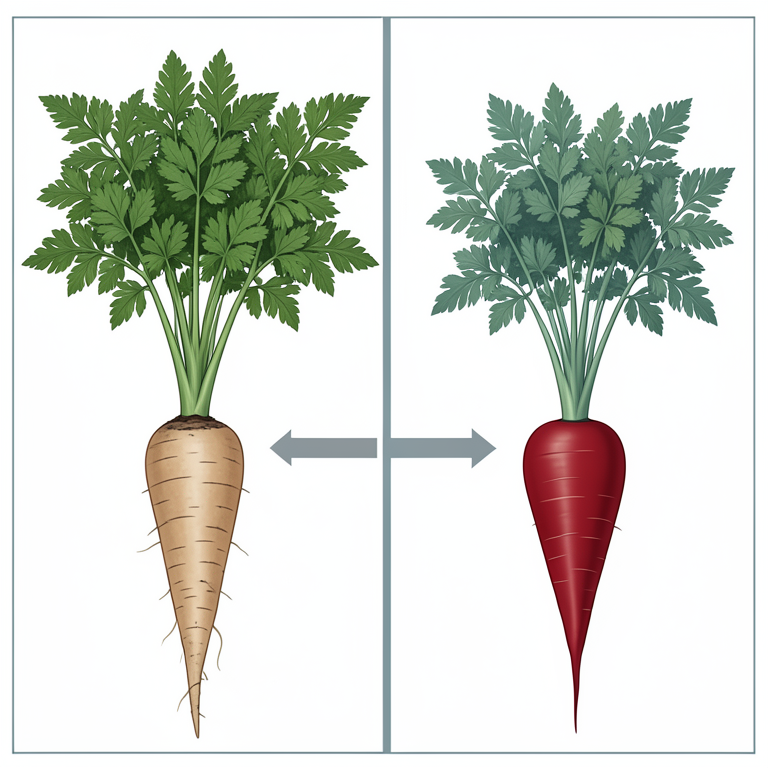
Bio-fertilizer Recommendation Matrix
AI-generated conceptual illustration (carrot plants (Daucus carota L.)). It explains the idea and does not show study data.
View source evidence ↗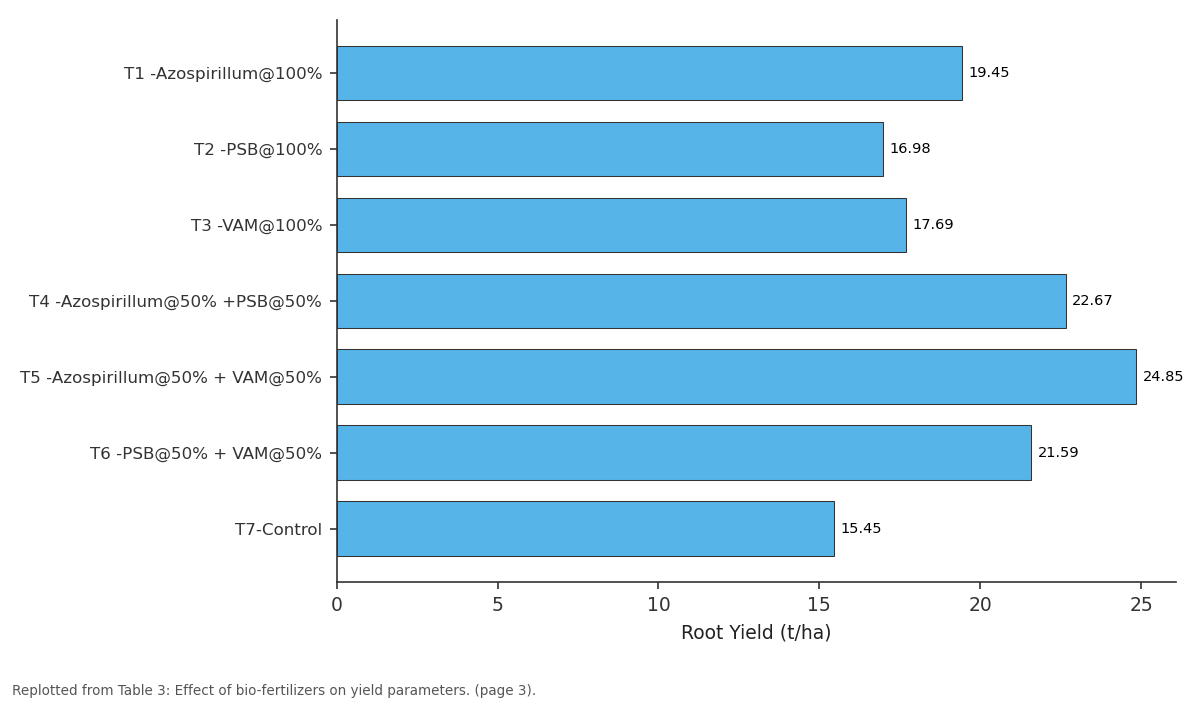
Root Yield (t/ha): T1 -Azospirillum@100% vs T2 -PSB@100% vs T3 -VAM@100% vs T4 -Azospirillum@50%... vs T5 -Azospirillum@50% +...
Replotted from Table 3 (page 3) of the original paper. Every bar is the paper's own table value.
View source evidence ↗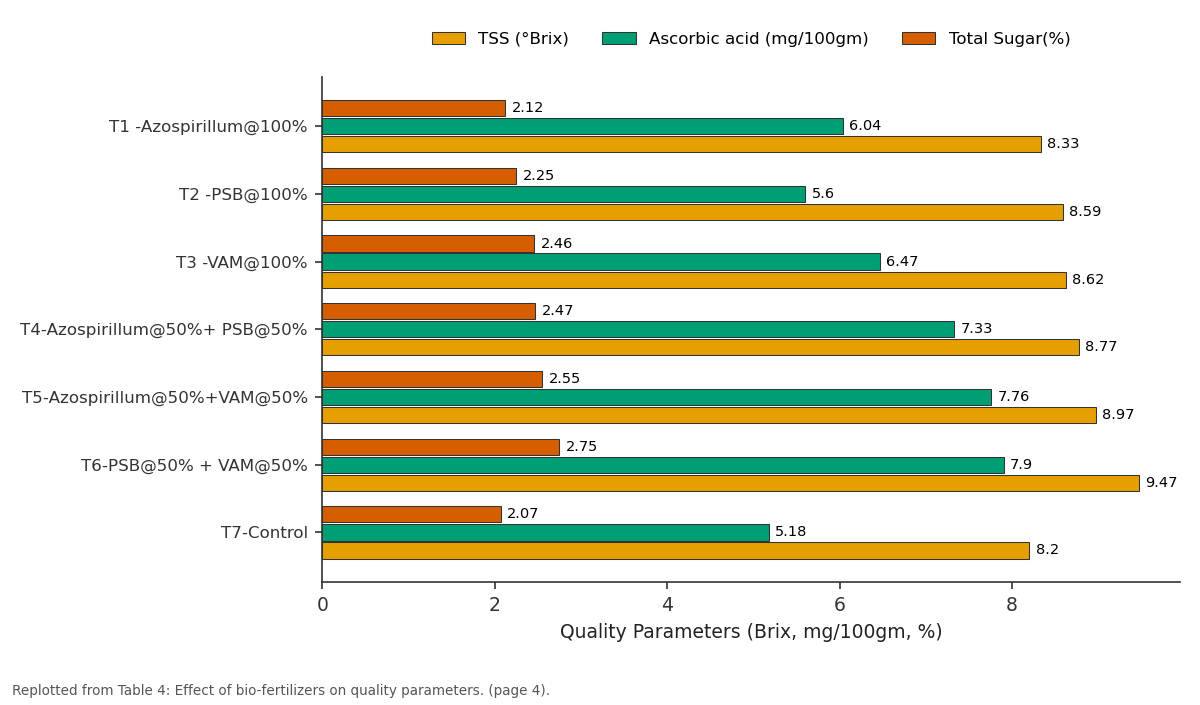
TSS (°Brix) and Ascorbic acid (mg/100gm) and more: T1 -Azospirillum@100% vs T2 -PSB@100% vs T3 -VAM@100% vs T4-Azospirillum@50%+... vs T5-Azospirillum@50%+VAM@...
Replotted from Table 4 (page 4) of the original paper. Every bar is the paper's own table value.
View source evidence ↗Figures & tables
From the original paper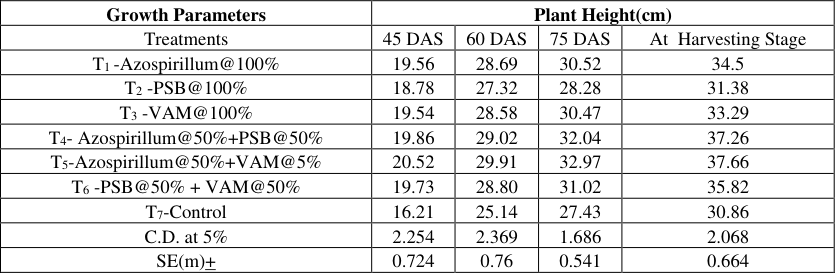 Table 1
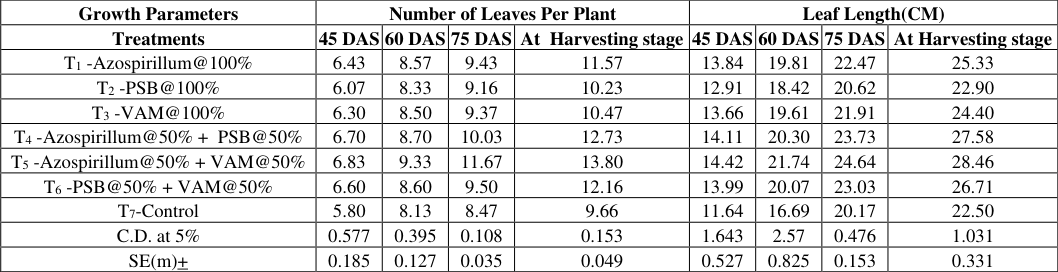 Table 2
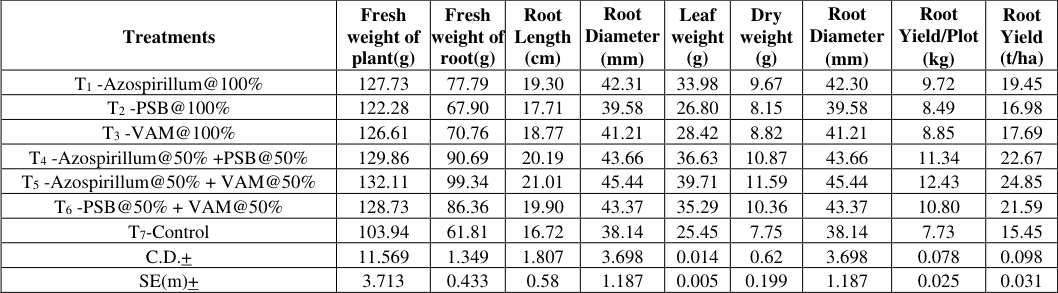 Table 3
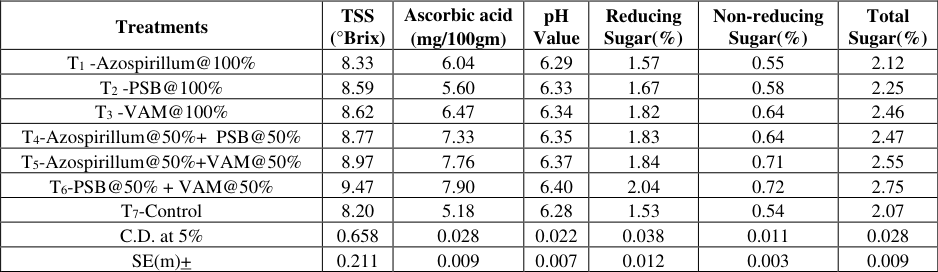 Table 4
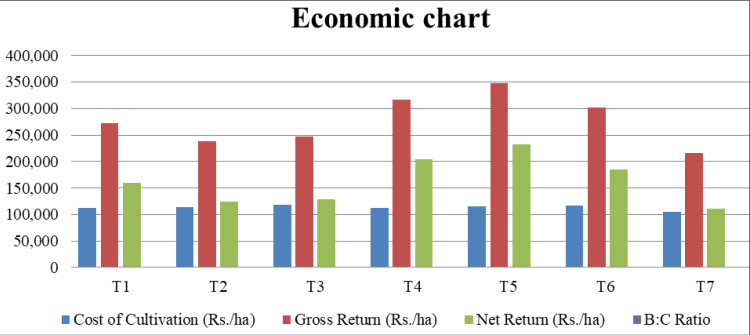 Figure 1
Introduction
Carrot (Daucus carota L.) is one of the most important root vegetable crops belonging to the family Apiaceae and chromosome number 2n=18. It is believed to have originated in South-West Asia and is widely cultivated throughout the world for its edible fleshy roots. In India, carrot is mainly cultivated in Uttar Pradesh, Haryana, Punjab, Karnataka and Andhra Pradesh. The crop is highly valued for its nutritive value, medicinal importance and economic returns. Carrot roots are rich in carbohydrates, carotenoids, vitamins, minerals and dietary fiber, making them an essential component of a healthy diet (Bhat et al., 2017) [3] . Carrot is a cool season crop and grows best under temperature range of 15-20°C in welldrained sandy loam soil with pH 6.0-7.0. The variety Pusa Rudhira is gaining popularity because of its attractive colour, high anthocyanin content and superior nutritional quality. Carrots contain important bioactive compounds such as carotenoids, flavonoids and antioxidants, which help in preventing several diseases and improving human health (Ahmad et al., 2019) [1] . Among different bio-fertilizers, Azospirillum, Phosphate Solubilizing Bacteria (PSB) and Vesicular Arbuscular Mycorrhiza (VAM) are widely used in vegetable crops. Azospirillum fixes atmospheric nitrogen and produces plant growth hormones such as indole acetic acid and gibberellins, thereby improving root and shoot growth (Bashan and de-Bashan, 2010). VAM improves uptake of phosphorus and micronutrients, increases water absorption and enhances root development (Smith and Read, 2008) [13] . These bioactive compounds possess strong antioxidant, anti-carcinogenic and immuneboosting properties and are beneficial for maintaining eye health. Carrot also exhibits several health-promoting effects such as cholesterol-lowering, anti-diabetic, anti-hypertensive, heapto protective and reno protective activities. In addition, carrot seed extracts have shown antibacterial, antifungal, anti-inflammatory and cardioprotective properties. Carrot pomace, a by-product rich in β-carotene, is also utilized for value-added food products such as biscuits, bread and cakes, thereby increasing its economic importance (Ikram et al., 2024) [5] .
The combined application of these bio-fertilizers has shown significant improvement in growth, yield, quality and soil health in vegetable crops. Several researchers have reported that integrated use of bio-fertilizers enhances nutrient uptake, root development, sugar accumulation and economic returns in carrot cultivation (Kumar and Sharma, 2019; Singh and Singh, 2020) [6,7,11] . In India, carrot is cultivated over an area of about 62,200 hectares with an annual production of nearly 1.15 million tonnes (Anonymous, 2024). In Madhya Pradesh, carrot cultivation covers approximately 1,400 hectares with a production of about 8.5 thousand tonnes annually. Initially, cultivated carrots were mostly purple and yellow in colour with long and slender roots. Depending upon the variety, carrot roots may be spherical, conical or cylindrical in shape. Carrot is a biennial crop in which the plant undergoes vegetative growth during the first season and produces flowers and seeds during the second season. In modern agriculture, excessive use of chemical fertilizers has adversely affected soil fertility, environmental quality and crop sustainability. Therefore, emphasis is now being given towards eco-friendly nutrient management practices through the use of bio-fertilizers. Bio-fertilizers are beneficial microorganisms that improve nutrient availability and plant growth by biological nitrogen fixation, phosphorus solubilization and secretion of growth promoting substances (Gaur, 2006) [4] .
Materials and Methods
The present investigation entitled "Effect of Bio-fertilizers on Growth, Yield and Quality of Carrot (Daucus carota L.) cv. Pusa Rudhira" was conducted during 2025-26 at the Agriculture Research Field, Department of Horticulture, Faculty of Agriculture, Prof. Rajendra Singh (Rajju Bhaiya) University, Naini, Prayagraj, Uttar Pradesh. The experimental field is situated at 25.35°N latitude, 81.89°E longitude and at an altitude of 98 m above mean sea level. The experiment was laid out in Randomized Block Design (RBD) with seven treatments and three replications. The carrot variety used for the experiment was cv. Pusa Rudhira. Each plot measured 2.5 m × 2.0 m with spacing of 40 cm × 10 cm. A total of 21 plots were maintained during the investigation. The treatments consisted of different biofertilizers and their combinations, viz., T1: Azospirillum@100%, T2: PSB@100%, T3:VAM@100%, T4:Azospirillum@50%+PSB@50%, T5:Azospirillum@50%+ VAM@50%, T6: PSB@50%+VAM@50% and T7:Control. The soil of the experimental field was sandy loam in texture, well-drained and suitable for carrot cultivation. The field was prepared properly by ploughing and levelling before sowing. Seeds were treated with respective bio-fertilizers prior to sowing. Sowing was done on 04 November 2025. All recommended cultural practices such as irrigation, weeding, thinning, earthing-up and plant protection measures were carried out uniformly for all treatments. Observations on growth parameters such as plant height(cm), number of leaves, leaf length(cm) and fresh weight of plant(g) were recorded at 45, 60, 75 and at harvesting stages. Yield parameters including fresh root weight(g), root length(cm), root diameter(mm), dry weight(g), root yield per plot and root yield per hectare were recorded at harvest. Quality parameters like TSS, reducing sugar, non-reducing sugar, total sugar, ascorbic acid and pH value were also analyzed. Economic parameters such as cost of cultivation, gross return, net return and benefit-cost (B:C) ratio were calculated for different treatments. The recorded data were statistically analyzed by using the analysis of variance (ANOVA) technique appropriate for Randomized Block Design(RBD) and treatment means were compared at 5% level of significance.
Results and Discussion
The present investigation was carried out to study the effect of different bio-fertilizers on growth, yield, quality and economics of carrot (Daucus carota L.) cv. Pusa Rudhira. The results obtained during the course of investigation are discussed under the following headings.
Plant height increased progressively from 45 DAS to harvesting stage under all treatments. Significant variation was observed among different bio-fertilizer treatments. Among all treatments, T 5 (Azospirillum@50% + VAM@50%) recorded the maximum plant height at all growth stages with 20.51 cm, 29.91 cm, 32.97 cm and 37.66 cm at 45 DAS, 60 DAS, 75 DAS and harvesting stage, respectively. The minimum plant height was observed in T 7 (Control). The increase in plant height under combined biofertilizer application may be due to improved nutrient availability, nitrogen fixation and enhanced uptake of phosphorus and micronutrients. Similar findings were reported by Bhat et al., (2017) [3] , who observed increased plant height in carrot due to bio-fertilizer application. Also reported that combined inoculation of Azospirillum and VAM significantly improved vegetative growth in root vegetables. (Table .1)
Number of leaves per plant
The number of leaves per plant increased continuously from 45 DAS up to harvesting stage. The highest number of leaves was recorded in T 5 (Azospirillum @50% + VAM@50%) with 6.83, 9.33, 11.67 and 13.80 leaves at 45 DAS, 60 DAS, 75 DAS and harvesting stage, respectively. The lowest values were recorded in control treatment (T 7 ).
The increased leaf production might be attributed to better vegetative growth due to improved nutrient absorption and production of growth promoting substances by biofertilizers. These findings are in accordance with Kumar and Sharma (2019) [6,7] , who reported that bio-fertilizer application significantly increased leaf production and vegetative growth in carrot crop. (Table .2)
Significant differences in leaf length were observed among treatments. The maximum leaf length was recorded in T 5 (Azospirillum@50% + VAM@50%) with 14.41 cm, 21.74 cm, 24.64 cm and 28.46 cm at different growth stages, while minimum leaf length was recorded under control treatment. Enhanced nutrient uptake and better physiological activities under combined bio-fertilizer application may have contributed to increased leaf growth. Similar observations were reported by Singh and Singh (2020) [11] , who stated that VAM and Azospirillum inoculation improved vegetative growth and leaf development in vegetable crops.
Yield Parameters Fresh weight of plant, root weight and root length
Different bio-fertilizer treatments significantly influenced yield attributes of carrot. The treatment T 5 (Azospirillum @50% + VAM @50%) recorded maximum fresh weight of plant (132.11 g), fresh root weight (99.39 g) and root length (21.00 cm), whereas minimum values were observed under T 7 (control) treatment. The increase in yield attributes may be due to improved root proliferation, nutrient uptake and better translocation of photosynthates. These findings are supported by Meena and Singh (2016) [8] , who reported that integrated nutrient management increased biomass accumulation and root weight in carrot.
Root diameter, leaf weight and dry weight
The maximum root diameter (45.44 mm), leaf weight (39.71 g) and dry weight (11.59 g) were recorded under T 5 treatment followed by T 4 (Azospirillum@50% + PSB@50%). The minimum values were recorded in T 7 (Control). Combined application of bio-fertilizers improved growth and dry matter accumulation due to enhanced nutrient availability and microbial activity in soil. Similar results were reported by Rana et al., (2020) [9] , who observed significant improvement in root growth and yield attributes in carrot under combined inoculation of VAM and PSB. (Table .3) [6,7] , who reported increased TSS and sugar content in carrot due to PSB and VAM inoculation. These findings are supported by Ahmad et al., (2019) [1] , who reported improved antioxidant compounds and nutritional quality in carrot with sustainable nutrient management practices. (Table .4)
Economic Analysis
Economic analysis revealed significant differences among treatments. The highest gross return (3,47,900 Rs./ha), net return (2,32,028 Rs./ha) and benefit-cost ratio (3.00) were recorded under T5 (Azospirillum@50% + VAM@50%), followed by T4 treatment. The lowest economic returns were recorded under T7 (control) treatment. Higher profitability in combined bio-fertilizer treatments was mainly due to increased yield and better marketable produce. Similar economic advantages of bio-fertilizer application were reported by Singh et al., (2021) [12] , who found higher net returns and benefit-cost ratio in biofertilizer treated carrot crop. (Fig. 1)
Conclusion
The present study revealed that the application of biofertilizers significantly influenced the growth, yield, quality and economics of carrot (Daucus carota L.) cv. Pusa Rudhira. Among the different treatments, Azospirillum@50% + VAM@50%; (T5) recorded the highest values for growth and yield attributes, including plant height, number of leaves, leaf length, root weight, root length, root diameter and root yield. The same treatment also resulted in maximum gross return, net return and benefit-cost ratio, indicating its economic superiority. On the other hand, PSB@50% + VAM@50%; (T 6 ) produced the best quality roots with higher TSS, ascorbic acid and total sugar content. Therefore, the combined application of Azospirillum and VAM can be recommended for obtaining higher yield and profitability, while PSB and VAM may be preferred for improving root quality. The study suggests that integrated use of bio-fertilizers is an effective and ecofriendly approach for sustainable carrot production under Prayagraj agro-climatic conditions.
Figures and tables from the paper
| Growth Parameters | Plant Height(cm) | — | — | — |
|---|---|---|---|---|
| Treatments | 45 DAS | 60 DAS | 75 DAS | At Harvesting Stage |
| T1 -Azospirillum@100% | 19.56 | 28.69 | 30.52 | 34.5 |
| T2 -PSB@100% | 18.78 | 27.32 | 28.28 | 31.38 |
| T3 -VAM@100% | 19.54 | 28.58 | 30.47 | 33.29 |
| T4- Azospirillum@50%+PSB@50% | 19.86 | 29.02 | 32.04 | 37.26 |
| T5-Azospirillum@50%+VAM@5% | 20.52 | 29.91 | 32.97 | 37.66 |
| T6 -PSB@50% + VAM@50% | 19.73 | 28.80 | 31.02 | 35.82 |
| T7-Control | 16.21 | 25.14 | 27.43 | 30.86 |
| C.D. at 5% | 2.254 | 2.369 | 1.686 | 2.068 |
| SE(m)+ | 0.724 | 0.76 | 0.541 | 0.664 |
Table text extracted from the original PDF; superscript letters are shown inline. The original table image is below.
View original table image
| Growth Parameters | Number of Leaves Per Plant | — | — | — | Leaf Length(CM) | — | — | — |
|---|---|---|---|---|---|---|---|---|
| Treatments | 45 DAS | 60 DAS | 75 DAS | At Harvesting stage | 45 DAS | 60 DAS | 75 DAS | At Harvesting stage |
| T1 -Azospirillum@100% | 6.43 | 8.57 | 9.43 | 11.57 | 13.84 | 19.81 | 22.47 | 25.33 |
| T2 -PSB@100% | 6.07 | 8.33 | 9.16 | 10.23 | 12.91 | 18.42 | 20.62 | 22.90 |
| T3 -VAM@100% | 6.30 | 8.50 | 9.37 | 10.47 | 13.66 | 19.61 | 21.91 | 24.40 |
| T4 -Azospirillum@50% + PSB@50% | 6.70 | 8.70 | 10.03 | 12.73 | 14.11 | 20.30 | 23.73 | 27.58 |
| T5 -Azospirillum@50% + VAM@50% | 6.83 | 9.33 | 11.67 | 13.80 | 14.42 | 21.74 | 24.64 | 28.46 |
| T6 -PSB@50% + VAM@50% | 6.60 | 8.60 | 9.50 | 12.16 | 13.99 | 20.07 | 23.03 | 26.71 |
| T7-Control | 5.80 | 8.13 | 8.47 | 9.66 | 11.64 | 16.69 | 20.17 | 22.50 |
| C.D. at 5% | 0.577 | 0.395 | 0.108 | 0.153 | 1.643 | 2.57 | 0.476 | 1.031 |
| SE(m)+ | 0.185 | 0.127 | 0.035 | 0.049 | 0.527 | 0.825 | 0.153 | 0.331 |
Table text extracted from the original PDF; superscript letters are shown inline. The original table image is below.
View original table image
| Treatments | TSS (°Brix) | Ascorbic acid (mg/100gm) | pH Value | Reducing Sugar(%) | Non-reducing Sugar(%) | Total Sugar(%) |
|---|---|---|---|---|---|---|
| T1 -Azospirillum@100% | 8.33 | 6.04 | 6.29 | 1.57 | 0.55 | 2.12 |
| T2 -PSB@100% | 8.59 | 5.60 | 6.33 | 1.67 | 0.58 | 2.25 |
| T3 -VAM@100% | 8.62 | 6.47 | 6.34 | 1.82 | 0.64 | 2.46 |
| T4-Azospirillum@50%+ PSB@50% | 8.77 | 7.33 | 6.35 | 1.83 | 0.64 | 2.47 |
| T5-Azospirillum@50%+VAM@50% | 8.97 | 7.76 | 6.37 | 1.84 | 0.71 | 2.55 |
| T6-PSB@50% + VAM@50% | 9.47 | 7.90 | 6.40 | 2.04 | 0.72 | 2.75 |
| T7-Control | 8.20 | 5.18 | 6.28 | 1.53 | 0.54 | 2.07 |
| C.D. at 5% | 0.658 | 0.028 | 0.022 | 0.038 | 0.011 | 0.028 |
| SE(m)+ | 0.211 | 0.009 | 0.007 | 0.012 | 0.003 | 0.009 |
Table text extracted from the original PDF; superscript letters are shown inline. The original table image is below.
View original table image
References
12 in the original paper- Ahmad T, Cawood M, Iqbal Q, Ariño A, Batool A, Tariq RMS, et al. Phytochemicals in Daucus carota and their health benefits-Review article. Foods. 2019;8(9):424. DOI:10.3390/foods8090424
- Bashan Y, de-Bashan LE. How the plant growthpromoting bacterium Azospirillum promotes plant growth-A critical assessment. Advances in Agronomy. 2010;108:77-136.
- Bhat NA, Hussain K, Qadri JA. Effect of bio-fertilizers on growth and yield of carrot (Daucus carota L.). International Journal of Current Microbiology and Applied Sciences. 2017;6(8):2791-2797.
- Gaur AC. Biofertilizer in sustainable agriculture. New Delhi: Indian Council of Agricultural Research; 2006.
- Ikram M, Nadeem M, Imran M, Khan MK. Nutritional composition, phytochemistry and health-promoting potential of carrot (Daucus carota L.): A review. Food Reviews International. 2024;40(2):345-367.
- Kumar R, Sharma SK. Influence of bio-fertilizers on growth, yield and quality of carrot (Daucus carota L.). International Journal of Chemical Studies. 2019;7(4):1582-1586.
- Kumar R, Sharma SK, Singh P. Effect of phosphate solubilizing bacteria and VAM on quality parameters of carrot. Journal of Pharmacognosy and Phytochemistry. 2019;8(4):2145-2149.
- Meena RK, Singh B. Effect of integrated nutrient management on growth and yield of carrot (Daucus carota L.). Indian Journal of Agricultural Research. 2016;50(4):364-368.
- Rana S, Kumar V, Singh R. Effect of VAM and phosphate-solubilizing bacteria on growth and yield attributes of carrot. International Journal of Current Microbiology and Applied Sciences. 2020;9(6):12541261.
- Sharma A, Singh D, Kumar P. Integrated use of biofertilizers for improving yield and quality of root crops. International Journal of Agricultural Sciences. 2018;10(2):5215-5219.
- Singh A, Singh B. Response of carrot to bio-fertilizers under sustainable production systems. Journal of Plant Development Sciences. 2020;12(5):289-294.
- Singh R, Kumar S, Yadav P. Economic analysis of biofertilizer application in carrot cultivation. Indian Journal of Horticulture. 2021;78(2):214-219.