
Research article · 2026 · Full text
International Journal of Agriculture and NutritionThe effect of Nutrition Education on Knowledge, Attitude and Practice among Iron-Deficient Female Adolescents in Aizawl, Mizoram
Volume 8(6) · Pages 57–62 · DOI: 10.33545/26646064.2026.v8.i6a.654 ↗
Research areasPublic Health and NutritionNutrition, Health and Food BehaviorIron Metabolism and Disorders
Abstract
Author-writtenNutritional anaemia continues to be a major public health concern among adolescent girls, particularly in developing countries, because of increased nutritional requirements during adolescence and insufficient dietary intake. Inadequate nutritional knowledge, negative view towards healthy eating, and poor dietary practices are major factors contributing to this condition. The present study sought to assess the effectiveness of nutrition education on the Knowledge, Attitude, Practice (KAP), and Health Seeking Behaviour (HSB) of anaemic adolescent girls. A total of 71 female adolescents aged 15–19 years were chosen from the baseline survey, and a KAP questionnaire was administered to all participants. The anaemic girls were randomly divided into control and intervention groups. The intervention group received a nutrition education module and was followed for three months, while the control group received no intervention. The nutrition education programme included lectures, presentations, interactive discussions, pamphlets, and video recordings in the local language concentrating on iron deficiency anaemia and strategies for its prevention and improvement. The programme was carried out for three months. The KAP and overall scores before and after the intervention were evaluated through the application of Mann–Whitney U test. The results showed that the knowledge scores were significantly higher in the intervention group (Md = 9, n = 37) compared to the control group (Md = 9, n = 34), with U = 375.500, Z = -3.036, and p = .002, indicating a medium effect size (d = .36). Similarly, attitude scores were significantly greater in the intervention group (Md = 8, n = 37) than in the control group (Md = 7, n = 34), with U = 308.000, Z = -3.811, and p = .001, showing a moderate effect size (d = .45). Practice scores were also greater in the intervention group; however, the difference was not statistically significant (U = 484.500, Z = -1.770, p = .077, d = .21). Similarly no significant difference was found in Health Seeking Behaviour (HSB) scores between the control and intervention groups. Nevertheless, the nutrition education module was effective in producing meaningful changes in cognitive and behavioural aspects that are more responsive to educational interventions, particularly in enhancing knowledge, improving attitudes, and encouraging the initial adoption of healthy practices.
Summary
Source-checkedPlain-language reading of the full paper, prepared with AI and checked against the text. Each point links to the authors' own words.
Why it matters
- Nutritional anaemia is a significant public health issue for adolescent girls in developing nations due to high nutritional needs and poor dietary intake. View evidence ↗
- Iron deficiency in adolescents can cause negative outcomes including impaired cognitive function, lower academic achievement, and increased infection risk. View evidence ↗
- The condition is largely driven by a lack of nutritional knowledge, negative attitudes toward healthy eating, and poor dietary habits. View evidence ↗
The question
- The study aimed to evaluate if a structured nutrition education module could effectively improve the knowledge, attitude, and practice (KAP) of iron-deficient adolescent girls to reduce anaemia. View evidence ↗
What they did
- The research took place in 2025 across four secondary schools located in Aizawl. View evidence ↗
- The study included 71 iron-deficient anaemic female adolescents, who were split into a control group and an intervention group. View evidence ↗
- The intervention group underwent a three-month program using a module consisting of lectures, videos, audio recordings, posters, and booklets. View evidence ↗
- Participants were assessed using a 48-question multiple-choice survey covering knowledge, attitude, practice, and health-seeking behavior. View evidence ↗
- Data analysis was performed using SPSS version 21, employing the Mann-Whitney U test to examine scores. View evidence ↗
What they found
- Post-intervention knowledge scores were significantly higher in the experimental group compared to the control group (p = .002), showing a moderate effect size. View evidence ↗
- The experimental group achieved significantly higher attitude scores than the control group (p = .001), with a moderate effect size. View evidence ↗
- Practice scores were significantly higher in the experimental group than in the control group (p = .002), though the effect size was small. View evidence ↗
- There was no statistically significant difference in health-seeking behavior (HSB) scores between the control and experimental groups (p = .077). View evidence ↗
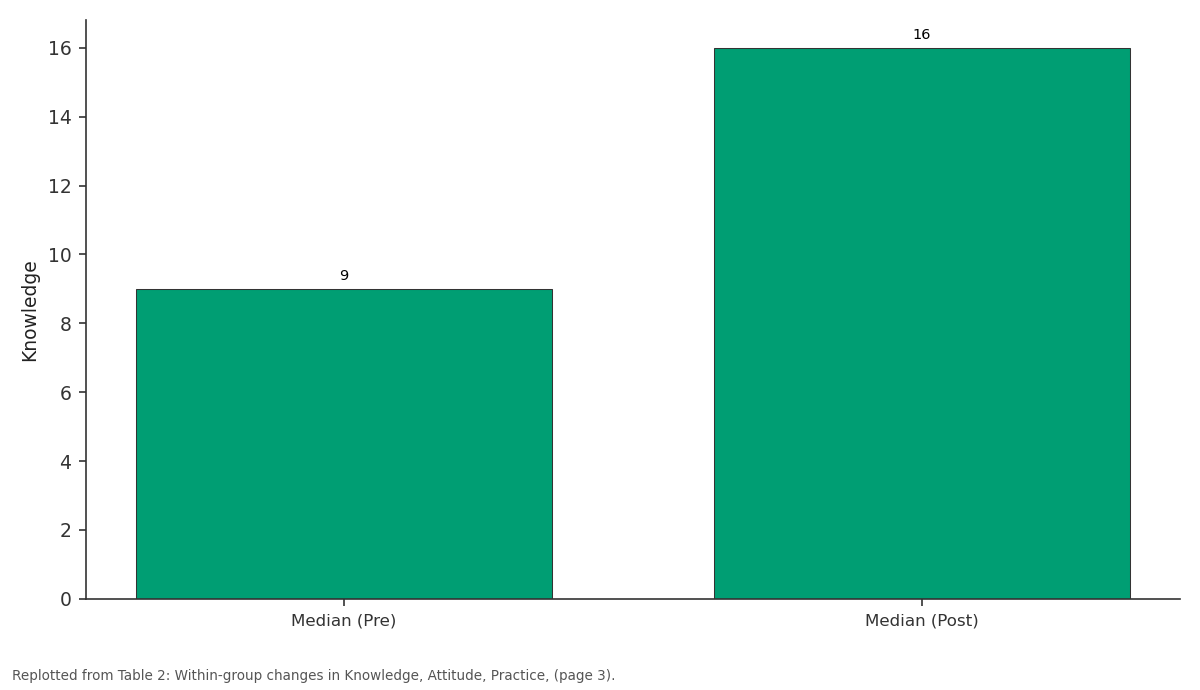
- Within the experimental group, knowledge scores increased significantly from a median of 9 at baseline to 16 post-intervention (p = .001). View evidence ↗
- The experimental group showed a significant internal improvement in practice scores, rising from a median of 9 to 42 (p = .001). View evidence ↗
What it means
- The authors conclude that the nutrition education module successfully improved the knowledge and attitudes of anaemic adolescent girls. View evidence ↗
- The authors recommend implementing culturally appropriate nutrition education in schools and communities to help control iron deficiency anaemia. View evidence ↗
- The study was limited by a relatively small sample size and the potential for self-reporting bias due to the use of questionnaires. View evidence ↗
Visual summary
2 visualsIllustrations explain the paper; charts are replotted from the paper's own table values.
Knowledge: Median (Pre) vs Median (Post)
Replotted from Table 2 (page 3) of the original paper. Every bar is the paper's own table value.
View source evidence ↗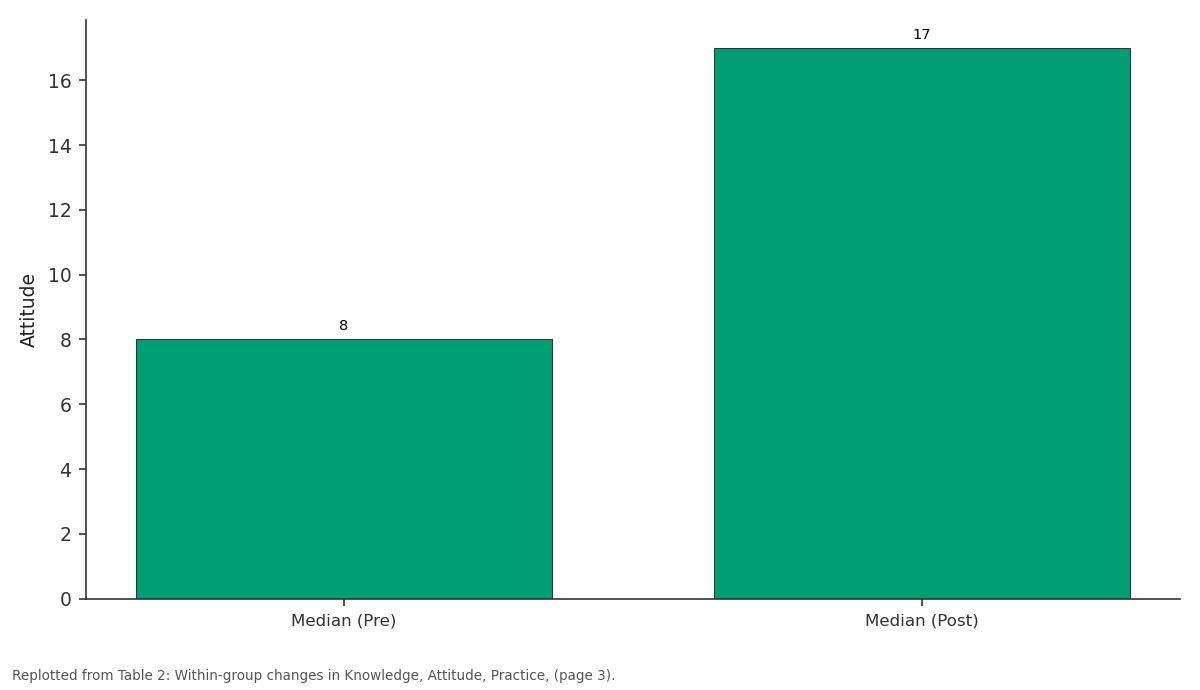
Attitude: Median (Pre) vs Median (Post)
Replotted from Table 2 (page 3) of the original paper. Every bar is the paper's own table value.
View source evidence ↗Figures & tables
From the original paper Table 1
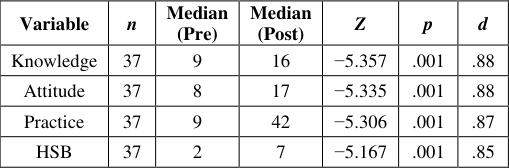 Table 2
 Table 3
Introduction
Adolescence represents an important phase of rapid growth and development, during which female adolescents experience increased physiological demands that make them more susceptible to nutritional deficiencies, particularly iron deficiency anaemia (IDA) (WHO, 2025). Iron deficiency anaemia remains one of the most widespread nutritional problems globally and continues to pose a major public health concern among adolescent girls. Global estimates indicate that nearly two billion individuals are affected by anaemia, with almost half of these cases resulting from iron deficiency. Although several global and national health programmes have been introduced to reduce anaemia, its prevalence remains considerably high among adolescent girls because of factors such as insufficient dietary intake, limited awareness, and sociocultural barriers influencing healthy food practices (Ahankari et al., 2017) [3] . Furthermore, while iron supplementation programmes are commonly implemented, their effectiveness over the long term is often restricted by poor compliance and limited understanding regarding the factors, effects, and prevention of anaemia (Sari et al., 2022) [18] .
International Journal of Agriculture and Nutrition https://www.agriculturejournal.net
Iron deficiency during adolescence can lead to several adverse health consequences, such as impaired cognitive functioning, reduced physical performance, poor academic achievement, and a greater risk of infections (Kulkarni et al., 2021) [13] . In addition, adolescent girls suffering from anaemia are more likely to become anaemic during motherhood, thereby continuing the intergenerational cycle of malnutrition and poor health outcomes. In India, anaemia among adolescent girls continues to be a significant public health issue. Several studies carried out in different parts of the country have documented prevalence rates varying from 50% to over 90%. Furthermore, a recent meta-analysis reported an overall pooled prevalence of 65.7% among adolescent girls. National survey findings further showed that nearly 39.6% of adolescent girls are affected by anaemia, indicating the continuing severity of the problem. Several contributing factors, poor dietary intake, low socioeconomic status, limited nutritional knowledge, and menstrual blood loss, significantly contribute to the high occurence of iron deficiency anaemia (IDA) among this population. Knowledge, Attitude, and Practice (KAP) studies are important tools for identifying gaps in awareness and behaviour, thereby helping in the development of focused and evidence-based interventions (Launiala et al., 2009) [14] . Structured and interactive nutrition education modules have shown considerable effectiveness in enhancing adolescents' understanding of iron-rich foods, factors that reduce iron absorption, and long-term consequences of untreated iron deficiency anaemia (IDA) (Contento, 2016; Bansal et al., 2021) [5,4] . Through improving practical knowledge and encouraging positive attitudes toward nutritional self-care, such educational interventions help adolescents translate awareness into long-term healthy dietary practices (WHO, 2018; Sharma & Kaur, 2019) [19] . Therefore, the present study aims to deliver knowledge, attitude, and practice (KAP) education on iron deficiency anaemia among iron-deficient adolescent girls through a structured nutrition education module, with the objective of assessing its effectiveness in improving nutritional status and reducing the prevalence of anaemia.
Methodology
This study was conducted in four secondary schools in Aizawl during 2025. Female adolescents aged 15-19 years were selected after obtaining informed consent. Following the baseline survey, serum ferritin levels were assessed during the first phase of the study. Based on the screening results, a total of 71 iron-deficient anaemic female adolescents were selected for the study. The participants were then separated into a control group and an intervention (nutrition education) group. A structured questionnaire evaluating Knowledge, Attitude, and Practice (KAP) was administered to all participants. The intervention group received nutrition education through a specially designed nutrition education module, which included videos, audio recordings, lectures, presentations, posters, and booklets focusing on good nutrition and iron-rich foods over a period of three months. Following the intervention, the post-test KAP questionnaire was conducted, and both the KAP and overall scores obtained before and after the intervention were analysed using the Mann-Whitney Test.
Sample size
Using the Raosoft sample size calculator, the sample size was derived by considering the population of female adolescent residing in Aizawl to be 47560, and taking 5% margin of error and 99% confidence level, the estimated sample size derived is 655.A sample size calculation was conducted for the study, which showed that a minimum of 70 female adolescents were required to participate, with 33 participants in the control group and 37 participants in the intervention group. Therefore, the final sample of the study included 70 female adolescents, who were classified into two groups: the control group (n = 33) and the intervention group (n = 37).
KAP Questionnaire
Validated KAP questionnaires were distributed to the anaemic female adolescents. The participants were instructed to complete the questionnaire, and necessary explanations were provided to ensure proper understanding. After completion, the questionnaires were collected and prepared for data analysis.
Nutrition Education Module
The purpose of the nutrition education programme was to educate adolescents on the importance of proper nutrition, with special emphasis on Iron Deficiency Anaemia (IDA). The intervention group participated in nutrition education sessions conducted over a period of three months. The educational intervention included video and audio recordings, lectures, presentations, posters, and booklets.
During the sessions, the researchers provided information on the meaning, causes, prevalence, screening, and WHO guidelines related to Iron Deficiency Anaemia. The participants' progress was also assessed periodically. In addition, the adolescents were educated on ways to improve iron intake through consumption of iron-rich foods, nutritional guidelines for preventing iron deficiency, and commonly available local iron-rich foods.
Scoring of Questionnaire
The researchers developed a scoring system for each part of the questionnaire. The KAP assessment was made up of 48 multiple-choice questions divided into four sections: knowledge (10 questions), attitude (10 questions), practice (24 questions), and health-seeking behaviour (4 questions). The knowledge section included questions with response options of "Yes" or "Don't know." The attitude and practice sections consisted of questions related to attitudes and daily practices regarding the intake of iron=-rich foods, with responses recorded as "Yes" or "No." Similarly, the health-seeking behaviour section contained four questions with "Yes" or "No" response options. For scoring purposes, the responses in each section were coded numerically, A score of 1 was given for 'Yes', while a score of 2 was assigned for 'Don't know'.
Statistical Analysis
KAP questionnaire scores were assessed before and after the nutrition education intervention. Data were analysed using SPSS version 21. The pre-and post-intervention scores for knowledge, attitude, and practice were examined for normality using the Mann-Whitney U test. As the data did not follow a normal distribution, the median was used to represent central tendency, while the interquartile range (IQR) was used to measure of variability. The Wilcoxon signed-rank test was applied to compare the scores before and after the intervention. A p-value below 0.05 was considered statistically significant.
Results
Table The Mann-Whitney U test was used to compare the baseline scores of Knowledge, Attitude, Practice, and HSB between the control and experimental groups. The results (Table .1) showed that there was no statistically significant difference between the groups in terms of knowledge, attitude and hsb scores (p >0.05) suggesting baseline comparability in these domains. However, a significant difference was found in practice scores, with the control group (Md = 43, n = 34) scoring slightly higher than experimental group (Md = 42, n = 37), Z = -2.179, p = 0.02, indicating a small effect size (d = .10). Overall, the findings indicate that the two groups were largely comparable at baseline, with the exception of a small difference in practice scores with very minimal effect size, which should be considered when interpreting the intervention outcomes. A Wilcoxon Signed-Rank Test was performed to compare the scores of Knowledge, Attitude, Practice, and Hsb scores before and after the introduction of the educational module among the experimental group. The results (Table . 2) showed that significant difference was observed in all four domains-knowledge, attitude, practice and habit scores following the intervention / after the introduction of education module. Results indicated a significant increase in knowledge scores from baseline (Md = 9, n = 37) to postintervention (Md = 16, n = 37), Z = -5.357, p = .001 with large effect size (d = .88). Similarly, attitude scores showed a significant improvement from baseline (Md = 8, n = 37) to post-intervention (Md = 17, n = 37), Z = -5.335, p = .001 with large effect size (d = .88). Practice scores also demonstrated a significant improvement from baseline (Md = 9, n = 37) to post-intervention (Md = 42, n = 37), Z = -5.306, p = .001 with large effect size (d = .87). In addition, HSB scores also showed a significant improvement from baseline (Md = 2, n = 37) to post-intervention (Md = 7, n = 37), Z = -5.167, p < = .001 with large effect size (d = .85).
Overall, these findings indicate that the educational module was highly effective in improving participants' knowledge, attitudes, practices, and hsb associated with anaemia. The consistently large effect sizes across all four domains further suggest that the intervention had a substantial and meaningful impact. Mann-Whitney U test was carried out to compare postintervention Knowledge, Attitude, Practice, and HSB scores between the control group and experimental groups. The findings (Table 3) indicated significant differences between the groups in knowledge, attitude and practice scores, whereas no significant difference was observed in HSB scores. Knowledge scores were significantly higher in experimental group (Md = 9, n = 37) than in the control group (Md = 9, n = 34), U = 375.500, Z = -3.036, p = .002, indicating a moderate effect size (d =.36). Although the median scores were the same in both groups, higher mean rank observed in the experimental group indicates that participants in this group generally had higher knowledge scores than the control group. Attitude scores were significantly higher in the experimental group (Md = 8, n = 37) showed higher scores than the control group (Md = 7, n = 34), U = 308.000, Z = -3.811, p =.001 reflecting a moderate effect size (d =.45). Practice scores were significantly greater in the experimental group (Md = 9, n = 37) than in the control group (Md = 6.50, n = 34), U = 364.000, Z = -3.067, p =.002 showing a small effect size (d =.21).
| Variable | Group | n | Median (Md) | Mean Rank | Mann-Whitney U | Wilcoxon W | Z | p | d |
|---|---|---|---|---|---|---|---|---|---|
| Knowledge | Control | 34 | 9 | 28.54 | 375.500 | 970.500 | -3.036 | .002 | .36 |
| Experimental | 37 | 9 | 42.85 | ||||||
| Attitude | Control | 34 | 7 | 26.56 | 308.000 | 903.000 | -3.811 | .001 | .45 |
| Experimental | 37 | 8 | 44.68 | ||||||
| Practice | Control | 34 | 6.50 | 28.21 | 364.000 | 959.000 | -3.067 | .002 | .36 |
| Experimental | 37 | 9 | 43.16 | ||||||
| HSB | Control | 34 | 2 | 40.25 | 484.500 | 1187.500 | -1.770 | .077 | .21 |
| Experimental | 37 | 2 | 32.09 |
Table text extracted from the original PDF; superscript letters are shown inline. The original table image is below.
View original table image
No significant difference was found in hsb scores between the control group (Md = 2, n = 34) and experiment groups (U = 484.500, Z = -1.770, p = .077, d = .21).
The findings also strengthen the comprehensiveness of the study by directly comparing the experimental and control groups after the intervention exposure. The findings showed that the experimental group obtained significantly higher scores in knowledge, attitude, and practice than the control group, while no significant difference was found in HSB scores. This pattern signifies that the educational module was effective in producing meaningful improvements in cognitive and behavioural domains that are more responsive to educational input, particularly knowledge acquisition, attitudinal change, and initial practice adoption. However, the absence of a significant difference in hsb scores suggests that health seeking behaviour change is more resistant and may require longer duration, repeated reinforcement, or environmental support beyond a single educational exposure.
Discussion
The present study indicates that nutrition education can serve as an effective approach for enhancing adolescents' knowledge, attitudes, and practices regarding anaemia prevention. There was a significant increase in knowledge and attitude scores among participants in the intervention group indicates that structured, repeated, and locally adapted education sessions can positively influence adolescents' understanding of anaemia and its prevention. This is important because poor awareness and misconceptions about diet are often major barriers to adequate iron intake among adolescent girls. The finding of a medium effect size for knowledge and a moderate effect size for attitude further supports the practical value of the intervention. Nutrition education delivered through lectures, presentations, interactive discussions, pamphlets, and video materials in the local language likely made the content more accessible and acceptable to the participants. Using multiple teaching methods may have helped reinforce key messages and increased engagement, which is especially relevant for adolescents who respond better to interactive and visually supported learning approaches. However, no statistically significant improvement was observed in practice and health-seeking behaviour scores suggests that knowledge gain alone may not be sufficient to bring about immediate behavioural change. Dietary practices are often shaped by family habits, food availability, affordability, cultural preferences, and social environment, all of which may limit a girl's ability to apply what she has learned. In addition, a three-month intervention period may be too short to observe meaningful changes in routine eating behaviour or health-seeking actions, especially when structural barriers remain unchanged. Another possible explanation is that behaviour change requires stronger reinforcement and more sustained followup than education alone. Adolescents may understand the importance of iron-rich foods or treatment, but still fail to act because of limited autonomy in food choice, dependence on household meals, or reluctance to seek care. This implies that nutrition education should ideally be combined with supportive measures such as school-based iron supplementation, dietary counselling for families, access to affordable iron-rich foods, and counselling on when and where to seek treatment.
The study has important public health implications. Improving nutrition knowledge and attitudes among adolescent girls can be considered a useful first step toward anaemia prevention and control, particularly in school or community settings. At the same time, the findings highlight that educational interventions alone may not be enough to change practices or health-seeking behaviour. A more comprehensive approach that combines education, supplementation, food-based strategies, and family/community engagement is likely to produce stronger and more sustainable outcomes. There are also certain methodological aspects that should be taken into account when interpreting the findings. The sample size was relatively small. Also, because the study relied on questionnaire-based KAP and HSB measures, responses may be influenced by self-reporting bias. In addition, the abstract does not indicate whether biochemical improvement in anaemia status was assessed, so it is not International Journal of Agriculture and Nutrition https://www.agriculturejournal.net possible to conclude whether the educational intervention reduced anaemia itself. Overall, the study demonstrates that nutrition education is effective for improving awareness and attitudes among anaemic adolescent girls, but additional and longer-term strategies are needed to translate these gains into healthier practices and improved health-seeking behaviour. This makes the intervention valuable, but best viewed as part of a broader anaemia control programme rather than a stand-alone solution.
Conclusion
The present study concludes that the nutrition education module was successful in enhancing the knowledge and attitude of anaemic adolescent girls regarding iron deficiency anaemia. The intervention group demonstrated significantly better knowledge and attitude scores compared to the control group after three months of nutrition education, indicating that structured educational interventions can positively influence awareness and perceptions related to nutritional anaemia. Although improvements in practice scores were observed among the intervention group, the difference was not statistically significant. Likewise, no significant difference was observed in health-seeking behaviour between the two groups. These results imply that although nutrition education can effectively improve knowledge and attitudes in the short term, longer duration interventions and continuous behavioural reinforcement may be required to bring about substantial changes in dietary practices and health-seeking behaviour. Therefore, introducing culturally appropriate nutrition education programmes in schools and communities may be an effective approach for preventing and controlling iron deficiency anaemia among adolescent girls
Figures and tables from the paper
| Variable | Group | n | Media (Md) | Mean Rank | Mann-Whitney U | Wilcoxon W | Z | p | d |
|---|---|---|---|---|---|---|---|---|---|
| Knowledge | Control | 34 | 16 | 37.62 | 574.000 | 1277.000 | -.664 | .507 | .08 |
| Experimental | 37 | 16 | 34.51 | ||||||
| Attitude | Control | 34 | 17 | 33.04 | 528.500 | 1123.500 | -1.198 | .231 | .14 |
| Experimental | 37 | 17 | 38.72 | ||||||
| Practice | Control | 34 | 43 | 41.49 | 442.500 | 1145.500 | -2.179 | .029 | .26 |
| Experimental | 37 | 42 | 30.96 | ||||||
| HSB | Control | 34 | 6 | 34.00 | 561.000 | 1156.000 | -.847 | .397 | .10 |
| Experimental | 37 | 7 | 37.84 |
Table text extracted from the original PDF; superscript letters are shown inline. The original table image is below.
View original table image
| Variable | n | Median (Pre) | Median (Post) | Z | p | d |
|---|---|---|---|---|---|---|
| Knowledge | 37 | 9 | 16 | −5.357 | .001 | .88 |
| Attitude | 37 | 8 | 17 | −5.335 | .001 | .88 |
| Practice | 37 | 9 | 42 | −5.306 | .001 | .87 |
| HSB | 37 | 2 | 7 | −5.167 | .001 | .85 |
Table text extracted from the original PDF; superscript letters are shown inline. The original table image is below.
View original table image
References
25 in the original paper- Al-Hadidi S, Al-Khawaldeh O. The impact of nutrition education on knowledge, attitude, and practice regarding iron deficiency anaemia among female adolescent students in Jordan. Heliyon. 2021.
- Agustina R. Iron supplement adherence and compliance among pregnant women. J Public Health Stud. 2022.
- Ahankari AS, Myles PR, Fogarty AW, Dixit JV, Tata LJ. Prevalence of iron-deficiency anaemia and risk factors in 1010 adolescent girls from rural Maharashtra, India: A cross-sectional survey. 2017.
- Bansal R, Kumar A, Singh S. Effectiveness of nutrition education on iron deficiency anaemia among adolescent girls. Indian J Community Med. 2021.
- Contento IR. Nutrition education: Linking research, theory, and practice. 3rd ed. Burlington (MA): Jones & Bartlett Learning; 2016.
- Elshafei A, Abu-Ouf N. Improvement in knowledge, attitude and practice of iron deficiency anaemia among iron-deficient female adolescents after nutritional educational intervention. Glob J Health Sci. 2016.
- Gupta A, Singh R. The impact of nutrition education on knowledge, attitude, and practice regarding iron deficiency anaemia among adolescent girls. J Nutr Metab. 2021.
- Joshi NS, Dhuppar K. A study to evaluate the effectiveness of structured teaching module on prevention of anaemia among adolescent girls at selected school in Kotdwar. Int J Nurs Stud. 2024.
- Kaliyaperumal K. Guideline for conducting a knowledge, attitude and practice (KAP) study. AECS Illumination. 2004;4:7-9.
- Kamalaja T, Ananthan LV, Kumar S. Effectiveness of health and nutritional education intervention to improve knowledge, attitude, and practice score on anaemia among adolescent girls. Int J Curr Microbiol Appl Sci. 2018.
- Kumar A. Prevalence of anaemia among adolescent girls (10-19 years) in India: A systematic review and meta-analysis. Natl Med J India. 2024.
- Kamalaja T, Raghunath M. Effectiveness of health and nutritional education intervention among adolescent girls. Int J Curr Microbiol Appl Sci. 2018.
- Kulkarni B, Peter R, Ghosh S, Pullakhandam R, Thomas T, Reddy GB, et al. Prevalence of iron deficiency and its sociodemographic patterning in Indian children and adolescents: Findings from the Comprehensive National Nutrition Survey 2016-18. J Nutr. 2021.
- Launiala A. How much can a KAP survey tell us about people's knowledge, attitudes and practices? Some observations from medical anthropology research on malaria in pregnancy in Malawi. Anthropol Matters. 2009;11(1).
- Garg M, et al. A cross-sectional study about knowledge, attitude and practice regarding anaemia among school-going adolescent girls in Naila, Jaipur, Rajasthan. Int J Adolesc Med Health. 2025. Advance online publication.
- Sari DP, Pratama MF. The effect of nutrition education on knowledge, attitudes, and iron intake of adolescent girls. J Health Nutr Res. 2023.
- Sharma A, Devi R, Kumar V. Nutritional anaemia in adolescent girls: An epidemiological study. Int J Community Med Public Health. 2017.
- Sari DP, Pratama MF, Setiawan A. Iron supplement adherence, dietary intake, and anemia risk among women. J Health Nutr Res. 2022.
- Sharma S, Kaur G. Impact of nutrition education on dietary practices and haemoglobin levels in adolescent girls. J Fam Med Prim Care. 2019.
- Samson KLI, Fischer JAJ, Roche ML. Iron status, anaemia, and iron interventions and their associations with cognitive and academic performance in adolescents: A systematic review. Nutrients. 2022.
- Verma SK, Khanum RS, Kumar SD, M RN. Knowledge, attitude and practices towards anaemia among late adolescent girls of JSS schools and colleges of Mysuru, India: A cross-sectional survey. Int J Community Med Public Health. 2021.
- World Health Organization. Adolescent nutrition interventions and programmes: A rapid review of evidence. Geneva: World Health Organization; 2018.
- World Health Organization. Anaemia [Internet]. Geneva: World Health Organization; 2021 [cited 2026 Jun 15]. Available from: https://www.who.int
- Geneva: World Health Organization; 2025 Feb 13 [cited 2026 Jun 15].
- Yerpude PN, et al. A review of the risk factors for iron deficiency anaemia among adolescents in developing countries. J Clin Med Public Health. 2023.