
Research article · 2026 · Full text
International Journal of Agriculture and NutritionEffect of foliar spray with Roselle and Bay leaves extracts on some floral and yield traits of broad bean (Vicia faba L)
Volume 8(6) · Pages 42–47 · DOI: 10.33545/26646064.2026.v8.i6a.652 ↗
Research areasPlant Growth Enhancement TechniquesAgriculture, Plant Science, Crop ManagementPlant Growth and Agriculture Techniques
Abstract
Author-writtenA field experiment was conducted on broad bean plants in Al Diwaniyah during the winter of 2024. We aimed to study the effect of applying three different concentrations of Roselle (Hibiscus sabdariffa L.) extract (0, 5, and 10 g L-1), and three concentrations of Bay Leaves (Laurus nobilis L.) extract (0, 15 and 30 g L-¹), besides how these two extracts interact. Three replicates were used in a factorial experiment arranged as a randomized complete block design (RCBD). Plants sprayed with Roselle and Bay leaf extracts showed significant improvements in fruit set, pod numbers, pod yield, overall pod productivity, and seed weight compared to the control group treated with distilled water. At a Roselle concentration of 5 g L-1, spraying significantly increased fruit set percentage, pod count, pod yield, and total productivity. A Roselle extract concentration of 10 g L-1 resulted in significant increases in seed weight, with averages of 11.89%, 18.22 pods/plant, 375.9 g/plant, 12.69 tons/dunum, and 2.7089 g noted. Spraying with a bay leaf extract solution at a concentration of 15 g L-¹ notably enhanced fruit percentage, pod count, pod yield, total productivity value, and seed weight. We observed peak values of 181.22 per plant, 13.11%, and 19.56 pods per plant.428.1 g per plant, 14.46 tons.dunum-1 and 2.7111, respectively, and the interaction of the two experimental factors had a significant effect on all studied traits. In conclusion, both plant extracts influenced bean growth traits and yield.
Summary
Source-checkedPlain-language reading of the full paper, prepared with AI and checked against the text. Each point links to the authors' own words.
Why it matters
- Broad bean (Vicia faba L.) is the fourth most important legume crop worldwide and serves as a critical food source for millions. View evidence ↗
- In Iraq, broad bean yields per unit area are currently too low to satisfy a large part of the domestic demand. View evidence ↗
- There is a need for eco-friendly growth enhancers to improve plant resilience to stress and reduce negative environmental impacts. View evidence ↗
The question
- The study aimed to evaluate how Roselle and Bay leaf extracts affect broad bean plants and to identify the most effective concentrations. View evidence ↗
What they did
- The field experiment took place in the Diwaniyah Governorate, Iraq, during the winter of 2024-2025. View evidence ↗
- The researchers used a randomized complete block design with three replicates, testing Roselle extract (0, 5, 10 g L-1) and Bay leaf extract (0, 15, 30 g L-1) and their interactions. View evidence ↗
- Plants received three foliar sprays at 15-day intervals, beginning 45 days after planting. View evidence ↗
- Data were analyzed using the GenStat 2012 program, with treatment means compared using the least significant difference (LSD) test at a 0.05 probability level. View evidence ↗
What they found
- The highest pod set percentage (13.67%) occurred with a combination of 10.0 g L-1 Roselle and 15.0 g L-1 Bay leaf extracts, compared to 7.67% for the distilled water control. View evidence ↗
- The maximum number of pods per plant (20.67) was achieved using 10.0 g L-1 Roselle and 15.0 g L-1 Bay leaf extracts, while the control produced 12.00 pods. View evidence ↗
- Pod yield peaked at 468.3 g per plant with 10.0 g L-1 Roselle and 15.0 g L-1 Bay leaf extracts, compared to 204.3 g for the control. View evidence ↗
- Total pod productivity reached a maximum of 14.46 tons per dunum with 10 g L-1 Roselle and 15 g L-1 Bay leaf extracts, while the control yielded 6.90 tons per dunum. View evidence ↗
- The highest fresh seed weight (2.8167 g) was observed with 10.0 g L-1 Roselle and 15.0 g L-1 Bay leaf extracts, compared to 2.3500 g for the control. View evidence ↗
What it means
- The authors concluded that 15 g L-1 of Bay leaf extract was generally the most effective concentration, and that increasing Roselle concentrations typically improved most studied traits. View evidence ↗
Visual summary
1 visualsIllustrations explain the paper; they do not show study data.
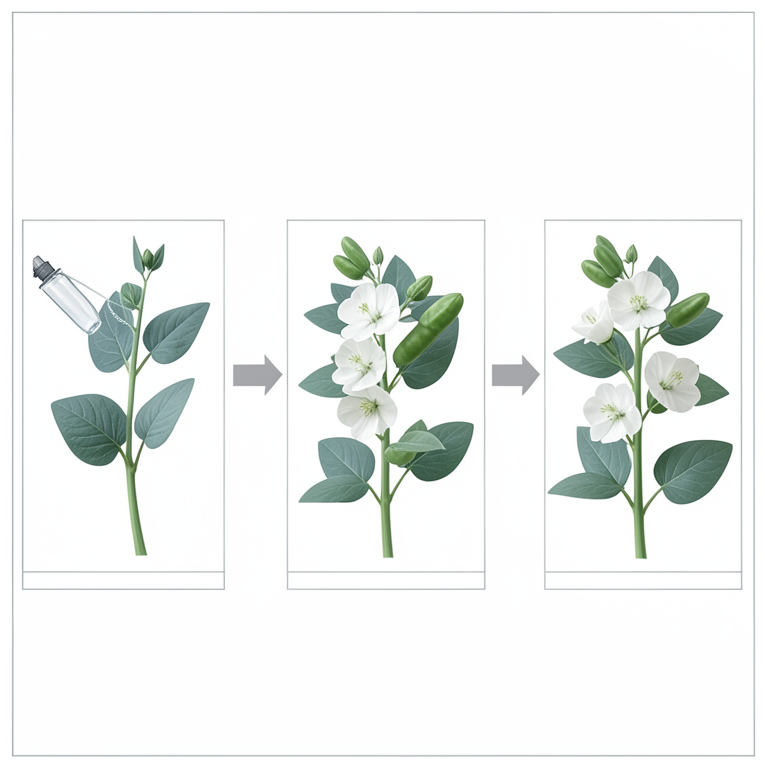
Experimental Treatment Matrix
AI-generated conceptual illustration (broad bean plants (Vicia faba L)). It explains the idea and does not show study data.
View source evidence ↗Figures & tables
From the original paper Table 1
 Table 2
 Table 3
 Table 4
 Table 5
Introduction
Broad bean (Vicia faba L.) ranks as the fourth most significant legume crop globally, following dry beans, dry peas, and chickpeas. It is part of the legume family (Leguminaceae). This crop is important because it serves as a vital food source for millions of people. (Karkanis et al., 2018) [18] , especially in poor and low-income communities in East and North Africa and some Asian countries. The protein content of its seeds is high, between 25-40%. This also includes carbohydrates, vitamins, and a few minerals (Al-Karawi, 2025) [5] . The cultivated area of green broad bean crop for the 2024 season in Iraq reached 17,727 dunums, with a production rate of 1,450 tons dunum-1 and a total production of 25,711 tons (Ministry of Planning, 2024) [20] . In addition to being animal feed and organic fertilizer for poor soils, it helps with biological nitrogen fixation through root nodules and Rhizobium bacteria. Consequently, it is included in crop rotations (Alwan and Alkarawi, 2024) [8] . Iraq's broad bean yield per unit area remains low, failing to meet a significant portion of domestic demand (Kamal et al., 2016) [17] . Providing broad bean plants with their essential nutrients, particularly the major ones, is key to enhancing their growth and yield. The need for broad bean cultivation has increased due to increased consumer demand, because of rising living standards and increased health and nutritional awareness, given its high nutritional value. Consequently, production needs to grow through enhanced dunum productivity and adherence to sound agricultural practices (Benmoussa et al., 2022) [10] . Consequently, employing eco-friendly growth enhancers is now essential to boost plant stress resilience and mitigate adverse impacts. Thus, growth stimulants, substances designed to shield biological systems from stress damage. It contains both Roselle and bay leaf extracts. Roselle extract boosts protein, delays aging by extending leaf life, improves root systems, thickens leaves, and lowers cell osmotic potential (Izquierdo-Vega et al., 2020) [15] . This may be explained because the angiosperm leaves of the bay contain anthocyanins, which have a more substantial antioxidant effect than ascorbic acid (Raei and Alami-Milani, 2014) [24] . Roselle extract also works to prevent protein degradation and lipid peroxidation (Osiki, 2019) [23] , as well as nutrients such as K, Na, P, Ca, and others. Bay leaves are also antioxidants because they contain phenolic compounds and have antibacterial properties (Nabila et al., 2022) [21] , Given the importance of the broad bean crop, we are working to increase productivity in terms of quantity and quality. This can be achieved by moving away from harmful environmental materials and replacing them with safer, growth-stimulating, available, and low-cost materials that play an important role in overcoming unfavorable conditions. Therefore, this study aims to evaluate the effect of Roselle extract and Bay leaves extract on the broad bean plant and determine the optimal concentration.
Materials and Methods
During the winter of 2024-2025, the experiment was conducted in a private field located in the Diwaniyah Governorate (Eastern Hamza District) at 31.5014° N, 44.9253° E. The soil was twice deeply and perpendicularly plowed with a rotary plow. Afterward, the soil was flattened and separated into 12-meter rows, each containing three experimental units. Drainage water was employed in spate irrigation. The soil was spread with fine mulch. The experiment utilized a broad bean cultivar from the local area. On October 8, 2024, two seeds were planted on opposite sides of the row in each hole and then covered with fine mulch. Plants were thinned 20 days post-planting to a single plant per seedbed (Abdullah, 2006) [1] , achieving a density of 333,777,777 plants. dunum-1. Fertilization: Before planting, the soil was prepared to a depth of 25 cm and fertilized with 6 tons of decomposed cow manure per dunum in the rows. Additionally, 25 kg of DAP (18:46) NP fertilizer per dunum was incorporated. Applying urea fertilizer (46% N) at 25 kg/dunum via the trench method was performed. This crop was subjected to agricultural operations such as irrigation, weeding, and hoeing. We watered the plants according to their requirements and hand-weeded them as needed.
The experiment factors
Nine factorial treatments were part of the experiment: a control (just distilled water), Roselle extract at 0, 5, and 10 g.L -1 , and Bay leaves extract at 0, 15, and 30 g.L -1 . Distilled water was used to complete the volume. There were 27 experimental units. Solutions of the substances in water were made to the specified concentrations. To prepare roselle extract, red roselle extract were ground using an electric grinder. The powder was then sieved using a 0.2 mm sieve. The powder was then kept in a paper bag until the leaf extract was ready. Harborne's (1998) [14] method was used to prepare the extract. Preparation of the bay leaf extract adhered to the method outlined in Sakai (1986) [25] . Therefore, the concentration of the solution is 30%. To achieve a 15% concentration, 50 ml of the initial 30% solution was used, and the total volume was brought to 100 ml with distilled water, following the dilution equation. To ensure even distribution, a few drops of washing liquid were included in all five spray treatments. Plants were drenched in the morning with a 2-liter hand sprayer until thoroughly wet. Three sprays were administered to the plants, with intervals of 15 days between applications, starting on day 45.
Yield and Its Components
Pod collection per plant occurred between February 7, 2025, and March 27, 2025. Harvesting the pods involved noting their appearance and whether they contained fresh seeds. We tallied the pods on all plants within the experimental unit and noted the averages. Green pod yield per plant was determined by dividing the total yield by the number of plants. The average fresh seed weight in grams was recorded for each experimental unit.
Statistical analysis
Three replicates were incorporated into the experiment, which followed a randomized complete block design (RCBD). Statistical analysis was performed on the design results, comparing the arithmetic means of the treatments. This comparison used the least significant difference (LSD) test at a 0.05 probability level via the GenStat 2012 program.
Results and Discussion Pod Set Percentage
A notable influence of Roselle extract spray on pod set percentage is shown in Table 3. Compared to the distilled water group, plants treated with 5.0 and 10.0 g L -1 solutions showed an 11.33% and 11.89% higher pod set percentage, respectively. There was no significant difference between the two spray treatments. The data in the same table reveals a significant effect of Bay leaf extract spraying on this trait. Plants treated with 15.0 g L -1 outperformed those sprayed with distilled water by 13.11%. A significant difference was observed between the two spray treatments using Bay leaf extract. As seen in the table, the interplay of the two study factors significantly impacted this trait. A 13.67% rate, the highest for this trait, was observed when plants were treated with Roselle extract at 10.0 g L -1 and Bay leaves extract at 15.0 g L ¹. The lowest rate of this trait, 7.67%, was observed in plants sprayed with distilled water. The presence of organic acids, including ascorbic acid and vitamin C, makes this happen because of their antioxidant properties, along with glyoxides, which boosts plant growth by improving photosynthesis and nutrient uptake. which is positively reflected in the inflorescence yield (Alejo-Armijo et al., 2017; Boretti and Banik, 2020) [3,11] . Al-Khazai, 2016 [6] research supports these findings; their study showed that applying Roselle extract at 10 g L -1 to the seven-ringed daisy (Antirrhinum majus L.) resulted in the most substantial increase in flower growth and quantity, surpassing both the control and the 5 g L -1 application.
| Roselle extracts (g.L-1) | Bay leaves extracts (g.L-1) | — | — | — | Average Roselle effect |
|---|---|---|---|---|---|
| 0.0 | 15.0 | 30.0 | |||
| 0.0 | 204.3 | 383.0 | 243.7 | 277.0 | |
| 5.0 | 296.3 | 433.0 | 353.3 | 360.9 | |
| 10.0 | 300.3 | 468.3 | 359.0 | 375.9 | |
| Bay leaves average effect | 267.0 | 428.1 | 318.7 | ||
| LSD 0.05 | |||||
| Bay leaves | Roselle X Bay leaves | Roselle | |||
| 17.84 | 30.90 | 17.84 |
Table text extracted from the original PDF; superscript letters are shown inline. The original table image is below.
View original table image
The findings align with research conducted by Al-Hakim (2016) [4] and Saleh et al. (2019) [26] . Spraying Roselle leaf extract resulted in the highest average number of flowers and the largest flower diameter, demonstrating a significant increase. when spraying the Chamomile (Matricaria chamomilla) and the daisy (Calendula officinalis L.).
The synergistic effect of Roselle and Bay leaf extracts might be because of elevated auxin levels, stemming from a greater presence of stimulating chemicals in the plant. This increases the transfer and accumulation of nutrients, resulting in increased cell division and the construction of cell walls, causing the plant to develop, including the emergence of inflorescences (Attia et al., 2010) [9] . Ghorbanpour et al. (2025) [13] found similar results, indicating that applying 10% and 30% Bay leaf extract to Adenium arabicum and Euphorbia viguieri had a significant impact on their growth, as the 10% concentration proved more effective than the 30% and the control.
Yield and its Components Number of Pods (Pod/Plant)
According to Table 2, the average number of pods was significantly influenced by the two investigated factors and their interactions. The Roselle extract concentrations of 5.0 and 10.0 g L -1 resulted in better plant performance than distilled water. With a rise in concentration came a rise in effect. Plants receiving 15 g L -1 of Bay leaf extract showed better results than those treated with distilled water. Plants receiving 15 g L -1 of bay leaf extract showed better results than those treated with distilled water. Plants receiving 15 g L -1 of Bay leaf extract showed better results than those treated with distilled water. The effect weakened when the concentration was higher. A maximum trait rate of 20.67 pods was observed with 10.0 g L -1 of Roselle extract and 15.0 g L -1 of Bay leaf extract. Conversely, the plants treated with distilled water exhibited the lowest rate for this characteristic, producing 12.00 pods. Treatment with Roselle extract had a significant impact on plant pod yield, as indicated in Table 3. Plants treated with 5.0 and 10.0 g.L -1 concentrations produced more pods than those sprayed with distilled water, yielding 360.9 g and 375.9 g, respectively. The table also shows that Bay leaf extract spray significantly impacted this trait. Plants treated with a 15.0 g L -1 solution showed superior pod yield compared to those treated with distilled water, achieving the highest yield of 428.1 g. Plants treated with 15.0 g L -1 significantly outperformed those sprayed with 30.0 g L -1 , and both groups were significantly better than the distilled water control. A significant impact on plant pod yield was observed because of the interaction of the two study factors. When plants received Roselle extract at 10.0 g L -1 and Bay leaf extract at 15.0 g L -1 , the highest rate for this trait was observed at 468.3 g. The lowest rate for this trait was 204.3 g, achieved with distilled water. The highest rate for this trait was achieved with Roselle extract at 10.0 g L -1 , and Bay leaf extract at 15.0 g L -1 , yielding 468.3 g. This is in contrast to the lowest rate of 204.3 g, which occurred when plants were sprayed with distilled water. Total Pod Productivity (tons per dunum) Table 3 shows that Roselle and Bay leaf extracts significantly boosted total pod productivity in plants, outperforming control groups. The application of Roselle extract at 5 and 10 g L -1 resulted in greater total pod productivity than treatment with distilled water. No significant variations were observed between the two treatment concentrations. The same table indicates that spraying with Bay leaf extract had a significant effect on this trait, as plants sprayed at a concentration of 10.0 g L -1
| Roselle extracts (g.L-1) | Bay leaves extracts (g.L-1) | — | — | — | Average Roselle effect |
|---|---|---|---|---|---|
| 0.0 | 15.0 | 30.0 | |||
| 0.0 | 12.00 | 18.0 | 14.33 | 14.78 | |
| 5.0 | 15.33 | 20.00 | 17.67 | 17.67 | |
| 10.0 | 16.33 | 20.67 | 17.67 | 18.22 | |
| Bay leaves average effect | 14.56 | 19.56 | 16.56 | ||
| LSD 0.05 | |||||
| Bay leaves | Roselle X Bay leaves | Roselle | |||
| 0.809 | 1.401 | 0.809 |
Table text extracted from the original PDF; superscript letters are shown inline. The original table image is below.
View original table image
produced the highest total pod productivity compared to those sprayed with 5.0 g L -1 , which significantly exceeded plants sprayed with distilled water. The interaction of the two study factors significantly influenced total pod productivity.
The maximum productivity was achieved with a 10 g L -1
Roselle extract spray and a 15g L -1 Bay leaves extract spray. This interaction resulted in 14.46 tons per dunum, whereas the lowest rate for this trait was 6.90 tons per dunum when plants were sprayed with distilled water.
The results in Table 4 show considerable differences in fresh seed weight based on the Roselle extract spray treatments. Plants treated with a concentration of 10.0 g L -¹ exhibited an average seed weight of 2.7089 g, which differed significantly from that of plants treated with a concentration of 5.0 g L -¹ and those sprayed with distilled water. According to the same table, there was a significant difference in seed weight when plants were sprayed with Bay leaf extract. Plants treated with 15.0 g L -1 had a significantly higher average fresh seed weight of 2.7111 g than those treated at 30.0 g L -1 . The two concentrations performed much better than the distilled water spray. The interplay of the two examined factors also had a significant impact on this characteristic, with the trait exhibiting its highest rate. When plants were treated with Roselle extract at 10.0 g L -1 and 15.0 g L -1 , they reached 2.8167 g. In contrast, the lowest rate of this trait was seen when plants were sprayed with distilled water, yielding 2.3500 g. A significant increase in yield indicators and components such as pod number, pod production, total plant pod yield, and seed weight is evident from Tables 2, 3, 4, and 5. The compounds originally present in these extracts cause plants to respond differently to their use, as some may contain wax-like and soap-like substances (Nasr, and Alkarawi, 2026) [22] . The extract's stimulating impact stems from its key function in managing IAA's natural hormonal activity, which promotes cell division and expansion (Al-Shemery, 2014) [7] . This is also because of their containing some other secondary compounds, such as monoterpenes, besides the flavonoids that bay leaves contain, which are antioxidants (Zibi et al., 2022) [28] . These substances found in bay leaves can neutralize or reduce oxidation caused by free oxygen species (Yasin et al., 2020) [27] . The results were consistent with those of Al-Jabar and Al-Jubouri, (2020) [16] . They studied Swiss chard and found that the two spray treatments using bay leaf extract were superior in certain characteristics compared to the control. The Roselle extract's coumarin content might also contribute to this, as it balances hormones in the plant, leading to increased height. It also contained hibiscin, hydrochloride, which boosted carbohydrate synthesis in the leaves, ultimately resulting in more fruit (Mehmood et al., 2021) [19] . The addition of plant extracts also increased yield by increasing the number of seed formed as a result of increased vegetative growth, which was positively reflected in increasing the total yield of black cumin oil. The findings matched the research by Ahmed et al. (2022) [2] , who examined two Roselle extract concentrations on tomato plants. They observed that the Roselle treatment excelled the control treatment, and the effect increased with increasing concentration, achieving the highest values in plant yield, total yield, and fruit number. indicators and yield, leading to an increase in total pod yield. where, spraying with Roselle extract at concentrations of 5 or 10 g.L -1 did not differ significantly in most traits.
| Roselle extracts (g.L-1) | Bay leaves extracts (g.L-1) | — | — | Average Roselle effect |
|---|---|---|---|---|
| 0.0 | 15.0 | 30.0 | ||
| 0.0 | 6.90 | 12.93 | 8.23 | 9.35 |
| 5.0 | 10.01 | 14.62 | 11.93 | 12.19 |
| 10.0 | 10.14 | 15.81 | 12.13 | 12.69 |
| Bay leaves average effect | 9.02 | 14.46 | 10.76 | |
| LSD 0.05 | ||||
| Bay leaves | Roselle X Bay leaves | Roselle | ||
| 0.603 | 1.045 | 0.603 |
Table text extracted from the original PDF; superscript letters are shown inline. The original table image is below.
View original table image
Conclusion
The studied, but it was noted that with increasing concentration of Roselle, the effect increased in most of the studied traits, and that the concentration of 15 g L -1 of Bay leaves extract was more effective in most of the studied traits of floral growth and yield.
Figures and tables from the paper
| Roselle extracts (g.L-1) | Bay leaves extracts (g.L-1) | — | — | — | Average Roselle effect |
|---|---|---|---|---|---|
| 0.0 | 15.0 | 30.0 | |||
| 0.0 | 7.67 | 12.33 | 9.00 | 9.67 | |
| 5.0 | 10.00 | 13.33 | 10.67 | 11.33 | |
| 10.0 | 10.67 | 13.67 | 11.33 | 11.89 | |
| Bay leaves average effect | 9.44 | 13.11 | 10.33 | ||
| LSD 0.05 | |||||
| Bay leaves | Roselle X Bay leaves | Roselle | |||
| 0.687 | 1.190 | 0.687 |
Table text extracted from the original PDF; superscript letters are shown inline. The original table image is below.
View original table image
| Roselle extracts (g.L-1) | Bay leaves extracts (g.L-1) | — | — | — | Average Roselle effect |
|---|---|---|---|---|---|
| 0.0 | 15.0 | 30.0 | |||
| 0.0 | 2.3500 | 2.6667 | 2.4333 | 2.4833 | |
| 5.0 | 2.6300 | 2.6500 | 2.6667 | 2.6489 | |
| 10.0 | 2.6400 | 2.8167 | 2.6700 | 2.7089 | |
| Bay leaves average effect | 2.5400 | 2.7111 | 2.5900 | ||
| LSD 0.05 | |||||
| Bay leaves | لخادتRoselleو Bay leaves | Roselle | |||
| 0.04283 | 0.07419 | 0.04283 |
Table text extracted from the original PDF; superscript letters are shown inline. The original table image is below.
View original table image
References
28 in the original paper- Abdullah AAA. The Effect of Planting Distance, Number of Plants per Hole, and Their Interaction on Some Growth Traits and Yield of Broad Beans Grown in Desert Areas of Southern Iraq. Basra Journal of Agricultural Sciences. 2006;19(2):69-78.
- Ahmed SM, Ibrahim RS, Abbas GK, Suhail AAK, Hussain HS. Response of growth and productivity of tomato for spraying with botanical extracts and chemical and organic fertilizer under greenhouse conditions. Anbar Journal of Agricultural Sciences. 2022;20(1):77-98.
- Alejo-Armijo A, Altarejos J, Salido S. Phytochemicals and biological activities of laurel tree (Laurus nobilis). Natural Product Communications. 2017;12(5):1934578X1701200519. https://doi.org/10.1177/1934578X1701200519
- Al-Hakim MSM. Response of Chamomile (Matricaria chamomilla) to spraying with gibberellic acid and Roselle extract on some vegetative and floral growth characteristics. Karbala University Scientific Journal. 2016;14(2):311-316.
- Al-Karawi HH. Impact of integrating nano-, mineral, and bio-fertilization on some yield characteristics of faba bean (Vicia faba L.). Sarhad Journal of Agriculture. 2025;41(3):1435-1444.
- Al-Khazai ZH. Effect of spraying with benzyl adenine (BA) and Roselle extract on vegetative and floral growth characteristics of Antirrhinum majus L. International Journal of Science and Technology. 2016;1(11):148-154.
- Al-Shemery AMA. The stimulating effect of Nigella sativa and Foeniculum vulgare extracts on germination characteristics of some pepper genotypes seeds. Dhi Qar Journal of Agricultural Research. 2014;3(2):313330.
- Alwan WM, Alkarawi HH. The Effect of Mineral and Biofertilization and Nano-Iron on the Growth and Yield of Broad Bean. Journal of University of Babylon for Pure and Applied Sciences. 2024;32(4):312-327.
- Attia HJ, Saadeddin SMK, Ibrahim BA. The effect of plant growth regulators on the vegetative Parameters of black seed. Iraqi Journal of Agricultural Sciences. 2010;41(2):80-88.
- Benmoussa S, Nouairi I, Rajhi I, Rezgui S, Manai K, Taamali W, et al. Growth performance and nitrogen fixing efficiency of faba bean (Vicia faba L.) genotypes in symbiosis with rhizobia under combined salinity and hypoxia stresses. Agronomy. 2022;12(3):606.
- Boretti A, Banik BK. Intravenous vitamin C for reduction of cytokines storm in acute respiratory distress syndrome. PharmaNutrition. 2020;12:100190.
- GenStat Executable Release 15.2. Lawes Agricultural Trust, Rothamstead Experimental Station, Harpenden: Clarendon Press; 2012.
- Ghorbanpour M, Sardoei AS, Babarabie M, Zolfaghary P, Hasanpour Z, Hatami M. Comparative LC-MSbased metabolite profiling of the Peppermint, Rosemary, Savory, and Thyme extracts and their potential role in germination and early growth of Adenium arabicum and Euphorbia viguieri. 3 Biotech. 2025;15(5):120.
- Harborne AJ. Phytochemical methods a guide to modern techniques of plant analysis. Springer Science & Business Media; 1998.
- Izquierdo-Vega JA, Arteaga-Badillo DA, SánchezGutiérrez M, Morales-González JA, Vargas-Mendoza N, Gómez-Aldapa CA, et al. Organic acids from Roselle (Hibiscus sabdariffa L.)-A brief review of its pharmacological effects. Biomedicines. 2020;8(5):100.
- Jabar HS, Al-Jubouri FFF. The Effect of Spraying with Extracts of Seaweeds (ALGIDEX) and Bay Leaf on the Growth of Swiss Chard (Beta vulgaris L.). Arab Journal of Agricultural Sciences. 2020;3:55-63.
- Kamal JAK, Al-Abbasi GB, Salman FS. The effect of adding organic fertilizer and urea on the growth and yield of the bean plant (Vicia faba L.). Babylon University Journal of Pure and Applied Sciences. 2016;24(4).
- Karkanis A, Ntatsi G, Lepse L, Fernández JA, Vågen IM, Rewald B, et al. Faba bean cultivation-revealing novel managing practices for more sustainable and competitive European cropping systems. Frontiers in Plant Science. 2018;9:375969.
- Mehmood A, Naveed K, Ayub Q, Alamri S, Siddiqui MH, Wu C, et al. Exploring the potential of moringa leaf extract as bio stimulant for improving yield and quality of black cumin oil. Scientific Reports. 2021;11(1):24217.
- Ministry of Planning, Central Bureau of Statistics. Report of faba bean. Agricultural Statistics Section; 2024. p. 3-7.
- Nabila B, Piras A, Fouzia, B, Falconieri D, Kheira G, Fedoul FF, et al. Chemical composition and antibacterial activity of the essential oil of Laurus nobilis leaves. Natural Product Research. 2022;36(4):989-993. https://doi.org/10.1080/14786419.2020.1839450
- Nasr HS, Alkarawi HH. Effect of foliar spraying with nano-iron and the addition of biofertilizer on soybean growth. Al-Furat Journal of Innovations in Agricultural Sciences. 2026;2(1).
- Osiki PO. The effect of beta-oxidation or TCA cycle inhibition on mitochondrial function and the sensitivity of high resolution respiratory detection [thesis]. 2019.
- Raei Y, Alami-Milani M. Organic cultivation of medicinal plants: a review. Journal of Biodiversity and Environmental Sciences. 2014;4:6-18.
- Sakai Y, Nagase H, Ose Y, Sato T, Yamada A, Hibi M, et al. Antimutagenicity of extracts from crude drugs in Chinese medicines. Mutation Research Letters. 1986;174(1):1-4.
- Saleh ZK, Ahmed MA, Hussein SS. The effect of spraying with Roselle extract and foliar feeding on the growth of Calendula officinalis L. flowers growing in flower circles. Al-Rafidain Journal. 2019;47(3):271276.
- Yasin G, Noor S, Irshad S, Haq I, Fatima S, Anwer I, et al. Solvents based extraction of antioxidants and their International Journal of Agriculture and Nutrition https://www.agriculturejournal.net activity from some plants of cholistan desert, Pakistan. International Journal of Pharmaceutical and Phytopharmacological Research. 2020;10:70-76.
- Zibi RDN, Tala VRS, Yamen P, Mbopi NHB, Tcheuffa GMN, Ngoupayo J. Comparative antiplasmodial and cytotoxic activities of Coffea arabica and Coffea canephora alkaloids extracts. International Journal of Pharmaceutical and Phytopharmacological Research. 2022;12(1):54-59.