
Research article · 2026 · Full text
International Journal of Horticulture and Food ScienceImpact of biofertilizers and phosphorus on growth and yield of cowpea (Vigna unguiculata (L.) Walp.)
Volume 8(6) · Pages 01–03 · DOI: 10.33545/26631067.2026.v8.i6a.753 ↗
Research areasAgricultural Science and FertilizationAgricultural pest management studiesAgriculture, Plant Science, Crop Management
Abstract
Author-writtenA field experiment was carried out during the summer season 2025. The experiment was conducted at the vegetable research farm of the Department of Horticulture, P.G. College, Ghazipur on sandy loam soil to assess the effect of biofertilizers and phosphorus on growth and yield of cowpea cv. Kashi Kanchan. The experiment was laid out in Randomized Block Design with nine treatments and three replications. The observations were recorded at 45 days after sowing. Experimental results showed significant increase in growth parameters viz: plant height (87.38 cm), number of branches per plant (31.78) and number of nodules per plant (19.85) with treatment combinations T₆, P₂O₅ @ 80 kg ha⁻¹ + Rhizobium. Number of leaves per plant (132.85) and number of pods per plant (32.91) were recorded with treatment combinations T₃, P₂O₅ @ 80 kg ha⁻¹, and shoot biomass with treatment combinations T₉, P₂O₅ @ 80 kg ha⁻¹ + PSB (7.09 g).Yield attributes and quality parameters showed significant increase in pod weight (12.48 g), grain weight per pod (2.650 g), shelling weight of pods (9.846 g), root biomass (0.71 g) and green pod yield (139.10 q/ha) with treatment combinations T₆, P₂O₅ @ 80 kg ha⁻¹ + Rhizobium. Overall, the study suggests that the integration of biofertilizers with phosphorus application (particularly Rhizobium, P₂O₅ and PSB) is effective in improving cowpea productivity and quality.
Summary
Source-checkedPlain-language reading of the full paper, prepared with AI and checked against the text. Each point links to the authors' own words.
Why it matters
- Cowpea, known in India as lobia, is a versatile legume crop used for grain, fodder, green manure, and as a vegetable. View evidence ↗
- Cowpea is a critical dietary component in developing countries because its green pods provide affordable protein, vitamins, and minerals. View evidence ↗
- Biofertilizers are used to improve nutrient availability and uptake from the soil, which supports plant metabolism. View evidence ↗
The question
- The study aimed to evaluate how different levels of phosphorus and the use of biofertilizers affect the growth and yield of cowpea in a field setting. View evidence ↗
What they did
- The experiment used cowpea cv. Kashi Kanchan grown in sandy loam soil at the P.G. College vegetable research farm in Ghazipur during the summer of 2025. View evidence ↗
- The study employed a Randomized Block Design with three replications and nine treatments combining Rhizobium, PSB, and phosphorus levels of 40 and 80 kg/ha. View evidence ↗
- Researchers measured various growth traits (height, leaves, branches, biomass, nodules, pods) and yield parameters (pod weight, grain weight, shelling weight, root biomass, and green pod yield). View evidence ↗
What they found
- The combination of 80 kg/ha P₂O₅ and Rhizobium produced the maximum plant height (87.38 cm), compared to the control (58.38 cm). View evidence ↗
- The highest number of leaves per plant (132.85) was achieved with 80 kg/ha P₂O₅, while the lowest (114.38) occurred with PSB. View evidence ↗
- Shoot biomass peaked at 7.09 g with 80 kg/ha P₂O₅ and PSB, whereas the control group had the minimum biomass of 4.46 g. View evidence ↗
- The highest number of nodules per plant (19.85) was found in the 80 kg/ha P₂O₅ and Rhizobium treatment, while PSB resulted in the lowest (11.08). View evidence ↗
- At 45 days, the maximum number of pods per plant (32.91) was recorded with 80 kg/ha P₂O₅, compared to 24.78 in the control. View evidence ↗
- Pod weight was highest (12.48 g) with 80 kg/ha P₂O₅ and Rhizobium and lowest (8.31 g) in the control group. View evidence ↗
- The highest green pod yield (139.10 q/ha) was achieved using 80 kg/ha P₂O₅ and Rhizobium, while the control yielded the lowest (90.60 q/ha). View evidence ↗
- Root biomass was maximized (0.71 g) with 80 kg/ha P₂O₅ and Rhizobium at 45 days, compared to 0.42 g in the control. View evidence ↗
What it means
- The authors concluded that combining biofertilizers with an optimal dose of phosphorus significantly improves the growth and yield of cowpea. View evidence ↗
- The authors recommend this integrated nutrient management approach for profitable cowpea cultivation in the Ghazipur region of Uttar Pradesh. View evidence ↗
Visual summary
3 visualsIllustrations explain the paper; charts are replotted from the paper's own table values.
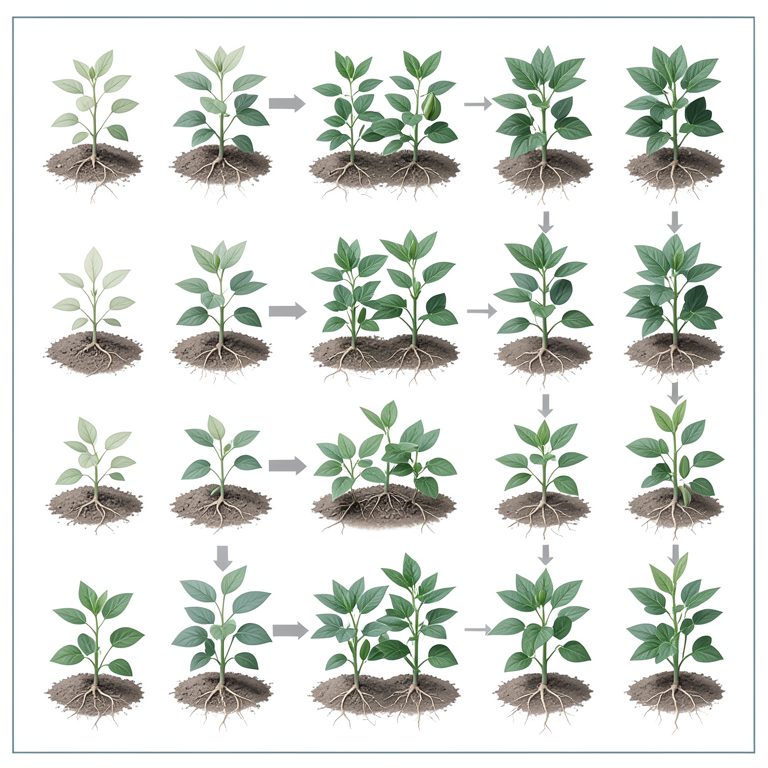
Experimental Treatment Matrix
AI-generated conceptual illustration (cowpea plants (Vigna unguiculata)). It explains the idea and does not show study data.
View source evidence ↗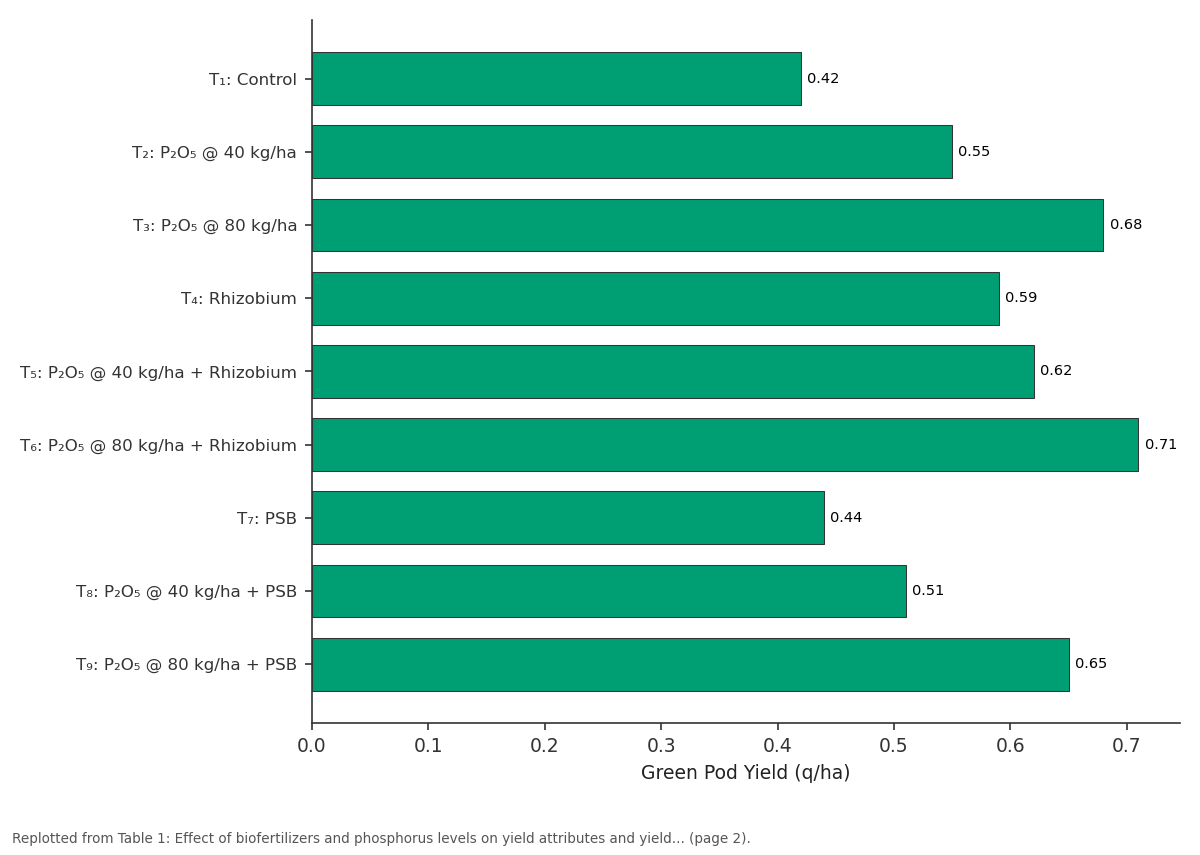
Root Biomass (g): T₁: Control vs T₂: P₂O₅ @ 40 kg/ha vs T₃: P₂O₅ @ 80 kg/ha vs T₄: Rhizobium vs T₅: P₂O₅ @ 40 kg/ha +...
Replotted from Table 1 (page 2) of the original paper. Every bar is the paper's own table value.
View source evidence ↗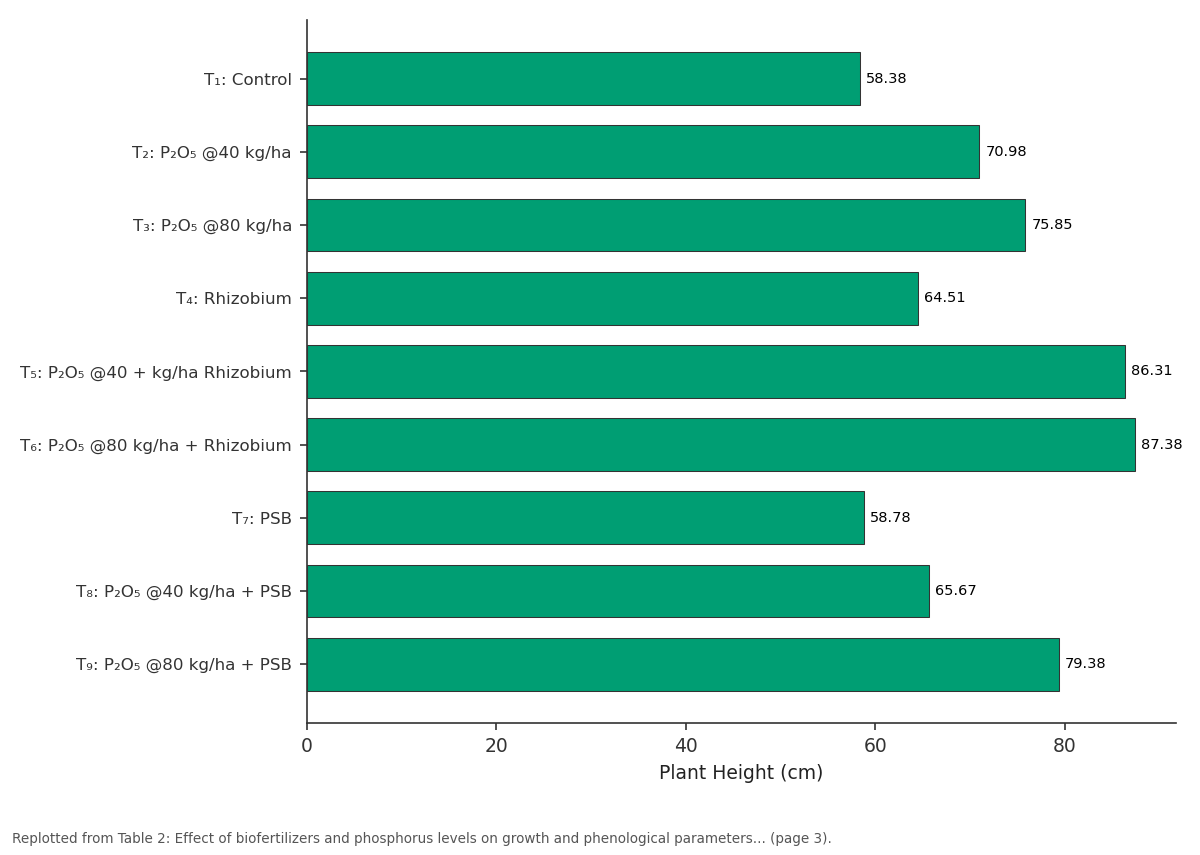
Plant Height (cm): T₁: Control vs T₂: P₂O₅ @40 kg/ha vs T₃: P₂O₅ @80 kg/ha vs T₄: Rhizobium vs T₅: P₂O₅ @40 + kg/ha...
Replotted from Table 2 (page 3) of the original paper. Every bar is the paper's own table value.
View source evidence ↗Figures & tables
From the original paper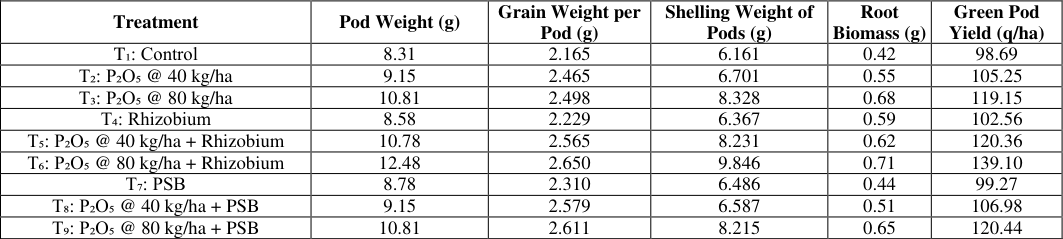 Table 1
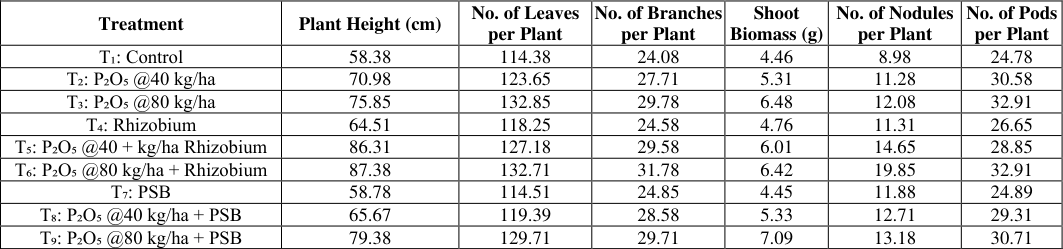 Table 2
Introduction
Cowpea (Vigna unguiculata (L.)) is commonly known as lobia in India, southern pea, and black-eyed pea. It is an important legume crop grown for multiple purposes such as vegetable, grain, fodder, and green manure. It is particularly valued for its short duration, high yield potential, and adaptability to drought-prone and marginal environments. The green tender pods are rich in moisture (84.6 g), protein (4.3 g), carbohydrates (8.0 g) per 100 g edible portion and are a significant source of affordable dietary protein, vitamins, and minerals, making cowpea a vital component of the human diet in many developing countries (1, 3). Globally, cowpea is cultivated on approximately 10.35 million hectares with a production of 19.77 million tonnes, contributing about 8.6% of the world vegetable production according to FAO (2024). Cowpea possesses the remarkable ability to fix atmospheric nitrogen, which is crucial for its early vegetative growth and development. Phosphorus (PSB) and nitrogen-fixing bacteria (Rhizobium) have been extensively employed to enhance soil fertility (4). Biofertilizers play a crucial role in plant metabolism and nutrient availability, facilitating nutrient uptake from the soil (5). The positive impact of phosphate biofertilizers produced with apatite plus sulphur inoculated with Acidithiobacillus on growth and yield of cowpea holds great promise for improving usage of these products as partial or total substitutes for soluble phosphate fertilizers due to low cost of production. While use of phosphate biofertilizers on low-P soils seems justified, caution must be exercised, since phosphate biofertilizers produced with phosphate rock plus elemental sulphur inoculated with Acidithiobacillus, when applied at higher levels, may decrease soil pH. Considering the need for sustainable nutrient management and improved cowpea productivity (2), the present investigation was undertaken to evaluate the effect of biofertilizers and phosphorus levels on the growth and yield of cowpea under field conditions (1, 6).
Materials and Methods
The field experiment was conducted during the said season, 2025, at the Vegetable Research Farm of the Department of Horticulture, Post Graduate College, Ghazipur, to assess the effect of biofertilizers and phosphorus on growth and yield of cowpea.
The trial was laid out in a Randomized Block Design with 9 treatments and 3 replications. Treatments included different combinations of biofertilizers, Rhizobium and Phosphate Solubilizing Bacteria (PSB), along with two levels of phosphorus: 40 and 80 kg/ha. The experimental design consisted of nine treatment combinations, viz: T₁: Control T₂: P₂O₅ @ 40 kg/ha T₃: P₂O₅ @ 80 kg/ha T₄: Rhizobium T₅: P₂O₅ @ 40 kg/ha + Rhizobium T₆: P₂O₅ @ 80 kg/ha + Rhizobium T₇: PSB T₈: P₂O₅ @ 40 kg/ha + PSB T₉: P₂O₅ @ 80 kg/ha + PSB The crop was sown in sandy loam soil following standard agronomic practices. Uniform cultural operations and plant care were provided to all plots. Observations were recorded on phenological traits such as plant height, number of leaves per plant, number of branches per plant, shoot biomass, number of nodules per plant, number of pods per plant, and yield parameters including pod weight, grain weight per pod, shelling weight of pods, root biomass, and green pod yield. The data collected were subjected to statistical analysis using Analysis of Variance (ANOVA) for RBD. Treatment means were compared using the Critical Difference (CD) at a 5% level of significance.
Results and Discussion Plant Height at Maturity
The highest plant height at maturity (87.38 cm) was recorded with P₂O₅ @ 80 kg ha⁻¹ + Rhizobium, while the lowest (58.38 cm) was observed with T₁ (control). The increase in plant height with P₂O₅ and Rhizobium may be attributed to enhanced nutrient availability and improved growth (Khan et al., 2017) [7] .
Number of Leaves per Plant
The maximum number of leaves per plant (132.85) was observed with P₂O₅ @ 80 kg ha⁻¹, while the lowest (114.38) was recorded with PSB (Ayub, 2012). The increased number of leaves with P₂O₅ and PSB may be due to improved phosphorus availability, promoting leaf growth.
Number of Branches per Plant
The maximum number of branches per plant at maturity (31.78) was recorded with P₂O₅ @ 80 kg ha⁻¹ + Rhizobium at 45 days, while the lowest (24.00) was observed with Rhizobium alone (Patel, 2013) [9] .
The maximum shoot biomass of cowpea (7.09 g) was recorded under P₂O₅ @ 80 kg ha⁻¹ + PSB, while the minimum (4.46 g) was observed under T₁ (control).
Number of Nodules per Plant
The maximum number of nodules per plant (19.85) was recorded with P₂O₅ @ 80 kg ha⁻¹ + Rhizobium, while the minimum (11.08) was recorded with PSB. Phosphorus level and Rhizobium enhanced nodule formation (Tiwari, Patel et al., 2020) [12] .
Number of Pods per Plant
Significant variation was observed in the number of pods per plant. The maximum number of pods per plant (32.91) at 45 days was recorded with P₂O₅ @ 80 kg ha⁻¹, while the minimum (24.78) was observed in T₁ (control) (Tomar, 2013) [14] .
The maximum pod weight (12.48 g) was observed with application of P₂O₅ @ 80 kg ha⁻¹ + Rhizobium, while the minimum (8.31 g) was observed with treatment T₁ (control).
The maximum grain weight per plant (2.650 g) was recorded with application of P₂O₅ @ 80 kg ha⁻¹ + Rhizobium, while the minimum (2.165 g) was observed in treatment T₁.
The highest shelling weight of pods (9.846 g) was observed with P₂O₅ @ 80 kg ha⁻¹ followed by Rhizobium at 45 days, while the lowest (6.161 g) was recorded in treatment T₁. The improvement with P₂O₅ + Rhizobium may be due to enhanced nutrient uptake and better translocation, resulting in improved shelling weight.
It was observed that the maximum root biomass (0.71 g) was recorded with P₂O₅ @ 80 kg ha⁻¹ + Rhizobium at 45 days, while the lowest (0.42 g) was observed with treatment T₁ (control) (Singh et al., 2020) [11] .
The highest green pod yield (139.10 q/ha) was recorded with the application of P₂O₅ @ 80 kg ha⁻¹ + Rhizobium (Tomar, 2013) [14] , while the lowest (90.60 q/ha) was observed in treatment T₁ (control). The improved yield at 80 kg/ha with biofertilizers is likely due to better nutrient uptake and enhanced rhizosphere activity.
Conclusion
The present study concluded that the integrated use of biofertilizers with an optimal dose of phosphorus significantly enhanced growth and yield of cowpea. All the growth characters observed in the experiment were greatly influenced by biofertilizers and various levels of phosphorus application. Application of P₂O₅, Rhizobium, and PSB up to the level of 80 kg P₂O₅/ha significantly increased plant height, number of leaves, number of branches, shoot biomass, number of nodules, number of pods, pod weight, grain weight, shelling weight, root biomass, and green pod yield. The experimental evidence suggests that this integrated nutrient management approach may be adopted for profitable cultivation of cowpea under existing agroclimatic conditions of Uttar Pradesh (Ghazipur region).
Figures and tables from the paper
| Treatment | Pod Weight (g) | Grain Weight per Pod (g) | Shelling Weight of Pods (g) | Root Biomass (g) | Green Pod Yield (q/ha) |
|---|---|---|---|---|---|
| T₁: Control | 8.31 | 2.165 | 6.161 | 0.42 | 98.69 |
| T₂: P₂O₅ @ 40 kg/ha | 9.15 | 2.465 | 6.701 | 0.55 | 105.25 |
| T₃: P₂O₅ @ 80 kg/ha | 10.81 | 2.498 | 8.328 | 0.68 | 119.15 |
| T₄: Rhizobium | 8.58 | 2.229 | 6.367 | 0.59 | 102.56 |
| T₅: P₂O₅ @ 40 kg/ha + Rhizobium | 10.78 | 2.565 | 8.231 | 0.62 | 120.36 |
| T₆: P₂O₅ @ 80 kg/ha + Rhizobium | 12.48 | 2.650 | 9.846 | 0.71 | 139.10 |
| T₇: PSB | 8.78 | 2.310 | 6.486 | 0.44 | 99.27 |
| T₈: P₂O₅ @ 40 kg/ha + PSB | 9.15 | 2.579 | 6.587 | 0.51 | 106.98 |
| T₉: P₂O₅ @ 80 kg/ha + PSB | 10.81 | 2.611 | 8.215 | 0.65 | 120.44 |
Table text extracted from the original PDF; superscript letters are shown inline. The original table image is below.
View original table image
| Treatment | Plant Height (cm) | No. of Leaves per Plant | No. of Branches per Plant | Shoot Biomass (g) | No. of Nodules per Plant | No. of Pods per Plant |
|---|---|---|---|---|---|---|
| T₁: Control | 58.38 | 114.38 | 24.08 | 4.46 | 8.98 | 24.78 |
| T₂: P₂O₅ @40 kg/ha | 70.98 | 123.65 | 27.71 | 5.31 | 11.28 | 30.58 |
| T₃: P₂O₅ @80 kg/ha | 75.85 | 132.85 | 29.78 | 6.48 | 12.08 | 32.91 |
| T₄: Rhizobium | 64.51 | 118.25 | 24.58 | 4.76 | 11.31 | 26.65 |
| T₅: P₂O₅ @40 + kg/ha Rhizobium | 86.31 | 127.18 | 29.58 | 6.01 | 14.65 | 28.85 |
| T₆: P₂O₅ @80 kg/ha + Rhizobium | 87.38 | 132.71 | 31.78 | 6.42 | 19.85 | 32.91 |
| T₇: PSB | 58.78 | 114.51 | 24.85 | 4.45 | 11.88 | 24.89 |
| T₈: P₂O₅ @40 kg/ha + PSB | 65.67 | 119.39 | 28.58 | 5.33 | 12.71 | 29.31 |
| T₉: P₂O₅ @80 kg/ha + PSB | 79.38 | 129.71 | 29.71 | 7.09 | 13.18 | 30.71 |
Table text extracted from the original PDF; superscript letters are shown inline. The original table image is below.
View original table image
References
22 in the original paper- Abebe B, Alemayehu MT. A review of the nutritional use cowpea (Vigna unguiculata L. Walp) for human and animals diets. Journal of Agriculture and Food Research. 2022.
- Gautam K, Sindhu S, Singh NR, Thakur V, Jatav SS, et al. Microbial fertilizer: Types, applications and current challenges for sustainable agricultural production. 2021.
- Dhakal A. Present status of grain legumes production in Nepal. Food & Agri Business Management. 2020.
- Xeng Q, Ding X, Wang J, Han X, Iqbal HMN, et al. Insight into soil nitrogen and phosphorus availability and agricultural sustainability by plant growthpromoting. 2022.
- Kumar S, Diksha, Sindhu SS, Kumar R. Biofertilizers: An ecofriendly technology for nutrient recycling and environmental sustainability. 2022.
- Jayshree, Umesha C. Effect of biofertilizers and phosphorus on growth parameters and yield of cowpea (Vigna unguiculata L. Walp.) in sandy loam soil of Prayagraj. 2021.
- Khan VM, Arumand A, Yadav B, Irfan M. Effect of vermicompost, biofertilizers, phosphorus, PSB, P₂O₅ on growth, yield attributes and nutrient content and their uptake of cowpea (Vigna unguiculata L. Walp.). International Journal of Current Microbiology and Applied Sciences. 2017.
- Ayub, et al. Effect of P₂O₅ @ 80 kg ha⁻¹ on number of leaves/plant in cowpea. 2012.
- Patel, et al. Effect of P₂O₅ @ 80 kg ha⁻¹ on number of branches/plant in cowpea. 2013.
- Rawat, et al. Effect of P₂O₅ @ 80 kg/ha + PSB on shoot biomass weight of cowpea. 2022.
- Singh, Sharma. Role of P₂O₅ + Rhizobium in solubilization and root biomass growth in cowpea. 2020.
- Choudhary R, Sharma P, Tiwari S. Effect of P₂O₅ + Rhizobium on nodules/plant in cowpea. 2020.
- Patel, et al. Effect of Rhizobium + 80 kg/ha phosphorus on nodules/plant in cowpea. 2019.
- Tomar. Effect of P₂O₅ @ 80 kg/ha on pod length and plant height in cowpea at 45 days. 2013.
- Yadav M, Yadav SS. Effect of biofertilizers and phosphorus on growth and yield of cowpea (Vigna unguiculata L. Walp.). 2017.
- Dass, et al. Effect of P₂O₅ @ 80 kg/ha⁻¹ + Rhizobium on pods/plant, green pod yield (q/ha), and shelling weight in cowpea. 2005.
- Datta, Sharma. Effect of biofertilizers and phosphorus application at higher level on yield of cowpea. 1960.
- Sen, Bains. Effect of phosphorus on leaves of cowpea. Journal of Indian Society of Soil Science. 1958.
- Kumar, Singh. Response of Rhizobium inoculation on growth of cowpea. International Journal of Current Microbiology and Applied Sciences. 2018.
- Vineela B, Dawson J. Effect of PSB with biofertilizers and micronutrients on nodules growth and yield of cowpea (Vigna unguiculata). The Pharma Innovation Journal. 2009.
- Nadeem MA, Singh, Pandey. Influence of phosphorus and biofertilizers on growth and yield of cowpea (Vigna unguiculata L. Walp.) in sandy or loamy soil. 2017.
- Jayshree. Effect of biofertilizers and phosphorus on growth parameters and yield of cowpea (Vigna unguiculata L. Walp.) in sandy soil. 2021.