
Research article · 2026 · Full text
International Journal of Biology SciencesEcology, pollination role and ecosystem services of hoverflies (Diptera: Syrphidae) in the central Himalayas
Volume 8(6) · Pages 27–32 · DOI: 10.33545/26649926.2026.v8.i6a.857 ↗
Research areasPlant and animal studiesDiptera species taxonomy and behaviorInsect behavior and control techniques
Abstract
Author-writtenHoverflies (Diptera: Syrphidae) are one of the most ecologically important and taxonomically diverse groups of diptheran insects known for their function as pollinators, biological control agents and ecosystem stabilizers. Adult hoverflies are important pollinators in both natural and agricultural ecosystems owing to their close association with flowering plants while the larval stages feed on diverse substrate types including aphidophagy, saprophagy and phytophagy. In mountain ecosystems with a humid climate e.g. the Central Himalayas, Syrphidae represent an important alternative pollinator group where at times bee activities are less. The steep altitudinal gradients, heterogeneous habitats and rich floral diversity of Central Himalaya provide a conducive environment for several syrphid species to thrive. Altitude, vegetation composition, climate and the availability of floral resources exerted strong influence on hoverfly abundance and distribution in this region. This review aims to present the biology, life cycle, floral visiting behaviour of Syrphidae as well as its role in pollination efficiency and ecosystem services with special emphasis on the Central Himalayan Ecosystem.
Summary
Source-checkedPlain-language reading of the full paper, prepared with AI and checked against the text. Each point links to the authors' own words.
Why it matters
- Hoverflies are ecologically significant insects that serve as pollinators, biological control agents, and stabilizers for ecosystems. View evidence ↗
- In the humid mountain ecosystems of the Central Himalayas, hoverflies are critical alternative pollinators, especially when bee activity is low. View evidence ↗
- Because they are sensitive to environmental disturbances, hoverflies can be used as bioindicators to assess habitat quality and ecosystem health. View evidence ↗
The question
- The review aims to examine the biology, life cycle, floral visiting behavior, pollination efficiency, and ecosystem services of hoverflies, focusing on the Central Himalayan Ecosystem. View evidence ↗
What they did
- The authors conducted a review of existing literature to synthesize information on hoverfly biology, distribution, and agricultural roles in the Central Himalayas. View evidence ↗
What they found
- The body size of hoverflies typically ranges from 4 to 25 cm. View evidence ↗
- The hoverfly life cycle consists of four distinct stages: egg, three larval stages, pupa (with puparium), and adult. View evidence ↗
- Hoverfly larvae have diverse diets: 70% of the Syrphini subfamily are aphidophagous, while others are saprophagous or phytophagous. View evidence ↗
- Floral color preferences vary by subfamily: Eristalinae prefer white, Pipizinae prefer white and yellow, and Syrphinae show no specific color preference. View evidence ↗
- Bees generally have higher pollination efficiency than hoverflies due to their robust size and hairiness. View evidence ↗
- As altitude increases, bee populations decline, leaving hoverflies as the dominant pollinators in high-altitude regions. View evidence ↗
- The highest abundance of Dipterans occurs between 1,500 and 2,500 meters, coinciding with a high density of flowering plants. View evidence ↗
- The life cycle of hoverflies lasts approximately 35 days. View evidence ↗
- Hoverflies pollinate a wide variety of crops, including oilseed rape, buckwheat, pear, kiwi, and strawberry. View evidence ↗
- Aphidophagous larvae provide biological pest control by consuming thrips and aphids. View evidence ↗
- Pollinator loss is driven by intensive land use, including pesticide application, habitat fragmentation, and degradation of floral resources. View evidence ↗
What it means
- The authors conclude that identifying critical habitats and establishing protected area networks and 'prime hoverfly areas' are essential for species conservation. View evidence ↗
- The authors note that simply establishing protected areas without active monitoring often fails to conserve species. View evidence ↗
Visual summary
2 visualsIllustrations explain the paper; they do not show study data.
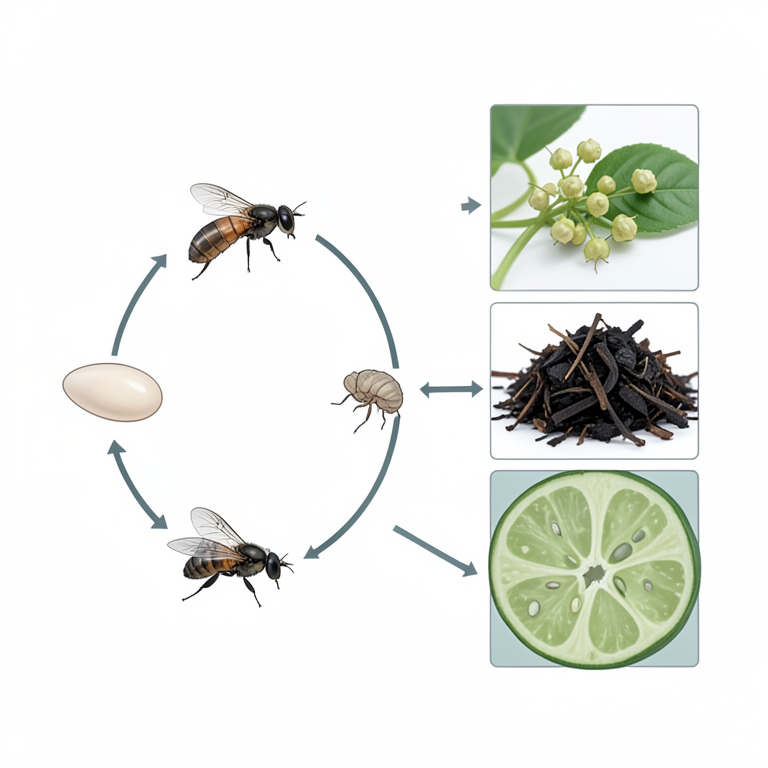
Hoverfly Life Cycle and Larval Diets
AI-generated conceptual illustration (Hoverflies (Diptera: Syrphidae)). It explains the idea and does not show study data.
View source evidence ↗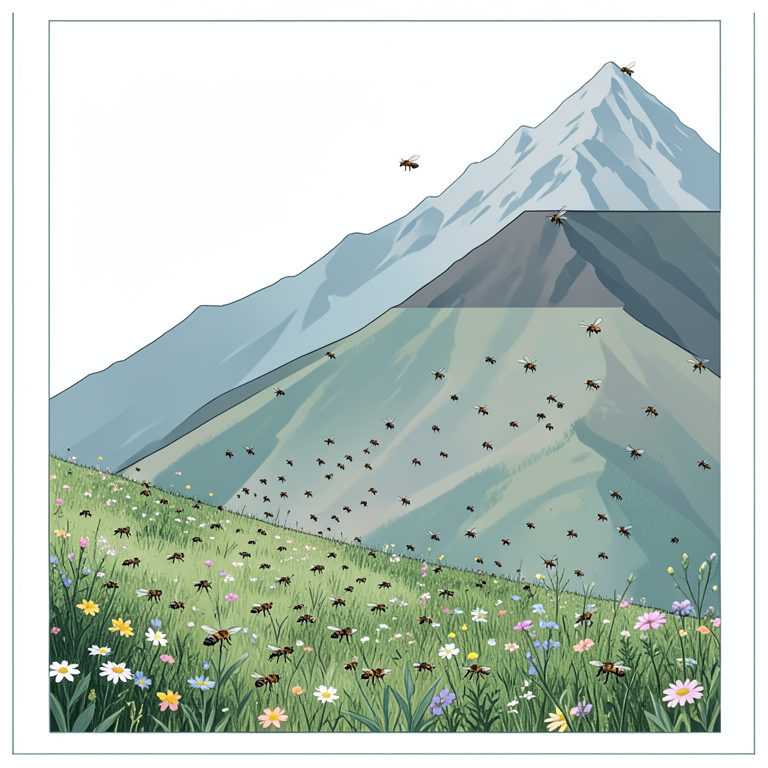
Altitudinal Distribution of Pollinators
AI-generated conceptual illustration (hoverflies and bees in the central Himalayas). It explains the idea and does not show study data.
View source evidence ↗Introduction
Hoverflies (Diptera: Syrphidae) are one of the largest and most tropically diverse families among dipterans, including around 6000 described species across ≈200 genera worldwide. Except in Antarctica and those few extreme arid desert ecosystems, they occur in nearly all biogeographical regions. Members of the family Syrphidae are well-known as hoverflies for their impressive ability to remain suspended in mid-air during flight; they are also known as flower flies, due to their close association with flowering plants. It is traditionally divided into three large subfamilies: Syrphinae, Eristalinae and Microdontinae that have unique ecological or larval feeding habits. A total of 366 species from 77 genera under 13 tribes and four subfamilies were recorded from India alone, suggesting significant diversity in the Indian subcontinent (Sengupta et al.,2024) [46] . Syrphidae contributes significantly to ecological balance, and are highly beneficial for agriculture (Rader et al.,2016) [42] . Adult hoverflies are significant pollinators of wild and refined plants as they often forage on nectar and pollen from flowers. However, in many bionetworks, particularly temperate and high-elevation territories where bee richness is low, hoverflies are important first liner pollinators (Cowgill et al., 1989) [13] . They are especially important pollinators in fragile mountain ecosystems where climatic conditions frequently restrict the activity and diversity of other insect pollinators (Sutherland et al.,1999) [56] . In addition to acting as pollinators, the very young stages of many species are larval and help in biological control (Schneider,1969) [44] . Aphid feeding larva that demolish aphids and other agricultural pests openly address the problem of crop loss and decrease reliance on pesticides. Saprophagous larvae contribute to decomposition and nutrient cycling, while some are also associated ecologically with myrmecophily and saproxylic behaviour. Central Himalaya, that is also one of the high biodiversity hot spots of the world with steep altitudinal gradients, highly heterogeneous habitats and multitude of floristic resources (Mani, 1968) [36] . Elevation ranges vary in temperature, humidity, composition of vegetation and topography, all of which have strong effects on the distribution and abundance of insect fauna including Syrphidae (Mani, 1968) [36] . The climate and geography of the Central Himalayas comprise multiple habitat types including forest edges, alpine meadows, grasslands, orchards, riverbanks and agricultural landscapes that is most suitable for hoverfly microhabitats as well as flower resources overall life processes. Mid-elevations have a greater variety of flowering plants, and this amplified plant accessibility perhaps results in higher profusion and variety of hoverflies (Branquart & Hemptinne, 2000) [6] . As many syrphid species are known to be cold tolerant, having a rapid life cycle and flexibility in foraging behaviour; they can be well adapted to the montaine and alpine environments (Singh et al.2018) [49] . For the past several years, anthropogenic interferences like habitat destruction, change in pattern of land-use, application of large amount pesticides and climate fluctuations have rigorously impacted pollinator assortment and profusion throughout mountain ecosystems. The survival and ecological functioning of hoverflies are compromised due to changing flowering phenology, diminishment of floral resources and microhabitats (Ball & Morris, 2015) [4] . Most syrphids are sensitive to environment disturbance, which makes them candidates for the bioindicators of ecosystem health and habitat quality. To this end understanding the ecology, distributional patterns, floral associations and ecosystem services of Syrphidae is important for biodiversity conservation and pollinator management practices in sustainable agricultural systems in Himalayan ecosystems by 2030. This review intends to provide a brief overview of biology, floral visiting behaviour, pollination role, altitudinal distribution, agricultural importance and conservation perspectives of Syrphidae with special emphasis on Central Himalayan ecosystem. The review underscores the ecological importance of hoverflies in natural and human-modified landscapes, contributions to biodiversity conservation, pollination services and biological control and continues by analyzing major threats influencing hoverfly diversity and abundance in alpine landscapes
Biology and Life Cycle
The body of Syrphidae is divided is divided into 3 parts-head, thorax and abdomen. Like all other Dipterans, it has one pair of wings and three pairs of legs. Syrphidae can be distinguished from other Dipterans by presence of distinctive spurious vein running parallel between 3 rd (R3) and 4 th (R4) vein in its wings. The average size of body can vary between 4-25 cm. The colour of the body varies from black to ombre yellow. The male Syrphidae can be distinguished from female Syrphidae by the presence of holotypic eyes whereas female has dichoptic eyes. The life cycle of Syrphidae is divided into 4 stages -egg, 3 larval stages, pupa with puparium and adult stage. According to Chandler, (1968) [10] eggs are laid nearby the host's colonies. Female Syrphidae searches site for oviposition such as on leaves, soil. Eristalinae oviposits its egg near the aquatic bodies. According to Awadallah et al. 1980 [3] aphidophagous Syrphidae population lays eggs before the aphid population increases in number. 2 weeks duration is required for eggs to hatch. Most of the species of Syrphidae larval stages are free living and are voracious predators upon Hemiptera. The larva of Syrphidae feeds on different types of food. On the basis of its diet the larva of Syrphidae can be aphidophagous (70% of subfamily Syrphini), saprophagous (some members of Subfamily Syrphini and Subfamily Eristalinae), phytophagous (some members of Subfamily Syrphini). Aphidophagous Syrphidae feeds upon crop pest belonging to Hemiptera and has biocontrol role of pest management. Saprophagous Syrphidae belonging to the subfamily Eristalinae, feeds upon the dead and decaying materials and provides ecological service as decomposers. Subfamily Microdontinae feeds upon ants. Some species feed upon rotten woods are saproxylic. Among all the three larval stages, 3 rd instar larva are voracious feeders due to their comparatively large body size. Adults of almost all known syrphid species feeds on nectar, pollen and honeydew too except for more than 400 species of Microdontinae. Nectar provides carbohydrates which provides energy for survival while pollen provides lipids, minerals and amino acids that allow sexual maturation and gametogenesis (Schneider, 1969; Gilbert, 1981; Haslett, 1989) [18,21,44] . Female hoverflies need to balance the intake of both nectar and pollen.
Floral Visiting Behaviour
Since adult hoverflies feeds upon nectar and pollen, selection of flower is important aspect. Selection of flowers for nectar is more prominent in case of Syrphidae than bees. Simple optimal foraging theory states that Syrphidae visit most abundant and rewarding flowers (Waser 1986; Haslett., 1989; Cowgill et al., 1989) [13,21,58] . To select flowers hoverflies relies upon visual floral cues such as size (Conner and Rush, 1996; Sutherland et al., 1999), shape (Gong and Huang, 2009) and color (Sutherland et al., 1999) [12,20,56] and nectar availability of flowers. Eristalinae have strong preference for white flowers, Pipizinae have strong preference for white and yellow flowers, whereas Syrphinae does not have any color preference. The foraging activity of anthophilous Diptera is affected by the weather. The pattern of flower foraging is affected by various environmental constraints such wind speed, cloudiness, rainfall, humidity, temperature. The activity of foraging depends upon the temperature as some insects uses solar basking to warm up their thoracic regions for flight activities (Kevan 1975) [32] . The size and the temperature together play important role. Hoverflies remain active throughout the day (Brunetti, 1923) [7] . Large flies can be overheated and dehydrated during high temperature so they avoid foraging during warmest part of day (Willmer & Unwin 1981) [59] whereas smaller flies are highly reflective, cannot forage when insolation is lower and they begin to forage when temperature begins to rise. Smaller flies have higher cooling rate which allows them to move towards cooler shade when necessary, therefore it can forage during the warmest part of the day (Maier & Waldbauer 1979) [35] . Large and relatively non reflective species can forage during early morning and evening and thus displays bimodal pattern of foraging. Rain and wet fogs halt the foraging activity of Syrphidae (Levesque & Burger 1982). Sunlight and temperature positively elevate visitation rate whereas rain declines visitation rate of Diptera in case of Alpine vegetation. (Inouye & Pyke 1988) [27] . Syrphidae seldom visits the flower during cloudy weather (Levesque & Burger 1982). During rain, flies hide beneath the petals (Kevan 2007) [31] . However, Maier & Waldbauer (1979) [35] observed that Syrphidae remains active during partly cloudy weather. Weather has effects on seasonal and temporal patterns of foraging activity. Iler et al., (2013) [25] , studied the effects of snowmelt and rain upon the activities of Syrphidae on Colardo Rocky Mountain. During the snowmelt Syrphidae emerged, whereas rain and snow ceased the activity of Syrphidae. During the year when snow melt was earlier than the predicted time, flower remained for longer duration and therefore Syrphidae were able to survive for longer period of time. Syrphidae arrives earlier than other foragers as during the morning period the quantity of nectar produced are comparatively richer (Faegri & van der Pijl 1979) [16] . Pleasant & Chaplin 1983 states that the amount of pollen and nectar decreases as the evening approaches. Melanostoma and Platycherius arrive predawn for foraging (Ssymank., 2001) [54] . Few Syrphidae are crepuscular. The physiological limitation of hoverflies also impacts its activity. During the early afternoon many aphidophagous females lays eggs therefore its flight activity is low during early afternoon. Therefore, there is difference in distributional pattern of hoverflies. To adapt to changing temperature and to avoid competition of floral resource some Syrphidae forage during different hours of day. Volucella vesicularia (Curran) feed upon Cephalanthus occidentalis (Rubiaceae) during crepuscular hour. Syrphidae can range from specialist like long tongued flies of South Africa (Goldblatt et al., 1995) [19] to generalist that feed on many types of plants. However, hoverflies can tend to be generalist if less numbers of preferred flowers are present and when numbers of preferred flowers are prevalent they can tend to be selective feeders (Cowgill, Southerton and Wratten, 1993.) [14] . Male hoverflies are more selective than female hoverflies (Gilbert 1981) [18] . Syrphid species that are found in area where intensive human activity takes place those species are generalist. However, the species that are found on undisturbed habitats have higher number of specialist species (Ssymank., 2002) [53] . The specialized species are more sensitive to environmental changes than generalist (O'Grady et al., 2001) [38] and these species will exhibit rapid and measurable responses to landscape changes.
Pollination Role of Syrphidae
Apart from providing pest control adult hoverflies have specific roles for pollination except species from Microdontinae. As the hoverflies move from one flower to the next it provides a way for pollination. Among the Dipterans, most of the pollination service is provided by the Syrphidae. The adhesion of the sticky pollen to the legs and thorax of Syrphidae provides the opportunity for pollination. In case of Eristalinus arvorum (Fabricius, 1787) presence of dense hair in chest, abdomen and legs help in transfer of huge pollen load. Hymenopterans are the important pollinators especially bees. Apidae forms the major pollinator among Hymenopterans. Syrphidae exhibits Batesian mimicry. In comparison to bees the hoverflies are more selective. The pollination efficiency of bees is more in comparison to hoverflies because of its morphological traits such as hairiness and robust size. Pollination efficiency of Syrphidae can be assessed by the relative abundance and by 3 parameters of foraging behavior-foraging rate, foraging speed and number of loose pollen grains adhered to body. However, some syrphids can relatively carry similar number of pollen grains as bees. Eristalis tenax deposits a similar amount of pollen to stigma of virgin flowers as bees. Jauker and Wolters (2008) [28] assessed the pollination efficiency of Syrphinae Episyrphus batleatus (De Geer 1776) that demonstrated that aphidophagous hoverfly significantly increased seed set and yield of oilseed rape closer to that of bees of some small honeybee colonies. Pollinator efficiency of bees is measured by seed set formed after a single visit of pollinator to virgin flower. However, in case of non-bee pollinators the measurement of pollinator efficiency is done after pollinators visit flowers multiple times. Fontaine et al 2005 [17] demonstrated that in case of plants community with open flowers pollination efficiency of hoverflies are more than that of bees. In New Zealand, it has been seen that Eristalis tenax (Linnaeus, 1758) transfers a similar number of pollen grains as honeybees to stigmas of pak choi and onions (Rader et al., 2009; Howlett et al., 2017) [24,43] . Pollination efficacy cannot only be determined by visitation rate because there are many species that has high vegetation rate but actually do transport very little pollen. According to Herrera 1987, Herrera 1989, Tepedino et.al. 2011 [22,23,57] the pollination efficacy is influenced by mainly three factorsvisitation rate, floral constancy and amount of pollen carried on visitor's body. Since pollinator efficacy varies among different species of Syrphidae, therefore pollinator efficacy must be measured for different species. Pollen collected by hoverflies should be estimated from dorsal head, anterior head, ventral head, dorsal thorax, ventral thorax, dorsal abdomen, ventral abdomen (Tepedino et al.,2011) [57] . Usually, Eristalinae carry large pollen loads whereas Toxomerus and Syrphinae carries small pollen load. Even though the pollination efficiency is lower than bees generally, Syrphidae acts as alternative pollinator in high altitudinal regions. With increase in altitudes the population of bees decreases however hoverflies form the dominant pollinator in high altitudinal regions. In high altitude areas the distribution of Syrphidae is at unimodal peak at middle elevation (Peter et al., 2016). According to Sengupta (2024) [39,46] ; after unimodal peak at middle elevation, the distributional pattern of hoverflies shows sharp decline in rate of pollinating species with increasing elevations, except for the few specialized species that can survive in harsh climate number of insects population decreases. Even in higher altitudinal region the major dominant pollinator is Syrphidae. It is to be noted that among bees Bombus are found in higher altitudinal regions. According to the research done by Sommaggio et al., 2022 [51] regarding altitudinal gradients in Dolomiti Bellunesi National Park (Italy) the Syrphidae population found in montane regions are not the subset population of lower regions but are of different species such as Cheilosia grisella (Becker,1894),Cheilosia laeviseta (Claussen,1987), Platycheirus manicatus (Meigen,1822), and Sphaerophoria fatarum (Goeldlin, 1989) These species are found in higher altitudes. Eristalis himalayensis (Brunetti, 1908) [8] is endemic to higher altitudinal region of Indian subcontinent.
Syrphidae in Central Himalayan Ecosystem
The distribution and abundance of species in Himalayas depend upon two important factors the prevailing ecological factors associated and the distribution of the insects in the past. Most of the high altitudinal species have evolved in situ. The distribution of insects within the same mountains with change in altitude also varies because of the difference in ecological conditions prevailing. The active dispersal of insects is limited due to the difference in prevailing ecological conditions. The discontinuity of the mountains, ruggedness of mountains affects the movement or dispersal of the insects. The distribution of insects depends upon the distribution of vegetation, the composition of vegetation and the various characters of the floral. The distribution as well as dispersal of insects are limited by various factors such as ecological specialization of insects, the prevailing climatic conditions, the physical barriers, floral composition as well as upon edaphic factors. The rocks which on weathering produces nutrient rich soil and higher water holding capacity sustains the livelihood of more faunal montane diversity of insects in comparison to the rocks which on weathering produces nutrient poor soil. Rocks such as sandstone, eruptive rocks, calcareous marl or shale which weathers faster provides nutrient rich soil whereas acidic rocks such as dolomites, quartzite, quartz rich sandstones weathers slower as a result produces nutrient poor soil. The distribution of insects is also affected by the steepness of the mountain. The faunal diversity of the insects is more on the gentle slopes as in comparison to steeper slope. (Mani M.S., 1968) [36] . The vertical distribution of mountain region insects is characterized by the progressive decrease of insect abundance with increase in altitude, variable width of the altitudinal range of distribution, the dominant zones of insects in different altitudes as well on the altitudinal stratification of species. With increase in altitude the forest line also decreases as a result the abundance of the insect species decreases.
Local factors also have effect on the rate of fall of abundance of species. Variation is seen even in the presence of the deep gorge; it pushes the upper limit of forest higher and results in continuous snow cover during summer. The difference in rate of decrease of abundance of different group of insects is observed which result in uneven distribution of species. With increase in the elevation, partial or complete replacement of lowland species is done by species that are not observed at lowland. Sometimes, overlapping of species occurs. As one ascends higher species are replaced by numerous others and further replacement of species takes place as one ascends to higher altitude. On the Himalayas the species abundance and composition are different from 2000-2500 m than 3000-3500 m altitudes. The species composition and abundance of 4000-4500 m is also quite different from other altitudinal ranges. (Mani M.S., 1968) [36] . One of the most important features of horizontal distribution of insect species is concentration of species in isolated, discontinuous patches. The species of high alpine zone of mountain region sometimes found around the single summits or ridges of mountains. Patchy, non-random and aggregative behavior of high altitudinal insect species is other the characteristic feature of horizontal distribution of insect species. Many species aggregate together in isolated patches and concentrate around summit and ridges of mountains. The concentration of species in small isolated patch can be considered as bioindicator species of the locality. (Mani M.S., 1968) [36] . The altitudinal distribution of Syrphidae changes rapidly in Himalayas due to the difference in vegetation along the altitudes are differentiated into lowland of Central Himalayas includes tropical and subtropical vegetation, subalpine and alpine vegetation. The diversity of Syrphidae changes rapidly along short distance. The rate of decrease in abundance of insects varies within same mountain as well as with different mountains with the increase in the altitude. At a height beyond 2300 meter above sea level the height of trees decreases compared to the lowland as well as shrub types of plants begins to the dominate the landscape (Sharma et al., 2017). According to Sinha et al 2022 [48,50] , highest number of Dipterans are found between 1500m -2500 meter where there is presence of large number of flowering plants. Kearns 1992 [30] states that Dipterans are thought to be active foragers in cold and wetter climates making them suitable pollinator for montane-alpine environment. The life cycle of Syrphidae is of nearly 35 days. The cold tolerance and short duration of life cycle of Syrphidae makes it suitable for survival in Central Himalayan Ecosystem. The abundance of flowering plants in altitudinal range between 1500-2500 m provides suitable floral resources for adult Syrphidae. Above 2500 meter above sea level the abundance of Rhododendron is more and the environment is windy therefore foraging activity is rare. The diverse habitats in Central Himalayas include forest edges, agricultural fields, grasslands, forest, river banks that has abundance of floral resources. Throughout their life cycle, hoverflies use various types of microhabitats ranging from compost heaps, tree barks and herbaceous plants for laying eggs (Ball & Morris, 2015) [4] .
Role in Agriculture and Ecosystem Services
In Central Himalayas the major crops grown are buckwheat, coriander, mustard, mandarin oranges, avocadoes, plums, peaches, kiwis, broccoli, ginger plants, cinchona, capsicum, strawberry etc. Broccoli (Brassica oleracea), Ginger plants (Zingiberaceae), tea plants depend upon the pollinators for cross pollination. Syrphidae act as pollinator for oilseed rape, buckwheat, turnips, pear, field bean, kiwi, strawberry, coffee (Rader et al., 2016) [42] . Syrphidae pollinates cornflower, alyssum, coriander, mint (Dunn et al., 2020) [15] . Glasshouse cultivation of sweet pepper has been successfully conducted using Syrphidae as pollinator (Inouye, 2015) [26] . Controlled pollination of Allium has been done using Syrphids (Inouye. 2015) [26] . Greenhouse grown horticultural crops such as melon and strawberry when pollinated by hoverflies results in improved seed quality (Li et al, 2023) in cold regions. Syrphidae plays significant role for pollination of the Broccoli, Ginger plants, tea plants, Kiwi, Capsicum, Red cabbage, open centered Dahlias, Primroses, Hydrangea, orchids such as Dendrobium, mustard, strawberries. Syrphidae helps in increasing the productivity of seed quantity in mandarin orange, avocado, plums, peach trees, strawberry. Thus increasing, the crop yield of crops. Aphidophagous larval hoverflies consumes aphids and thrips, thus help in biological control of pest. The impact of Syrphidae as biological control depends upon relationship between the consumption efficiency of aphidophagous larval Syrphidae and the increase in number of pest (Bombosch, 1963) [5] . Female hoverflies orient its egg depending upon the odor of honeydew of crops. As the population of aphids increases exponentially, Syrphidae should be introduced earlier. The flower shape, color, phenology of blooming period of flower, quality and quantity of nectar has impact on the hoverflies to act as a biological control (Colley & Luna., 2000) [10] .
Threats and Conservation
Various environmental and anthropogenic activities lead to decline in diversity and abundance of species. Intensive land use such as habitat degradation, fragmentation, use of pesticides leads to decrease in floral resources and ultimately leads to pollinator loss (Seibold et al., 2019, Millard et al., 2021) [37,45] . Apart from decline in pollinator population, the health and performance of pollinator individual are negatively impacted (Straub et al., 2023) [55] . Fragmentation of landscapes or the loss of connectivity results in gene isolation, genetic inbreeding eventually leading into loss of genetic diversity. Land use changes such as conversion of natural habitat land into agricultural land results in loss of maintenance of genetic connectivity eventually leading to inbreeding depression due to the lack of genetic differentiation (Jha, 2015) [29] . Landscape barrier such as mountains and oceans often leads to loss in genetic connectivity. Allendorf 1986 [2] in his study highlighted that loss of genetic diversity make the pine hoverflies more vulnerable to diseases outbreak. Climatic shift also affects the species richness. Survival ability of species of hoverfly depends upon the macroclimatic set of the region (Alencar et al., 2026) [1] . Temperature is one of the most important variable of climate. Global warming results in overall elevated temperature eventually causing the range shift of organism towards high elevation and altitude. Climatic shift causes changes in the phenology and abundance of hoverfly species. Climatic shift affects the floral resources eventually affecting the diversity and abundance of species as well as affects the growth and ecology of the Syrphidae. Due to various anthropogenic activities and change in morphological traits as a response the population of hoverflies are negatively impacted. Therefore, conservation of species as well as maintenance of the habitats are equally important. For example, aphidophagous species are affected by landscape structure. Landscape complementation patches for larval development and patches for adult requirement that is floral density is required to maintain the pool of hoverflies. The abundance and richness of hoverflies depend on various factors such as abundance of floral density, microhabitat for larval development, quality of pollen and nectar. Abundance of hoverflies varies according to ecological group. According to Primack, 2008, Soulé 1991 [41, 52] , establishing protected areas is one of the most common conservative strategies. However, many times establishment of only protected areas and failure to monitor the conservative sites has failed to conserve the species. Many species are found abundantly outside the conservation area. For conservation of species the identification of habitat and designation of protected area network and establishment of prime hoverfly area is essential (Vujic et al., 2016). Understanding the ecology of hoverflies is essential for maintenance of protected areas.
Acknowledgement
AcknowledgementAuthors are grateful to Director, Zoological Survey of India, Kolkata for her continuous support and inspiration. A special thanks to Dr. S. Sheela, Scientist-E, CEL Section for her encouragement and guidance throughout the entire study period. To all colleagues of the CEL Section, we also convey our gratitude for their valuable scientific input and technical assistance. A special thank you to Dr. Tilak Chatterjee Principal, Bankim Sardar College as well as to Dr. Aniruddha Maity for their constant encouragement.
References
59 in the original paper- Alencar JBR, Pereira-Colavite A, Nunes JP, Silva AM. Small gains, large losses: range shifts of the hoverfly Dioprosopa clavata (Fabricius, 1794) (Diptera: Syrphidae) to 2100. Int J Biometeorol. 2026;70:71.
- Allendorf FW. Genetic drift and the loss of alleles versus heterozygosity. Zoo Biol. 1986;5:181-190.
- Awadallah KT, et al. Egg laying activities of the syrphid females, Metasyrphus corollae Fabr. and Sphaerophoria scripta L. (Syrphidae: Diptera). Mesopotamia J Agric. 1980;15:263-271.
- Ball S, Morris R. Britain's Hoverflies: A Field Guide. Princeton: Princeton University Press; 2015.
- Bombosch S. Untersuchungen zur Vermehrung von Aphis fabae Scop. in Samenrübenbeständen unter besonderer Berücksichtigung von Schwebfliegen (Diptera: Syrphidae). Z Angew Entomol. 1963;52:105141.
- Branquart E, Hemptinne JL. Selectivity in the exploitation of floral resources by hoverflies (Diptera: Syrphinae). Ecography. 2000;23:732-742.
- Brunetti E. Family Syrphidae. In: Fauna of British India. Vol. 3. London: Taylor and Francis; 1923. p. 406-415.
- Brunetti E. Notes on Oriental Syrphidae with descriptions of new species. Part I. Rec Indian Mus. 1908;2:49-96.
- Brunetti E. The Fauna of British India, including Ceylon and Burma: Diptera. Vol. 3. London: Taylor and Francis; 1923.
- Chandler AEF. Some factors influencing the occurrence and site of oviposition by aphidophagous Syrphidae (Diptera). Ann Appl Biol. 1968;61:435-446.
- Colley M, Luna J. Relative attractiveness of potential beneficial insectary plants to aphidophagous hoverflies (Diptera: Syrphidae). Environ Entomol. 2000;29:10541059.
- Conner JK, Rush S. Effects of flower size and number on pollinator visitation to wild radish, Raphanus raphanistrum. Oecologia. 1996;105:509-516.
- Cowgill, S. E. (1989). The role of non-crop habitats on hoverfly (Diptera: Syrphidae) foraging on arable land. Proceedings of the 1989 Brighton Crop Protection Conference -Weeds, Vol. 3, pp. 1103-1108.
- Cowgill SE, Wratten SD, Sotherton NW. The selective use of floral resources by the hoverfly Episyrphus balteatus (Diptera: Syrphidae) on farmland. Ann Appl Biol. 1993;122:223-231.
- Dunn L, Lequerica M, Reid CR, Latty T. Dual ecosystem services of syrphid flies (Diptera: Syrphidae): pollinators and biological control agents. Ecol Entomol. 2020;45:114.
- Faegri K, van der Pijl L. The Principles of Pollination Ecology. 3rd ed. Oxford: Pergamon Press; 1979.
- Fontaine C, Dajoz I, Meriguet J, Loreau M. Functional diversity of plant-pollinator interaction webs enhances the persistence of plant communities. PLoS Biol. 2005;4(1):e1.
- Gilbert FS. Foraging ecology of hoverflies: morphology of the mouthparts in relation to feeding on nectar and pollen in some common urban species. Ecol Entomol. 1981;6:245-262.
- Goldblatt P, Manning JC, Bernhardt P. Pollination biology of the long-proboscid fly pollination system in southern Africa. Ann Missouri Bot Gard. 1995;82:67-86.
- Gong YB, Huang SQ. Floral symmetry: pollinatormediated stabilizing selection on flower size in bilateral species. Proc R Soc B. 2009;276:4013-4020.
- Haslett JR. Interpreting patterns of resource utilization: randomness and selectivity in pollen feeding by adult hoverflies. Oecologia. 1989;78:433-442.
- Herrera CM. Components of pollinator quality: comparative analysis of a diverse insect assemblage. Oikos. 1987;50:79-90.
- Herrera CM. Pollinator abundance, morphology and flower visitation rate: analysis of the quantity component in a plant-pollinator system. Oecologia. 1989;80:241248.
- Howlett BG, Evans LJ, Pattemore DE, Nelson WR. Stigmatic pollen delivery by flies and bees: methods comparing multiple species within a pollinator community. Basic Appl Ecol. 2017;19:19-25.
- Iler AM, Inouye DW, Hoye TT, Miller-Rushing AJ, Burkle LA, Johnston EB. Maintenance of temporal synchrony between syrphid flies and floral resources despite differential phenological responses to climate. Glob Change Biol. 2013;19:2348-2359.
- Inouye DW, Larson BMH, Ssymank A, Kevan PG. Flies and flowers III: ecology of foraging and pollination. J Pollinat Ecol. 2015;16:115-133.
- Inouye DW, Pyke GH. Pollination biology in the Snowy Mountains of Australia, with comparisons with montane Colorado, USA. Aust J Ecol. 1988;13:191-210.
- Jauker F, Wolters V. Hoverflies are efficient pollinators of oilseed rape. Oecologia. 2008;156:819-823.
- Jha S. Contemporary human-altered landscapes and oceanic barriers reduce bumble bee gene flow. Mol Ecol. 2015;24:993-1006.
- Kearns CA. Anthophilous fly distribution across an elevation gradient. Am Midl Nat. 1992;127:172-182.
- Kevan PG. Diaheliotaxis and ombrophobia in an anthophilous High Arctic midge, Smittia velutina (Lundbeck, 1898) (Chironomidae). Chironomus Newsl Chironomidae Res. 2007;20:29-31.
- Kevan PG. Sun-tracking solar furnaces in high arctic flowers: significance for pollination and insects. Science. 1975;189:723-726.
- Levesque CM, Burger JF. Insects (Diptera, Hymenoptera) associated with Minuartia groenlandica (Caryophyllaceae) on Mount Washington, New Hampshire, USA and their possible role as pollinators. Arct Alp Res. 1982;14:117-124.
- Li H, Wyckhuys KAG, Wu K. Hoverflies provide pollination and biological pest control in greenhousegrown horticultural crops. Front Plant Sci. 2023;14:1-12.
- Maier CT, Waldbauer GP. Diurnal activity patterns of flower flies (Diptera: Syrphidae) in an Illinois sand area. Ann Entomol Soc Am. 1979;72:237-245.
- Mani MS. Ecology and Biogeography of High Altitude Insects. Series Entomologica. Vol. 4. The Hague: Dr. W. Junk N.V. Publishers; 1968.
- Millard J, Outhwaite CL, Kinnersley R, et al. Global effects of land-use intensity on local pollinator biodiversity. Nat Commun. 2021;12:2902.
- O'Grady A, Maehr DS, Woolfenden GE. Landscape ecology of specialist insects in fragmented habitats. Conserv Biol. 2001;15:123-130.
- Peter F, Meyer ST, Rocha M, Schleuning M. Hoverfly diversity and altitudinal gradients in mountain ecosystems. Ecography. 2016;39:1-11.
- Pleasants JM, Chaplin SJ. Nectar production rates of Asclepias quadrifolia: causes and consequences of individual variation. Oecologia. 1983;59:232-238.
- Primack RB. A Primer of Conservation Biology. Sunderland: Sinauer Associates; 2008.
- Rader R, Bartomeus I, Garibaldi LA, Garratt MPD, Howlett BG, Winfree R, et al. Non-bee insects are important contributors to global crop pollination. Proc Natl Acad Sci USA. 2016;113:146-151.
- Rader R, Howlett BG, Cunningham SA, Westcott DA, Newstrom-Lloyd LE, Walker MK, et al. Alternative pollinator taxa are equally efficient but not as effective as the honeybee in a mass flowering crop. J Appl Ecol. 2009;46:1080-1087.
- Schneider E. Studies on the ecology and feeding biology of hoverflies (Syrphidae). Zool Jahrb. 1969;96:283-338.
- Seibold S, Gossner MM, Simons NK, et al. Arthropod decline in grasslands and forests is associated with landscape-level drivers. Nature. 2019;574:671-674.
- Sengupta J, Hazra S, Naskar A, Banerjee D. How altitudinal gradient affecting distributional pattern of pollinating hover flies along the agro-climatic zones of Himachal Pradesh, India. Rec Zool Surv India. 2024;123(4):377-389.
- Sengupta J, Roy B, Naskar A, Banerjee D. A Catalogue of Indian Hoverflies (Insecta: Diptera: Syrphidae). Occasional Paper No. 420. Kolkata: Zoological Survey of India; 2024.
- Sharma V, Joshi SP, Kumar K. Vegetation structure and altitudinal zonation in Central Himalayan ecosystems. Trop Ecol. 2017;58:421-432.
- Singh H, Mishra R, Kumar D. Diurnal foraging behaviour of hoverflies on flowering crops. J Entomol Zool Stud. 2018;6(2):1450-1455.
- Sinha S, Mahato S, Hazari P, Ojha S, Jana N, Pandya N, et al. Altitudinal variation in species diversity and composition of Diptera (Insecta) in the Eastern Himalaya, India. J Threat Taxa. 2023;15(11):2424124254.
- Sommaggio D, Zanotelli L, Vettorazzo E, Burgio G, Fontana P. Different distribution patterns of hoverflies (Diptera: Syrphidae) and bees (Hymenoptera: Anthophila) along altitudinal gradients in Dolomiti Bellunesi National Park (Italy). Insects. 2022;13(3):293.
- Soulé ME. Conservation: tactics for a constant crisis. Science. 1991;253:744-750.
- Ssymank A. Patterns of habitat use of Syrphidae in the valley of river Strom in north east Brandeburg. Volucella. 2002;6:81-124.
- Ssymank A. Vegetation und blütenbesuchende Insekten in der Kulturlandschaft-Pflanzengesellschaften, Blühphänologie, Biotopbindung und Raumnutzung von Schwebfliegen (Diptera: Syrphidae) im Drachenfelser Ländchen sowie Methodenoptimierung und Landschaftsbewertung. Bonn: Bundesamt für Naturschutz; 2001.
- Straub L, Williams GR, Pettis J. Environmental stressors affecting pollinator health and performance. Trends Ecol Evol. 2023;38:112-126.
- Sutherland JP, Sullivan MS, Poppy GM. The influence of floral character on the foraging behaviour of the hoverfly, Episyrphus balteatus. Entomol Exp Appl. 1999;93:157-164.
- Tepedino VJ, Durham S, Cameron SA. Measuring pollen loads on insect pollinators: applications for pollination studies. J Kans Entomol Soc. 2011;84:1-10.
- Waser NM. Flower constancy: definition, cause and measurement. Am Nat. 1986;127:593-603.
- Willmer PG, Unwin DM. Field analyses of insect heat budgets: reflectance, size and heating rates. Oecologia. 1981;50:250-255.