
Research article · 2026 · Full text
International Journal of Biology SciencesSacred grove of Purbi Singhbhum, Jharkhand, India: Insights into floristic diversity, vegetation analysis and indigenous traditions
Volume 8(6) · Pages 07–11 · DOI: 10.33545/26649926.2026.v8.i6a.854 ↗
Research areasForest Ecology and ConservationEthnobotanical and Medicinal Plants StudiesBotany and Plant Ecology Studies
Abstract
Author-writtenSacred grove is one of the ancient traditional cultures of the society which preserves the biodiversity and nature. The sacred groves are small forest area which is protected by different community due to their religious and cultural belief. The sacred groves of Jharkhand generally known as Jaherthan plays a key role in preserving plant diversity, maintaining tribal culture, and promoting conservation efforts. A field survey was conducted in three sacred groves of Boram block of Purbi Singhbhum (East Singhbhum), Jharkhand, India, through semi-structured interview of the community leader and locals that accentuates their floristic diversity, vegetation analysis and traditional role in biodiversity conservation. The study details the taxonomical identification of 51 plant species, including trees, shrubs, climbers, and herbs, each serving distinct ethnobotanical functions within the grove. It also explores the impact of external factors, such as urban expansion on traditional knowledge systems, which contributes to the decline of long-established ecological practices. The findings emphasis the necessity for ongoing conservation efforts to safeguard both biodiversity and tribal culture through the protection of sacred groves.
Summary
Source-checkedPlain-language reading of the full paper, prepared with AI and checked against the text. Each point links to the authors' own words.
Why it matters
- Sacred groves are ancient traditional cultural sites that serve to preserve nature and biodiversity. View evidence ↗
- In Jharkhand, these groves are known as Jaherthan and are essential for maintaining tribal culture and plant diversity. View evidence ↗
- These areas act as refuges for endemic, threatened, rare, and endangered species because they are left untouched. View evidence ↗
The question
- The study aimed to analyze the floristic diversity, vegetation, and traditional conservation role of three sacred groves in the Boram block of Purbi Singhbhum, Jharkhand. View evidence ↗
What they did
- A seasonal field survey was conducted between 2025 and 2026 to document vegetation and tribal culture. View evidence ↗
- The research focused on three specific sacred groves located in the villages of Lialam, Chimta, and Chardungri. View evidence ↗
- Quantitative data on plant occurrence was gathered using 10 m x 10 m quadrants. View evidence ↗
- Google Earth was utilized to analyze changes in vegetation area over time. View evidence ↗
What they found
- The three groves collectively contain 51 plant species from 15 different families. View evidence ↗
- The groves vary in size, with Chardungri and Chimta measuring approximately 18.581 sq. m and Lailam measuring about 9.29 sq. m. View evidence ↗
- Approximately 45 of the recorded plant species possess ethnomedicinal properties used since ancient times. View evidence ↗
- Significant ethnobotanical properties were found in 32 species in Chardungri, 18 in Lailam, and 15 in Chimta. View evidence ↗
- Floristic diversity is decreasing due to overgrazing, urbanization, and deforestation. View evidence ↗
- Invasive species such as Lantana camara, Chromolaena odorata, and Mikania micrantha are degrading the environment by overshadowing native plants. View evidence ↗
What it means
- The authors conclude that ongoing conservation of sacred groves is necessary to protect both tribal culture and biodiversity. View evidence ↗
- Modernization is noted as a factor contributing to the loss of traditional knowledge regarding the medicinal properties of the grove's plants. View evidence ↗
Visual summary
1 visualsIllustrations explain the paper; they do not show study data.
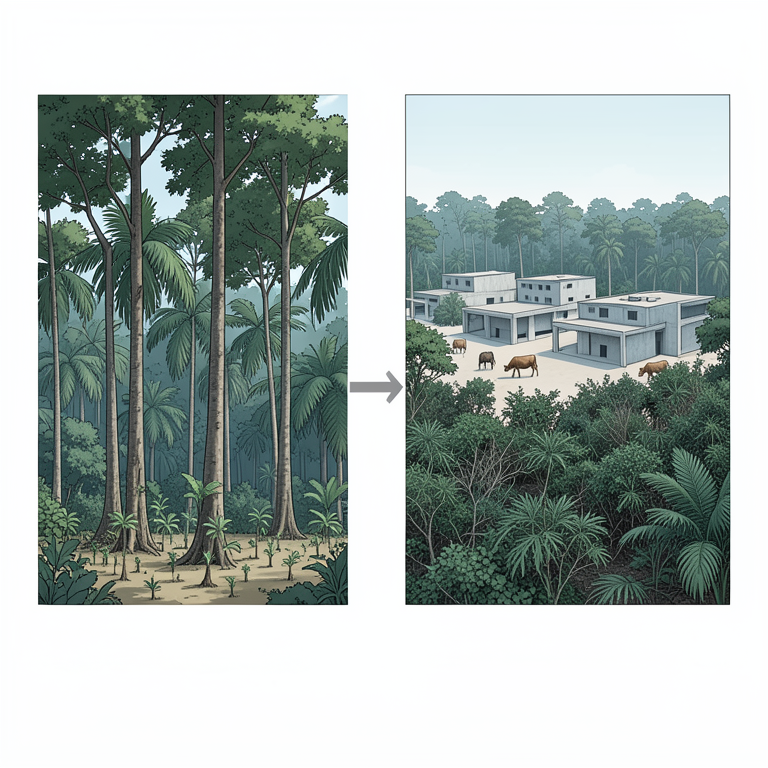
Threats to Sacred Grove Biodiversity
AI-generated conceptual illustration (Sacred grove forest in Jharkhand, India). It explains the idea and does not show study data.
View source evidence ↗Figures & tables
From the original paper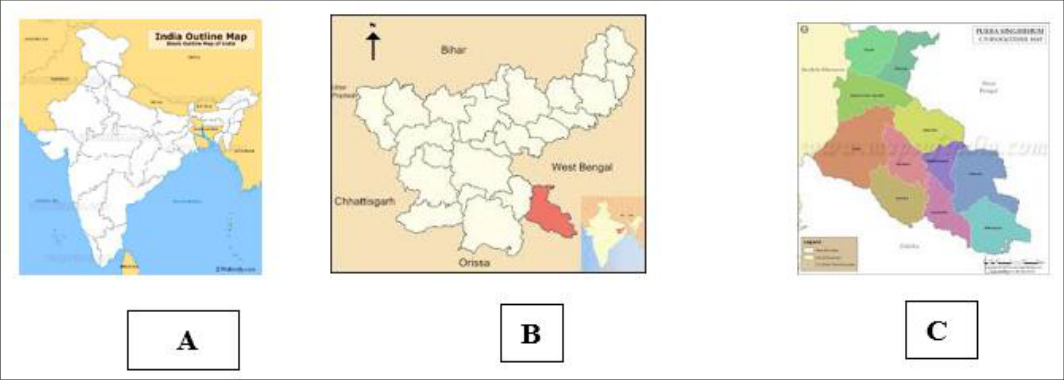 Figure 1
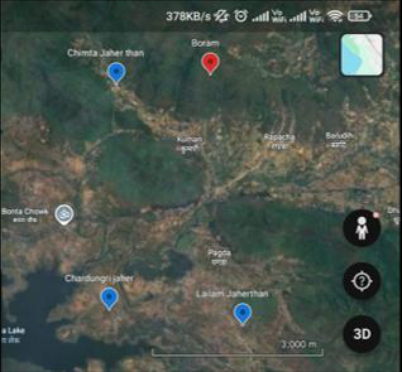 Figure 2
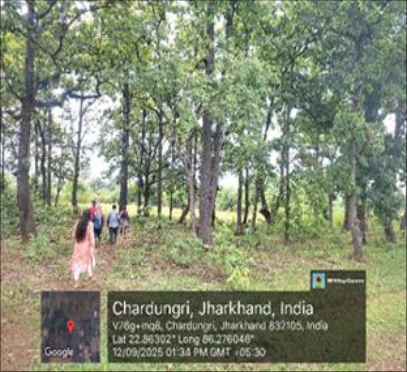 Figure 2
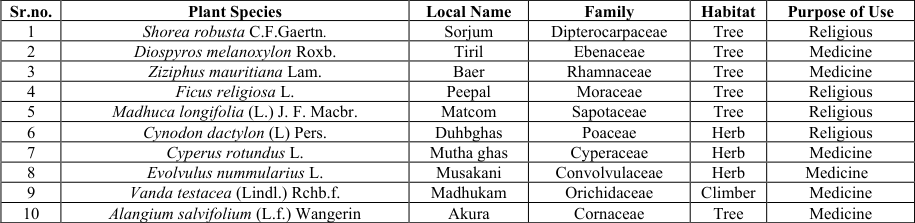 Table 1
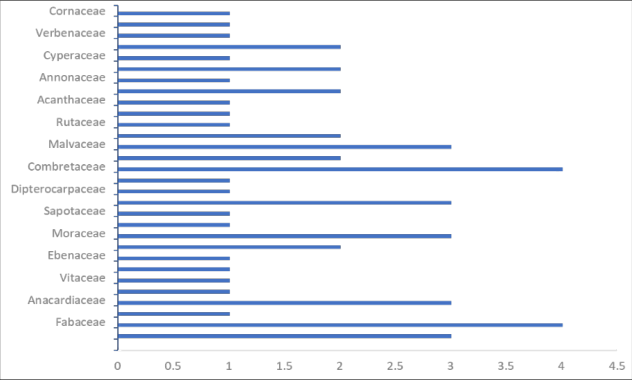 Figure 4
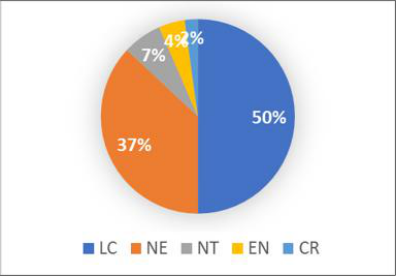 Figure 5
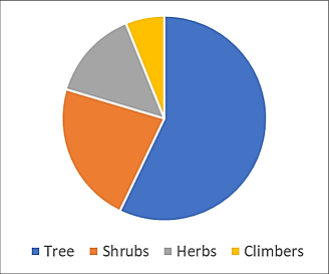 Figure 5
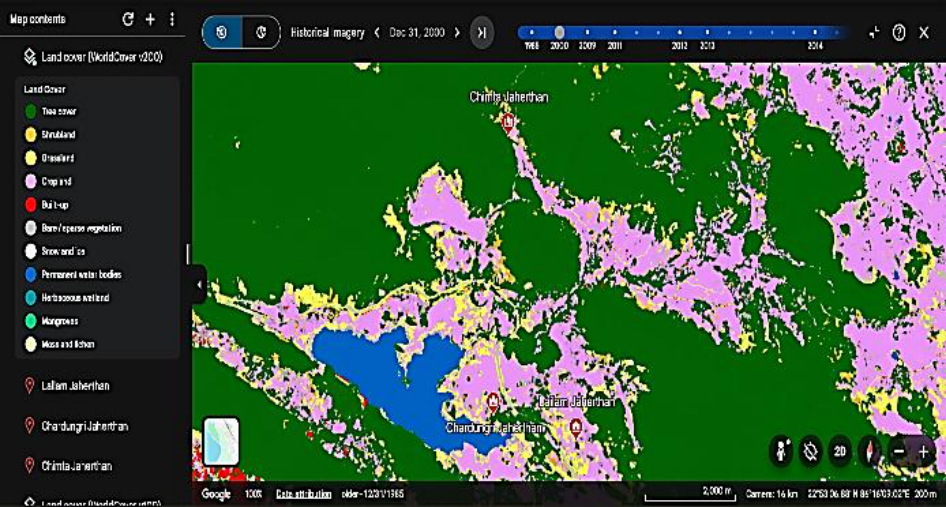 Figure 7
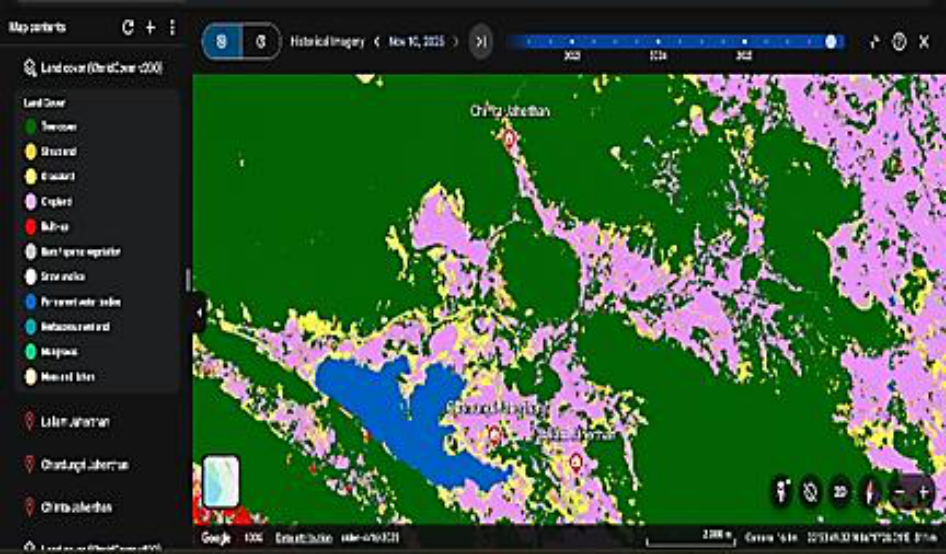 Figure 8
Introduction
Forest area is traditionally protected by the indigenous local communities for centuries as one of ancient tradition of nature conservation. Sacred grove is considered one of the prime tribal traditions which plays a key role in biodiversity conservation. Sacred grove is a small patch of forest area which is considered to be sacred site by different communities due to their culture, religious and ethnic belief existing in the grove. The groves are kept undisturbed condition to show the link between deity and nature [1] . Sacred groves are present globally in many countries like Asia, Africa, Australia and parts of South America having mythological landscape and cultural practices [2] . India, a mega diverse country which is rich in plant diversity. Each region hosts unique plant species adapted to local conditions which plays a crucial role in biodiversity conservation. Jharkhand is abundant in floristic diversity because of its past geological history [3] . Indigenous knowledge of plant species is the cultural legacy which has been carried out over generations [4] . 29 sacred groves have been documented in Jharkhand consisting of major plant species of Shorea robusta and Madhuca indica within the grove. The study of sacred grove is important as it maintains the ecological balance of the region [5] . Sacred groves of Purbi Singhbhum (East Singhbhum), Jharkhand are traditionally preserved forest patches that hold significant ecological and cultural value. Purbi Singhbhum district has an area of approximately 3,562 sq. km. within the Chota Nagpur Plateau. It is divided into two subdivisions; Dhalbhum and Ghatshila. The tribal population is roughly 28%-29% in the area. The major tribal communities include Santhal, Bhumij, Ho, Munda and Kharia. The Sacred groves are safeguarded by the different communities for their forest deity and locally named as Jaherthan. These sacred groves are considered to be refuge for rare, endangered, threatened and endemic species which remains untouched. The sacred grove is protected by different way like open sacred grove, concrete boundary, stone boundary or bamboo boundary. Vegetation analysis is an optimal approach in understanding the floristic diversity of the sacred grove that will provide a baseline to understand the long-term environmental changes. Sacred groves of East Singhbhum are associated with major plant species including trees, shrubs, herbs, climber which has its own ethnobotanical significance within the grove. Traditional knowledge and practices have continued to sustain the rich cultures and livelihoods of people living around forests [6] . Many sacred groves contain plants with medicinal properties which has traditional remedies and potentially contribute to modern medical research [7] . This research paper, is based on field survey in the Sacred groves of Boram block of Purbi Singhbhum district which is owned by the Bhumij tribal communities. The floristic diversity and information about each grove are studied by intense observation and interview by the local resident.
Materials and method
The study was carried out in the Boram block of Purbi Singhbhum (East Singhbhum) district of Jharkhand, India. The Boram block is located in the Dhalbhum subdivision, this block covers a geographical area of 283.75 km2. The block has deep roots in the tribal dominated Chota Nagpur Plateau, where tribal communities, including Santhal and Bhumij resides. A field survey in 2025-2026 was seasonally carried out in the sacred groves of the block to record the floristic diversity, tribal culture and vegetation analysis. The sacred groves were visited and the information was collected in the form of questionnaire from the community leader and the local villager. A total of 3 sacred grove was visited and documented. The groves are present in Chardungri, Chimta and Lialam village of Boram block, Purbi Singhbhum. For vegetation analysis, google earth tool was used to analyse the vegetation area of the sacred groves from present to past. Google Map was used to tag the geographical coordinates of the groves. Plant identification was done using the present published flora-Botany of Bihar and Orissa by H.H. Haines (1925). The IUCN status of each plant was noted. For quantitative study, quadrant study was done using quadrants of 10 m x 10m to spot the occurrence of different plant species including trees, shrubs, herbs and climbers. By this method the frequency and abundance of the plant species present inside the sacred groves were calculated. Ethnobotanical studies including cultural belief and significance of the sacred grove were documented. A semistructured questionnaire was created that documents all the information related to sacred grove, including general information, ethnobotanical information, conservation efforts and other details.
Result
The The taxonomical analysis showed that the grove is dominated by the tree species, followed by shrubs, herbs and climbers. Shorea robusta (Sal) is the dominant tree species present in the grove. Other tree species recorded are Madhuca longifera, Albizia lebbeck, Butea monosperma, Syzgium cumini, Semecarpus anacardium, Croton caudatus, Holarrhena pubescens, Terminalia anogeissiana, Terminalia alata, Ficus racemosa, Ficus religiosa, Bombax ceiba. The analysis also includes a list of plant species with its botanical name, local name, family, habitat, purpose of use and its status according to the International Union for Conservation of Nature (IUCN). According to IUCN status 2 endangered species, 2 that are near threatened, 1 species classified as critically endangered, 23 species of least concern, and other species that have not been assessed. The unevaluated species might be vulnerable.
The vegetative analysis indicated that the vegetation of the sacred grove has reduced at present. The sacred grove consists of many medicinal plants which is used in traditional remedies. About 45 plant species were recorded having ethnomedicinal properties are being used as medicine since ancient times. The Sacred groves of the block are owned by the Bhumij Tribal communities; they perform different rituals inside the grove. Haadi Bonga commonly known as Sarhul is the major ritual performed inside the sacred grove. They belief in the taboo of not touching or harming the plant species inside the sacred grove.
The field visit noted the construction work and other activities outside the grove that are leading to the destruction of the sacred grove. Conservation efforts and strategies are needed for the maintenance of the sacred grove which will lead to the conservation of the biodiversity.
Discussion
Sacred grove provides plant diversity which has high medicinal properties and are in extent to perished. The study indicates high concern for the preservation of the Sacred grove as it leads to biodiversity conservation. The sacred groves of Chardungri, Lailam and Chimta Jaherthan showed a high floristic diversity. The study noted majorly 32 plant species from Chardungri Jaherthan,15 plant species from Chimta and 18 plant species in Lailam Jaherthan which had a significant ethnobotanical property. Shorea robusta, Diospyros melanoxylon, Ziziphus mauritiana, Ficus religiosa, Madhuca longifolia are the common tree species found in all the three sacred groves. Cattle grazing was also one of the threats which degraded the area. The process of modernization is contributing to the decline of traditional knowledge concerning sacred groves and the significant ethnomedicinal properties of the plant species found within them.are leading to extinction of the native plant species.
Conclusion
Sacred groves are one of the prime customs which is responsible for biodiversity conservation. It provides in-situ conservation of different species. Sacred grove acts as gene pool for the different forest resources present which can be used for future. The study reveals a strong relationship between the Bhumij tribals of Jharkhand with their nature. Understanding the expanse of the area, plant diversity within the grove, cultural practices and rituals of the communities make the importance of conserving the sacred groves. The floristic diversity documentation will help to preserve the cultural heritage and the traditional knowledge associated with Sacred Grove and will be passed down to younger generation which will maintain the cultural continuity.
The ethnobotanical study offers an opportunity to gather new insights into plants that can be utilized for the benefit of humanity. It is also suggested that the overexploitation of plants for commercial purposes may lead to the destruction of some important species, which need to be conserved.
Acknowledgement
AcknowledgementWe would like to express deep gratitude to the village head, the leaders of the Bhumij tribal communities of Chardungri, Lialam and Chimta villages in Boram block, East Singhbhum, and the villagers for their support during our site visit. We also appreciate their assistance in identifying and understanding the socio-cultural significance of the plant species within the sacred grove.
Figures and tables from the paper
| Sr.no. | Plant Species | Local Name | Family | Habitat | Purpose of Use |
|---|---|---|---|---|---|
| 1 | Shorea robusta C.F.Gaertn. | Sorjum | Dipterocarpaceae | Tree | Religious |
| 2 | Diospyros melanoxylon Roxb. | Tiril | Ebenaceae | Tree | Medicine |
| 3 | Ziziphus mauritiana Lam. | Baer | Rhamnaceae | Tree | Medicine |
| 4 | Ficus religiosa L. | Peepal | Moraceae | Tree | Religious |
| 5 | Madhuca longifolia (L.) J. F. Macbr. | Matcom | Sapotaceae | Tree | Religious |
| 6 | Cynodon dactylon (L) Pers. | Duhbghas | Poaceae | Herb | Religious |
| 7 | Cyperus rotundus L. | Mutha ghas | Cyperaceae | Herb | Medicine |
| 8 | Evolvulus nummularius L. | Musakani | Convolvulaceae | Herb | Medicine |
| 9 | Vanda testacea (Lindl.) Rchb.f. | Madhukam | Orichidaceae | Climber | Medicine |
| 10 | Alangium salvifolium (L.f.) Wangerin | Akura | Cornaceae | Tree | Medicine |
Table text extracted from the original PDF; superscript letters are shown inline. The original table image is below.
View original table image
References
13 in the original paper- Manna S, Manna S, Ghora TK, Roy A. Sacred grove as remnant forest: A vegetation analysis. Biodiversitas. 2017;18(3):899-908.
- Gadgil M, Vartak VD. The sacred groves of Western Ghats in India. Economic Botany. 1976;30(2):152-160.
- Kumar R, Saikia P. Floristic analysis and dominance pattern of Shorea robusta forests in Ranchi, Jharkhand, eastern India. Journal of Forestry Research. 2020;31(2):415-427.
- Kumar R. Indigenous knowledge of medicinal practices among the tribal peoples of Jharkhand, India. Roots International Journal of Multidisciplinary Researches. 2022;9(2):28-36.
- Kujur RS, Munda SS, Kumar A, Rathna V, Lall RR. Sacred grove: A reservoir of plant diversity and conservation. In: Tree Biology and Biotechnology. Singapore: Springer Nature Singapore; 2025. p. 133-144.
- Majumder A. Ethno-medical practices among the Bhumij of Jharkhand, India. BAOJ Medical Nursing. 2017;3(1):1-5.
- Kumar S. Use of traditional knowledge in sustainable forest management and provisioning of ecosystem services in Jharkhand, India. 2022.
- Alam S, Kumari M. Tribal heritage conservation in Jharkhand from an anthropological viewpoint. Indian Journal of Social Research. 2017;58:913-924.
- Singh AK, Pandey SK. An analytical study of ethnomedicinal and sacred plants of Jharkhand. International Journal of Current Microbiology and Applied Sciences. 2019;8(2):1837-1841.
- Sivakumar KP, Nair AS, Jaya DS. Indigenous reverence for environment: A review on sacred groves in India. In: Proceedings of the International Conference on Indigenous Initiatives for Environment and Development; 2014 Jun. p. 28-29.
- Malhotra KC, Gokhale Y, Chatterjee S, Srivastava S. Cultural and ecological dimensions of sacred groves in India. New Delhi: INSA; 2001. p. 1-30.
- Vipat A, Bharucha E. Sacred groves: The consequence of traditional management. Journal of Anthropology. 2014;2014:595314.
- Haines HH. The Botany of Bihar and Orissa. Vol. 1-3. London; 1921-1925.