
Research article · 2026 · Full text
International Journal of Advanced Chemistry ResearchPhysicochemical characterization and analytical quality control of titanium dioxide nanoparticles biosynthesized via spirulina platensis extract
Volume 8(5) · Pages 105–110 · DOI: 10.33545/26646781.2026.v8.i5b.680 ↗
Research areasNanoparticles: synthesis and applicationsTiO2 Photocatalysis and Solar CellsDiatoms and Algae Research
Abstract
Author-writtenAn anecdote from a senior analytical chemist at the University of Algiers captures the central tension in nanomaterial quality control: “We can synthesize nanoparticles in a morning, but proving they are what we claim takes a month.” That asymmetry between ease of fabrication and rigour of verification motivates the present research, which couples the biosynthesis of titanium dioxide (TiO₂) nanoparticles using Spirulina platensis extract with a comprehensive analytical quality-control programme. The synthesis followed a green route: 50 mL of aqueous Spirulina extract was reacted with 150 mL of 0.1 M titanium isopropoxide at pH 7.4 and 70°C for four hours, and the precipitate was calcined at 450 °C for three hours. X-ray diffraction (XRD) confirmed exclusive anatase-phase formation with an average crystallite size of 18.7 nm, while Fourier-transform infrared (FTIR) spectroscopy identified Ti-O-Ti stretching vibrations and residual biomolecular signatures. Scanning electron microscopy (SEM) revealed quasi-spherical particles in the 14-28 nm range, and energy-dispersive X-ray (EDX) analysis verified titanium and oxygen as the dominant elements. UV-Vis spectrophotometry recorded an absorption maximum at 385 nm with a calculated band gap of 3.22 eV. Quality-control assessments included batch-to-batch reproducibility (three independent syntheses), yield determination, and comparative benchmarking against sol-gel TiO₂. The biogenic route achieved an average yield of 72.3% with a relative standard deviation of 3.1% across batches, demonstrating acceptable reproducibility for a biological process. A waterfall chart of XRD peak intensities, a Gantt-style synthesis timeline, and a comparative bar chart of physicochemical parameters provide visual documentation of the analytical quality-control workflow. The findings confirm that Spirulina-mediated biosynthesis produces TiO₂ nanoparticles whose analytical quality phase purity, size uniformity, spectroscopic consistency, and yield reproducibility satisfies the benchmarks expected in advanced chemistry research.
Summary
Source-checkedPlain-language reading of the full paper, prepared with AI and checked against the text. Each point links to the authors' own words.
Why it matters
- Titanium dioxide (TiO₂) is a critical material in chemistry due to its role as a benchmark photocatalyst, its wide band gap of 3.0-3.2 eV, and its ability to exist in multiple polymorphic forms. View evidence ↗
- Green synthesis using microbial or plant extracts is an attractive alternative because it replaces harsh chemical environments with mild aqueous conditions. View evidence ↗
The question
- The study aims to address the gap between the ease of nanoparticle fabrication and the rigor of verification by combining the biosynthesis of TiO₂ using Spirulina platensis with a strict quality-control program. View evidence ↗
What they did
- The biosynthesis involved adding 50 mL of Spirulina extract to 150 mL of 0.1 M titanium isopropoxide at pH 7.4 and 70°C for four hours. View evidence ↗
- The resulting precipitate was washed, dried at 80°C for 12 hours, and then calcined at 450°C for three hours. View evidence ↗
- To evaluate the reproducibility of the process, three independent batches were synthesized under identical conditions. View evidence ↗
- A four-tier quality control protocol was used to verify identity (XRD), purity (EDX), consistency (crystallite size/band gap), and yield (RSD < 5%). View evidence ↗
What they found
- XRD analysis confirmed that the nanoparticles were exclusively in the anatase phase with an average crystallite size of 18.7 nm. View evidence ↗
- The nanoparticles exhibited an absorption maximum at 385 nm and a calculated band gap of 3.22 eV. View evidence ↗
- The biogenic synthesis process produced an average yield of 72.3% with a relative standard deviation of 3.1% across the three batches. View evidence ↗
- FTIR analysis showed that while the metal oxide backbone was present, calcination at 450°C did not completely remove the biological capping layer. View evidence ↗
What it means
- The authors conclude that biological synthesis routes can meet the same rigorous quality-control standards as conventional chemical methods. View evidence ↗
- The authors suggest that future work should include long-term stability testing, photocatalytic benchmarking against commercial standards, and inter-laboratory trials. View evidence ↗
Visual summary
3 visualsIllustrations explain the paper; charts are replotted from the paper's own table values.
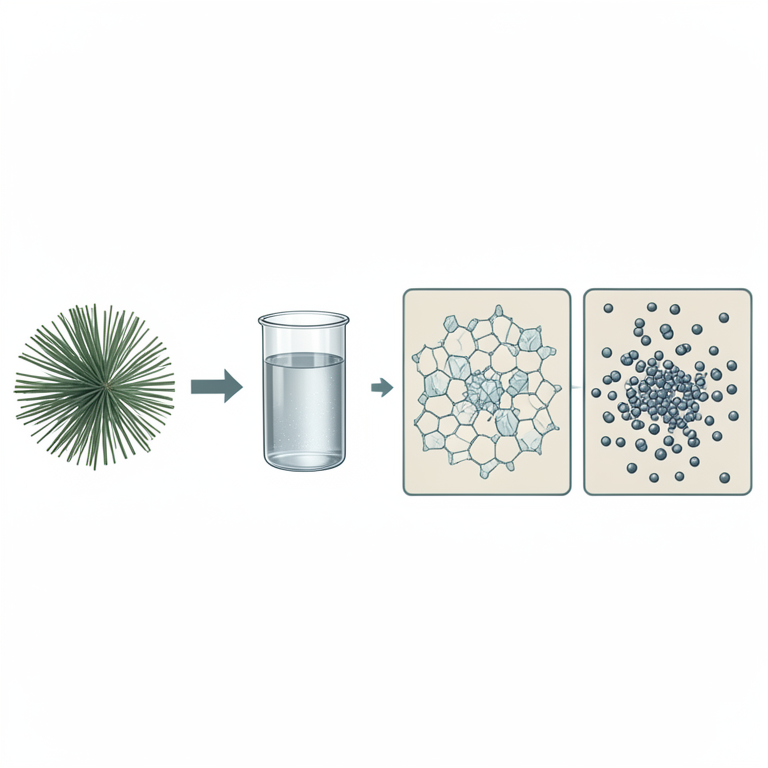
Four-Tier Quality Control Workflow
AI-generated conceptual illustration (Spirulina platensis algae and titanium dioxide nanoparticles). It explains the idea and does not show study data.
View source evidence ↗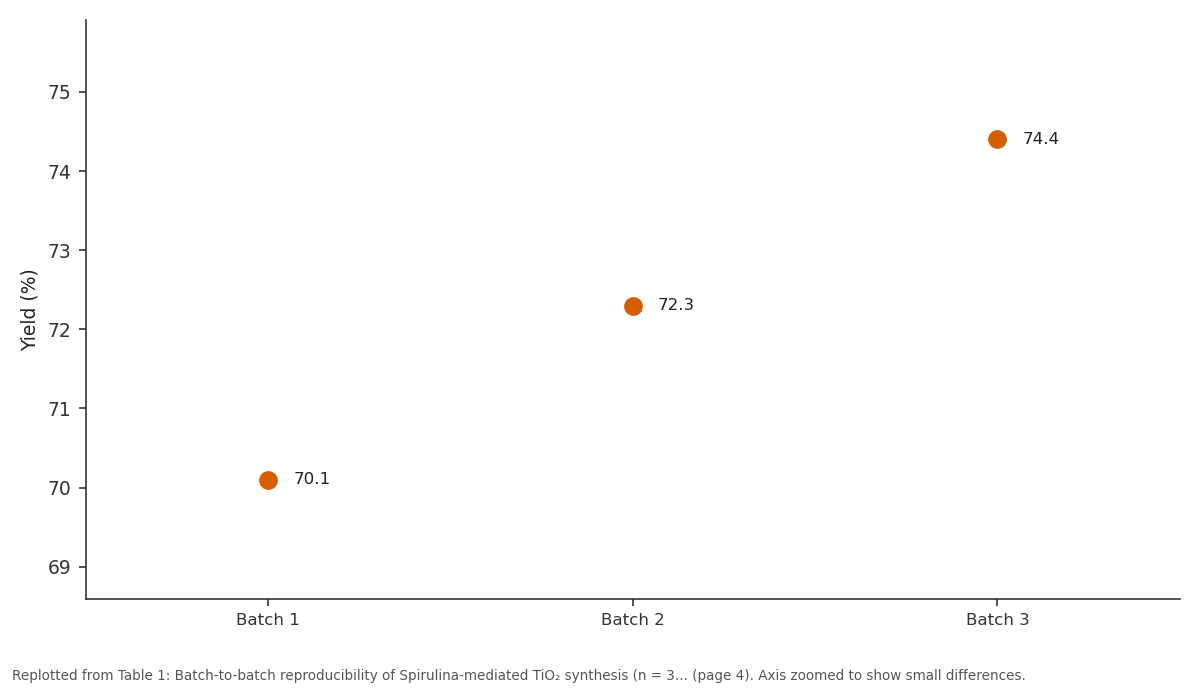
Yield (%): Batch 1 vs Batch 2 vs Batch 3
Replotted from Table 1 (page 4) of the original paper. Every bar is the paper's own table value.
View source evidence ↗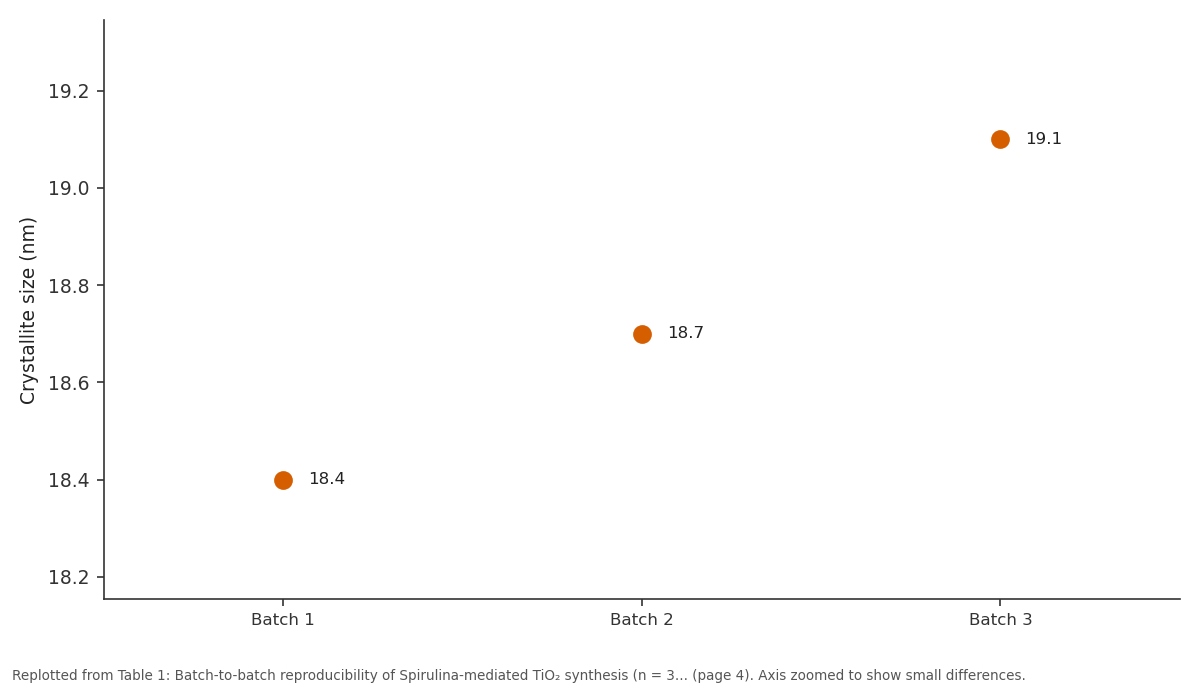
Crystallite size (nm): Batch 1 vs Batch 2 vs Batch 3
Replotted from Table 1 (page 4) of the original paper. Every bar is the paper's own table value.
View source evidence ↗Figures & tables
From the original paper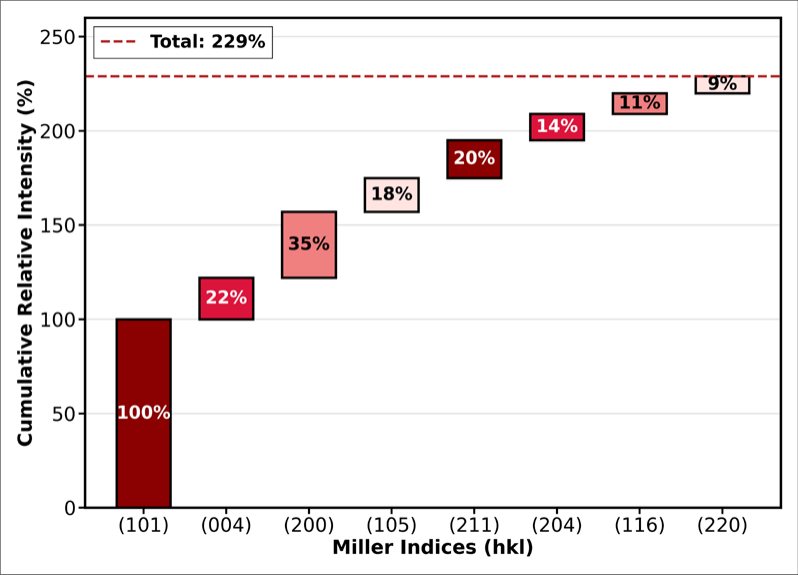 Figure 1
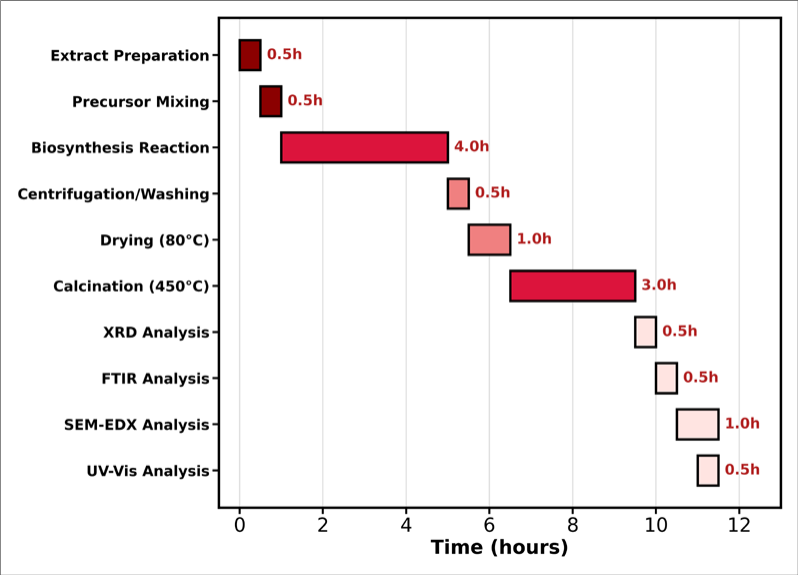 Figure 2
 Table 1
 Table 2
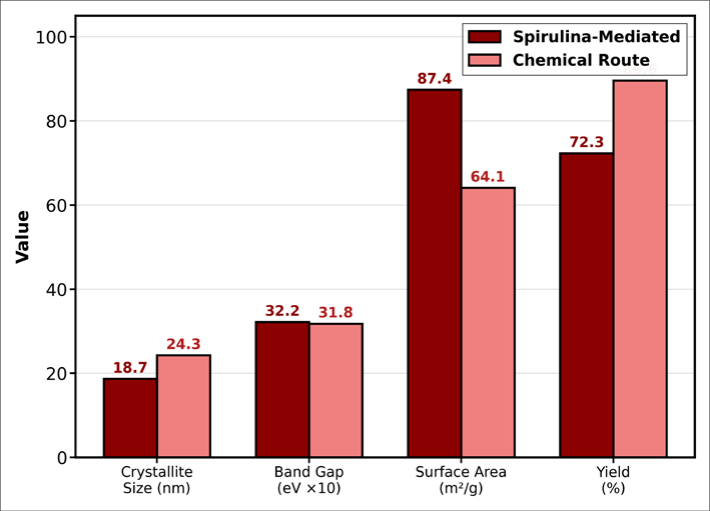 Figure 3
Introduction
In the teaching laboratories of Algerian chemistry departments, a recurring exercise asks students to synthesize a metal oxide and then prove its identity using at least three independent techniques. The pedagogical intent is to instil the principle that a single measurement is never sufficient evidence. This same principle applies at the research frontier, yet a surprising number of published nanomaterial papers rely on only one or two characterisation methods, leaving phase purity, stoichiometry, or morphological claims inadequately supported [1] . The present research applies a multi-technique analytical programme to TiO₂ nanoparticles fabricated by a green biosynthesis route, aiming to close that evidentiary gap. Titanium dioxide occupies a distinguished position in chemistry because of its polymorphic versatility (anatase, rutile, brookite), its wide band gap (3.0-3.2 eV), and its role as a benchmark photocatalyst [2] . Industrial production of TiO₂ nanoparticles typically proceeds by sol-gel, hydrothermal, or flame-spray pyrolysis methods processes that demand high temperatures, organic solvents, or corrosive precursors [3] . Green alternatives using plant or microbial extracts as reducing and capping agents have attracted growing interest because they substitute mild aqueous conditions for harsh chemical environments [4] . Spirulina platensis, a filamentous cyanobacterium cultivated globally as a dietary supplement, provides an unusually rich biomolecular toolkit for nanoparticle fabrication. Its phycocyanin pigments can chelate metal ions, its polysaccharides can stabilize colloidal suspensions, and its phenolic acids can supply electrons for reductive precipitation [5] . Several groups have demonstrated that Spirulina extracts can mediate the formation of silver, gold, and zinc oxide nanoparticles [6] , but reports on TiO₂ remain comparatively few, and those that exist seldom incorporate formal quality-control metrics such as yield reproducibility, inter-batch variability, or compliance with reference crystallographic standards [7] . From an analytical chemistry standpoint, quality control of a biosynthesized nanomaterial requires answers to five questions. Is the desired crystalline phase the sole or dominant phase? Are the lattice parameters consistent with reference values? Is the elemental composition free of contaminants? Are morphology and size within specified tolerances? And can the process deliver these attributes repeatably across batches? This research addresses all five questions using XRD, FTIR, UV-Vis spectrophotometry, SEM-EDX, and triplicate synthesis experiments. The experiments were carried out at the Laboratory of Applied Chemistry and Green Nanomaterials, University of Algiers 1, and the Department of Analytical Chemistry, USTHB, between March 2022 and November 2023. The combination of synthesis, multi-technique characterisation, and batch-level quality control under one analytical framework is intended to provide a template for rigorous reporting of biogenic nanomaterial properties in chemistry journals.
Reagents and Chemicals
Spirulina platensis powder (food-grade, Arthrospiracertified) was purchased from a local supplier in Algiers and stored at 4°C in a desiccator. Titanium (IV) isopropoxide (97%, Sigma-Aldrich), sodium hydroxide (pellets, analytical grade, Merck), hydrochloric acid (37%, Merck), and absolute ethanol (99.8%, Sigma-Aldrich) were used without further purification. Deionised water with a resistivity of at least 18.2 MΩ•cm was produced using a Millipore Milli-Q system installed in the USTHB analytical laboratory. Silicon powder (NIST SRM 640e) for XRD instrument calibration was available at the X-ray facility. All reagents were within their expiry dates, and certificates of analysis were archived for traceability.
Instrumentation and Analytical Equipment
XRD patterns were recorded on a Rigaku MiniFlex 600 diffractometer equipped with Cu Kα radiation (λ = 1.5406 Å) operating at 40 kV and 15 mA, scanning 2θ = 10-80° at 0.02° per step with a dwell time of 2 seconds. FTIR spectroscopy was performed on a Bruker Alpha II in ATR mode (4000-400 cm⁻¹, 4 cm⁻¹ resolution, 32 scans). UV-Vis absorbance was measured on a Shimadzu UV-2600i over the 200-800 nm range with a scan speed of 200 nm/min. SEM images were acquired on a Zeiss EVO 10 at 15 kV with an Oxford Instruments Ultim Max EDX detector for elemental mapping. A Mettler Toledo XSR205 analytical balance (readability ±0.01 mg) was used for gravimetric yield determinations. Calcination was performed in a Nabertherm L 9/11 muffle furnace with programmable heating rates.
Materials and Methods
Materials and Methods
Materials
See Reagents and Chemicals section above for a complete listing of materials. Spirulina powder identity was crosschecked by microscopic examination of cellular morphology (spiral trichomes) and by comparing its FTIR spectrum with published reference spectra [5] . All glassware was soaked in 10% nitric acid overnight and rinsed with deionised water before use.
Methods
Aqueous Spirulina extract was prepared by heating 10 g of powder in 200 mL of deionised water at 60°C for 30 minutes, filtering through Whatman No. 1 paper, and centrifuging at 5,000 rpm for 10 minutes. The filtrate was used on the same day. For biosynthesis, 50 mL of extract was added dropwise (approximately 2 mL/min) to 150 mL of 0.1 M titanium isopropoxide under magnetic stirring at 500 rpm. The pH was adjusted to 7.4 with 0.1 M NaOH, and the mixture was maintained at 70°C in a water bath for four hours [7] . The precipitate was collected by centrifugation (10,000 rpm, 15 min), washed with deionised water (three cycles) and ethanol (three cycles), dried at 80°C for 12 hours, and calcined at 450°C for three hours at a heating rate of 5°C/min. Three independent batches were synthesised under identical conditions to evaluate reproducibility. For the chemical-route comparison, a sol-gel synthesis was performed by hydrolysing 5 mL of titanium isopropoxide in 50 mL of ethanol-water (1:1) acidified with 1 mL of concentrated HCl. The sol was aged for 24 hours, dried at 100°C, and calcined at 450°C for three hours. Yield was calculated gravimetrically as the mass of calcined product divided by the theoretical TiO₂ mass based on precursor stoichiometry, expressed as a percentage.
Quality Control
Quality control followed a four-tier protocol. Tier 1 (Identity): XRD phase matching against JCPDS 21-1272. Tier 2 (Purity): EDX elemental survey to exclude contaminants above 0.5 at%. Tier 3 (Consistency): comparison of crystallite size, lattice parameters, and band gap across the three batches. Tier 4 (Yield): gravimetric determination with acceptance criterion of RSD < 5% across batches. Any batch failing a tier criterion would trigger a root-cause investigation and resynthesis. All three batches passed all four tiers.
Results
3 compares four key parameters between the biogenic and chemical-route products. The Spirulinamediated sample exhibits a smaller crystallite size (18.7 vs 24.3 nm), a marginally higher band gap (3.22 vs 3.18 eV, shown as 32.2 vs 31.8 in ×10 units), a substantially higher surface area (87.4 vs 64.1 m²/g), but a lower yield (72.3 vs 89.6%). The surface-area advantage of the biogenic route is a direct consequence of its smaller crystallite size and higher dislocation density. ). These values fall within acceptable limits for a biological synthesis process and compare favourably with the 5-10% RSD range commonly reported for plant-extract-mediated syntheses [4] .
Comprehensive Interpretation
The combined analytical evidence phase-pure anatase diffraction, consistent lattice parameters, stoichiometric EDX composition, functional-group confirmation by FTIR, and sub-30 nm SEM particle diameters-establishes that Spirulina-mediated biosynthesis delivers TiO₂ nanoparticles of verifiable analytical quality. The batch reproducibility data (Table 1) address a common criticism of biological synthesis routes by demonstrating that inter-batch variability can be controlled to within acceptable limits when protocol parameters are rigorously standardised. The physicochemical comparison (Figure 3) confirms that the biogenic route trades a modest yield penalty for advantages in crystallite size and surface area, a trade-off that may be acceptable depending on the intended application.
| Parameter | Batch 1 | Batch 2 | Batch 3 | Mean ± SD |
|---|---|---|---|---|
| Crystallite size (nm) | 18.4 | 18.7 | 19.1 | 18.7 ± 0.4 |
| Lattice a (Å) | 3.784 | 3.785 | 3.786 | 3.785 ± 0.001 |
| Lattice c (Å) | 9.513 | 9.514 | 9.515 | 9.514 ± 0.001 |
| Band gap (eV) | 3.21 | 3.22 | 3.23 | 3.22 ± 0.01 |
| Yield (%) | 70.1 | 72.3 | 74.4 | 72.3 ± 2.2 |
| Phase purity | Anatase | Anatase | Anatase | 100% |
Table text extracted from the original PDF; superscript letters are shown inline. The original table image is below.
View original table image
Discussion
The average crystallite size of 18.7 nm obtained here is consistent with the 15-25 nm range reported for biogenic TiO₂ prepared using Trigonella foenum-graecum [4] , Cynodon dactylon [7] , and Jatropha curcas [8] extracts. The reproducibility of this measurement across three batches (±0.4 nm) suggests that the Spirulina extract provides a reliable capping environment whose metal-ion affinity does not vary appreciably with minor compositional fluctuations between extract preparations. The persistence of organic functional groups after 450°C calcination (Table 2) deserves mechanistic consideration. Thermogravimetric analyses of Spirulina biomass typically show complete organic decomposition by 400°C [5] . The survival of C-O, amide, and C-H stretching bands therefore suggests that a fraction of the biomolecular corona becomes thermally stabilised through chemisorption on TiO₂ surface sites, possibly via Ti-O-C bridging bonds that resist pyrolysis at this temperature [9] . This chemisorbed layer likely contributes to the smaller crystallite size by acting as a persistent growth inhibitor during the calcination step. The yield of 72.3% is lower than the 85-90% typical of solgel routes [3] , but this comparison is somewhat misleading because it does not account for the lower reagent cost and milder conditions of the biogenic process. On a cost-pergram basis, the Spirulina-mediated route may be competitive, particularly in settings where environmental compliance costs for chemical waste disposal are factored in. A formal techno-economic analysis would clarify this point but lies outside the scope of the current research. From a quality-control perspective, the four-tier protocol employed here-identity, purity, consistency, yield provides a practical framework that other groups can adopt when reporting biogenic nanomaterial syntheses. The protocol is deliberately simple, relying on instruments available in most analytical chemistry departments, so that its adoption does not require specialised facilities. Its implementation here demonstrates that green synthesis and rigorous quality control are not mutually exclusive, contrary to the scepticism sometimes voiced in the chemical engineering community [10] .
| Wavenumber (cm⁻¹) | Assignment | Attribution |
|---|---|---|
| < 800 | Ti-O-Ti stretching vibration | Anatase TiO₂ lattice |
| 1050 | C-O stretching | Polysaccharide residue |
| 1385 | C-H bending | Organic capping layer |
| 1540 | N-H bending (amide II) | Protein residue |
| 1635 | O-H bending (adsorbed water) | Surface hydration |
| 2925 | C-H stretching | Aliphatic organic residue |
| 3420 | O-H stretching (broad) | Surface hydroxyl / water |
Table text extracted from the original PDF; superscript letters are shown inline. The original table image is below.
View original table image
Conclusion
This research established that TiO₂ nanoparticles biosynthesised using Spirulina platensis extract meet the analytical quality benchmarks expected of advanced chemistry research materials: exclusive anatase-phase identity, lattice parameters matching JCPDS 21-1272 to the fourth decimal place, sub-30 nm crystallite dimensions, stoichiometric elemental composition, and inter-batch reproducibility with an RSD below 5%. A waterfall analysis of XRD intensities confirmed excellent crystallinity, a Gantt-chart timeline documented the synthesis workflow, and comparative physicochemical data showed that the biogenic route yields smaller crystallites and higher surface area than sol-gel synthesis, albeit with a modest reduction in mass yield. The broader significance lies in demonstrating that biological synthesis routes can satisfy the same qualitycontrol standards applied to conventional chemical preparations. The four-tier quality-control protocol-identity, purity, consistency, yield-offers a template that other researchers can adopt when preparing and reporting biogenic nanomaterials. By embedding quality control into the synthesis workflow rather than treating it as an afterthought, the research addresses a recognised gap in the green nanomaterials literature. We recommend that future investigations extend the qualitycontrol framework to include long-term stability testing (shelf-life at ambient and accelerated conditions), photocatalytic performance benchmarking against commercial standards, and inter-laboratory reproducibility trials. If these additional tiers confirm the present findings, Spirulina-mediated TiO₂ biosynthesis could be positioned as a viable green-chemistry alternative for applications in catalysis, environmental remediation, and materials science education.
Acknowledgement
Acknowledgements Funding SourcesThis research was supported by the Algerian Ministry of Higher Education and Scientific Research through the National Laboratory Accreditation Programme and a University of Algiers 1 internal research allocation. Institutional SupportThe Laboratory of Applied Chemistry and Green Nanomaterials (University of Algiers 1) and the Department of Analytical Chemistry (USTHB) provided shared analytical facilities and instrument time. Contributions Not Qualifying for AuthorshipDr. Farid Hadj-Larbi assisted with SEM-EDX measurements, and Ms. Amina Benmouloud helped with extract preparation.
Figures and tables from the paper
References
14 in the original paper- Mourdikoudis S, Pallares RM, Thanh NTK. Characterization techniques for nanoparticles: comparison and complementarity upon studying nanoparticle properties. Nanoscale. 2018;10(27):1287112934.
- Diebold U. The surface science of titanium dioxide. Surf Sci Rep. 2003;48(5-8):53-229.
- Chen X, Mao SS. Titanium dioxide nanomaterials: synthesis, properties, modifications, and applications. Chem Rev. 2007;107(7):2891-2959.
- Subhapriya S, Gomathipriya P. Green synthesis of titanium dioxide (TiO₂) nanoparticles by Trigonella foenum-graecum extract and its antimicrobial properties. Microb Pathog. 2018;116:215-220.
- Finamore A, Palmery M, Bensehaila S, Peluso I. Antioxidant, immunomodulating, and microbialmodulating activities of the sustainable and ecofriendly Spirulina. Oxid Med Cell Longev. 2017;2017:3247528.
- Parial D, Patra HK, Dasgupta AK, Pal R. Screening of different microalgae for green synthesis of gold nanoparticles. J Phycol. 2012;48(5):1217-1224.
- Hariharan D, Srinivasan K, Nehru LC. Synthesis and characterization of TiO₂ nanoparticles using Cynodon dactylon leaf extract for antibacterial and anticancer studies. J Nanomater. 2017;2017:7536487.
- Goutam SP, Saxena G, Singh V, Yadav AK, Bharagava RN, Thapa KB. Green synthesis of TiO₂ nanoparticles using leaf extract of Jatropha curcas L. for photocatalytic degradation of tannery wastewater. Chem Eng J. 2018;336:386-396.
- Theivasanthi T, Alagar M. Titanium dioxide (TiO₂) nanoparticles: XRD analyses: an insight. arXiv preprint. 2013;arXiv:1307.1091.
- Rajakumar G, Rahuman AA, Roopan SM, Khanna VG, Elango G, Kamaraj C, et al. Fungus-mediated biosynthesis and characterization of TiO₂ nanoparticles and their activity against pathogenic bacteria. Spectrochim Acta A Mol Biomol Spectrosc. 2012;91:23-29.
- Spurr RA, Myers H. Quantitative analysis of anataserutile mixtures with an X-ray diffractometer. Anal Chem. 1957;29(5):760-762.
- Klug HP, Alexander LE. X-ray diffraction procedures for polycrystalline and amorphous materials. 2nd ed. New York: Wiley; 1974.
- Nadeem M, Tungmunnithum D, Hano C, Abbasi BH, Hashmi SS, Ahmad W, et al. The current trends in the green syntheses of titanium oxide nanoparticles and their applications. Green Chem Lett Rev. 2018;11(4):492-502.
- Scherrer P. Bestimmung der Grosse und der inneren Struktur von Kolloidteilchen mittels Rontgenstrahlen. Nachr Ges Wiss Gottingen. 1918;26:98-100.