
Research article · 2026 · Full text
International Journal of Geography Geology and EnvironmentStatus and development of educational infrastructure in rural primary schools of West Bengal
Volume 8(5) · Pages 130–136 · DOI: 10.22271/27067483.2026.v8.i5b.777 ↗
Research areasEducation in Rural ContextsEducation in Diverse ContextsEducational Environments and Student Outcomes
Abstract
Author-writtenGeographic disparities and imbalanced development significantly impact the inclusive growth of education. The accessibility of school infrastructure is a key factor in the enhancement of the quality of education. This study aims to explore the changing trends, patterns and level of development of Primary School infrastructure facilities from 2012 to 2021 in Rural West Bengal. The infrastructure facilities data of rural primary schools (I-V) were collected from the Unified District Information System for Education (UDISE) plus report for the years 2011-12 and 2021-2022. A composite index has been used to quantify the level of school infrastructure development. The concentration level of various facilities was measured using the Location Quotient method in this study. This study reveals that the northern part of West Bengal has a low level of school infrastructure. In contrast, the southern part of West Bengal belongs to a high level of school infrastructure, except for South 24 Parganas. Almost all districts have drinking water facilities, as well as separate restrooms for boys and girls. However, all rural primary schools have low levels of newspaper, hand washing, water purifiers, medical check-ups, and computer facilities. The government should provide more funding to build new schools and educational facilities. This study will assist policymakers and other stakeholders in formulating policies and developing educational infrastructure.
Summary
Source-checkedPlain-language reading of the full paper, prepared with AI and checked against the text. Each point links to the authors' own words.
Why it matters
- The accessibility of school infrastructure is considered a critical factor for improving the overall quality of education. View evidence ↗
- Imbalances in how educational facilities are accessed can lead to significant gaps in educational standards. View evidence ↗
- Many rural primary schools in India fail to meet average quality standards, often lacking sufficient facilities and proper shelter. View evidence ↗
The question
- The study aims to investigate the trends, patterns, and development levels of primary school infrastructure in rural West Bengal between 2012 and 2021. View evidence ↗
What they did
- Academic performance data for students was obtained from the 2021 National Achievement Survey (NAS). View evidence ↗
- The researchers used 14 key indicators, including electricity, playgrounds, libraries, toilets, drinking water, and computer availability, to assess infrastructure. View evidence ↗
- A composite index ranging from 0 to 1 was developed using multiple parameters to quantify the level of school infrastructure development. View evidence ↗
What they found
- By 2021-2022, electricity was available in all rural primary schools in Nadia and Purba Medinipur, but only in 71.29% of schools in Darjeeling. View evidence ↗
- In 2021-2022, playground availability varied significantly, with Cooch Behar at 100% and Puruliya at the lowest rate of 43.32%. View evidence ↗
- Newspaper facilities were generally low across all rural areas, peaking at 8.94% in Uttar Dinajpur and dropping to 0.5% in Darjeeling by 2021-2022. View evidence ↗
- By 2021-2022, fully functional drinking water systems were present in every rural primary school district except Darjeeling, where the rate was 79.40%. View evidence ↗
- Computer access remains very low in most rural schools, with only 12.38% in Uttar Dinajpur and as low as 0.41% in Cooch Bihar in 2021-2022. View evidence ↗
- The School Infrastructure Index (SII) in 2021 showed Howrah as the highest (0.76) and Darjeeling as the lowest (0.19). View evidence ↗
- There is a regional disparity where northern West Bengal has low school infrastructure, while southern West Bengal generally has higher levels, with the exception of South 24 Parganas. View evidence ↗
What it means
- The authors recommend that the government increase funding for the construction of new schools and educational facilities. View evidence ↗
- The authors conclude that resource allocation and development strategies, particularly in North Bengal, need extensive evaluation to ensure equitable educational opportunities. View evidence ↗
Visual summary
2 visualsIllustrations explain the paper; charts are replotted from the paper's own table values.
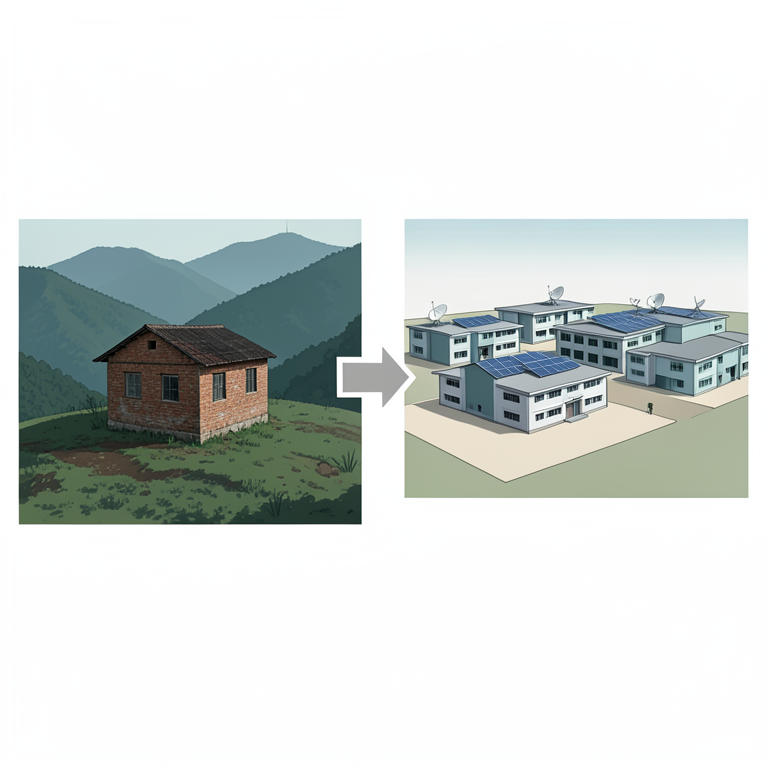
Regional Infrastructure Disparity
AI-generated conceptual illustration (Rural primary schools in West Bengal). It explains the idea and does not show study data.
View source evidence ↗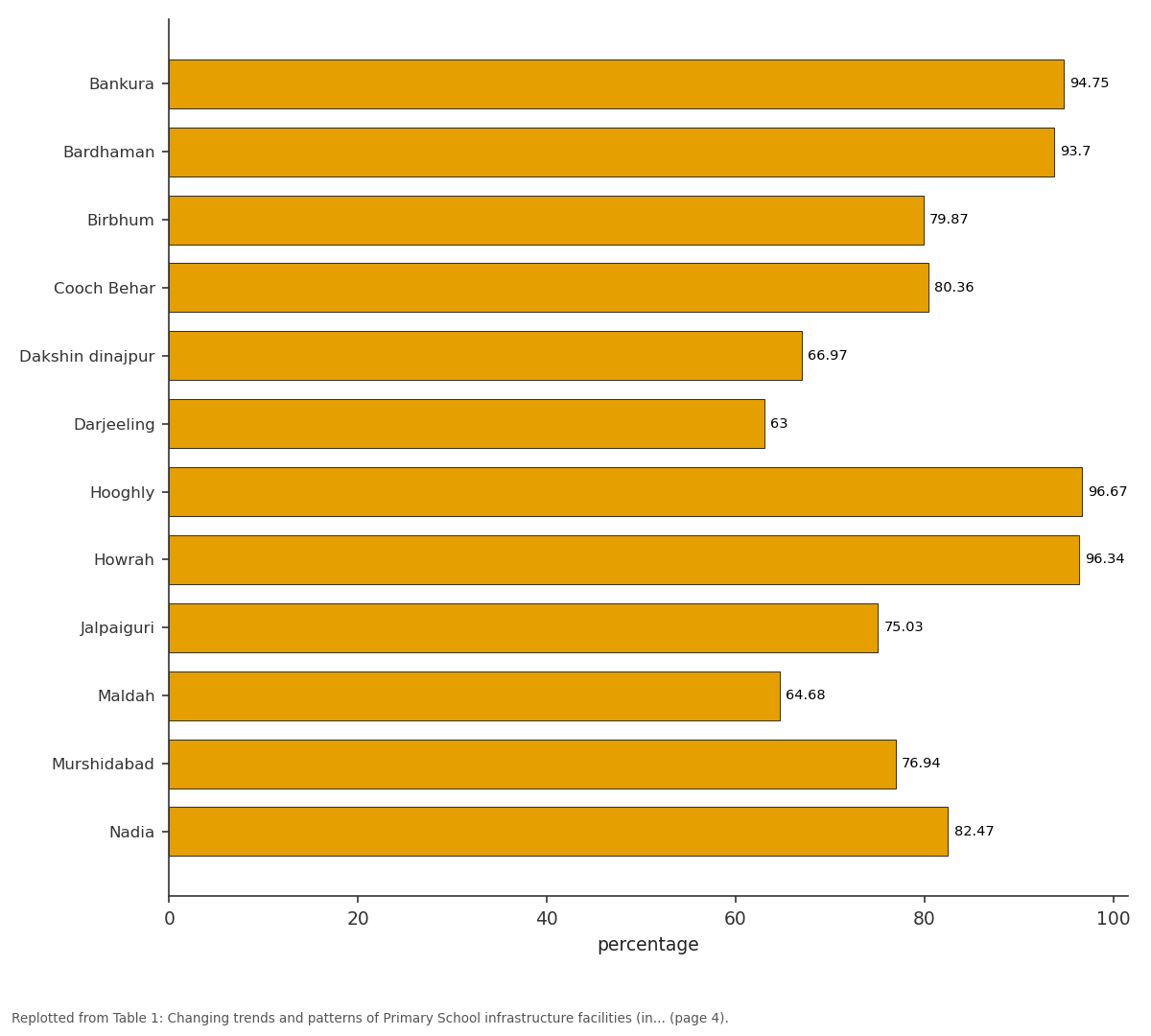
Medical Check up / 2021- 2022: Bankura vs Bardhaman vs Birbhum vs Cooch Behar vs Dakshin dinajpur
Replotted from Table 1 (page 4) of the original paper. Every bar is the paper's own table value.
View source evidence ↗Figures & tables
From the original paper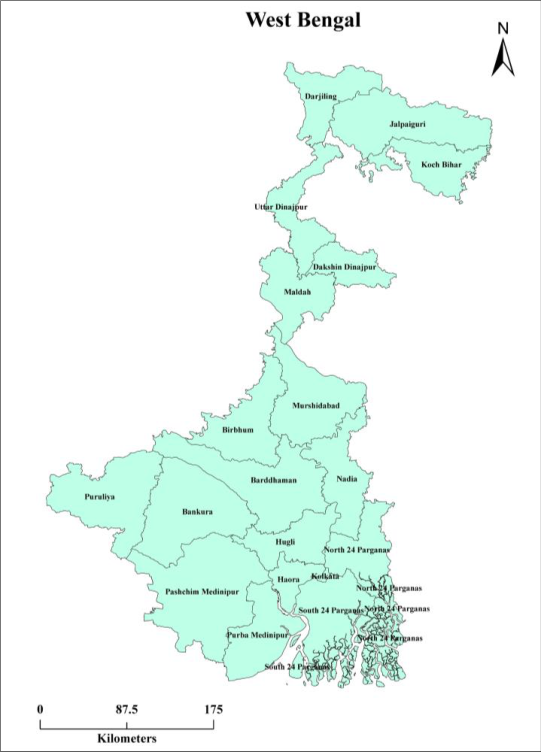 Figure 1
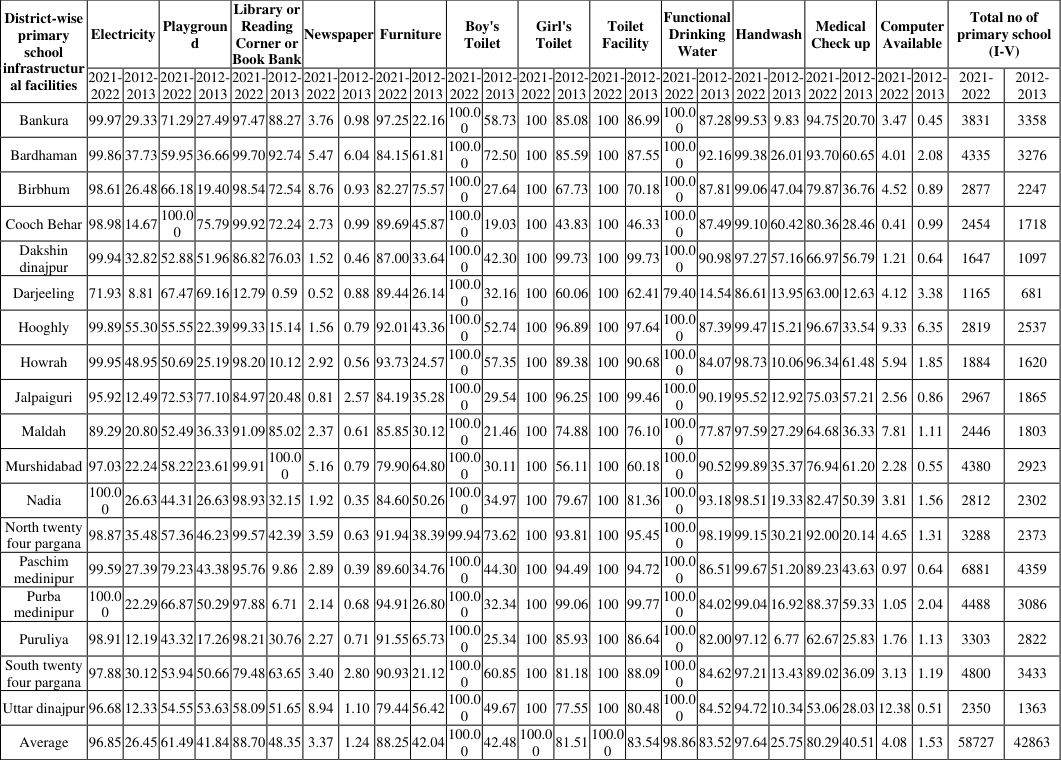 Table 1
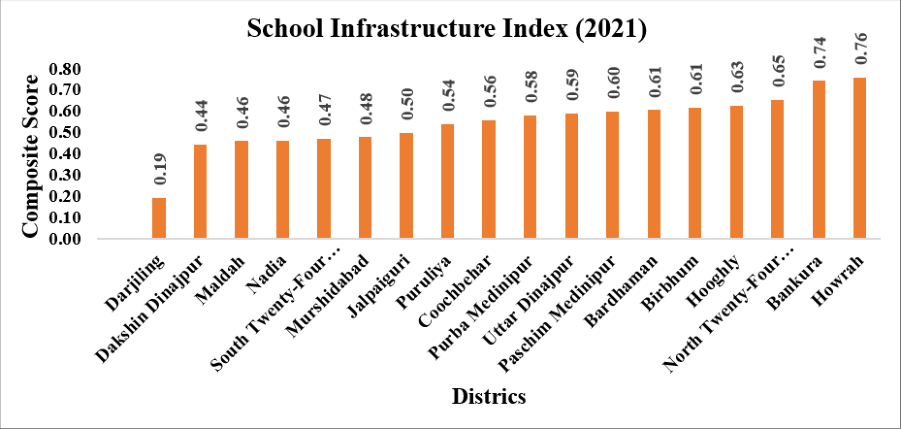 Figure 2
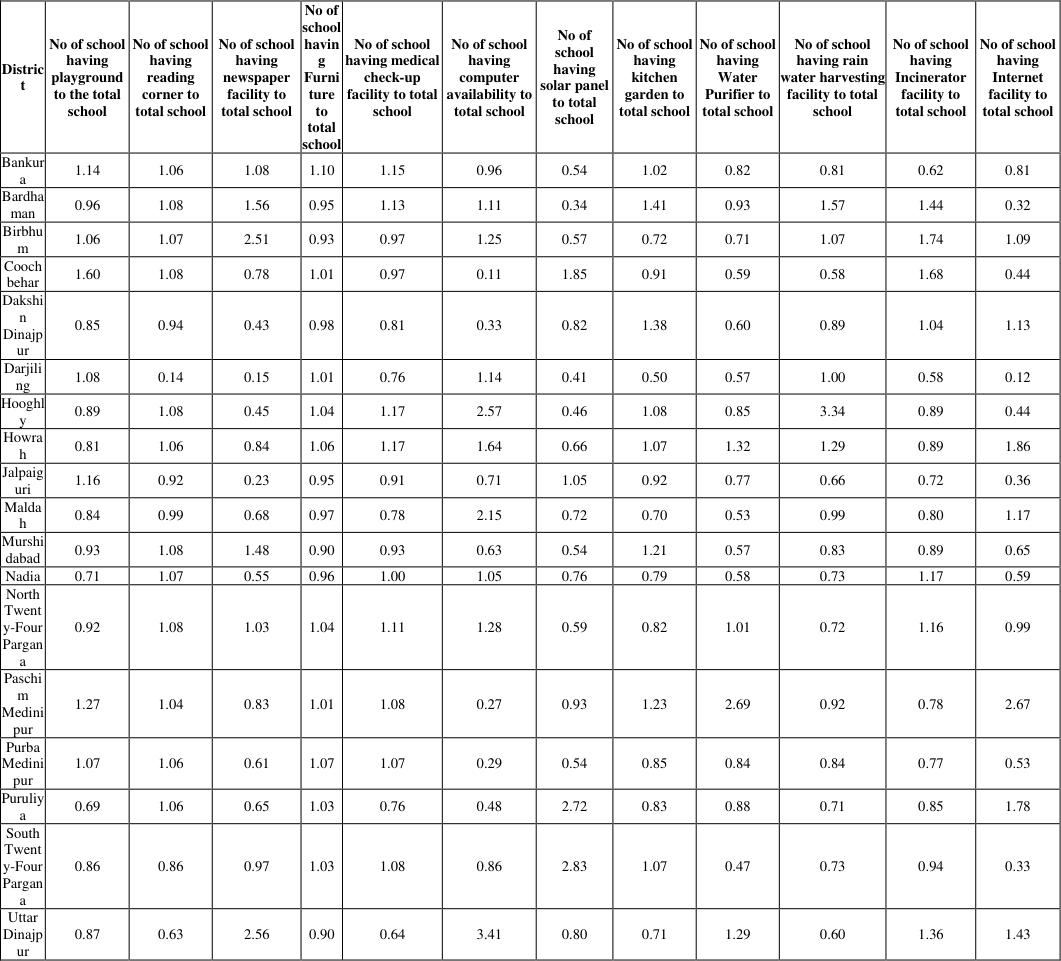 Table 2
Introduction
Educational attainment is considered to be one of the most important factors of economic growth and social development in developing nations. An effective elementary school-driven educational framework is necessary for any country to grow. Everyone knows how essential primary education is. The backbone for learning and growth across all stages is primary education (Dutt and Kundu, 2018) [6] . Education plays a vital role in rural development. In most developing nations, the 1990s saw a significant neglect of the rural dimension of the fundamental educational problem (Atchoarena & Gasperin, 2003) [2] . The comprehensive educational growth of an area depends on its educational infrastructure. The availability of teachers, classrooms, libraries, laboratories, hostels, playgrounds, electricity, drinking water, bathrooms, computers, and other amenities all have a significant impact on educational quality. The imbalance in accessibility of educational facilities contributes to a more significant gap in the standard of education. Proper educational infrastructure is necessary for the child's overall development (Mahapatra, 2019) [13] . The Right to Education Act (RTE) of 2009 states that every school must have an all-weather building, enough staff, a minimum of one classroom per teacher, separate restrooms for boys and girls, a safe and sufficient supply of water to drink, a playing area, a kitchen for midday meals, and arrangements for maintaining the school premises safe by boundary. Students can learn better in a suitable environment with modern facilities, which are essential for enhancing their performance and learning (Shami, 2005) [20] . In recent times, some studies have focused on finding out the relationship between Primary school infrastructure and the academic performance of the student. Karmakar (2016) [11] examines the connection between enrolment and school infrastructure in West Bengal. They found a strong link between enrolment interschool infrastructure, midday meals, drinking water, and the appearance of a teacher. Jamil et al. (2018) [9] tried to determine the influence of school infrastructure on students' academic achievement in Khyber Pakhtunkhwa. They discovered that resources such as gas, electricity, libraries, and high-quality instruction service improve student achievement. Janu (2020) [10] in his study used composite index method to analyse the level of infrastructural development in Rajasthan. Majhi and Mallick (2019) [14] applied a multiple linear regression method to determine the influence of school infrastructure facilities on gross enrolment in primary schools in Odisha using District Information System for Education (DISE) data. They discovered that physical infrastructure has an important impact on enrolment in primary schools. The Indian government considers universal access to education as one of its top priorities. The Pratham Annual Status of Education Report in 2014 indicates that 96.7% of children in India's rural areas (ages 6 to 14) are enrolled in school. But attendance varies around the state. West Bengal, Uttar Pradesh, and Bihar have recorded the lowest rates of attendance. India has over 1.5 million primary schools (Mandal and Sarkar, 2020) [15] . The majority of schools are located in rural areas and do not meet average quality standards, such as shelter-less educational institutions, insufficient facilities, a high pupil-teacher ratio, traditional way teaching techniques, and a high absence rate (Bhunia and Shit, 2012) [4] . According to the Census 2011, West Bengal's literacy rate is 77.1%. It's excellent compared to the national rate of 74%. Over the last twenty to thirty years, both the gross and net enrolment rates in West Bengal have risen significantly. The quality of education has improved over the previous ten years. But, many primary schools in West Bengal don't have basic facilities like classrooms, bathrooms, drinkable water, or playgrounds. It not only makes it challenging to provide a quality education, but it also affects students' achievement and development overall. An attempt has been made in this paper to explore the changing trends and patterns of Primary School infrastructure facilities (in percentage) from 2012 to 2021 in Rural West Bengal and analyse the level of primary school infrastructure development and its relation with the academic performance of the student. This study will help policymakers and other stakeholders formulate policies and develop educational infrastructure.
Materials and Methods
Materials and Methods
Study Area
West Bengal is the only state in India that the Himalayas surrounds to the north and the Bay of Bengal to the south. The remaining territory is comprised of both plains and plateaus. It is located between 85º 50' and 89º50' east longitude and between 21º38' North and 27º10' north latitude. Within the Nadia district, the tropic of Cancer travels through its southernmost point. West Bengal is India's fourth largestpopulation state, as per the 2011 Census data. According to the 2011 census, West Bengal's urban population was 29093002, accounting for around 31.81% of the total population. The entire rural population is 62183113, accounting for approximately 68.13% of the total population. The overall literacy rate of West Bengalis is 77.08%. Among the entire population, 82.67% of males are literate, whereas only 71.16% of females are literate.
Data
Data on the infrastructure of rural primary schools (I-V) were gathered from the Unified District Information System for Education (UDISE) plus report for the years 2011-12 and 2021-2022. This data gives detailed information on primary school infrastructure. Student academic performance data has been collected from National achievement Survey (NAS) 2021. This study exclusively included primary schools under the jurisdiction of the Department of Education, Government of West Bengal.
Selection of Indicator
Based on data base availability, we selected a few key indicators that are relevant to education in order to better understand the infrastructural features of rural primary schools:
Method 2.4.1 Normalisation of data by Min-Max Method
The normalisation procedure plays a crucial role in the field of data mining. It standardises the data to a uniform scale. The Min-max approach is a significant technique in the normalisation strategy. This method is utilised to rescale the data, transforming it to a range between 0 and 1. In this context, the minimum value of a specific attribute will be mapped to 0, the maximum value of the same attribute will be mapped to 1, and all other values will be transformed into a decimal between 0 and 1. We have discovered a mathematical formula for the Min-Max method in the OECD handbook for creating the Composite index. If the variable has a positive correlation with development, the formula is
When the variable has a negative relationship with the development, the formula.
𝑀𝑎𝑥𝐴 -𝑉𝑖 𝑀𝑎𝑥𝐴 -𝑀𝑖𝑛𝐴 * (𝑁𝑒𝑤 𝑀𝑎𝑥𝐴 -𝑁𝑒𝑤 𝑀𝑖𝑛𝐴) + 𝑁𝑒𝑤 𝑀𝑖𝑛𝐴
Where Vi=value of A variable of i place MaxA= Maximum variable of A variable, MinA= Minimum variable of A variable New MaxA=1, New MinA =0
Constructing Composite Index
It shows a single value that represents the sum of the values of the several variables. As a result, we can conclude that it is a comprehensive, multidimensional index. It is a simple sum of all indicators. We have utilised it to track progress.
The composite index has values ranging from 0 to 1. In this study, we used multiple parameters to create a composite index that shows the level of development.
Location Quotient Method
The 'Location Quotient' is a simple ratio used to determine the dominance of a particular phenomenon in a region compared to a larger region or benchmark region. It is used to compare a phenomenon of a local region with a component of a national region. It helps to identify the disparity of a phenomenon in a small region.
𝐿. 𝑄 = ( 𝑋𝑖 𝑁𝑖 )/( 𝑋 𝑁 )
Where, L. Q= Location Quotient Xi=the amount of some X in region i Ni= Total amount of X in region i X= The amount of X in a larger region (nation, state, etc.) N= Total amount of X in larger region (nation, state) Development of infrastructure facilities, such as electric connection, water connection and availability of playground facility, etc, is highly suitable for plain areas rather than hilly areas. Here, accessibility to education and health infrastructure service is easy. Due to industrialization and highly fertile land, this region is economically more strong than North Bengal.
Result 3.1 Result of Changing trends and patterns of Primary School (I-V) infrastructural facilities in rural West
Result 3.1 Result of Changing trends and patterns of Primary School (I-V) infrastructural facilities in rural West
Level of concentration of availability of various dimensions of primary school infrastructure in rural West Bengal
Table 2 represents the concentration of availability of various school infrastructure in primary schools in rural West Bengal.
Here, > 1 value indicates high concentration, <1 value indicates low concentration, close to 0 shows nearly concentration, and 0 indicates perfect balance concentration. In this study, to determine the level of concentration of number of schools having different infrastructure facilities to school, we have selected 12 dimensions: playground, reading corner, Newspaper facility, furniture, medical check-up, computer availability, solar panel, kitchen garden, Water Purifier, rainwater harvesting facility, Incinerator facility and Internet facility. L.Q >1 value indicates that there is a higher concentration of value than the national or regional average. This region is unique from the central area.
From the study, the concentration level of various school infrastructure availability is unequal in the whole region. In case of availability of playground, the level of concentration is very high in Cooch Behar
Discussion
This study found substantial improvement in basic school infrastructures in rural West Bengal from 2012-13 to 2021-22. Most of the district has shown improvement because of government intervention in some important basic facilities such as electricity, drinking water and sanitation after performing the RTE act and educational policies. The result supports the other previous studies which emphasize the role of government in increasing the basic educational infrastructure in rural India (Govinda & Bandyopadhyay, 2010) [23] .
Overall progress was noted in terms of infrastructural development, but the study also observed excessive spatial disparities among the districts. In the case of infrastructure development of primary school, Howrah, Bankura and North 24 Parganas in the southern part of West Bengal is more developed compared to northern and geographically backward districts. Topographical characteristics, economic progress, and accessibility may be the main reasons for these kinds of disparities. The hilly topography of North Bengal and the threat of coastal hazards in some districts is a challenge for infrastructure development expansion (Chatterjee, 2015; Mukherjee & Das, 2018) [24,25] . At the other level, almost all districts experienced the near universal coverage of certain most basic amenities but access to recent good and relatively better-quality service like computers, internet or more appropriate existing Learning environments remain restricted in many rural west Bengal.LQ analysis also indicates strong inequity in the distribution of infrastructural facilities. While several districts Howrah, Hooghly and Paschim Medinipur are relatively better placed in terms of primary school infrastructure, others such as Darjeeling, Puruliya and Jalpaiguri experience lower levels of concentration indicating the absence of basic services/infrastructure. Such trends highlight the need for a region-specific planning approach. The need to reduce the regional gap and improve access to digital learning or higherquality materials is pressing. Infrastructural development in low-income and socio-economically disadvantaged areas needs further specific intervention region-wise.
Conclusion
Educational infrastructure is very important for improving overall development in education. The spatial inequality in the accessibility of educational infrastructure impacts the quality of education. The present study attempts to explore the changing trends and patterns of Primary School infrastructure facilities (in percentage) from 2012 to 2021 in Rural West Bengal and analyse the level of primary school infrastructure development and its relation with the academic performance of the student. This study found that the northern part of West Bengal has a low level of school infrastructure. In contrast, the southern part of West Bengal belongs to a high level of school infrastructure, except for South 24 Parganas. Environmental obstacles in North Bengal may be responsible for the low level of infrastructural development. The majority of this region is connected by hills and mountains. On the other hand, the majority of South Bengal is connected to plain areas. Some educational facilities in this state are inadequate. Concentration level of availability of playground, solar panel, water purifier, computer, internet connection and medical check-up facility of primary school in rural West Bengal is not uniform. There is a huge disparity. Water purifier, computer, internet connection and medical check-up should be improved in the schools of West Bengal. The results demand an extensive evaluation of the strategies for infrastructure development and allocation of resources, especially in North Bengal, to guarantee that all students have access to equitable educational opportunities. Enhancing the quality of school infrastructure can contribute to a more equitable educational landscape in the region. The government should provide more funding to build new schools and educational facilities. This study will assist policymakers and other stakeholders in formulating policies and developing educational infrastructure.
Figures and tables from the paper
| District-wise primary school infrastructur al facilities | Electricity | — | Playgroun d | — | Library or Reading Corner or Book Bank | — | Newspaper | — | Furniture | — | Boy's Toilet | — | Girl's Toilet | — | Toilet Facility | — | Functional Drinking Water | — | Handwash | — | Medical Check up | — | Computer Available | — | Total no of primary school (I-V) | — |
|---|---|---|---|---|---|---|---|---|---|---|---|---|---|---|---|---|---|---|---|---|---|---|---|---|---|---|
| 2021- 2022 | 2012- 2013 | 2021- 2022 | 2012- 2013 | 2021- 2022 | 2012- 2013 | 2021- 2022 | 2012- 2013 | 2021- 2022 | 2012- 2013 | 2021- 2022 | 2012- 2013 | 2021- 2022 | 2012- 2013 | 2021- 2022 | 2012- 2013 | 2021- 2022 | 2012- 2013 | 2021- 2022 | 2012- 2013 | 2021- 2022 | 2012- 2013 | 2021- 2022 | 2012- 2013 | 2021- 2022 | 2012- 2013 | |
| Bankura | 99.97 | 29.33 | 71.29 | 27.49 | 97.47 | 88.27 | 3.76 | 0.98 | 97.25 | 22.16 | 100.0 0 | 58.73 | 100 | 85.08 | 100 | 86.99 | 100.0 0 | 87.28 | 99.53 | 9.83 | 94.75 | 20.70 | 3.47 | 0.45 | 3831 | 3358 |
| Bardhaman | 99.86 | 37.73 | 59.95 | 36.66 | 99.70 | 92.74 | 5.47 | 6.04 | 84.15 | 61.81 | 100.0 0 | 72.50 | 100 | 85.59 | 100 | 87.55 | 100.0 0 | 92.16 | 99.38 | 26.01 | 93.70 | 60.65 | 4.01 | 2.08 | 4335 | 3276 |
| Birbhum | 98.61 | 26.48 | 66.18 | 19.40 | 98.54 | 72.54 | 8.76 | 0.93 | 82.27 | 75.57 | 100.0 0 | 27.64 | 100 | 67.73 | 100 | 70.18 | 100.0 0 | 87.81 | 99.06 | 47.04 | 79.87 | 36.76 | 4.52 | 0.89 | 2877 | 2247 |
| Cooch Behar | 98.98 | 14.67 | 100.0 0 | 75.79 | 99.92 | 72.24 | 2.73 | 0.99 | 89.69 | 45.87 | 100.0 0 | 19.03 | 100 | 43.83 | 100 | 46.33 | 100.0 0 | 87.49 | 99.10 | 60.42 | 80.36 | 28.46 | 0.41 | 0.99 | 2454 | 1718 |
| Dakshin dinajpur | 99.94 | 32.82 | 52.88 | 51.96 | 86.82 | 76.03 | 1.52 | 0.46 | 87.00 | 33.64 | 100.0 0 | 42.30 | 100 | 99.73 | 100 | 99.73 | 100.0 0 | 90.98 | 97.27 | 57.16 | 66.97 | 56.79 | 1.21 | 0.64 | 1647 | 1097 |
| Darjeeling | 71.93 | 8.81 | 67.47 | 69.16 | 12.79 | 0.59 | 0.52 | 0.88 | 89.44 | 26.14 | 100.0 0 | 32.16 | 100 | 60.06 | 100 | 62.41 | 79.40 | 14.54 | 86.61 | 13.95 | 63.00 | 12.63 | 4.12 | 3.38 | 1165 | 681 |
| Hooghly | 99.89 | 55.30 | 55.55 | 22.39 | 99.33 | 15.14 | 1.56 | 0.79 | 92.01 | 43.36 | 100.0 0 | 52.74 | 100 | 96.89 | 100 | 97.64 | 100.0 0 | 87.39 | 99.47 | 15.21 | 96.67 | 33.54 | 9.33 | 6.35 | 2819 | 2537 |
| Howrah | 99.95 | 48.95 | 50.69 | 25.19 | 98.20 | 10.12 | 2.92 | 0.56 | 93.73 | 24.57 | 100.0 0 | 57.35 | 100 | 89.38 | 100 | 90.68 | 100.0 0 | 84.07 | 98.73 | 10.06 | 96.34 | 61.48 | 5.94 | 1.85 | 1884 | 1620 |
| Jalpaiguri | 95.92 | 12.49 | 72.53 | 77.10 | 84.97 | 20.48 | 0.81 | 2.57 | 84.19 | 35.28 | 100.0 0 | 29.54 | 100 | 96.25 | 100 | 99.46 | 100.0 0 | 90.19 | 95.52 | 12.92 | 75.03 | 57.21 | 2.56 | 0.86 | 2967 | 1865 |
| Maldah | 89.29 | 20.80 | 52.49 | 36.33 | 91.09 | 85.02 | 2.37 | 0.61 | 85.85 | 30.12 | 100.0 0 | 21.46 | 100 | 74.88 | 100 | 76.10 | 100.0 0 | 77.87 | 97.59 | 27.29 | 64.68 | 36.33 | 7.81 | 1.11 | 2446 | 1803 |
| Murshidabad | 97.03 | 22.24 | 58.22 | 23.61 | 99.91 | 100.0 0 | 5.16 | 0.79 | 79.90 | 64.80 | 100.0 0 | 30.11 | 100 | 56.11 | 100 | 60.18 | 100.0 0 | 90.52 | 99.89 | 35.37 | 76.94 | 61.20 | 2.28 | 0.55 | 4380 | 2923 |
| Nadia | 100.0 0 | 26.63 | 44.31 | 26.63 | 98.93 | 32.15 | 1.92 | 0.35 | 84.60 | 50.26 | 100.0 0 | 34.97 | 100 | 79.67 | 100 | 81.36 | 100.0 0 | 93.18 | 98.51 | 19.33 | 82.47 | 50.39 | 3.81 | 1.56 | 2812 | 2302 |
| North twenty four pargana | 98.87 | 35.48 | 57.36 | 46.23 | 99.57 | 42.39 | 3.59 | 0.63 | 91.94 | 38.39 | 99.94 | 73.62 | 100 | 93.81 | 100 | 95.45 | 100.0 0 | 98.19 | 99.15 | 30.21 | 92.00 | 20.14 | 4.65 | 1.31 | 3288 | 2373 |
| Paschim medinipur | 99.59 | 27.39 | 79.23 | 43.38 | 95.76 | 9.86 | 2.89 | 0.39 | 89.60 | 34.76 | 100.0 0 | 44.30 | 100 | 94.49 | 100 | 94.72 | 100.0 0 | 86.51 | 99.67 | 51.20 | 89.23 | 43.63 | 0.97 | 0.64 | 6881 | 4359 |
| Purba medinipur | 100.0 0 | 22.29 | 66.87 | 50.29 | 97.88 | 6.71 | 2.14 | 0.68 | 94.91 | 26.80 | 100.0 0 | 32.34 | 100 | 99.06 | 100 | 99.77 | 100.0 0 | 84.02 | 99.04 | 16.92 | 88.37 | 59.33 | 1.05 | 2.04 | 4488 | 3086 |
| Puruliya | 98.91 | 12.19 | 43.32 | 17.26 | 98.21 | 30.76 | 2.27 | 0.71 | 91.55 | 65.73 | 100.0 0 | 25.34 | 100 | 85.93 | 100 | 86.64 | 100.0 0 | 82.00 | 97.12 | 6.77 | 62.67 | 25.83 | 1.76 | 1.13 | 3303 | 2822 |
| South twenty four pargana | 97.88 | 30.12 | 53.94 | 50.66 | 79.48 | 63.65 | 3.40 | 2.80 | 90.93 | 21.12 | 100.0 0 | 60.85 | 100 | 81.18 | 100 | 88.09 | 100.0 0 | 84.62 | 97.21 | 13.43 | 89.02 | 36.09 | 3.13 | 1.19 | 4800 | 3433 |
| Uttar dinajpur | 96.68 | 12.33 | 54.55 | 53.63 | 58.09 | 51.65 | 8.94 | 1.10 | 79.44 | 56.42 | 100.0 0 | 49.67 | 100 | 77.55 | 100 | 80.48 | 100.0 0 | 84.52 | 94.72 | 10.34 | 53.06 | 28.03 | 12.38 | 0.51 | 2350 | 1363 |
| Average | 96.85 | 26.45 | 61.49 | 41.84 | 88.70 | 48.35 | 3.37 | 1.24 | 88.25 | 42.04 | 100.0 0 | 42.48 | 100.0 0 | 81.51 | 100.0 0 | 83.54 | 98.86 | 83.52 | 97.64 | 25.75 | 80.29 | 40.51 | 4.08 | 1.53 | 58727 | 42863 |
Table text extracted from the original PDF; superscript letters are shown inline. The original table image is below.
View original table image
References
25 in the original paper- Arshad M, Qamar ZA, Gulzar FH. Effects of physical facilities at public schools on students' achievement in Punjab, Pakistan. Global Social Sciences Review. 2018;3(4):102-113.
- Atchoarena D, Gasperini L. Education for rural development towards new policy responses. Paris: International Institute for Educational Planning, UNESCO; 2003.
- Bagenda DK, Field MH, Okazaki W. Can rural community initiatives improve learning outcomes in local primary schools? International Journal of Educational Development. 2021;82:102373.
- Bhunia GS, Shit PK. Appraisal of teachers' index in primary and upper primary level: a geospatial analysis. 2012.
- Chudgar A, Chandra M, Iyengar R, Shanker R. School resources and student achievement: data from rural India. Prospects. 2015;45(4):515-531.
- Dutt G, Kundu A. Primary education: issues relating to gender parity in predominantly rural populated districts of West Bengal, India. 2018.
- Figueroa LL, Lim S, Lee J. Investigating the relationship between school facilities and academic achievements through geographically weighted regression. Annals of GIS. 2016;22(4):273-285.
- Figueroa LL, Lim S, Lee J. Investigating the relationship between school facilities and academic achievements through geographically weighted regression. Annals of GIS. 2016;22(4):273-285.
- Jamil M, Mustafa G, Ilyas M. Impact of school infrastructure and pedagogical materials on its academic performance: evidence from Khyber Pakhtunkhwa. FWU Journal of Social Sciences. 2018;12(1):42-55.
- Janu A. Relationship between schools infrastructural facilities and education attainment in primary schools of Rajasthan: a case study in districts of Jaipur and Pratapgarh. 2020.
- Karmakar J. Assessing the enrolment and primary educational infrastructure of the rural West Bengal: a district level analysis. Journal of Economic & Social Development. 2016;12(1):1-8.
- Khalid S, Tadesse E, Gao C. School facilities are grooming primary schools academic performance in Pakistan: a longitudinal evidence from Punjab Province. Asian Social Science. 2021;17(1):1-42.
- Mahapatra SK, Goowalla H. A study on educational infrastructure facilities provided by government and private schools in Nagaland with special reference to Dimapur. International Journal of Logistics & Supply Chain Management Perspectives. 2019;8(2):3615-3619.
- Majhi H, Mallick M. Infrastructural development and enrollment in elementary education in Odisha. Economic Affairs. 2019;64(2):377-385.
- Mandal D, Sarkar D. A dismal story of academic performance of primary students in West Bengal, India. The Indian Economic Journal. 2020;68(1):40-60.
- Mog USJ, Debbarma J. Educational inequality: a case study on school enrolment and infrastructure. In: The Routledge handbook of exclusion, inequality and stigma in India. New Delhi: Routledge India; 2020. p. 125-135.
- Mukhopadhyay R, Chatterjee D. Learning achievement at the elementary level in rural West Bengal. 2016.
- Neupane P. Barriers to education and school attainment: evidence from secondary schools in rural Nepal. International Education Studies. 2017;10(2):68-83.
- Pervez SI. School education in West Bengal and Kerala: a comparative perspective. 2021.
- Shami PA. Access and equity in basic education. Islamabad: Academy of Educational Planning and Management, Ministry of Education; 2005.
- Susanti S, Lian B. The influence of school facilities and motivation on the students' learning outcomes. In: International Conference on Education Universitas PGRI Palembang (INCoEPP 2021). Paris: Atlantis Press; 2021. p. 816-819.
- Yangambi M. Impact of school infrastructures on students learning and performance: case of three public schools in a developing country. Creative Education. 2023;14(4):788-809.
- Govinda R, Bandyopadhyay M. Social exclusion and school participation in India: Expanding access with equity. Prospects. 2010 Sep;40(3):337-54.
- Chatterjee S. Matrix estimation by universal singular value thresholding. The annals of statistics. 2015 Feb 1:177-214.
- Das G, Mukherjee A, Smith RJ. The perfect fit: the moderating role of selling cues on hedonic and utilitarian product types. Journal of Retailing. 2018 Jun 1;94(2):203-16.