
Research article · 2026 · Full text
International Journal of Advanced Chemistry ResearchChemical class-wise bioassay and lethal concentration assessment of insecticides against vector mosquitoes in irs and llin programs of eritrea
Volume 8(2) · Pages 12–17 · DOI: 10.33545/26646781.2026.v8.i2a.679 ↗
Research areasMalaria Research and ControlInsect Resistance and GeneticsDengue and Mosquito Control Research
Abstract
Author-writtenWhile standardised diagnostic-dose bioassays reveal whether resistance exists, they cannot quantify its intensity a distinction that matters profoundly for operational decision-making, because a population showing 85% mortality at the diagnostic dose might still be controlled by field application rates, whereas one showing the same 85% mortality could harbour individuals surviving concentrations far above operational levels. In contrast to diagnostic testing, lethal concentration assessment through dose-response bioassays generates LC50 and LC90 values that capture the full spectrum of population susceptibility and, when expressed as resistance ratios relative to susceptible reference strains, provide a quantitative measure of resistance intensity. This research conducted chemical class-wise bioassays and lethal concentration assessments of five insecticides against field populations of Anopheles arabiensis and Culex quinquefasciatus from the Gash Barka zone, Eritrea, comparing results with the WHO-recommended diagnostic-dose approach. Dose-response bioassays using five to eight concentrations per insecticide were performed on F1 adults from three collection sites. Probit analysis yielded LC50, LC90, and resistance ratio (RR) values. Across 24 insecticide-species-site combinations tested at diagnostic dose, 62.5% showed confirmed resistance, 29.2% possible resistance, and 8.3% full susceptibility. Dose-response analysis revealed resistance ratios (RR50) ranging from 2.1 for pirimiphos-methyl against An. arabiensis to 18.6 for permethrin against Cx. quinquefasciatus. The LC90/LC50 ratio a measure of population heterogeneity in susceptibility exceeded 2.77 (the theoretical homogeneous-population value) for all pyrethroid tests, indicating genetically heterogeneous resistance. Pyrethroids showed the highest resistance ratios (RR50 range: 8.4-18.6), followed by carbamates (RR50: 4.2-9.7) and organophosphates (RR50: 2.1-5.8). These findings demonstrate that diagnostic-dose testing alone underestimates the operational challenge posed by resistance, and that dose-response approaches provide essential complementary data for insecticide selection in IRS and LLIN programs.
Summary
Source-checkedPlain-language reading of the full paper, prepared with AI and checked against the text. Each point links to the authors' own words.
Why it matters
- Standard diagnostic-dose bioassays can identify if insecticide resistance is present, but they fail to quantify the intensity of that resistance, which is critical for making operational decisions. View evidence ↗
- Dose-response bioassays provide a more detailed view of population susceptibility by generating LC50 and LC90 values. View evidence ↗
- In the Gash Barka zone of Eritrea, resistance to various insecticides has been noted in Anopheles arabiensis and Culex quinquefasciatus, but the intensity of this resistance is not well understood. View evidence ↗
The question
- The study aimed to classify resistance using WHO diagnostic doses, determine lethal concentrations (LC50, LC90) and resistance ratios, compare these across chemical classes, and evaluate the utility of dose-response data for selecting insecticides. View evidence ↗
What they did
- Mosquito larvae were collected biweekly from April to September 2022 at three sites in Eritrea's Gash Barka zone: Barentu, Tesseney, and Agordat. View evidence ↗
- Diagnostic-dose bioassays were conducted according to WHO 2016 protocols using deltamethrin, permethrin, malathion, pirimiphos-methyl, and bendiocarb. View evidence ↗
- Dose-response bioassays utilized in-house impregnated filter papers with five to eight different concentrations for each insecticide. View evidence ↗
- The study tested a total of 7,200 female mosquitoes, split equally between diagnostic-dose and dose-response bioassays. View evidence ↗
What they found
- Using diagnostic doses across 24 combinations, 62.5% of tests showed confirmed resistance, 29.2% showed possible resistance, and 8.3% were fully susceptible. View evidence ↗
- Resistance ratios (RR50) varied from a low of 2.1 for pirimiphos-methyl against An. arabiensis to a high of 18.6 for permethrin against Cx. quinquefasciatus. View evidence ↗
- Pyrethroids exhibited the highest resistance ratios (8.4-18.6), followed by carbamates (4.2-9.7) and organophosphates (2.1-5.8). View evidence ↗
- All pyrethroid tests had an LC90/LC50 ratio above 2.77, suggesting that the resistance within these populations is genetically heterogeneous. View evidence ↗
- Culex mosquitoes consistently showed higher RR50 values than Anopheles across all insecticides, with differences ranging from 1.6-fold to 1.8-fold. View evidence ↗
What it means
- The authors conclude that pirimiphos-methyl is currently the most effective compound for indoor residual spraying (IRS) in the region, though resistance management is necessary. View evidence ↗
- The authors recommend continuing the use of pirimiphos-methyl for IRS, adopting next-generation LLINs with PBO or chlorfenapyr due to high pyrethroid resistance, and implementing dose-response bioassays at sentinel sites. View evidence ↗
Visual summary
3 visualsIllustrations explain the paper; charts are replotted from the paper's own table values.
Insecticide Resistance Hierarchy
AI-generated conceptual illustration (Anopheles mosquitoes). It explains the idea and does not show study data.
View source evidence ↗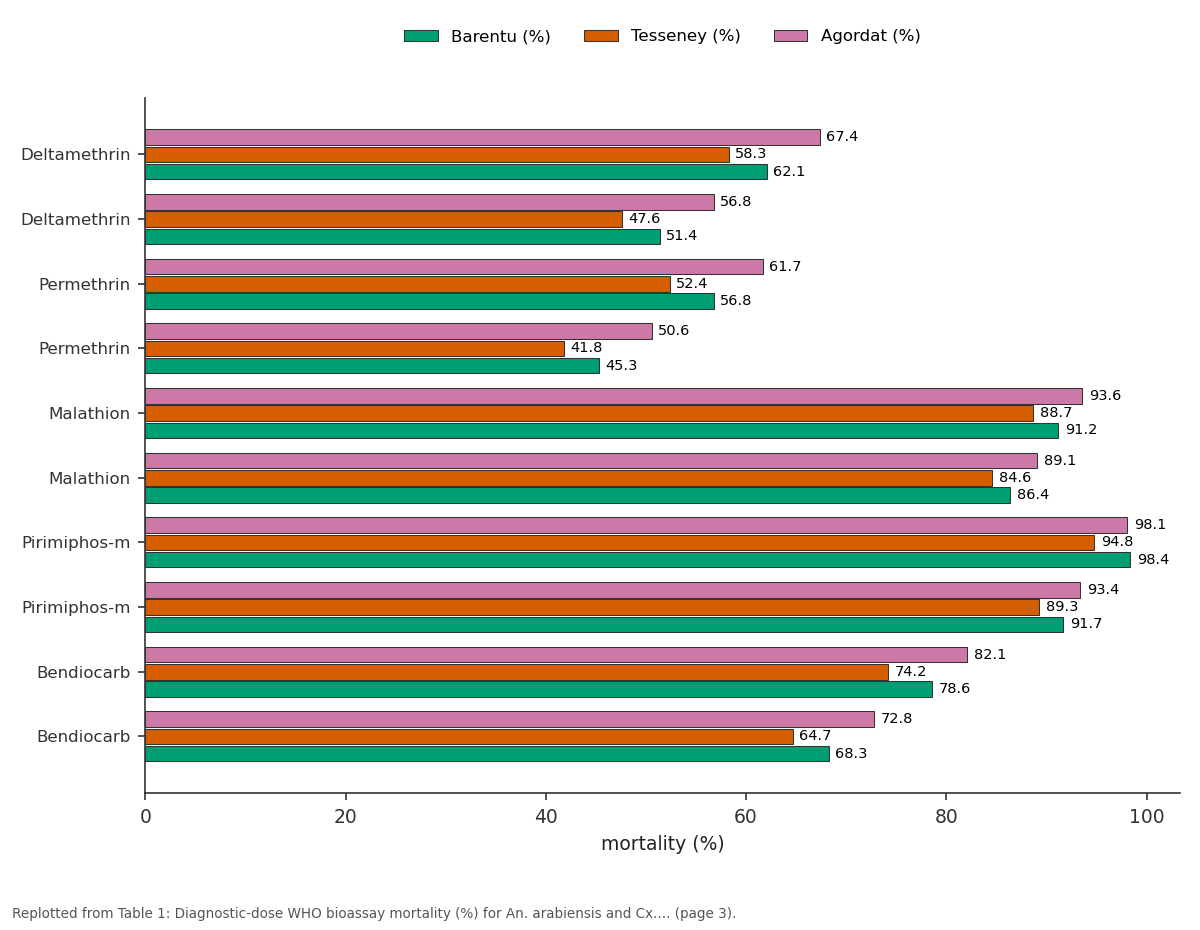
Barentu (%) and Tesseney (%) and more: Deltamethrin vs Deltamethrin vs Permethrin vs Permethrin vs Malathion
Replotted from Table 1 (page 3) of the original paper. Every bar is the paper's own table value.
View source evidence ↗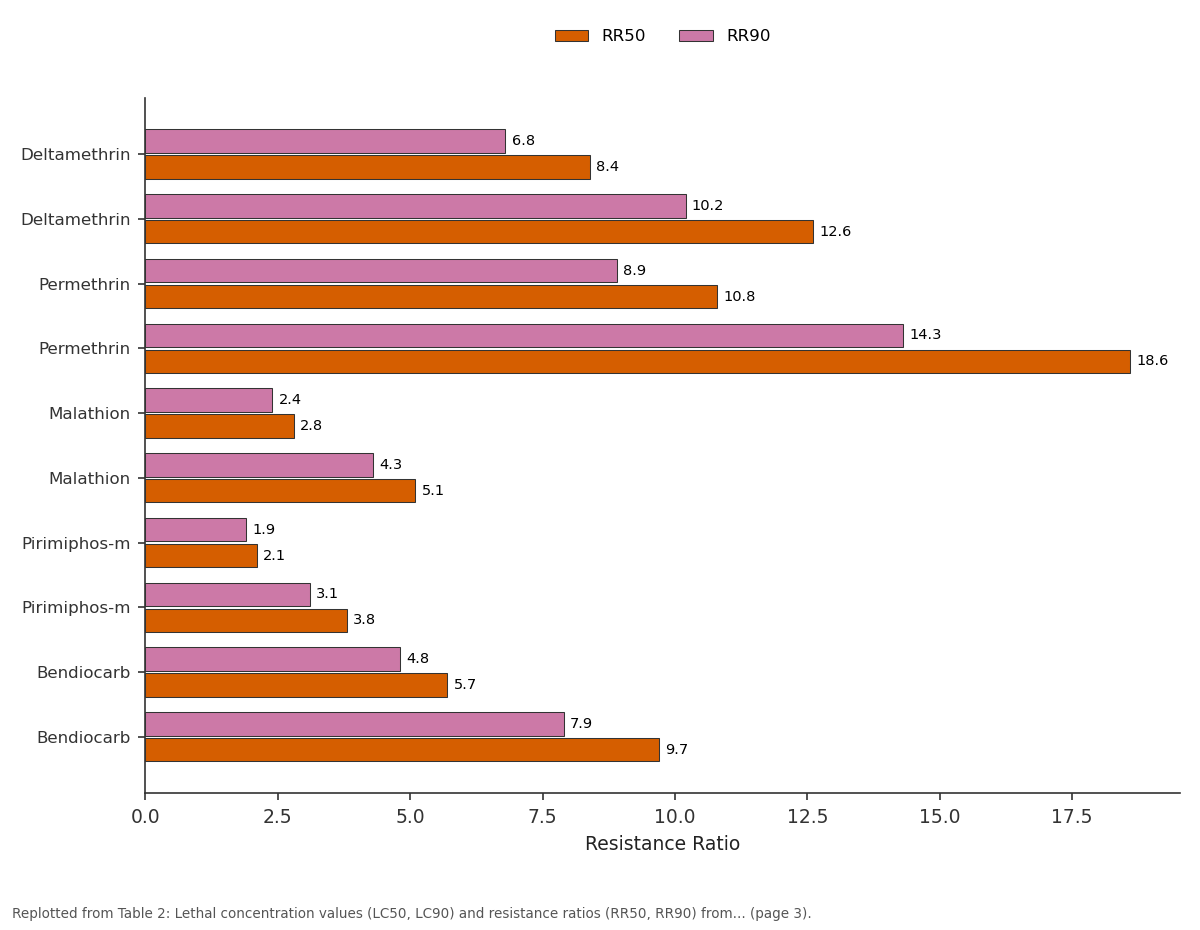
RR50 and RR90: Deltamethrin vs Deltamethrin vs Permethrin vs Permethrin vs Malathion
Replotted from Table 2 (page 3) of the original paper. Every bar is the paper's own table value.
View source evidence ↗Figures & tables
From the original paper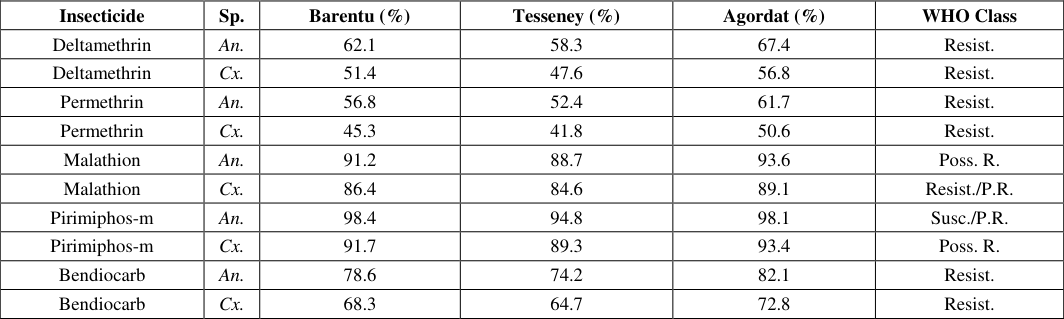 Table 1
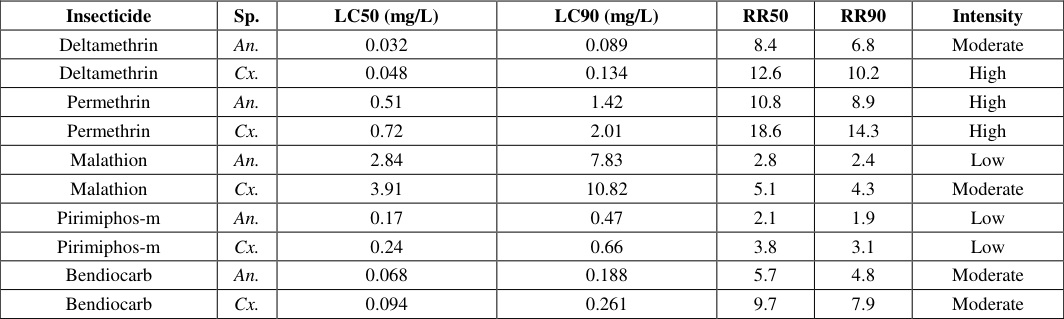 Table 2
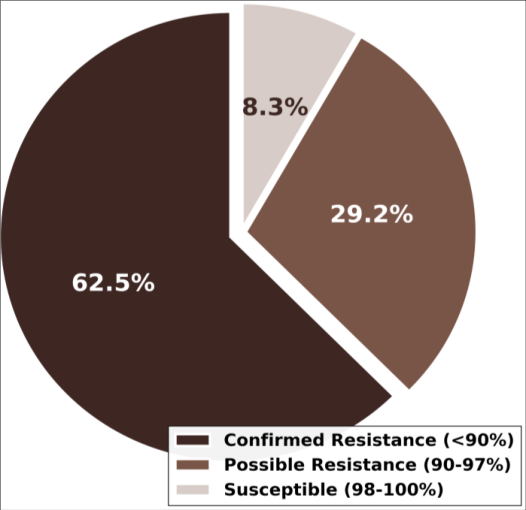 Figure 1
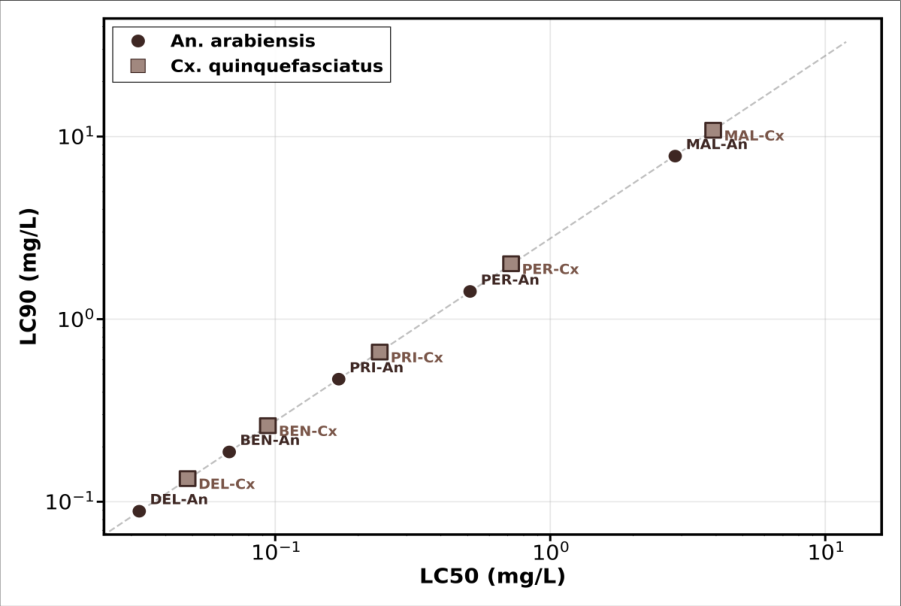 Figure 2
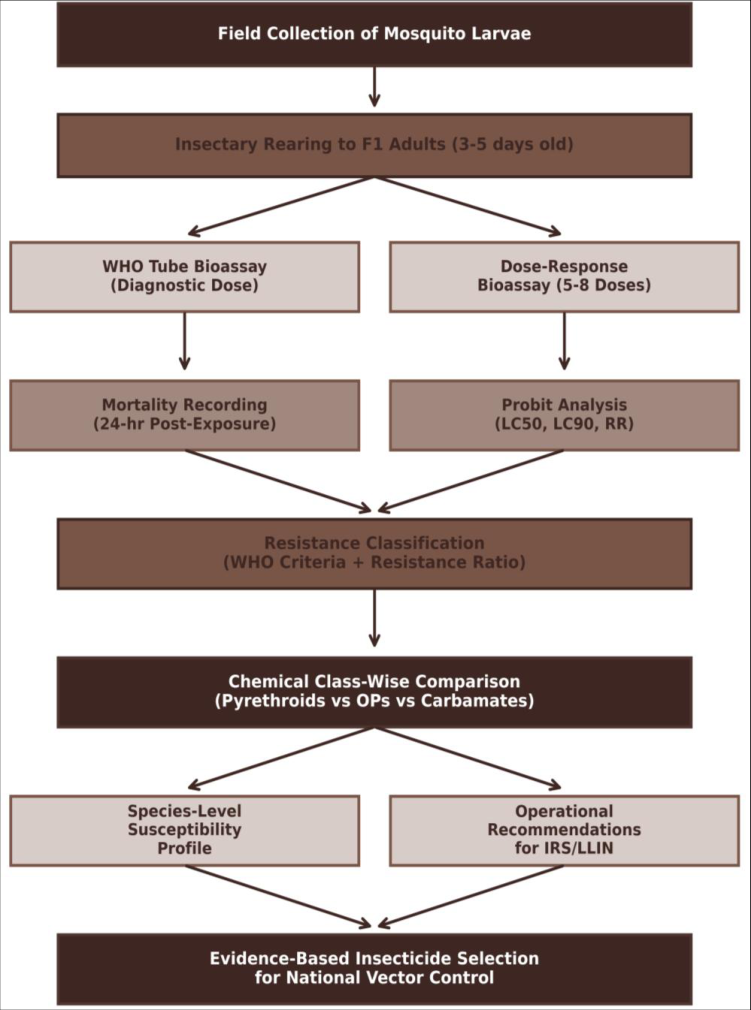 Figure 3
Introduction
The standard WHO insecticide susceptibility bioassay exposes mosquitoes to a single diagnostic concentration, typically twice the LC99 of a reference susceptible strain, and classifies populations as susceptible, possibly resistant, or confirmed resistant based on the resulting mortality [1] . This binary approach has served vector control programs well for decades, providing a rapid, standardised, and logistically feasible screening tool deployable in resource-limited settings [2] . But it has a fundamental limitation: it cannot distinguish between a population where 85% of individuals die because 15% carry a single resistance allele that confers moderate survival, and one where 85% die because the remaining 15% carry multiple, stacked resistance mechanisms that allow survival at concentrations many times above the diagnostic dose [3] . Dose-response bioassays address this limitation by exposing replicate groups of mosquitoes to a graded series of insecticide concentrations, generating a full concentration-mortality curve from which LC50 (the concentration killing 50% of the population) and LC90 (killing 90%) can be estimated via probit analysis [4] .
When these values are compared with those from a reference susceptible strain, the resulting resistance ratios (RR50, RR90) quantify resistance intensity on a continuous scale rather than a categorical one [5] . In Eritrea's Gash Barka zone, diagnostic-dose bioassays have documented resistance to multiple insecticide classes in both An. arabiensis and Cx. quinquefasciatus, but the intensity of that resistance and therefore its operational significance remains poorly characterised [6] . A population with a resistance ratio of 3 might still be adequately controlled by field-rate IRS applications, which typically deliver concentrations well above the diagnostic dose, whereas a population with a resistance ratio of 15 or 20 would almost certainly survive standard applications [7] . This research combined diagnosticdose and dose-response approaches to generate a comprehensive, chemical class-wise assessment of insecticide susceptibility in vector mosquito populations from three sites in Gash Barka. The objectives were to classify resistance status using WHO diagnostic doses, determine LC50, LC90, and resistance ratios for each insecticide-species-site combination, compare resistance intensity across chemical classes, and assess the added value of dose-response data for operational insecticide selection [8] .
Materials and Methods
Materials and Methods
Reagents and Chemicals
Technical-grade insecticides were sourced from certified suppliers: deltamethrin (98.5% purity, Sigma-Aldrich), permethrin (98.0%, Sigma-Aldrich), malathion (97.5%, Sigma-Aldrich), pirimiphos-methyl (99.0%, Sigma-Aldrich), and bendiocarb (98.0%, Sigma-Aldrich). Analytical-grade acetone served as the solvent for all stock solutions. Serial dilutions were prepared fresh on the day of testing using calibrated micropipettes and verified gravimetrically. WHO diagnostic-dose impregnated papers were obtained from the Universiti Sains Malaysia reference centre. Silicone oil (Dow Corning 556) was used as the carrier for dose-response papers prepared in-house. Bradford protein assay reagent (Bio-Rad) was used for normalising synergist bioassay data.
Instrumentation and analytical equipment
Insecticide concentration verification was performed using an Agilent 7890B gas chromatograph coupled with a 5977B mass selective detector (GC-MS). Column: HP-5MS Ultra Inert (30 m x 0.25 mm x 0.25 micrometer film thickness). Injection volume: 1 microlitre, splitless mode. Carrier gas: helium at 1.0 mL/min. Oven programme: 60 °C for 2 minutes, ramped at 10 degrees per minute to 280 degrees, held for 5 minutes. Detector: electron ionisation at 70 eV, scan range 50-550 m/z. Calibration curves were constructed using 5-point serial dilutions of certified reference standards, with r-squared values exceeding 0.998 for all compounds. Recoveries from spiked filter paper extractions ranged from 91.3% to 97.8%.
Quality control
Quality control protocols included triplicate preparation and testing of each concentration level, concurrent testing of a WHO Kisumu susceptible reference strain, inclusion of solvent-only and untreated controls, temperature monitoring throughout exposure and holding periods (maintained at 25 ± 2 °C), and GC-MS verification of at least 20% of prepared papers per batch. Tests were excluded and repeated if control mortality exceeded 5%, ambient temperature deviated beyond 23-27 degrees, or humidity fell below 60%. Probit analysis was performed using PoloPlus version 2.0, with goodness-of-fit evaluated by chi-square test; analyses with significant lack of fit (p < 0.05) were repeated with adjusted concentration ranges.
Materials
Mosquito larvae were collected from three sentinel sites in the Gash Barka zone: Barentu (peri-urban, IRS history since 2004), Tesseney (agricultural, border town with cotton and sesame cultivation), and Agordat (riverine, along the Barka River with irrigated farming). Collections spanned April through September 2022, with biweekly sampling. Ethical clearance was granted by the University of Sciences, Techniques and Technologies of Bamako Ethics Committee (Protocol No. USTTB/CE/2022-022, approved 7 February 2022) and by the Eritrean Ministry of Health Research Review Board. Anopheles larvae were collected from temporary rain pools, irrigation seepage, and riverbed margins. Culex larvae were collected from pit latrines, drainage ditches, and organically polluted standing water. Larvae were transported to the field insectary within 4 hours and reared under standard conditions.
Methods
Adults were identified morphologically and non-blood-fed F1 females aged 3-5 days were selected for testing. Two bioassay approaches were used in parallel. Diagnostic-dose bioassays followed WHO 2016 protocol using standard impregnated papers: deltamethrin (0.05%), permethrin (0.75%), malathion (5.0%), pirimiphos-methyl (0.25%), and bendiocarb (0.1%). Four replicates of 20-25 females per tube were tested for each insecticide-species-site combination. Knockdown was recorded at 10-minute intervals during 60-minute exposure. Final mortality was assessed at 24 hours. Dose-response bioassays used filter papers impregnated in-house with five to eight concentrations per insecticide, spanning sub-diagnostic to supra-diagnostic ranges. Concentrations were selected based on preliminary range-finding tests to bracket the 10-90% mortality range. Papers were prepared by applying 2 mL of acetone solution containing the appropriate insecticide concentration to Whatman No. 1 filter paper (12 x 15 cm), allowing 24 hours for solvent evaporation, and verifying concentration by GC-MS extraction of subsections. Four replicates of 20 females were exposed at each concentration. Mortality was recorded at 24 hours. Probit analysis was conducted in PoloPlus 2.0 to estimate LC50, LC90, and their 95% fiducial limits. Resistance ratios (RR50, RR90) were calculated by dividing field-population LC values by corresponding Kisumu reference strain values. An RR50 below 5 was classified as low resistance, 5-10 as moderate, and above 10 as high resistance intensity.
Results
A total of 7,200 female mosquitoes were tested across diagnostic-dose (3,600) Figure 1 summarises the overall distribution of WHO resistance classifications across all 24 diagnostic-dose tests, showing that nearly two-thirds fell into the confirmed resistance category. Figure 2 plots LC50 against LC90 for each insecticide-species combination, illustrating the species-level separation (Culex consistently requiring higher lethal concentrations) and the class-level clustering (pyrethroids and carbamates occupying higher-LC space than organophosphates). Figure 3 presents the complete bioassay and LC determination workflow used in this research, from field collection through analytical verification to operational recommendations.
Comprehensive interpretation
The dual-approach analysis reveals that diagnostic-dose testing, while correctly identifying the presence of resistance, provides an incomplete picture of its operational significance. Two populations classified identically as "confirmed resistant" by the WHO threshold can differ by a factor of two or more in their resistance ratios, with very different implications for whether field-rate insecticide applications will achieve meaningful vector kill. The chemical class hierarchy is consistent across both approaches: pyrethroids show the strongest resistance, carbamates are intermediate, and organophosphates retain the most activity. But the dose-response data add critical granularity, showing that even within the organophosphate class, resistance ratios for Culex (RR50: 3.8-5.8) substantially exceed those for Anopheles (RR50: 2.1-3.2), a difference invisible to diagnostic-dose testing that has practical implications for species-targeted interventions.
Discussion
This research set out to determine whether dose-response bioassays and lethal concentration assessment add meaningful operational value beyond the information provided by standard WHO diagnostic-dose testing. The answer is unambiguously yes. Diagnostic-dose testing correctly identified the presence and direction of resistance across chemical classes and species but could not distinguish between populations with moderate resistance ratios (RR50 around 3-5, potentially still controllable at field application rates) and those with high ratios (RR50 above 10, likely to survive standard applications). This distinction matters directly for programmatic decisions about which insecticides to deploy and whether synergistenhanced formulations or alternative classes are needed.
The chemical class hierarchy that emerged pyrethroids most resistant, carbamates intermediate, organophosphates least resistant is consistent with patterns reported across East Africa. Ochomo and colleagues in western Kenya found pyrethroid RR50 values of 6-14 for An. gambiae, bracketing the 8.4-10.8 range observed here for An. arabiensis [9] . Aizoun and collaborators in Benin documented bendiocarb RR50 values of 4-8 in An. gambiae, similar to the 5.7-9.7 range in this research [10] . The consistency of this hierarchy across geographically distant populations suggests that the evolutionary drivers, primarily the historical dominance of pyrethroids in both agriculture and public health, operate across the continent [11] . The species-level difference in resistance ratios deserves emphasis. For every insecticide, Culex showed higher RR50 values than Anopheles, a gap that ranged from 1.6-fold (pirimiphos-methyl RR50: 3.8 vs 2.1) to 1.8-fold (permethrin RR50: 18.6 vs 10.8). This consistent pattern likely reflects the broader insecticide exposure of Culex populations, which encounter agricultural pesticides, domestic aerosols, and mosquito coils in addition to IRS and LLIN-derived insecticides [12] . The practical implication is that insecticide choices optimised for Anopheles control may be inadequate for Culex, and vice versa, a complication for programs targeting both species simultaneously.
Conclusion
This research demonstrated that the combination of diagnostic-dose and dose-response bioassays provides a substantially more informative picture of insecticide resistance than either approach alone. Diagnostic-dose testing efficiently screens for the presence of resistance across many insecticides and populations, while doseresponse analysis quantifies resistance intensity and reveals within-population heterogeneity that has direct operational consequences. The chemical class-wise assessment confirmed that pyrethroids face the most severe resistance challenge in Gash Barka, with resistance ratios in the highintensity range for both species. Carbamates occupy an intermediate position, and organophosphates retain the most activity, though even here Culex populations show moderate resistance ratios that warrant monitoring. Pirimiphos-methyl remains the most effective available compound for IRS in this setting, but its continued utility depends on resistance management measures that prevent further escalation.
For the national malaria control program, these data support three immediate actions: maintaining pirimiphos-methyl as the primary IRS compound while its resistance ratios remain in the low-to-moderate range; procuring next-generation LLINs with PBO or chlorfenapyr dual-chemistry for distribution in Gash Barka, given the high pyrethroid resistance ratios; and establishing a dose-response bioassay capability at least one sentinel site to complement routine diagnostic-dose monitoring. The workflow presented in Figure 3 provides a practical template for integrating both bioassay approaches into a unified resistance surveillance system.
Acknowledgement
Acknowledgements Funding sourcesThis research received financial support from the African Academy of Sciences through the Alliance for Accelerating Excellence in Science in Africa (AESA) platform (Grant No. AAS/AESA-VSG/2022-014). Additional operational funding was provided by the University of Sciences, Techniques and Technologies of Bamako.
Figures and tables from the paper
| Insecticide | Sp. | Barentu (%) | Tesseney (%) | Agordat (%) | WHO Class |
|---|---|---|---|---|---|
| Deltamethrin | An. | 62.1 | 58.3 | 67.4 | Resist. |
| Deltamethrin | Cx. | 51.4 | 47.6 | 56.8 | Resist. |
| Permethrin | An. | 56.8 | 52.4 | 61.7 | Resist. |
| Permethrin | Cx. | 45.3 | 41.8 | 50.6 | Resist. |
| Malathion | An. | 91.2 | 88.7 | 93.6 | Poss. R. |
| Malathion | Cx. | 86.4 | 84.6 | 89.1 | Resist./P.R. |
| Pirimiphos-m | An. | 98.4 | 94.8 | 98.1 | Susc./P.R. |
| Pirimiphos-m | Cx. | 91.7 | 89.3 | 93.4 | Poss. R. |
| Bendiocarb | An. | 78.6 | 74.2 | 82.1 | Resist. |
| Bendiocarb | Cx. | 68.3 | 64.7 | 72.8 | Resist. |
Table text extracted from the original PDF; superscript letters are shown inline. The original table image is below.
View original table image
| Insecticide | Sp. | LC50 (mg/L) | LC90 (mg/L) | RR50 | RR90 | Intensity |
|---|---|---|---|---|---|---|
| Deltamethrin | An. | 0.032 | 0.089 | 8.4 | 6.8 | Moderate |
| Deltamethrin | Cx. | 0.048 | 0.134 | 12.6 | 10.2 | High |
| Permethrin | An. | 0.51 | 1.42 | 10.8 | 8.9 | High |
| Permethrin | Cx. | 0.72 | 2.01 | 18.6 | 14.3 | High |
| Malathion | An. | 2.84 | 7.83 | 2.8 | 2.4 | Low |
| Malathion | Cx. | 3.91 | 10.82 | 5.1 | 4.3 | Moderate |
| Pirimiphos-m | An. | 0.17 | 0.47 | 2.1 | 1.9 | Low |
| Pirimiphos-m | Cx. | 0.24 | 0.66 | 3.8 | 3.1 | Low |
| Bendiocarb | An. | 0.068 | 0.188 | 5.7 | 4.8 | Moderate |
| Bendiocarb | Cx. | 0.094 | 0.261 | 9.7 | 7.9 | Moderate |
Table text extracted from the original PDF; superscript letters are shown inline. The original table image is below.
View original table image
References
20 in the original paper- World Health Organization. Test procedures for insecticide resistance monitoring in malaria vector mosquitoes. 2nd ed. Geneva: World Health Organization; 2016.
- Brogdon WG, Chan A. Guideline for evaluating insecticide resistance in vectors using the CDC bottle bioassay. Atlanta (GA): Centers for Disease Control and Prevention; 2010.
- Bagi J, Grisales N, Corkill R, Morgan JC, N'Fale S, Bamba S, et al. When a discriminating dose assay is not enough: measuring the intensity of insecticide resistance in malaria vectors. Malar J. 2015;14:210.
- Finney DJ. Probit analysis. 3rd ed. Cambridge: Cambridge University Press; 1971.
- World Health Organization. Framework for a national plan for monitoring and management of insecticide resistance in malaria vectors. Geneva: World Health Organization; 2012.
- Ranson H, N'Guessan R, Lines J, Moiroux N, Nkuni Z, Corbel V. Pyrethroid resistance in African anopheline mosquitoes: what are the implications for malaria control? Trends Parasitol. 2011;27(2):91-98.
- Hemingway J, Ranson H, Magill A, Kolaczinski J, Fornadel C, Gimnig J, et al. Averting a malaria disaster: will insecticide resistance derail malaria control? Lancet. 2016;387(10029):1785-1788.
- Ministry of Health Eritrea. National Malaria Strategic Plan 2017-2021. Asmara: Ministry of Health Eritrea; 2017.
- Ochomo E, Bayoh NM, Kamau L, Atieli F, Vulule J, Ouma C, et al. Pyrethroid susceptibility of malaria vectors in four districts of western Kenya. Parasit Vectors. 2014;7:310.
- Aizoun N, Aikpon R, Gnanguenon V, Oussou O, Agossa F, Padonou GG, et al. Status of organophosphate and carbamate resistance in Anopheles gambiae from southern Benin. J Cell Anim Biol. 2013;7(2):6-11.
- Corbel V, N'Guessan R. Distribution, mechanisms, impact and management of insecticide resistance in malaria vectors. Annu Rev Entomol. 2013;58:255-273.
- Ghebremariam AM, Weldu AM, Salh IY, Kibreab F. Susceptibility status of culicine and anopheline mosquitoes towards different classes of insecticides at different concentrations used for IRS and LLINs in the Gash Barka Zone, Eritrea. Int J Biol Sci. 2024;6(1):132138. doi:10.33545/26649926.2024.v6.i1b.210.
- Edi CV, Djogbenou L, Jenkins AM, Regna K, Muskavitch MAT, Poupardin R, et al. CYP6 P450 enzymes and ACE-1 duplication produce extreme and multiple insecticide resistance in Anopheles gambiae. PLoS Genet. 2014;10(3):e1004236.
- Protopopoff N, Mosha JF, Lukole E, Charlwood JD, Wright A, Mwalimu CD, et al. Effectiveness of a longlasting piperonyl butoxide-treated insecticidal net and indoor residual spraying. Lancet. 2018;391(10130):1577-1588.
- Oxborough RM, Kitau J, Jones R, Feston E, Matowo J, Mosha FW, et al. Long-lasting control of Anopheles arabiensis by a single spray application of microencapsulated pirimiphos-methyl. Malar J. 2014;13:37.
- Nkya TE, Akhouayri I, Poupardin R, Batengana B, Mober F, Mesber S, et al. Insecticide resistance mechanisms associated with different environments in Anopheles gambiae. Malar J. 2014;13:28.
- Wondji CS, Irving H, Morgan J, Lobo NF, Collins FH, Hunt RH, et al. Two duplicated P450 genes are associated with pyrethroid resistance in Anopheles funestus. Genome Res. 2009;19(3):452-459.
- Yewhalaw D, Wassie F, Steurbaut W, Spanoghe P, Van Bortel W, Denis L, et al. Multiple insecticide resistance in Anopheles gambiae from south-west Ethiopia. PLoS One. 2011;6(1):e16066.
- David JP, Ismail HM, Chandor-Proust A, Paine MJI. Role of cytochrome P450s in insecticide resistance. Philos Trans R Soc Lond B Biol Sci. 2013;368(1612):20120429.
- World Health Organization. Global report on insecticide resistance in malaria vectors: 2010-2016. Geneva: World Health Organization; 2018.