
Research article · 2026 · Full text
International Journal of Advanced Chemistry ResearchStudy of the effect of adding plant extracts on the physical and biological properties of prepared shampoo
Volume 8(5) · Pages 67–73 · DOI: 10.33545/26646781.2026.v8.i5a.677 ↗
Research areasEssential Oils and Antimicrobial ActivityMedicinal Plant ResearchAntimicrobial agents and applications
Abstract
Author-writtenMany plants contain active compounds that can kill harmful microbes more effectively than synthetic chemicals. Due to the negative side effects of these chemicals, it's best to use products containing natural ingredients. This study aimed to increase the effectiveness of a specific shampoo against pathogenic bacteria and fungi that affect the skin and scalp, by adding some plant extracts that come from locally available plants to the prepared shampoo, such as wild lettuce leaves, myrtle leaves, neem leaves, bitter orange leaves, lemon leaves, and olive leaves, and measuring the biological effectiveness of the shampoo fortified with these extracts against some types of bacteria, such as Gram-positive Staphylococcus aureus, Gram-negative Pseudomonas aeruginosa, Gram-positive Streptococcus, and some Candida albicans species, using standard laboratory methods such as the disc diffusion method. It was observed that the antibacterial and antifungal activity of the shampoo prepared in this study increased after adding plant extracts to it, and also increased with increasing concentrations of the added plant extracts.
Summary
Source-checkedPlain-language reading of the full paper, prepared with AI and checked against the text. Each point links to the authors' own words.
Why it matters
- Natural plant compounds can be more effective at killing harmful microbes than synthetic chemicals, which often have negative side effects. View evidence ↗
- Shampoo is a critical daily hair care product used for cleaning dirt and oils while improving scalp health and hair appearance. View evidence ↗
- The development of microbial resistance to synthetic chemicals in hygiene products necessitates the search for natural alternatives. View evidence ↗
The question
- The study aimed to increase a shampoo's effectiveness against skin and scalp pathogens by adding extracts from locally available plants. View evidence ↗
What they did
- The plant extracts used in the study were derived from wild lettuce, myrtle, neem, bitter orange, lemon, and olive leaves. View evidence ↗
- Active compounds were extracted by soaking plant materials in 70% ethanol for 72 hours. View evidence ↗
- Plant extracts were added to the prepared shampoo at concentrations of 5%, 10%, and 15%. View evidence ↗
- Biological effectiveness was measured using the disc diffusion method against S. aureus, P. aeruginosa, Streptococcus, and Candida albicans species. View evidence ↗
What they found
- The base shampoo showed an initial foam height of 166-170 mm, with stability measurements of 145 mm after 5 minutes and 115 mm after 10 minutes. View evidence ↗
- The prepared shampoo had a pH of 6.2, which is considered safe for scalp and hair use. View evidence ↗
- The shampoo's viscosity was 6300 centipoise, meeting standard quality requirements. View evidence ↗
- Antibacterial effectiveness increased across all samples as the plant extract concentration was raised from 5% to 15%. View evidence ↗
- Lemon leaf extract was the most effective against all tested bacteria, followed by bitter orange and olive leaf extracts. View evidence ↗
- Antifungal effectiveness also increased as plant extract concentrations were raised from 5% to 15%. View evidence ↗
- Bitter orange, lemon, and olive leaf extracts showed the highest inhibition diameters against all tested fungi. View evidence ↗
What it means
- The authors conclude that these plant extracts can serve as safer, more environmentally friendly alternatives to synthetic chemicals in shampoo. View evidence ↗
Visual summary
3 visualsIllustrations explain the paper; charts are replotted from the paper's own table values.
Concentration vs. Inhibition
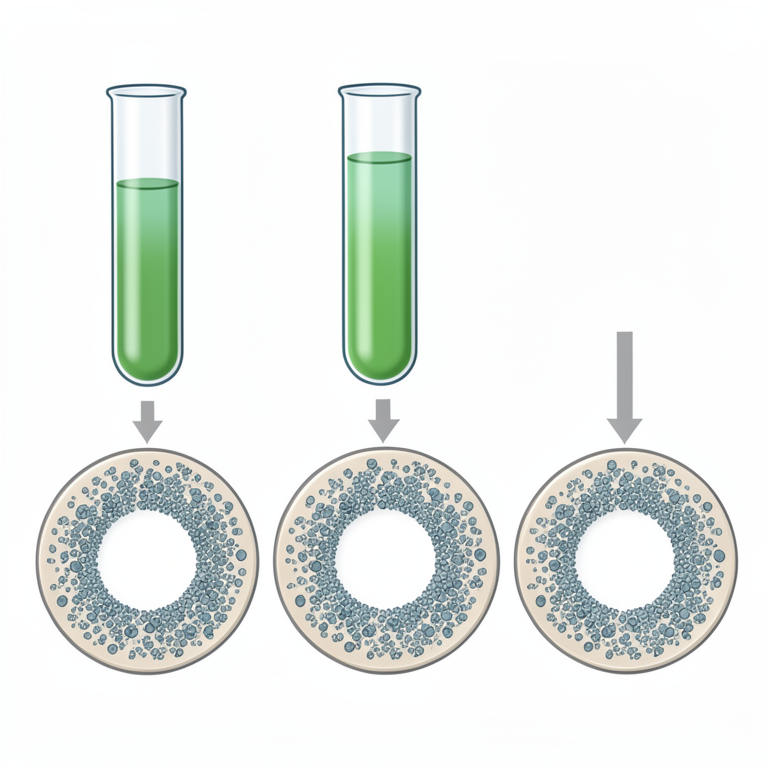
AI-generated conceptual illustration (Plant extract shampoo and agar plates with bacterial colonies). It explains the idea and does not show study data.
View source evidence ↗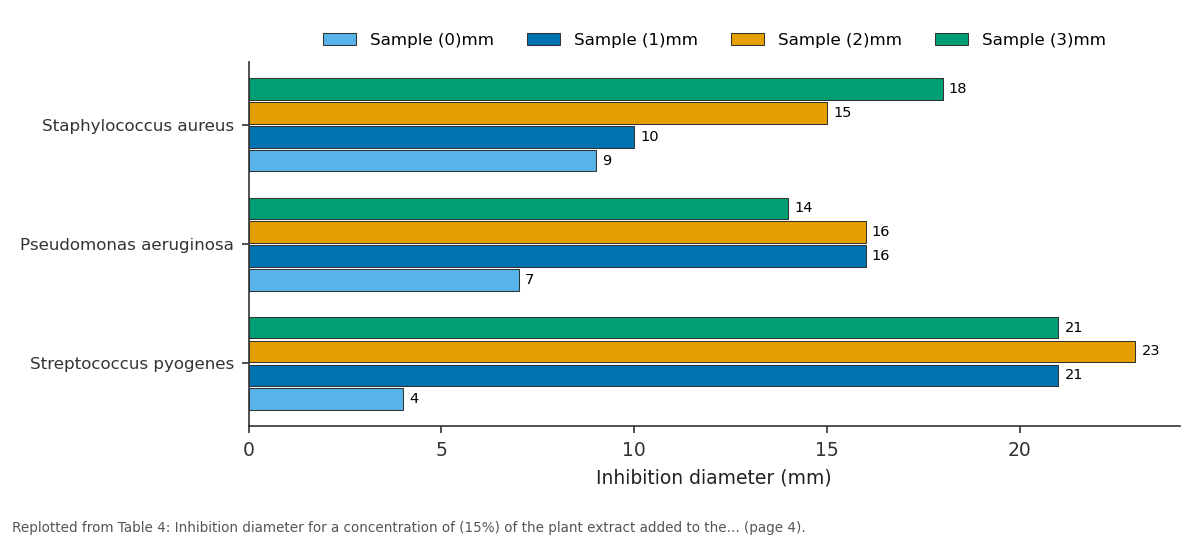
Sample (0)mm and Sample (1)mm and more: Staphylococcus aureus vs Pseudomonas aeruginosa vs Streptococcus pyogenes
Replotted from Table 4 (page 4) of the original paper. Every bar is the paper's own table value.
View source evidence ↗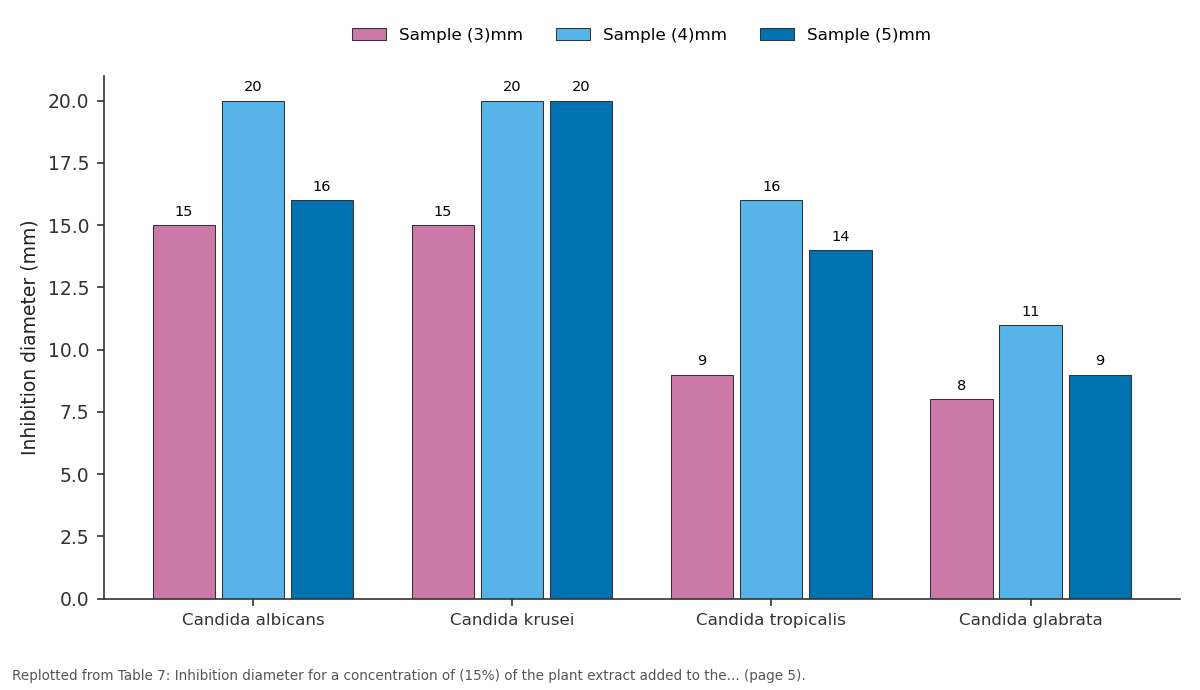
Sample (3)mm and Sample (4)mm and more: Candida albicans vs Candida krusei vs Candida tropicalis vs Candida glabrata
Replotted from Table 7 (page 5) of the original paper. Every bar is the paper's own table value.
View source evidence ↗Figures & tables
From the original paper Table 1
 Table 2
 Table 3
 Table 4
 Table 5
 Table 6
 Table 7
Introduction
Shampoo is one of the most important and widely used hair care products in daily life. It is used to clean the hair from dirt and excess oils. It also improves scalp health and adds softness and shine to the hair. Shampoo is a cleansing substance used to care for the hair and scalp. It is mainly composed of surfactants, which help remove grease and dirt, in addition to nourishing, moisturizing, and aromatic substances [1] . Traditional shampoo is a water-based cleansing product that contains surfactants that remove oils and dirt from the scalp and hair. The basic formula of shampoo contains surfactants, such as sodium lauryl sulfate (SLS) or sodium lauryl ether sulfate (SLES), which are responsible for cleaning and foaming. It also contains foam-stabilizing agents, such as cocamide diethylamine (DEA) or monoethylamine (MEA), humectants and emollients, such as glycerin and plant proteins, preservatives such as parabens or phenoxyethanol, and fragrances and colors to create an attractive scent and desirable appearance. It also contains acidity regulators (pH) to adjust the acidity to be suitable for the scalp, which is usually between (5-7) [2] .
With the growing trend towards natural and environmentally friendly products, the importance of using plant extracts in the cosmetics industry has emerged, especially in hair care products such as shampoo. The need has emerged to replace or supplement traditional shampoo ingredients with natural ingredients with therapeutic and cosmetic benefits, such as plant extracts rich in phenols, flavonoids, and volatile oils, which are used as antimicrobials, antioxidants, and scalp soothers. Vegetable oils, such as olive oil, coconut oil, and almond oil, also moisturize and strengthen hair. Shampoo ingredients can also be enhanced with natural proteins, such as wheat or soy protein, to improve hair elasticity and reduce breakage. It can also be enriched with natural gels, such as aloe vera gel or gum arabic, to improve viscosity and enhance hydration [3] .
This growing interest has prompted researchers to investigate the possibility of enhancing the effectiveness of commercial shampoos by combining them with selected plant extracts. The most commonly used plant extracts in shampoo formulations include neem, aloe vera, tea tree oil, and citrus extracts, which scientific studies have shown to be effective in inhibiting microbial growth. This trend is fueling the growing demand for sustainable and healthy hygiene products, while reducing the risks of synthetic chemical preservatives and antimicrobial agents. However, some bacteria and fungi may develop resistance to the chemicals in these products, requiring the search for natural alternatives that support their effectiveness. Therefore, this research studies the possibility of using plant extracts as additives to shampoo, highlighting their efficiency in increasing antimicrobial activity, their safety for human use, and their environmental benefits [4] .
The added plant extracts, each individually, include wild lettuce leaves, myrtle leaves, neem leaves, bitter orange leaves, lemon leaves, and olive leaves. These plants are known to contain effective chemical compounds, such as alkaloids, flavonoids, ricin, and terpenes, with antibacterial and antifungal properties. The incorporation of these plant extracts into the shampoo formula represents an innovative step towards producing effective natural products that combine acceptable physical properties with high biological activity, thus achieving health and aesthetic benefits for the consumer [5] . The plants are as follows : 1. 1 .Wild lettuce leaves: Wild lettuce (Lactuca virosa) contains lactucin and lactucopicrin, which have soothing and anti-inflammatory properties and may help soothe the scalp and reduce irritation [6] .
2 .Myrtus communis leaves:
Myrtus communis is rich in tannins and flavonoids, and is known for its antibacterial and antifungal properties, making it effective in combating dandruff and skin infections [7] . 3. Neem leaves: The neem tree (Azadirachta indica) is one of the most powerful antimicrobial plants, and contains compounds such as azadirachtin and nimbin, which contribute to cleansing the scalp and reducing skin infections. It also contains terpenes that are antibacterial, antifungal, and anticancer, and sterols and flavonoids that are anti-inflammatory and antioxidant [8] .
Bitter orange leaves:
The bitter orange tree (Citrus aurantium) contains volatile oils such as linalool and limonene, which have antiseptic and refreshing properties, and help stimulate blood circulation in the scalp. It also contains terpenes that are antibacterial, antifungal, anticancer, antioxidant, and antiinflammatory [9] .
Lemon tree leaves:
The lemon tree (Citrus limon) is rich in citric acid and essential oils. It is used to regulate sebum secretion and effectively cleanse the scalp, in addition to its antibacterial properties. It also contains tannins, flavonoids, and coumarins with antibacterial and antifungal properties [10] . 6. Olive tree leaves: The olive tree (Olea europaea) contains oleoresin and phenols, and is known for its antibacterial, antifungal, antioxidant, and nourishing properties, which enhance hair health and strengthen it from the roots [11] .
The study aims to evaluate the effect of adding these extracts on the physical and chemical properties of shampoo such as pH, viscosity and foam, in addition to measuring the biological effectiveness using standard laboratory methods such as the disk diffusion method, for shampoo enriched with these extracts are effective against some types of disease-causing bacteria, such as Gram-positive Staphylococcus aureus, which is one of the most common causes of skin infections and is associated with the appearance of pimples and inflammation of hair follicles [12] . Gram-negative Pseudomonas aeruginosa bacteria are resistant to many antibiotics and can cause chronic skin infections, especially in humid environments [13] . Grampositive Streptococcus bacteria are responsible for acute skin infections such as erysipelas and cellulitis [14] . Also, some types of Candida albicans, such as Candida albicans, a common yeast fungus, cause skin and oral infections, especially in warm and humid environments [15] . Candida krusei, a relatively treatment-resistant species, is associated with skin and oral infections in individuals with low immunity [16] . Candida tropicalis, a pathogenic fungus capable of colonizing the skin and mucous membranes, is a common species in superficial fungal infections [17] . Candida glabrata, a relatively resistant fungus, causes skin and oral infections and is characterized by its ability to adapt to different environmental conditions [18] .
Materials and Methods 1. Preparation of plant extracts
Plant extracts are prepared from the target plants, which are wild lettuce leaves, myrtle leaves, neem leaves, bitter orange leaves, lemon leaves, and olive leaves, each separately. This is done by taking the targeted part of the plant, washing it well, and drying it in the shade to preserve the effectiveness of the compounds, especially the compounds sensitive to heat and light, such as flavonoids and volatile oils [19] . The dry plant materials are ground using a fine mill, then the active compounds are extracted by soaking in ethanol at a concentration of (70%) for (72) hours, which is a common method for extracting phenolic and terpenoid compounds from medicinal plants [20] . After that, the extracts are filtered and concentrated using a rotary evaporator at low temperatures to avoid the decomposition of the active compounds [21] .
Preparing Shampoo
Prepare liquid shampoo using the following ingredients :
1. A (15%) sodium lauryl sulfate (SLS) solution is prepared using distilled water. It is a common cleansing and foaming agent in commercial shampoo formulations [22] .
2. A (3%) cocamide diethanolamine (DEA) solution is prepared using distilled water. It is used as a foam stabilizer and texture enhancer [23] . 3. Mix the ingredients prepared in steps (1) and (2) above, and stir well using a mechanical mixer until the contents are well combined .
4. Add 2% glycerin to the mixture and mix well. This moisturizing agent helps improve hair softness and moisturize the scalp [24] . 5. Adjust the pH to (5.5), the ideal skin pH, by adding citric acid to ensure compatibility with the scalp and reduce irritation [25] . 6. Then, add distilled water as a solvent to (100%).
Measuring some physical properties A. Measuring foam height and stability
The measurement is done by the Cylinder Shake Test, where (1) gram of prepared shampoo is weighed and placed in a test tube, then up to (10 ml) of distilled water is added to it, the tube is shaken and then turned over, and the height of the resulting foam is immediately measured. After that, the tube is left for (5) minutes, and then the height of the resulting foam is measured again after (5) minutes [26] .
B. pH measurement
Before testing, the pH meter was calibrated using a neutral solution (pH=7) and an acidic solution (pH=4). Then, a volume of (1 ml) of the prepared shampoo sample is dissolved in (10 ml) of distilled water, shaken vigorously, and the electrode of the pH meter is immersed in it. It is left until the device reading stabilizes, then the value indicated by the calibrated pH meter is recorded. The pH of shampoo should comply with the standard test method for pH of aqueous solutions specified by [American Society for Testing and Materials (2015) (ASTM E70)]. The pH should range between (5.5-6) [27] .
C. Viscosity measurement
The viscosity of the prepared shampoo was measured using an Ostwald Viscometer at a temperature of (25 °C), and its amount was calculated according to the following equation :
Preparing shampoo enriched with plant extracts
Plant extracts are added at different concentrations (5%, 10%, 15%) to a sample of shampoo prepared separately. The ingredients are mixed well at room temperature with continuous stirring for (30) minutes to ensure homogeneity of the extracts, to test their effectiveness .
Antimicrobial efficacy testing
Antimicrobial efficacy is tested by preparing cultures containing various types of bacteria and fungi, such as the Gram-positive Staphylococcus aureus, the Gram-negative Pseudomonas aeruginosa, the Gram-positive Streptococcus pyogenes, and some types of Candida albicans (Candida albicans, Candida krusei, Candida tropicalis, and Candida glabrata) .
The ability of shampoo samples enriched with plant extracts to inhibit microbial growth was tested using the disc diffusion method in the Biology Department/College of Science/Tikrit University, where bacterial and fungal cultures were inoculated separately on a nutrient agar plate, and incubated at a temperature of (37 °C) for (48) hours in an incubator .
The paper disk diffusion method (a standard method of the National Committee for Clinical Laboratory Standards (NCCLS)) was used to determine the inhibition zone. Approximately (15-20 ml) of Mueller-Hinton agar was poured onto sterile (90 mm) glass Petri dishes and allowed to solidify. The agar surface of each dish was then wiped with a sterile cotton swab dipped in a specific strain of microbes (bacteria or fungi). Paper discs of size (6 mm) were soaked in (100 microliters) of each sample of liquid soap, and placed on solidified agar plates at equal distances from the control plates. The plates were left for (30) minutes. Then the plates were incubated at a temperature of (37 °C) for 48 hours [28] .
Results and discussion
Results and discussion
Results of measuring some physical properties :
A. Foam height and stability test A foam height test was conducted to determine the amount of foam produced by the prepared shampoo. As a surfactant, sodium lauryl sulfate (SLS) plays an important role in shampoo foam production, so higher (SLS) concentrations result in more foam. The desired foam height for shampoo ranges from (50 to 200 mm). Accordingly, good foam stability criteria were obtained, which assumes that between (60% and 70%) of the foam strength and stability are retained within (10) minutes [29] . Shampoo with high foam does not necessarily mean better cleaning effectiveness, but may be an indicator of the concentration of surfactants. Foam stability is also important for the user experience, but it is not directly related to the antimicrobial or antifungal capacity [26] . The foam height value of the prepared shampoo ranged between an initial height of (166-170 mm) after shaking for one minute, and the foam stability after ( 5) and ( 10) minutes without stirring or shaking was (145 mm) and (115 mm) respectively .
B. pH measurement
The prepared shampoo obtained a pH value of (6.2), which is safe for use on the scalp and hair, as the normal pH range for regular shampoo is between ( 5) and ( 7) [27] .
C. Viscosity measurement
The viscosity range for regular shampoo is between (5000 and 8000 centipoise), so the viscosity of the prepared shampoo, which was (6300 centipoise), can be considered to meet the quality requirements .
Antimicrobial efficacy
The addition of plant extracts is expected to increase the shampoo's effectiveness against bacteria and fungi. Effects may vary depending on the extract concentrations, with higher concentrations expected to have a stronger effect. Some plants are expected to be more effective against certain types of microbes. The effect of active compounds in extracts on the structure of cell membranes of bacteria and fungi can be analyzed. The effect of extracts on the quality of shampoos produced, such as scent, color, and foam, can be addressed. In conclusion, the use of plant extracts in health and cosmetic products is an effective and natural way to enhance their antimicrobial properties [30] .
This study demonstrates that extracts of wild lettuce leaves, myrtle leaves, neem leaves, bitter orange leaves, lemon leaves, and olive leaves may be effective alternatives to synthetic chemicals, providing safer, more environmentally friendly options .
The samples of plant extracts added to the prepared shampoo were arranged according to the following sequence, as in Table (1) below:
A. Antibacterial efficacy
The ability of shampoo samples enriched with plant extracts to inhibit the growth of three types of bacteria was tested using the disk diffusion method: the Gram-positive Staphylococcus aureus, the Gram-negative Pseudomonas aeruginosa, and the Gram-positive Streptococcus pyogenes.
Plant extracts were added at different concentrations (5%, 10%, 15%) to the prepared shampoo sample, and the measurement was carried out in the Biology Department/College of Science/Tikrit University, and the results are shown in Tables (2), ( 3) and (4) below: 2) above shows the results of the effectiveness of adding a concentration of (5%) of each plant extract to the prepared shampoo in inhibiting the growth of three different types of bacteria, by measuring the diameter of inhibition in millimeters (mm). The larger the diameter of inhibition, the greater the effectiveness of the extract in eliminating bacteria. As for Staphylococcus aureus bacteria, the highest effectiveness was for sample (5) with lemon leaf extract (20 ml) and sample (6) with olive leaf extract (19 ml), and the lowest effectiveness was for sample (1) with wild lettuce leaf extract (5 ml), while the other samples showed varying effectiveness between the highest and least effective categories. As for the bacteria (Pseudomonas aeruginosa), sample ( 5) with lemon leaf extract gave the highest effectiveness (28 ml), sample (2) with myrtle leaf extract gave the least effectiveness (6 ml), and the other samples showed an effectiveness between them. While Streptococcus pyogenes bacteria showed the highest effectiveness in samples ( 4) and ( 5) with orange leaf extract and lemon leaf extract (19 mm), the lowest effectiveness was in sample (3) with neem leaf extract (14 mm). While Table (3) above shows the results of the effectiveness of adding a concentration of (10%) of each plant extract to the prepared shampoo in inhibiting the growth of the three different types of bacteria, with regard to the bacteria (Staphylococcus aureus), the highest effectiveness was for sample (5) with lemon leaf extract (23 mm), followed by sample (4) with orange leaf extract (20 mm), and sample (6) with olive leaf extract (19 mm). The least effective was for sample (1) with wild lettuce leaf extract (7 ml). As for the bacteria (Pseudomonas aeruginosa), sample (5) with lemon leaf extract gave the highest effectiveness (31 ml), and sample (2) with myrtle leaf extract gave the least effectiveness (9 ml), while the other samples showed an average effectiveness between them. While Streptococcus pyogenes bacteria showed the highest effectiveness in sample (4) with orange leaf extract (22 mm), sample (5) with lemon leaf extract (21 mm), and sample (6) with olive leaf extract (20 mm), the lowest effectiveness was in sample (3) with neem leaf extract (17 mm). As Table (4) above shows, the results of the effectiveness of adding a concentration of (15%) of each plant extract to the prepared shampoo in inhibiting the growth of these bacteria. As for the bacteria (Staphylococcus aureus), the highest effectiveness was for sample (4) with an extract of bitter orange leaves (26 mm), followed by sample (5) with an extract of lemon leaves (26 mm), and sample (6) with an extract of olive leaves (23 mm). The least effective was for sample (1) with wild lettuce leaf extract (10 ml). As for the bacteria (Pseudomonas aeruginosa), sample (5) with lemon leaf extract gave the highest effectiveness (34 ml), and sample (3) with neem leaf extract gave the least effectiveness (14 ml), and the other samples showed an effectiveness between them. While the bacteria (Streptococcus pyogenes) showed the highest effectiveness, sample (5) with lemon leaf extract (26 ml). It was followed by samples ( 4) and ( 6) with orange leaf extract and olive leaf extract (25 ml), and the least effective was for samples (1) with wild lettuce leaf extract and (3) with neem leaf extract (21 ml). It is clear from the results shown in Tables (2, 3 and 4) above that all samples of the prepared shampoo showed an increase in the diameter of inhibition as a result of increasing the concentration of the added plant extract from (5%) to (10%) and then (15%). This indicates that the effectiveness of the plant extracts increases with increasing concentration, which enhances their use as an antibacterial. Lemon leaf extract showed the highest inhibition diameter across all bacteria, followed by bitter orange leaf extract and olive leaf extract. Wild lettuce leaf extract and neem leaf extract, however, were relatively weak in their efficacy compared to the other extracts. The response of bacteria to the added plant extracts also varied, with Streptococcus pyogenes being the most affected, followed by Staphylococcus aureus, and then Pseudomonas aeruginosa, suggesting that some plant extracts may be more specific in targeting specific types of bacteria.
B. Antifungal activity
The ability of shampoo samples enriched with plant extracts to inhibit the growth of four species of Candida albicans (Candida albicans, Candida krusei, Candida tropicalis, and Candida glabrata) was tested using the disc diffusion method. Plant extracts were added at different concentrations (5%, 10%, 15%) to the prepared shampoo solution, and the measurement was carried out in the Department/College of Science/Tikrit University, and the results are shown in Tables (5), ( 6) and ( 7) below: Table (5) above shows the results of the effectiveness of adding a concentration of (5%) of each plant extract to the prepared shampoo in inhibiting the growth of four different types of fungi of the genus (Candida), by measuring the diameter of inhibition in millimeters (mm). The larger the diameter of inhibition, the greater the effectiveness of the extract in eliminating fungi. As for the fungus (Candida albicans), the highest effectiveness was for sample (4) with bitter orange leaf extract (28 mm), followed by sample (2) with oleander leaf extract (25 mm), and sample (7) with lemon leaf extract (23). The least effectiveness was for sample (5) with wormwood leaf extract (12 mm). As for the fungus (Candida krusei), sample (4) with colocynth fruit extract gave the highest effectiveness (30 ml), followed by sample (2) with oleander leaf extract (26 ml) and sample (5) with wormwood leaf extract (23 ml). Sample (1) with castor leaf extract gave the least effectiveness (15 ml), and the other samples showed an effectiveness between them. While the fungus (Candida tropicalis) showed the highest effectiveness, which was attributed to sample (4) with colocynth fruit extract (12 mm) and sample (2) with oleander leaf extract (11 mm), the lowest effectiveness was attributed to sample (3) with olive leaf extract (3 mm). As for the fungus (Candida glabrata), it gave the highest effectiveness (10 mm) and (9 mm) for samples (4) and ( 2) respectively, while samples (3), ( 6), ( 1) and ( 5) gave the least effectiveness, respectively. Table (6) above gives the results of the effectiveness of adding a concentration of (10%) of each plant extract to the prepared shampoo in inhibiting the growth of fungi of the genus (Candida), where the fungus (Candida albicans) gave the highest effectiveness for sample (4) with an extract of bitter orange leaves (16 mm), followed by sample ( 6) with an extract of olive leaves (15 mm), and the least effectiveness was for sample (1) with an extract of wild lettuce leaves (10 mm). As for the fungus (Candida krusei), sample (5) with lemon leaf extract gave the highest effectiveness (17 ml), and sample (3) with neem leaf extract gave the least effectiveness (12 ml). While the fungus (Candida tropicalis) showed the highest effectiveness, which was in sample (2) with myrtle leaf extract (15 ml), and the least effectiveness was in samples ( 1) and ( 6), which were wild lettuce leaf extract and olive leaf extract (6 ml), respectively. As for the fungus (Candida glabrata), the highest effectiveness (10 ml) was due to the extract of myrtle leaves (2), while sample (3) gave the lowest effectiveness (6 ml). While Table (7) above gave the results of the effectiveness of adding a concentration of (15%) of each plant extract to the prepared shampoo in inhibiting the growth of the above-mentioned fungi, where the fungus (Candida albicans) gave the highest effectiveness for sample (4) with an extract of bitter orange leaves (20 mm), followed by sample (6) with an extract of olive leaves (19 mm), and the least effectiveness was for sample (1) with an extract of wild lettuce leaves (12 mm). As for the fungus (Candida krusei), sample (4) with orange leaf extract, and sample (5) with lemon leaf extract gave the highest effectiveness (20 ml), while sample (1) with wild lettuce leaf extract and sample (3) with neem leaf extract gave the least effectiveness (15 ml). While the fungus (Candida tropicalis) showed the highest effectiveness for sample (2) with myrtle leaf extract (18 mm), the least effectiveness was for sample (1) with wild lettuce leaf extract and sample (6) with olive leaf extract (8 mm). As for the fungus (Candida glabrata), it gave the highest effectiveness (13 mm) and (11 mm) for both samples (2) and (4), which were myrtle leaf extract and bitter orange leaf extract, respectively, while sample (6) with olive leaf extract gave the lowest effectiveness (7 mm). It is clear from the results shown in Tables (5, 6 and 7) above that all samples of the prepared shampoo showed an increase in the diameter of inhibition as a result of increasing the concentration of the added plant extract from (5%) to (10%) and then (15%). This indicates that the effectiveness of plant extracts increases with increasing concentration, which enhances their use as an antifungal. The extracts of bitter orange, lemon and olive leaves recorded the highest diameter of inhibition against all types of fungi. While the effectiveness of wild lettuce and neem leaf extracts was relatively weak compared to the other extracts, the response of fungi to the added plant extracts also varied, with Candida krusei being the most affected, followed by Candida albicans, Candida tropicalis, and Candida glabrata, respectively. This suggests that some plant extracts may be more specific in inhibiting certain types of fungi.
Figures and tables from the paper
| Type of Bacteria | Sample (0)mm | Sample (1)mm | Sample (2)mm | Sample (3)mm | Sample (4)mm | Sample (5)mm | Sample (6)mm |
|---|---|---|---|---|---|---|---|
| Staphylococcus aureus | 9 | 5 | 10 | 14 | 18 | 20 | 19 |
| Pseudomonas aeruginosa | 7 | 9 | 6 | 7 | 11 | 28 | 13 |
| Streptococcus pyogenes | 4 | 15 | 16 | 14 | 19 | 19 | 17 |
Table text extracted from the original PDF; superscript letters are shown inline. The original table image is below.
View original table image
| Type of Bacteria | Sample (0)mm | Sample (1)mm | Sample (2)mm | Sample (3)mm | Sample (4)mm | Sample (5)mm | Sample (6)mm |
|---|---|---|---|---|---|---|---|
| Staphylococcus aureus | 9 | 7 | 12 | 16 | 20 | 23 | 19 |
| Pseudomonas aeruginosa | 7 | 12 | 9 | 10 | 14 | 31 | 14 |
| Streptococcus pyogenes | 4 | 18 | 19 | 17 | 22 | 21 | 20 |
Table text extracted from the original PDF; superscript letters are shown inline. The original table image is below.
View original table image
| Type of Bacteria | Sample (0)mm | Sample (1)mm | Sample (2)mm | Sample (3)mm | Sample (4)mm | Sample (5)mm | Sample (6)mm |
|---|---|---|---|---|---|---|---|
| Staphylococcus aureus | 9 | 10 | 15 | 18 | 27 | 26 | 23 |
| Pseudomonas aeruginosa | 7 | 16 | 16 | 14 | 19 | 34 | 16 |
| Streptococcus pyogenes | 4 | 21 | 23 | 21 | 25 | 26 | 25 |
Table text extracted from the original PDF; superscript letters are shown inline. The original table image is below.
View original table image
| Type of Fungi | Sample (0)mm | Sample (1)mm | Sample (2)mm | Sample (3)mm | Sample (4)mm | Sample (5)mm | Sample (6)mm |
|---|---|---|---|---|---|---|---|
| Candida albicans | 11 | 8 | 12 | 10 | 13 | 12 | 13 |
| Candida krusei | 9 | 11 | 10 | 9 | 12 | 13 | 12 |
| Candida tropicalis | 6 | 5 | 10 | 6 | 11 | 9 | 7 |
| Candida glabrata | 4 | 8 | 7 | 5 | 7 | 6 | 7 |
Table text extracted from the original PDF; superscript letters are shown inline. The original table image is below.
View original table image
| Type of Fungi | Sample (0)mm | Sample (1)mm | Sample (2)mm | Sample (3)mm | Sample (4)mm | Sample (5)mm | Sample (6)mm |
|---|---|---|---|---|---|---|---|
| Candida albicans | 11 | 10 | 14 | 13 | 16 | 14 | 15 |
| Candida krusei | 9 | 13 | 14 | 12 | 15 | 17 | 14 |
| Candida tropicalis | 6 | 6 | 15 | 7 | 13 | 12 | 6 |
| Candida glabrata | 4 | 8 | 10 | 6 | 8 | 8 | 7 |
Table text extracted from the original PDF; superscript letters are shown inline. The original table image is below.
View original table image
| Type of Fungi | Sample (0)mm | Sample (1)mm | Sample (2)mm | Sample (3)mm | Sample (4)mm | Sample (5)mm | Sample (6)mm |
|---|---|---|---|---|---|---|---|
| Candida albicans | 11 | 12 | 16 | 15 | 20 | 16 | 19 |
| Candida krusei | 9 | 15 | 17 | 15 | 20 | 20 | 17 |
| Candida tropicalis | 6 | 8 | 18 | 9 | 16 | 14 | 8 |
| Candida glabrata | 4 | 9 | 13 | 8 | 11 | 9 | 7 |
Table text extracted from the original PDF; superscript letters are shown inline. The original table image is below.
View original table image
References
30 in the original paper- Fernández-Peña L, Guzmán E. Physicochemical aspects of the performance of hair-conditioning formulations. Cosmetics. 2020;7(2):26.
- Cornwell PA. A review of shampoo surfactant technology: Consumer benefits, raw materials and recent developments. Int J Cosmet Sci. 2018;40(1):1630.
- Rele AS, Mohile RB. Effect of mineral oil, sunflower oil, and coconut oil on prevention of hair damage. J Cosmet Sci. 2003;54(2):175-192.
- Paradkar V, Bodhe S, Babu VS. A comprehensive review of neem leaf-based herbal shampoos: Composition, efficacy, and applications. Int J Pharm Sci. 2023;3(5):1-15.
- Cowan MM. Plant products as antimicrobial agents. Clin Microbiol Rev. 1999;12(4):564-582.
- Cowan MM. Plant products as antimicrobial agents. Clin Microbiol Rev. 1999;12(4):564-582.
- Al-Snafi AE, Teibo JO, Shaheen HM, Akinfe OA, Ayandeyi Teibo TK, Emieseimokumo N, et al. The therapeutic value of Myrtus communis L.: An updated review. Naunyn Schmiedebergs Arch Pharmacol. 2024;397:4579-4600.
- Paradkar V, Bodhe S, Babu VS. A comprehensive review of neem leaf-based herbal shampoos: Composition, efficacy, and applications. Int J Pharm Sci. 2023;3(5):1-15.
- National Center for Biotechnology Information. Antimicrobial and antibiofilm activities of citrus waterextracts. J Nat Prod Res. 2018.
- Asker M, El-gengaihi SE, Hassan EM, Mohammed MA, Abdelhamid SA. Phytochemical constituents and antibacterial activity of Citrus lemon leaves. Bull Natl Res Cent. 2020;44:194.
- Al-Rimawi F, Sbeih M, Amayreh M, Rahhal B, Mudalal S. Evaluation of the antibacterial and antifungal properties of oleuropein, Olea europaea leaf extract, and Thymus vulgaris oil. BMC Complement Med Ther. 2024;24:297.
- Tong SYC, Davis JS, Eichenberger E, Holland TL, Fowler VG. Staphylococcus aureus infections: Epidemiology, pathophysiology, clinical manifestations, and management. Clin Microbiol Rev. 2015;28(3):603-661.
- Moradali MF, Ghods S, Rehm BHA. Pseudomonas aeruginosa lifestyle: A paradigm for adaptation, survival, and persistence. Front Cell Infect Microbiol. 2017;7:39.
- Walker MJ, Barnett TC. Streptococcus pyogenes: Basic biology to clinical manifestations. Oklahoma: University of Oklahoma Health Sciences Center; 2006.
- Mayer FL, Wilson D, Hube B. Candida albicans pathogenicity mechanisms. Virulence. 2013;4(2):119128.
- Pfaller MA, Diekema DJ, Gibbs DL, Newell VA, Ellis D, Tullio V, et al. Candida krusei, a multidrug-resistant opportunistic fungal pathogen: Geographic and temporal trends from the ARTEMIS DISK antifungal surveillance program. J Clin Microbiol. 2006;44(8):2551-2556.
- Silva S, Negri M, Henriques M, Oliveira R, Williams DW, Azeredo J. Candida glabrata, Candida parapsilosis and Candida tropicalis: Biology, epidemiology, pathogenicity and antifungal resistance. FEMS Microbiol Rev. 2012;36(2):288-305.
- Kaur R, Ma B, Cormack BP. Candida glabrata: A major fungal pathogen of humans. Fungal Biol Rev. 2020;34(4):106-118.
- Azwanida NN. A review on the extraction methods use in medicinal plants, principle, strength and limitation. Med Aromat Plants. 2015;4(3):196.
- Do QD, Angkawijaya AE, Tran-Nguyen PL, Huynh LH, Soetaredjo FE, Ismadji S, Ju YH. Effect of extraction solvent on total phenol content, total flavonoid content, and antioxidant activity of Limnophila aromatica. J Food Drug Anal. 2014;22(3):296-302.
- Sasidharan S, Chen Y, Saravanan D, Sundram KM, Latha LY. Extraction, isolation and characterization of bioactive compounds from plants' extracts. Afr J Tradit Complement Altern Med. 2011;8(1):1-10.
- Cornwell PA. A review of shampoo surfactant technology: Consumer benefits, raw materials and recent developments. Int J Cosmet Sci. 2018;40(1):1630.
- Thompson CJ, Ainger N, Starck P, Mykhaylyk OO, Ryan AJ. Shampoo science: A review of the physiochemical processes behind the function of a shampoo. Macromol Chem Phys. 2023;224(3):2200420.
- Fernández-Peña L, Guzmán E. Physicochemical aspects of the performance of hair-conditioning formulations. Cosmetics. 2020;7(2):26.
- Robbins CR. Chemical and physical behavior of human hair. 5th ed. New York: Springer; 2012.
- Widiani N, Novitasari A, Winandari OP, Saputri DA. Formulation and antibacterial activity testing of ecosoap based on sodium lauryl sulfate surfactant. BIOMEDICH. 2024;13(1):121-125.
- ASTM International. Standard test method for pH of aqueous solutions with the glass electrode (ASTM E7019). ASTM International; 2019.
- Clinical and Laboratory Standards Institute. Performance standards for antimicrobial disk susceptibility tests; approved standard-twelfth edition (CLSI document M02-A12). Wayne (PA): CLSI; 2015.
- Medina C, Alvarez-Nunes F. Handbook of pharmaceutical excipients. 6th ed. London: Pharmaceutical Press; 2009.
- Das S, Agarwal S, Samanta S, Kumari M, Das R. Formulation and evaluation of herbal soap. J Pharmacogn Phytochem. 2024;13(4):14-19.