
Research article · 2026 · Full text
International Journal of Geography Geology and EnvironmentPetrographic studies of Barial sandstones in and around Churachandpur district, Manipur, Ne-India
Volume 8(5) · Pages 60–69 · DOI: 10.22271/27067483.2026.v8.i5a.757 ↗
Research areasGeochemistry and Elemental AnalysisGeological formations and processesGeological and Geochemical Analysis
Abstract
Author-writtenRepresentative sandstone samples from Churachandpur areas have been investigated for their petrographic properties. The rocks are mostly Quartz wacke, Arkosic wacke and Lithic wacke types. The colour of the rocks ranges from light grey to dark grey depending upon the cementing materials. Cross-bedding and ripple marks are the main structures. The rocks are transverse by quartz and calcite vains. The minerals are identified by petrological microscope and their minerals percentages are counted by point counter. The heavy minerals are also identified which are used to suggest diversity of source rocks.
Summary
Source-checkedPlain-language reading of the full paper, prepared with AI and checked against the text. Each point links to the authors' own words.
Why it matters
- Petrographic studies of sedimentary rocks are essential for understanding geological history by analyzing the mineralogical and textural properties of clastic rocks. View evidence ↗
- Sandstones are of particular economic importance because their high porosity and permeability make them primary reservoirs for oil and natural gas. View evidence ↗
- Analyzing the modal composition of detrital framework grains allows geologists to infer the tectonic setting and the origin (provenance) of the sediments. View evidence ↗
The question
- The study aims to identify the minerals and texture of Barail sandstones to classify them and understand their provenance, depositional environment, and diagenesis. View evidence ↗
What they did
- The research was conducted along a 30km road section from Churachandpur to Tuilaphai in Manipur, India. View evidence ↗
- Twenty-five representative sandstone samples were selected for detailed petrographic investigation and classification. View evidence ↗
- Standard thin sections were prepared by grinding samples to a thickness of 0.03 mm for analysis under a polarizing microscope. View evidence ↗
- Mineral and framework compositions were determined using the point-counting method to analyze the constituent grains. View evidence ↗
What they found
- Quartz was the dominant framework component, ranging from 28.40% to 55.60% across the samples. View evidence ↗
- The matrix content varied significantly between samples, ranging from 32% to 64.60%. View evidence ↗
- Feldspar, consisting of plagioclase and orthoclase, made up between 1.60% and 7.00% of the samples. View evidence ↗
- Rock fragments, primarily chert and polycrystalline quartz, ranged from 1.8% to 11.80%. View evidence ↗
- Micas, with muscovite being more abundant than biotite, ranged from 1.2% to 6.60%. View evidence ↗
- Calcite was present as a cementing material or in veins, ranging from 0.20% to 2.00%. View evidence ↗
- Because the matrix content ranged from 15% to 75%, all the studied sandstones were categorized as wackes. View evidence ↗
- The sandstones were classified as 76% lithic wacke, 12% quartz wacke, and 12% arkosic wacke. View evidence ↗
- Modal analysis indicates that most sediments originated from a continental block provenance, with one sample (GLM2-F) originating from a recycled orogenic provenance. View evidence ↗
What it means
- The authors conclude that the Barail sandstones were deposited in a shallow environment characterized by fluctuating energy conditions. View evidence ↗
- The sandstones exhibit textural immaturity due to high matrix proportions, variable grain sizes, and poor sorting and rounding. View evidence ↗
Visual summary
3 visualsIllustrations explain the paper; charts are replotted from the paper's own table values.
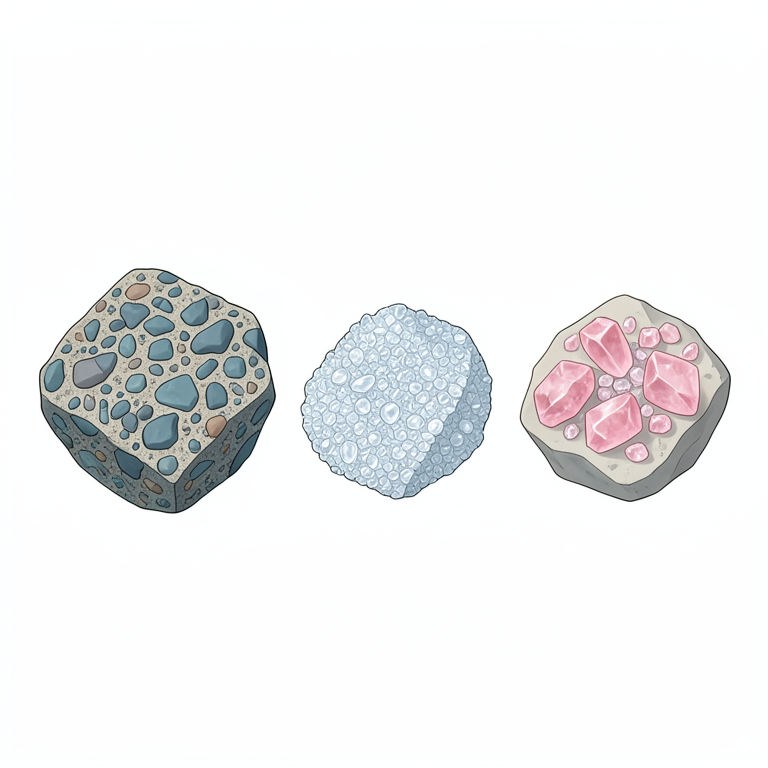
Sandstone Classification Distribution
AI-generated conceptual illustration (Barial sandstone samples from Manipur, India). It explains the idea and does not show study data.
View source evidence ↗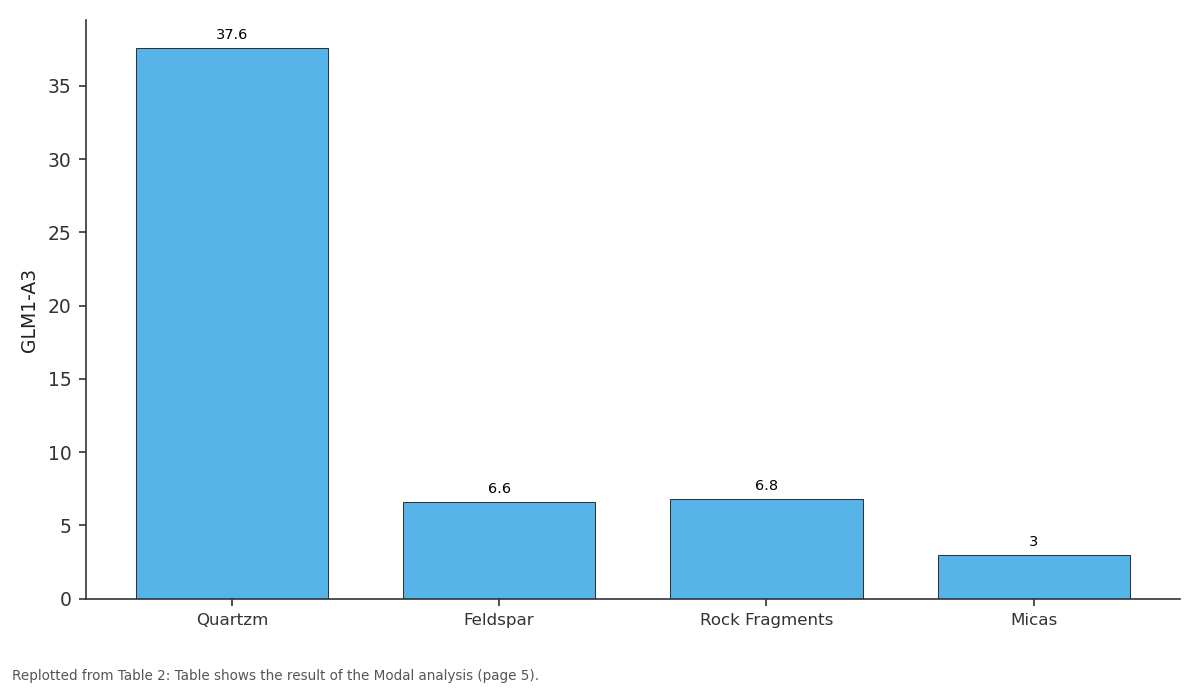
GLM1-A3: Quartzm vs Feldspar vs Rock Fragments vs Micas
Replotted from Table 2 (page 5) of the original paper. Every bar is the paper's own table value.
View source evidence ↗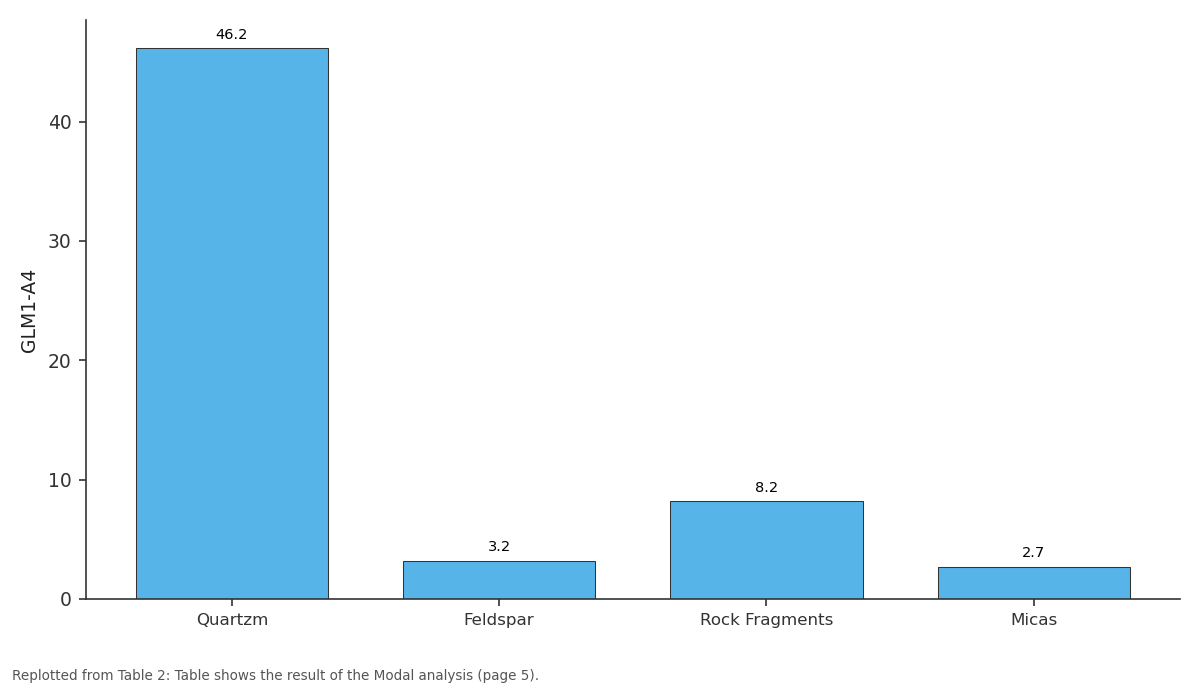
GLM1-A4: Quartzm vs Feldspar vs Rock Fragments vs Micas
Replotted from Table 2 (page 5) of the original paper. Every bar is the paper's own table value.
View source evidence ↗Figures & tables
From the original paper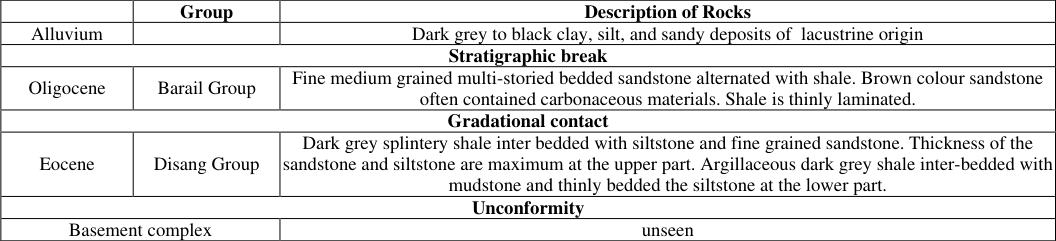 Table 1
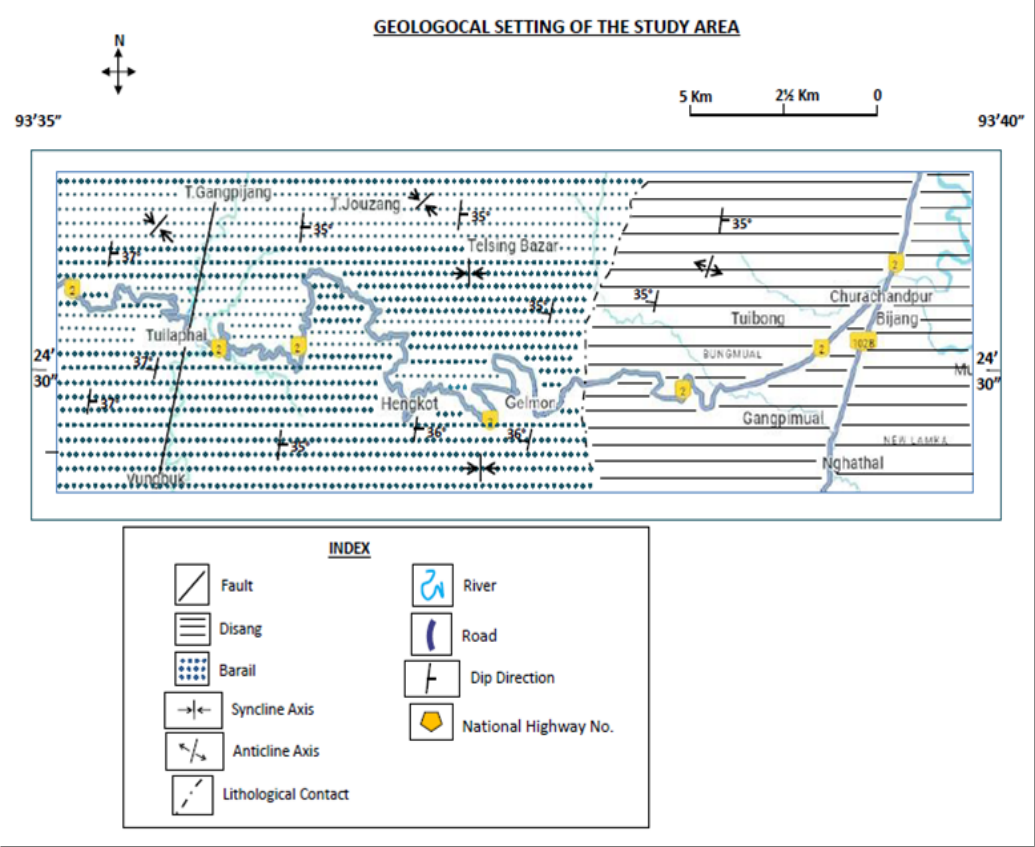 Figure 1
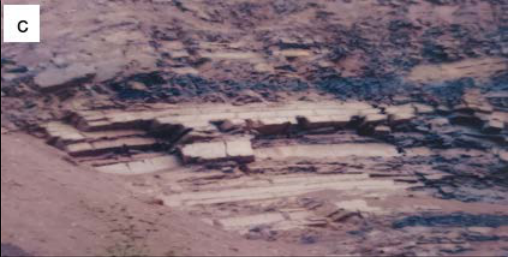 Figure 2
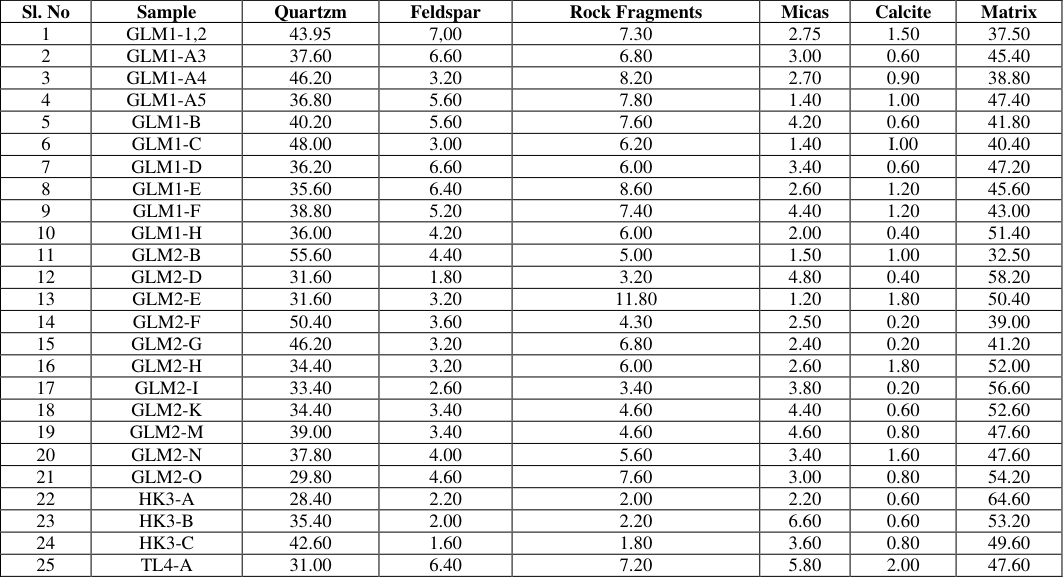 Table 2
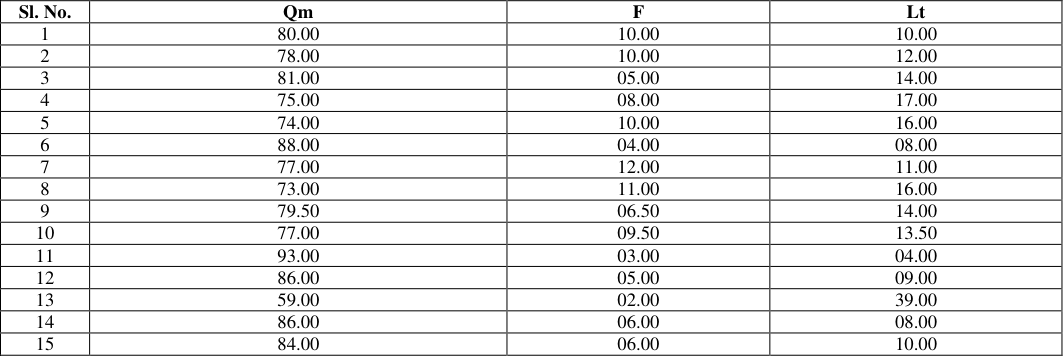 Table 3
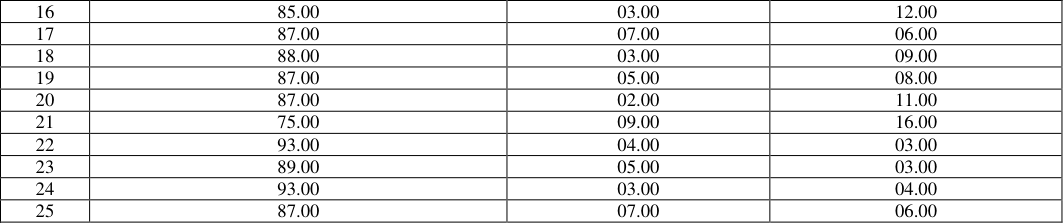 Table 4
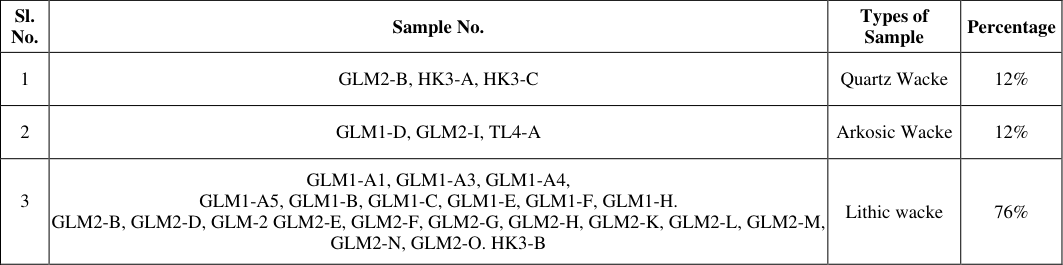 Table 4
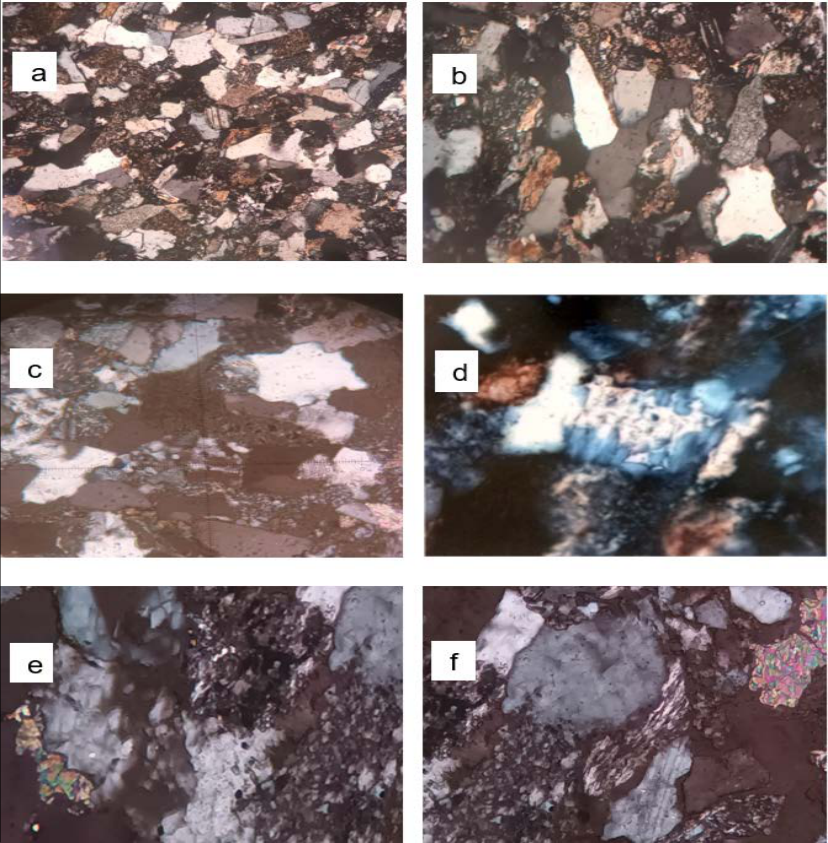 Figure 3
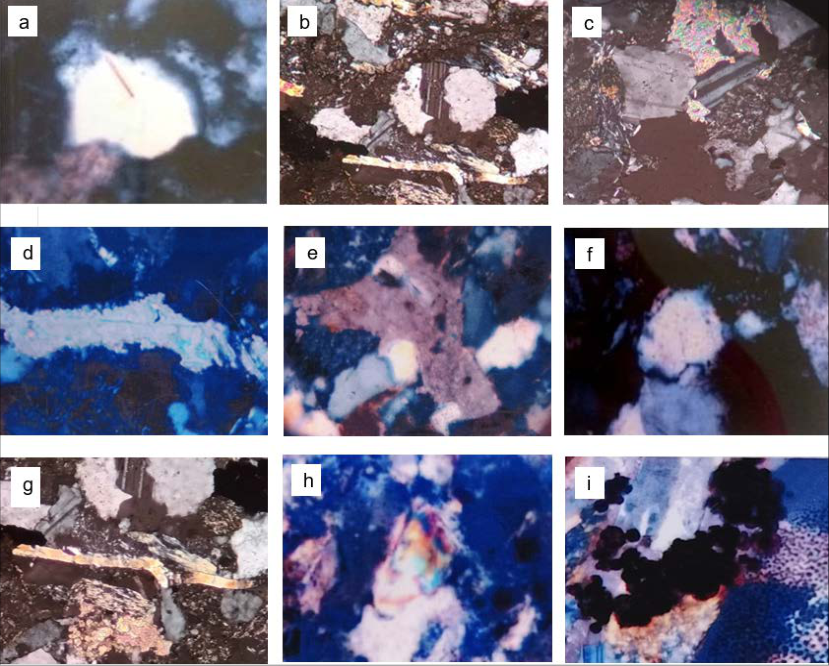 Figure 4
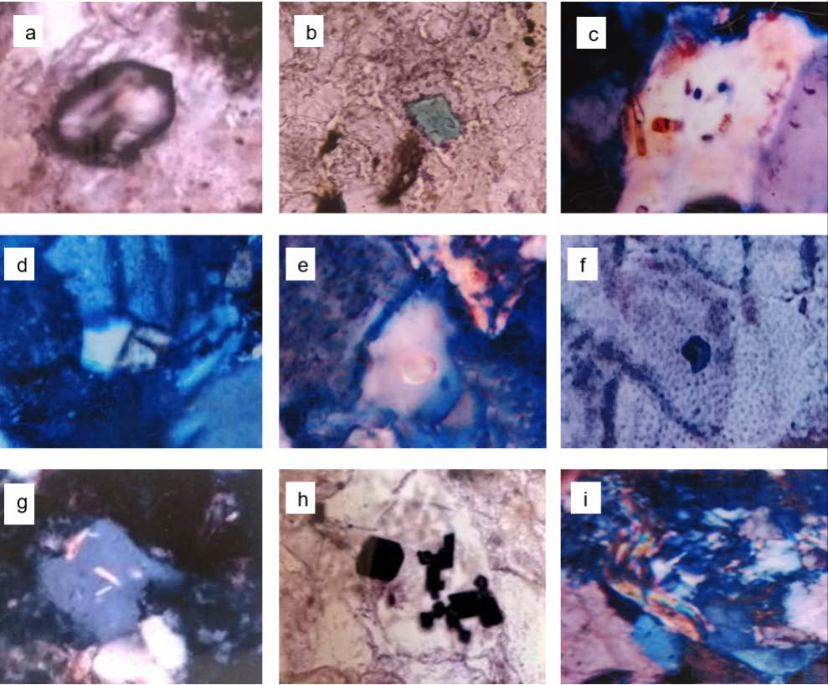 Figure 5
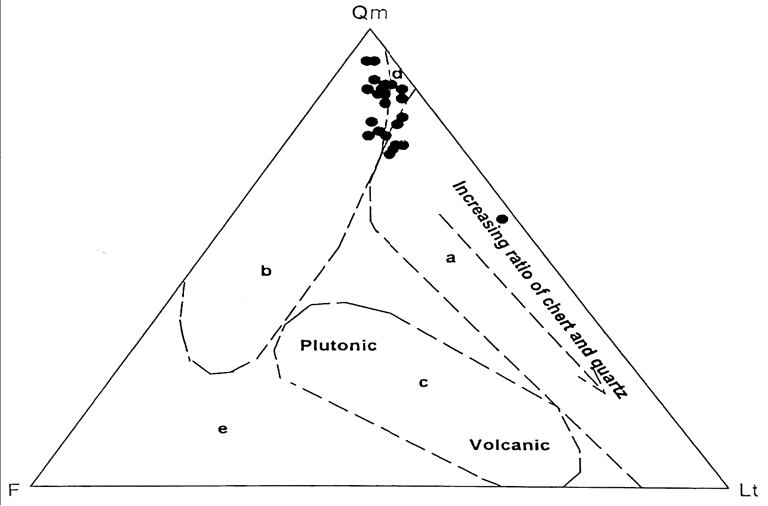 Figure 6
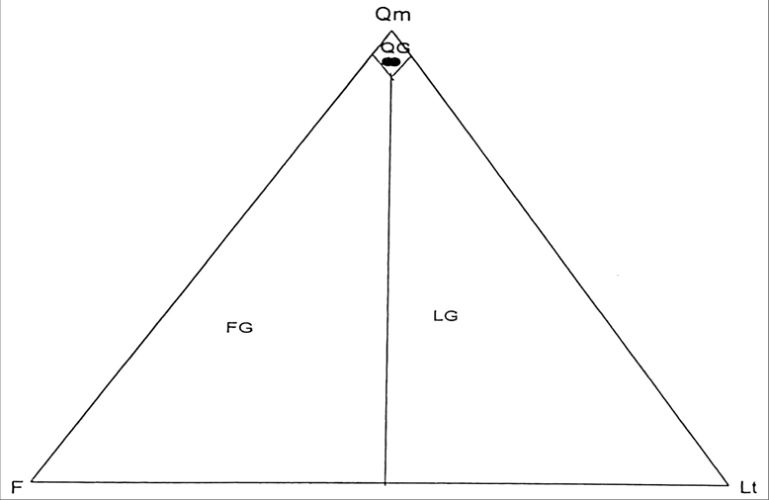 Figure 7
Introduction
The petrographic study of sedimentary archives is the most effective systematic method of many keys to deciphering geological history by study mineralogical and textural properties and micro-structure of clastic sedimentary rocks in hand specimen and thin section (Garzanti E., 2019) [15] . Descriptive petrography and classifications of sand and sandstone can be easily studied and distinguished by using petrographic microscope which is proposed more than half a century ago are still in use (Garzanti E., 2019) [15] ; and, most of the world oil and natural gas fields are found in sands and sandstones because of their high porosity and permeability. Sandstones are composed of framework grains, matrix, chemically precipitated cement and pores; has been used by sendimentologist during past few decades to decipher the provenance and tectonic setting of the source area (Dickinson, 1970; Crook, 1970; Dickinson and Suczek, 1979; Pettijohn F.J. 1987) [8,9,26] . In worldwide, such studies have been widely prove and applied by many authors. Consequently, modal analysis of the detrital framework grains of clastic sedimentary rocks has been used to infer their provenance and tectonic provenance (Dickinson, 1970; Basu et al., 1975; Dickinson and Suczek, 1979; Critelli et al., 2003) [8,1,9,5] . The aim of the present investigation is to identify the mineral present, texture of the rocks and to classify the rocks in order to understand the provenances, environments and diagenesis of the rocks.
Geological Setting of the Study Area
The study area covers the road section of about 30km from Churachandpur to Tuilaphai located at latitudes 24°20΄-24°25΄N and longitudes 93°35΄-93°45΄E stretches along National Highway No. 2. The geological formations exposed in the study area include Disang Group, Barail Group and Alluvium (fig. 1). A simplified stratigraphlic succession of the study area is given in table 1. The Disang Group of rocks lie unconformable just above the Basement complex. The Disangs are dominated by argillaceous rocks like shales and interbedded with flaggy sandstone. Minor amount of mudstone and siltstone are present at the lower part of the column where as bedded splintery shales and interbedded siltstone and sandstone are present at the upper part of the formation. Brachiopod fossils of Eocene age are abundantly present in the Disang shale. The Disang shales are characterised splintery nature due to the present of many joints which are the results of tectonic movements.
The Barails Group of rocks particularly the arenaceous one lies above the Disang Group with gradational contact (fig. 2). Fine to medium grained multi-storied bedded sandstones are well developed, interbedded with thin layers of shale Brown colour sandstones contain coal streaks/carbonaceous materials. Cross-bedding and ripple marks are the prominent structures of the rocks. Wood fossils of Oligocene age can be seen in the rocks.
Gradational contact
Gradational contact
Eocene Disang Group
Dark grey splintery shale inter bedded with siltstone and fine grained sandstone. Thickness of the sandstone and siltstone are maximum at the upper part. Argillaceous dark grey shale inter-bedded with mudstone and thinly bedded the siltstone at the lower part.
Unconformity Basement complex unseen
Unconformity Basement complex unseen
Materials and Method
The study area is selected because of abundances and fresh exposures of Barail rocks. The area is geologically mapped on the scale of 1:50000 (fig. 1). The sample were collected from suitable areas at the sizes of 4:7 cm and kept the sample in the black polyethylene bags. About 25 rock samples were selected for petrographic investigations including classification of rocks. The rock slides were prepared at the laboratory of Earth Sciences Department, Manipur University along with the technician of the department. The slides were investigated in the laboratory of Geology Department, Imphal College and D. M. College of Science, Imphal. The rocks are classified accordingly with the slide. The samples that were chosen for analysis were observed to be in either a loose or moderately indurated state. The impregnation process was deemed crucial for the successful preparation of each sample. Subsequent procedures were executed following the impregnation process to facilitate the production of thin sections.
Preparation of Standard Thin Section
Rock slabs were cut with a knife, and washed with water, then acetone to remove gases. Araldite resin and Araldite hardener were mixed 1:1 and diluted with toluene to increase viscosity (30% glue, 70% toluene). After submerging the samples in it for 3 days, the solution penetrated them. The indurated samples were then heated in an oven at 40°C temperature for 2 days to increase their rigidity. One side of the impregnated slab was polished on a coarse grinding lap and a glass plate until smooth and flat.
Then, this was mounted on a clean microscope slide, applying Araldite glue (resin: hardener = 1:1) on the polished surface. The sample's free face was ground on a coarse lap until light could pass through. The sample's thickness was tested regularly using a polarising microscope until it reached 0.03 mm. After adding Canada balsam to the heated rock slide, a thin cover slip was applied (Md. Mesbah Uddin Bhuiyan et al., 2024) [23] . The thin section petrographic analysis involved the determination of the texture and mineral/framework element
Result and Discussion Petrography
The petrographic properties of sandstones provide a basic tool for of rock classification. Combined with other parameters, it can be used to solve many intricate sedimentological problems. Composition of sandstone is influenced by the characteristics provenance, the nature of sedimentary processes within the depositional basin, and kind of dispersal path linked provenance to the depositional basin (Dickinson and Suczek, 1979) [9] . Key relations between provenance and depositional basin are governed by plate tectonics, which are ultimately controls the distribution of different type of sandstones.
For the present investigation, among 30 samples those collected from the study area, 25 representative sandstones samples were selected for detailed petrographic studies.
Texturally and mineralogically, these sandstones were found to be more or less similar, hard and compact; and, composed of quartz, feldspar, rock-fragments, micas, opaque minerals, heavy minerals and matrix/cementing materials.
Quartz
Quartz is the most dominated framework component of sandstone. Both monocrystalline and polycrystalline varieties of quartz were present in the samples collected from the study area but monocrystalline variety was more abundant than the polycrystslline one. In the present samples, quartz were varies from 28.40% -55.60%. Minimum percentage of quartz was observed in sample number HK3-A collected from the Henkot village and the maximum in sample number GML2-B from Gelmol village (table 2). Most of the quartz grains shown floating contact however, suture point, concavo-convex, long contacts were also present. These quartz grains were variable in shape and size as sub-rounded, rounded and angular (fig. 3a). Many quartz grains were characterised by the presence of various type of inclusion like, muscovite, biotite, chlorite, feldspars, gas bubbles, fluid inclusions and heavy minerals. (fig. 4 & 5). In some of the sample, gas bubbles shown preferred orientation. Inclusion of heavy minerals viz. andalusite, haematite, Zircon, gluconite, kyanite, sphene, spinel, brokite, tourmarine, garnet, magnetite, rutile, epidote, zoisite, chloritoid, amphibolite, have also been observed in the quartz grains (fig. 4h & 4i; fig. 5).
| Sl. No | Sample | Quartzm | Feldspar | Rock Fragments | Micas | Calcite | Matrix |
|---|---|---|---|---|---|---|---|
| 1 | GLM1-1,2 | 43.95 | 7,00 | 7.30 | 2.75 | 1.50 | 37.50 |
| 2 | GLM1-A3 | 37.60 | 6.60 | 6.80 | 3.00 | 0.60 | 45.40 |
| 3 | GLM1-A4 | 46.20 | 3.20 | 8.20 | 2.70 | 0.90 | 38.80 |
| 4 | GLM1-A5 | 36.80 | 5.60 | 7.80 | 1.40 | 1.00 | 47.40 |
| 5 | GLM1-B | 40.20 | 5.60 | 7.60 | 4.20 | 0.60 | 41.80 |
| 6 | GLM1-C | 48.00 | 3.00 | 6.20 | 1.40 | I.00 | 40.40 |
| 7 | GLM1-D | 36.20 | 6.60 | 6.00 | 3.40 | 0.60 | 47.20 |
| 8 | GLM1-E | 35.60 | 6.40 | 8.60 | 2.60 | 1.20 | 45.60 |
| 9 | GLM1-F | 38.80 | 5.20 | 7.40 | 4.40 | 1.20 | 43.00 |
| 10 | GLM1-H | 36.00 | 4.20 | 6.00 | 2.00 | 0.40 | 51.40 |
| 11 | GLM2-B | 55.60 | 4.40 | 5.00 | 1.50 | 1.00 | 32.50 |
| 12 | GLM2-D | 31.60 | 1.80 | 3.20 | 4.80 | 0.40 | 58.20 |
| 13 | GLM2-E | 31.60 | 3.20 | 11.80 | 1.20 | 1.80 | 50.40 |
| 14 | GLM2-F | 50.40 | 3.60 | 4.30 | 2.50 | 0.20 | 39.00 |
| 15 | GLM2-G | 46.20 | 3.20 | 6.80 | 2.40 | 0.20 | 41.20 |
| 16 | GLM2-H | 34.40 | 3.20 | 6.00 | 2.60 | 1.80 | 52.00 |
| 17 | GLM2-I | 33.40 | 2.60 | 3.40 | 3.80 | 0.20 | 56.60 |
| 18 | GLM2-K | 34.40 | 3.40 | 4.60 | 4.40 | 0.60 | 52.60 |
| 19 | GLM2-M | 39.00 | 3.40 | 4.60 | 4.60 | 0.80 | 47.60 |
| 20 | GLM2-N | 37.80 | 4.00 | 5.60 | 3.40 | 1.60 | 47.60 |
| 21 | GLM2-O | 29.80 | 4.60 | 7.60 | 3.00 | 0.80 | 54.20 |
| 22 | HK3-A | 28.40 | 2.20 | 2.00 | 2.20 | 0.60 | 64.60 |
| 23 | HK3-B | 35.40 | 2.00 | 2.20 | 6.60 | 0.60 | 53.20 |
| 24 | HK3-C | 42.60 | 1.60 | 1.80 | 3.60 | 0.80 | 49.60 |
| 25 | TL4-A | 31.00 | 6.40 | 7.20 | 5.80 | 2.00 | 47.60 |
Table text extracted from the original PDF; superscript letters are shown inline. The original table image is below.
View original table image
Feldspar
Feldspar is another important framework component of sandstone. In the present samples, amount of feldspar were found varies from 1.60% -7.00% (table 2), which includes plagioclase and orthoclase. Plagioclase was more common than orthoclase feldspars. Most of the feldspar grains were decomposed and could not be recognized on the basis of optical properties and hence considered as matrix. The plagioclase feldspars (fig. 4c) were identified by their characteristic twinning. Un-twinned orthoclase was differentiated from quartz by their turbid nature and brown colour under plane polarized light and Carlsbad twinning.
Rock Fragment
Rock fragments are also an important framework component of sandstone. In the present sample, chert (fig. 3f) and polycrystalline quartz (fig. 3e) were found as the most common type of rock fragments and ranging from 1.8% -11.80% (table 2). These rock fragments might have been derived from igneous, metamorphic and sedimentary source.
Micas
Mica group of minerals are minor contributor to the sandstones, which rarely exceeds 2% of the terrigeneous fraction and normally less than 0.5%. In the present samples, micas were found varies from 1.2% -6.60% (table 2). Muscovite being chemically stable was observed more abundant than that of the biotite. Among the mica group of minerals muscovite (fig. 4g) was more common in most of the samples. These muscovite grains were observed as elongated, slender, and platy to flaky in nature, whereas, colourless in polarized light and show one set of prominent cleavages. Biotite were found as subhedral grains and light brown colour, highly pleochroic and show straight extinction. By partial decomposition, it was altered to chloride. In some samples, both muscovite and biotite grains were crumple twisted around the clastic grains boundaries (Fig. 5c).
Calcite
Calcareous material is one of the common cement in mesozoic and cenozoic sandstones (Tallman, 1994) [29] . In the present investigation, crystal of calcite could seen varies from 0.20% -2.00% (table 2) along in the rocks as calcareous cement and calcite vein present at sample GLM2-F which was collected from Gelmon (Fig. 4d).
Heavy Mineral
Heavy minerals identified from the present samples include zircon and tourmarine, garnet, magnetite, rutile, epidote, spinel, hematite, andalusite zoisite, sphene, etc. Most of these heavy minerals occurred as inclusion in quartz grains but some of the coarse grained heavy minerals were also present independently in the ground mass.
Matrix
Matrix is the binding materials in the detrital sedimentary rocks. These may be associated intimately, crystallizing together in the same pore spaces or may be distributed in more or less isolated patches. Therefore, both fine grained detritus and chemically precipitated minerals were observed as cementing material in all rock samples. However, fine grained detritus were more common than the precipitated cementing materials. The matrix included detritus finegrained quartz, weathered feldspar, ferrigenous materials etc. The percentages of the matrix in the sample collected from the study area were observed varies greatly ranges from 32% -64.60% (table 2). The sample from Gelmol area could have little matrix whereas comparing to sample collected from HK3-A that have high amount of matrix. Calcareous material was found act as cement in some samples.
Modal Analysis
Detrital framework grains of sandstone suites from different kind of basin are the function of provinane types and governed by platetectonics. Provenance studies focuses on proportion of detrital framework grains as character and amount of interstitial cement and matrix largely a function of diagenesis (Dickinson, 1970) [8] .
For comparative analysis of sandstone suites, varied framework grains must be cast in common terms that reflect key factors of sand genesis. Modal analysis is best suited method for the estimation of relative proportion of framework grains, which are used for comparative analysis of sandstone suite (Dickinson and Suczek, 1979) [9] . In case if size of the framework grains are highly variable, Gazzi-Dickinson method of point counting gives relatively better result (Dickinson 1970; Graham et al., 1976; Ingersoll et al., 1984; Zuffa, 1985) [8,16,18,31] . The Gazzi-Dickinson method distinguishes interstitial matrix from framework grains strictly on the basis of size of framework components of the sandstones in the samples were variable and used to work out the modal composition. The results obtained from the modal analysis are shown in table 2.
For the present analysis, all model composition as volumetric proportion were recalculated into QmFLt, where, Qm stand for monocrystalline quartz; F stand for feldspar and Lt for lithic fragments. Percentage of these framewok grains are shown in table 3. QmFLt plot after Dickinson and Suczek (1979) [9] indicates that majority of the present sediments were derived from continental block provenance except GLM2-F derived from recycle orogenic provenance.
| Sl. No. | Qm | F | Lt |
|---|---|---|---|
| 1 | 80.00 | 10.00 | 10.00 |
| 2 | 78.00 | 10.00 | 12.00 |
| 3 | 81.00 | 05.00 | 14.00 |
| 4 | 75.00 | 08.00 | 17.00 |
| 5 | 74.00 | 10.00 | 16.00 |
| 6 | 88.00 | 04.00 | 08.00 |
| 7 | 77.00 | 12.00 | 11.00 |
| 8 | 73.00 | 11.00 | 16.00 |
| 9 | 79.50 | 06.50 | 14.00 |
| 10 | 77.00 | 09.50 | 13.50 |
| 11 | 93.00 | 03.00 | 04.00 |
| 12 | 86.00 | 05.00 | 09.00 |
| 13 | 59.00 | 02.00 | 39.00 |
| 14 | 86.00 | 06.00 | 08.00 |
| 15 | 84.00 | 06.00 | 10.00 |
Table text extracted from the original PDF; superscript letters are shown inline. The original table image is below.
View original table image
Classification
There are numerous schemes for the classification of sandstones based on textural and mineralogical parameters, proposed by various workers. Most of the classification uses triangular diagram with quartz, feldspar and rock fragments are end members. The triangle is derived into various fields and rocks with a specific modal composition falling within a particular field are given a specific name. Some of the notable workers who have contributed significantly in the classification of sandstone are Fischer (1933) [11] , Krinine (1948) [20] , Tallman (1949) [29] , Dapples et al., (1953) [7] , Folk (1954) [12] , Van-Andel (1958) [30] , Fuchtbauer (1959) [14] , Hubert (1960) [17] , Fujji (1962) [13] ,
Mc. Bride (1963) [22] , Krumbein and Sloss (1966) [19] ,
Shutov (1967) [28] , Boggs (1967) [3] , and many other. Packman (1954) [25] and Crook (1970) [6] have used structure, texture and mineralogy for the classification of sandstone. Dott (1964) [10] scheme for the classification of sandstone modified by Petijohn F.J. (1984) [26] is widely accepted one and has been adopted for the classification of present sandstones. It is simple scheme of classification and suitable for both ancient as well as modern sediments because it uses mineralogy of the framework grains and matrix both Quartz, Feldspar and rock fragments are used as end members in this triangular. On the basis of matrix percentage, sandstones is classified into three major groups such as Arenite with matrix (<15%), Wacke with matrix (15% -75%) and Mudstone with matrix (>75%).
Since the matrix amount in the present samples ranges from 15% -75%, it was categorised as wackes. For further subdivisions of this wackes, percentage of quartz, feldspar and rock fragment obtained from the modal analysis (table 3) was plotted in the triangular diagram (fig 6). Analysis of QmFLt diagram revealed that out of 25 samples which were selected for the modal analysis, 19 samples were catagorised in the lithic grey wacke category followed by 3 samples in arkosic wacke category and again, 3 samples in quartz wacke catagory (table 4) (fig. 7).
| Sl. No. | Sample No. | Types of Sample | Percentage |
|---|---|---|---|
| 1 | GLM2-B, HK3-A, HK3-C | Quartz Wacke | 12% |
| 2 | GLM1-D, GLM2-I, TL4-A | Arkosic Wacke | 12% |
| 3 | GLM1-A1, GLM1-A3, GLM1-A4, GLM1-A5, GLM1-B, GLM1-C, GLM1-E, GLM1-F, GLM1-H. GLM2-B, GLM2-D, GLM-2 GLM2-E, GLM2-F, GLM2-G, GLM2-H, GLM2-K, GLM2-L, GLM2-M, GLM2-N, GLM2-O. HK3-B | Lithic wacke | 76% |
Table text extracted from the original PDF; superscript letters are shown inline. The original table image is below.
View original table image
| 16 | 85.00 | 03.00 | 12.00 |
|---|---|---|---|
| 17 | 87.00 | 07.00 | 06.00 |
| 18 | 88.00 | 03.00 | 09.00 |
| 19 | 87.00 | 05.00 | 08.00 |
| 20 | 87.00 | 02.00 | 11.00 |
| 21 | 75.00 | 09.00 | 16.00 |
| 22 | 93.00 | 04.00 | 03.00 |
| 23 | 89.00 | 05.00 | 03.00 |
| 24 | 93.00 | 03.00 | 04.00 |
| 25 | 87.00 | 07.00 | 06.00 |
Table text extracted from the original PDF; superscript letters are shown inline. The original table image is below.
View original table image
Greywacke
Wackes are the transitional group between arenites and mudrocks. Dominant with considerably high amount of quartz and a fairly large proportion of grained-matrix and are term as quartz wackes. The term arkosic wacke is used for the sandstones with the significant proportion of matrix and feldspars more than the rock fragments (Pettijohn F.J., 1984) [26] . Wackes containing more rock fragments than the feldspar are terms as lithic wackes.
From above finding, it may discuss that due to the presence of large proportion of matrix, wide range of grain size variation, and lack of rounding and sorting of the framework grains is the indications of textural immaturity. The presence of feldspars and rock fragment of various types may indicate mineralogical immaturity (Pettijohn F.J., 1984; Sengupta S.M., 1996) [26,2] . heavy minerals and matrix/cementing materials. Quartz is the most dominant mineral and constitutes 28.5% -55.6% of the framework grains. Both monocrystalline and polycrystalline varieties of quartz are present, however; monocrystalline variety is more than the polycrystalline one. Most of the quartz grains floating contact however, suture, point, concavo-convex, long contact are also present suggesting variable degree of diagenesis. Some quartz grains are highly elongated and show wavy extinction suggesting metamorphic source. Fine grain minerals like muscovite, boitite, chlorite, feldspars, gas bubbles and different types of heavy minerals are present as inclusion in the quartz grains. These gas bubbles and quartz grains are arranged randomly as well as in the straight lines. In some quartz grains presence of liquid inclusions suggest their igneous origin. Samples containing large amount of decomposed feldspars and calcareous matrix show the effect of itching over the quartz grains. Feldspar group of mineral is represented by plagioclase, microcline, and orthoclase together contributes 1 -5.8% of the framework constituent. Most of the feldspars have been decomposed beyond the limit of recognition on the basis of their optical properties and hence consider as matrix. High amount of feldspars in some samples suggests tectonically active source area, short distance of transport and also shows igneous origin. Lithic fragments include both polycrystalline and microcrystalline quartz which contributes 1-20.8% to the framework components suggesting metamorphic and sedimentary source. Among the mica group of minerals, muscovite is more common however; few grains of biotite have also been observed. In the present samples mica ranges from 1 -4.8%. Presence of muscoviten supports metamorphic sources.
Acknowledgement
AcknowledgementsThe authors are grateful and would like to thanks to Dept. of Geology, D. M. College of Science, Dhanamanjuri University (DMU); Dept. of Earth Science, Manipur University (MU) and Dept. of Geology, Imphal College, Imphal for kind extending the laboratory facilities and equipment for preparation of this paper. And also, the authors would like to gratitude and thanks to the Dept. of Geology, Bir Tikendrajit University (BTU), Imphal for giving us opportunity to do such kind of research under the University. Lastly, thanks to all well wishers.
Figures and tables from the paper
References
31 in the original paper- Basu A, Young S, Suttner L, James W, Mack G. Reevaluation of the use of undulatory extinction and crystallinity in detrital quartz for provenance interpretation. Journal of Sedimentary Research. 1975;45:873-882.
- Sengupta SM. Sedimentary texture. In: Introduction to sedimentary petrology. Chapter 3. Oxford & IBH Publishing Co Pvt Ltd; 1996. p. 19-46.
- Boggs SJ. A numerical method for sandstone classification and texture. Journal of Sedimentary Petrology. 1967;37:548-555.
- Bookman J. Sandstone classification in relation to composition texture. Journal of Geology. 1955;61:291317.
- Critelli D, Arribas J, Le Pera E, Tortosa A, Marsaglia KM, Latter KK. The recycled orogenic sand provenance from an uplifted thrust belt, Betic Cordillera, Southern Spain. Journal of Sedimentary Research. 2003;73:72-81.
- Crook KAW. Geotectonic significance of graywackes: Relevance of recent sediments from Nuigini. In: Proceedings of the 42nd ANZAAS Congress, Port Moresby, Nuigini; 1970.
- Dapples EC, Krumbein WC, Sloss LL. Petrographic and lithologic attributes of sandstones. Journal of Geology. 1953;57:582-591.
- Dickinson WR. Interpreting detrital modes of mechanical analysis. Journal of Sedimentary Petrology. 1970;40:695-707.
- Dickinson WR, Suczek CA. Plate tectonics and sandstone composition. American Association of Petroleum Geologists Bulletin. 1979;63:2164-2182.
- Dott RA. Wacke, greywacke and matrix-what approach to immature sandstone classification. Journal of Sedimentary Petrology. 1964;34:625-632.
- Fischer G. Die petrographie der Grauwacken. Jahrbuch der Preussischen Geologischen Landesanstalt. 1933;54:320-334.
- Folk RL. The distinction between grain size and mineral composition in sedimentary rock nomenclature. Journal of Geology. 1954;62:344-359.
- Fujii K. Petrography of the Upper Paleozoic sandstones from the Yatsushiro area, Kyushu. Memoirs of the Faculty of Science, Kyushu University, Series D. 1962:179-213.
- Füchtbauer H. Zur Nomenclature der Sedimentgesteine. Erdöl und Kohle. 1959;12:605-613.
- Garzanti E. Petrographic classification of sand and sandstone. Earth-Science Reviews. 2019. doi:10.1016/j.earscirev.2018.12.014.
- Graham SA, Ingersoll RV, Dickinson WR. Common provenance for lithic grains in Carboniferous sandstones from Ouachita Mountains and Black Warrior Basin. Journal of Sedimentary Petrology. 1976;46:620-632.
- Hubert JF. Petrology of the Fountain and Lyons formations, Front Range. Colorado School of Mines Quarterly. 1960;55:242.
- Ingersoll RV, Bullard TF, Grimm JP, Pickle JD, Sares SW. The effect of grain size on detrital modes: A test of the Gazzi-Dickinson point counting method. Journal of Sedimentary Petrology. 1984;54:103-116.
- Krumbein WC, Sloss LL. Stratigraphy and sedimentation. San Francisco: Freeman; 1966. p. 491.
- Krynine PD. The megascopic study and field classification of sedimentary rocks. Journal of Geology. 1948;56:230-265.
- Abdulfarraj MR, Alqahtani FA, Wanas HA. Petrography and geochemistry of sandstones of the Ash Shumaysi Formation in the Jeddah-Makkah region, Saudi Arabia: Implications for provenance, tectonic setting, paleoweathering, paleoclimate and paleogeography. Sedimentary Geology. 2024.
- McBride EF. Classification of common sandstones. Journal of Sedimentary Petrology. 1963;33:644-669.
- Bhuiyan MMU, Bhuiyan MAH, Islam MS, Sabira U. Petrography and diagenesis of thin-bed reservoirs from the eastern folded belt of Bangladesh. Nature Environment and Pollution Technology. 2024;23(2):605-618.
- Anyiam OA, Moghalu OA, Onwuka OS. Petrography and depositional environments of the sandstones in areas around Abuul, in Ushongo, Southern Benue Trough, Nigeria. Global Journal of Geological Sciences. 2017;15:13-23.
- Packman GH. Sedimentary structures are an important factor in the classification of sandstone. American Journal of Science. 1954;252:466-476.
- Pettijohn FJ. Sedimentary rocks. 3rd ed. Delhi: CBS Publishers and Distributors; 1984. p. 483-503.
- Sahu BK. Classification of arenites. American Journal of Science. 1965;258:419-428.
- Shutov VD. Klassifikatsiia peschankov (classification of sandstone). Litologiya i Poleznye Iskopayemye. 1967;5:86-103.
- Tallman SF. Sandstone types, their abundances and cementing agents. Journal of Geology. 1949;57:582591.
- Van Andel TH. Origin and classification of Cretaceous, Paleocene, and Eocene sandstones of western Venezuela. Bulletin of the American Association of Petroleum Geologists. 1958;42:734-763.
- Zuffa GG. Optical analysis of arenites: Influence of methodology on compositional results. In: Zuffa GG, editor. Provenance of arenites. NATO Advanced Study Institute Series. 1985.