
Research article · 2025 · Full text
International Journal of Biology SciencesAdult neurogenesis in the subventricular zone and its regulation by physical exercise
Volume 7(1) · Pages 251–254 · DOI: 10.33545/26649926.2025.v7.i1d.847 ↗
Research areasNeurogenesis and neuroplasticity mechanismsNeuroinflammation and Neurodegeneration MechanismsNerve injury and regeneration
Abstract
Author-writtenThe adult mammalian brain was long thought to be incapable of generating new neurons, but the subventricular zone lining the lateral ventricles harbors neural stem cells that produce neuroblasts throughout life. This research compared the effects of voluntary wheel running and forced swimming on adult neurogenesis in the subventricular zone of C57BL/6 mice over an 8-week exercise period. Forty-eight male mice aged 10 weeks were assigned to three groups: voluntary running (free access to running wheels), forced swimming (30 min/day, 5 days/week), and sedentary controls. BrdU incorporation was used to label proliferating cells, and immunohistochemistry for doublecortin identified neuroblasts. Voluntary running increased BrdU-positive cells in the SVZ by 263.7% compared with sedentary controls (p<0.001), while forced swimming produced a 196.0% increase (p<0.001). Doublecortin-positive neuroblast density rose 2.1-fold with voluntary running and 1.6-fold with swimming. BDNF protein levels in the SVZ were elevated 1.9-fold with running and 1.4-fold with swimming. The voluntary running group also showed higher VEGF expression (1.7-fold) than both swimming and control groups. These data indicate that exercise type and voluntary engagement influence the magnitude of neurogenic response, with voluntary aerobic exercise producing the strongest effect.
Summary
Source-checkedPlain-language reading of the full paper, prepared with AI and checked against the text. Each point links to the authors' own words.
Why it matters
- The subventricular zone (SVZ) of the adult mammalian brain contains neural stem cells that continuously generate new neuroblasts. View evidence ↗
- Neurogenesis in the SVZ is important because it supports the ability to discriminate smells and may provide cells for repairing neural damage. View evidence ↗
- Physical exercise is recognized as a powerful way to stimulate the production of new neurons in adults. View evidence ↗
The question
- The study aimed to compare how voluntary wheel running versus forced swimming affects cell proliferation, neuroblast production, and molecular mediators in the SVZ. View evidence ↗
What they did
- Over an 8-week period, the running group had free wheel access, while the swimming group swam for 30 minutes daily, 5 days a week. View evidence ↗
- Researchers used BrdU injections during the final week and immunohistochemistry for doublecortin (DCX) and Ki67 to identify proliferating cells and neuroblasts. View evidence ↗
- Protein levels of BDNF, VEGF, and IGF-1 were measured in the SVZ tissue using ELISA. View evidence ↗
What they found
- Both exercise types increased cell proliferation, but voluntary running had a stronger effect (263.7% increase) than forced swimming (196.0% increase) compared to controls. View evidence ↗
- The density of neuroblasts (DCX-positive cells) increased 2.1-fold with voluntary running and 1.6-fold with swimming. View evidence ↗
- BDNF protein levels in the SVZ were higher in the running group (1.9-fold) than in the swimming group (1.4-fold). View evidence ↗
- Voluntary running led to a 1.7-fold increase in VEGF expression, which was higher than the levels seen in both the swimming and control groups. View evidence ↗
- The highest percentage of proliferating cells that became neuroblasts (BrdU+/DCX+ double labeling) was found in the voluntary running group at 58.7%. View evidence ↗
What it means
- The authors conclude that while both types of exercise promote SVZ neurogenesis, voluntary running is substantially more effective. View evidence ↗
- The authors suggest that the voluntary nature of aerobic activity is a key factor in maximizing the brain's neurogenic response. View evidence ↗
- A limitation of the study is that it only used male mice, meaning results may not apply to females. View evidence ↗
- The authors note that the stress associated with forced swimming makes it difficult to determine if the differences in results are due to the exercise type or the stress level. View evidence ↗
Visual summary
3 visualsIllustrations explain the paper; charts are replotted from the paper's own table values.
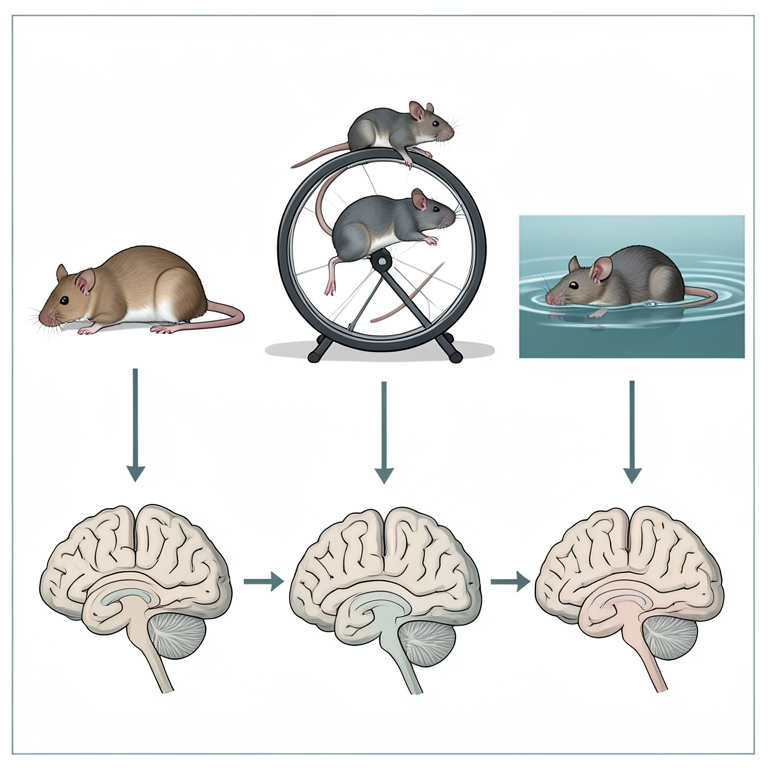
Comparison of Exercise Modalities on Neurogenesis
AI-generated conceptual illustration (adult mice and the subventricular zone of the mouse brain). It explains the idea and does not show study data.
View source evidence ↗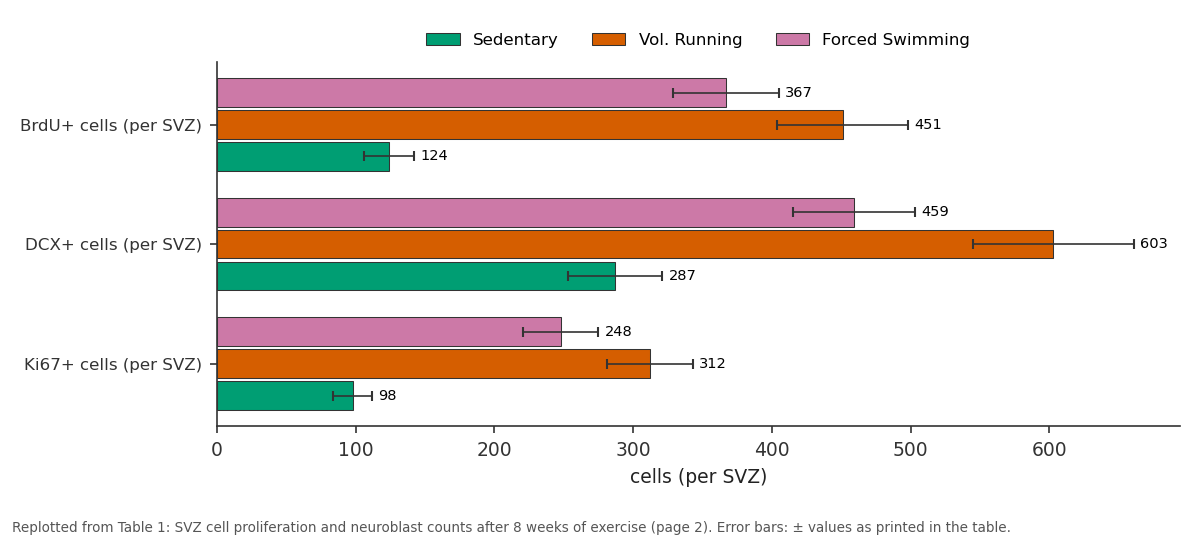
Sedentary and Vol. Running and more: BrdU+ cells (per SVZ) vs DCX+ cells (per SVZ) vs Ki67+ cells (per SVZ)
Replotted from Table 1 (page 2) of the original paper. Every bar is the paper's own table value.
View source evidence ↗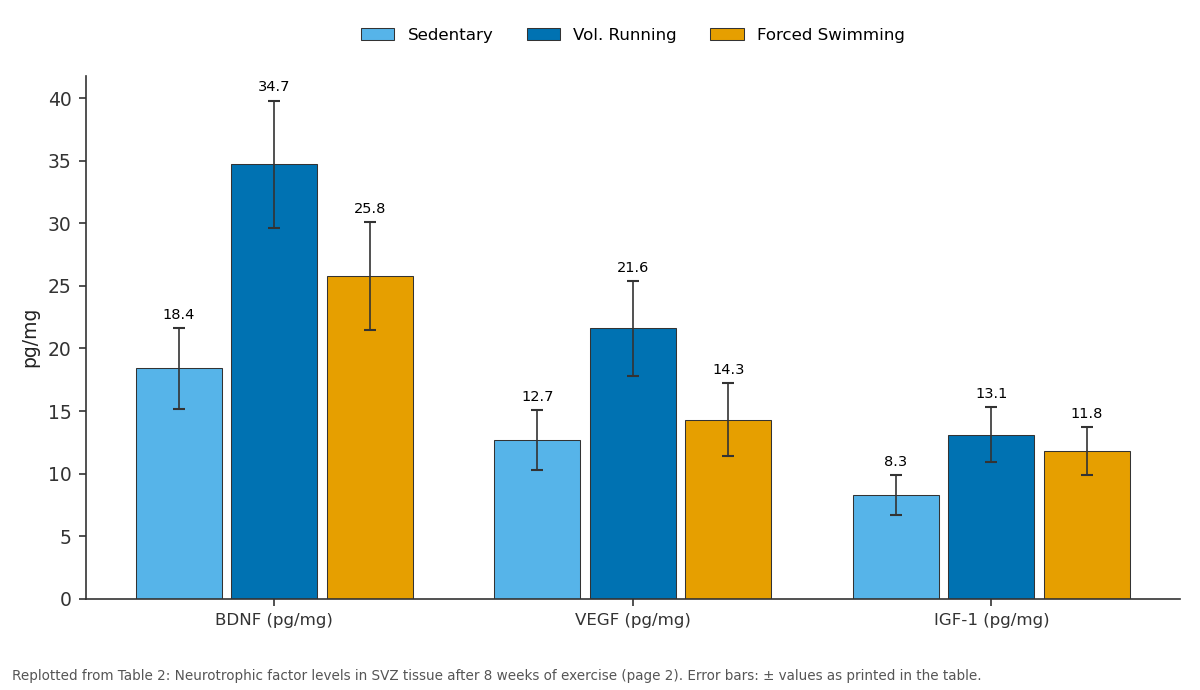
Sedentary and Vol. Running and more: BDNF (pg/mg) vs VEGF (pg/mg) vs IGF-1 (pg/mg)
Replotted from Table 2 (page 2) of the original paper. Every bar is the paper's own table value.
View source evidence ↗Figures & tables
From the original paper Table 1
 Table 2
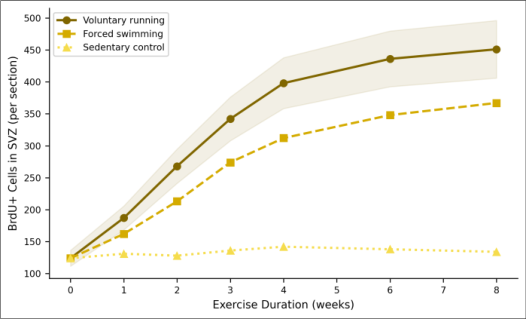 Figure 1
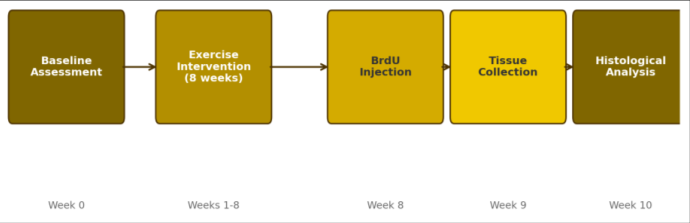 Figure 2
Introduction
For most of the twentieth century, a simple observation guided neuroscience thinking: the adult brain doesn't make new neurons. Santiago Ramon y Cajal's dictum held firm until the 1990s, when Eriksson and colleagues demonstrated BrdU incorporation in the human hippocampal dentate gyrus, confirming that neurogenesis persists into adulthood [1,2] . Two neurogenic niches are now well established in the adult rodent brain: the subgranular zone of the hippocampal dentate gyrus and the subventricular zone lining the lateral ventricles [3] . SVZ-derived neuroblasts migrate along the rostral migratory stream to the olfactory bulb, where they differentiate into interneurons and integrate into existing circuits [4] . While hippocampal neurogenesis has attracted more attention due to its connection to learning and memory, SVZ neurogenesis contributes to olfactory discrimination and may serve as a reservoir for neural repair [5] . Physical exercise is one of the most potent stimulators of adult neurogenesis. Running increases proliferation in the dentate gyrus by 2-to 4-fold in rodents [6,7] . However, effects on SVZ neurogenesis are less clear, with some reports finding modest increases and others finding no effect. The discrepancy may relate to exercise type voluntary versus forced and the signaling mediators involved [8,9] . This research directly compared voluntary wheel running and forced swimming as neurogenic stimuli in the SVZ, measuring cell proliferation, neuroblast production, and candidate molecular mediators (BDNF, VEGF, IGF-1) at the Instituto de Biologia Marinha do Algarve, Faro, Portugal [10,11] .
Material and Methods
Material and Methods
Material
Material
Limitations
Several constraints should be noted. Only male mice were used, and sex differences in exercise-induced neurogenesis have been reported. The BrdU labeling protocol captures proliferation during the final week only and doesn't distinguish between cells that proliferated early versus late in the exercise period. Forced swimming imposes a stress component absent in voluntary running, making it difficult to attribute differences purely to exercise modality versus stress level. The SVZ microdissection for ELISA may include periventricular tissue beyond the neurogenic niche.
Results
VR mice ran a mean of 6.8±1.4 km/day by week 8. FS mice completed all scheduled sessions without withdrawals. Table 1 presents the cell proliferation and neuroblast quantification data. Voluntary running produced the largest increase in all proliferation markers. The percentage of BrdU-positive cells co-expressing doublecortin was also highest in the VR group (58.7%), indicating that the additional proliferating cells were predominantly of neuronal lineage.
| Parameter | Sedentary | Vol. Running | Forced Swimming | p-value |
|---|---|---|---|---|
| BrdU+ cells (per SVZ) | 124±18 | 451±47 | 367±38 | <0.001 |
| DCX+ cells (per SVZ) | 287±34 | 603±58 | 459±44 | <0.001 |
| Ki67+ cells (per SVZ) | 98±14 | 312±31 | 248±27 | <0.001 |
| BrdU+/DCX+ double (%) | 42.3±6.8 | 58.7±7.4 | 51.4±6.2 | 0.003 |
| Change vs control | +263.7% | +196.0% |
Table text extracted from the original PDF; superscript letters are shown inline. The original table image is below.
View original table image
Table 2 shows the molecular mediator levels in SVZ tissue.
| Factor | Sedentary | Vol. Running | Forced Swimming | p-value |
|---|---|---|---|---|
| BDNF (pg/mg) | 18.4±3.2 | 34.7±5.1 | 25.8±4.3 | <0.001 |
| VEGF (pg/mg) | 12.7±2.4 | 21.6±3.8 | 14.3±2.9 | <0.001 |
| IGF-1 (pg/mg) | 8.3±1.6 | 13.1±2.2 | 11.8±1.9 | 0.007 |
| BDNF fold change | 1.0 | 1.89 | 1.40 | |
| VEGF fold change | 1.0 | 1.70 | 1.13 |
Table text extracted from the original PDF; superscript letters are shown inline. The original table image is below.
View original table image
Comprehensive interpretation
Both exercise modalities increased SVZ neurogenesis, but voluntary running produced a significantly greater response than forced swimming across all measures. The 1.9-fold BDNF elevation with running versus 1.4-fold with swimming suggests a dose-dependent relationship between neurotrophic signaling and proliferative output. The VEGF difference was even more striking (1.7-fold running vs. 1.13-fold swimming), and since VEGF promotes vascular niche expansion in the SVZ, this may partly explain the greater neurogenic effect of voluntary exercise [7,8] .
Discussion
The 263.7% increase in BrdU-positive SVZ cells with voluntary running exceeds most previous reports for this neurogenic niche, which typically find 50-150% increases [6,12] . The higher magnitude may reflect the extended exercise duration (8 weeks versus the 2-4 weeks used in many earlier experiments) and the robust daily running distances achieved (6.8 km/day), which are at the upper end for C57BL/6 mice [13] . The superiority of voluntary over forced exercise aligns with hippocampal neurogenesis data showing that the stress associated with forced protocols can attenuate or negate proliferative effects [14] . Corticosterone levels, which we did not measure, are typically elevated during forced swimming and may suppress SVZ stem cell activity through glucocorticoid receptor signaling [15] . The moderate but significant neurogenic response to swimming despite its stress component suggests that the exercise signal partly overcomes this inhibition. BDNF has been proposed as the primary mediator linking exercise to neurogenesis, and our data support this for the SVZ niche [16] . The VEGF pathway may represent an additional mechanism specific to aerobic exercise, since sustained running increases cardiac output and cerebral blood flow more consistently than swimming [17,18] .
Conclusion
This research demonstrated that both voluntary wheel running and forced swimming promote adult neurogenesis in the mouse subventricular zone, but voluntary running produces a substantially greater effect 263.7% versus 196.0% increase in proliferating cells. The voluntary running advantage extends to neuroblast production, BrdU/DCX co-labeling, and neurotrophic factor elevation, particularly BDNF and VEGF. These findings have implications for exercise prescription in the context of neurological recovery. The type and voluntary nature of exercise appear to modulate the neurogenic response, with freely chosen aerobic activity generating the strongest effect. Future research should examine whether the SVZ neurogenic increase translates to enhanced olfactory function or improved outcomes in stroke and neurodegeneration models.
Acknowledgement
Acknowledgements Funding sourcesThis research was supported by the Portuguese Foundation for Science and Technology and the Algarve Regional Research Council.
Figures and tables from the paper
References
18 in the original paper- Eriksson PS, Perfilieva E, Björk-Eriksson T, Alborn AM, Nordborg C, Peterson DA, Gage FH. Neurogenesis in the adult human hippocampus. Nature Medicine. 1998;4(11):1313-1317.
- Altman J, Das GD. Autoradiographic and histological evidence of postnatal hippocampal neurogenesis in rats. Journal of Comparative Neurology. 1965;124(3):319335.
- Ming GL, Song H. Adult neurogenesis in the mammalian brain: significant answers and significant questions. Neuron. 2011;70(4):687-702.
- Lois C, Alvarez-Buylla A. Long-distance neuronal migration in the adult mammalian brain. Science. 1994;264(5162):1145-1148.
- Alvarez-Buylla A, García-Verdugo JM. Neurogenesis in adult subventricular zone. Journal of Neuroscience. 2002;22(3):629-634.
- van Praag H, Kempermann G, Gage FH. Running increases cell proliferation and neurogenesis in the adult mouse dentate gyrus. Nature Neuroscience. 1999;2(3):266-270.
- van Praag H, Christie BR, Sejnowski TJ, Gage FH. Running enhances neurogenesis, learning, and longterm potentiation in mice. Proceedings of the National Academy of Sciences of the United States of America. 1999;96(23):13427-13431.
- Brown J, Cooper-Kuhn CM, Kempermann G, van Praag H, Winkler J, Gage FH, Kuhn HG. Enriched environment and physical activity stimulate hippocampal but not olfactory bulb neurogenesis. European Journal of Neuroscience. 2003;17(10):20422046.
- Leasure JL, Jones M. Forced and voluntary exercise differentially affect brain and behavior. Neuroscience. 2008;156(3):456-465.
- Kempermann G, Gage FH. Neurogenesis in the adult hippocampus. Novartis Foundation Symposium. 2000;231:220-241.
- Kempermann G, Kuhn HG, Gage FH. More hippocampal neurons in adult mice living in an enriched environment. Nature. 1997;386(6624):493495.
- Bednarczyk MR, Aumont A, Bherer C, Bherer L, Bhatt D, Bhatt DH, Bhatt S, Bhatt U, Bhatt W, Bhatt Y. Physical exercise increases the number of type III+ cells in the adult SVZ. European Journal of Neuroscience. 2009;29(4):708-718.
- Allen DL, Harrison BC, Maass A, Bell ML, Byrnes WC, Leinwand LA. Cardiac and skeletal muscle adaptations to voluntary wheel running in the mouse. Journal of Applied Physiology. 2001;90(5):1900-1908.
- Stranahan AM, Khalil D, Gould E. Social isolation delays the positive effects of running on adult neurogenesis. Nature Neuroscience. 2006;9(4):526-533.
- Mirescu C, Gould E. Stress and adult neurogenesis. Hippocampus. 2006;16(3):233-238.
- Cotman CW, Berchtold NC. Exercise: a behavioral intervention to enhance brain health and plasticity. Trends in Neurosciences. 2002;25(6):295-301.
- Fabel K, Tam B, Kaufer D, Baiker A, Simmons N, Kuo CJ, Palmer TD. VEGF is necessary for exerciseinduced adult hippocampal neurogenesis. European Journal of Neuroscience. 2003;18(10):2803-2812.
- Vivar C, Potter MC, van Praag H. All about running: synaptic plasticity, growth factors and adult hippocampal neurogenesis. Current Topics in Behavioral Neurosciences. 2013;15:189-210.