
Research article · 2026 · Full text
International Journal of Advanced Chemistry ResearchMethodological study of the spectral estimation of cobalt ions in some environmental models (food and pharmaceuticals)
Volume 8(5) · Pages 17–22 · DOI: 10.33545/26646781.2026.v8.i5a.670 ↗
Research areasAnalytical chemistry methods developmentEnvironmental and Analytical Chemistry StudiesAnalytical Methods in Pharmaceuticals
Abstract
Author-writtenThis study aimed to develop a sensitive and accurate spectroscopic method for the determination of cobalt (II) ions (Co (II)) in several environmental, food, and pharmaceutical samples using the laboratory-prepared Schiff-azo organic reagent ABIDAPH, based on UV-Vis spectroscopy. The study involved preparing standard solutions and the organic reagent, then investigating the spectral behavior of the resulting cobalt complex and determining the optimal conditions for complex formation and stability. The results showed that the cobalt complex with the organic reagent exhibited the highest absorbance at a maximum wavelength of 520 nm, while the maximum wavelength for the free reagent was 457 nm, confirming the formation of a clear and stable complex between. The optimal medium for complex formation was at pH 9, where the absorbance decreased at higher pH values due to the potential precipitation of cobalt ions or the formation of less stable complexes. The best concentration of the organic reagent was 1 × 10⁻⁴ M while for the cobalt ion the best concentration was 5 × 10⁻⁵ M. The effect of the order of addition of the reaction components was also investigated. The results showed that the best order for achieving the highest absorbance was the addition of the cobalt ion, followed by the alkaline medium, and then the organic reagent (M + pH + R), resulting in an absorbance of 0.33. The results confirmed a 1:1 cobalt-to-organic reagent ratio, indicating the formation of a stable complex with a clear coordination structure. The titration curve analysis showed that the method complies with Beer-Lambert's law within the studied concentration range, exhibiting good sensitivity for detecting low concentrations of cobalt ions. The proposed method was successfully applied to estimate cobalt ions in several different food samples after fresh digestion. Cobalt concentrations ranged from 11 to 20 ppm in the studied samples, with lentils recording the highest cobalt concentration at 20 ppm and celery the lowest at 11 ppm. The results generally indicate the efficiency of the organic reagent ABIDAPH in forming stable-colored complexes with cobalt ions, and the potential of the proposed method as a simple, accurate, and sensitive analytical tool for estimating cobalt in various environmental, food, and herbs samples.
Summary
Source-checkedPlain-language reading of the full paper, prepared with AI and checked against the text. Each point links to the authors' own words.
Why it matters
- Cobalt is a critical transition metal used in biological processes, such as vitamin B12 synthesis, and industrial applications like lithium-ion batteries. View evidence ↗
- Elevated levels of cobalt in food or the environment can potentially cause adverse health effects. View evidence ↗
- The potential health risks of cobalt necessitate the creation of precise analytical methods to measure its concentration in environmental samples. View evidence ↗
The question
- The study aims to develop and validate a new spectrophotometric method using a Schiff-azo derivative to determine cobalt levels, including optimizing reaction parameters and testing on real samples. View evidence ↗
What they did
- The researchers used UV-Vis spectroscopy and a laboratory-prepared organic reagent called ABIDAPH to detect cobalt (II) ions. View evidence ↗
- Standard solutions were prepared by dissolving 0.5920 g of aqueous cobalt chloride and 0.4611 g of the ABIDAPH reagent, each in 25 mL of absolute ethanol. View evidence ↗
- The stoichiometry of the cobalt-reagent complex was determined to be a 1:1 ratio using both the mole ratio and continuous variation (Job's) methods. View evidence ↗
What they found
- The cobalt-ABIDAPH complex showed maximum absorbance at 520 nm, compared to 457 nm for the free reagent, confirming complex formation. View evidence ↗
- The optimal pH for complex formation was 9.0; absorbance decreased at higher pH levels, likely due to cobalt ion precipitation or complex instability. View evidence ↗
- The study identified the optimal concentrations for the reaction as 1 x 10⁻⁴ M for the organic reagent and 5 x 10⁻⁵ M for the cobalt ion. View evidence ↗
- The order of addition significantly affected absorbance, with the sequence of metal ion, then alkaline medium, then reagent (M + pH + R) yielding the highest absorbance of 0.33. View evidence ↗
- In food sample analysis, cobalt concentrations ranged from 11 to 20 ppm, with lentils having the highest (20 ppm) and celery the lowest (11 ppm). View evidence ↗
- The method's validity for quantitative analysis was confirmed by the adherence of the titration curve to Beer-Lambert's law within the studied concentration range. View evidence ↗
What it means
- The authors conclude that the ABIDAPH-based method is a simple, sensitive, and low-cost tool suitable for estimating cobalt in environmental, food, and pharmaceutical samples. View evidence ↗
Visual summary
3 visualsIllustrations explain the paper; charts are replotted from the paper's own table values.
Effect of Addition Sequence
AI-generated conceptual illustration (cobalt ions in a laboratory Erlenmeyer flask). It explains the idea and does not show study data.
View source evidence ↗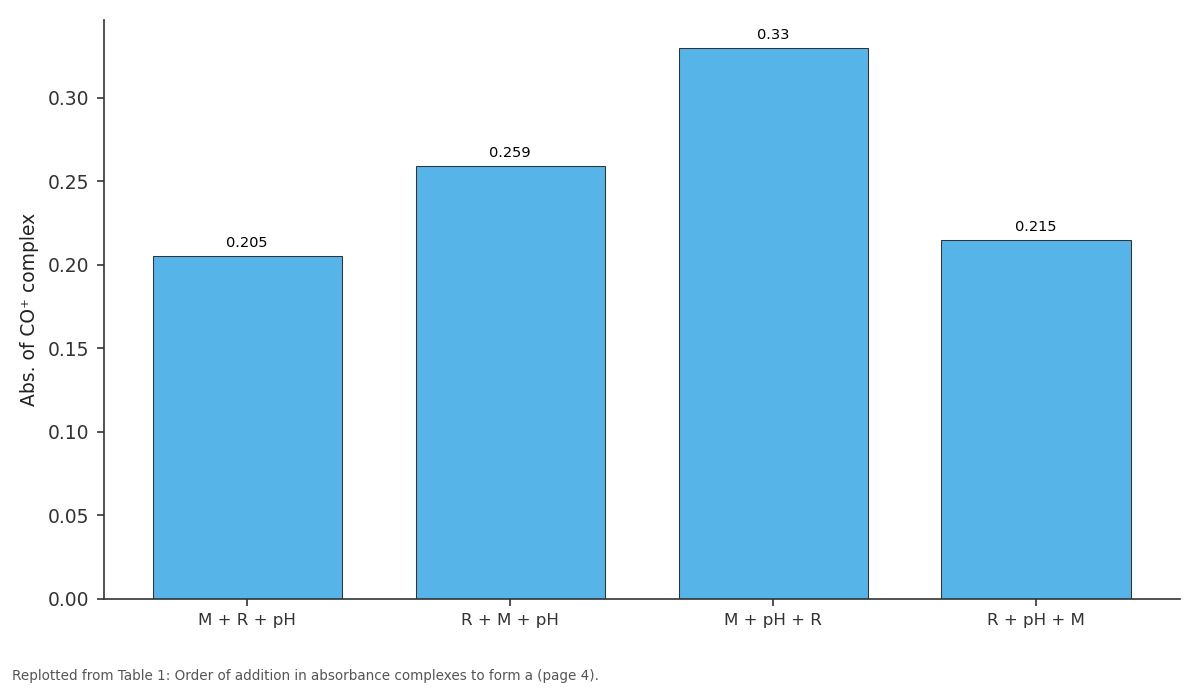
Abs. of CO⁺ complex: M + R + pH vs R + M + pH vs M + pH + R vs R + pH + M
Replotted from Table 1 (page 4) of the original paper. Every bar is the paper's own table value.
View source evidence ↗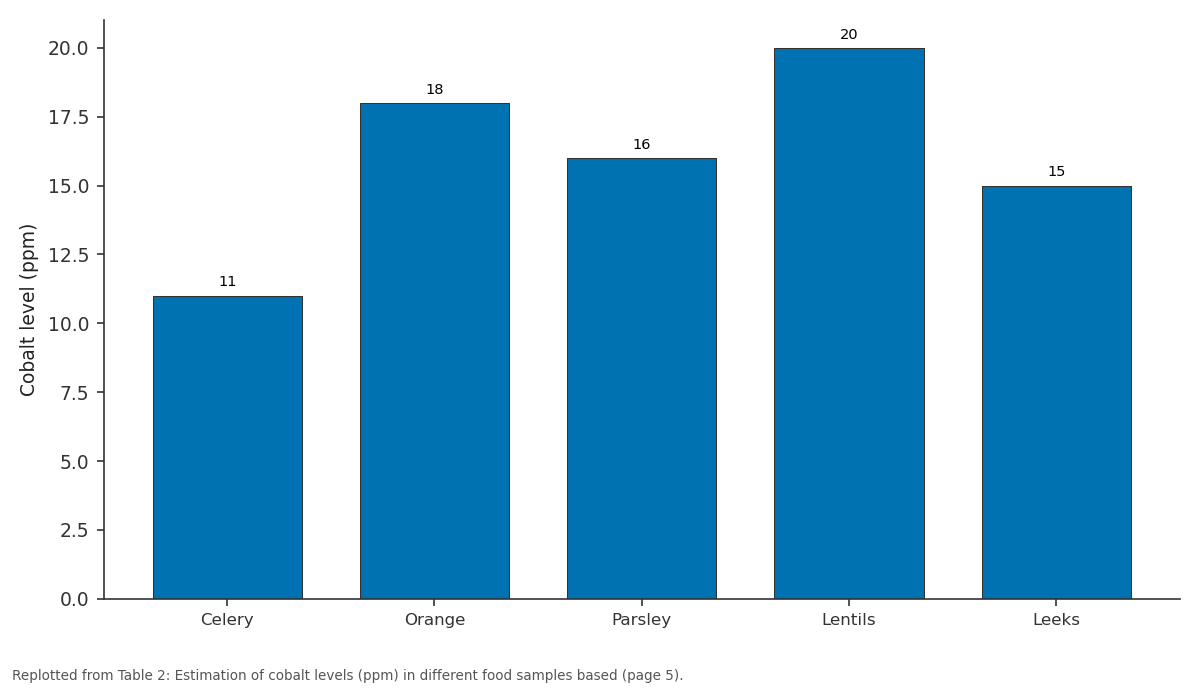
Cobalt level (ppm): Celery vs Orange vs Parsley vs Lentils vs Leeks
Replotted from Table 2 (page 5) of the original paper. Every bar is the paper's own table value.
View source evidence ↗Figures & tables
From the original paper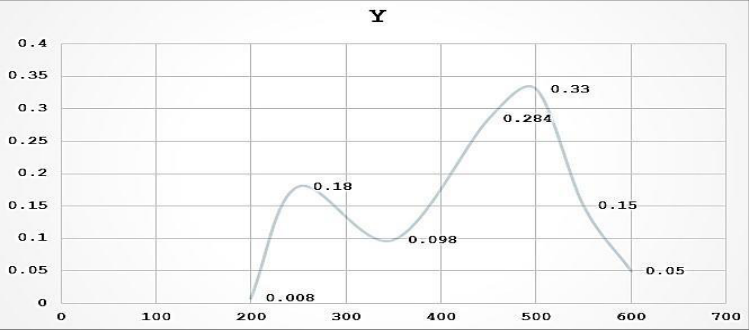 Figure 1
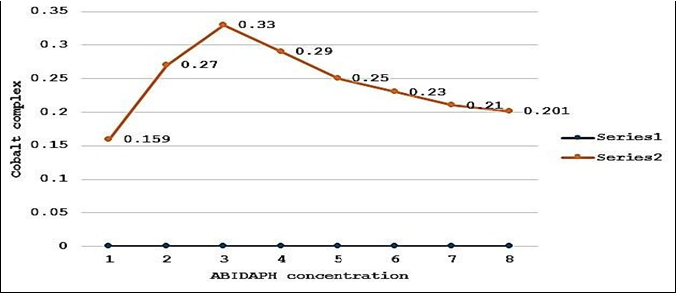 Figure 3
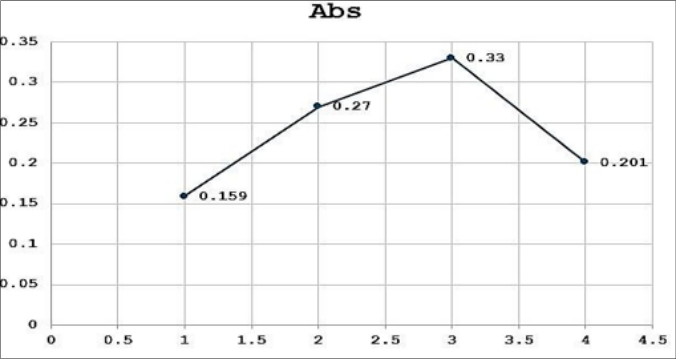 Figure 4
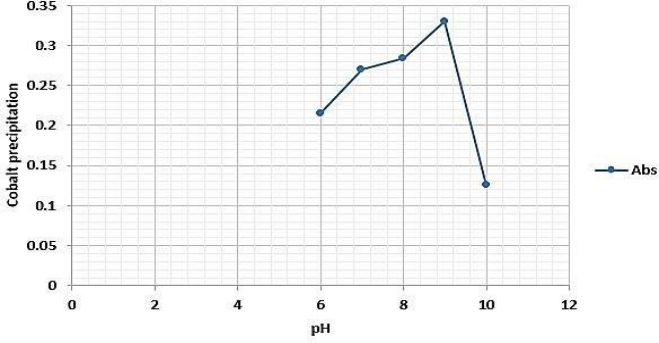 Figure 2
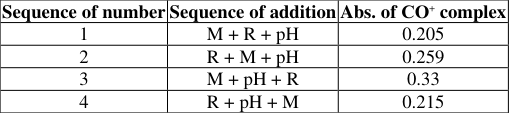 Table 1
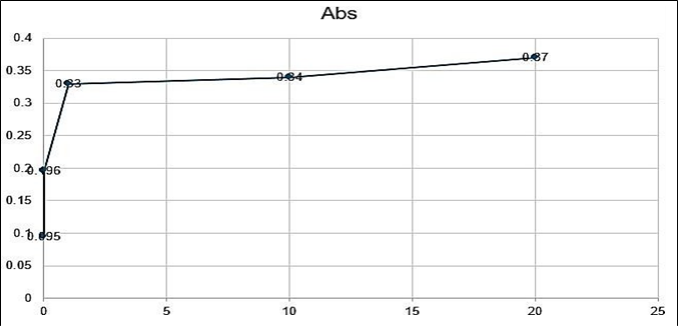 Figure 5
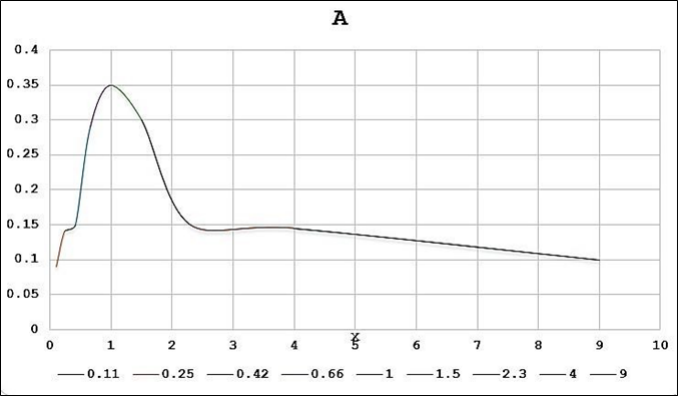 Figure 6
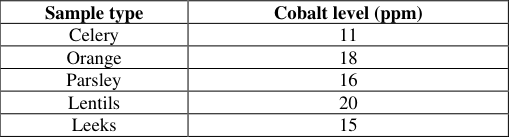 Table 2
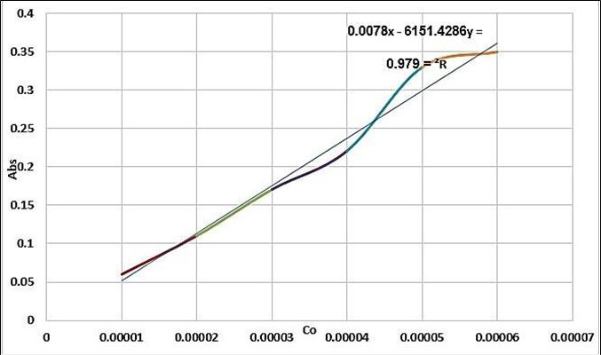 Figure 7
Introduction
Analytical chemistry is that branch of chemistry which deals with the study of the composition of matter, both qualitatively and quantitatively. The importance of this field can be judged from the fact that it not only helps in characterizing the elements and compounds but also develops methods for accurate measurement of concentration [1,2]. structure, and composition, which can support the development of science in different fields such as environmental science, biomedicine, as well as genetic and hereditary analysis in biological research, forensic medicine [3] , and the pharmaceutical industry [4]. Traditionally, analytical methods are divided into two types: qualitative analysis, which detects elements or functional groups' presence, and quantitative analysis, which determines substances' exact concentration. The most recent addition to these methods is spectroscopic techniques that are based on the interaction between matter and electromagnetic radiation. Each element has its own spectrum that can be used to study and measure it. The electromagnetic spectrum covers all types of light, from low-frequency radio waves to high-energy gamma rays [5,6] . Notable reagents in the spectroscopic analysis are Schiff bases, imine compounds resulting from the reaction of amines with carbonyl compounds. These bases can be defined by their aptness to form stable complexes with metal ions [7] . Azo dyes are organic compounds that contain the (N=N-) group. They are known for their bright colors and their ability to bind to metal ions; therefore, they are suitable reagents in spectroscopy [8]. Cobalt (Co) is one of the vital transition metals that find use in a wide range of industrial and biological applications, including lithium-ion batteries and the synthesis of vitamin B12 [9]. Some studies have shown that high concentrations of cobalt in the environment or in food might lead to health effects. This fact necessitates the development of accurate analytical methods for the estimation of cobalt in different environmental samples [10,11] .
Cobalt ions have been estimated in several organic reagents by spectroscopic methods because of their sensitivity and applicability [12,13]. This is particularly important in the case of azo compounds because they have been widely used, and their application is constantly increasing due to the fact that they can form colored complexes suitable for spectroscopic analysis [14,15]. Therefore, the present work is focused on developing and validating a new spectrophotometric method for cobalt determination as a Schiff-azo derivative, optimizing the reaction parameters, constructing a calibration curve, and applying the method for real sample analysis. Such improvements will eventually lead to more accurate and reliable results of cobalt assays in environmental, food, and pharmaceutical samples.
Materials and Methods: Preparation of Standard Solutions and Reagents
The standard solutions and reagents used in this work were prepared as per routine procedures of our laboratory to obtain reliable analytical results in the estimation of cobalt in environmental, food, and pharmaceutical samples. The cobalt standard solution was prepared at a molar concentration. An amount of 0.5920 g of aqueous cobalt chloride was weighed with a precision analytical balance and then dissolved in 25 mL of absolute ethyl alcohol in a suitable volumetric flask with constant stirring until a completely homogeneous solution was obtained. The reagent standard solution was also prepared at a molar concentration. 0.4611 g of the reagent was weighed and dissolved in 25 mL of absolute ethanol. This solution was used to prepare a series of dilute standard solutions within the concentration range 1 to 1 molar by sequential dilution to get solutions of various concentrations used in constructing the titration curve. Two drops of 25% concentrated ammonium hydroxide solution were added to 25 mL of distilled water in a 25 mL volumetric flask to prepare the dilute ammonium hydroxide solution. The solution was then thoroughly mixed to ensure homogeneity. This solution was used to establish the alkaline medium required for the analytical reaction. Clean and pre-calibrated laboratory glassware was used for all preparations. Great care was taken to ensure the accuracy of measurements and volumes to be able to minimize experimental errors and to keep the stability of the analytical conditions throughout the experiments.
Calculations and Discussion
Spectroscopic Study of the Organic Reagent ABIDAPH A spectroscopic study was performed on the pre-prepared organic reagent (ABIDAPH) in the UV-Vis region with the cobalt(II) ion Co(II). The spectrum showed an absorption band at the maximum wavelength of the [ABIDAPH-Co(II)] complex, where λₘₐₓ = 520 nm, while the maximum wavelength of the organic reagent is λₘₐₓ = 457 nm [16]
Study of Optimal Conditions Effect of pH
To identify the optimal pH, a wide range of pH values between 6-11 was selected by measuring the absorbance at the maximum wavelength of 250 nm for the organic reagent at a concentration of (M1 x 10⁴) and for the metal ion (M5 x 10⁻⁵). The cobalt complex has the optimal pH, as it was observed that the optical intensity of the complex solutions gradually increases to reach its peak at the optimal pH, which was best at pH = 9, to reach the highest absorption. The optical intensity of the complex decreases with increasing pH values. At this limit, the reason is due to the start of the precipitation of the element ion or due to the formation of unstable complex ions [17] .
Effect of Reagent Concentration
The purpose of this study was to determine the optimal concentration of the two prepared reagents for complex formation. Different concentrations of the reagent, ranging from 6 x 10⁻⁴ to 8 x 10⁻⁵, were used, along with a metal ion concentration of 5 x 10⁻⁵ and pH 9. The absorbance was recorded at the maximum wavelength. It was observed that the absorbance values of the complex solutions at the maximum absorbance wavelength increased, reaching a 1 x 10⁻⁴ was obtained as the peak for the cobalt complex (Figure 3). Probably, an interaction between the metal ion and the reagent was responsible for driving the formation of the complex. Thereafter, the absorbance values decreased with increasing concentration of the reagent, either due to saturation of the coordination field between the ion and the reagent or because the reagent was not completely in the solvent [18] . In general, the best concentration of the organic reagent was 1 x 10⁻⁴.
Effect of addition order:
To demonstrate the effect of the addition order on the absorbance value of the prepared addition order of the reaction components on the absorbance complexes under study. Only the first, second, and fourth of the prepared complexes under study, four addition sequences of mixing gave lower absorbance, while the third method was adopted as shown in Table 1. A spectral mixing gave the highest absorbance [19,20] . Determining the concentration of the metal ion reagent [ABIDAPH] was added at pH 9. The absorbance of A group of solutions of the metal ion was measured for each solution, and the concentration of different ranges from (1x10⁻⁵ to 8x10⁻⁵). The organic metal ion solution was reacted with its equivalent in organic reagent. The absorbance of each of these solutions was then plotted on the y-axis to obtain the was then recorded at the maximum wavelength (max = 520 final figure. The best concentration of the metal ion was nm against Planck's solution. The values representing the (5x10⁻⁵ m) (Figure 4).
| Sequence of number | Sequence of addition | Abs. of CO⁺ complex |
|---|---|---|
| 1 | M + R + pH | 0.205 |
| 2 | R + M + pH | 0.259 |
| 3 | M + pH + R | 0.33 |
| 4 | R + pH + M | 0.215 |
Table text extracted from the original PDF; superscript letters are shown inline. The original table image is below.
View original table image
Concentration of the metal ion on the x-axis and the Studying the Static Isometrics of Complexes. The metal/reagent ratio of the complexes under study was determined using the mole ratio method and the continuous variation method (radio method). The reagent-to-metal ratio was found to be 1:1.
Mole Ratio Method
This is one of the most common and simple methods for determining possible formulas, in addition to providing good results. The mole ratio of the cobalt-reagent complex [ABIDApH] was determined by using a set of 10 ml volumetric bottles. One ml of each metal ion solution with a concentration of 1 x 10⁻⁴ was added at pH 9. Organic reagent solutions with concentrations of 5 x 10⁻⁴ to 8 x 10⁻⁵ were added, and the volume was completed to 10 ml with absolute ethanol. The absorbance of the collected solutions was then measured at ⅄max = 520 nm for each complex against the blank solution (Figure 5).
Continuous Change Method (Jobb's Method)
A set of 10 ml bottles was used, and different volumes of metal ions and organic reagents, from 0.9 to 0.1 ml, were added to them at an optimal pH of 9. The results were measured at a maximum wavelength of 520 nm against Planck's solution. The results (Figure 6) showed that the metal: reagent ratio was (1:1) for the cobalt complex with the reagent ABIDAPH. Study of the calibration curve: The calibration curve was prepared using optimal conditions obtained from the study to determine the range of concentrations that give results within the Beer-Lambert's law for the cobalt (II) ion solution with the organic reagent [Co-ABIDAPH] under study from 1 x 10⁻⁵ to 8 x 10⁻⁵, over a wide range of concentrations (Figure 8). Several concentrations were left out because they did not conform to Beer-Lambert's law within the range of 5 x 10⁻⁶ to 1 x 10⁻⁶ in 10 mL of solution. [21,22] .
Applications
Wavelength Of 520 nm was o determined for the cobaltreagent complex; this provides good sensitivity in the Some pre-prepared, wet-digested samples were used, and the cobalt (II) ion was determined after adding 4 IU/mL of sodium potassium tartrate to the solution. The results are shown in Table 2.
| Sample type | Cobalt level (ppm) |
|---|---|
| Celery | 11 |
| Orange | 18 |
| Parsley | 16 |
| Lentils | 20 |
| Leeks | 15 |
Table text extracted from the original PDF; superscript letters are shown inline. The original table image is below.
View original table image
Conclusions
It was found that the organic reagent ABIDAPH gives high efficiency in the formation of a stable colored complex with cobalt (II) ions, which can be tracked accurately spectroscopically by the UV-Vis technique. A maximum spectroscopic analysis. The optimal medium for complex formation was established to be at pH 9 since this value gives the highest absorbance and also the best stability for the formed complex. Generally, the organic reagent performed best at a concentration of 1 × 10⁻⁴ M, while that for cobalt ion was 5 × 10⁻⁵ M. The order of addition of the reac-tion components significantly affected the increase in absorbance, and the sequence (metal + basic medium + reagent) gave the highest value of absorbance compared to other methods of addition. Both the molar ratio method and the continuous variation method confirmed that the bonding ratio between the cobalt ion and the organic reagent was 1:1, which means that a stable coordination complex was formed. The analytical method showed good agreement with Beer-Lambert's law within the studied concentration range, qualifying it for the quantitative determination of cobalt ions. The method successfully determined cobalt in different food samples and, therefore, has high potential for environmental, food, and pharmaceutical applications due to its simplicity, sensitivity, and low cost compared to some advanced analytical methods. The present study reports a new spectroscopic method for the determination of divalent cobalt ions based on UV-Vis spectroscopy using the laboratory-prepared organic reagent ABIDAPH. The results showed that the reagent can form a stable complex with cobalt ions that has a high absorbance, which makes it useful in quantitative analysis with good accuracy and remarkable sensitivity.
Figures and tables from the paper
References
21 in the original paper- Horvai G, Christian GD, Dasgupta PK, Schug KA. Analytical chemistry. Anal Bioanal Chem. 2014;406:5385-5386.
- Christian GD, Dasgupta PK, Schug KA. Analytical chemistry. 7th ed. Hoboken: John Wiley & Sons; 2013.
- Tobiszewski M, Mechlińska A, Namieśnik J. Green analytical chemistry-theory and practice. Chem Soc Rev. 2010;39(8):2869-2878.
- Gallo M, Ferranti P. The evolution of analytical chemistry methods in foodomics. J Chromatogr A. 2016;1428:3-15.
- Pereira H. The rationale behind cork properties: a review of structure and chemistry. BioResources. 2015;10(3):6207-6229.
- Leroy C, Rancoita PG. Principles of radiation interaction in matter and detection. Singapore: World Scientific; 2011.
- Elbadawy HA, et al. Synthesis, characterization, computational, and dyeing behavior of Cu(II) and Zn(II) metal complexes derived from azo-Schiff bases containing phenol derivatives. BMC Chem. 2025;19(1):207-220.
- Nassar S, Mohammed GI, Farghaly TA. Direct spectrophotometric method for determination of cadmium(II) ions using bis-thiosemicarbazone. Int J Anal Chem. 2025;2025(1):3347969.
- Iravani S, Varma RS. Sustainable synthesis of cobalt and cobalt oxide nanoparticles and their catalytic and biomedical applications. Green Chem. 2020;22(9):2643-2661.
- Genchi G, et al. Prevalence of cobalt in the environment and its role in biological processes. Biology (Basel). 2023;12(10):1335-1352.
- Amin RR, Elgemeie GEH. The direct electrochemical synthesis of Co(II), Ni(II), and Cu(II) complexes of some pyridinethione derivatives. Synth React Inorg Met Org Chem. 2001;31(3):431-440.
- Alamgir A, et al. Assessment of heavy metals in unbranded nail polishes retailed in Karachi, Pakistan. EQA Int J Environ Qual. 2023;58:34-40.
- Ueda K. Spectrophotometric study on the extraction of 4-(2-thiazolylazo) resorcinol chelates of cobalt(II), nickel(II), copper(II), and zinc(II) with zephiramin. Anal Lett. 1978;11(12):1009-1021.
- Khanum R, et al. Recent review on synthesis, spectral studies, versatile applications of azo dyes and its metal complexes. Results Chem. 2023;5:100890.
- Khedr AM, et al. Rapid and simple spectrophotometric determination of Mn(II), Fe(III), Co(II), Ni(II) and Cu(II) ions in natural samples using 2-(2hydroxynaphth-1-ylazo)-pyridine. Egypt J Chem. 2010;53(6):885-902.
- Gavazov KB, et al. Mono-and binuclear complexes in a centrifuge-less cloud-point extraction system for the spectrophotometric determination of zinc(II). Molecules. 2024;29(18):4511-4525.
- Turan N, et al. Investigation of spectroscopic, thermal, and biological properties of Fe(II), Co(II), Zn(II), and Ru(II) complexes derived from azo dye ligand. J Mol Struct. 2021;1244:130989.
- Al-Khafagi AA, Mashkoor MS, Kahlol MK. Determination of naltrexone by using phentermine as a new spectrophotometric coupling agent. Syst Rev Pharm. 2020;11(12):1655-1660.
- Almáši M, Vilkova M, Bednarčík J. Synthesis, characterization and spectral properties of novel azoazomethine-tetracarboxylic Schiff base ligand and its Co(II), Ni(II), Cu(II) and Pd(II) complexes. Inorg Chim Acta. 2021;515:120064.
- Nikpassand M, et al. Mechanochemical synthesis of azo-linked 2-amino-4H-chromene derivatives using Fe3O4@SiO2@KIT-6-NH2@Schiff-base complex nanoparticles. J Mol Struct. 2022;1251:132065.
- Pundi A, et al. Naked-eye colorimetric and turn-on fluorescent Schiff base sensor for cyanide and aluminum(III) detection in food samples and cell imaging applications. Spectrochim Acta A Mol Biomol Spectrosc. 2021;262:120139.