
Research article · 2026 · Full text
International Journal of Horticulture and Food ScienceDiversified Horticulture-Based Farming as a Livelihood Strategy: A Case Study of Suresh Gouda’s 40-Acre Farm in Timmapur H, Raichur District, Karnataka
Volume 8(5S) · Pages 04–10 · DOI: 10.33545/26631067.2026.v8.i5sa.747 ↗
Research areasAgricultural Economics and PracticesAgricultural Innovations and PracticesAgricultural Development and Management
Abstract
Author-writtenThis case-study research paper examines the diversified farming model practised by Suresh Gouda, a progressive farmer from Timmapur H, Raichur District, Karnataka. Based on primary interview data, the study analyses how a 40-acre black-soil farm combines horticultural crops, commercial crops, pulses, and millets to generate a self-reported annual income of approximately ₹1 crore. The farm cultivates Psidium guajava L. (Guava), Syzygium cumini (L.) Skeels. (Jamun), Capsicum annuum L. (Chilli), Gossypium hirsutum L. (Cotton), Cajanus cajan (L.) Huth (Red Gram), Sorghum bicolor (L.) Moench (Jowar), and experimental dragon fruit. Findings show that crop diversification, drip irrigation, rainwater harvesting, permanent labour, market grading, and adaptive field management are central to the farm’s productivity and risk management. However, the farm also faces challenges such as fruit diseases, climatic variability, price fluctuation, dependence on bank loans, and limited digital technology use. The study concludes that horticulture-led diversification can strengthen income stability in semi-arid regions when supported by irrigation, market access, extension services, and disease-management systems.
Summary
Source-checkedPlain-language reading of the full paper, prepared with AI and checked against the text. Each point links to the authors' own words.
Why it matters
- Agricultural diversification is a key strategy for increasing income and reducing risks for farmers in semi-arid regions. View evidence ↗
- Semi-arid regions are particularly vulnerable to climate change, which threatens rural livelihoods through extreme weather and changing rainfall. View evidence ↗
- Horticulture is driving agricultural transformation in India by improving nutritional security, employment, and income diversification. View evidence ↗
The question
- The study aims to evaluate diversified crop cultivation as a practical model to improve sustainability, profitability, and productivity in semi-arid conditions. View evidence ↗
What they did
- The research is a case study of a 40-acre farm owned by Suresh Gouda in Timmapur H, Raichur District, Karnataka. View evidence ↗
- Data was collected through a qualitative design using a structured interview with the farmer covering operational, financial, and technical aspects of the farm. View evidence ↗
- The farm is situated on black soil, which the farmer reports as suitable for the chosen crop mix. View evidence ↗
What they found
- The diversified farming model, combining horticulture, commercial crops, pulses, and millets, generated a self-reported annual income of approximately ₹1 crore. View evidence ↗
- Guava is identified as a high-profit horticultural crop on the farm, with the advantage of being harvested twice per year. View evidence ↗
- Water management is achieved through a combination of drip irrigation, a rainwater harvesting pond, and supplemental water from the Krishna River during summer. View evidence ↗
- The farm's market channel consists of 75% sales to local markets and 25% direct sales to consumers. View evidence ↗
- Pink disease in guava was reported as a major disease problem that negatively impacts fruit yield. View evidence ↗
- Despite progressive irrigation, the farm has a technology gap, with no use of mobile apps, farm-management software, or online market platforms. View evidence ↗
- The farm utilizes a permanent labour system with monthly salaries to ensure continuous care for horticulture crops. View evidence ↗
What it means
- The authors conclude that diversification led by horticulture can improve income stability in semi-arid regions if supported by proper irrigation, market access, and disease management. View evidence ↗
- The authors recommend that the farm implement value addition (e.g., juices and jams) to reduce financial losses caused by market price fluctuations. View evidence ↗
- The study is an explanatory case study and is not intended to be a statistically representative sample of all farms. View evidence ↗
- A limitation of the data is the lack of crop-specific income and land allocation details, meaning all income analysis is based on aggregate self-reported figures. View evidence ↗
Visual summary
2 visualsIllustrations explain the paper; charts are replotted from the paper's own table values.
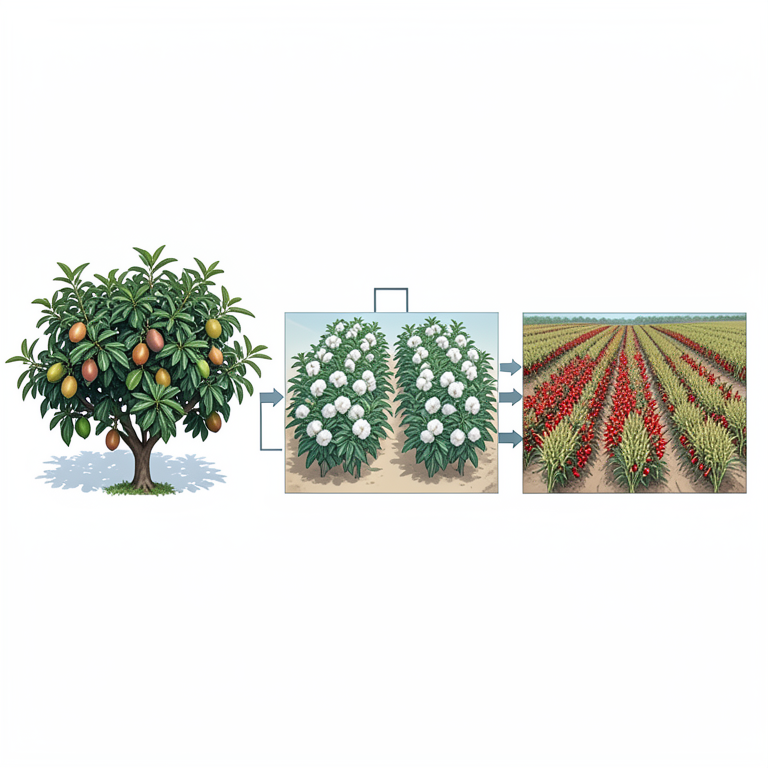
Diversified Crop Portfolio
AI-generated conceptual illustration (A diversified farm in Karnataka, India, featuring guava trees, jamun trees, cotton plants, chilli plants, red gram, andจ). It explains the idea and does not show study data.
View source evidence ↗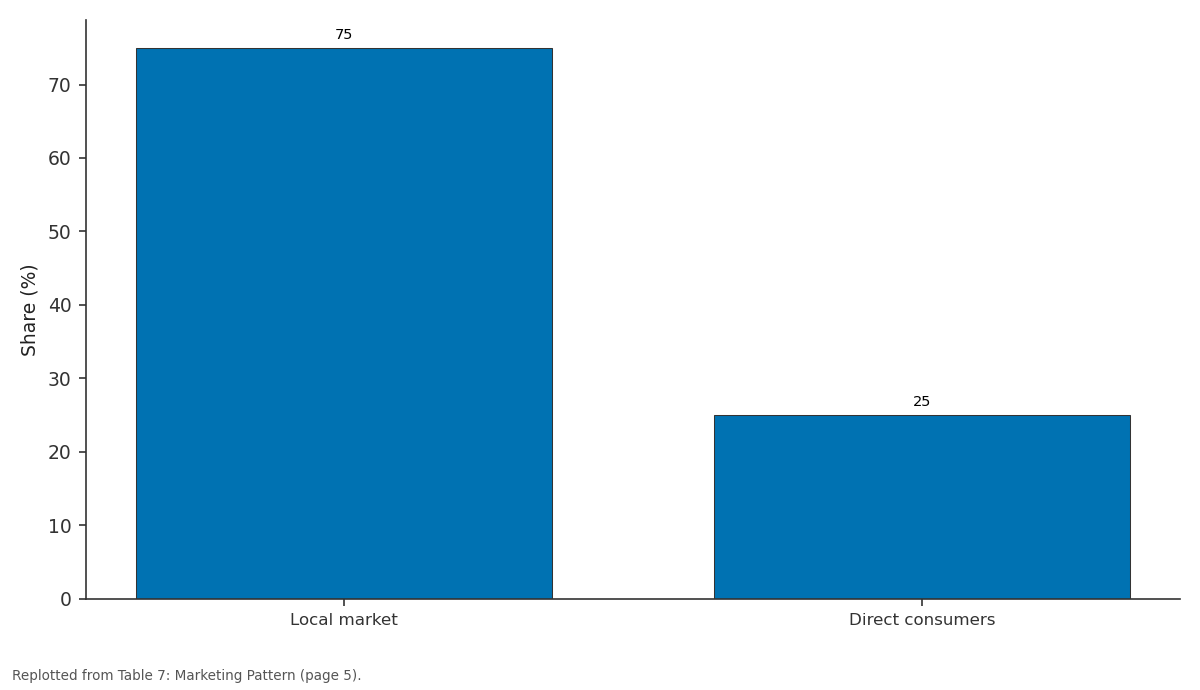
Share: Local market vs Direct consumers
Replotted from Table 7 (page 5) of the original paper. Every bar is the paper's own table value.
View source evidence ↗Figures & tables
From the original paper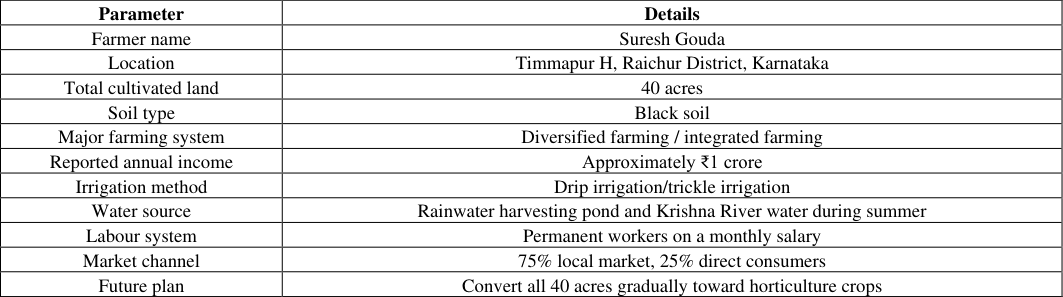 Table 1
 Table 2
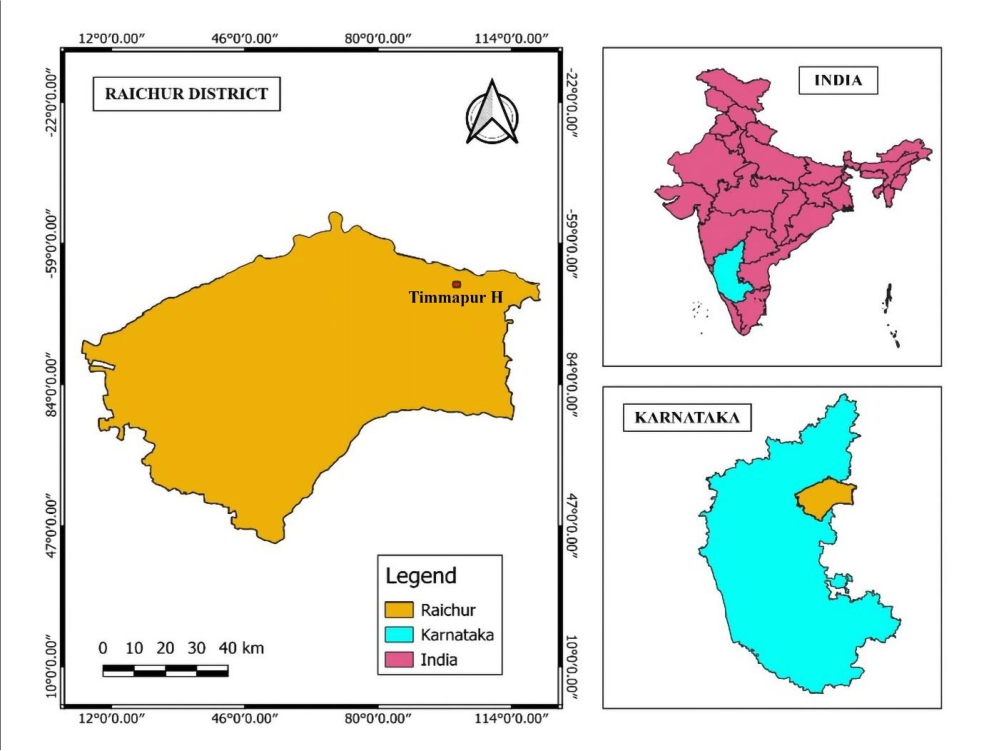 Figure 1
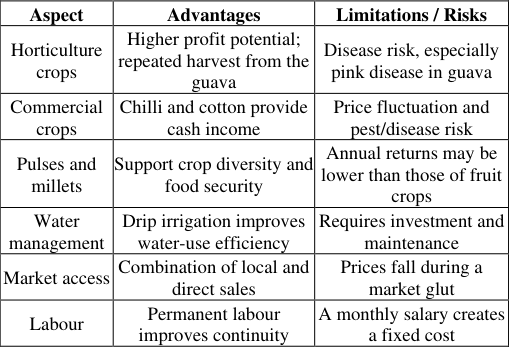 Table 3
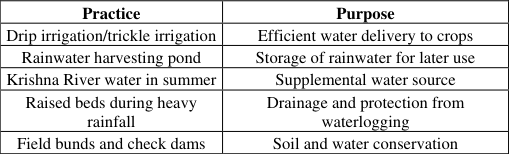 Table 4
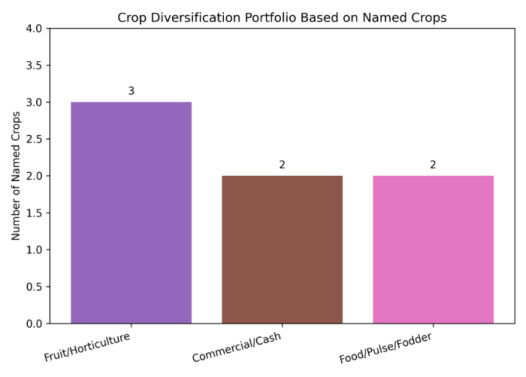 Fig. 2
 Figure 3
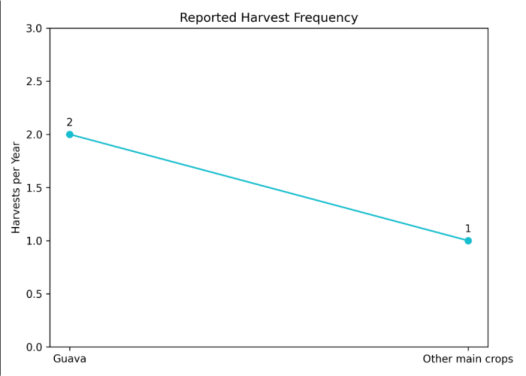 Figure 4
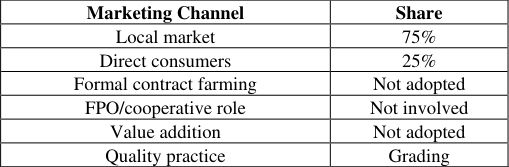 Table 7
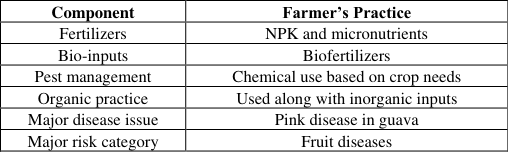 Table 5
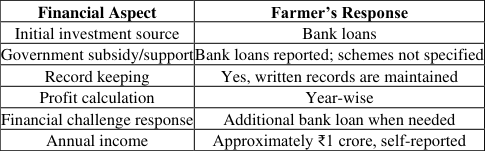 Table 8
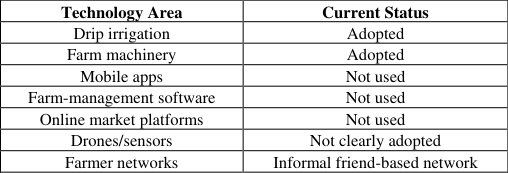 Table 6
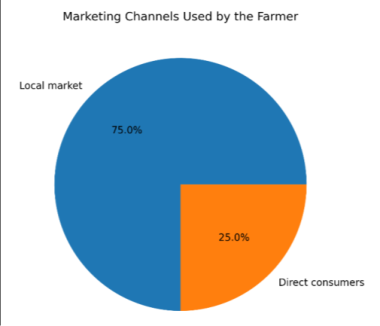 Figure 5
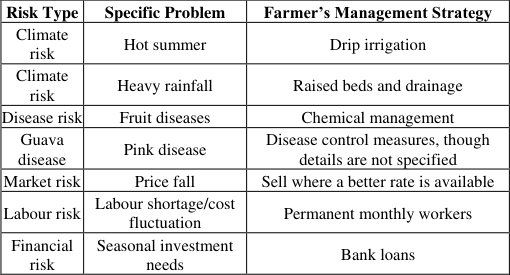 Table 9
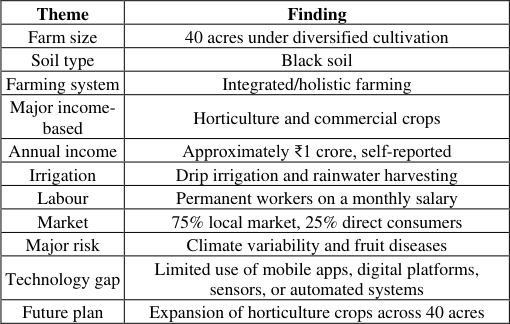 Table 10
Introduction
Agricultural diversification has emerged as an important strategy for improving farm income, reducing production risk, and strengthening the resilience of farmers, particularly in semi-arid regions. Crop diversification enables farmers to distribute economic and climatic risks across multiple crops instead of depending on a single crop or market season. Semi-arid regions are highly vulnerable to climate change because changing rainfall patterns, rising temperatures, and frequent extreme weather events directly affect agricultural productivity and rural livelihoods (Kumar et al., 2025). In this context, diversified farming systems involving fruit crops, vegetables, pulses, cereals, and commercial crops have become increasingly relevant for sustainable farm development. In India, horticulture has become a major component of agricultural transformation due to its contribution to value addition, rural employment, nutritional security, and income diversification. Guava (Psidium guajava L.), one of India's most promising fruit crops, is highly valued for its nutritional benefits and financial returns (Sahu et al., 2025) [16] . Previous studies have reported substantial variability among guava genotypes, with MPUAT S-1 and MPUAT S-2 identified as superior genotypes for yield and fruit quality (Shukla et al., 2012) [22] . Similarly, crop-regulation studies in guava have shown that plant growth regulators such as NAA and GA can improve fruit weight and yield, while other treatments may influence fruit quality parameters (Yadav et al., 2001) [25] . The use of fertilizers and bioinoculants has also been reported to enhance fruit growth, fruit weight, fruit volume, and yield in guava (Rai et al., 2024) [15] . Jamun (Syzygium cumini L.) is another important underexploited indigenous fruit crop belonging to the family Myrtaceae.
It is valued for its nutritional, therapeutic, postharvest, and industrial importance, and its wide distribution reflects its adaptability to diverse climatic conditions (Sanjay et al., 2019) [20] . Jamun fruits are rich in iron, minerals, sugars, protein, and carbohydrates, while the seeds contain bioactive compounds associated with hypoglycemic properties, making the crop important for both fresh consumption and value-added products (Sanjay et al., 2009) [19] . In addition, dragon fruit (Hylocereus undatus), a climbing cactus native to Central America, has gained global recognition as both an ornamental and fruit crop due to its market acceptability and future production potential (Pushpakumara et al., 2005) [13] . Vegetable and spice crops also play a significant role in diversified farming systems. Chilli (Capsicum annuum L.) is an important spice-cum-vegetable crop, and recent cropimprovement research emphasizes the assessment of genetic variability for developing high-yielding and quality varieties (Komala et al., 2023) [9] . Growth-regulator studies in Byadagi chilli have shown that NAA application as a preflowering spray can significantly improve plant height, fruit set, number of fruits, fruit length, fruit thickness, and yield (Doddamani & Panchal, 1989) [5] . Such findings indicate the importance of improved crop-management practices in enhancing productivity under diversified farming conditions. Commercial and field crops such as cotton, sorghum, and redgram further strengthen the economic base of farmers in semi-arid regions. Bt cotton under drip irrigation has shown improved growth and yield attributes when topping at 100 days after sowing is combined with higher nitrogen levels (Chaudhari et al., 2021) [4] . However, long-term studies have also raised concerns regarding the sustainability of Bt cotton, as recent evidence shows yield stagnation, no significant profit improvement, and increased sensitivity to pest pressure (Subramanian, 2023) [24] . Sorghum remains a vital dryland crop in India, used mainly as animal feed during the rainy season and for human consumption during the post-rainy season (Sanjana Reddy, 2017) [18] . In Karnataka, declining sorghum production has been linked mainly to reduction in cultivated area, while yield gaps may be addressed through improved input use, particularly balanced fertilizer application (Kumar et al., 2016). Redgram (Cajanus cajan L.) is largely cultivated in northern Karnataka, especially in Kalaburgi district, which is known as the "pulse bowl" of the state. Redgram processing units in Kalaburgi and Vijayapura districts handle significant quantities of raw material annually, highlighting the crop's economic importance in the region (Sajjan et al., 2021) [17] . Improved cultivation practices such as the dibbling method have been reported to increase redgram yield and farm income, particularly among small and marginal farmers (Aditya et al., 2018) [1] . Therefore, integrating horticultural crops, vegetables, pulses, cereals, and commercial crops within a diversified farming system can enhance farm income, improve resource-use efficiency, and reduce production risks in semi-arid agricultural regions. Overall, the literature indicates that diversified farming is not merely a crop-selection strategy but a broader approach to sustainable agricultural development. The integration of fruit crops such as guava, jamun, and dragon fruit with chilli, cotton, sorghum, and redgram can improve income stability, nutritional security, and resilience against climatic and market uncertainties. Hence, the present study focuses on diversified crop cultivation as a practical model for improving farm productivity, profitability, and sustainability in semi-arid farming conditions. Against this background, the present study documents and analyses the farming model of Suresh Gouda, a farmer cultivating 40 acres in Timmapur H, Raichur District. The case is significant because it combines fruit crops, commercial crops, pulses, and millets with rainwater harvesting, drip irrigation, permanent labour management, and market-oriented production. The study does not treat the farm as a statistically representative sample; rather, it presents it as an explanatory case of diversified, horticulture-oriented farming in a semi-arid agrarian setting.
Objectives of the Study
The study has the following objectives: To document the crop-diversification strategy followed by Suresh Gouda on his 40-acre farm. To analyse the role of horticulture crops in farm income and production stability. To examine farm-management practices related to irrigation, soil conservation, labour, pest management, and marketing. To identify the major risks faced by the farmer, including climate, disease, market, and financial risks. To assess the future potential of horticulture-led diversified farming in semi-arid regions such as Raichur.
Methodology
This study uses a qualitative case-study design based on primary interview data collected from farmer Suresh Gouda.
A structured interview schedule was used to collect information on farm size, crop pattern, farming experience, irrigation, market linkages, labour, financial management, challenges, technology use, sustainability practices, and future plans.
The study is descriptive and interpretive in nature. The farmer's responses were organised into thematic categories, including crop diversification, farm management, market linkage, financial management, risk management, social impact, sustainability, and technology use.
Scope and Limitation of Data
The farmer reported an annual income of approximately ₹1 crore. However, crop-wise income and crop-wise land allocation were not provided. Therefore, this paper does not create artificial crop-wise income estimates. All incomerelated analysis is presented as self-reported aggregate annual farm income.
Study Area and Farm Profile
Suresh Gouda's farm is located in Timmapur H, Raichur District, Karnataka. The farm covers 40 acres and is situated in a semi-arid agricultural region where water management is critical. The soil type reported by the farmer is black soil, which is generally suitable for crops such as cotton, chilli, pulses, millets, and some horticultural crops when supported by appropriate irrigation and nutrient management.
Crop Diversification Pattern
The farmer cultivates both horticultural and field crops. Horticulture crops include guava and jamun, while dragon fruit is under trial in 2026. Commercial crops include chilli and cotton. Food and field crops include red gram and jowar.
Diversification as an Integrated Farming Strategy
The farmer describes his approach as "integrated farming" or "holistic farming." In practice, this means that he does not depend on a single crop. Instead, he combines horticulture crops, commercial crops, pulses, and millets. This system improves income security because different crops mature at different times and respond differently to climate, disease, and market conditions.
The most important shift is toward horticulture. Guava and jamun are treated as profitable crops, and dragon fruit is being tested as a future crop. Guava is especially important because it is harvested twice a year, unlike most annual field crops. The application of 100% recommended dose of fertilizer (RDF) combined with Biofertisol significantly enhanced fruit growth and yield in guava, with the highest number of fruits, fruit size, and weight observed in this treatment (Rai et al., 2024) [15] .
Water Management and Irrigation
Water is one of the strongest features of this farm model. The farmer uses drip irrigation and has also created a rainwater harvesting pond. During the summer, water is also accessed through the Krishna River. The reported water pH is 7, which is neutral and generally favourable for irrigation. Drip irrigation is particularly suitable for horticulture crops because it supplies water directly to the root zone, reduces wastage, and supports efficient nutrient application. In a semi-arid region such as Raichur, this becomes a critical climate-resilience strategy.
Soil and Field Management
The farmer uses ridge construction, bund construction, field borders, and check dams. These practices help conserve soil, reduce runoff, and manage excess rainfall. In heavy rainfall situations, the farmer raises the agricultural field bed to remove excess water and protect the crops. These practices are important because semi-arid regions face both drought and sudden heavy rainfall. Therefore, the farm requires a dual strategy: water conservation during dry periods and drainage management during heavy rainfall.
Nutrient and Pest Management
The farmer uses both organic and inorganic inputs depending on crop requirements. He reported the use of NPK, micronutrients, and biofertilizers. Pest and disease management is mainly chemical-based, although organic inputs are also used.
The major disease problem reported is pink disease in guava, which reduces fruit yield. Fruit diseases are identified as one of the most serious risks in the farm system. This indicates the need for stronger integrated pest and disease management, especially for horticulture crops.
Labour Management
The farmer employs permanent workers on a monthly salary. This is important because horticulture requires continuous care, including irrigation, pruning, pest monitoring, harvesting, grading, and marketing preparation. Permanent labour reduces the risk of labour shortage during peak periods. However, permanent labour also increases fixed monthly costs. The advantage is that it ensures continuous farm supervision, especially because fruit crops require regular field attention.
Farm Mechanisation and Technology Use
The farmer reported using equipment such as a tiller, hammer radiator mixing equipment, and other implements locally described as curling and brush curling. These tools support field preparation, soil work, mixing, and farm operations.
However, the use of digital technology is limited. The farmer does not currently use mobile apps, farmmanagement software, online platforms, drones, soil sensors, or automated irrigation systems. Market intelligence is mainly gathered through experience, friends, and field visits. This shows that the farm is technically progressive in irrigation and mechanisation, but still traditional in digital agriculture and market intelligence.
Market Linkages
The farmer sells approximately 75% of the produce in the local market and 25% directly to consumers. He also sells in different states when better prices are available. There are no fixed long-term contracts or formal buyer agreements. The farmer's main marketing principle is to sell to buyers who offer the best price. The farmer does not currently practice value addition, such as guava juice, jam, jamun products, or processed chilli products. This is a major future opportunity because value addition can reduce distress sales during periods of low market prices.
Financial Management
The farmer depends on bank loans for investment and financial support. He also maintains written financial records. Profits are calculated year-wise. During financial difficulty, he again approaches the bank for loans. The self-reported annual income is approximately ₹1 crore. However, crop-wise income was not provided. Therefore, the study treats this as a total farm-level income figure rather than crop-wise income.
Risk Management
The major risks reported by the farmer are climate and disease. Heavy rainfall is managed by raising field beds and draining excess water. Hot summer conditions are managed through drip irrigation. Market risk is managed by selling to buyers who offer better prices. This indicates that the farm has both economic and social significance. It is not only a source of income but also a site of knowledge sharing, family improvement, and community-level agricultural learning.
Sustainability and Future Plans
The farmer's long-term goal is to increase production and gradually convert all 40 acres into horticultural crops. He believes that horticulture crops have strong potential for the future of agriculture in his region. His advice to other farmers is that horticulture should be adopted according to soil type. He also believes farmers need better loans, modern farming practices, and new technology support from the government, NGOs, and institutions. His final message is that educated youth should come into agriculture and apply knowledgebased farming practices. In chilli landraces, environmental factors were found to significantly influence the expression of traits, and high heritability and genetic advance for traits like the number of fruits and green fruit yield suggest their suitability for breeding programs (Singh et al., 2022). Regarding Bt cotton, while initial years showed higher yields and profits, the most recent decade has seen stagnation in yields, no improvement in profits, and increased vulnerability to pest pressure, raising concerns about the sustainability of GM technology (Subramanian, 2023) [24] . In Chamarajanagara district, the decline in sorghum production was mainly attributed to a decrease in cultivated area, underscoring the need for improved input usage, particularly fertilizers, to bridge the yield gap and enhance economic viability (Kumar et al., 2016). Lastly, the dibbling method of redgram cultivation, widely adopted by small and marginal farmers, significantly increased yield and farm income, with farmers earning an additional Rs. 10,170 per acre (Aditya et al., 2018) [1] .
Key Findings
Key Findings
Recommendations
Based on the findings of this study, it is recommended that the farmer focuses on improving crop-wise financial recordkeeping to accurately track profits, costs, and net returns for each crop, facilitating better decision-making. Enhanced disease management strategies, particularly for guava's pink disease, should be implemented by consulting with horticultural experts and incorporating integrated pest management practices. The farm should explore value addition for its horticultural crops, such as producing guava juice, jam, and other products, to mitigate losses during market price fluctuations. Additionally, forming or joining a Farmer Producer Organization (FPO) could improve collective bargaining power, access to better markets, and input purchasing. Digital technologies for farm management and market intelligence, such as mobile apps and online price tracking platforms, should be adopted to improve market decision-making and risk management. Soil and water testing should be done regularly to optimize fertilizer use and water application, while expanding the use of drip irrigation to further increase water-use efficiency. Lastly, the farm's long-term goal of transitioning to a fully horticulture-based model should be approached gradually, based on soil suitability, water availability, and market demand, ensuring a sustainable and profitable future for the farm.
Conclusion
The case of Suresh Gouda demonstrates how diversified farming can become a strong livelihood model in a semiarid region. The farm combines horticulture crops, commercial crops, pulses, and millets with drip irrigation, rainwater harvesting, permanent labour, and market grading. The reported annual income of ₹1 crore suggests that highvalue horticulture, especially guava and jamun, plays an important role in improving farm profitability. At the same time, the farm faces important risks. These include fruit diseases, climate variability, market price fluctuations, dependence on bank loans, and limited digital technology use. The future success of the farm will depend on scientific disease management, better financial records, digital market access, value addition, and institutional support. Overall, the study shows that horticulture-led diversification can be a promising model for farmers in Raichur and similar semi-arid regions, provided it is supported by water-efficient irrigation, soil-based crop planning, market linkage, extension guidance, and climate-resilient practices.
Acknowledgement
Acknowledgement
Figures and tables from the paper
| Parameter | Details |
|---|---|
| Farmer name | Suresh Gouda |
| Location | Timmapur H, Raichur District, Karnataka |
| Total cultivated land | 40 acres |
| Soil type | Black soil |
| Major farming system | Diversified farming / integrated farming |
| Reported annual income | Approximately ₹1 crore |
| Irrigation method | Drip irrigation/trickle irrigation |
| Water source | Rainwater harvesting pond and Krishna River water during summer |
| Labour system | Permanent workers on a monthly salary |
| Market channel | 75% local market, 25% direct consumers |
| Future plan | Convert all 40 acres gradually toward horticulture crops |
Table text extracted from the original PDF; superscript letters are shown inline. The original table image is below.
View original table image
| Crop | Scientific Name | Crop Category | Reported Role in Farm System |
|---|---|---|---|
| Guava | Psidium guajava L. | Fruit/horticulture | High-profit fruit crop; harvested twice a year |
| Jamun | Syzygium cumini (L.) Skeels. | Fruit/horticulture | Long-term horticulture crop |
| Chilli | Capsicum annuum L. | Commercial crop | Cash crop with market value |
| Cotton | Gossypium hirsutum L. | Commercial crop | Traditional commercial crop |
| Red gram | Cajanus cajan (L.) Huth | Pulse crop | Annual field crop |
| Jowar | Sorghum bicolor (L.) Moench | Millet/cereal crop | Food and dryland crops |
| Dragon fruit | Selenicereus spp. | Fruit/horticulture | Trial crop introduced in 2026 |
Table text extracted from the original PDF; superscript letters are shown inline. The original table image is below.
View original table image
| Marketing Channel | Share |
|---|---|
| Local market | 75% |
| Direct consumers | 25% |
| Formal contract farming | Not adopted |
| FPO/cooperative role | Not involved |
| Value addition | Not adopted |
| Quality practice | Grading |
Table text extracted from the original PDF; superscript letters are shown inline. The original table image is below.
View original table image
| Component | Farmer’s Practice |
|---|---|
| Fertilizers | NPK and micronutrients |
| Bio-inputs | Biofertilizers |
| Pest management | Chemical use based on crop needs |
| Organic practice | Used along with inorganic inputs |
| Major disease issue | Pink disease in guava |
| Major risk category | Fruit diseases |
Table text extracted from the original PDF; superscript letters are shown inline. The original table image is below.
View original table image
| Financial Aspect | Farmer’s Response |
|---|---|
| Initial investment source | Bank loans |
| Government subsidy/support | Bank loans reported; schemes not specified |
| Record keeping | Yes, written records are maintained |
| Profit calculation | Year-wise |
| Financial challenge response | Additional bank loan when needed |
| Annual income | Approximately ₹1 crore, self-reported |
Table text extracted from the original PDF; superscript letters are shown inline. The original table image is below.
View original table image
| Technology Area | Current Status |
|---|---|
| Drip irrigation | Adopted |
| Farm machinery | Adopted |
| Mobile apps | Not used |
| Farm-management software | Not used |
| Online market platforms | Not used |
| Drones/sensors | Not clearly adopted |
| Farmer networks | Informal friend-based network |
Table text extracted from the original PDF; superscript letters are shown inline. The original table image is below.
View original table image
| Theme | Finding |
|---|---|
| Farm size | 40 acres under diversified cultivation |
| Soil type | Black soil |
| Farming system | Integrated/holistic farming |
| Major income- based | Horticulture and commercial crops |
| Annual income | Approximately ₹1 crore, self-reported |
| Irrigation | Drip irrigation and rainwater harvesting |
| Labour | Permanent workers on a monthly salary |
| Market | 75% local market, 25% direct consumers |
| Major risk | Climate variability and fruit diseases |
| Technology gap | Limited use of mobile apps, digital platforms, sensors, or automated systems |
| Future plan | Expansion of horticulture crops across 40 acres |
Table text extracted from the original PDF; superscript letters are shown inline. The original table image is below.
View original table image
References
21 in the original paper- Aditya KS, Praveen KV, Ahamed BZ, Mazumder C, Kumar P, Kar A. Quantifying the role of disembodied technologies in enhancing farm income: A case of dibbling method of Cajanus cajan cultivation in Kalaburgi district of Northern Karnataka. Indian J Agric Econ. 2018;73(3):269-280.
- Agnihotri A, Tiwari R, Singh OP. Effect of crop regulators on growth, yield and quality of guava. Ann Plant Soil Res. 2013;15(1):54-57.
- Birthal PS, Roy D, Negi DS. Assessing the impact of crop diversification on farm poverty in India. World Dev. 2015;72:70-92.
- Chaudhari JH, Chauhan SA, Chaudhary MM. Effect of topping and nitrogen levels on growth, yield attributes and yield of Bt cotton under drip irrigation conditions. Pharma Innov J. 2021;10(10):1898-1902.
- Ghojage AH, Swamy GSK, Kanamadi VC, Jagdeesh RC, Kumar P, Patil CP, Reddy BS. Studies on variability among best selected genotypes of Jamun (Syzygium cumini Skeels). Acta Hortic. 2011;890(2):255-260.
- Jayaraman K. Bt brinjal splits Indian cabinet. Nat Biotechnol. 2010;28(4):296-297.
- Kokwe M, Chama T, Pali P, Ramasamy S. Enhancing climate resilience in the farming systems with crop diversification in Zambia. IIb. 2022;3(16):29-29.
- Komala M, Lakshmi KS, Madhavi N. Recent advances in crop improvement of chilli (Capsicum annuum L.) for high fruit yield and quality. J Exp Agric Int. 2023;45(8):21-29.
- Meherda PK. Ministry of Agriculture and Farmers Welfare. 2024.
- Pushpakumara DKN, Gunasena HPM, Karyawasam M. Flowering and fruiting phenology, pollination vectors and breeding system of dragon fruit (Hylocereus spp.). Sri Lankan J Agric Sci. 2005;42:81-91.
- Radha T, Mathew L. Fruit crops. Vol. 3. New Delhi: New India Publishing; 2007.
- Rai RK, Pandey SK, Pandey CS, Samaiya RK, Upadhyay AK. Optimization of fruit growth and developments of guava (Psidium guajava L.) cv. L-49 using fertilizer & bioinoculants. Int J Agric Environ Biotechnol. 2024;17(3):617-620.
- Sahu K, Khunte SD, Chandrakar YK, Singh A. Advances in guava crop regulation: A review of recent research and developments. Plant Arch. 2025;25(1):557-564.
- Sajjan SS, Naik BK, Kulkarni VS, HT C, Hasalkar S. Economics of processing of redgram (Cajanus cajan L.) in North Karnataka. J Plant Dev Sci. 2021;13(6):321-328.
- Sanjana Reddy P. Sorghum, Sorghum bicolor (L.) Moench. In: Millets and Sorghum: Biology and Genetic Improvement. 2017;1-48.
- Sanjay S, Singh AK, Bagle BG. Grow more Jamun tree easily. Indian Hortic. 2009;54(2):13-14.
- Sanjay S, Singh AK, Saroj PL, Mishra DS. Research status for technological development of Jamun (Syzygium cuminii). Indian J Agric Sci. 2019;84(11):1991-1998.
- Saxena A, Kumar P, Goyal RK, Patel N, Khapte PS. Assessment of water productivity of different cropping systems under drip irrigation in arid region of western India. Ann Arid Zone. 2016;55:101-105.
- Shukla AK, Sarolia DK, Mahawer LN, Bairwa HL, Kaushik RA, Sharma R. Genetic variability of guava (Psidium guajava L.) and its prospects for crop improvement. Indian J Plant Genet Resour. 2012;25(2):157-160.
- Singh TN, Joshi AK, Vikram A, Dogra RK. Genetic variability and stability analysis in chilli (Capsicum annuum L.) landraces of North-Western Himalayas. 2022;16:30-30.
- Subramanian A. Sustainable agriculture and GM crops: The case of Bt cotton impact in Ballari district of India. Front Plant Sci. 2023;14:1102395.