
Research article · 2026 · Full text
International Journal of Advanced Chemistry ResearchComparative studies for the synthesis of aliphatic thiazolidinone derivatives from novel 1, 4 diaminobutane based dicationic ionic liquids
Volume 8(5) · Pages 01–06 · DOI: 10.33545/26646781.2026.v8.i5a.669 ↗
Research areasMulticomponent Synthesis of HeterocyclesIonic liquids properties and applicationsChemical Synthesis and Reactions
Abstract
Author-writtenMost of the heterocyclic reactions are toxic and hazardous in nature in previous dates. The synthesis stratergies are continue to more attraction for the construction and development and find in wide range of applications in recent years with green chemistry. In this thiazolidinone are one the most active biological theme compounds and varying this study we perform a one pot three component synthesis route of greener method with aliphatic aldehyde and aromatic amines with Thioglycolic acid in presence of catalyst like Novel 1, 4 diaminobutane based dicationic ionic liquids. Which reduce reaction time. Its high range and easy recyclability abilities give high yield without any loss of its catalytic activity. Synthesis compound were confirm by TLC and its characterization like 1H-NMR, 13C-NMR, 19F-NMR, 31P-NMR, FT-IR. Allowing the product obtained with better identifications.
Summary
Source-checkedPlain-language reading of the full paper, prepared with AI and checked against the text. Each point links to the authors' own words.
Why it matters
- Thiazolidinone derivatives are important five-membered heterocycles because they exhibit a broad range of biological activities, such as anti-cancer, anti-viral, and anti-microbial properties. View evidence ↗
- Traditional synthesis of these derivatives often relies on toxic organic solvents, which lead to environmental safety concerns, low yields, and long reaction times. View evidence ↗
- Dicationic ionic liquids (DCILs) are considered more sustainable than monocationic ionic liquids because they are easier to recover and reuse, reducing waste. View evidence ↗
What they did
- The researchers used a one-pot, three-component synthesis involving aliphatic aldehydes, aromatic amines, and thioglycolic acid. View evidence ↗
- The synthesized catalysts and thiazolidinone derivatives were characterized using 1H, 13C, 19F, and 31P NMR, as well as IR and mass spectroscopy. View evidence ↗
What they found
- The [BDAMim](PF6-)2 catalyst consistently provided high yields between 92% and 98% within a short timeframe of 20 to 40 minutes. View evidence ↗
- Compared to other methods, dicationic ionic liquids (DICLs) showed the best performance with yields of 90-98%, reaction times of 20-40 minutes, and reusability for 5-10 cycles. View evidence ↗
- The [BDAMim](PF6-)2 catalyst maintained its activity over seven consecutive runs without a significant decrease in yield. View evidence ↗
- Monocationic ionic liquids based on BF4 showed lower efficiency than DCILs, with yields of 80-90% and longer reaction times of 60-180 minutes. View evidence ↗
What it means
- The authors conclude that their method provides a strong foundation for the next generation of green catalytic synthesis of aliphatic thiazolidinones. View evidence ↗
- The authors recommend the use of [BDAMim](PF6-)2 due to its ability to retain catalytic activity over 5-10 cycles with negligible loss in yield. View evidence ↗
Visual summary
1 visualsIllustrations explain the paper; they do not show study data.
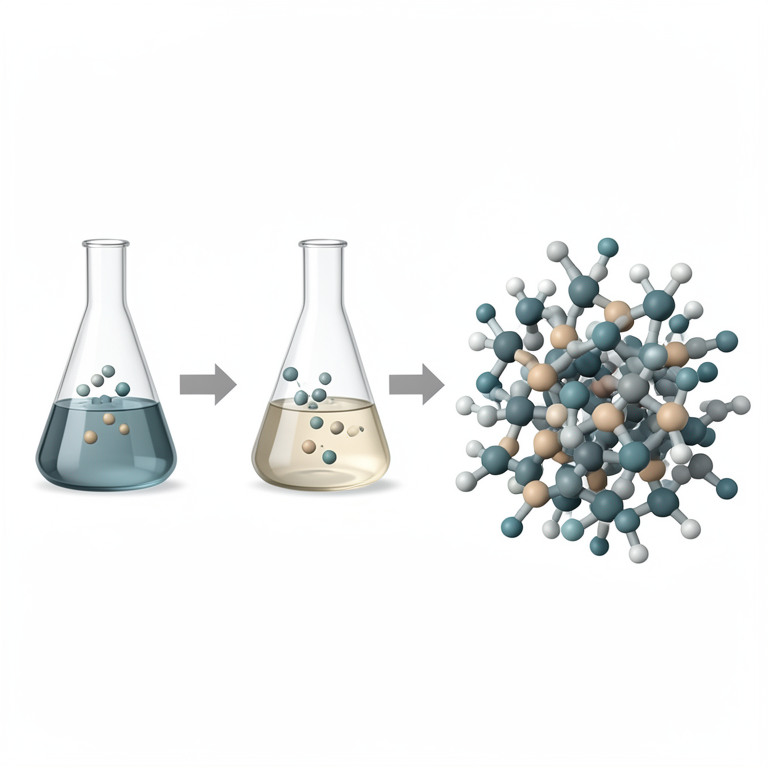
Catalyst Performance Comparison
AI-generated conceptual illustration (aliphatic thiazolidinone molecules and dicationic ionic liquid catalyst). It explains the idea and does not show study data.
View source evidence ↗Figures & tables
From the original paper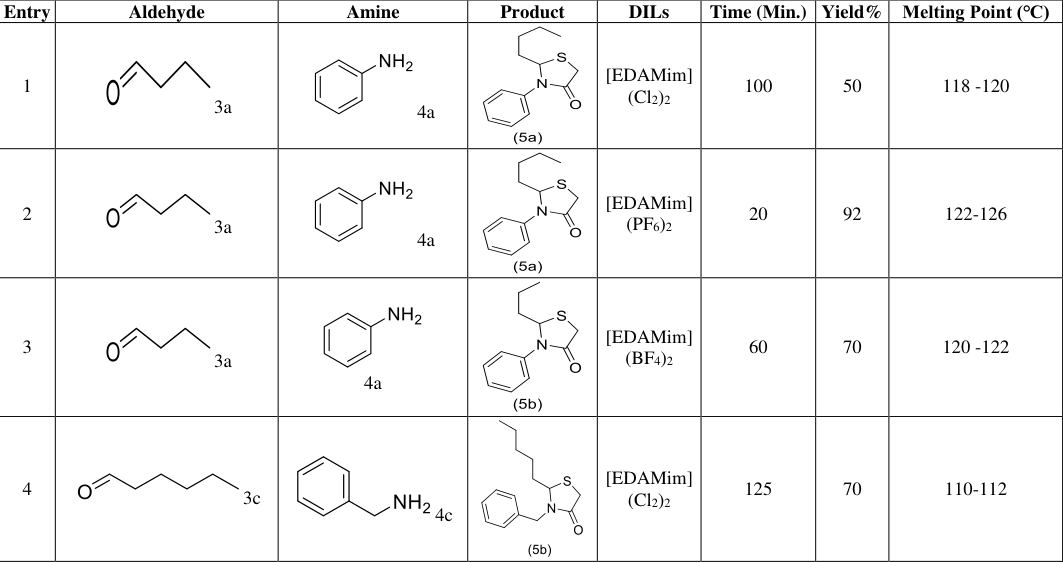 Table 1
 Table 2
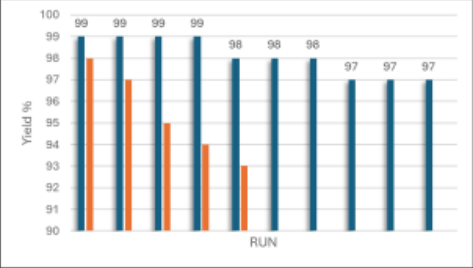 Figure 1
Text
(DCILs) have attention for increasing and attraction to their superior physicochemical and catalytic properties compared to mono-cationic ionic liquids [12,14] . The attention shifted on Dicationic Ionic for the development of new subclass having two cationic centers linked by a flexible spacer, resulting they demonstrated lower toxicity and stronger electrostatic interactions, enhanced hydrogen bonding capability, and also improved thermal stability. These features highlight contribution to their enhanced catalytic efficiency and recyclability [13][14][15]31] . Particularly, heterocyclic synthesis with suitable for multicomponent reactions process making them catalytic active DILs [11,12,44] . In comparison, monocationic ionic liquids often exhibit lower catalytic activity than Dicationic ionic liquids and limited recyclability due to weaker ionic interactions [9] . The application of dicationic ionic liquids in the synthesis of aliphatic thiazolidinone derivatives has been extensively explored in recent decades. Several reports have demonstrated the efficient synthesis of thiazolidinone derivatives using Chloride and acetate based ionic liquids under mild and solvent-free conditions [12][13][14] . For instance, Dicationic liquid-mediated multicomponent reactions have been shown to produce aliphatic thiazolidinone in high yields with improved selectivity and shorter reaction times [13, 15, 32] . Most research scholar nowadays focusing on aromatic synthesis stratergies systems despite the advancement of synthesis of Aliphatic based thiazolidinone using DILs remains underexplore. Although, aliphatic compounds have more efficient catalytic system required for achieving the high yield and selectivity [3,5,44] . Therefore, the synthesis of aliphatic thiazolidinone using Dicationic ionic liquids is for the development of green and scalable employing methodologies and in significant and industrial interests. Herein, our goal is study green and efficient method for the synthesis of aliphatic based thiazolidinone derivatives using as catalyst i.e. 1, 4 diaminobiutane based dicationic ionic liquids (DCILs) these both catalyst and solvent have been employed. The best catalyst developed protocol offers. For the advancements, such as less reaction time, highest yield, and recyclability of Dicationic ionic liquid in environmentally benign conditions. The synthesized compounds were further characterization by using spectroscopic techniques including 1H NMR, 13C NMR, FT-IR, and mass spectrometry for confirming their structural identity.
Experimental 2.1. Materials
All reagents and chemicals were analytical grade and used without further purification and commercially available, 1,4 Diaminobutane, 1-Methyl Imidazole, Chloacetyl Chloride, Potassium Carbonate, Lithium Perchlorate and Potassium hexafluorophosphate were obtained from sigma Aldrich (India),sodium tetrafluoroborate, diethyl ether, Ethyl acetate, Sodium sulphate, Aldehydes, Primary aliphatic amines and Thioglycolic acid all chemical were purchase from S.D fine Chemicals and Co. Ltd. and Avra synthesis Pvt. Ltd. All the chemical were used as received unless it is specified all the glassware are special washed and dried under suitable temperature in Oven at 120 ºC to 150 ºC. TLC of the synthesized compound was taken on TLC Silica gel 60 F254 aluminum coated sheet. NMR Spectra of synthesized ionic liquids and products were recorded in DMSO-d 6 on a Brucker Spectrometer operating at 400 MHz and chemical shifts are given in ppm downfield from TMS (∂=0.00), FT-IR Spectra of the synthesized compounds were obtained by using Fourier Transform Infrared Spectrophotometer (Shimadzu, IR Affinity-1 Japan) in the wave range 400-4000cm -1 in the transmittance mode using KBr pellets.
Characterization
The Dicationic Ionic liquid catalyst and All synthesized Aliphatic based Thiazolidinone derivatives were characterized using analytical techniques as 1 H NMR and 13 C NMR, 19 F NMR, 31 P NMR, IR, Mass, spectroscopy. Also the melting points were measured for all synthesized derivatives.
Method 2.3.1 Scheme 1: 3, 3'-((butane-1,4diylbis(azanediyl)bis(2-oxoethne-2,1-diyl))bis(1-methyl-1H-imidazol-3-ium) dicationic Ionic Liquid.
Step -I: Alkylation of 1, 4 Diaminobutane According to lit. [45] N, N'-(butane-1,4-diyl)bis(2chloroacetamide) (2) known procedure with some minor modification and analytical data encounters with literature [15, 16] .
Synthesis of 3,3'-((butane-1,4diylbis(azanediyl)bis(2-oxoethne-2,1-diyl))bis(1-methyl-1H-imidazol-3-ium) chloride dicationic Ionic Liquid. (2a)
According to lit. [46] N, N'-(butane-1,4-diyl)bis(2chloroacetamide) (2) (2.41 g, 10 mmol) was loaded in R. B. flask with 1-methylimidazole (1.64 ml, 20 mmol) in 1:2 ration in 50 mL acetonitrile. Then taken on magnetic stirrer for next 24 hours under reflux condition. White sticky solid was obtained which separated by pouring of acetonitrile directly and rinsed ethyl acetate (3 x 20 ml) and finally followed by diethyl ether. After drying under high vacuum pure white solid of [EDAMIM] Cl 2 product was obtained. Yield:72%, White solid; M.p 94ºC; 1
Step -III: Metathesis of Anion 1) Synthesis of 3,3'-((butane-1,4-diylbis(azanediyl)0bis(2oxoethne-2,1-diyl))bis(1-methyl-1H-imidazol-3-ium) hexafluorophosphate dicationic Ionic Liquid. (2b)
The crude product was dissolve in Deionised water in minimum quantity and then add Potassium Hexafluoride (Dissolve in small quantity of deionised water) 1:2 ratio drop wise at room temperature and take it for continuous stirring for next 4 hours. After the completion of the reaction Ionic Liquid get Filter and then dry under high Vacuum. The White Solid soft Crystal are obtained. Yield: 92%, White solid; m.p 94 0 C; 1 [BDAMim] (PF 6 -) 2 was washed with ethyl acetate (3 x 5 mL), decanted and dried in oven at 60 ºC. Finally, Thiazolidinone derivative was isolated by removing ethyl acetate using rotary evaporator and solid product was purified by recrystallization in Methanol / Ethanol or some compounds were purified by column chromatography. The melting points and spectroscopic data of these thiazolidinone derivatives are in good concurrence with the literature.
Scheme 2: Synthesis of 2-butyl-3-phenylthiazolidin-4-one
Result and Discussion
The developed method successfully yielded aliphatic thiazolidinone derivatives with excellent efficiency.
Catalytic Studies
The present work exhibits a novel Dicationic based ionic liquid catalyst and solvent. The safe and simple method efficiently yielded thiazolidinone derivatives by using aniline, aliphatic aldehydes and Thioglycolic acid in 1:1:1.2 equimolar amount. The catalytic activity of [BDAMim] (PF 6 -) 2 catalyst as well as solvent examined towards the synthesis of thiazolidinone derivatives. In order to optimize reaction condition, the model reaction of Butyraldehyde aniline and Thioglycolic acid was carried out [BDAMim] (PF 6 -) 2 Dicationic ionic liquid. The activities of the catalyst were evaluated by varying the amount of catalyst, reaction temperature and time. (Table 1). Nano catalyst and conventional while still outperforming the monocationic system, exhibited slightly lower efficiency (4 -12 hrs and 3-6hrs) with (70-80% yield; 50-70% yield) compared to. To the MILs and DCILs may be due to the absence of an aromatic cationic system, leading to weaker intermolecular interactions and less effective catalytic activation. Overall Comparisons of Dicationic ionic liquids exhibit significantly enhanced catalytic performance as compared to Monocationic ionic liquids, Nano catalyst and Conventional (Acid / Base) method in the synthesis of aliphatic thiazolidinone. Dicationic ionic liquids showed higher catalytic activity with their dual ionic nature provides improved interaction with reactants, leading to higher yields, faster reactions, and better sustainability as compared to conventional solvents and Monocationic ILs Recyclability up to 4-5 cycles, Therefore, DILs are more suitable for advanced green synthetic and Recyclability up to 5-10 cycles remain superior in catalytic applications.
Recycability
The recyclability of the solvent/catalyst [BDAMim] (PF 6 -) 2 was investigated in the model reactions of Butyraldehyde,, Aniline and thioglycolic acid. After every run, thiazolidinone was diluted with ethyl acetate, and the [BDAMim] (PF 6 -) 2 was obtained by solvent decantation. Any leftover traces of the non-ionic compounds were removed by washing with ethyl acetate and diethyl ether. After being vacuum-dried for three hours at 60 °C, the [BDAMim] (PF 6 -) 2 was used for the next run of the model reaction. Our catalyst is recyclable, as shown by Fig. 1, where [BDAMim] (PF 6 -) 2 has shown good catalytic activity across seven runs without a noticeable drop in yield.
Acknowledgement
The authors are grateful to Management and Principal of Amolakchand Mahavidyalaya, Yavatmal for providing the laboratory facilities. We are acknowledged VIT University, Vellore, for providing instrumental facilities for characterization.
Conclusion
Recyclability studies further highlighted the advantages of dicationic ionic liquids. DCILs [BDAMim] (PF 6 -) 2 retained its catalytic activity over 5-10 cycles with negligible loss in yield, whereas [EDAMim] (BF 4 -) 2 showed moderate stability up to 3-5 cycles. In comparison, the monocationic ionic liquid displayed a significant decrease in the other acid / base or nano catalyst methods activity after 2-3 cycles. The strong foundation for development of next generation in heterocycles in green catalytic synthesis of aliphatic thiazolidinone. The synthesis stratergies are continue to more attraction in future for the construction and developments are found in wide range of applications.
Figures and tables from the paper
| Catalyst Type | Yield% | Temp (0C) | Time (min.-hour) | Reusability | Environmental |
|---|---|---|---|---|---|
| Conventional (Acid / Base) | 50-70 | 70-120 | 4-12 hrs | No | Toxic Nature Solvents |
| Catalyst (Nano) | 70-80 | 60-100 | 3-6 hrs. | Moderate | Semi-green |
| Mono Ionic Liquid(MILs) | 80-93 | 40-70 | 1-3 hrs | Yes (3-5 Cycles) | Green |
| Dicationic ILs (DICLs) | 90-98 | R.T to 80 | 20 - 40 min | Yes (5-10 Cycles) | Highly green |
Table text extracted from the original PDF; superscript letters are shown inline. The original table image is below.
View original table image
References
48 in the original paper- Kaur M, Singh M, Chadha N. Thiazolidinone derivatives as potential therapeutic agents: a review. Bioorganic Chemistry. 2019;92:103258-103258.
- Jain AK, Vaidya A, Ravichandran V. Recent developments in thiazolidinone chemistry. European Journal of Medicinal Chemistry. 2018;158:104-133.
- Verma A, Saraf SK. 4-Thiazolidinones: a biologically active scaffold. European Journal of Medicinal Chemistry. 2019;180:656-682.
- Kumar S, Bawa S, Gupta H. Biological activities of thiazolidinone derivatives. Mini Reviews in Medicinal Chemistry. 2020;20:1-15.
- Sharma PK, Kumar S. Advances in the synthesis of thiazolidinones. Journal of Heterocyclic Chemistry. 2021;58:1-20.
- Singh GS, Desta ZY. Isatins in heterocyclic synthesis. Chemical Reviews. 2020;120:1-85.
- Clarke CJ, Tu WC, Levers O, Bröhl A, Hallett JP. Green and sustainable solvents. Chemical Reviews. 2018;118:747-800.
- Sheldon RA. Green chemistry and catalysis. Green Chemistry. 2017;19:18-43.
- Plechkova NV, Seddon KR. Applications of ionic liquids. Chemical Society Reviews. 2018;47:123-150.
- Zhang S, Sun J, Zhang X, Xin J, Miao Q, Wang J. Ionic liquid-based catalysis. Chemical Reviews. 2020;120:678-749.
- Bica K, Rogers RD. Confused ionic liquids. Angewandte Chemie International Edition. 2019;58:212.
- Zhao D, Wu M, Kou Y, Min E. Ionic liquids in catalysis. Catalysis Today. 2019;148:33-37.
- Parvulescu VI, Hardacre C. Catalysis in ionic liquids. Chemical Reviews. 2017;117:2615-2686.
- Han X, Armstrong DW. Ionic liquids in separations. Accounts of Chemical Research. 2020;53:1-10.
- Kumar V, Malhotra SV. Dicationic ionic liquids in synthesis. Journal of Molecular Liquids. 2021;336:116125.
- Zhang Q, Zhang S, Deng Y. Ionic liquid catalysis. Green Chemistry. 2019;21:1-20.
- Shukla SK, Mikkola JP. Ionic liquids in green chemistry. Frontiers in Chemistry. 2020;8:1-15.
- Singh R, Kumar A. Multicomponent reactions in ionic liquids. Molecular Diversity. 2022;26:123-145.
- Mohurle S, Maiti B. Ionic liquid-mediated synthesis of thiazoles. RSC Advances. 2025;15(48):40912-40966.
- Martinho LA, Praciano VHJG, Matos GDR, Gatto CC, Andrade CKZ. Thiazolidinones via microwave-assisted synthesis. Beilstein Journal of Organic Chemistry. 2025;21:203-203.
- Barasarathi J, et al. Ionic liquid catalyzed multicomponent reactions. Green Chemistry Letters and Reviews. 2026;19:1-25.
- Gundogdu Hizliates C, et al. Eco-friendly synthesis of thiazolidines. ChemSelect. 2025;10(3):202404712202404712.
- Humne VT, Birhade DR, Pawar OB. Ionic liquidmediated thiazolidinone synthesis. Organic Communications. 2025;18:153-165.
- Siddiqui N, et al. Microwave-assisted ionic liquid synthesis. Journal of Molecular Liquids. 2025;436:128175-128175.
- Mohammadi R, Esmati S, Gholamhosseini-Nazari M. Ionic liquid-supported catalysis. Journal of Molecular Liquids. 2019;275:523-534.
- Clarke CJ, Tu WC, Levers O. Sustainable solvents in chemistry. Chemical Reviews. 2018;118:747-800.
- Zhang S, Sun J. Ionic liquids in catalysis. Chemical Reviews. 2020;120:678-749.
- Plechkova NV, Seddon KR. Industrial applications of ionic liquids. Chemical Society Reviews. 2018;47:123150.
- Parvulescu VI, Hardacre C. Ionic liquid catalysis. Chemical Reviews. 2017;117:2615-2686.
- Shukla SK, Mikkola JP. Advances in ionic liquids. Frontiers in Chemistry. 2020;8:1-15.
- Kumar V, Malhotra SV. Dicationic ionic liquids. Journal of Molecular Liquids. 2021;336:116-125.
- Singh R, Kumar A. Ionic liquid multicomponent reactions. Molecular Diversity. 2022;26:123-145. International Journal of Advanced Chemistry Research https://www.chemistryjournals.net
- Kaur N, Kumar S. Ionic liquids in heterocyclic synthesis. Current Organic Synthesis. 2021;18:1-10.
- Verma A, Saraf SK. Thiazolidinone medicinal chemistry. European Journal of Medicinal Chemistry. 2019;180:656-682.
- Kucukguzel SG, Rollas S. Thiazolidinone derivatives. European Journal of Medicinal Chemistry. 2020;185:111-120.
- Sharma PK, Kumar S. Thiazolidinone synthesis. Journal of Heterocyclic Chemistry. 2021;58:1-20.
- Singh GS, Desta ZY. Heterocycles in drug design. Chemical Reviews. 2020;120:1-85.
- Kumar S, Bawa S. Thiazolidinone biological activity. Mini Reviews in Medicinal Chemistry. 2020;20:1-15.
- Han X, Armstrong DW. Ionic liquids applications. Accounts of Chemical Research. 2020;53:1-10.
- Zhao D, Wu M. Ionic liquid catalysis. Catalysis Today. 2019;148:33-37.
- Zhang Q, Zhang S. Green ionic liquid catalysis. Green Chemistry. 2019;21:1-20.
- Bica K, Rogers RD. Ionic liquids chemistry. Angewandte Chemie International Edition. 2019;58:212.
- Tang C, Wang Y. Ionic liquid properties. Chemical Reviews. 2022;122:1-45.
- Lozano-Martín D, et al. Thermal properties of ionic liquids. Journal of Chemical Thermodynamics. 2024;180:106-115.
- Budkov YA, Kolesnikov AL. Theoretical models of ionic liquids. Advances in Chemical Physics. 2021;175:1-50.
- Shital M, Barnali M. Recent trends in ionic liquidmediated synthesis of thiazoles: toward greener methodologies. RSC Advances. 2025;15(48):4091240966.
- Mateus M, Kiss A, Cisarova I, Karpinski TM, Rycek L. Synthesis of silver complexes with chelating bidentate N-heterocyclic ligands, their application in catalytic A3 coupling and as antimicrobial agents. Applied Organometallic Chemistry. 2023;37:6994-6994.
- Muskawar PN, Senthil Kumar S, Bhagat PR. Carboxylfunctionalized ionic liquids based on benzimidazolium cation: study of Hammett values and catalytic activity towards one-pot synthesis of 1-amidoalkyl naphthols. Journal of Molecular Catalysis A: Chemical. 2013;380:112-117.