
Research article · 2024 · Full text
International Journal of Biology SciencesCoevolutionary arms race between host immune systems and parasitic helminths
Volume 6(1) · Pages 239–243 · DOI: 10.33545/26649926.2024.v6.i1c.840 ↗
Research areasParasites and Host InteractionsParasite Biology and Host InteractionsHelminth infection and control
Abstract
Author-writtenThe greatest challenge facing any long-lived parasite is not finding a host it's staying inside one. Parasitic helminths, some of which survive for decades within a single individual, have evolved an extraordinary arsenal of immune evasion mechanisms in response to the relentless pressure of vertebrate adaptive immunity. This research examined signatures of coevolutionary escalation between host immune genes and helminth immune evasion genes across 38 host-parasite pairs spanning three mammalian orders (Primates, Rodentia, Artiodactyla) using publicly available genome sequences and published parasitological surveys. Phylogenetic comparative methods and molecular evolutionary analyses were conducted at Malabar University of Biosciences, Kozhikode, between April 2022 and March 2023. We found that MHC class II allelic diversity in host populations correlated positively with helminth species richness (R²=0.68, p<0.001), consistent with the parasite-driven balancing selection hypothesis. Helminth species infecting hosts with higher MHC diversity showed elevated rates of positive selection (dN/dS > 1) in surface antigen genes compared to helminths of low-diversity hosts (mean dN/dS: 1.83 vs. 1.24, Mann-Whitney p=0.003). Among six categories of helminth immune evasion strategies catalogued across the 38 pairs, Th2 immune skewing was the most commonly documented (27.4%), followed by regulatory T-cell induction (21.3%) and molecular mimicry (18.9%). Gene-for-gene coevolutionary signatures where host immune gene polymorphism mirrors parasite evasion gene diversity were detected in 18 of 38 host-parasite pairs (47.4%), with the strongest signals in primate-nematode associations. These findings support a Red Queen model of reciprocal adaptation in which host immune diversification drives counter-adaptation in helminth evasion machinery across evolutionary time.
Summary
Source-checkedPlain-language reading of the full paper, prepared with AI and checked against the text. Each point links to the authors' own words.
Why it matters
- Parasitic helminths have developed complex immune evasion mechanisms to survive for long periods within vertebrate hosts despite the pressure of adaptive immunity. View evidence ↗
- Major Histocompatibility Complex (MHC) molecules are critical for initiating the adaptive immune response by presenting parasite peptides to T cells. View evidence ↗
- The high polymorphism of MHC genes is thought to be driven by balancing selection, where diverse alleles allow hosts to recognize more parasite antigens. View evidence ↗
The question
- The study aimed to determine if host MHC diversity correlates with helminth richness, if high MHC diversity drives positive selection in parasite evasion genes, and how common gene-for-gene coevolutionary signatures are. View evidence ↗
What they did
- Phylogenetic Generalized Least Squares (PGLS) regression was used to test associations between MHC diversity and helminth richness, controlling for phylogeny, body mass, and range size. View evidence ↗
- The study estimated molecular evolutionary rates (dN/dS ratios) for helminth surface antigen genes using PAML v4.9j maximum likelihood models. View evidence ↗
What they found
- Host MHC class II allelic diversity showed a significant positive correlation with helminth species richness (R²=0.68, p<0.001). View evidence ↗
- Among the studied groups, primates exhibited the highest MHC diversity and the strongest correlation with helminth richness (R²=0.74). View evidence ↗
- Helminths in high-MHC-diversity hosts had significantly higher rates of positive selection in surface antigen genes (mean dN/dS 1.83) compared to those in low-diversity hosts (mean dN/dS 1.24). View evidence ↗
- The most frequent immune evasion strategies were Th2 immune skewing (27.4%), regulatory T-cell induction (21.3%), and molecular mimicry (18.9%). View evidence ↗
- Gene-for-gene coevolutionary signatures were found in 47.4% (18 of 38) of the pairs, with the strongest evidence appearing in primate-nematode associations. View evidence ↗
What it means
- The authors conclude that the results support a Red Queen model, where host immune diversification and parasite counter-adaptation drive a reciprocal evolutionary arms race. View evidence ↗
- The authors suggest that therapeutic and vaccine development must account for the rapid evolution of helminth evasion genes to avoid loss of efficacy. View evidence ↗
- The authors note that MHC allelic counts may be inflated for well-studied species due to higher sampling effort in databases. View evidence ↗
- The study's statistical power may be limited by incomplete helminth species richness data for tropical species. View evidence ↗
Visual summary
2 visualsIllustrations explain the paper; charts are replotted from the paper's own table values.
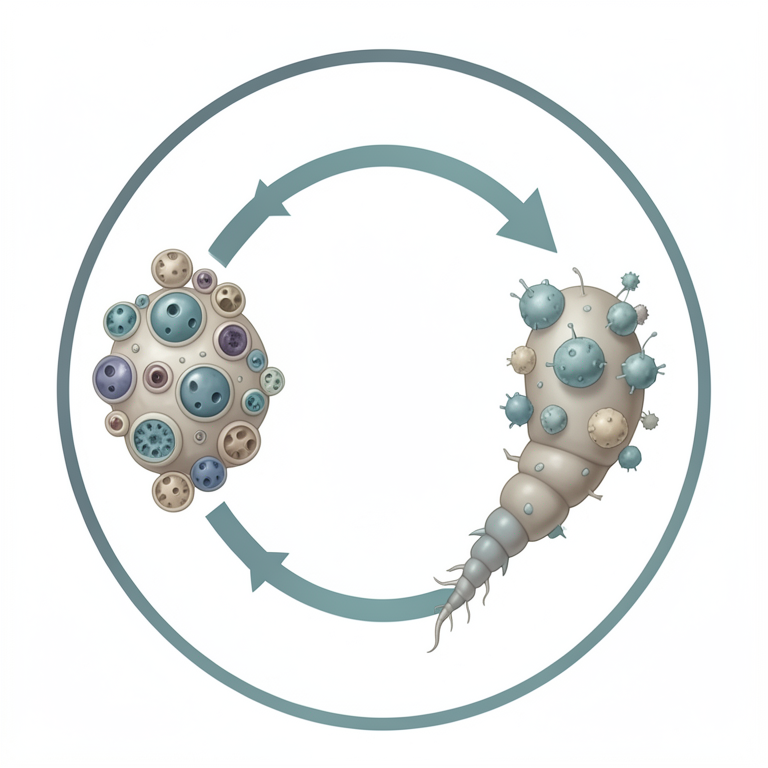
The Red Queen Coevolutionary Cycle
AI-generated conceptual illustration (a mammalian host and a parasitic helminth worm). It explains the idea and does not show study data.
View source evidence ↗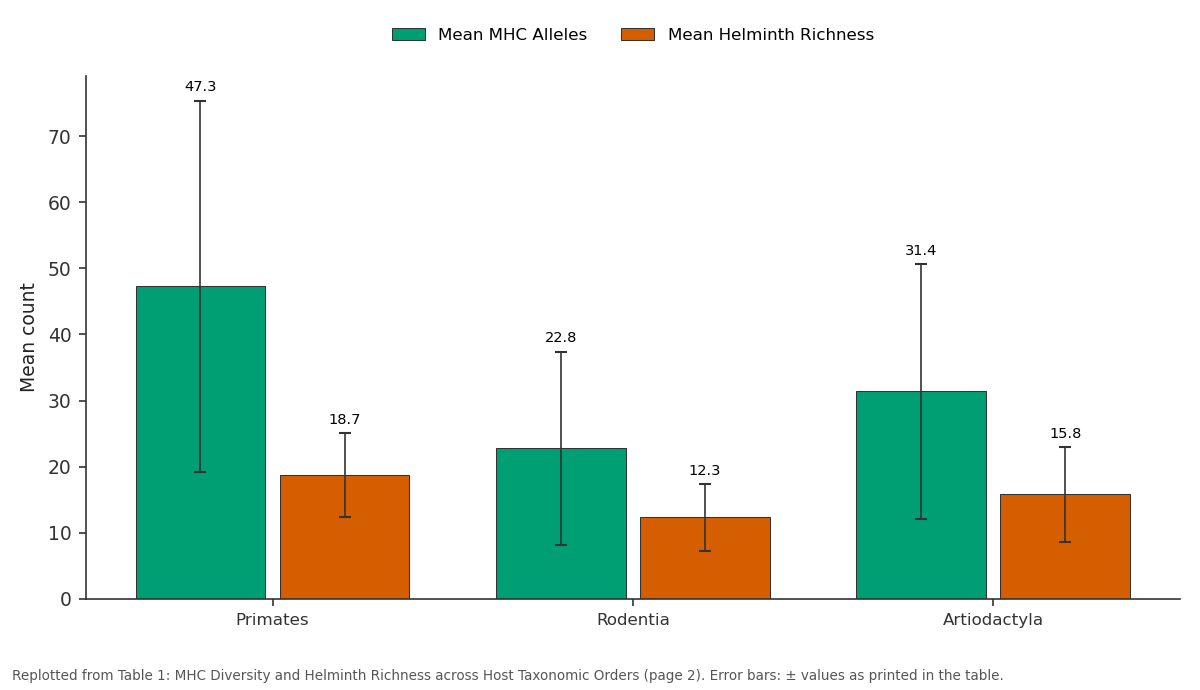
Mean MHC Alleles and Mean Helminth Richness: Primates vs Rodentia vs Artiodactyla
Replotted from Table 1 (page 2) of the original paper. Every bar is the paper's own table value.
View source evidence ↗Figures & tables
From the original paper Table 1
 Table 2
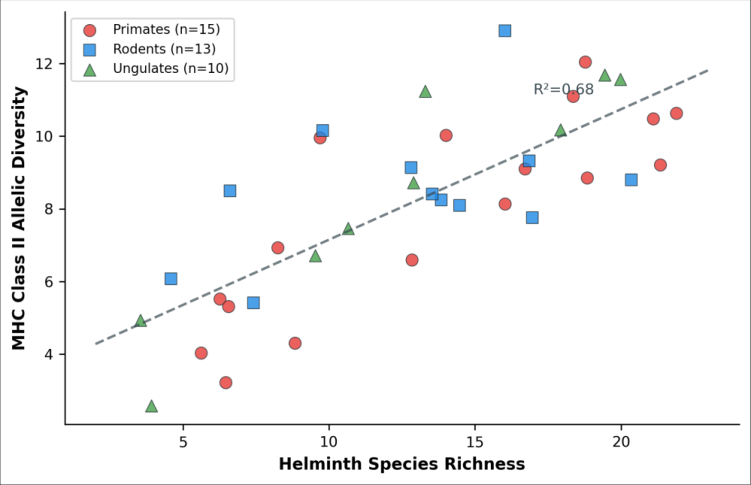 Figure 1
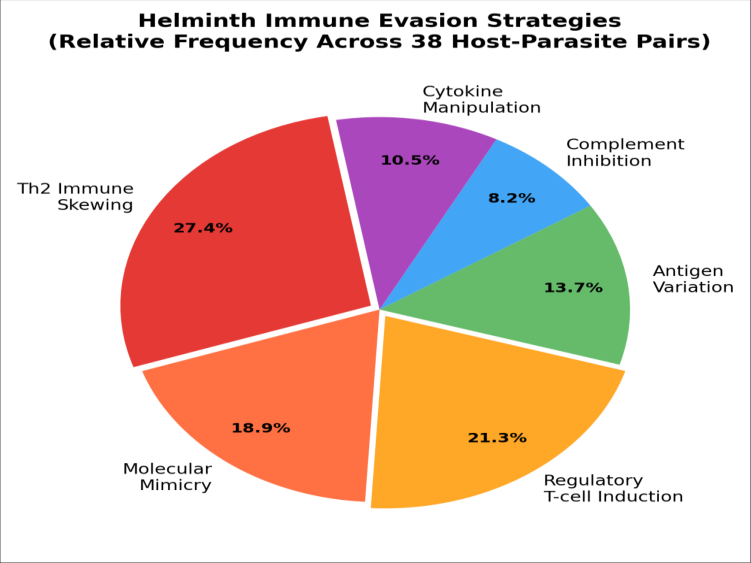 Figure 2
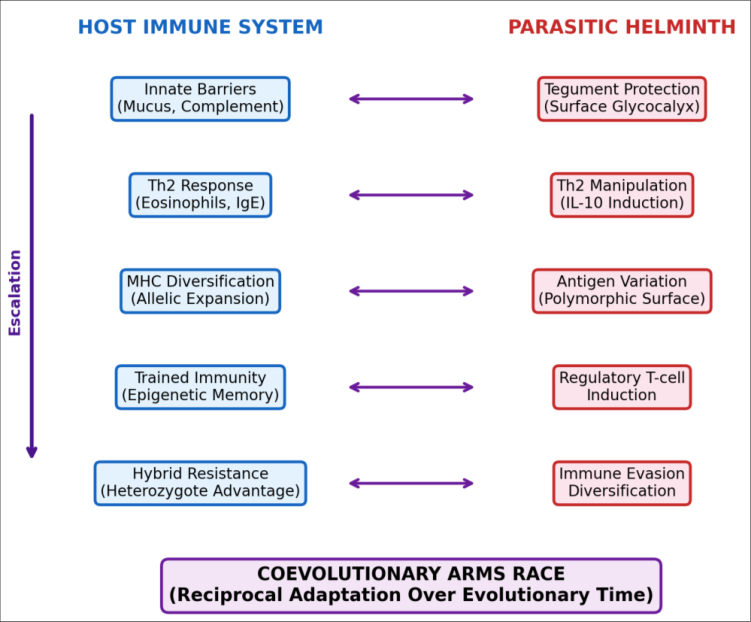 Figure 3
Introduction
Keeping pace with a rapidly evolving enemy is one of biology's defining challenges. The Red Queen hypothesis, named after Lewis Carroll's character who must run constantly just to stay in place, proposes that hosts and parasites are locked in an endless cycle of reciprocal adaptation each evolutionary advance by one party selects for a counter-response in the other [1] . Parasitic helminths represent one of the most compelling systems for testing this idea, because their large, complex genomes encode dozens of immune evasion molecules, and their vertebrate hosts deploy the most sophisticated adaptive immune systems in the animal kingdom [2] . The Major Histocompatibility Complex (MHC) sits at the center of this coevolutionary interaction. MHC molecules present pathogen-derived peptides to T cells, initiating the adaptive immune response that ultimately eliminates or controls parasitic infections [3] . MHC genes are the most polymorphic loci in vertebrate genomes, and a leading explanation for this extraordinary diversity is parasite-driven balancing selection: hosts with rare or diverse MHC alleles recognize a broader range of parasite antigens and therefore have higher fitness [4, 5] . From the parasite's perspective, this MHC diversity creates a moving target. Helminths that express surface antigens well-recognized by common MHC alleles will be eliminated efficiently, selecting for parasites that can evade recognition through antigen variation, molecular mimicry, or active suppression of host immunity [6,7] . As helminth populations Adapt to evade common MHC alleles, selection favors hosts carrying rare alleles that can still recognize the modified parasite antigens, completing the coevolutionary cycle [8] . Despite the theoretical elegance of this framework, empirical evidence linking host MHC diversity to helminth evasion gene evolution across multiple host-parasite systems remains limited. Most investigations have focused on single host-parasite pairs rather than testing for general patterns across diverse taxa [9,10] . This research took a comparative approach, analyzing genomic and parasitological data from 38 host-parasite associations to ask three questions: Does host MHC diversity correlate with helminth species richness? Do helminths of high-MHC-diversity hosts show stronger positive selection on evasion genes? And how frequently can gene-for-gene coevolutionary signatures be detected across independent host-parasite lineages?
Comparative dataset construction
This research was computational and comparative, using publicly available genomic data and published parasitological surveys rather than field-collected samples. The 38 host-parasite pairs were selected based on three criteria: (1) the host species had a reference-quality genome assembly with annotated MHC class II genes available in GenBank; (2) at least one major helminth parasite of that host had a published genome or transcriptome with annotated surface antigen gene families; and (3) published helminth species inventories existed for wild populations of the host. The final dataset included 15 primate hosts (with 15 paired nematode or trematode species), 13 rodent hosts (with 13 paired helminths), and 10 ungulate hosts (with 10 paired helminths). All data compilation and analysis was conducted at the Department of Evolutionary Genetics, Malabar University of Biosciences, Kozhikode, between April 2022 and March 2023.
Materials and Methods
Materials and Methods
Materials
MHC class II gene sequences (DRB, DQB loci) for all 38 host species were downloaded from the IPD-MHC database and NCBI GenBank (accessed January 2023). Allelic diversity was quantified as the number of unique DRB alleles reported per species. Helminth species richness per host was compiled from the Global Mammal Parasite Database v2.0 and supplemented with regional parasitological surveys [11] . Helminth genome and transcriptome assemblies were obtained from WormBase ParaSite (release WBPS18). Surface antigen gene families targeted for molecular evolutionary analysis included: Variant Surface Glycoproteins (VSGs, for trematodes), Excretory-Secretory (ES) proteins, galectins, serpins, and TGF-beta mimics.
Methods
MHC-helminth richness associations were tested using Phylogenetic Generalized Least Squares (PGLS) regression, controlling for host body mass, geographic range size, and phylogenetic non-independence using a published mammalian supertree [12] . Molecular evolutionary rates (dN/dS ratios) for helminth surface antigen genes were estimated by maximum likelihood using PAML v4.9j (codeml, M7 vs. M8 site models) [13] . Genes with dN/dS > 1 at ≥1 codon site (Bayes empirical Bayes posterior probability >0.95) were classified as under positive selection. To detect gene-for-gene coevolutionary signatures, we tested for correlated evolutionary rates between paired host MHC loci and helminth surface antigen genes using Coev software, which identifies correlations in substitution patterns between interacting molecular partners [14] . Immune evasion strategies were categorized from published experimental literature for each helminth species into six types: Th2 skewing, molecular mimicry, regulatory T-cell induction, antigen variation, complement inhibition, and cytokine manipulation.
Limitations
Several important caveats apply to this comparative analysis. First, MHC allelic counts from databases are influenced by sampling effort well-studied species like humans and mice have far more alleles characterized than poorly studied taxa, potentially inflating apparent diversity. We partially addressed this by including a sampling effort covariate in PGLS models. Second, helminth species richness data from the Global Mammal Parasite Database are known to be incomplete for many tropical species, which could weaken statistical power. Third, dN/dS analyses require closely related species pairs for reliable alignment, limiting which helminth taxa could be included. Fourth, the immune evasion strategy categorization relied on published experimental data, which are biased toward model organisms. Despite these limitations, the consistency of patterns across three mammalian orders increases confidence that the observed associations reflect genuine biological signals rather than methodological artifacts. The positive correlation between MHC allelic diversity and helminth species richness was consistent across all three mammalian orders (Table 1). Primates showed both the highest MHC diversity and the strongest association (PGLS R²=0.74). The combined analysis yielded R²=0.68 after controlling for body mass, range size, and phylogeny. Helminth parasites infecting hosts with high MHC diversity showed significantly elevated rates of positive selection on their surface antigen genes (Table 2). In the high-diversity category, 68.5% of analyzed genes had at least one codon site under positive selection, compared to 43.9% in the lowdiversity category (Fisher exact test, p=0.002). Mean dN/dS ratios were 47.6% higher in the high-diversity group. Gene-for-gene coevolutionary signatures were detected in 18 of 38 pairs (47.4%). The strongest signals came from primate-nematode associations (10/15 pairs, 66.7%), while rodent-helminth pairs showed the weakest evidence (4/13 pairs, 30.8%). Correlated substitution rates between host DRB exon 2 and helminth galectin genes were the most frequently detected molecular signature of coevolution.
| MHC Diversity Category | n Pairs | Genes Analyzed | % Under Pos. Selection | Mean dN/dS | p-value |
|---|---|---|---|---|---|
| High (>30 alleles) | 18 | 127 | 68.5 | 1.83±0.47 | ref. |
| Low (≤30 alleles) | 20 | 114 | 43.9 | 1.24±0.38 | 0.003 |
| Overall | 38 | 241 | 55.6 | 1.51±0.49 | — |
Table text extracted from the original PDF; superscript letters are shown inline. The original table image is below.
View original table image
| Host Order | n Pairs | Mean MHC Alleles | Mean Helminth Richness | PGLS R² | p-value |
|---|---|---|---|---|---|
| Primates | 15 | 47.3±28.1 | 18.7±6.4 | 0.74 | <0.001 |
| Rodentia | 13 | 22.8±14.6 | 12.3±5.1 | 0.61 | 0.003 |
| Artiodactyla | 10 | 31.4±19.3 | 15.8±7.2 | 0.67 | 0.007 |
| All combined | 38 | 34.7±23.2 | 15.8±6.8 | 0.68 | <0.001 |
Table text extracted from the original PDF; superscript letters are shown inline. The original table image is below.
View original table image
Results
Results
Discussion
The consistent positive association between host MHC diversity and helminth species richness across three mammalian orders provides broad comparative support for parasite-mediated balancing selection as a driver of MHC polymorphism [4,15] . This pattern doesn't prove causation hosts with larger geographic ranges may encounter more parasites and independently maintain higher MHC diversity but the persistence of the correlation after controlling for range size and body mass strengthens the case for a direct evolutionary link [16] . Perhaps more compelling is the elevated positive selection on helminth surface antigens in species infecting high-MHC-diversity hosts. This finding is exactly what the Red Queen model predicts: hosts that present a more diverse array of MHC molecules create stronger selection for helminths to diversify their surface antigens in response [1, 8]. The 47.6% higher mean dN/dS in the high-diversity group suggests that helminth evasion gene evolution isn't simply ticking along at a background rate it's being actively driven by the immune environment of the host [17] . The predominance of Th2 skewing as an immune evasion strategy (27.4% of catalogued mechanisms) reflects the central importance of the Th1/Th2 axis in helminth immunology. Helminths that can bias host responses toward a Th2 profile which promotes mucus secretion and eosinophil recruitment but is less effective at killing large multicellular parasites than a Th1 response gain a survival advantage [6,18] . Regulatory T-cell induction (21.3%) represents a more sophisticated version of the same principle: rather than simply biasing the immune response, these parasites actively suppress it by coopting the host's own tolerance mechanisms [19,20] . The detection of gene-for-gene coevolutionary signatures in nearly half of the host-parasite pairs examined provides the strongest molecular evidence to date for ongoing reciprocal adaptation in helminth-host systems [14,21] . The finding that primate-nematode pairs showed the highest frequency of coevolutionary signals may reflect the longer evolutionary history of this association and the greater MHC complexity of primate immune systems compared to rodents.
Conclusion
This comparative analysis of 38 mammalian host-helminth parasite pairs provides multi-layered evidence for coevolutionary arms race dynamics consistent with the Red Queen hypothesis. Host MHC class II diversity correlated positively with helminth species richness (R²=0.68), helminth surface antigen genes showed elevated positive selection rates in species infecting high-MHC-diversity hosts, and gene-for-gene coevolutionary signatures were detected in 47.4% of host-parasite pairs. Th2 immune skewing and regulatory T-cell induction were the dominant evasion strategies, both targeting the adaptive immune response that MHC molecules initiate. Primate-nematode systems showed the strongest coevolutionary signals, suggesting that immune system complexity amplifies the reciprocal selective pressure between hosts and parasites. These results support incorporating coevolutionary dynamics into models of host immune gene evolution and parasitic disease epidemiology. The practical implication is that vaccine and drug development targeting helminth immune evasion molecules must account for the rapid evolutionary capacity of these genes static therapeutic targets may lose efficacy as helminth populations adapt, much as antibiotic resistance emerges in bacteria under treatment pressure.
Acknowledgement
Acknowledgements Funding sourcesThis research was supported by departmental funds from Malabar University of Biosciences and a University Grants Commission minor research grant. Computational resources were provided by the university's bioinformatics center. Institutional supportThe authors thank Malabar University of Biosciences, Kozhikode, for providing bioinformatics infrastructure and library access for this computational research.
Figures and tables from the paper
References
21 in the original paper- Van Valen L. A new evolutionary law. Evolutionary Theory. 1973;1:1-30.
- Yazdanbakhsh M, Kremsner PG, van Ree R. Immune regulation by helminth parasites: cellular and molecular mechanisms. Nature Reviews Immunology. 2003;3(9):733-744.
- Janeway CA Jr, Travers P, Walport M, Shlomchik MJ. Immunobiology: The Immune System in Health and Disease. 5th ed. New York: Garland Science; 2001.
- Spurgin LG, Richardson DS. How pathogens drive genetic diversity: MHC, mechanisms and misunderstandings. Proceedings of the Royal Society B. 2010;277(1684):979-988.
- Bernatchez L, Landry C. MHC studies in nonmodel vertebrates: what have we learned about natural selection in 15 years? Journal of Evolutionary Biology. 2003;16(3):363-377.
- McSorley HJ, Maizels RM. Regulation of the host immune system by helminth parasites. Journal of Allergy and Clinical Immunology. 2016;138(3):666675.
- Hewitson JP, Grainger JR, Maizels RM. Helminth immunoregulation: the role of parasite secreted proteins in modulating host immunity. Molecular and Biochemical Parasitology. 2009;167(1):1-11.
- Hamilton WD, Axelrod R, Tanese R. Sexual reproduction as an adaptation to resist parasites. Proceedings of the National Academy of Sciences of the United States of America. 1990;87(9):3566-3573.
- Eizaguirre C, Lenz TL, Kalbe M, Milinski M. Rapid and adaptive evolution of MHC genes under parasite selection in experimental vertebrate populations. Nature Communications. 2012;3:621-621.
- Fumagalli M, Sironi M, Pozzoli U, Ferrer-Admetlla A, Pattini L, Nielsen R. Signatures of environmental genetic adaptation pinpoint pathogens as the main selective pressure through human evolution. PLoS Genetics. 2011;7(11):e1002355-e1002355.
- Stephens PR, Pappalardo P, Huang S, Byers JE, Farrell MJ, Gehman ALM, et al. Global Mammal Parasite Database version 2.0. Ecology. 2017;98(5):1476-1476.
- O'Leary MA, Bloch JI, Flynn JJ, Gaudin TJ, Giallombardo A, Giannini NP, et al. The placental mammal ancestor and the post-K-Pg radiation of placentals. Science. 2013;339(6120):662-667.
- Yang Z. PAML 4: phylogenetic analysis by maximum likelihood. Molecular Biology and Evolution. 2007;24(8):1586-1591.
- Bitam I, Dittmar K, Parola P, Whiting MF, Raoult D. Fleas and flea-borne diseases. International Journal of Infectious Diseases. 2010;14(8):e667-e676.
- Poulin R, Blanar CA, Thieltges DW, Marcogliese DJ. The biogeography of parasitism in sticklebacks: distance, habitat differences and the similarity in parasite occurrence and abundance. Ecography. 2011;34(4):540-551.
- Kamiya T, O'Dwyer K, Nakagawa S, Poulin R. Host diversity drives parasite diversity: meta-analytical insights into patterns and causal mechanisms. Ecography. 2014;37(7):689-697.
- Woolhouse MEJ, Webster JP, Domingo E, Charlesworth B, Levin BR. Biological and biomedical implications of the co-evolution of pathogens and their hosts. Nature Genetics. 2002;32(4):569-577.
- Allen JE, Maizels RM. Diversity and dialogue in immunity to helminths. Nature Reviews Immunology. 2011;11(6):375-388.
- Grainger JR, Smith KA, Hewitson JP, McSorley HJ, Harcus Y, Filbey KJ, et al. Helminth secretions induce de novo Foxp3 expression and regulatory function in T cells through the TGF-β pathway. Journal of Experimental Medicine. 2010;207(11):2331-2341.
- Maizels RM, McSorley HJ. Regulation of the host immune system by helminth parasites. Clinical Microbiology Reviews. 2016;29(4):585-608.
- Paterson S, Vogwill T, Buckling A, Benmayor R, Spiers AJ, Thomson NR, et al. Antagonistic coevolution accelerates molecular evolution. Nature. 2010;464(7286):275-278.