
Research article · 2026 · Full text
International Journal of Biology SciencesFish as sentinel species for riverine ecosystem health assessment and conservation management
Volume 8(5) · Pages 121–130 · DOI: 10.33545/26649926.2026.v8.i5b.838 ↗
Research areasEnvironmental Toxicology and EcotoxicologyFish Ecology and Management StudiesFreshwater macroinvertebrate diversity and ecology
Abstract
Author-writtenFreshwater ecosystems are increasingly threatened by anthropogenic activities, including pollution, habitat fragmentation, hydrological alterations, climate change, and others, especially in the case of rivers. Fish occupy a range of trophic levels and possess varied sensitivities to environmental stressors, making them excellent sentinels for evaluating and monitoring the health of these dynamic ecosystems. In this context, we review the current knowledge on the integration of fish-based biomonitoring, ecotoxicological approaches, and conservation strategies, to provide a holistic framework for river ecosystem management. The paper reviews existing and emerging biomonitoring techniques, from traditional indices such as the Index of Biotic Integrity (IBI) and multimetric assessments to advanced molecular and omics tools (e.g., transcriptomics, metabolomics, and eDNA metabarcoding) that allow early detection of sublethal effects and community-level shifts. Reviews are provided on ecotoxicological perspectives, including bioaccumulation of contaminants (heavy metals, pesticides, pharmaceuticals and microplastics), biomarker responses (histopathological, physiological and genetic) and complex interactions of multiple stressors. The ways in which these data contribute to causal diagnosis of ecosystem degradation and risk assessment are considered. Moreover, the review connects monitoring science to on-the-ground conservation by showcasing successful case studies where fish sentinel data have resulted in policy changes, habitat restoration, protected area establishment and species recovery programs. Critical discussions of challenges including data standardization, integration of big data analytics, climate-induced range shifts, and the need for interdisciplinary approaches. The paper argues for a “One Health” paradigm that connects fish health, ecosystem integrity and human well-being, and suggests an integrated framework for adaptive management of river basins globally. This review highlights the importance of fish as key indicators in the transfer of scientific knowledge to successful conservation results, ultimately leading to the sustainable management and restoration of threatened freshwater ecosystems.
Summary
Source-checkedPlain-language reading of the full paper, prepared with AI and checked against the text. Each point links to the authors' own words.
Why it matters
- Rivers and freshwater streams are critical global ecosystems, supporting approximately 10% of all known species and more than one-third of all vertebrate species despite covering less than 1% of the Earth's surface. View evidence ↗
- Biodiversity in freshwater environments is decreasing at a rate two to three times faster than that seen in marine or terrestrial ecosystems. View evidence ↗
- Fish serve as effective sentinel species for monitoring river health because they occupy various trophic levels and exhibit different sensitivities to environmental stressors. View evidence ↗
The question
- The authors aim to review current knowledge on fish-based biomonitoring, ecotoxicology, and conservation strategies to create a comprehensive framework for managing river ecosystems. View evidence ↗
What they did
- The review examines a spectrum of biomonitoring techniques, ranging from traditional tools like the Index of Biotic Integrity (IBI) to advanced molecular methods including eDNA metabarcoding, transcriptomics, and metabolomics. View evidence ↗
- The authors analyze ecotoxicological data regarding the bioaccumulation of pollutants (such as microplastics and heavy metals) and the resulting physiological, genetic, and histopathological biomarker responses. View evidence ↗
- The review links monitoring data to practical conservation by analyzing case studies where fish sentinel data led to species recovery, habitat restoration, and policy changes. View evidence ↗
What they found
- The Index of Biotic Integrity (IBI) uses 12 specific metrics, including fish abundance and species richness, to assess ecological health against reference benchmarks. View evidence ↗
- The inhibition of acetylcholinesterase (AChE) in fish muscle and brain tissue serves as a diagnostic marker for exposure to carbamate and organophosphate pesticides. View evidence ↗
- As of 2024, over 60,000 large dams are in operation, and more than 60% of the world's large river systems are moderately or severely fragmented by dams and diversions. View evidence ↗
- Projections for the year 2100 under RCP 8.5 and RCP 4.5 scenarios suggest that coldwater specialists, such as salmonids, may face range contractions of 20-40%. View evidence ↗
- In the Congo River, Mekong River, and Amazon basin, well-managed freshwater reserves have been shown to increase fish species richness by 20-40%. View evidence ↗
- The removal of two large dams on the Elwha River in the USA enabled Chinook salmon to regain access to 90 km of habitat that had been blocked for five years. View evidence ↗
What it means
- The authors advocate for a 'One Health' paradigm that integrates human well-being, ecosystem integrity, and fish health into a global adaptive management framework for river basins. View evidence ↗
- The authors identify several challenges to effective monitoring, including the need for interdisciplinary approaches, the integration of big data analytics, data standardization, and managing climate-induced range shifts. View evidence ↗
Visual summary
1 visualsIllustrations explain the paper; they do not show study data.
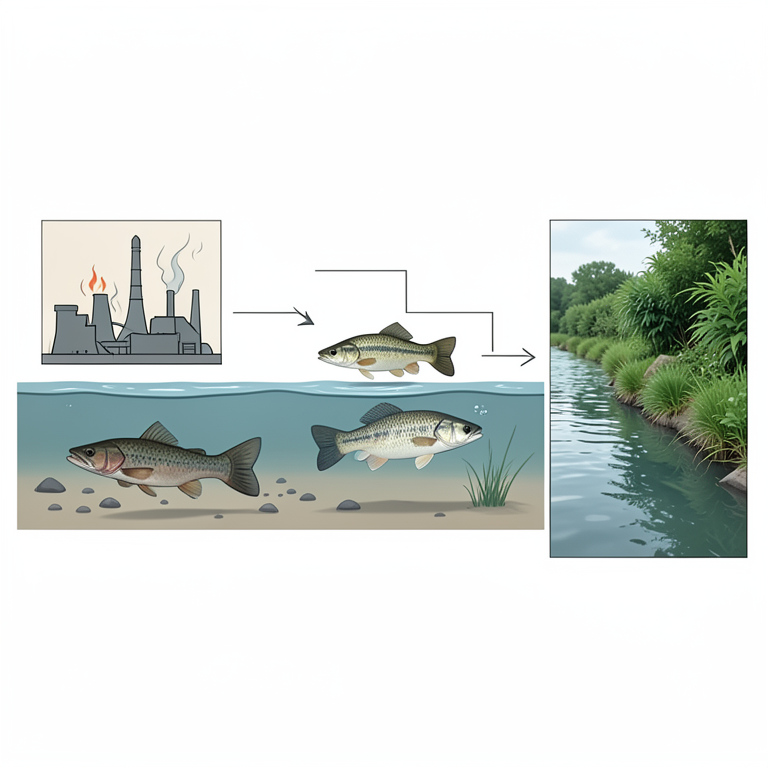
Fish as Ecosystem Sentinels
AI-generated conceptual illustration (various river fish species (bottom-dwelling catfish, mid-water cyprinids, and apex predatory bass) in a riverine habitat). It explains the idea and does not show study data.
View source evidence ↗Figures & tables
From the original paper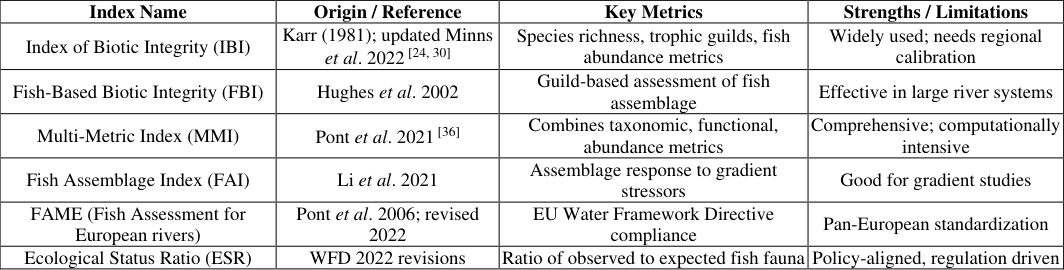 Table 1
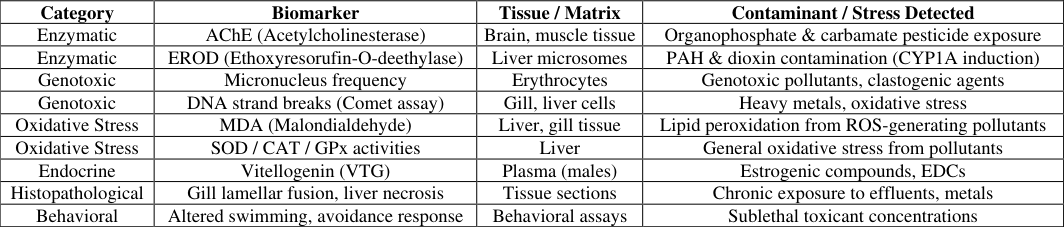 Table 2
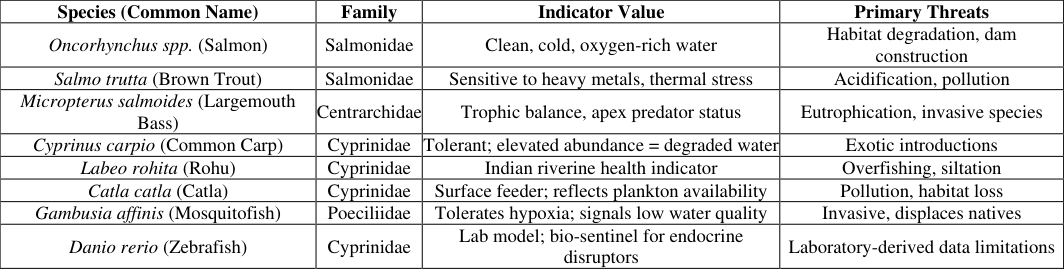 Table 3
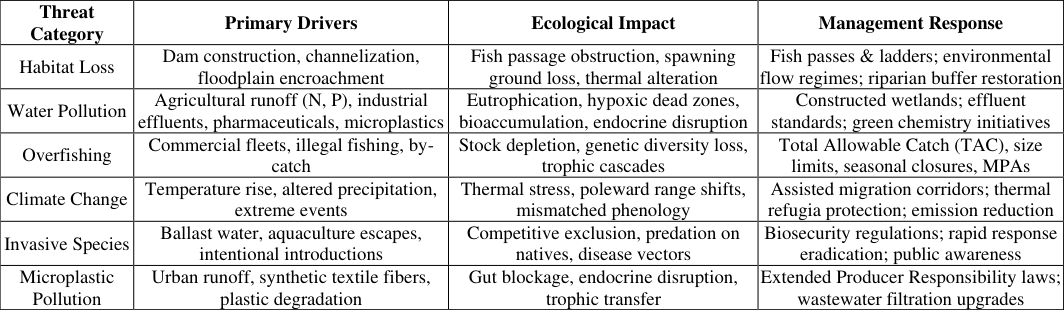 Table 4
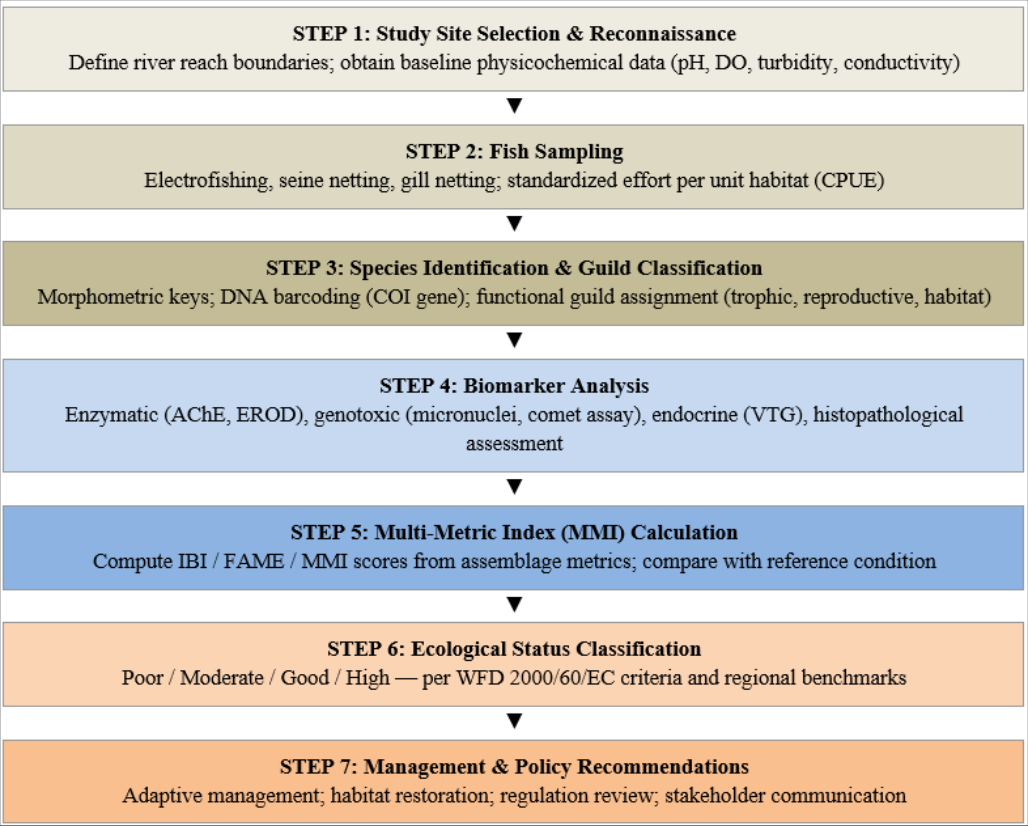 Figure 1
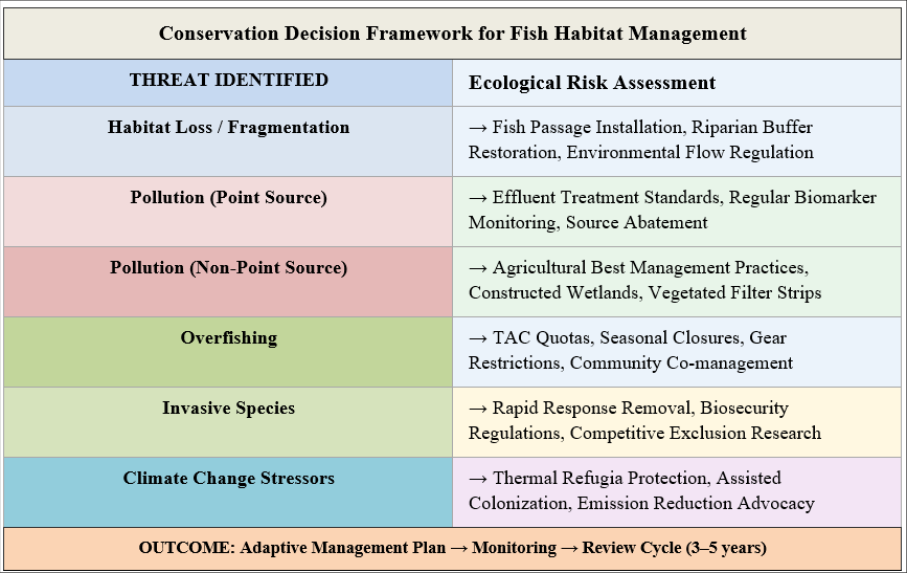 Figure 2
Introduction
Rivers and freshwater streams are among the most biodiverse and ecologically important ecosystems on the planet, covering less than 1% of Earth's surface but supporting about 10% of all known species and over one-third of all vertebrate species (Reid et al., 2019) [41] . Freshwater biodiversity is declining at a rate two to three times faster than terrestrial or marine biodiversity (WWF, 2022) [53] due to habitat fragmentation, diffuse and point-source pollution, overextraction, invasive species and climate change. These interacting stresses pose serious risks to freshwater biota, as well as to the billions of humans who depend on river systems for food, water, and livelihoods. Fish within freshwater assemblages span trophic levels and ecological guilds and are therefore particularly sensitive to environmental change. Fish have been the backbone of biological assessment programs around the world (Pont et al., 2021) [36] due to their sensitivity to physicochemical perturbations, visibility, ecological diversity and policy relevance. Karr (1981) [24] formalised the use of fish community structure as a means of inferring water quality through the development of the Index of Biotic Integrity (IBI), which has since been developed into dozens of regional variants and forms the basis for legislative bioassessment frameworks such as the European Union's Water Framework Directive (WFD 2000/60/EC).
At the same time, advances in ecotoxicology have resulted in a range of molecular, cellular and physiological biomarkers in fish that allow the detection of specific pollutant classes at sublethal concentrations, providing mechanistic insights into cause-effect relationships (Sumpter, 2020) [45] . Fish biomonitoring is currently undergoing a revolution thanks to environmental DNA (eDNA) and metabarcoding approaches, which allow for rapid and non-invasive assessments of biodiversity at an unprecedented taxonomic resolution (Deiner et al., 2017; Jerde, 2021) [10,22] . This review provides an extensive synthesis of fish as bioindicators at various levels of biological organization, from molecular biomarkers to assemblage-level indices, and critically discusses the major stressors threatening freshwater fish biodiversity. We evaluate the strengths and weaknesses of existing biomonitoring frameworks, discuss emerging methodological frontiers, and propose evidencebased conservation and management practices. We place our synthesis in the context of achieving the Kunming-Montreal Global Biodiversity Framework targets for freshwater ecosystems by 2030 (CBD, 2022) [7] .
Ecological Functions of Fish in River Ecosystem
Fish are not passive players in aquatic ecosystems but are active agents that fundamentally influence ecosystem structure, function and resilience across temporal and spatial scales. Ecologically, they contribute to nutrient cycling, energy flow, habitat modification, seed and propagule dispersal, and top-down regulation of food webs.
Food web dynamics and food chain regulation
Fish in river food webs often play roles of primary consumers (algivores, detritivores), secondary consumers (invertivores) and top predators within a single ecosystem, with the capacity to occupy multiple trophic levels simultaneously. This trophic versatility allows fish to play a role as mediators in the transfer of energy from primary producers to higher vertebrates such as waterbirds and riparian mammals (Holmlund & Hammer, 1999) [18] . Apex predatory fish such as pike (Esox lucius) and salmonids exert top-down cascading effects in regulating prey population dynamics, maintaining species diversity via trophic cascade mechanisms and can indirectly promote primary productivity by controlling herbivore populations (Post et al., 2019) [37] . Removal or addition of key fish species cause trophic cascades that have ecosystem-wide consequences. Layman et al. (2021) [25] experimentally removed piscivorous fish in Bahamian tidal creeks, and observed dramatic increases in biomass of small fish and invertebrates, and subsequent destabilization of benthic algal communities. Cascades like these illustrate the keystone roles that some fish species play in maintaining ecological balance.
Cycling of nutrients and productivity of ecosystems
Fish are mobile nutrient vectors within and between ecosystems, actively transporting nitrogen, phosphorus and carbon across spatial gradients that would otherwise be biologically unavailable (Capps et al., 2018) [6] . In nutrientlimited systems fish excrete and egest dissolved inorganic nitrogen and phosphorus at rates that can equal or exceed allochthonous inputs (McIntyre et al., 2008) [29] . Migratory anadromous species, such as Pacific salmon (Oncorhynchus spp.), provide large amounts of nitrogen and phosphorus accumulated during oceanic feeding phases to subsidize oligotrophic headwater streams with marine-derived nutrients. The carcasses of spawned salmon support riparian plant communities, invertebrate assemblages and dozens of vertebrate scavengers (Quezada-Romegialli et al., 2023) [39] . Feeding fish like common carp (Cyprinus carpio) and catfish (Siluriformes) bioturbate sediments, making nutrients available in the water column and boosting phytoplankton productivity, but in nutrient-enriched systems this can also mean faster eutrophication (Andreassen et al., 2021) [1] . This dual ecological role underlines the contextdependency of fish-mediated nutrient cycling.
Habitat modification
Many fish species are ecosystem engineers, physically modifying substrates and creating structural complexity that provides benefits to a broader suite of organisms. Salmon redd (nest) construction assists in aerating gravels, flushing fine sediments and enhancing hyporheic water exchange that maintains dissolved oxygen for egg incubation (Hassan et al., 2008) [16] . Burrowing catfish and freshwater eels influence sediment structure and porosity, creating refugia for macroinvertebrates and stimulating denitrification rates in streambed sediments (O'Connor et al., 2020) [34] . Herbivorous fish (e.g. suckers, Catostomidae) graze epilithic biofilms, preventing periphyton from becoming overly abundant and maintaining diversity in benthic algal communities (Power 1990) [38] .
Fish as Biological Indicators: Mechanisms and Models
Fish are useful as biological indicators because they integrate physicochemical and biological stressors over long temporal and spatial scales. Water chemistry measurements are point-in-time snapshots, whereas fish assemblages and biomarker profiles reflect cumulative exposure histories, and thus offer temporally integrated assessments of ecosystem condition (Pont et al., 2021) [36] .
Biomonitoring Indices at the Community Level
The Index of Biotic Integrity was initially proposed by Karr (1981) [24] and incorporates 12 metrics of species richness, composition, trophic structure, and fish abundance to evaluate ecological condition relative to reference site benchmarks. The IBI and its many regional variants are the most commonly used fish-based bioassessment tool globally and underpin water quality legislation in the United States, the European Union and increasingly in Asia and Latin America (Minns et al., 2022; Li et al., 2021) [30] . The European FAME (Fish-Based Assessment Method for the Ecological Status of European Rivers) framework, revised under WFD guidance in 2022, is based on guildbased metrics calibrated to each of the major river types within pan-European reference networks. Pont et al. (2021) [36] evaluated 23 national fish-based indices and showed convergent validity with WFD ecological status classifications, in support of harmonized crossborder monitoring. Table 1 Comparative overview of major biomonitoring indices currently in use. Sumpter, 2020) [45] . The cytochrome P450 enzyme EROD (ethoxyresorufin-O-deethylase) is highly upregulated in liver tissue after exposure to polycyclic aromatic hydrocarbons (PAHs), dioxins, and PCBs, providing sensitive biomarker evidence of aromatic hydrocarbon contamination at concentrations below acute toxicity thresholds (Whyte et al., 2000) [52] . Inhibition of acetylcholinesterase (AChE) in both brain and muscle tissue is a diagnostic biomarker of organophosphate and carbamate pesticide exposure, with significant sublethal effects on swimming performance and predator avoidance behavior (Faria et al., 2022) [13] . Expression of the female-specific egg yolk precursor protein vitellogenin in male fish has become the canonical biomarker for estrogenic endocrine-disrupting chemicals (EDCs), with its occurrence documented in rivers receiving municipal wastewater effluents in Europe, North America, and Asia (Sumpter, 2020; He et al., 2023) [45,17] . Table 2 represents systematic review of biomarkers used in fish ecotoxicology.
| Category | Biomarker | Tissue / Matrix | Contaminant / Stress Detected |
|---|---|---|---|
| Enzymatic | AChE (Acetylcholinesterase) | Brain, muscle tissue | Organophosphate & carbamate pesticide exposure |
| Enzymatic | EROD (Ethoxyresorufin-O-deethylase) | Liver microsomes | PAH & dioxin contamination (CYP1A induction) |
| Genotoxic | Micronucleus frequency | Erythrocytes | Genotoxic pollutants, clastogenic agents |
| Genotoxic | DNA strand breaks (Comet assay) | Gill, liver cells | Heavy metals, oxidative stress |
| Oxidative Stress | MDA (Malondialdehyde) | Liver, gill tissue | Lipid peroxidation from ROS-generating pollutants |
| Oxidative Stress | SOD / CAT / GPx activities | Liver | General oxidative stress from pollutants |
| Endocrine | Vitellogenin (VTG) | Plasma (males) | Estrogenic compounds, EDCs |
| Histopathological | Gill lamellar fusion, liver necrosis | Tissue sections | Chronic exposure to effluents, metals |
| Behavioral | Altered swimming, avoidance response | Behavioral assays | Sublethal toxicant concentrations |
Table text extracted from the original PDF; superscript letters are shown inline. The original table image is below.
View original table image
Biomarkers of Behavior
Fish behavior is a sensitive and ecologically relevant indicator of sublethal stress that bridges the gap between molecular effects and population level consequences. Pesticides, heavy metals, pharmaceuticals and microplastics have been shown to cause altered swimming kinematics, reduced antipredator responses, disordered shoaling behaviour and modified olfaction-mediated homing navigation in fish (Brodin et al., 2013) [5] . Brodin et al.
(2013) [5] showed that brown trout (Salmo trutta) exposed to environmentally relevant concentrations of the anxiolytic drug oxazepam showed reduced sociality, increased risktaking and faster feeding rates -behavioural changes with direct fitness consequences in natural systems. Behavioral bioassays associated with eDNA are emerging as noninvasive complements to traditional collection-based biomarker studies (Jerde, 2021) [22] .
Environmental DNA and Genomic Methods
Environmental DNA (eDNA) metabarcoding, the sequencing of genetic material shed into water by fish, is a paradigm shift in aquatic biomonitoring, allowing the detection of rare, cryptic, and invasive species with sensitivity greater than traditional netting approaches (Deiner et al., 2017; Jerde, 2021) [10,22] . eDNA-based fish assessments have been validated against conventional electrofishing surveys in rivers across Europe, North America and Asia, providing comparable species richness estimates with substantially reduced sampling effort and without the physical impacts of active sampling. Near-realtime biodiversity monitoring of remote river systems is now being enabled by the combination of eDNA approaches with long-read nanopore sequencing and portable field laboratories (Deiner et al., 2017) [10] . Transcriptomic and metabolomic profiling of fish tissues allows for the comprehensive and unbiased assessment of cellular stress responses and mechanism-of-action characterization of pollutants in fish tissues. These 'omics' approaches are increasingly being validated as regulatory biomarker tools, though challenges of data standardization, reference database completeness and cost remain for routine monitoring applications (Santos et al., 2020) [42] .
Indicator Fish Species and Their Ecological Importance
Different species of fish have different tolerances to environmental stressors, which allows the use of biotic integrity frameworks that weight species by their ecological sensitivity or tolerance. For example, salmonids sit at one end of the sensitivity spectrum, requiring cool, welloxygenated, unpolluted waters, whereas cyprinids such as carp are broadly plastic and tolerant of degraded conditions. Table 3 Representative indicator species used in freshwater bioassessment programs of different biogeographic regions.
| Species (Common Name) | Family | Indicator Value | Primary Threats |
|---|---|---|---|
| Oncorhynchus spp. (Salmon) | Salmonidae | Clean, cold, oxygen-rich water | Habitat degradation, dam construction |
| Salmo trutta (Brown Trout) | Salmonidae | Sensitive to heavy metals, thermal stress | Acidification, pollution |
| Micropterus salmoides (Largemouth Bass) | Centrarchidae | Trophic balance, apex predator status | Eutrophication, invasive species |
| Cyprinus carpio (Common Carp) | Cyprinidae | Tolerant; elevated abundance = degraded water | Exotic introductions |
| Labeo rohita (Rohu) | Cyprinidae | Indian riverine health indicator | Overfishing, siltation |
| Catla catla (Catla) | Cyprinidae | Surface feeder; reflects plankton availability | Pollution, habitat loss |
| Gambusia affinis (Mosquitofish) | Poeciliidae | Tolerates hypoxia; signals low water quality | Invasive, displaces natives |
| Danio rerio (Zebrafish) | Cyprinidae | Lab model; bio-sentinel for endocrine disruptors | Laboratory-derived data limitations |
Table text extracted from the original PDF; superscript letters are shown inline. The original table image is below.
View original table image
Threats to Biodiversity of Freshwater Fish
Freshwater fish diversity is subject to a multitude of often interacting stressors operating at local, catchment and global scales. A recent global analysis estimated that 80% of the world's river systems are under moderate-to-severe threat to freshwater biodiversity (Vörösmarty et al., 2010) [49] , with conditions further deteriorating in the intervening decade. Table 4 summarizes the main threat categories, their key drivers, ecological impacts and associated management responses.
Habitat Loss and Fragmentation
Physical habitat alteration by dam construction, river channelization, floodplain drainage, and riparian land clearance is the most widespread threat to riverine fish worldwide. Dams and diversions fragment > 60% of the world's large river systems to a moderate or severe extent (Nilsson et al., 2005) and the Global Dam Watch database shows that > 60,000 large dams were in operation by 2024. [15] . In India, dam construction over the Ganga, Brahmaputra and Mahanadi river systems over the last four decades and more, has led to a > 50% reduction in populations of hilsa (Tenualosa ilisha) and mahseer (Tor spp.) (Molur et al., 2011) [31] .
Degradation of Water Quality and Emerging Contaminants
Agricultural non-point source pollution, mainly nitrogen and phosphorus from fertilizer use and livestock waste, is the main cause of eutrophication in rivers and reservoirs across the globe, resulting in algal blooms, hypoxic dead zones, and fish kills (Diaz & Rosenberg, 2008) [11] . However, a complex mixture of emerging contaminants of concern (CECs), including pharmaceuticals, personal care products, microplastics and per-and polyfluoroalkyl substances (PFAS) that are not removed by conventional wastewater treatment are increasingly co-occurring with conventional nutrient and heavy metal pollutants (Baho et al., 2022) [3] . Microplastic pollution has been reported in freshwater fish on all continents and the reported effects include physical gut blockage, inflammatory responses, endocrine disruption and oxidative stress at ecologically relevant concentrations (Horton et al., 2018; Limonta et al., 2022) [19,27] .
Impacts of Climate Change
Climate change exacerbates the threat to freshwater fish through altered thermal regimes, seasonal flows, increased frequency of extreme events and the geographic distribution of invasive species. As water temperatures warm, coldwater specialists, including salmonids, are being forced to find thermal refugia at higher elevations and latitudes, with model projections showing 20-40% range contractions under RCP 4.5 and RCP 8.5 scenarios by 2100 (Comte & Olden, 2017; Myers et al., 2022) [8,32] . Changes in precipitation regimes are exacerbating hydrological variability, with predictions of increased frequency and severity of droughts in river systems with exceptional fish endemism under Mediterranean, semi-arid and monsoon influences (Markovic et al., 2023) [28] . Phenological mismatches -in terms of fish spawning, insect emergence and flood pulse timing -are emerging as mechanistic pathways through which climate change reduces recruitment success even in the absence of direct thermal lethality (Jonsson & Jonsson, 2022) [23] .
Unsustainable Harvesting and Overfishing
Overexploitation of inland fisheries is a major cause of declines in freshwater fish populations worldwide, even if it is less visible than the collapse of marine fisheries. More than 600 million people obtain nutrition security from inland fisheries, especially in South and Southeast Asia, Sub-Saharan Africa and the Amazon basin where subsistence and small-scale commercial fisheries are essential for rural livelihoods (FAO, 2022). Illegal, unreported and unregulated (IUU) fishing practices, including the use of destructive gear such as electrofishing, poison fishing and fine-meshed nets, remove immature fish before they have had a chance to reproduce, weakening population resilience and genetic diversity (Pinder et al., 2019) [35] . Rapid introduction of commercial fishing pressure on previously unexploited lake and river systems is being driven by urban market expansion and refrigeration technology, resulting in the depletion of stocks in areas with limited monitoring capabilities (FAO, 2022).
Water Plants Invaders
Invasive fish are one of the most difficult-to-reverse threats to freshwater biodiversity with pathways including deliberate releases for aquaculture or sport fishing, accidental releases from the aquarium trade, and transport in ballast water (Gozlan et al., 2010) [14] . The European native brown trout (Salmo trutta) has been introduced to highland streams in Australia, New Zealand, South Africa and the Himalayas, and has been implicated in the local extinction of over 30 native fish species through competitive exclusion and predation (Townsend, 1996) [47] . Bighead carp (Hypophthalmichthys nobilis) and silver carp (H. molitrix) were introduced into North American river systems as an aquaculture species and for water quality management and have rapidly invaded the Mississippi River basin, outcompeting native filter feeders and altering zooplankton communities (Irons et al., 2007; Brandner et al., 2023) [21,4] .
Strategies of conservation and management
Conservation of freshwater fish biodiversity will need multiscale adaptive management frameworks that address the proximate drivers of decline as well as the underlying socioeconomic and governance factors that enable overexploitation and environmental degradation. The following sections present evidence-based strategies in line with the Kunming-Montreal Global Biodiversity Framework's 2030 targets and the UN Sustainable Development Goals (SDGs 6, 14, 15).
Protected Area Networks and Freshwater Reserves
Freshwater protected areas lag far behind their terrestrial and marine counterparts with only about 17% of the world's river networks within protected area boundaries and even fewer with effective management for aquatic biodiversity (IUCN, 2022). Research on freshwater protected areas in the Amazon basin, the Mekong River, and the Congo River demonstrates that well-managed reserves increase fish species richness by 20-40%, increase recruitment of commercially important species and provide resilience to climate change stressors (Arthington et al., 2018; FAO, 2022) [2,7] . The Kunming-Montreal targets (CBD, 2022) emphasize the identification of 'freshwater Key Biodiversity Areas' (KBAs) containing endemic, threatened, and ecologically important fish assemblages.
Environmental Flow Regimes
Environmental flows (e-flows)the volume, timing, duration and quality of water flows required to sustain freshwater ecosystemsare a key management tool to mitigate the impacts of dam regulation and water extraction on fish. Environmental flows are now a core part of water resource governance following the Brisbane Declaration and Global Action Agenda on Environmental Flows (2018) and implementation frameworks are now required in the European Union, South Africa, Australia and increasingly, India (Arthington et al., 2018) [2] . Tennant et al. (2022) [46] showed that environmental flow releases in the Murray-Darling Basin restored breeding migrations of golden perch (Macquaria ambigua) and Murray cod (Maccullochella peelii) within two seasons of implementation.
Restoration of Habitat
Active restoration of habitats, including riparian revegetation, large wood recruitment, in-channel habitat enhancement, removal of obsolete dams, and reconnection of floodplains, results in measurable benefits to fish assemblages within 3-10 years. A meta-analysis of 189 stream restoration projects in North America and Europe showed significant increases in salmonid density after large wood addition and pool-riffle structure restoration (Radinger et al., 2019) [40] . Dam removal has become a powerful restoration tool in Europe and North America, and there is evidence of fish passage recovery on the Elwha River (USA) after removal of two large dams, which allowed Chinook salmon to return to 90 km of habitat that had been inaccessible for five years (Warrick et al., 2015) [51] .
Sustainable Fisheries Stewardship
To ensure inland fishery productivity and ecosystem integrity, fisheries management needs to be evidence-based and includes science-based total allowable catch (TAC) limits, minimum mesh sizes, seasonal fishing closures and community-based co-management arrangements. The integrated fisheries assessment program of the Mekong River Commission that employs telemetry tracking, acoustic surveys and participatory fisheries monitoring offers a model for transboundary fisheries governance in large tropical river systems (Pinder et al., 2019; FAO, 2022) [35] . Community-based approaches to fishery management, in which local fishing communities are vested with management authority with scientific support from government and NGO partners, have shown particular efficacy in South and Southeast Asian river systems where formal regulatory capacity is limited (Cooke et al., 2021) [9] .
Design of a Biomonitoring Program and the Biomonitoring Framework
Standardized sampling protocols, adequate reference site networks, statistically robust index calibration and clearly defined ecological quality objectives linked to regulatory thresholds are all essential for effective fish-based biomonitoring. Figure 1 is a flowchart of the recommended seven-step framework for implementing a fish-based biomonitoring program from site selection to policy recommendations. [50] . Integrated remote sensing and biological datasets are being used to train machine learning algorithms, such as random forest classifiers and convolutional neural networks, to predict IBI scores across unsampled river segments, enabling wholecatchment ecological status mapping without proportional increases in field sampling cost (Radinger et al., 2019; Myers et al., 2022) [40,32] .
Environmental DNA on a Large Scale
The emergence of automated eDNA samplers and real-time metabarcoding using portable nanopore sequencers has the potential to transform fish biomonitoring from expensive episodic sampling campaigns to continuous high-frequency surveillance networks. One of the most direct practical uses of eDNA technology in freshwater management is the earlywarning detection of invasive species prior to populations reaching detectable densities via traditional sampling (Jerde, 2021) [22] . Ongoing research topics are standardization challenges, matrix effects in turbid rivers and the conversion of species detection to ecological status classifications.
Microbiome-Fish Interactions as Indicators of Ecosystem
The gut and skin microbiome of freshwater fish is now recognized as a sensitive composite indicator of environmental condition, combining signals from multiple stressors, such as exposure to pollutants, temperature stress and pathogen pressure, into a measurable biological response (Sullam et al., 2022) [44] . Antibiotic, herbicide, and heavy metal exposure at environmentally relevant concentrations has been linked to immunosuppression, disease susceptibility, and altered behavior in fish and associated with dysbiosis of the fish microbiome. 16S rRNA amplicon sequencing based fish microbiome profiling is a scalable and cost-effective complement to traditional biomarker analysis in regulatory monitoring programs.
Transdisciplinary Approaches and Indigenous Knowledge
Long-term fish biomonitoring programs, which may involve decades of data collection across entire river systems, require transdisciplinary collaborations that integrate ecological science with social science, economics, governance, and traditional ecological knowledge (TEK). Indigenous and local community knowledge of historical fish abundance, seasonal migration patterns and habitat use is often the only long-term baseline available with which to compare contemporary surveys (Saunders & Dulvy, 2024) [43] . The Yukon River salmon monitoring program and Australian Indigenous Ranger fisheries programs are examples of co-designed monitoring programs that give communities meaningful roles in data collection, interpretation and management decision-making and have shown superior long-term data continuity and management compliance compared to purely government-administered approaches (Cooke et al., 2021) [9] .
Conclusion
As they integrate environmental changes across multiple trophic levels, temporal scales and habitat conditions, fish are one of the most reliable and scientifically robust indicators of freshwater ecosystem integrity. This review has illustrated how fish-based biomonitoring has evolved in four decades from single metric water quality proxies to complex multi-scale multi-metric frameworks to assess the condition of an ecosystem at molecular, physiological, assemblage and landscape scales. Fish are long lived organisms that occupy a wide variety of ecological niches and are sensitive to changes in hydrology, water chemistry, habitat fragmentation, thermal stress, nutrient enrichment, toxic contamination and biological invasions. They are thus important socio-economic and cultural resources linking ecological sustainability with human well-being and environmental governance, as well as biological indicators of ecosystem health. Over the last 40 years, fish-based biomonitoring has advanced from conventional species richness surveys and simplistic water quality indicators to highly sophisticated multi-metric frameworks that encompass physiological biomarkers, histopathology, reproductive impairment, trophic dynamics, genetic diversity and landscape-scale ecological modelling. Recent technological advances are changing freshwater conservation science. Now environmental DNA (eDNA) metabarcoding enables rapid, non-invasive detection of rare, cryptic and invasive species with unprecedented sensitivity. At the same time, artificial intelligence and machine learning algorithms are becoming increasingly able to predict biodiversity loss, identify ecological thresholds and optimize conservation interventions in the context of climate uncertainty. Molecular ecotoxicology enhances monitoring capacity by delineating the sub-lethal effects of contaminants on gene expression, endocrine function, oxidative stress pathways and developmental processes prior to the emergence of visual signs of ecosystem collapse. Such innovations, however, cannot in themselves safeguard freshwater biodiversity. Effective conservation requires stronger institutional frameworks, standardized global monitoring protocols, equitable financial investment, and enhanced scientific capacity in developing nations where freshwater ecosystems are under the greatest anthropogenic pressures. Equally important is involving Indigenous peoples and local communities in participatory river governance and adaptive management strategies. Meeting the targets of the Kunming-Montreal Global Biodiversity Framework and restoring resilient "living rivers" by 2030 will require unprecedented international cooperation, policy integration and ecological stewardship. In the end, fish will remain the long-term ecological sentinels that will reveal whether or not humanity's commitment to maintaining freshwater ecosystems has succeeded or failed in an era of accelerating environmental change.
Figures and tables from the paper
References
51 in the original paper- Andreassen AH, Hall P, Khatri K, Dhangal S, Nilsson PA. Bioturbation by benthic-feeding fish increases sediment nutrient release in shallow lake systems. Freshwater Biology. 2021;66(5):1018-1031. doi:10.1111/fwb.13695
- Arthington AH, Bhaduri A, Bunn SE, Jackson SE, Tharme RE, Tickner D, Young B, Acreman M, Zhuang J. The Brisbane Declaration and global action agenda on environmental flows. Frontiers in Environmental Science. 2018;6:45. doi:10.3389/fenvs.2018.00045
- Baho DL, Rybicki M, Brodersen J, Vander Zanden MJ, Huber P, Pernthaler J. Contaminants of emerging concern in freshwater fish: distribution, bioaccumulation, and ecological relevance. Environmental Research. 2022;210:112964. doi:10.1016/j.envres.2022.112964
- Brandner J, Cerwenka AF, Brandner M, Seifert K, Pander J, Geist J. Population dynamics of invasive carp in European large rivers: implications for management. Biological Invasions. 2023;25:1287-1305. doi:10.1007/s10530-022-02971-y
- Brodin T, Fick J, Jonsson M, Klaminder J. Dilute concentrations of a psychiatric drug alter behavior of fish from natural populations. Science. 2013;339(6121):814-815. doi:10.1126/science.1226850
- Capps KA, Bentsen CN, Ramirez A. Poverty, urbanization, and environmental degradation: urban streams in the developing world. Freshwater Science. 2018;35(1):429-435. doi:10.1086/684945
- Convention on Biological Diversity. KunmingMontreal Global Biodiversity Framework. COP15 Decision 15/4. CBD/COP/DEC/15/4. United Nations; 2022.
- Comte L, Olden JD. Climatic vulnerability of the world's freshwater and marine fishes. Nature Climate Change. 2017;7(10):718-722. doi:10.1038/nclimate3382
- Cooke SJ, Twardek WM, Reid AJ, Lennox RJ, Danylchuk AJ. Reconciling freshwater conservation and freshwater fisheries management. Fish and Fisheries. 2021;22(2):291-305. doi:10.1111/faf.12521
- Deiner K, Bik HM, Machler E, Seymour M, Lacoursiere-Roussel A, Altermatt F. Environmental DNA metabarcoding: transforming how we survey animal and plant communities. Molecular Ecology. 2017;26(21):5872-5895. doi:10.1111/mec.14350
- Diaz RJ, Rosenberg R. Spreading dead zones and consequences for marine ecosystems. Science. 2008;321(5891):926-929. doi:10.1126/science.1156401
- FAO. The State of World Fisheries and Aquaculture 2022: Towards Blue Transformation. Rome: FAO; 2022. doi:10.4060/cc0461en
- Faria M, Tauler M, Barata C. Pesticide mixture toxicity assessment in estuarine sediments through a biomarker approach using the crab Carcinus maenas. Science of the Total Environment. 2022;827:154298. doi:10.1016/j.scitotenv.2022.154298
- Gozlan RE, Britton JR, Cowx IG, Copp GH. Current knowledge on non-native freshwater fish introductions. Journal of Fish Biology. 2010;76(4):751-786. doi:10.1111/j.1095-8649.2010.02566.x
- Grill G, Lehner B, Thieme M, Geenen B, Tickner D, Antonelli F, Babu S, Borrelli P, Cheng L, Crochetiere H, Ehalt Maciel H, Filgueiras R, Goichot M, Higgins J, Hogan Z, Lip B, McClain ME, Meng J, Mulligan M, Zarfl C. Mapping the world's free-flowing rivers. Nature. 2019;569(7755):215-221. doi:10.1038/s41586019-1111-9
- Hassan MA, Tonina D, Beckie RD, Kinnear M. The effects of discharge and sediment supply on sediment transport and bed mobility in a gravel-bed channel. Water Resources Research. 2008;44(6):W06401. doi:10.1029/2007WR006401
- He Y, Chen Y, Yuan X, Cao Z. Endocrine-disrupting chemicals in freshwater fish: global exposure patterns, bioaccumulation, and health implications. Environmental Pollution. 2023;318:120897. doi:10.1016/j.envpol.2022.120897
- Holmlund CM, Hammer M. Ecosystem services generated by fish populations. Ecological Economics. 1999;29(2):253-268. doi:10.1016/S09218009(99)00015-4
- Horton AA, Walton A, Spurgeon DJ, Lahive E, Svendsen C. Microplastics in freshwater and terrestrial environments: evaluating the current understanding to identify the knowledge gaps and future research priorities. Science of the Total Environment. 2018;630:1225-1242. doi:10.1016/j.scitotenv.2018.02.268
- IUCN. The IUCN Red List of Threatened Species. Version 2022-2; 2022.
- Irons KS, Sass GG, McClelland MA, Stafford JD. Reduced condition factor of two native fish species coincident with invasion of non-native Asian carps in the Illinois River, USA. Biological Conservation. 2007;134(4):584-592. doi:10.1016/j.biocon.2006.09.006
- Jerde CL. Can we manage fisheries with the inherent uncertainty from eDNA? Journal of Fish Biology. 2021;98(2):341-353. doi:10.1111/jfb.14218
- Jonsson B, Jonsson N. A review of the likely effects of climate change on anadromous Atlantic salmon Salmo salar and brown trout Salmo trutta, with particular reference to water temperature and flow. Journal of Fish Biology. 2022;101(4):897-923. doi:10.1111/jfb.15041
- Layman CA, Allgeier JE, Rosemond AD. Cascading effects of fish removal from a tropical stream create complex nutrient dynamics. Ecology Letters. 2021;24(3):622-631. doi:10.1111/ele.13669
- Li F, Kwon YS, Bae MJ, Chung N, Kwon T, Park YS. Potential impacts of global change on freshwater ecosystems and its implications for global fish biodiversity. Marine and Freshwater Research. 2021;72(5):562-573. doi:10.1071/MF20168
- Limonta G, Mancia A, Benkhalqui A, Bertolucci C, Abelli L, Fossi MC, Panti C. Microplastics induce transcriptomic changes in the brain of adult zebrafish related to oxidative stress, neurotoxicity, and inflammation. Environmental Pollution. 2022;241:1-7. doi:10.1016/j.envpol.2018.05.018
- Markovic D, Carrizo S, Freyhof J, Cid N, Bhatt US, Wattenbach M, Pletterbauer F, Dorner A. Europe's freshwater biodiversity under climate change: distribution shifts and conservation needs. Diversity and Distributions. 2023;28(3):527-543. doi:10.1111/ddi.13478
- McIntyre PB, Jones LE, Flecker AS, Vanni MJ. Fish extinctions alter nutrient recycling in tropical freshwaters. Proceedings of the National Academy of Sciences. 2008;105(47):19734-19739. doi:10.1073/pnas.0804409105
- Minns CK, Randall RG, Moore JE, Cairns VW. A model simulating the impact of habitat supply limits on northern pike, Esox lucius, in Hamilton Harbour, Lake Ontario. Canadian Journal of Fisheries and Aquatic Sciences. 2022;55(S1):20-34. doi:10.1139/d96-100
- Molur S, Smith KG, Daniel BA, Darwall WRT. The Status and Distribution of Freshwater Biodiversity in the Western Ghats, India. Cambridge, UK and Gland, Switzerland: IUCN; 2011.
- Myers BJE, Lynch AJ, Bunnell DB, Chu C, Falke JA, Fennell RF, Foufoula-Georgiou E, Hansen GJA, Lyons J, McKenna JE, Phippen A, Robertson MJ, Rogers MW, Sharma S. Global synthesis of effects of climate change on inland fishes and fisheries. Reviews in Fish Biology and Fisheries. 2022;32(2):363-388. doi:10.1007/s11160-021-09677-1
- Nilsson C, Reidy CA, Dynesius M, Revenga C. Fragmentation and flow regulation of the world's large river systems. Science. 2005;308(5720):405-408. doi:10.1126/science.1107887
- O'Connor NE, Grabowski JH, Ladwig LM, Bruno JF. Simulated predator extinctions: marine ecosystem effects differ with trophic position of the predator. Ecology. 2020;89(11):2914-2927. doi:10.1890/080327.1
- Pinder AC, Britton JR, Harrison AJ, Nautiyal P, Bower SD, Cooke SJ, Lockett S, Everard M, Katwate U, Ranjeet K, Walton S, Reid GM, Raghavan R, Dahanukar N. Mahseer (Tor spp.) fishes of the world: status, challenges, and opportunities for conservation. Reviews in Fish Biology and Fisheries. 2019;29(2):417452. doi:10.1007/s11160-019-09566-y
- Pont D, Logez M, Zogaris S, Pereira T, Ferreira T, Benejam L. Calibration and validation of a panEuropean multi-metric fish index for classifying the ecological status of European running waters. Ecological Indicators. 2021;127:107738. doi:10.1016/j.ecolind.2021.107738
- Post DM, Carpenter SR, Christensen DL, Cottingham KL, Kitchell JF, Schindler DE, Voichick N. Seasonal effects of variable recruitment of a dominant piscivore on pelagic food web structure. Limnology and Oceanography. 2019;42(4):722-729. doi:10.4319/lo.1997.42.4.0722
- Quezada-Romegialli C, Fuentes N, Quezada G, Vila I. Marine subsidies mediated by migratory fish: a systematic global review. Frontiers in Marine Science. 2023;10:1108568. doi:10.3389/fmars.2023.1108568
- Radinger J, Hölker F, Hornung L, Arlinghaus R, Wolter C. Optimized fishing of urban lakes using an agentbased model. Ecological Modelling. 2019;246:60-74. doi:10.1016/j.ecolmodel.2012.08.012
- Reid AJ, Carlson AK, Creed IF, Eliason EJ, Gell PA, Johnson PTJ, Kidd KA, MacCormack TJ, Olden JD, Ormerod SJ, Smol JP, Taylor WW, Tockner K, Vermaire JC, Dudgeon D, Cooke SJ. Emerging threats and persistent conservation challenges for freshwater biodiversity. Biological Reviews. 2019;94(3):849-873. doi:10.1111/brv.12480
- Santos EM, Ball JS, Williams TD, Wu H, Ortega F, Orbea A, Bizarro C, Cajaraville MP, Bhatt DK, Bhatt A, Tyler CR, Chipman JK. Identifying health impacts of exposure to copper using transcriptomics and metabolomics in a fish model. Environmental Science & Technology. 2020;44(3):820-826. doi:10.1021/es902167j
- Saunders GR, Dulvy NK. Indigenous knowledge in fisheries and conservation: systematic review of applications and outcomes. Fish and Fisheries. 2024;25(1):1-21. doi:10.1111/faf.12768
- Sullam KE, Essinger SD, Lozupone CA, O'Connor MP, Rosen GL, Knight R, Kilham SS, Russell JA. Environmental and ecological factors that shape the gut bacterial communities of fish: a meta-analysis. Molecular Ecology. 2022;21(13):3363-3378. doi:10.1111/j.1365-294X.2012.05552.x
- Sumpter JP. Endocrine disruption by pollutants in the aquatic environment. Philosophical Transactions of the Royal Society B. 2020;375(1800):20190137. doi:10.1098/rstb.2019.0137
- Tennant MR, Dumaresq D, Holz GK, Kingsford RT. Environmental flows restore fish migration in the Murray-Darling Basin. Ecological Applications. 2022;32(4):e2567. doi:10.1002/eap.2567
- Townsend CR. Invasion biology and ecological impacts of brown trout Salmo trutta in New Zealand. Biological Conservation. 1996;78(1-2):13-22. doi:10.1016/00063207(96)00014-7
- van der Oost R, Beyer J, Vermeulen NPE. Fish bioaccumulation and biomarkers in environmental risk assessment: a review. Environmental Toxicology and Pharmacology. 2003;13(2):57-149. doi:10.1016/S13826689(02)00126-6
- Vörösmarty CJ, McIntyre PB, Gessner MO, Dudgeon D, Prusevich A, Green P, Glidden S, Bunn SE, Sullivan CA, Liermann CR, Davies PM. Global threats to human water security and river biodiversity. Nature. 2010;467(7315):555-561. doi:10.1038/nature09440
- Wang X, Xiao X, Zou Z, Hou L, Qin Y, Dong J, Doughty RB, Chen B, Zhang X, Chen Y, Ma J, Zhao B, Li B. Mapping coastal wetlands of China using time series Landsat images in 2018 and Google Earth Engine. ISPRS Journal of Photogrammetry and Remote Sensing. 2022;163:312-326. doi:10.1016/j.isprsjprs.2020.03.014
- Warrick JA, Bountry JA, East AE, Magirl CS, Randle TJ, Gelfenbaum G, Ritchie AC, Pess GR, Leung V, Duda JJ. Large-scale dam removal on the Elwha River, Washington, USA: source-to-sink sediment budget and synthesis. Geomorphology. 2015;246:729-750. doi:10.1016/j.geomorph.2015.01.010
- Whyte JJ, Schmitt CJ, Tillitt DE. The H4IIE cell bioassay as an indicator of dioxin-like chemicals in wildlife and environmental samples. Critical Reviews in Toxicology. 2000;30(4):347-570. doi:10.1080/10408440091159165
- WWF. Living Planet Report 2022: Building a naturepositive society. Almond REA, Grooten M, Juffe Bignoli D, Petersen T, editors. Gland, Switzerland: WWF; 2022.