
Research article · 2026 · Full text
International Journal of Agriculture and NutritionPaclobutrazol-Mediated Regulation of Growth, Physiology and Yield in Groundnut (Arachis hypogaea L.): A Review
Volume 8(5) · Pages 42–46 · DOI: 10.33545/26646064.2026.v8.i5a.639 ↗
Research areasPeanut Plant Research StudiesFlowering Plant Growth and CultivationPlant Physiology and Cultivation Studies
Abstract
Author-writtenGroundnut (Arachis hypogaea L.) is an important oilseed crop, yet its productivity is often constrained by excessive vegetative growth, poor source-sink balance, and suboptimal assimilate partitioning. Plant growth regulators, particularly paclobutrazol (PBZ), have emerged as effective tools to regulate plant architecture and improve yield efficiency. PBZ, a triazole-based compound, inhibits gibberellin biosynthesis by blocking ent-kaurene oxidase activity, resulting in reduced stem elongation and compact canopy formation. This physiological modification improves light interception, reduces mutual shading, and enhances radiation use efficiency. In addition, PBZ alters hormonal balance by increasing abscisic acid levels and improving stress tolerance responses. It also enhances chlorophyll content, delays senescence, and stimulates antioxidant enzyme activity, thereby improving photosynthetic efficiency and oxidative stress management. Furthermore, PBZ promotes better source-sink relationships by redirecting assimilates from vegetative to reproductive organs, leading to improved pod development, kernel weight, and harvest index. Enhanced accumulation of osmoprotectants and carbohydrates further supports plant resilience under abiotic stress conditions such as drought. Overall, PBZ contributes to improved dry matter partitioning, photosynthetic performance, and yield stability in groundnut. Although extensive research exists on PBZ in various crops, its integrated physiological and agronomic effects in groundnut remain less comprehensively synthesized. This review highlights the chemical nature, mode of action, and physiological responses of PBZ, emphasizing its potential to enhance productivity and sustainability in groundnut cultivation under changing environmental conditions.
Summary
Source-checkedPlain-language reading of the full paper, prepared with AI and checked against the text. Each point links to the authors' own words.
Why it matters
- Groundnut is a globally significant oilseed crop essential for edible oil, plant protein, and economic security in semi-arid and tropical regions. View evidence ↗
- Groundnut productivity is often hindered by physiological inefficiencies, specifically excessive vegetative growth that causes imbalanced assimilate partitioning and lower pod yields. View evidence ↗
- A major bottleneck for increasing groundnut productivity is the imbalance between the source (where photosynthates are produced) and the sink (where they are used). View evidence ↗
The question
- The review aims to examine how paclobutrazol (PBZ) affects the physiology and yield of groundnut, using evidence from other crops to understand its potential for sustainable productivity. View evidence ↗
What they did
- The primary mode of action for PBZ is the inhibition of the ent-kaurene oxidase enzyme, which blocks the biosynthesis of gibberellins. View evidence ↗
- In oilseed crops like groundnut, PBZ is typically applied as a foliar spray at dosages of 50-150 ppm between 25-35 days after sowing (DAS) or during early flowering. View evidence ↗
What they found
- PBZ application consistently reduces plant height in groundnut without negatively impacting overall biomass accumulation. View evidence ↗
- PBZ treatment leads to darker green leaves, which indicates increased chlorophyll concentration and a delay in leaf senescence. View evidence ↗
- By shifting source-sink dynamics, PBZ improves pod filling, increases kernel weight, and raises the harvest index in groundnut. View evidence ↗
- PBZ increases the root-shoot ratio by reducing shoot elongation, which allows more photoassimilates to be allocated to the roots, increasing root length, density, and biomass. View evidence ↗
- PBZ increases abscisic acid (ABA) levels, which helps the plant adapt to stress by reducing transpiration and regulating stomatal closure. View evidence ↗
- PBZ reduces oxidative damage during stress by stimulating antioxidant enzymes, including catalase (CAT), peroxidase (POD), and superoxide dismutase (SOD). View evidence ↗
- Plants treated with PBZ show an increased number of pods per plant, better pod weight, and a higher percentage of kernel filling. View evidence ↗
What it means
- The authors conclude that PBZ is a strategic tool for enhancing the resilience and productivity of groundnut cultivation. View evidence ↗
- The effectiveness of PBZ varies based on genotype, dosage, and environment, meaning application technologies still need refinement. View evidence ↗
Visual summary
1 visualsIllustrations explain the paper; they do not show study data.
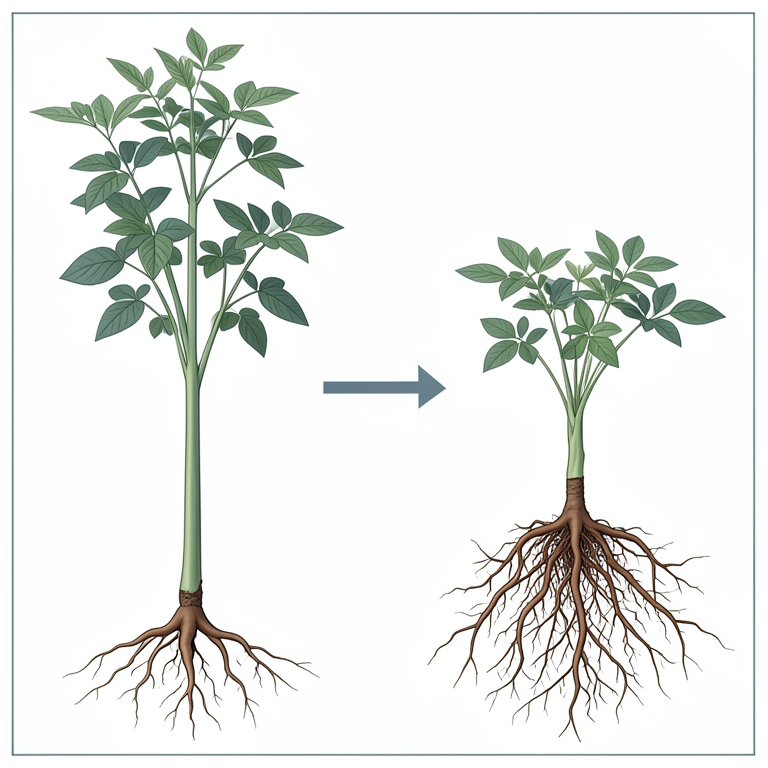
PBZ Growth Regulation Flow
AI-generated conceptual illustration (groundnut plants (Arachis hypogaea)). It explains the idea and does not show study data.
View source evidence ↗Figures & tables
From the original paper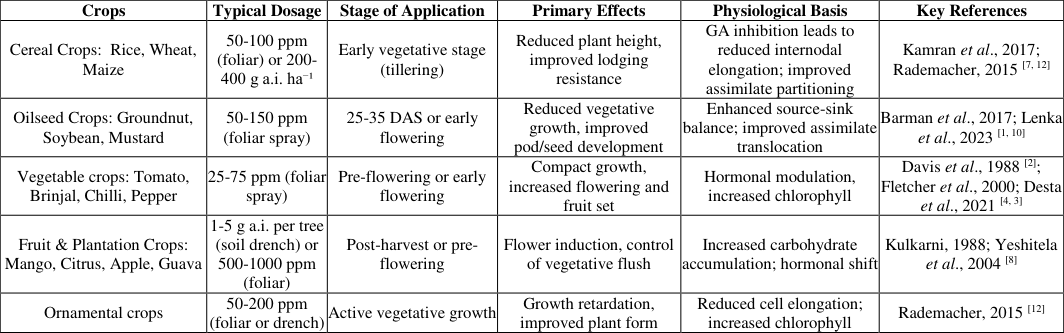 Table 1
Introduction
Groundnut (Arachis hypogaea L.) is one of the most important oilseed crops cultivated globally, contributing tiger share to edible oil production, plant protein supply, and livelihood security also in commercial terms in tropical and semi-arid regions. Globally, groundnut is grown on approximately 30-32 million hectares with an annual production of about 50-55 million tonnes, with Asia and Africa as major contributions (Food and Agriculture Organization, 2023). India is one of the leading producers, cultivating groundnut on nearly 5-6 million hectares with a production of around 9-10 million tonnes, although productivity (1800 kg ha⁻¹) finds out to be lower than the global average due to various constraints (Directorate of Economics and Statistics, 2022). Despite its economic importance, groundnut productivity is often limited by both biotic and abiotic stresses, as well as physiological inefficiencies. Among these, excessive vegetative growth under favorable conditions frequently results in imbalnaced assimilate partitioning, reduced reproductive efficiency and ultimately lower pod yield. The imbalance between source and sink is considered a major physiological bottleneck in realizing higher productivity in groundnut. The use of plant growth regulators (PGRs) could be an effective approach to manipulate plant growth and improve crop performance. Paclobutrazol (PBZ), a triazole-based PGR, is widely recognized for its ability to inhibit gibberellin biosynthesis, thereby reducing stem International Journal of Agriculture and Nutrition https://www.agriculturejournal.net elongation and promoting compact plant architecture (Rademacher, 2015) [12] . In addition to growth regulation, PBZ has been reported to enhance chlorophyll content, improve photosynthetic efficiency, regulate endogenous hormonal balance, and confer increased tolerance to abiotic stresses (Davis et al., 1988; Desta et al., 2021) [2,3] . Harnessing role of paclobutrazole could lead to improvements in key yield attributes such as pod number, kernel weight, and harvest index (Barman et al., 2017; Lenka et al., 2023) [1,10] . Furthermore, contributes to improved water-use efficiency and resilience under droughtprone conditions, which are common in major groundnutgrowing regions.
Although the role of PBZ has been extensively studied in various crops, a comprehensive synthesis of its physiological and agronomic effects specifically in groundnut remains limited. Therefore, the present review aims to critically examine the chemical nature, mode of action, physiological responses, and yield-related impacts of paclobutrazol in groundnut, while integrating supporting evidence from other crop systems to provide a broader understanding of its potential in enhancing productivity and sustainability. [4,3] .
Paclobutrazol: Chemical
Paclobutrazol: Chemical
Inhibition of Gibberellin Biosynthesis
The inhibition of gibberellins biosynthesis is primary mode of action of paclobutrazole. PBZ blocks the oxidative steps in terpenoid pathway of gibberellin biosynthesis, by inhibiting the ent-kaurene oxidase enzyme, which is a cytochrome P 450-dependent monooxygenase. This leads to reduction in conversion of ent kaurene to ent kaurenoic acid, ultimately lowering the endogenous gibberellin concentrations (Fletcher et al., 2000) [4] . The reduction in gibberellin concentration suppresses cell elongation without significantly affecting cell division (which is primarily influenced by cytokinin levels), leading to shorter internodes and compact plant growth. In groundnut, this manifests as reduced plant height, improved canopy structure, and enhanced assimilate allocation toward reproductive organs (Barman et al., 2017; Lenka et al., 2023) [1,10] . Gibberellins (GAs) are diterpenoid plant growth regulators synthesized through the terpenoid pathway, with geranylgeranyl diphosphate (GGDP) as the precursor.
Gibberellic Acid Biosynthetic Pathway
Gibberellic Acid Biosynthetic Pathway
Modulation of Plant Hormonal Balance
Apart from inhibition of gibberellin biosynthesis, paclobutrazol alters the balance of other phytohormones. It has been reported to increase abscisic acid (ABA) levels, which plays a crucial role in stress adaptation by regulating stomatal closure and reducing transpiration losses. Additionally, PBZ may enhance cytokinin activity, promoting cell division and delaying senescence, while modulating ethylene production under stress conditions (Desta et al., 2021; Pal et al., 2016) [3,11] . This hormonal modulations may contribute to improved physiological efficiency and resilience in groundnut, particularly under drought and heat stress conditions.
Effects on Metabolic and Enzymatic Activities
Paclobutrazol influences several biochemical and metabolic processes that contribute to improved plant performance. One of the notable effects is the enhancement of chlorophyll content. PBZ also stimulates the activity of antioxidant enzymes such as superoxide dismutase (SOD), catalase (CAT), and peroxidase (POD), thereby reducing oxidative damage under stress conditions (Ghadiali et al., 2023). Furthermore, PBZ promotes the accumulation of osmoprotectants such as proline and soluble sugars, which help maintain cellular turgor and enzyme stability during water deficit conditions (Yooyongwech et al., 2017). It also improves carbohydrate partitioning by directing assimilates toward sink organs, such as developing pods in groundnut (Hua et al., 2014) [6] .
Integrated Physiological Outcome in Groundnut
The combined effects of reduced gibberellin activity, altered hormonal balance, and enhanced metabolic efficiency result in a more compact and physiologically efficient plant system. In groundnut, the combinational effect of reduced Gibberellin activity, altered hormonal balance and improved metabolic activity of plant can result in improved sourcesink dynamics, better peg penetration, pod to peg ratio and increased pod development.
Physiological Effects of Paclobutrazol in Groundnut (Arachis hypogaea L.)
Various physiological effects of Paclobutrazole on Groundnut are discussed hereunder.
Plant Height and Canopy Architecture
The effect on Plant Height and Canopy Architecture are the primary effects of paclobutrazole on Groundnut growth. Paclobutrazol (PBZ) reported to significantly influence plant architecture in Groundnut by inhibiting gibberellin biosynthesis, resulting in reduced stem elongation and shorter internodes. This leads to a compact canopy structure, resulting limitation to excessive vegetative growth with better partitioning efficiency. Studies [1,10,4] . The compact canopy enhances light penetration within the crop stand, improving radiation distribution across leaves and reducing mutual shading. This architectural modification is particularly beneficial under high-density planting conditions, where excessive vegetative growth can limit photosynthetic efficiency and reproductive development (Rademacher, 2015) [12] .
Leaf Area and Chlorophyll content PBZ influences leaf development and physiology by increasing chlorophyll content and maintaining functional leaf area for a longer duration. Treated plants often exhibit darker green leaves, indicative of enhanced chlorophyll concentration and delayed senescence (Fletcher et al., 2000; Desta et al., 2021) [4,3] . While PBZ may moderately reduce total leaf area due to restricted expansion, it improves the efficiency of the existing leaf area by optimizing leaf orientation, to reduce negative affect of mutual shading.
Dry Matter Accumulation and Partitioning
One of the most significant physiological effects of paclobutrazol (PBZ) in groundnut is its influence on dry matter accumulation and assimilate partitioning. By inhibiting gibberellin biosynthesis and restricting excessive vegetative growth, reduced demand from vegetative sinks, leading to better reproductive translocation. This shift in source-sink dynamics enhances pod development, resulting in improved pod filling, increased kernel weight, and higher harvest index (Hua et [6,1,10] . Fletcher et al., 2000; Rademacher, 2015 [4,12] , reported that, Triazole-induced growth regulation improves carbon allocation efficiency and biomass partitioning. PBZ has also been shown to influence carbohydrate metabolism by increasing the accumulation of soluble sugars and starch in sink tissues, thereby strengthening sink capacity (Desta et al., 2021) [3] . The improved source-sink balance ensures efficient utilization of photosynthates, ultimately contributing to enhanced yield and productivity in groundnut.
Photosynthesis and Carbon Assimilation
The enhancement in chlorophyll content and canopy architecture under paclobutrazol (PBZ) application translates into improved photosynthetic efficiency in groundnut. Increased chlorophyll concentration enhances light-harvesting capacity, while the development of a compact canopy structure facilitates uniform light distribution within the crop stand, thereby reducing mutual shading and improving radiation use efficiency (Fletcher et al., 2000; Rademacher, 2015) [4,12] . In addition, PBZ has been reported to enhance the activity of key photosynthetic enzymes, including ribulose-1,5-bisphosphate carboxylase/oxygenase (RuBisCO), thereby improving carbon fixation efficiency and net photosynthetic rate (Desta et al., 2021) [3] . The improved photosynthetic performance is further supported by delayed leaf senescence and sustained functional leaf area, which prolong the duration of assimilate production.
Root Growth and Root-Shoot Ratio
Paclobutrazol (PBZ) application in groundnut has been reported to increased root-shoot ratio. The inhibition of gibberellin biosynthesis suppresses shoot elongation, thereby reducing the assimilate demand of aerial parts and facilitating greater allocation of photoassimilates towards root growth. This shift in biomass partitioning promotes the development of a more extensive and functionally efficient root system, characterized by increased root length, density, and biomass (Fletcher et al., 2000; Rademacher, 2015) [4,12] . Enhanced root architecture improves water and nutrient uptake efficiency, particularly under moisture-limited conditions with better stress resilience. Additionally, PBZinduced modulation of hormonal balance, including elevated abscisic acid levels, plays a crucial role in root growth regulation and adaptation to drought stress (Desta et al., 2021) [3] . The increased root biomass not only enhances resource acquisition but also improves plant anchorage and stability, which attributes to better growth and yield under varying environmental conditions (Ghadiali et al., 2023).
Influence of paclobutrazole on various crops.
A wide range of crops are reported to be influenced under effect of paclobutrazole, highlighting persistant nature of it on crops. Evidence from diverse cropping systems further establishes its role in regulating plant architecture, enhancing assimilate partitioning, and improving productivity (Fletcher et al., 2000; Desta et al., 2021) [4,3] .
Oilseed Crops
In oilseed crops such as soybean and mustard, paclobutrazol application has been reported to reduce excessive vegetative growth and improve reproductive efficiency. Enhanced partitioning of assimilates towards developing seeds, along with an increase in harvest index, has been consistently observed (Kumar et al., 2012; Rademacher, 2015) [9,12] . These responses are alignment with findings of Barman et al., 2017; Lenka et al., 2023, [1,10] where PBZ-mediated modulation of source-sink dynamics contributes to improved pod development and yield.
Cereal Crops
In cereals like wheat and rice, paclobutrazol is widely reported to influence as reducing plant height and improving lodging resistance through inhibition of gibberellin biosynthesis (Rademacher, 2015) [12] . This leads to increased harvest index, as assimilates are preferentially allocated to reproductive organs (Hua et al., 2014) [6] . These reporting's establish concrete background for studying influence of cereal crops by paclobutrazole.
Horticultural Vegetable Crops
In horticultural vegetable crops such as tomato, brinjal, and chilli, paclobutrazol (PBZ) has been reported and published establishing its effect on modulating vegetative growth by inhibiting gibberellin biosynthesis, resulting in reduced stem elongation and more compact plant architecture (Thomas D. Davis et al., 1988; Richard A. Fletcher et al., 2000; Wilhelm Rademacher, 2015) [4,2,12] . The PBZ acts by enhancing flowering intensity, improving fruit set, and increasing reproductive sink strength, which is attributed to improved assimilate partitioning and altered endogenous hormonal balance. Furthermore, PBZ-induced increases in chlorophyll content and photosynthetic efficiency contribute to increased crop growth rate, more assimilate partitioning efficiency with better source sink relationships even under stress conditions (Berhanu Desta et al., 2021) [3] .
Plantation Crops
In perennial plantation crops, particularly mango, paclobutrazol (PBZ) is extensively used to regulate vegetative growth and induce flowering through inhibition of gibberellin biosynthesis, resulting in suppression of excessive vegetative flushes and promotion of reproductive differentiation (Kulkarni, 1988; Yeshitela et al., 2004; Rademacher, 2015) [8,16,12] . This is attributed to increase in abscisic acid levels and reduced gibberellin activity, which favours floral induction and reproductive development. Additionally, PBZ enhances assimilates accumulation and assimilates partitioning, thereby improving flowering intensity and fruit set. These responses establish strong basis for application of paclobutrazole in plantation crops.
Effect of Paclobutrazol on Growth and Yield Attributes in Groundnut (Arachis hypogaea L.)
Paclobutrazol (PBZ) plays a significant role in modulating growth and yield attributes in groundnut through its influence on plant architecture, assimilate partitioning, and hormonal balance.
Influence on Flowering and Reproductive growth
Paclobutrazol (PBZ) has been reported to influence reproductive growth in groundnut by modulating endogenous hormonal balance, primarily through the suppression of gibberellins and the relative enhancement of abscisic acid and cytokinins. These hormonal shifts facilitate the transition from vegetative to reproductive growth, resulting in improved flowering synchronization and increased flower retention. In legumes, regulation of gibberellin activity has been closely associated with enhanced reproductive efficiency and improved flower-topod conversion (Rademacher, 2015; Taiz et al., 2015) [12,14] . Studies in groundnut and related crops have indicated that PBZ application improves the proportion of effective flowers that develop into mature pods, primarily due to improved assimilate availability and hormonal regulation (Barman et al., 2017; Lenka et al., 2023) [1,10] . Furthermore, triazole-mediated growth regulation has been shown to enhance reproductive sink strength and reduce floral abscission under varying environmental conditions, thereby contributing to yield stability (Davis et al., 1988; Sankar et al., 2007) [2] .
Peg Formation and Pod Development
Peg formation is a critical determinant of yield in groundnut, as successful peg penetration into the soil directly influences pod set. PBZ-induced reduction in vegetative growth improves canopy openness and reduces competition for assimilates, thereby leading to better peg initiation and penetration. Additionally, improved assimilate availability ensures adequate energy supply for pod development.
Studies have shown that PBZ application enhances peg-topod conversion efficiency, leading to a higher number of well-developed pods per plant (Barman et al., 2017; Lenka et al., 2023) [1,10] .
Pod Yield and Kernel Yield
The increased pod yield in groundnut as effect of Paclobutrazole is widely reported in many experiments. PBZ-treated plants reported to exhibit increased number of pods per plant, improved pod weight, and higher kernel filling percentage (Barman et al., 2017; Lenka et al., 2023) [1] . Similar findings across studies indicate that PBZ at optimised doses significantly enhance economic yield without compromising plant health. The improved yield performance is further supported by enhanced photosynthetic capacity and prolonged leaf functional duration (Fletcher et al., 2000; Rademacher, 2015) [4,12] .
Harvest Index and Biomass Efficiency
Paclobutrazol application leads to a notable improvement in harvest index by increasing the proportion of economic yield relative to total biomass. The suppression of excessive vegetative growth reduces non-productive biomass accumulation, thereby enhancing biomass-use efficiency, which is a key indicator of crop productivity (Hua et al., 2014) [6] . This reflects the effectiveness of PBZ in optimizing carbon allocation within the plant system. The ability of PBZ to optimize source-sink dynamics and enhance reproductive efficiency underscores its potential as a valuable agronomic tool for improving groundnut productivity (Fletcher et al., 2000; Desta et al., 2021; Rademacher, 2015) [4,12,3] .
Conclusion
Paclobutrazol is understood as an effective growth regulator for groundnut (Arachis hypogaea L.) through its targeted inhibition of gibberellin biosynthesis and consequent modulation of plant hormonal balance. The resulting alterations in plant architecture, photosynthetic efficiency, root development and assimilate partitioning collectively enhance source-sink relationships and reproductive efficiency. Evidence from groundnut and other crop systems consistently demonstrates that PBZ reduces excessive vegetative growth while promoting pod development, thereby improving yield attributes and harvest index. In addition, PBZ contributes to enhanced tolerance against abiotic stresses through improved physiological and biochemical adjustments. However, variability in response due to genotype, dosage, and other environmental conditions necessitates further refinement of application technology. Future research should focus on optimizing dose-timing combinations, understanding long-term soil and environmental impacts, and integrating PBZ use within sustainable crop management practices. Overall, PBZ has potential as a strategic tool for improving productivity and resilience in groundnut cultivation systems. [7,12] Oilseed Crops: Groundnut, Soybean, Mustard [4,3] Fruit & Plantation Crops: Mango, Citrus, Apple, Guava 1-5 g a.i. per tree (soil drench) or 500-1000 ppm (foliar)
Post-harvest or preflowering Flower induction, control of vegetative flush Increased carbohydrate accumulation; hormonal shift Kulkarni, 1988;Yeshitela et al., 2004 [8] Ornamental crops 50-200 ppm (foliar or drench)
Active vegetative growth Growth retardation, improved plant form Reduced cell elongation; increased chlorophyll Rademacher, 2015 [12]
Figures and tables from the paper
References
16 in the original paper- Barman KK, Singh R, Singh AK. Effect of paclobutrazol on growth and yield of groundnut (Arachis hypogaea L.). Legume Res. 2017;40(2):345349.
- Davis TD, Curry EA, Steffens GL. Chemical regulation of vegetative growth. Hortic Rev. 1988;10:63-105.
- Desta B, Amare G, Alemayehu G. Paclobutrazol as a plant growth regulator: physiological effects and agricultural applications. J Plant Growth Regul. 2021;40:1-15.
- Fletcher RA, Gilley A, Sankhla N, Davis TD. Triazoles as plant growth regulators and stress protectants. Plant Growth Regul. 2000;30:105-120.
- Ghadiali AJ, Patel PT, Patel DD. Influence of paclobutrazol on growth, yield and water stress tolerance in groundnut. Int J Plant Soil Sci. 2023;35(4):45-52.
- Hua S, Zhang Y, Wang X. Effect of paclobutrazol on assimilate partitioning and yield in crops. Agric Sci. 2014;5:101-108.
- Kamran M, Wennan S, Ahmad I, Xiangping M, Wenwen C, Xudong Z, et al. Application of paclobutrazol affects maize growth, physiology and yield. Plant Physiol Biochem. 2017;115:382-388.
- Kulkarni VJ. Chemical control of tree vigour and the promotion of flowering and fruiting in mango (Mangifera indica L.) using paclobutrazol. Acta Hortic. 1988;231:392-397.
- Kumar S, Singh R, Kumar A. Effect of paclobutrazol on growth and yield of oilseed crops. Indian J Agron. 2012;57:92-96.
- Lenka S, Behera S, Mohanty SK. Effect of paclobutrazol levels and time of application on growth and yield of groundnut. Legume Res. 2023;46(5):567572.
- Pal S, Zhao J, Khan A, Yadav NS, Batushansky A, Barak S, et al. Paclobutrazol induces tolerance in plants through metabolic and physiological regulation. Plant Physiol Biochem. 2016;100:211-223.
- Rademacher W. Plant growth regulators: backgrounds and uses in plant production. Annu Plant Rev. 2015;49:1-34.
- Sankar B, Jaleel CA, Manivannan P, Kishorekumar A, Somasundaram R, Panneerselvam R. Effect of paclobutrazol on growth, biochemical constituents and yield under stress conditions. Colloids Surf B Biointerfaces. 2007;60:206-212.
- Taiz L, Zeiger E, Møller IM, Murphy A. Plant physiology and development. 6th ed. Sunderland: Sinauer Associates; 2015.
- Yooyongwech S, Samphumphuang T, Theerakulpisut P. Paclobutrazol improves drought tolerance in plants through osmotic adjustment and antioxidant activity. Acta Physiol Plant. 2017;39:1-12.
- Yeshitela T, Robbertse PJ, Stassen PJC. Paclobutrazolinduced flowering in mango: hormonal and carbohydrate changes. S Afr J Plant Soil. 2004;21(1):110.