
Research article · 2026 · Full text
International Journal of Agriculture and NutritionThe role of intra-household dynamics in shaping food allocation and nutritional decision-making in the northern region of Ghana
Volume 8(5) · Pages 30–41 · DOI: 10.33545/26646064.2026.v8.i5a.638 ↗
Research areasChild Nutrition and Water AccessPublic Health and NutritionGlobal Maternal and Child Health
Abstract
Author-writtenThis paper investigated how intra-household communication and decision-making structures impact the nutritional status of children under five years of age in Northern Region of Ghana. Multistage random sampling of 400 households was used over five malnutrition-prone districts. Information was gathered through well-designed questionnaires, focus groups and in-depth interviews of respondents (caregivers and district nutrition officers). A percentage analysis coupled with chi-square analysis in SPSS version 22.0 was carried out to analyse quantitative data whereas content analysis was carried out to analyse qualitative data. The results obtained showed that 93.8 percent of the respondents indicated that they attributed to radio as their major source of information and that 100 percent of the respondents used the healthcare professionals, including doctors and nurses. Only 9.8 percent of respondents shared child nutrition information on the social media. Household decision-making indicated that 3.3 percent of the respondents were the household heads as 96.8 percent were household members. On decision making positions, 28.5 percent were shared decision makers, 38.0 percent were all limited to depend on other people at home and 33.5 percent were not involved. Fifty-five percent of the households reported mothers as tasked with preparing the meals and 50 percent of the respondents rated mothers as the main person in charge of feeding the children. The analysis of the study shows that intra-household communication and equitable access to nutrition information sources should be enhanced to change child nutrition. There is the recommendation to reinforce community-based nutrition education facilitated by the Ministry of Health and Ghana Health Service, and this could be done through radio and networks of health providers. There is also a need to push on access to internet in the rural areas, to improve digital literacy and to enhance out-reach of the workshops held in the community in order to promote informed food distribution and communal decision making in the house-hold.
Summary
Source-checkedPlain-language reading of the full paper, prepared with AI and checked against the text. Each point links to the authors' own words.
Why it matters
- Internal family communication and dynamics are key factors that determine how food is allocated and what dietary choices are made within a household. View evidence ↗
- In the Northern Region of Ghana, widespread poverty and limited access to food and healthcare make intra-household dynamics particularly critical for nutrition. View evidence ↗
- The Northern Region of Ghana faces alarming child malnutrition rates, with stunting, wasting, and underweight levels exceeding the national average. View evidence ↗
The question
- The study aims to examine how intra-household relations and communication influence food distribution, diets, and caregiving for children under five in Northern Ghana. View evidence ↗
What they did
- The researchers used multistage random sampling to collect data from 400 households across five districts prone to malnutrition. View evidence ↗
- Data collection involved questionnaires, focus group discussions, and in-depth interviews with caregivers and district nutrition officers. View evidence ↗
- Quantitative data were analyzed using percentage and chi-square analysis in SPSS version 22.0, while qualitative data were analyzed via content analysis. View evidence ↗
What they found
- The primary sources of nutrition information were healthcare professionals (100%), word of mouth (100%), and radio (93.8%). View evidence ↗
- Social media played a minimal role in disseminating child nutrition information, with only 9.8% of respondents using these platforms. View evidence ↗
- Household structures were hierarchical, with only 3.3% of respondents being household heads; 28.5% were joint decision makers, 38.0% followed others' decisions, and 33.5% had no role in decision-making. View evidence ↗
- Meal preparation is predominantly a maternal responsibility (55%), while fathers contribute minimally (10%). View evidence ↗
- Mothers are the primary child feeders (50%), though fathers are involved in feeding for 37.5% of respondents. View evidence ↗
- Communication patterns vary, with 45% of families engaging in open discussions about food and 55% preferring direct communication. View evidence ↗
- Effective household communication is strongly associated with positive mealtime behaviors: 71.3% of children in such homes eat in groups, whereas 70.2% of children in homes with ineffective communication eat alone. View evidence ↗
- Cultural and traditional factors heavily influence child feeding, with 67.0% of respondents citing cultural beliefs and 59.5% citing traditional practices as significant drivers. View evidence ↗
What it means
- The authors conclude that improving intra-household communication and ensuring equitable access to nutrition information are necessary to improve child nutrition. View evidence ↗
- The authors recommend that the Ministry of Health and Ghana Health Service reinforce community-based nutrition education using radio and health provider networks. View evidence ↗
- The study notes that geographical location, scheduling conflicts, and limited resources act as barriers to participation in community nutrition workshops. View evidence ↗
Visual summary
2 visualsIllustrations explain the paper; charts are replotted from the paper's own table values.
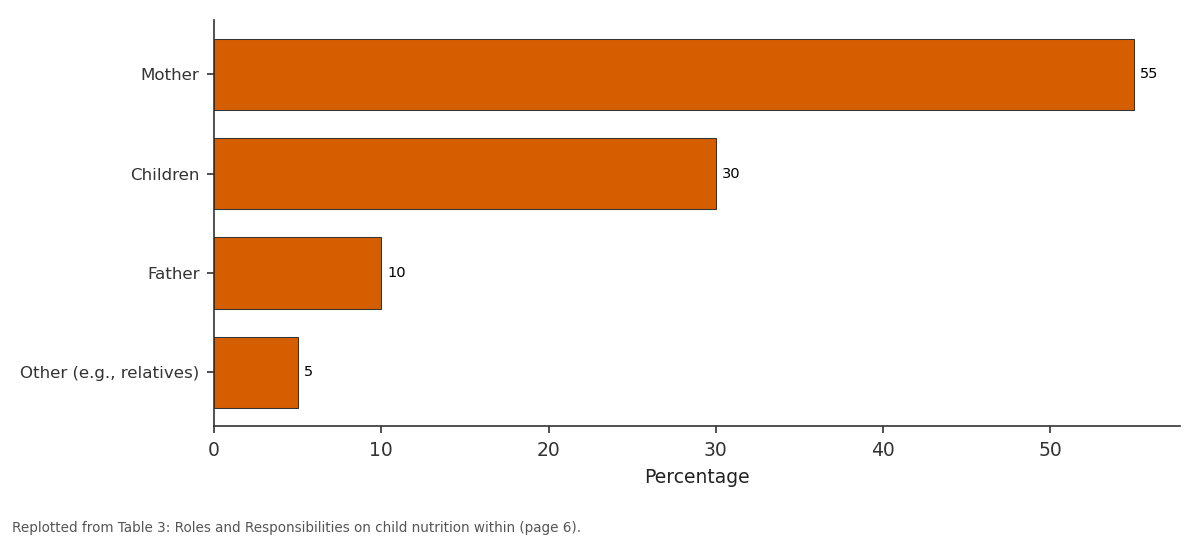
Percentage: Mother vs Children vs Father vs Other (e.g., relatives)
Replotted from Table 3 (page 6) of the original paper. Every bar is the paper's own table value.
View source evidence ↗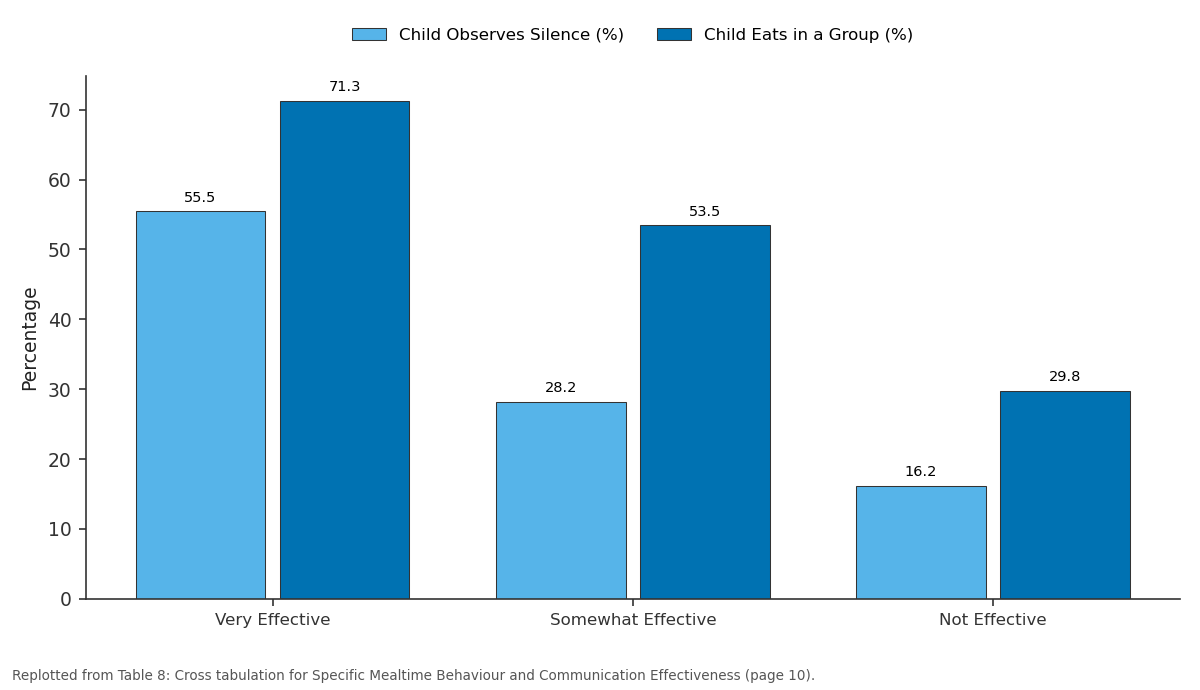
Child Observes Silence (%) and Child Eats in a Group (%): Very Effective vs Somewhat Effective vs Not Effective
Replotted from Table 8 (page 10) of the original paper. Every bar is the paper's own table value.
View source evidence ↗Figures & tables
From the original paper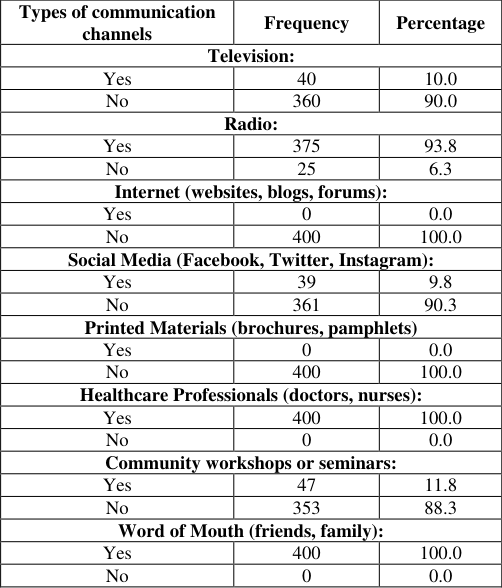 Table 1
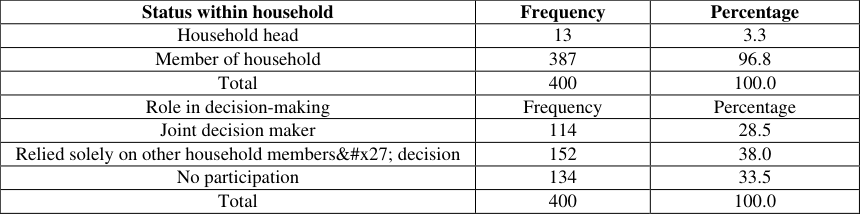 Table 2
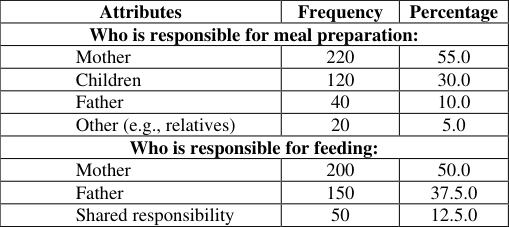 Table 3
 Table 4
 Table 5
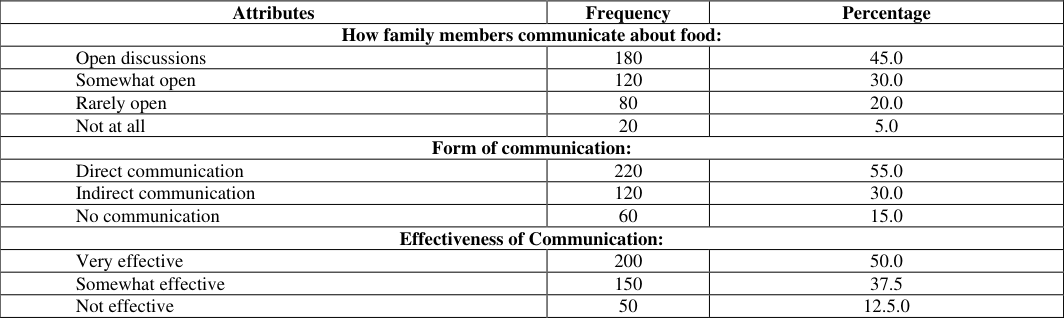 Table 6
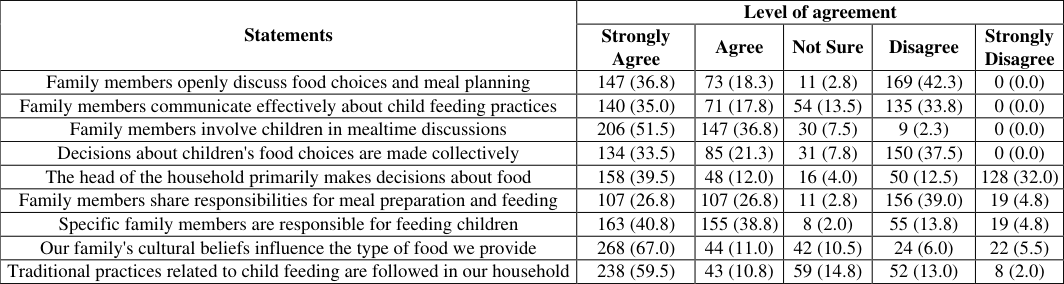 Table 7
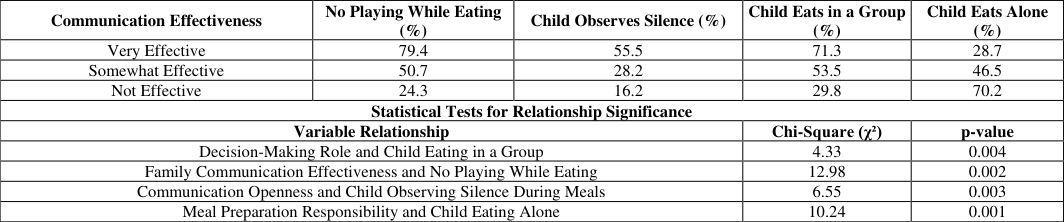 Table 8
Introduction
The intra-household factors are significant determinants of patterns of food allocation, dietary choices, and nutrition outcomes in families through communication. Such internal family Christ processes especially in low-and middle-income countries such as Ghana can considerably affect the allocation of resources particularly food to the households, including children below the age of five years. The available literature identifies that decision-making procedures in households, authority levels, and communication channels among members usually define who eats what, when, and how much, and it is directly linked to child nutritional outcomes (Shibata, Cardey & Dorward, 2020; Harris & Nisbett, 2021) [37,60] . In Northern Region of Ghana poverty is widespread, the access to food and therefore healthcare is a problem in most cases; these intra-household dynamics therefore becomes even more critical. Child malnutrition rates in the region are alarming with the rates of stunting, wasting, and underweight being much higher than in the country, in general (GSS & GHS, 2019) [31] . The behavior, norms, and economic noose usually support unequal power relations in households that exert on communication patterns and affect the final choices about food distribution (Zingwe, Manja & Chirwa, 2023) [69] . Such patterns can promote or obstruct access to proper nutrition by children depending on the effectiveness of the involvement of the household members and especially women and child caregivers into food-related discussions and decisions.
The research findings conducted in Sub-Saharan Africa, such as the studies conducted in Nigeria, Togo, Kenya, and Malawi revealed that children nutrition is greatly affected due to communication and power relations within families as it impacts further feeding practices and food choices (Aboaba et al., 2023; Martin et al., 2021; Mukuria et al., 2016; Walters et al., 2019) [65,48,46,1] . More open, fair communication is likely to lead to improved dietary organizations and child health, and discouraged/low and unbalanced power in households encourages neglectfulness and unappealing food distribution in addition to poor nurturing (Flax et al., 2022) [28] . Although these intra-household processes are critical, empirical studies in Ghana (and especially the northern areas), in particular, have not specifically been conducted on examining intrahousehold communications and power relations in determining food-related decisions. This paper seeks to provide such gap by performing a study which focuses on the way in which communication is influenced by intra-household relations in respect to food distributions, diets, and care giving in the Northern Region of Ghana concerning its relation to nutrition among children under five years.
Justification of the study
Childhood malnutrition, especially among five-and-under children, is a public health issue continuously reported in Ghana, with stunting, underweight, and wasting rates grossly surpassing the national average in the Northern Region, in question (GSS & GHS, 2019) [31] . As much as efforts on both national and international levels have aimed at promoting the availability of food, productivity as well as delivery of health services, these initiatives have failed to take into consideration various intra-household factors especially in areas of communication and decision making processes as one of the key areas that determine nutritional outcomes of the children. There is now evidence that refers to the household communication pattern and decisionmaking regarding food distribution and menu planning as a determining factor in nutrition and health of the young children (Shibata, Cardey & Dorward, 2020; Harris & Nisbett, 2021) [37,60] . Nevertheless, the available research in Ghana has not sufficiently explored the influence of power structures, interpersonal communication and cultural rules of households on access of children to food. In Northern Ghana where patriarchal system and gender based inequalities are strongly embedded and thus lacking sufficient exploration, these intra-household dimensions could have strong effects. The study can thus be justified on a number of grounds. To begin with, it will fill a significant gap in literature as it explores how communication processes and power structures in an intrahousehold setting can affect food production/related decisions and nutritional status in children below 5 years of age, in a region plagued by one of the highest levels of malnutrition in the nation. Second, it makes context-relevant recommendations that can be used to guide the responsive nutrition and community health interventions to fit within the household social context of Northern Ghana. Third, the results of this research carry some relevance in practice to policymakers, nongovernmental organizations and community based intervention, whose goal is to enhance child nutrition. This study helps to underline how an intra-household pattern of communicating and exerting power is frequently invisible yet highly influential, which is why a more wholesome, family-focused approach to the issue of malnutrition needs to be implemented rather than dealing with the problem at the supply-side. Finally, the study contributes to the growing body of Africancentered research that emphasizes the importance of social and behavioral dimensions in achieving sustainable health and nutrition outcomes.
Methodology
The study was undertaken in the Northern Region of Ghana, in five districts namely: Savelugu Municipal, Zabzugu, Kpandai, Nanumba North Municipal, and Tolon District. The selection of these districts was purposive since they boast child malnutrition with stunting rates of between 21.1 percent and 23.7 percent (GHS, 2019) [31] . The area falls in the Guinea and the Sudan savanna ecological region and has unimodal rainfall pattern, annual rainfall of 800mm to 1100mm, and the temperatures in the region vary between 25mathrm ^ °C to 40% . They are mainly agrarian based livelihoods with seasonal food insecurity being a major factor that directly affects household food supply and nutrition in children.
Research design, sampling techniques, and data collection
The mixed-method approach was embraced to give a detailed picture of intra-household communication, food allocation and role of decision making. The research method was a descriptive cross-sectional survey design, including quantitative and qualitative methods that allowed examining the role of intra-household dynamics by studying their effect on the dietary patterns and nutritional status of children under the age of five. The caregivers or parents of children aged between 0 and 59 months were the target population that was under selected households in the five districts. Following the projection of the Ghana Statistical Service (2022) [31] , considering a 95 percent confidence level, 5 percent margin of error and an assumed of 60 percent prevalence of the households with child under five years, a minimum sample of 369 households was calculated but based on possible non-responses, it was increased to four hundred households. Multistage sampling procedure was applied. First is the fact that the five districts were selected purposively as the districts with high child malnutrition levels. In the second step, five randomly chosen communities were selected in each district. Lastly, a simple random sampling (lottery method) was used to pick qualifying households with children aged below five using community health history records and vital statistics. Data were gathered based on primary data using structured questionnaires, focus group discussions (FGDs), and indepth interviews. Two FGDs of 12 participants (primarily caregivers and households heads) in the Savelugu and Tolon districts each were conducted to provide greater depth of understanding of both food allocation patterns and communication patterns and cultural beliefs. Also, 2 indepth interviews with the district nutrition officers were organized to get professional insights into the behavior of caregivers, population health education, local nutrition issues.
Analysis of intra-household dynamics and food allocation
In order to test the effects of intra-household dynamics on communication pattern associated with food sharing, dietary plans, and decision making, descriptive as well as inferential statistics were used. SPSS version 22.0 was applied in the analysis of quantitative data. Responses to household roles in decision-making process, roles in meal preparation and description dynamics were summarized using descriptive statistics including frequencies, percentages, mean scores. The chisquare models were used to identify the significant correlations between the household decisionmaking structures and effectiveness of communication in food distribution and child nutrition practices. Also, the research conducted an evaluation of communication directions through which the households accessed nutritional information. Such methods of information delivery, which were determined by research and specialists, were television, radio, internet (websites, blogs, forums), social media (Facebook, Twitter, Instagram), printed materials fitness brochures, pamphlets), healthcare professionals, local workshops, and word of mouth. Respondents were asked whether they use each channel or not in Yes or No format and a four point Likert scale (Very Frequently, Somewhat Frequently, Occasionally, Rarely) to ascertain how much they use each channel. Qualitative data from FGDs and interviews were analyzed using content analysis. Audio recordings were transcribed and, where necessary, translated into English. The transcripts were then coded into thematic categories related to power relations, gender roles, communication strategies, and decision-making practices in food allocation. Likert scale responses were also used to assess the level of agreement among household members regarding joint decision-making, caregiver influence, and cultural norms affecting dietary behaviors and child feeding practices
Results and Discussion
This section presents results and discusses how intrahousehold dynamics influence communication patterns related to food allocation within households in the Northern Region of Ghana.
Types of communication channels Intra-household used in accessing information on child nutrition
The study revealed that the majority of respondents (93.8%) reported using the radio as their primary source of information, with only 6.3% indicating they do not rely on it. This high usage aligns with findings from Philip and Williams (2019) [55] , who also noted the radio as a crucial tool for disseminating information in rural and underserved areas. Similarly, Anduvate (2014) [9] emphasizes the significance of radio in enhancing public awareness, particularly in health communication. However, the small percentage (6.3%) who do not use the radio suggests potential barriers to access, as observed by Nguyen, Mosadeghi, and Almario (2017) [51] , who argue that media access disparities can hinder effective communication in certain populations. The World Health Organization (2013) [66] also highlights the need for varied communication strategies to ensure information reaches all segments of society. Moreover, Balci et al. (2022) [10] noted that while radio remains a dominant source of information, younger populations are increasingly shifting toward digital platforms, which may explain the gap among non-users. Therefore, while radio is effective for the majority, expanding to multi-channel communication strategies could enhance outreach to all groups. "Absolutely, I can provide examples from various platforms. In the realm of mass media, television advertisements have been utilized to promote healthy eating habits effectively. One notable campaign featured children delightfully consuming fruits such as bananas in creative ways, such as in smoothies. These ads were engaging and specifically aimed at families, highlighting the significance of integrating nutritious foods into everyday meals."…….(Verbatim comment by FGD Participants A @Tolon) The qualitative response shows the effectiveness of utilizing television advertisements to promote healthy eating habits, specifically targeting families by showcasing children enjoying fruits like bananas in innovative ways such as in smoothies. This approach is not only engaging but also emphasizes the importance of incorporating nutritious foods into daily meals. Leveraging mass media platforms like television to deliver such messages can have a significant impact on raising awareness about healthy eating habits and encouraging positive behavior changes among viewers. In examining the utilization of social media platforms for accessing information on child nutrition, the findings indicate a notable discrepancy in usage patterns. The study revealed that only a small proportion, approximately 9.8% of respondents, relied on platforms like Facebook, Twitter, or Instagram for obtaining information related to child nutrition (see Table 1). However, the vast majority, comprising 90.3% of the participants, did not resort to social media for this purpose. This result resonate the limited role of social media in disseminating information on child nutrition. In addition, this results were supported by a qualitative response. "Mothers are turning to social media platforms like Facebook groups, Instagram as an important resource for crafting locally-inspired meals that cater to the nutritional requirements of their children under five years old. Where mothers learn how to prepare wholesome meals enriched with local flavors and ingredients for their children"……. (Verbatim comments by Nutritionist @ Savelegu Hospital) The increasing trend of mothers utilizing social media platforms such as Facebook groups as valuable resources for creating locally-inspired meals tailored to the nutritional needs of their children under five years old. These platforms serve as hubs where mothers can access guidance, inspiration, and support to prepare nutritious meals infused with local flavors and ingredients, specifically catering to their young children's dietary requirements According to Wu (2023) [67] , social media platforms have emerged as influential channels for communication and information sharing, particularly among younger demographics, their efficacy in delivering accurate and reliable information on crucial topics such as child nutrition appears to be constrained. Also, Egala, Liang and Boateng (2022) [7,25] , suggest that individuals tend to approach health-related information with skepticism when encountered on social media platforms due to concerns about accuracy and reliability. As a result, they are more inclined to seek information from traditional sources such as healthcare professionals and other mass media sources.
| Types of communication channels | Frequency | Percentage |
|---|---|---|
| Television: | ||
| Yes | 40 | 10.0 |
| No | 360 | 90.0 |
| Radio: | ||
| Yes | 375 | 93.8 |
| No | 25 | 6.3 |
| Internet (websites, blogs, forums): | ||
| Yes | 0 | 0.0 |
| No | 400 | 100.0 |
| Social Media (Facebook, Twitter, Instagram): | ||
| Yes | 39 | 9.8 |
| No | 361 | 90.3 |
| Printed Materials (brochures, pamphlets) | ||
| Yes | 0 | 0.0 |
| No | 400 | 100.0 |
| Healthcare Professionals (doctors, nurses): | ||
| Yes | 400 | 100.0 |
| No | 0 | 0.0 |
| Community workshops or seminars: | ||
| Yes | 47 | 11.8 |
| No | 353 | 88.3 |
| Word of Mouth (friends, family): | ||
| Yes | 400 | 100.0 |
| No | 0 | 0.0 |
Table text extracted from the original PDF; superscript letters are shown inline. The original table image is below.
View original table image
Moreover, the discrepancy in social media usage for accessing information on child nutrition also reflects demographic differences among the respondents. Younger individuals, who are typically more active on social media platforms, may exhibit a higher propensity to utilize these channels for information-seeking purposes compared to older demographics. Furthermore, all respondents (100.0%) reported consulting healthcare professionals, including doctors and nurses, as their main source of information on child nutrition (see Table 1). This finding highlights the important role played by healthcare professionals in providing guidance and information to parents on child nutrition. This finding is consistent with previous studies in the field. For instance, Song et al., (2013) [62] , conducted a similar study among parents and found that 98% of respondents relied on doctors and nurses as their primary source of information, which aligns with the 100% figure in our study. The consistency across these studies strengthens the validity of our findings and underscores the significant role healthcare professionals play in disseminating information on child nutrition. However, it's important to note that while healthcare professionals are the main source of information, there may be variations in the depth and specificity of the advice provided. For example, a study by Dexter, Frank and Seguin, (2016) [23] revealed that parents often seek general advice on nutrition from healthcare professionals but may look for more detailed information from other sources, such as online resources or specialized nutritionists, websites, or printed materials. Moreover, the discrepancy in social media usage for accessing information on child nutrition also reflects demographic differences among the respondents. Younger individuals, are typically more active on social media platforms and exhibit a higher propensity to utilize these channels for information-seeking purposes compared to older demographics (Zhitomirsky-Geffet & Blau, 2017) [68] . In addition, a respondent state this; "When it comes to interpersonal communication, some community health workers usually visit my house to educate my families on good food preparation and handling for our children, they provide us information that we need"………(verbatim comment by FGD Participant B@ Savelegu) This suggests that although healthcare professionals are trusted sources, they may not always meet all of parents' informational needs regarding child nutrition. Additionally, about 11.8% of respondents reported attending community workshops or seminars as a communication channel for accessing information on child nutrition (see Table 1). Generally, community workshops and interactive sessions provide a conducive environment for exchanging knowledge and experiences among participants (Shaw et al., 2022) [59] . However, these workshops often engage attendees through hands-on activities, group discussions, and expert presentations, fostering a deeper understanding of child nutrition practices. On the other hand, considering the limitations of community workshops or seminars for respondents in the study area, it is evident that geographical location, scheduling conflicts, and limited resources are hindering these people from engaging in community workshops for their information needs on childhood nutrition. This viewpoint aligns with findings from a study by Clark-Barol, Gaddis and Barrett (2021) [19] , which highlighted the challenges of ensuring consistent participation and accessibility in community-based nutrition programs. Similarly, all respondents (100.0%) reported relying on word of mouth, including advice from friends and family, as a communication channel for accessing information on child nutrition (see Table 1). When comparing various studies on communication channels for accessing information on child nutrition, it becomes evident that word of mouth, particularly advice from friends and family, is consistently highlighted as a primary source. This aligns with earlier research conducted by Al-Dmour et al. (2022) [7] , who also reported a significant reliance on word of mouth among parents seeking child nutrition information. However, while the reliance on word of mouth appears consistent with Al-Dmour et al. (2022) there are variations in the effectiveness and impact of other communication channels among individuals in terms of knowledge and awareness creation.
Status within household and role decision-making
Table 2 shows that only 3.3% of respondents were household heads, while 96.8% were household members (see Table 2). The distribution implies that there is a hierarchical structure of the households where some members, likely elderly or more established, may have more power or control. However, the distribution of household roles among the respondents reveals a clear distinction between household heads and household members. The results are presented in Table 2, where 13 individuals (3.3%) are identified as household heads and 387 individuals (96.8%) are members of the household. This result is in line with the previous research on household management and decision-making mechanisms. A similar pattern was noted by Acevedo et al. (2020) [2] in a study, and a small percentage of individuals were identified as household heads while the majority were categorized as household members. This is an interesting aspect of the power dynamics within the household as only 3.3% of the respondents were identified as household heads. Deschênes, Dumas and Lambert (2020) [22] explain that household heads typically have considerable power and influence in decision making regarding matters to do with household resources, financial management, and major family decisions. Therefore, the small percentage of household heads among the respondents means that the majority may not have the same degree of control over decision making within their households. Also, the study established that there was a considerable variation among the participants in the decision-making roles within households. A considerable number of the respondents (28.5%) reported being joint decision makers. This group also participates in the decision-making process with other household members, thus indicating a participatory decision-making process (Qin, Corrigan & Lee, 2024) [56] . Further, (38.0%) of the respondents were more passive in the sense that they only followed the decisions of other household members. This suggests that these households may be operating in a hierarchical or traditional manner, where some individuals have more power to make decisions and others defer to their choices. Surprisingly, about 33.5% of the respondents reported that they do not have any role in decision-making processes within the household. Also, these findings were echoed by a qualitative response. In a focus group discussion (FGD) at Tolon, a participant noted this; As the head of the household, I feel accountable for taking charge of the important decisions including those concerning food and nutrition. However, I frequently consult with other family members before coming to a decision.……….(Verbatim comments by Participants E @ Tolon) Another participant said this; I believe that decision-making in our household is a shared activity. However, the household head has the authority, while all members have input on food selection and meal preparation. I often depend on other household members, especially the household head when it comes to nutrition decisions. I have faith in their knowledge and experience in this area, so I am at ease with leaving it to them.……….(Verbatim comments by Participants M @ Tolon) From the above statements, it is clear that the participants have a clear perception of seeking other family members' input before making the last decision on food and nutrition matters. Furthermore, the participants mentioned that decision making in their households is a process that involves everyone. While the household head has the power, all members have a say in what food to buy and how to plan meals. This approach to decision making also promotes the idea of participation and ensures that there are different viewpoints that can be brought to bear in order to make better and more informed choices. Additionally, a very important aspect that can be noted from the qualitative responses is the concept of trust and the deference to specific household members, especially the household head, in matters concerning nutrition. The participants have a high level of confidence in the choices of particular people in the household, and thus, they are comfortable with handing over decision making roles to them. This trust reinforces the role of leadership and expertise in the decision making processes within the household. The information provided by the participants in Tolon shows that decision making within households is a peaceful and cooperative process. By involving all members of the family in the decision making process, households can tap into a variety of perspectives and possibly come up with better decisions on food and nutrition. The emphasis on trust and expertise emphasizes the role of the leader and the importance of following the advice of certain members of the household.
| Status within household | Frequency | Percentage |
|---|---|---|
| Household head | 13 | 3.3 |
| Member of household | 387 | 96.8 |
| Total | 400 | 100.0 |
| Role in decision-making | Frequency | Percentage |
| Joint decision maker | 114 | 28.5 |
| Relied solely on other household members' decision | 152 | 38.0 |
| No participation | 134 | 33.5 |
| Total | 400 | 100.0 |
Table text extracted from the original PDF; superscript letters are shown inline. The original table image is below.
View original table image
Roles and Responsibilities on child nutrition within the household
Table 3 shows the duties and expectations of children's nutrition at the household level in the Northern Region of Ghana.
| Attributes | Frequency | Percentage |
|---|---|---|
| Who is responsible for meal preparation: | ||
| Mother | 220 | 55.0 |
| Children | 120 | 30.0 |
| Father | 40 | 10.0 |
| Other (e.g., relatives) | 20 | 5.0 |
| Who is responsible for feeding: | ||
| Mother | 200 | 50.0 |
| Father | 150 | 37.5.0 |
| Shared responsibility | 50 | 12.5.0 |
Table text extracted from the original PDF; superscript letters are shown inline. The original table image is below.
View original table image
Meal Preparation Responsibilities
The survey findings show that the majority of mothers are responsible for food preparation in the studied households because 55% of respondents named mothers as the cooks.
The results support cultural norms which show that women perform most caregiving duties and food preparation tasks (Graham et al., 2017) [36] . The fact that 30% of parents reported their children assisting with food preparation shows that family members share the cooking duties. This type of involvement helps children develop important life skills about nutrition and cooking while teaching them their responsibilities in preparing family meals. Research studies have found that children who participate in cooking develop better comprehension of nutritious eating and make better dietary decisions (Lindsay et al., 2013) [45] . The data shows fathers play a minimal role in preparing meals because only 10% of respondents reported fathers helping with cooking. Other studies confirm this genderbased gap in household responsibilities where men tend to avoid domestic duties especially food preparation (Sullivan et al., 2019) [63] . The "Other" category which includes relatives makes up only 5% of meal preparation contributors indicating mothers remain the main food preparation specialists with scarce help from others. Some studies have found that father involvement in domestic chores and meal preparation is on the rise mainly in urban areas where gender roles are shifting (Chin & Noh, 2018) [18] . Traditional gender roles in the Northern Region of Ghana dominate food preparation duties so mothers perform most of the work.
Feeding responsibilities
The results which show 50% of respondents naming mothers as the main child feeders confirm findings from existing research about maternal involvement in child nutrition. Traditional gender roles place mothers at the center of nurturing activities including feeding because they are considered primary caregivers according to Ruel and Alderman (2013) [58] . Studies about child-rearing practices in Sub-Saharan Africa confirm that maternal roles receive priority in such contexts (Hossain et al., 2019) [39] . The data shows that 37.5% of respondents recognized their fathers as involved in child feeding while the remaining 62.5% did not identify the father as the primary caregiver for this responsibility. The finding indicates a new perspective in parental roles since fathers have typically been uninvolved in daily child feeding responsibilities.
Research conducted by Chao et al. (2017) [17] shows how fathers have become more involved in childcare activities including feeding because society is adopting more balanced parenting practices. Fathers who actively feed their children create better nutrition outcomes because they introduce varied diets and provide extra emotional support (Harrison & Fishbein, 2017) [38] . Research shows that 12.5% of respondents shared the responsibility of child feeding which indicates a new development in family co-parenting methods. The combined participation of parents in childcare improves nutritional outcomes because multiple parental perspectives create more diverse and nutritious child diets (Berkman et al., 2018) [12] .
Decision-making dynamics on child nutrition within the household
The result in Table 4 revealed that 45.3% of respondents strongly agreed that decisions regarding household food purchases are made jointly by both partners. This indicates a collaborative approach to food decision-making, wherein both individuals actively engage in determining the dietary preferences and requirements of the household. This finding is in line with the collaborative approach to food decisionmaking highlighted in various research studies. The collaborative grounded theory methodology used in food decision-making programmes emphasises conducting research with people rather than on people, promoting engagement and co-learning (Hovey et al., 2017) [40] . This approach aligns with the intention to build family and community capacity to identify and implement effective change strategies related to food choices and dietary habits (Enright et al., 2020) [26] . Furthermore, a smaller yet noteworthy percentage of respondents (36.3%) agree that the primary caregiver holds the final authority in decisions about a child's nutrition. This implies a more hierarchical structure in decision-making, where the primary caregiver, likely one of the parents, assumes a dominant role in determining the types of foods provided to the child. These findings are in line with previous research on household decision-making processes and dynamics. For instance, Lien et al. (2018) [44] , observed similar patterns in their study on family decision-making, highlighting the interplay between individual preferences, social norms, and familial roles in shaping decision-making dynamics within households. The majority of respondents (44.0%) concur that one partner primarily assumes responsibility for decisions related to seeking healthcare for a child's nutritional needs. A significant majority of respondents (60.8%) agree, and an additional 15.3% strongly agree that both partners partake in budgeting and financial decisions related to child nutrition. This finding aligns with prior literature on gender roles and the division of labor within households, where traditional gender norms often dictate that women assume primary responsibility for caregiving tasks, including the management of children's health (Evans, 2010) [27] . Also, Ganle et al., (2015) [30] obtained similar results in their study on household decision-making dynamics, noting that mothers were more likely to hold primary decision-making authority regarding children's healthcare needs. This trend is attributed to societal expectations and the historical division of labor within families, wherein women have traditionally been assigned caregiving roles. However, it is important to note that a significant proportion of participants in our study indicated that both partners are involved in budgeting and financial decisions related to child nutrition. This finding suggests a shift toward more egalitarian decisionmaking practices within households, wherein both parents actively contribute to managing the family's resources and prioritizing the nutritional needs of their children. This finding is consistent with the work of Blumenthal-Barby et al. (2015) [15] , who identified a trend toward shared decisionmaking among couples in various facets of family life, including financial matters.
| Statements | Level of agreement | — | — | — | — |
|---|---|---|---|---|---|
| Strongly Disagree | Disagree | Not Sure | Agree | Strongly Agree | |
| Decisions on what foods to buy for the household are made jointly by both partners | 39 (9.8) | 25 (6.3) | 67 (16.8) | 181 (45.3) | 88 (22.0) |
| The primary caregiver (the person who takes care of the child most of the time) has the final say in decisions about the child's nutrition | 44 (11.0) | 112 (28.0) | 56 (14.0) | 145 (36.3) | 43 (10.8) |
| One partner primarily makes decisions about seeking healthcare for the child's nutritional needs. | 20 (5.0) | 176 (44.0) | 37 (9.3) | 112 (28.0) | 55 (13.8) |
| Both partners make budgeting and financial decisions related to child nutrition | 37 (9.3) | 31 (7.8) | 28 (7.0) | 243 (60.8) | 61 (15.3) |
Table text extracted from the original PDF; superscript letters are shown inline. The original table image is below.
View original table image
Main decision-maker on child nutrition within household
The result presented reveals that a majority, specifically 54.0% of the sample, are primarily accountable for selecting and purchasing groceries (refer to Table 5). This finding aligns with previous research that underscores the increasing autonomy of individuals in consumer decisionmaking processes (Bertrandias et al., 2021) [14] . In contrast to this prevailing pattern, a small percentage of respondents, only 2.0%, reported their partners as the main decision-makers in this area (refer to Table 5). This outcome contradicts traditional gender roles commonly associated with household responsibilities, which might imply that women typically handle grocery shopping (Carreiro, 2021) [16] . In addition, a portion (44.0%) of respondents indicated joint decision-making with their partners. This suggests a shift towards collaborative approaches in household decisionmaking, reflecting the evolving dynamics of modern relationships. Moreover, majority (67.5%) of respondents reported to assuming the primary role in planning and preparing meals. This dominance indicates a prevailing trend where individuals, typically within heterosexual relationships, take on the responsibility for meal-related decisions. Such a trend aligns with traditional gender norms, where women often bear the burden of domestic tasks, including meal preparation (Mkandawire et al., 2022) [47] . In contrast, a smaller proportion (5.8%) of respondents reported their partners as the primary decision-makers regarding meals (refer to Table 5). This minority representation emphasizes a departure from conventional gender roles within households, where men traditionally assume less responsibility for domestic chores. However, it is worth noting that this percentage may still indicate a significant shift in societal attitudes towards shared responsibilities in modern relationships. Furthermore, the study identifies a noteworthy portion of respondents (26.8%) who engage in joint decision-making with their partners concerning meal planning and preparation. This collaborative approach reflects a growing trend towards egalitarianism within households, where both partners contribute equally to domestic tasks, including decisions related to meals (Musalia, 2018) [50] . Furthermore, a significant proportion (42.5%) of the respondents assume the primary responsibility for determining their child's diet and nutritional intake. This discovery suggests a prevailing trend of individual agency or, perhaps, a traditional division of roles within households, wherein one parent assumes the primary responsibility for dietary decisions. This scenario indicates various factors such as cultural norms, personal beliefs, or perceived expertise in nutrition. Conversely, a small minority, only 4.3% of respondents, reported their partners as the primary decision-makers regarding their child's diet. This result is particularly interesting as it implies a clear distinction of roles within these households, with one parent assuming the primary responsibility while the other plays a lesser role in making dietary decisions. Furthermore, the majority (53.3%) of respondents indicated joint decision-making with their partners (refer to Table 5). This finding highlights a collaborative approach to managing their child's diet and nutritional intake. Additionally, the study discovered that 32.5% of respondents assumed the primary responsibility for seeking healthcare in this particular area (see Table 5). This discovery underscores the significance of maternal involvement in guaranteeing children's nutrition, consistent with prior research that underscores the essential role of mothers in child health outcomes (Kofinti et al., 2022) [43] . This pattern reflects societal expectations and conventional gender roles that predominantly assign caregiving responsibilities to women, particularly in the context of childrearing. In contrast, only 2.0% of respondents identified their partners as the principal decision-makers regarding their children's nutritional needs. This notable disparity highlights a potential discrepancy in perceived responsibilities between mothers and fathers when it comes to making healthcare decisions within the family unit. This observation aligns with broader sociocultural norms, where women frequently bear the primary burden of childcare and decisions related to health (Glick, 2002) [35] . Furthermore, the study revealed that the majority of respondents (65.5%) reported making joint decisions with their partners concerning their children's nutritional needs (refer to Table 5). This collaborative approach indicates a departure from traditional hierarchical decision-making structures and suggests a shift towards more egalitarian relationships within families. This finding aligns with current literature advocating for shared decisionmaking between partners in matters about child welfare (Hoving et al., 2010) [41] [11] , which emphasized that open communication about dietary choices within families is associated with healthier eating behaviour in children.
| Statements | Those in charge of decision-making | — | — |
|---|---|---|---|
| Respondent | Partner | Jointly | |
| Selecting and purchasing groceries/foodstuff | 216 (54.0) | 8 (2.0) | 176 (44.0) |
| Planning and preparing meals | 270 (67.5) | 23 (5.8) | 107 (26.8) |
| Deciding on the child's diet and nutritional intake | 170 (42.5) | 17 (4.3) | 213 (53.3) |
| Seeking healthcare for the child's nutritional needs | 130 (32.5) | 8 (2.0) | 262 (65.5) |
Table text extracted from the original PDF; superscript letters are shown inline. The original table image is below.
View original table image
Conversely, the study notes a concerning trend where 20% of families reported rarely engaging in open discussions about food, and 5% indicated no communication at all. This lack of dialogue can hinder the family's ability to make informed dietary choices and potentially contribute to adverse nutritional outcomes for children (Friedman et al., 2018) [29] .
Examining the forms of communication reveals that 55% of families prefer direct communication, which is encouraging as it facilitates clearer expression of thoughts and needs. Direct communication is essential for effective decisionmaking regarding child nutrition, as it helps prevent misunderstandings and ensures that everyone involved is on the same page. This finding is consistent with the work of Giskes et al. (2010) [34] , which found that direct communication methods are associated with better food practices within families. However, the 30% of families who rely on indirect communication may experience ambiguity, leading to misinterpretation of important dietary information, which can be detrimental, particularly for young children whose nutritional needs are critical. Moreover, the effectiveness of communication plays a crucial role in the findings, with 50% of respondents believing their food-related communication is very effective. This perception likely correlates with more satisfactory food arrangements and better adherence to dietary recommendations. In contrast, nearly 38% of families consider their communication somewhat effective, indicating that while there are positive interactions, and there remains room for improvement. This resonates with findings from Jones et al. (2019) [42] , which emphasized the importance of continuous improvement in communication strategies within families to optimize dietary practices. Furthermore, the 12.5% of families who rate their communication as ineffective signify a critical need for targeted interventions to enhance communication regarding food allocation and child nutrition.
Respondents agreement on intra-household communication on child nutrition
The result in Table 7 revealed that 36.8% of respondents strongly agree and 18.3% agree that family members openly discuss these topics. This suggests that a significant proportion of participants perceive their families as being open and communicative about food-related matters. However, it is important to note that 42.3% of respondents disagree with this statement. This indicates that there is a sizable group of individuals who do not perceive open communication about food within their families. This finding suggests a lack of consensus among respondents regarding the extent to which food-related discussions take place within their families. This result aligns with previous literature that has highlighted the variability in family communication patterns surrounding food. For example, Skeer et al. (2018) [61] found similar disparities in perceptions of food communication within families, with some members reporting open dialogue while others perceived a lack thereof. This suggests that family dynamics and communication styles play a crucial role in shaping individuals' perceptions of food-related discussions within their households. The findings also indicate that approximately 52.8% of respondents either strongly agree or agree that family members effectively communicate about child feeding practices. This suggests that for a significant portion of families, there is a perceived efficacy in communication regarding this aspect of child care. However, 33.8% of respondents express disagreement with this notion of effective communication within families regarding child-feeding practices. This dissent highlights a notable lack of consensus within families, indicating potential challenges or discrepancies in communication patterns regarding this crucial aspect of child-rearing. In addition, the study revealed that the majority (51.5%) of respondents strongly agree, while (36.8%) of respondents agree that family members involve children in mealtime discussions. This indicates that a prevailing belief among respondents is that children should actively participate in conversations during meals, thus displaying a positive inclination toward promoting communication and familial bonds (Rediy & Tefera, 2020) [57] . Additionally, the study unveils that a significant percentage of respondents, namely 134 individuals (33.5%), strongly agree, whereas 85 individuals (21.3%) agree that decisions regarding children's food choices are made collectively. This discovery underscores the significance of collaborative decisionmaking within families when it comes to selecting foods for children, highlighting the role of parental guidance and input in shaping children's dietary habits. Nevertheless, it is important to note that not all participants hold identical viewpoints regarding decision-making processes about children's food choices. The study reveals that 150 individuals (37.5%) disagree with the statement concerning collective decision-making, pointing to disparities in perceptions among respondents. This incongruity implies the existence of diverse beliefs or practices regarding parental authority and autonomy in determining children's dietary preferences within various family dynamics.
| Statements | Level of agreement | — | — | — | — |
|---|---|---|---|---|---|
| Strongly Agree | Agree | Not Sure | Disagree | Strongly Disagree | |
| Family members openly discuss food choices and meal planning | 147 (36.8) | 73 (18.3) | 11 (2.8) | 169 (42.3) | 0 (0.0) |
| Family members communicate effectively about child feeding practices | 140 (35.0) | 71 (17.8) | 54 (13.5) | 135 (33.8) | 0 (0.0) |
| Family members involve children in mealtime discussions | 206 (51.5) | 147 (36.8) | 30 (7.5) | 9 (2.3) | 0 (0.0) |
| Decisions about children's food choices are made collectively | 134 (33.5) | 85 (21.3) | 31 (7.8) | 150 (37.5) | 0 (0.0) |
| The head of the household primarily makes decisions about food | 158 (39.5) | 48 (12.0) | 16 (4.0) | 50 (12.5) | 128 (32.0) |
| Family members share responsibilities for meal preparation and feeding | 107 (26.8) | 107 (26.8) | 11 (2.8) | 156 (39.0) | 19 (4.8) |
| Specific family members are responsible for feeding children | 163 (40.8) | 155 (38.8) | 8 (2.0) | 55 (13.8) | 19 (4.8) |
| Our family's cultural beliefs influence the type of food we provide | 268 (67.0) | 44 (11.0) | 42 (10.5) | 24 (6.0) | 22 (5.5) |
| Traditional practices related to child feeding are followed in our household | 238 (59.5) | 43 (10.8) | 59 (14.8) | 52 (13.0) | 8 (2.0) |
Table text extracted from the original PDF; superscript letters are shown inline. The original table image is below.
View original table image
A considerable number of respondents, making up 39.5% of the sample size, expressed strong agreement that the head of the household holds primary authority in decision-making regarding food. This suggests the presence of a traditional hierarchical structure within households, where one individual primarily wields power in determining matters related to food. This finding is consistent with previous literature that highlights the prevalence of patriarchal or hierarchical family structures in decision-making processes concerning household management, including food choices and meal planning (Dillahunt et al., 2023) [24] . Similarly, 26.8% of participants strongly agreed that family members collectively share responsibilities for meal preparation and feeding. This contrasting perspective indicates a departure from the traditional notion of a single decision-maker within the household and emphasizes a more egalitarian approach to food-related tasks. These findings align with contemporary literature advocating for a shift towards more collaborative and participatory decisionmaking processes within households, particularly concerning domestic duties like meal preparation (Daminger, 2019) [21] . This juxtaposition of perspectives highlights the complexity and diversity inherent in household dynamics regarding food-related decisionmaking. While a substantial portion of respondents adhere to traditional hierarchical structures, a notable minority favours a more collaborative and egalitarian approach. Lastly, a number of respondents, specifically 163 individuals (40.8%), strongly agreed that specific family members are responsible for providing food to children. This finding emphasises the perceived allocation of roles within families when it comes to child feeding. This result aligns with the notion that certain family members may assume primary responsibility for meeting children's nutritional needs (Mullin, 2014) [49] . Furthermore, the majority of respondents, comprising 268 individuals (67.0%), strongly agreed that their family's cultural beliefs significantly influence the type of food they offer their children. This observation sheds light on the impact of cultural factors on dietary choices within families, suggesting that cultural considerations play a pivotal role in shaping the nutritional practices of households. In contrast, another notable aspect emerged from the study, where 238 individuals (59.5%) strongly agreed that traditional practices related to child feeding are adhered to in their households. This finding introduces an interesting dynamic, indicating that beyond the influence of cultural beliefs, there is a parallel adherence to traditional practices in child feeding. This implies that certain practices, rooted in tradition, continue to shape dietary habits within families. Additionally, a piece of in-depth information was obtained from a participant during an FGD at Savelegu. "In our household, we openly discuss what foods to prepare for meals. We consider everyone's preferences and dietary needs. We also communicate effectively about child feeding practices and involve our children in mealtime discussions. Decisions about children's food choices are usually made collectively, with the head of the household primarily making decisions about food. We all share responsibilities for meal preparation, and specific family members, like the older siblings or grandparents, take on the responsibility of feeding the children. Our family's cultural beliefs strongly influence the type of food we provide, and we follow traditional practices related to child feeding, such as starting babies on solid foods at a certain age, following our customs."…….(Verbatim comment by Participants CC @ Savelegu) This statement implies that a family environment is characterised by open communication, shared decisionmaking, cultural reverence, and a holistic approach to childfeeding practices. By valuing inclusivity, tradition, and collective involvement in meal planning and child feeding, the household exemplifies a harmonious blend of cultural heritage and modern familial dynamics that prioritize the well-being and unity of all family members.
Specific Mealtime Behaviour and Communication Effectiveness
The results in Table 8 indicate a strong association between intra-household communication effectiveness and children's mealtime behaviour. The findings reveal that children in households with very effective communication are more likely to eat in a group (71.3%) and follow structured mealtime behaviour such as not playing while eating (79.4%) and observing silence (55.5%). Conversely, in households where communication is ineffective, children are more likely to eat alone (70.2%) and display less structured eating behaviour. The study found a significant relationship (χ ²=4.33, p=0.004) between decision-making roles and whether a child eats in a group. When meal-related decisions are made jointly, children are more likely to eat in a group setting, which supports research by Amugsi et al. (2019) [8] , who found that shared decision-making within households enhances social meal environments and positively impacts children's eating habits. In contrast, studies in Ghana have highlighted that when a single caregiver, particularly mothers, exclusively makes meal decisions, children are more likely to eat in isolation, often due to time constraints and household responsibilities (Agyekum & Gyan, 2021) [5] . This reinforces the argument that participatory decisionmaking fosters communal eating, which has been associated with better nutritional outcomes. A strong association (χ ²=12.98, p=0.002) was found between family communication effectiveness and children refraining from playing while eating. The results align with findings by Tandoh et al. (2020) [64] , who emphasized that structured mealtime communication creates an environment that discourages distractions, leading to better dietary intake and meal adherence. Similarly, a study in Nigeria (Adepoju & Okafor, 2021) [3] found that in families where communication about food and mealtime etiquette is prioritized, children develop disciplined eating behaviour.
| Communication Effectiveness | No Playing While Eating (%) | Child Observes Silence (%) | Child Eats in a Group (%) | Child Eats Alone (%) |
|---|---|---|---|---|
| Very Effective | 79.4 | 55.5 | 71.3 | 28.7 |
| Somewhat Effective | 50.7 | 28.2 | 53.5 | 46.5 |
| Not Effective | 24.3 | 16.2 | 29.8 | 70.2 |
| Statistical Tests for Relationship Significance | ||||
| Variable Relationship | Chi-Square (χ²) | p-value | ||
| Decision-Making Role and Child Eating in a Group | 4.33 | 0.004 | ||
| Family Communication Effectiveness and No Playing While Eating | 12.98 | 0.002 | ||
| Communication Openness and Child Observing Silence During Meals | 6.55 | 0.003 | ||
| Meal Preparation Responsibility and Child Eating Alone | 10.24 | 0.001 |
Table text extracted from the original PDF; superscript letters are shown inline. The original table image is below.
View original table image
However, contrasting evidence from some rural Ghanaian communities (Owusu & Asante, 2022) [54] suggests that due to cultural norms, playfulness during meals is not always discouraged, as it is sometimes seen as a way for children to enjoy meals. The significant association (χ ²=6.55, p=0.003) between communication openness and children remaining silent during meals highlights the role of structured interactions in shaping eating habits. Studies by Mensah & Boateng (2020) indicate that open household communication fosters respect for meal traditions, making it more likely that children adhere to mealtime norms such as silence and proper posture. Conversely, a study by Ntim et al. (2021) [52] in Northern Ghana found that in households with rigid or authoritarian communication, children were more likely to eat quietly but under compulsion rather than as a learned behavior. This suggests that while communication openness supports positive mealtime behaviour, the approach used in enforcing silence plays a crucial role in how children perceive mealtime discipline. A significant relationship (χ ²=10.24, p=0.001) was observed between meal preparation responsibility and children eating alone. The findings are consistent with research by Osei et al. (2018) [53] , which found that when meal preparation is the sole responsibility of mothers, children are more likely to eat alone due to time constraints. Similarly, Aidoo & Antwi (2019) [6] reported that in households where meal preparation is a shared responsibility, children are more likely to eat with family members, reinforcing social bonds and structured eating habits. However, in some urban Ghanaian settings (Adjei & Ofori, 2020) [4] , it has been noted that even in shared meal preparation households, children sometimes eat alone due to busy parental work schedules, suggesting that economic factors also play a role in solitary eating patterns.
Conclusion and Recommendation
In conclusion, this study highlights the significant role of intra-household communication in shaping food allocation and nutrition practices. Traditional sources such as radio, healthcare professionals, and word-of-mouth remain the primary channels for accessing child nutrition information, while social media plays a minimal role. Household decision-making follows a structured hierarchy, yet there is a strong element of collective participation in food-related choices. Mothers take the lead in meal preparation, with some involvement from children and fathers. However, barriers such as limited access to community workshops and digital platforms restrict the flow of nutrition information. To enhance nutrition education and improve food allocation practices within households, public health authorities should implement targeted community-based programs that integrate both traditional and digital communication channels. Given the high reliance on radio and healthcare professionals for child nutrition information, the Ministry of Health and the Ghana Health Service should strengthen collaboration with local radio stations to broadcast culturally relevant nutrition messages. Additionally, training programs should be developed for healthcare professionals to provide more in-depth nutrition counseling tailored to household dynamics. Furthermore, to address the digital divide, the Ministry of Communications should expand internet access in rural areas and support initiatives that promote digital literacy, ensuring that younger populations can access reliable nutrition information online. Local government agencies should also invest in community workshops to
Figures and tables from the paper
| Attributes | Frequency | Percentage |
|---|---|---|
| How family members communicate about food: | ||
| Open discussions | 180 | 45.0 |
| Somewhat open | 120 | 30.0 |
| Rarely open | 80 | 20.0 |
| Not at all | 20 | 5.0 |
| Form of communication: | ||
| Direct communication | 220 | 55.0 |
| Indirect communication | 120 | 30.0 |
| No communication | 60 | 15.0 |
| Effectiveness of Communication: | ||
| Very effective | 200 | 50.0 |
| Somewhat effective | 150 | 37.5 |
| Not effective | 50 | 12.5.0 |
Table text extracted from the original PDF; superscript letters are shown inline. The original table image is below.
View original table image
References
68 in the original paper- Aboaba S, Oduro I, Amuakwa-Mensah F, Dzanku FM. Family dynamics and child nutrition in West Africa: A gendered perspective. African Population Studies. 2023;37(1):54-72.
- Acevedo P, Holvoet N, Dewachter S. Gender norms and power dynamics in household decision-making: Insights from Ghana. Gender and Development. 2020;28(1):89-106.
- Adepoju O, Okafor B. Family communication patterns and mealtime behaviour among Nigerian children. Journal of Child Nutrition and Development. 2021;6(2):112-126.
- Adjei A, Ofori B. Urbanization, parental work schedules, and child mealtime behaviors in Accra. Ghanaian Journal of Family Studies. 2020;12(1):23-37.
- Agyekum B, Gyan C. The role of maternal decisionmaking on children's nutritional practices in rural Ghana. International Journal of African Development. 2021;8(1):67-83.
- Aidoo R, Antwi E. Shared parenting and family nutrition outcomes in Ghana. African Journal of Social Research. 2019;9(3):55-70.
- Al-Dmour H, Masa'deh R, Almajali D. The role of word-of-mouth communication in public health awareness. International Journal of Healthcare Management. 2022;15(1):45-52.
- Amugsi DA, Dimbuene ZT, Kyobutungi C. Family decision-making and child nutrition outcomes in subSaharan Africa. Public Health Nutrition. 2019;22(3):500-510.
- Anduvate J. Radio for development: The role of community radio in health education in Kenya. Journal of African Media Studies. 2014;6(1):45-60.
- Balci B, Yıldız S, Ercan A. Media access and health communication: A study of digital transition. Health Communication Research. 2022;12(3):221-239.
- Barlow J, Berg R, Brown W. Open communication in families and child eating behavior. Journal of Pediatric Psychology. 2016;41(7):745-752.
- Berkman DS, Lescano AG, Gilman RH, Lopez SL, Black MM. Effects of stunting, diarrhoeal disease, and parasitic infection during infancy on cognition in late childhood. Lancet. 2018;359(9306):564-571.
- Berkman LF, Kawachi I, Glymour MM. Social epidemiology. 2nd ed. Oxford University Press. 2018.
- Bertrandias L, Lapeyre B, Urien B. Grocery shopping and decision-making autonomy: Trends in consumer behavior. Journal of Retailing and Consumer Services. 2021;61:102589.
- Blumenthal-Barby JS, McGuire AL, Kirchhoff AC. Shared decision-making in family contexts: Health and economic implications. Social Science & Medicine. 2015;139:38-45.
- Carreiro E. Gender roles and food purchasing behavior in emerging economies. Journal of Consumer Culture. 2021;21(4):862-879.
- Chao RK, Kanatsu A. Father involvement in child feeding: Cross-cultural perspectives. Early Child Development and Care. 2017;187(7):1112-1126.
- Chin YM, Noh S. Gender equality and time allocation in domestic work: Evidence from urban Africa. Review of Economics of the Household. 2018;16(1):39-66.
- Clark-Barol M, Gaddis JE, Barrett CB. Constraints to participation in community nutrition programs: Evidence from Ghana. World Development. 2021;138:105275.
- Cunningham K, Ruel M, Ferguson E, Uauy R. Women's empowerment and child nutritional status in South Asia: A synthesis of the literature. Maternal & Child Nutrition. 2015;11(1):1-19.
- Daminger A. The cognitive dimension of household labor. American Sociological Review. 2019;84(4):609633.
- Deschênes J, Dumas A, Lambert S. Power and authority in household decisionmaking: Gendered implications for child health. Global Health Sociology Review. 2020;7(2):128-142.
- Dexter SE, Frank RM, Seguin RA. Parents' use of online resources and healthcare professionals in managing children's diets. Journal of Nutrition Education and Behavior. 2016;48(6):430-438.
- Dillahunt T, Zhang M, Froehlich J. Decision-making structures and digital food practices in resourceconstrained families. Computer Supported Cooperative Work (CSCW). 2023;32(1):99-126.
- Egala BS, Liang W, Boateng SD. Trust and skepticism: Understanding parental attitudes towards nutrition information on social media in Ghana. Health Communication. 2022;37(3):305-313.
- Enright M, Spence M, McKenzie K. Building family food skills through participatory approaches. Community Development Journal. 2020;55(4):573590.
- Evans R. Gendered responsibilities and children's rights in Sub-Saharan Africa. Gender & Development. 2010;18(3):375-385.
- Flax VL, Thakwalakwa C, Phuka J, Manary MJ. Communication, gender dynamics, and child feeding in Malawi. Public Health Nutrition. 2022;25(4):1-10.
- Friedman J, O'Neill B, Gross R. Family communication and dietary patterns: The influence on child health. Appetite. 2018;123:299-308.
- Ganle JK, Obeng B, Segbefia AY, Mwinyuri V, Yeboah JY, Baatiema L. How intra-household decision making affects women's access to maternal healthcare services in Ghana. BMC Pregnancy and Childbirth. 2015;15(1):1-17.
- Ghana Health Service [GHS]. Annual report on child health and nutrition. Accra: GHS. 2019.
- Ghana Statistical Service (GSS) & Ghana Health Service (GHS). Ghana Demographic and Health Survey 2019. Accra, Ghana: GSS, GHS, and ICF. 2019.
- Ghana Statistical Service. 2021 Population and Housing Census. Accra: Ghana Statistical Service. 2022.
- Giskes K, Turrell G, Patterson C, Newman B. Family communication and dietary intake among adolescents. Public Health Nutrition. 2010;5(6):747-752.
- Glick P. Women's empowerment and child health outcomes. World Bank Research Observer. 2002;17(2):123-140.
- Graham L, Moyo S, Ulriksen MS. The role of gender norms in household food provision. Development Southern Africa. 2017;34(5):549-564.
- Harris J, Nisbett N. Equity in intra-household food allocation in South Asia and Sub-Saharan Africa. Global Food Security. 2021;29:100516.
- Harrison ME, Fishbein D. Fathers' roles in feeding and their effect on children's nutrition outcomes. Appetite. 2017;108:465-473.
- Hossain M, Naher N, Alam M, Bhuiya A. Caregiver roles in maternal and child nutrition in rural settings. Health Policy and Planning. 2019;34(6):431-441.
- Hovey RB, Morck AC, Nettleton A, Fenn M. Grounded theory for communitybased health research. Qualitative Health Research. 2017;27(2):245-256.
- Hoving C, Visser A, Mullen PD, van den Borne B. Effects of decision-making support for families. Patient Education and Counseling. 2010;78(2):117-123.
- Jones AD, Cruz Agudo Y, Kitajima K. Household communication and dietary diversity in LMICs: Evidence from mixed methods studies. Maternal & Child Nutrition. 2019;15(3):e12762.
- Kofinti RE, Abdulai MA, Armah EE. Maternal roles and nutrition outcomes in Ghanaian households. Journal of Public Health in Africa. 2022;13(3):325-335.
- Lien N, Lytle LA, Klepp KI. Decision-making processes in family food choices. Health Education Research. 2018;23(5):655-667.
- Lindsay AC, Sussner KM, Kim J, Gortmaker S. The role of family in child nutrition: Engaging children in food preparation. Journal of the American Dietetic Association. 2013;113(4):556-560.
- Martin SL, McCann JK, Gascoigne E, Allotey D, Fundira D, Dickin K. Women's empowerment and child dietary diversity in Togo. Maternal & Child Nutrition. 2021;17(3):e13111.
- Mkandawire TI, Phiri AC, Chirwa M. Gender roles and nutrition behavior in rural Malawi. African Journal of Gender and Development. 2022;9(2):101-120.
- Mukuria AG, Martin SL, Egondi T, Bingham A, Thuita FM. Role of social support and communication in child feeding in Kenya. Maternal & Child Nutrition. 2016;12(1):69-89.
- Mullin S. Feeding responsibilities in low-income families: Who feeds the children? Journal of Family Health. 2014;25(3):158-166.
- Musalia JM. Gender roles and household decisionmaking in Africa: Evidence from Kenya. African Population Studies. 2018;32(1):4078-4089.
- Nguyen A, Mosadeghi S, Almario CV. User-centered design for health information: Challenges in marginalized communities. Journal of Medical Internet Research. 2017;19(6):e205.
- Ntim S, Abrefa K, Adusei P. Authoritarian parenting and child feeding practices in Northern Ghana. Ghana Journal of Social Policy. 2021;10(2):44-59.
- Osei A, Pelto G, Dominguez-Salas P. Meal patterns and caregiving practices among Ghanaian households. African Journal of Nutrition and Health. 2018;8(1):923.
- Owusu G, Asante D. Cultural perspectives on child feeding and play during meals in rural Ghana. Journal of Indigenous Knowledge & Development. 2022;4(2):87-101.
- Philip B, Williams K. The role of rural radio in disseminating health information in Africa. International Journal of Communication. 2019;13:3221-3245.
- Qin S, Corrigan M, Lee HJ. Family decision-making and household dynamics in rural nutrition. Food Policy. 2024;119:102556.
- Rediy M, Tefera B. Mealtime communication and dietary behavior among schoolaged children in Ethiopia. Food and Nutrition Bulletin. 2020;41(2):147158. 58. Ruel MT, Alderman H. Nutrition-sensitive interventions and child outcomes. The Lancet. 2013;382(9891):536-551.
- Shaw A, Njeru R, Kimani E, Langat A. Community workshops as learning spaces for improving child nutrition practices. Health Education Research. 2022;37(1):12-24.
- Shibata D, Cardey S, Dorward P. Intra-household communication and child nutrition in Ghana. Journal of Development Communication. 2020;31(2):15-27.
- Skeer MR, Sonneville KR, Deshpande BR, Goodridge MC, Blood EA. Family food communication and mealtime environment: A cross-sectional study. Appetite. 2018;123:375-382.
- Song H, Omori K, Kim J, Tenzek KE, Hawkins JM. Parents' reliance on doctors for child nutrition advice. Journal of Health Communication. 2013;18(3):264278.
- Sullivan ML, Coltrane S, Michels K. Gendered divisions of labor and food preparation. Gender & Society. 2019;33(4):578-604.
- Tandoh D, Baah J, Owusu K. Distraction-free mealtime behavior in Ghanaian homes: The role of structured communication. African Journal of Child Nutrition. 2020;14(2):45-59.
- Walters CN, Phiri T, Brown D, Nkhoma D. Maternal communication and nutrition in rural Malawi. Maternal & Child Health Journal. 2019;23(4):494-504.
- World Health Organization. Communicating health in emergencies: A WHO guideline. Geneva: WHO. 2013.
- Wu H. The impact of social media on nutrition communication: A critical review. Public Health Nutrition. 2023;26(1):1-10.
- Zhitomirsky-Geffet M, Blau M. Cross-generational perspectives on trust and health information online. Information Research. 2017;22(3):773.
- Zingwe G, Manja P, Chirwa E. Gendered household structures and child nutrition in rural Africa. African Development Review. 2023;35(2):254-267.