
Research article · 2026 · Full text
International Journal of Biology SciencesMethods for isolation and identification of cellulose-degrading bacteria: A Review
Volume 8(5) · Pages 95–97 · DOI: 10.33545/26649926.2026.v8.i5b.834 ↗
Research areasBiofuel production and bioconversionEnzyme Production and CharacterizationComposting and Vermicomposting Techniques
Abstract
Author-writtenCellulolytic bacteria are key microorganism responsible for the degradation of lignocellulosic biomass, playing avital role in nutrient cycling, soil fertility, and environmental sustainability. This review summarizes previously published studies on the diversity, isolation, and identification of cellulose-degrading bacteria, with a focus on species isolated from natural habitats, including soil, compost, and the gastrointestinal tracts of her bivorous animals. Methods for screening and identifying cellulolytic bacteria, such as selective culture media, congo red staining, biochemical tests, and 16s rRNA gene sequencing are critically discussed. The review also highlights the agricultural and industrial application of these bacteria, including composting, biofertilizers, biofuel production, and waste management. Advances in molecular and biotechnological approaches have furthrer expanded the potential of cellulolytic bacteria in sustainable agriculture and biotechnology. Future perespectives emphasize the discovery of novel species, optimization of enzyme production, and integration with omics technologies to enhance their industrial and environmental applications. Overall, cellulolytic bacteria represent a valuable biological resource with broad implications for sustainable management of lignocellulosic waste and renewable bioenergy production.
Summary
Source-checkedPlain-language reading of the full paper, prepared with AI and checked against the text. Each point links to the authors' own words.
Why it matters
- Cellulose is the most common natural biopolymer and serves as the primary structural element in plant cell walls. View evidence ↗
- Managing the buildup of agricultural residues containing cellulose is critical for environmental sustainability and carbon cycling. View evidence ↗
- Bacteria that can degrade cellulose are essential for maintaining soil fertility and nutrient cycling by breaking down lignocellulosic biomass. View evidence ↗
The question
- The review aims to summarize existing research on the diversity, isolation, and identification of cellulolytic bacteria, while highlighting their importance in biotechnology and agriculture. View evidence ↗
What they did
- Isolation of these bacteria typically starts by sampling cellulose-rich environments, including soil, compost, agricultural waste, and the guts of herbivores. View evidence ↗
- Researchers use selective enrichment by providing cellulose or carboxymethyl cellulose (CMC) as the only carbon source to promote the growth of cellulolytic bacteria. View evidence ↗
- Congo red staining is used as a preliminary screening tool; the appearance of clear halo zones around colonies indicates the presence of cellulase activity. View evidence ↗
- 16S rRNA gene sequencing is the primary modern molecular technique used for the accurate taxonomic and phylogenetic identification of these bacteria. View evidence ↗
What they found
- Cellulose degradation is achieved by three main enzyme groups: endoglucanases (internal bonds), exoglucanases (chain ends), and B-glucosidases (cellobiose to glucose). View evidence ↗
- Bacillus species are common aerobic cellulolytic bacteria known for producing thermostable enzymes and adapting to various environments. View evidence ↗
- Anaerobic bacteria like Clostridium thermoscellum use complex enzyme structures called cellulosomes to increase the efficiency of cellulose hydrolysis. View evidence ↗
- In agriculture, these bacteria improve soil fertility by recycling organic matter and releasing nitrogen, phosphorus, and carbon for plant use. View evidence ↗
- Industrially, cellulolytic bacteria are used to produce bioethanol by converting cellulose into fermentable sugars. View evidence ↗
- The paper and pulp industry utilizes cellulolytic enzymes for biobleaching and to enhance the quality of the pulp. View evidence ↗
What it means
- The authors conclude that cellulolytic bacteria are a vital biological resource for industrial biotechnology, agriculture, and environmental sustainability. View evidence ↗
Visual summary
1 visualsIllustrations explain the paper; they do not show study data.
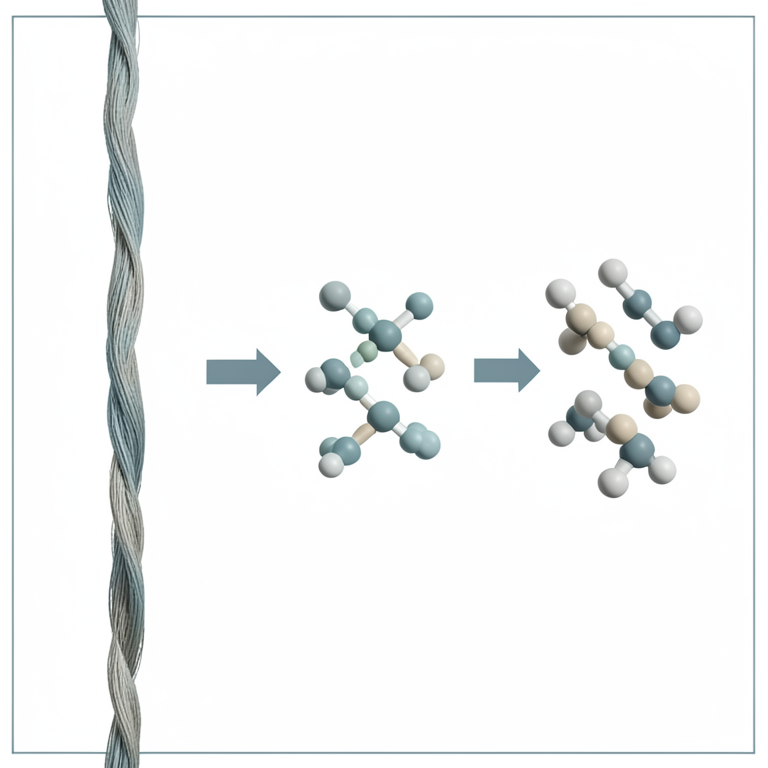
Cellulose Degradation Pathway
AI-generated conceptual illustration (cellulose polymer chains and bacterial enzymes). It explains the idea and does not show study data.
View source evidence ↗Introduction
Cellulose is considered the most abundant natural biopolymer on earth and represent the main structural component of plant cell walls [1] . It consists of linear chains of B-1,4-linked glucose units arranged in crystalline micro fibrills, which makes cellulose highly resistant to enzymatic degradation [2] . The accumulation of cellulosic agricultural residues has gained increasing attention due to its environmental and its importance in sustainable biomass utilization and carbon cycling [3] . Microorganisms play a fundamental role in cellulolytic bactria that produce cellulase enzyme systems capable of converting cellulose into soluble sugars [4] . These bacteria are widely distributed in different ecological niches such as soil, compost, aquatic environments, and the digestive systems of herbivorous animals [5] . Among these habitats, the rumen ecosystem is recognized as one of the most efficient natural environments for lignocellulosic biomass degradation due to its complex microbial community and anaerobic conditions [6] . Several bacterial genera have been reported as efficient cellulose degraders, including Bacillus, Cellulomonas, clostridium, and Pseudomonas, species [7] . Various isolation and identification methods have been. Developed by researchers to detect cellulase-producing bacteria, including selective culture media, congo red staining assays, biochemical characterization, and molecular identification based on 16s rRNA gene analysis [8] . In recent years, cellulolytic bacteria have attracted considerable interest because of their applications in agriculture, composting, biofuel rodaction, and industrial biotechnology [3,9] . Therefore, reviewing previously published studies on the isolation and identification of cellulolytic bacteria is essential for improving future biotechnological applications and developing sustainable environmental solutions [10] . The present review aims to summarize previously published research concerning the diversity, isolation methods, and identification approaches of cellulolytic bacteria and to highlight their agricultural and biotechnological importance.
Structure of cellulose and mechanism of its degradation.
Cellulose is a homopolysaccharide composed of repeating B-D-glucose units linked by B-1,4-glycosidic bonds, froming long linear chains that aggregate into microfibrils through hydrogen bonding interactions [1,2] . This highly ordered crystalline structure provides mechanical strength to plant cell walls and contributes to the recalcitrant nature of cellulose against chemical and enzymatic degradation [11] . Cellulose exists in both crystalline and amorphous regions, where the crystalline portions are more resistant to enzymatic attack, while amorphous regions are relatively accessible to microbial enzymes [12] . The resistance of cellulose degradation is mainly attributed to its structural complexity and its association with hemicellulose and lignin within lignocellulosic biomass [3] . Microbial degradation of cellulose is a chiered through the synergistic action of cellulase enzyme systems produced by cellulolytic microorganisms [5] . These enzyme systems generally consist of three major group: endoglucanases (EC 3,2.1,4), which randomly clear internal bonds within cellulose chains ; exoglucanases or cellobiohydrolases (EC 3.2.1.9.1), which release cellobiose units from chain ends ; and Bglucosidases (EC 3.2.1.21), which hydrolyze cellobiose into glucose molecules [4] . The cooperative interaction among these enzymes significantly enhances cellulose hydrolysis efficiency. Enabling microorganisms to utilize cellulose as a carbon and energy source [5,13] . Advances in microbial biotechnology have improved the understanding of cellulase system and their industrial relevance, particularly in biomass conversion and biofuel production processes [9] . Understanding cellulose structure and degradation mechanisms is essential for optimizing microbial applications in agriculture, environmental management, and sustainable biotechnological industries [10] .
Cellulolytic bacteria.
Cellulolytic bacteria represent a diverse group of microorganisms capable of degrading cellulose through the production of extracellular cellulase enzymes. These bacteria are widely distributed in natural environments where plant biomass is a bund ant, including soil, compost, sediments, and the gastrointestinal tracts of herbivorous animals [5,1] . Their ecological role is essential in nutrient recycling and maintenance of the global carbon cycle. Among aerobic cellulolytic bacteria, species belonging to the genus Bacillus are frequently reported due to their ability to produce thermostable cellulases and adapt to various environmental conditions [7] . Members of the genus Cellulomonas are also well known for their efficient cellulose degradation enzyme production [14] . In addition, several Pseudomonas species have demonstrated cellulolytic activity, contributing to organic matter decomposition in soil ecosystems [3] . Anaerobic cellulolytic bacteria play a crucial role in lignocellulose degradation within oxygen-limited environments such as rumen systems and anaerobic digesters. Species of the genus clostridium, particularly clostridium thermoscellum, are recognized for producing complex enzyme structures known as cellulosomes, which significantly enhance cellulose hydrolysis efficiency [15] . The rumen microbiome of herbivorous animals represent one of the most efficient microbial ecosystems for fiber degradation. Numerous studies have identified cellulolytic bacterial populations within rumen environments that contribute to the breakdown of plant cell wall components and provide nutrients to the host animal [6] . These microbial communities function synergistically with fungi and protozoa to achieve effective lignocellulosic digestion [16] .
Recent advances in molecular identification techniques, especially 16S rRNA gene sequencing, have improved the understanding of cellulolytic bacterial diversity and revealed previously uncultivable species involved in cellulose degradation [17] . Such findings have expanded the potential applications of cellulolytic bacteria in agriculture, enzyme production, and bioenergy industries [9] .
Isolation and identification methods of cellulolytic bacteria.
Isolation and identification of cellulolytic bacteria have been widely described in previously published studies using culture-dependent and molecular approaches. Isolation procedures generally begin with the collection of samples from cellulose-rich environments such as soil, compost, agricultural residues, and the gastrointestinal tracts of herbivorous animals [1] . Selective enrichment techniques are commonly applied to enhance the growth of cellulosedegrading microorganism by using cellulose or carboxymethyl cellulose (CMC) as the sole carbon source [7] . Selective media containing CMC agar are frequently employed for screening cellulolytic bacteria. Following incubation, congo red staining is used to visualize cellulose degradation, where clear halo zones surrounding bacterial colonies indicate cellulase activity [18] . This qualitative assay remains one of the most widely used preliminary screening methods due to its simplicity and reliability [19] . Morphological characterization is typically performed by examining colony appearance, pigmentation, and microscopic cell morphology after gram staining [20] . In addition, biochemical test such as catalase activity, oxidase reaction, carbohydrate utilization, and enzyme profiling have traditionally been used for bacterial identification at the genus level [21] . Recent advances in microbial identification rely heavily on molecular techniques, particularly 16S rRNA gene sequencing, which allows accurate taxonomic classification and phylogenetic analysis of cellulolytic bacteria [17] . Molecular approaches have significantly improved the detection of previously unculturable microorganisms and enhanced the understanding of microbial diversity involved in cellulose degradation [22] . Furthermore, modern studies increasingly combine classical microbiological methods with molecular and bioinformatics tools to achieve reliable identification and functional characterization of cellulolytic bacteria [5] . These integrated approaches provide valuable insights for selecting efficient bacterial strains for agricultural and industrial applications [9] .
Agricultural Applications of cellulolytic Bacteria.
Cellulolytic bacteria have significant roles in agriculture due to their ability to decompose plant residues and improve soil fertility. By breaking down lignocellulosic biomass, these bacteria contribute to the recycling of organic matter, making essential nutrients such as nitrogen, phosphorus, and carbon more available to plant [1,3] . One of the major applications is in composting, where cellulolytic bacteria accelerate the decomposition of crop residues, straw, and other plant materials. The presence of efficient cellulosedegrading bacteria in composting systems reduces the resulting compost as an organic fertilizer [4,7] . Cellulolytic bacteria also play a key role in biofertilizers, particularly in combination with other beneficial microbes. By improving soil structure and releasing nutrients from plant residues, these bacteria support plant growth and crop yield, making them valuable tools for sustainable agriculture [5,9] . In addition, these bacteria can be applied in the management of agricultural waste, including sugarcane bagasse, wheat straw, and rice husks. Their enzymatic activity helps convert these waste products into simpler compounds that can be used as soil amendments or as feeds tock for other biotechnological processes [8. 13] . Recent studies have also highlighted the potential of cellulolytic bacteria in integrated farming systems, where their use contributes to nutrient cycling, reduced dependence on chemical fertilizers, and overall improvement of agro-ecosystem sustainability [4,6] .
Industrial and Biotechnological Applications of cellulolytic Bacteria.
Cellulolytic bacteria have attracted considerable attention in industrial biotechnology due to their ability to convert lignocellulosic biomass into valuable products. These bacteria produce cellulase that can hydrolyze cellulose into fermentable sugars, which are subsequently utilized in the production of biofuels such as bioethanol. In the paper and pulp industry, cellulolytic enzymes are employed for biobleaching and improving pulp quality. The use of microbial cellulases in these processes reduces the need for harsh chemicals minimizes environmental pollution, and enhances the overal effeiciency of industrial operations. Additionally, cellulolytic bacteria are used in the production of value-added products such as organic acids, single-cell proteins, and enzymes for detergent, textile, and food industries. Their enzymatic activity allows sustainable conversion of agricultural residues into commercially valuable biomolecules [18,13] . Waste management represents another important industrial application. Cellulolytic bacteria facilitate the degradation of crop residues, municipal solid waste, and agro-industrial by-products, contributing to environmental sustainability and reducing the burden of organic waste [6,7] . The integration of cellulolytic bacteria with modern biotechnological tools, including genetic engineering and enzyme optimization, has further enhanced their industrial potential, enabling the development of efficient microbial strains with high cellulase productivity and stability under harsh conditions [10, 15] .
Conclusion and future perspectives.
Cellulolytic bacteria play a crucial role in the degradation of lignocellulosic biomass, contributing to nutrient cycling, soil fertility, and sustainable agriculture. They are widely distributed across divers environments, including soil, compost, aquatic habitats, and the gastrointestinal tracts of herbivorous animals, where they interact synergistically with other microorganisms to decompose cellulose efficiently [5,6] . The diversity of cellulolytic bacteria, ranging from aerobic species such as Bacillus and Cellulomonas to anaerobic species like clostridium, highlights their adaptability and functional significance in both natural and engineered ecosystems [7,14] . Various isolation and identification methods, including selective culture, biochemical assays, and 16S rRNA gene sequencing, have enabled researchers to explore and characterize these bacteria comprehensively [1,17] . Applications of cellulolytic bacteria in agriculture and industry demonstrate their potential in enhancing crop productivity, composting, biofuel production, and waste management. Integration with modern biotechnological approaches, including genetic engineering and enzyme optimization, further extends their utility and industrial relevance [4,9] . Future research should focus on discovering novel cellulolytic species, optimizing enzyme production under diverse environmental conditions, and exploring their synergistic interactions within microbial communities. Additionally, combining omics technologies, bioinformatics, and systems biology approaches will enhance our understanding of cellulolytic bacteria and facilitate their application in sustainable biotechnology [10,13] . In conclusion, cellulolytic bacteria represent a vital biological resource with broad implications for agriculture, environmental sustainability, and industrial biotechnology. Continued exploration and application of these microorganisms will contribute significantly to solving global challenges associated with lignocellulosic waste management and renewable energy production.
References
22 in the original paper- Lynd LR, et al. Microbial cellulose utilization. Microbiol Mol Biol Rev. 2002.
- Bayer EA, et al. From cellulosomes to cellulosomics. Chem Rec. 2008.
- Sanchez C. Lignocellulosic residues: biodegradation and bioconversion. Waste Manag. 2009.
- Bhat MK. Cellulases and related enzymes in biotechnology. Adv Biotechnol. 2000.
- Wilson DB. Microbial diversity of cellulose hydrolysis. Curr Opin Microbiol. 2011.
- Flint HJ, et al. Polysaccharide utilization by gut bacteria. Nat Rev Microbiol. 2008.
- Gupta P, et al. Isolation of cellulose-degrading bacteria. Int J Microbiol. 2012.
- Imran M, et al. Cellulase production from bacteria and fungi. Adv Biosci Biotechnol. 2016.
- Kumran R, et al. Bioconversion of lignocellulosic biomass. J Ind Microbiol Biotechnol. 2008.
- Singh A, Hayashi K. Microbial cellulases. Adv Appl Microbiol. 1995.
- Klemm D, et al. Cellulose: fascinating biopolymer and sustainable raw material. Angew Chem Int Ed. 2005.
- Zhang YHP, Lynd LR. Toward an aggregated understanding of enzymatic hydrolysis of cellulose. Biotechnol Bioeng. 2004.
- Horn SJ, et al. Novel enzymes for the degradation of cellulose. Biotechnol Biofuels. 2012.
- Stackebrandt E, Schumann P. The genus Cellulomonas. In: The Prokaryotes. 2001.
- Bayer EA, Lamed R, Himmel ME. The cellulosome concept. Curr Opin Biotechnol. 2007.
- Krause DO, et al. Opportunities to improve fiber degradation in the rumen. FEMS Microbiol Rev. 2003.
- Janda JM, Abbott SL. 16S rRNA gene sequencing for bacterial identification. J Clin Microbiol. 2007.
- Teather RM, Wood PJ. Use of Congo redpolysaccharide interactions. Appl Environ Microbiol. 1982.
- Kasana RC, et al. A rapid and easy method for detection of microbial cellulases. Curr Microbiol. 2008.
- Cappuccino JG, Sherman N. Microbiology: A Laboratory Manual. Pearson; 2014.
- Holt JG, et al. Bergey's Manual of Determinative Bacteriology. 1994.
- Woese CR. Bacterial evolution. Microbiol Rev. 1987.