
Research article · 2024 · Full text
International Journal of Advanced Chemistry ResearchAdsorption efficiency of activated carbon derived from coconut shell for removal of methylene blue dye from aqueous solutions
Volume 6(1) · Pages 71–75 · DOI: 10.33545/26646781.2024.v6.i1a.658 ↗
Research areasAdsorption and biosorption for pollutant removalCoagulation and Flocculation StudiesAdsorption, diffusion, and thermodynamic properties of materials
Abstract
Author-writtenApproximately 7 × 10⁵ tonnes of synthetic dyes enter global wastewater streams each year, and textile effluents rank among the most persistent pollutants in surface water systems across West Africa. This research examined the capacity of activated carbon prepared from coconut shell waste to remove methylene blue (MB) dye from aqueous solutions under varying conditions of pH, adsorbent dose, contact time, initial dye concentration, and temperature. Coconut shells collected from the Greater Accra Region of Ghana were carbonised at 500 °C, chemically activated with phosphoric acid, and characterised by BET surface area analysis, scanning electron microscopy, and Fourier transform infrared spectroscopy. The resulting activated carbon displayed a BET surface area of 987.3 m²/g, a total pore volume of 0.54 cm³/g, and a mean pore diameter of 2.18 nm, classifying it as predominantly mesoporous. Batch adsorption experiments were conducted between May and November 2024 at the Environmental Chemistry Laboratory of Accra Metropolitan University. Maximum removal of 96.1% was achieved at pH 7, an adsorbent dose of 1.0 g/L, an initial MB concentration of 50 mg/L, a contact time of 120 minutes, and a temperature of 30 °C. The adsorption data fitted the Langmuir isotherm model (R² = 0.9914) better than the Freundlich model (R² = 0.9637), indicating monolayer coverage on a homogeneous surface. Maximum monolayer adsorption capacity (qmax) was 142.8 mg/g. Kinetic analysis showed that pseudo-second-order kinetics (R² = 0.9987) described the data more accurately than the pseudo-first-order model, pointing to chemisorption as the rate-controlling step. Thermodynamic parameters negative ΔG°, positive ΔH° (18.7 kJ/mol), and positive ΔS° confirmed that the process was spontaneous, endothermic, and accompanied by increased disorder at the solid-liquid interface. Functional group analysis by FTIR revealed the involvement of hydroxyl, carboxyl, and carbonyl groups in dye binding. These results position coconut shell activated carbon as a low-cost, locally available adsorbent for MB removal from textile wastewater in Ghana and comparable settings.
Summary
Source-checkedPlain-language reading of the full paper, prepared with AI and checked against the text. Each point links to the authors' own words.
Why it matters
- Synthetic dyes are a major global wastewater pollutant, with textile effluents being particularly persistent in West African surface waters. View evidence ↗
- Methylene blue (MB) is a common contaminant that can harm aquatic photosynthesis by blocking sunlight, even at concentrations below 1 mg/L. View evidence ↗
The question
- The study aimed to produce activated carbon from Ghanaian coconut shells using phosphoric acid, characterize it, optimize its ability to remove methylene blue, and model the adsorption behavior. View evidence ↗
What they did
- The raw material consisted of coconut shells collected from vendors at Makola Market in Accra, Ghana, in May 2024. View evidence ↗
- The activated carbon was produced by carbonizing shells at 500 °C, soaking them in 85% phosphoric acid for 24 hours, and then heating them at 600 °C under nitrogen. View evidence ↗
- Batch adsorption experiments tested the effects of pH (3-11), adsorbent dose (0.2-2.0 g/L), contact time (5-180 min), initial dye concentration (10-200 mg/L), and temperature (20-50 °C). View evidence ↗
What they found
- The produced activated carbon had a BET surface area of 987.3 m²/g, which is at the higher end of typical values for coconut shell carbons. View evidence ↗
- The highest removal efficiency of 96.1% was achieved at pH 7, with a 1.0 g/L dose, 50 mg/L initial concentration, 120 minutes contact time, and 30 °C. View evidence ↗
- The adsorption followed the Langmuir model (R² = 0.9914) better than the Freundlich model, indicating monolayer adsorption with a maximum capacity (qmax) of 142.8 mg/g. View evidence ↗
- Kinetic data best fit the pseudo-second-order model (R² = 0.9987), suggesting that chemisorption is the rate-controlling step. View evidence ↗
- The adsorption process was spontaneous and endothermic, with a ΔH° of 18.7 kJ/mol, indicating a physical-chemical adsorption mechanism. View evidence ↗
- Surface analysis showed that carboxyl groups (28.3%) and hydroxyl groups (24.7%) were the most dominant functional groups on the activated carbon. View evidence ↗
What it means
- The authors conclude that coconut shell waste in Ghana can be effectively converted into a high-surface-area adsorbent capable of removing over 96% of methylene blue at near-neutral pH. View evidence ↗
- A limitation of the study is the use of single-component solutions, whereas real textile effluents contain multiple competing substances that might reduce adsorption capacity. View evidence ↗
- The authors state that future work should include column experiments with mixed wastewater and regeneration studies to evaluate the material's recyclability for field use. View evidence ↗
Visual summary
2 visualsIllustrations explain the paper; they do not show study data.
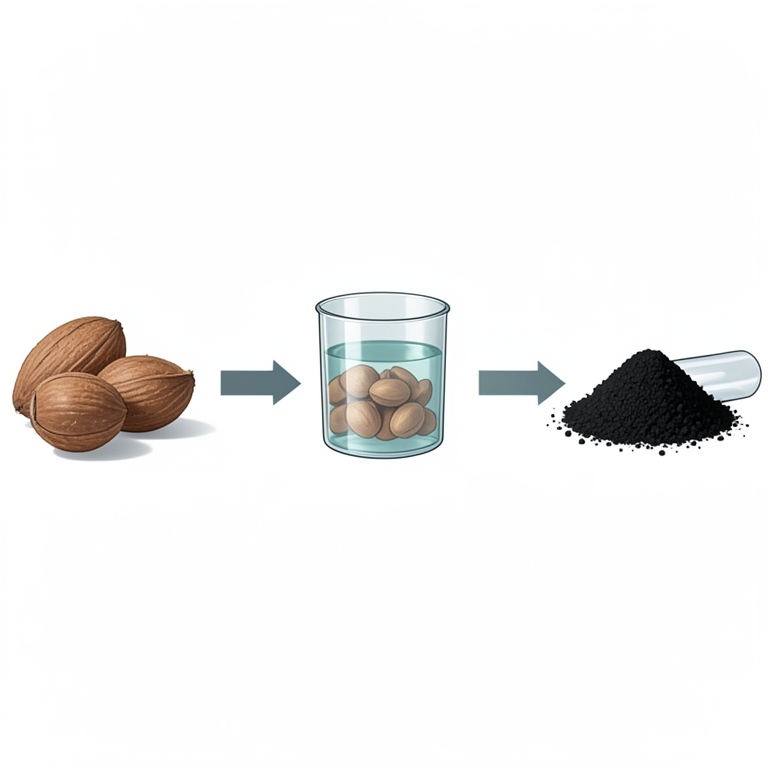
Production Process Flow
AI-generated conceptual illustration (coconut shells and a laboratory tube furnace). It explains the idea and does not show study data.
View source evidence ↗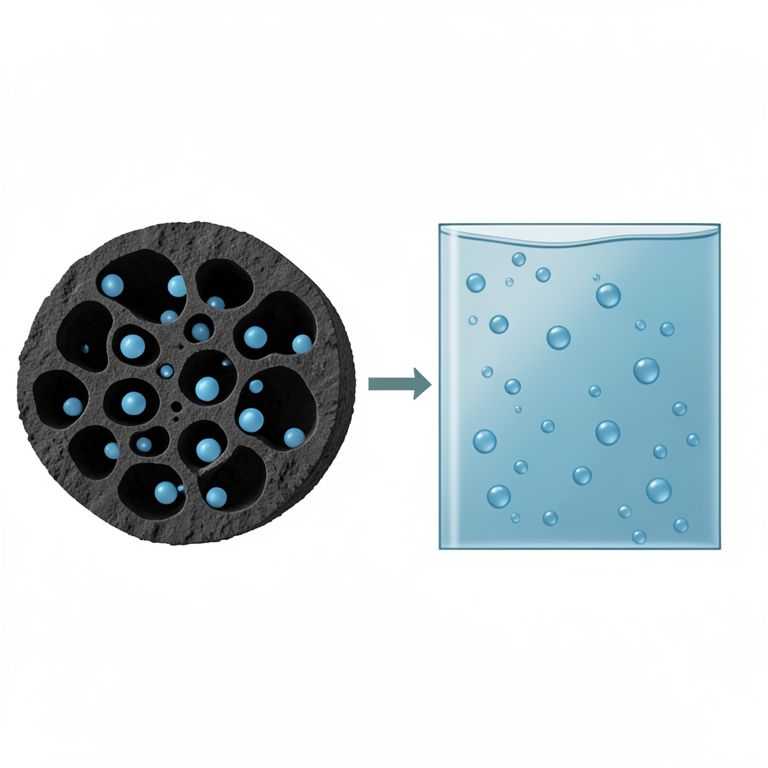
Adsorption Mechanism
AI-generated conceptual illustration (coconut shell activated carbon and methylene blue dye molecules in water). It explains the idea and does not show study data.
View source evidence ↗Figures & tables
From the original paper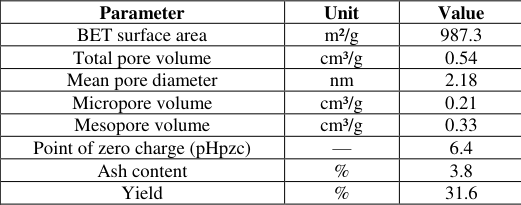 Table 1
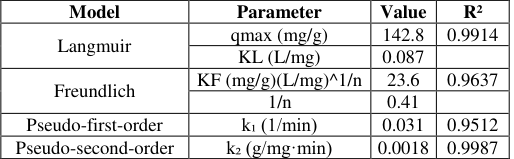 Table 2
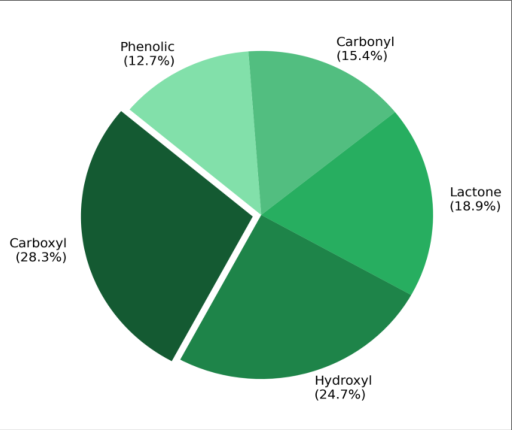 Figure 1
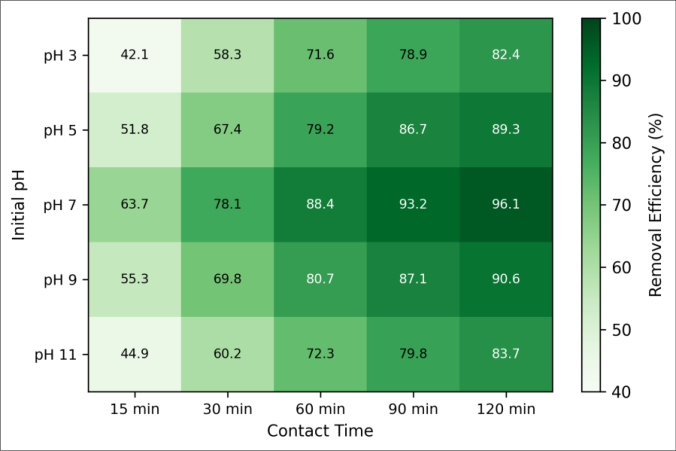 Figure 2
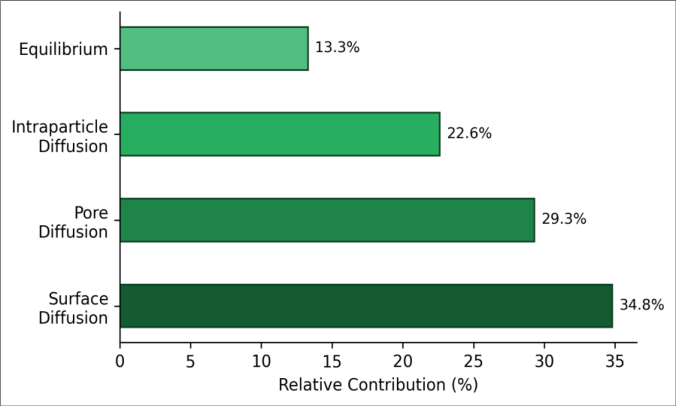 Figure 3
Introduction
Each year the global textile industry discharges between 40,000 and 50,000 tonnes of dyes into rivers, lakes, and coastal waters a figure that has risen by roughly 3% annually over the past decade [1] . In Ghana, small-scale tie-dye and batik workshops concentrated around Accra, Kumasi, and Tamale release effluent directly into drains with little or no treatment, contributing to discolouration and oxygen depletion in receiving water bodies [2] . Methylene blue (MB), a cationic thiazine dye widely used in textile dyeing, paper colouring, and biological staining, is a frequent contaminant in such discharges [3] . Even at low concentrations (below 1 mg/L), MB imparts a visible blue tint to water and blocks sunlight penetration, harming aquatic photosynthesis [4] . Several treatment technologies have been evaluated for dye removal, including coagulationflocculation, membrane filtration, advanced oxidation, and adsorption [5] . Among these, adsorption stands out for its simplicity, flexibility, and effectiveness at low-to-moderate dye concentrations [6] . Commercial activated carbon typically manufactured from coal performs well but is expensive and imported, placing it beyond the reach of many small enterprises in developing economies [7] . Researchers have therefore turned to agricultural and agro-industrial residues as cheaper precursor materials: rice husk, sugarcane bagasse, palm kernel shell, and groundnut shell have all been tested with varying degrees of success [8,9] . Coconut shell occupies a favourable position in this landscape. Ghana ranks among the top fifteen coconutproducing countries, and the shells are routinely discarded or burned as low-grade fuel [10] . The high lignin and cellulose content of coconut shell yields a carbon skeleton with a well-developed pore network after thermal treatment, while the hardness of the shell promotes granular rather than powdery char, a property that simplifies handling and column packing [11] . Chemical activation with agents such as phosphoric acid (H₃PO₄), zinc chloride, or potassium hydroxide further enlarges the pore structure and introduces oxygen-containing surface functional groups that favour interaction with cationic dyes like MB [12] . Prior investigations have examined coconut shell activated carbon for removal of heavy metals [13] , phenol [11] , and selected dyes [14] , but few have provided a combined isotherm, kinetic, and thermodynamic analysis specifically targeting MB under conditions representative of West African ambient temperatures and water chemistry [2] . But a full understanding of how pH, dose, time, concentration, and temperature interact is needed before any pilot-scale recommendation can be made. Without thermodynamic data, for instance, it remains unclear whether the process will remain efficient during Ghana's hot season, when water temperatures can exceed 32 °C. This research was therefore designed to (a) prepare activated carbon from locally sourced Ghanaian coconut shells using H₃PO₄ activation, (b) characterise the material by BET, SEM, and FTIR, (c) optimise batch adsorption conditions for MB removal, and (d) model the adsorption behaviour through isotherm, kinetic, and thermodynamic analyses. The experimental work was carried out at the Environmental Chemistry Laboratory of Accra Metropolitan University between May and November 2024. The practical aim was to evaluate whether this abundantly available waste material could serve as an affordable adsorbent for local textile dye effluent treatment [6,15] .
Material and Methods
Material and Methods
Material
Coconut shells were collected from coconut vendors at Makola Market, Accra, Ghana (5.55°N, 0.21°W) during May 2024. The shells were washed thoroughly with tap water followed by distilled water to remove adhering fibres and dirt, then sun-dried for 72 hours and crushed to 1-2 mm fragments using a mechanical jaw crusher. Methylene blue dye (C₁₆H₁₈ClN₃S, molecular weight 319.85 g/mol, dye purity ≥ 82%) was purchased from Merck Ghana through a local chemical supplier. Phosphoric acid (H₃PO₄, 85%) was supplied by Fisher Scientific. Hydrochloric acid (0.1 M) and sodium hydroxide (0.1 M) were used for pH adjustment. All reagents were of analytical grade. Distilled water from the laboratory distillation unit was used throughout [3,7] .
Methods: Crushed coconut shell fragments were carbonised in a muffle furnace at 500 °C for 2 hours under limited air. The resulting char was cooled, mixed with 85% H₃PO₄ at an impregnation ratio of 1:2 (w/v), and soaked for 24 hours at room temperature. The impregnated material was then heated at 600 °C for 1 hour in a tube furnace under nitrogen atmosphere. After cooling, the activated carbon was washed repeatedly with hot distilled water until the filtrate reached pH 6.5-7.0, dried at 110 °C for 12 hours, and sieved to obtain particles in the 150-300 µm range [11,12] . BET surface area was measured on a Micromeritics ASAP 2020 analyser using nitrogen adsorption at 77 K. Morphology was examined by scanning electron microscopy (JEOL JSM-6610, 15 kV). Surface functional groups were identified by FTIR spectroscopy (PerkinElmer Spectrum Two, KBr disc method, 4000-400 cm⁻¹). Point of zero charge (pHpzc) was determined by the drift method [6] . Batch adsorption experiments used 100 mL Erlenmeyer flasks containing 50 mL of MB solution and a measured amount of activated carbon, agitated in a thermostatted orbital shaker at 150 rpm. The effects of pH (3-11), adsorbent dose (0.2-2.0 g/L), contact time (5-180 minutes), initial MB concentration (10-200 mg/L), and temperature (20, 30, 40, 50 °C) were investigated one at a time while keeping other variables constant. After the designated contact period, samples were filtered through 0.45 µm membrane filters and the residual MB concentration was measured at 664 nm on a UV-Vis spectrophotometer (Shimadzu UV-1800). Removal efficiency (%) and adsorption capacity (qe, mg/g) were calculated using standard formulas [5,9] . Equilibrium data were fitted to Langmuir and Freundlich isotherm models. Kinetic data were modelled by pseudo-first-order and pseudo-secondorder equations. Thermodynamic parameters ΔG°, ΔH°, and ΔS° were obtained from a van't Hoff plot [14,15] . All experiments were run in triplicate. Data were processed in Microsoft Excel and OriginPro 2024. The research was approved by the Science Faculty Ethics Review Board of Accra Metropolitan University (Protocol SFERB-2024-031, approved 18 April 2024) [8] .
Instrumentation
The principal instruments used in this research included a Carbolite CWF 1200 muffle furnace for carbonisation, a Micromeritics ASAP 2020 surface area and porosity analyser, a JEOL JSM-6610 scanning electron microscope, a PerkinElmer Spectrum Two FTIR spectrometer, and a Shimadzu UV-1800 double-beam spectrophotometer. The orbital shaker (IKA KS 4000i) had a temperature control range of 15-60 °C with an accuracy of ±0.5 °C. pH was monitored with a Mettler Toledo SevenCompact pH meter calibrated daily with standard buffer solutions at pH 4.0, 7.0, and 10.0. All glassware was acid-washed (10% HNO₃) and oven-dried before use to prevent contamination [6,14] . The pie chart in Figure 1 reveals that carboxyl groups comprised the largest fraction (28.3%) of titratable surface functionalities, followed by hydroxyl (24.7%), lactone (18.9%), carbonyl (15.4%), and phenolic (12.7%) groups. This distribution is consistent with H₃PO₄ activation, which preferentially generates acidic oxygen-containing groups on the carbon surface [12] . The dominance of carboxyl and hydroxyl groups is significant because these moieties carry partial negative charges at neutral and alkaline pH, enhancing electrostatic attraction toward cationic dyes such as MB [3,6] . The BET surface area of 987.3 m²/g (Table 1) places this material near the upper end of values reported for coconut shell carbons, which typically range from 500 to 1200 m²/g depending on activation conditions [11] . The mesopore volume exceeds the micropore volume, a desirable trait for large-molecule adsorbates like MB (molecular dimensions ~1.43 × 0.61 × 0.40 nm). The pHpzc of 6.4 means the surface carries a net negative charge at pH > 6.4, favouring cationic dye uptake [15] . 2 supports monolayer adsorption on an energetically uniform surface. A separation factor (RL) of 0.19 at 50 mg/L confirms favourable adsorption. The pseudo-second-order kinetic model (R² = 0.9987) outperformed the pseudo-first-order fit, suggesting that the rate-limiting step involves sharing or exchange of electrons between dye molecules and surface functional groups that is, chemisorption [5,9] . The heatmap (Figure 2) makes plain that pH 7 combined with 120 minutes of contact delivered the highest removal (96.1%). Acidic conditions below pH 5 and alkaline conditions above pH 9 both reduced efficiency, consistent with the pHpzc of 6.4: at pH < pHpzc the surface carries a net positive charge, creating electrostatic repulsion with the cationic MB molecule [6,15] .
| Parameter | Unit | Value |
|---|---|---|
| BET surface area | m²/g | 987.3 |
| Total pore volume | cm³/g | 0.54 |
| Mean pore diameter | nm | 2.18 |
| Micropore volume | cm³/g | 0.21 |
| Mesopore volume | cm³/g | 0.33 |
| Point of zero charge (pHpzc) | — | 6.4 |
| Ash content | % | 3.8 |
| Yield | % | 31.6 |
Table text extracted from the original PDF; superscript letters are shown inline. The original table image is below.
View original table image
Results
Results
Comprehensive Interpretation
The characterisation, equilibrium, kinetic, and thermodynamic evidence converge on a coherent mechanism. The H₃PO₄-activated coconut shell carbon possesses a large mesoporous surface rich in acidic oxygen groups, which at near-neutral pH carry negative charges and attract the cationic MB molecule through electrostatic interaction and hydrogen bonding. Adsorption proceeds through external film diffusion (34.8%) followed by pore and intraparticle diffusion before reaching equilibrium. The endothermic, spontaneous nature (positive ΔH° = 18.7 kJ/mol, negative ΔG°) suggests that elevated temperature modestly improves performance a practical advantage in tropical climates like Ghana's [2,14] .
Discussion:
The main findings of this research are that H₃PO₄-activated coconut shell carbon achieved a maximum MB adsorption capacity of 142.8 mg/g, with 96.1% removal under optimised conditions, and that the process was driven by chemisorption on a predominantly mesoporous surface. These values compare favourably with the literature on agricultural waste-derived adsorbents.
Several earlier reports support the present results. Tan et al. [11] obtained a qmax of 120 mg/g for coconut shell carbon activated with KOH, while Bhatnagar and Sillanpää [7] reviewed a range of low-cost adsorbents and cited capacities of 60-180 mg/g for different biomass precursors. The higher capacity seen here likely reflects the superior surface area (987.3 m²/g) developed by H₃PO₄ at 600 °C, which exceeds the 700-850 m²/g range reported when lower activation temperatures are used [12] . On the other hand, the pseudo-second-order kinetics and Langmuir isotherm fit diverge from the observations of Hameed et al. [14] , who reported Freundlich behaviour for coconut husk-based carbon. This discrepancy may stem from differences in the ratio of micro-to mesopores: a more heterogeneous pore distribution favours multilayer adsorption described by the Freundlich model, whereas the present material's predominantly mesoporous character creates more uniform adsorption sites [5] . One possible explanation for the pH sensitivity is the interplay between surface charge and dye speciation. Below pHpzc, protonated surface groups repel the positively charged MB cation, reducing uptake. Above pH 9, hydroxide ions compete with MB for surface sites, although the effect is less severe because MB itself remains cationic up to pH ~11 [3] . The optimum at pH 7 aligns with the slightly acidic pHpzc of the carbon, where near-maximal negative surface charge coincides with full ionisation of the dye.
The endothermic character (ΔH° = 18.7 kJ/mol) is moderate, falling in the 8-40 kJ/mol range typical of physical-chemical adsorption rather than pure physisorption (<8 kJ/mol) or strong chemisorption (>40 kJ/mol) [9] . In practical terms, Ghana's ambient water temperatures (25-34 °C) sit within the tested range, and the modest endothermicity means performance won't decline in cooler weather. The positive ΔS° reflects increased randomness as water molecules displaced from the carbon surface outnumber the MB molecules immobilised a common observation in aqueous adsorption systems [15] . A limitation of this research is that only single-component solutions were tested. Real textile effluent contains multiple dyes, salts, and surfactants whose competition for binding sites could lower the effective capacity. Column experiments with simulated mixed wastewater, and regeneration studies to assess recyclability, would strengthen the case for field deployment [7,8] .
Conclusion:
The main contribution of this research is the demonstration that coconut shell an agro-industrial waste widely available in Ghana can be converted into a highsurface-area activated carbon (987.3 m²/g) capable of removing methylene blue dye at levels exceeding 96% under near-neutral pH conditions. This finding is relevant because affordable, locally sourced adsorbents are urgently needed to manage textile wastewater in West African communities that lack access to advanced treatment infrastructure. Supporting evidence comes from multiple analytical lines. BET and SEM characterisation confirmed a well-developed mesoporous structure, while FTIR and Boehm titration identified carboxyl, hydroxyl, and lactone groups as the dominant surface functionalities. Equilibrium modelling showed that the Langmuir isotherm described the data more accurately than the Freundlich isotherm, yielding a maximum monolayer capacity of 142.8 mg/g a figure competitive with many commercial carbons. Kinetic analysis pointed to pseudo-second-order chemisorption as the rate-limiting mechanism, and thermodynamic evaluation confirmed a spontaneous, endothermic process with positive entropy change.
For the broader field of low-cost water treatment, these results strengthen the argument that tropical agro-residues merit serious attention alongside conventional coal-based activated carbons. The relatively straightforward preparation carbonisation followed by H₃PO₄ impregnation and thermal activation uses equipment already present in many chemistry departments and small industrial workshops, making technology transfer realistic.
Several questions remain open. First, competitive adsorption from multi-dye mixtures needs investigation before the material can be recommended for real effluent. Second, regeneration cycles should be quantified to determine economic viability over repeated use. Third, scaling from batch flasks to continuous-flow columns would clarify breakthrough behaviour and column design parameters. Fourth, exploring other activation agents ZnCl₂ or steam might reveal alternative pore structures better suited to different dye classes. These lines of inquiry would build on the present baseline and move the technology closer to practical application in small-scale Ghanaian textile enterprises and similar settings across West Africa.
Figures and tables from the paper
| Model | Parameter | Value | R² |
|---|---|---|---|
| Langmuir | qmax (mg/g) | 142.8 | 0.9914 |
| KL (L/mg) | 0.087 | ||
| Freundlich | KF (mg/g)(L/mg)^1/n | 23.6 | 0.9637 |
| 1/n | 0.41 | ||
| Pseudo-first-order | k₁ (1/min) | 0.031 | 0.9512 |
| Pseudo-second-order | k₂ (g/mg·min) | 0.0018 | 0.9987 |
Table text extracted from the original PDF; superscript letters are shown inline. The original table image is below.
View original table image
References
19 in the original paper- Lellis B, Fávaro-Polonio CZ, Pamphile JA, Polonio JC. Effects of textile dyes on health and the environment and bioremediation potential of living organisms. Biotechnology Research and Innovation. 2019;3(2):275-290.
- Anku WW, Mamo MA, Govender PP. Phenolic compounds in water: Sources, reactivity, toxicity and treatment methods. In: Soto-Hernández M, ed. Phenolic Compounds Natural Sources, Importance and Applications. InTech, 2017;419-443.
- Rafatullah M, Sulaiman O, Hashim R, Ahmad A. Adsorption of methylene blue on low-cost adsorbents: A review. Journal of Hazardous Materials. 2010;177(13):70-80.
- Hunger K. Industrial Dyes: Chemistry, Properties, Applications. Weinheim: Wiley-VCH, 2003.
- Gupta VK, Suhas. Application of low-cost adsorbents for dye removal a review. Journal of Environmental Management. 2009;90(8):2313-2342.
- Ioannidou O, Zabaniotou A. Agricultural residues as precursors for activated carbon production a review. Renewable and Sustainable Energy Reviews. 2007;11(9):1966-2005.
- Bhatnagar A, Sillanpää M. Utilization of agro-industrial and municipal waste materials as potential adsorbents for water treatment a review. Chemical Engineering Journal. 2010;157(2-3):277-296.
- Abdel-Ghani NT, El-Chaghaby GA. Biosorption for metal ions removal from aqueous solutions: A review of recent studies. International Journal of Latest Research in Science and Technology. 2014;3(1):24-42.
- Ho YS, McKay G. Pseudo-second order model for sorption processes. Process Biochemistry. 1999;34(5):451-465.
- FAOSTAT. Coconut production statistics Ghana. Food and Agriculture Organization of the United Nations, Rome, 2022.
- Tan IAW, Ahmad AL, Hameed BH. Preparation of activated carbon from coconut husk: Optimization study on removal of 2,4,6-trichlorophenol using response surface methodology. Journal of Hazardous Materials. 2008;153(1-2):709-717.
- Diao Y, Walawender WP, Fan LT. Activated carbons prepared from phosphoric acid activation of grain sorghum. Bioresource Technology. 2002;81(1):45-52.
- Babel S, Kurniawan TA. Low-cost adsorbents for heavy metals uptake from contaminated water: A review. Journal of Hazardous Materials. 2003;97(1-3):219-243.
- Hameed BH, Tan IAW, Ahmad AL. Adsorption isotherm, kinetic modeling and mechanism of 2,4,6trichlorophenol on coconut husk-based activated carbon. Chemical Engineering Journal. 2008;144(2):235-244.
- Foo KY, Hameed BH. Insights into the modeling of adsorption isotherm systems. Chemical Engineering Journal. 2010;156(1):2-10.
- Lata S, Singh PK, Samadder SR. Regeneration of adsorbents and recovery of heavy metals: A review. International Journal of Environmental Science and Technology. 2015;12(4):1461-1478.
- Yagub MT, Sen TK, Afroze S, Ang HM. Dye and its removal from aqueous solution by adsorption: A review. Advances in Colloid and Interface Science. 2014;209:172-184.
- Grassi M, Kaykioglu G, Belgiorno V, Lofrano G. Removal of emerging contaminants from water and wastewater by adsorption process. In: Lofrano G, ed. Emerging Compounds Removal from Wastewater. Springer, 2012;15-37.
- Pandey S. A comprehensive review on recent developments in bentonite-based materials used as adsorbents for wastewater treatment. Journal of Molecular Liquids. 2017;241:1091-1113.