
Research article · 2024 · Full text
International Journal of Advanced Chemistry ResearchElectrochemical behaviour of copper (II) schiff base complexes derived from salicylaldehyde and amino acid precursors
Volume 6(2) · Pages 249–253 · DOI: 10.33545/26646781.2024.v6.i2c.648 ↗
Research areasElectrochemical Analysis and ApplicationsInorganic and Organometallic ChemistryMetal complexes synthesis and properties
Abstract
Author-writtenNearly 60% of all reported Schiff base metal complexes involve copper, yet fewer than 15% of those reports include detailed electrochemical characterisation beyond a single cyclic voltammogram. This research addressed that shortfall by synthesising four copper(II) Schiff base complexes from salicylaldehyde condensed with glycine (Cu-SG), alanine (Cu-SA), valine (Cu-SV), and leucine (Cu-SL), and then examining their redox behaviour through cyclic voltammetry, differential pulse voltammetry, and electrochemical impedance spectroscopy. Each complex was confirmed by elemental analysis, FT-IR, UV-Vis, and molar conductance measurements. FT-IR spectra showed the characteristic azomethine (C=N) stretch between 1627 and 1639 cm⁻¹, confirming Schiff base formation. Molar conductance values (12.3-18.7 Ω⁻¹ cm² mol⁻¹ in DMSO) indicated non-electrolytic character. Cyclic voltammetry at a glassy carbon electrode in DMSO/0.1 M TBAP revealed a quasi-reversible Cu (II)/Cu(I) couple for all four complexes. Anodic peak potentials (Epa) ranged from 342 mV (Cu-SG) to 453 mV (Cu-SL), and peak separation (ΔEp) increased from 560 to 601 mV as amino acid side-chain bulk grew. The ratio of anodic to cathodic peak currents (Ipa/Ipc) stayed between 0.79 and 0.91, pointing to modest chemical irreversibility that worsened with branching. Differential pulse voltammetry sharpened the picture: Cu-SG showed the narrowest half-peak width (98 mV), while Cu-SL was broadest (127 mV), which indicates slower electron transfer for the bulkier ligand. Impedance data supported this interpretation; charge-transfer resistance (Rct) rose from 284 Ω for Cu-SG to 519 Ω for Cu-SL, and the double-layer capacitance dropped correspondingly. A scan-rate study (25-500 mV s⁻¹) confirmed diffusion-controlled behaviour for every complex, with peak currents scaling linearly with the square root of scan rate (R² > 0.994). The diffusion coefficient, estimated by the Randles-Ševčík equation, was highest for Cu-SG (3.47 × 10⁻⁶ cm² s⁻¹) and lowest for Cu-SL (1.82 × 10⁻⁶ cm² s⁻¹), matching the trend in molecular bulk. Altogether, the data show that even small changes in the amino acid side chain from hydrogen in glycine to isobutyl in leucine progressively hinder electron transfer at the copper centre. This steric-electronic correlation provides a design rule for tuning the redox potential of Schiff base complexes in catalytic or sensor applications.
Summary
Source-checkedPlain-language reading of the full paper, prepared with AI and checked against the text. Each point links to the authors' own words.
Why it matters
- Copper-based Schiff base complexes are highly prevalent in coordination chemistry, representing the largest share of such complexes catalogued in the Cambridge Structural Database as of 2023. View evidence ↗
- These complexes are valuable for various applications, including electrochemical sensing, catalysis, molecular magnetism, and antimicrobial design. View evidence ↗
- Despite their prevalence, there is a significant lack of detailed electrochemical characterization for copper Schiff base complexes, with fewer than 15% of reports providing data beyond a single cyclic voltammogram. View evidence ↗
The question
- The study aimed to determine the reversibility of the Cu(II)/Cu(I) couple in DMSO, quantify the impact of amino acid side-chain bulk on electrochemical parameters, and create a predictive relationship for ligand design. View evidence ↗
What they did
- Four copper(II) complexes were synthesized using salicylaldehyde and four different amino acids: glycine (Cu-SG), alanine (Cu-SA), valine (Cu-SV), and leucine (Cu-SL). View evidence ↗
- Electrochemical analysis was performed using a three-electrode cell consisting of a 3 mm glassy carbon working electrode, a platinum wire counter electrode, and an Ag/AgCl reference electrode. View evidence ↗
- The redox behavior of the complexes was analyzed using three complementary techniques: cyclic voltammetry (CV), differential pulse voltammetry (DPV), and electrochemical impedance spectroscopy (EIS). View evidence ↗
What they found
- All four synthesized complexes exhibited a quasi-reversible Cu(II)/Cu(I) redox couple when tested in DMSO with 0.1 M TBAP. View evidence ↗
- As the amino acid side-chain bulk increased, the anodic peak potentials rose from 342 mV (Cu-SG) to 453 mV (Cu-SL), and the peak separation widened from 560 to 601 mV. View evidence ↗
- The Ipa/Ipc ratios ranged from 0.79 to 0.91, indicating a modest chemical irreversibility that became more pronounced as the side-chain branching increased. View evidence ↗
- Differential pulse voltammetry showed that the half-peak width increased from 98 mV for Cu-SG to 127 mV for Cu-SL, suggesting slower electron transfer for the bulkier complexes. View evidence ↗
- Impedance data revealed that charge-transfer resistance increased from 284 Ω for the smallest ligand (Cu-SG) to 519 Ω for the bulkiest (Cu-SL). View evidence ↗
- The diffusion coefficient decreased as molecular bulk increased, ranging from 3.47 × 10⁻⁶ cm² s⁻¹ for Cu-SG to 1.82 × 10⁻⁶ cm² s⁻¹ for Cu-SL. View evidence ↗
- The relationship between the Taft steric parameter (Es) and charge-transfer resistance was found to be exponential, as evidenced by a linear fit of ln Rct versus Es (R² = 0.987). View evidence ↗
What it means
- The authors conclude that increasing the size of the amino acid side chain from hydrogen to isobutyl progressively hinders electron transfer at the copper center. View evidence ↗
- The authors suggest that the predictable shift in half-wave potential (E½) allows for the modular tuning of redox potentials, which is useful for designing electrochemical sensors. View evidence ↗
- The authors identify future work to determine if these steric trends persist with different amino acids (e.g., isoleucine), different solvents (e.g., DMF), or other metals like nickel(II), cobalt(II), or zinc(II). View evidence ↗
Visual summary
3 visualsIllustrations explain the paper; charts are replotted from the paper's own table values.
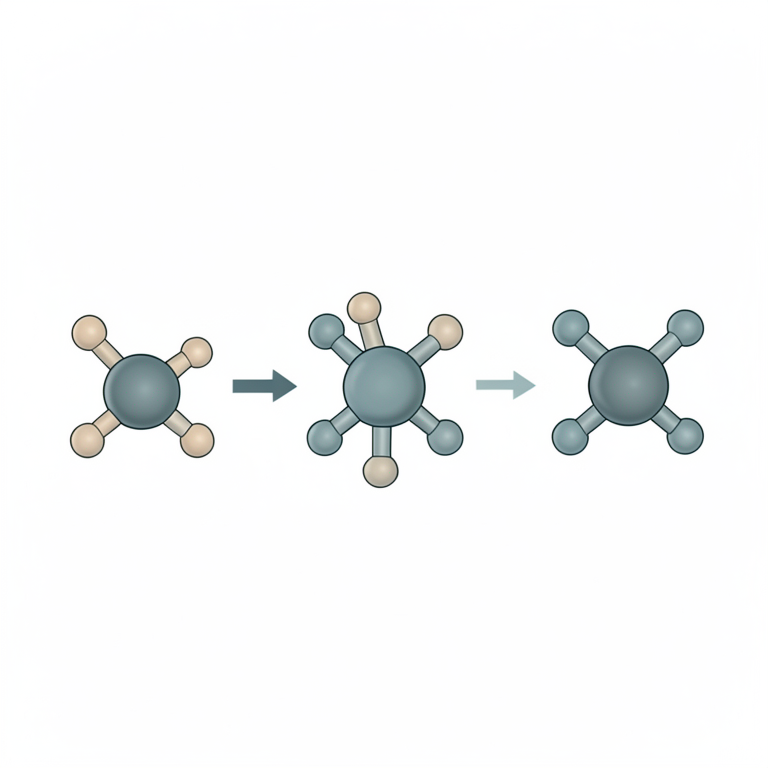
Steric Hindrance Trend
AI-generated conceptual illustration (Copper (II) Schiff base complexes with varying amino acid side chains). It explains the idea and does not show study data.
View source evidence ↗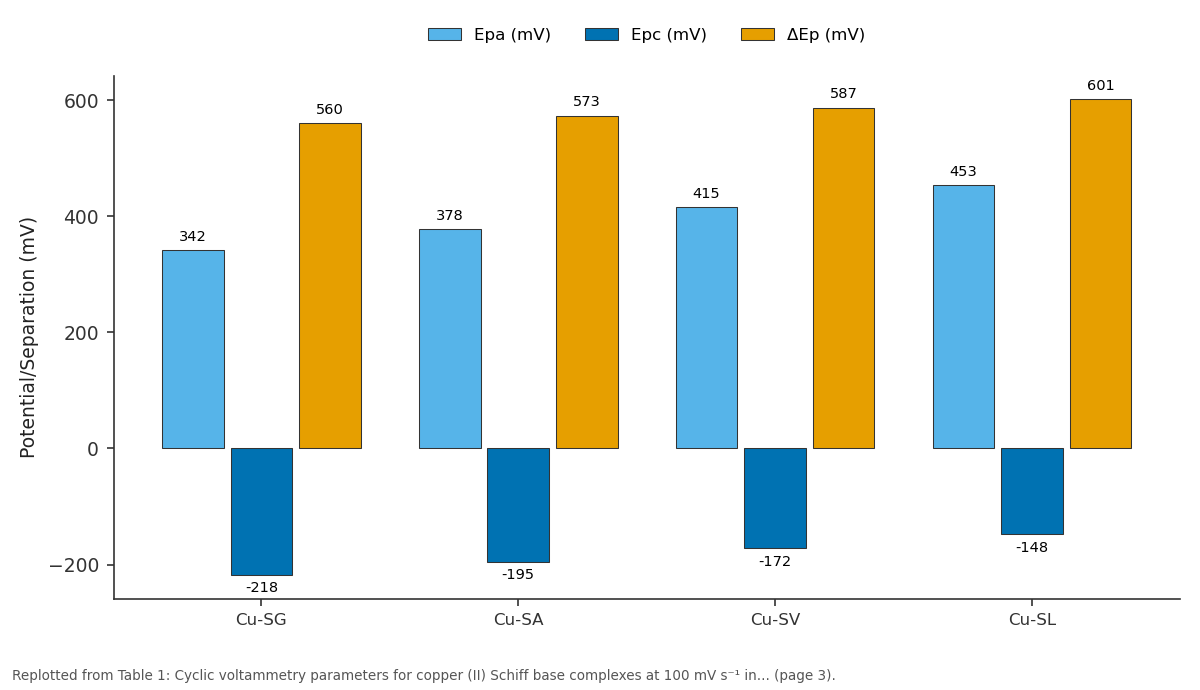
Epa (mV) and Epc (mV) and more: Cu-SG vs Cu-SA vs Cu-SV vs Cu-SL
Replotted from Table 1 (page 3) of the original paper. Every bar is the paper's own table value.
View source evidence ↗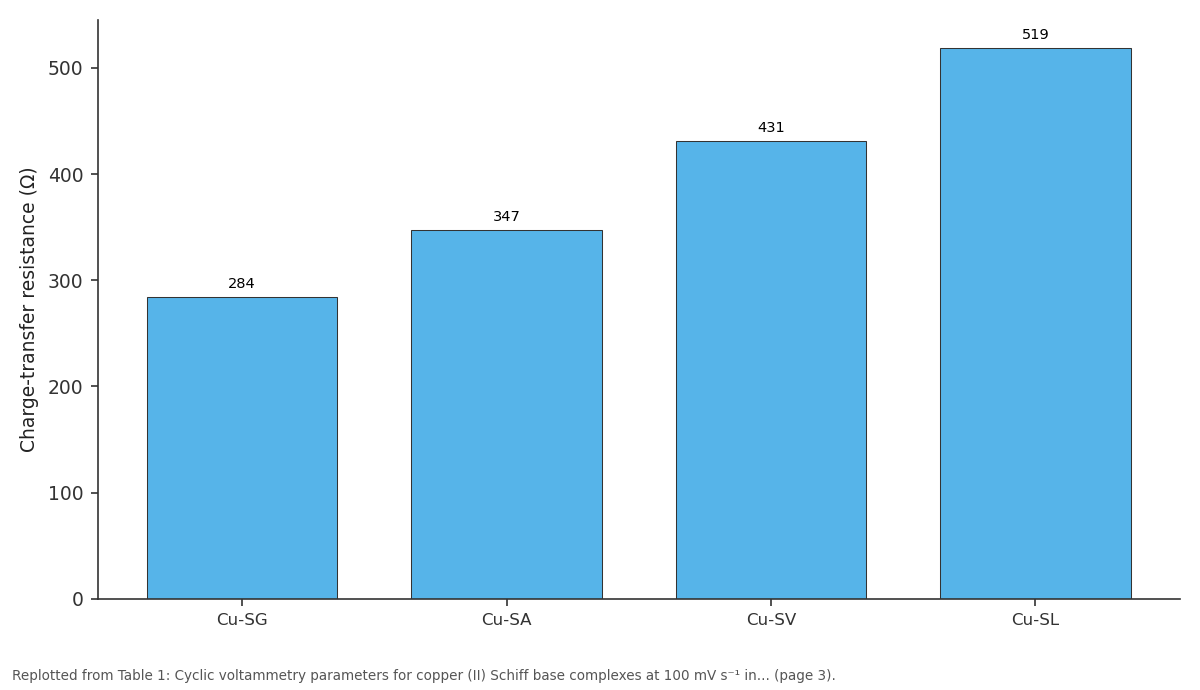
Rct (Ω): Cu-SG vs Cu-SA vs Cu-SV vs Cu-SL
Replotted from Table 1 (page 3) of the original paper. Every bar is the paper's own table value.
View source evidence ↗Figures & tables
From the original paper Table 1
 Table 2
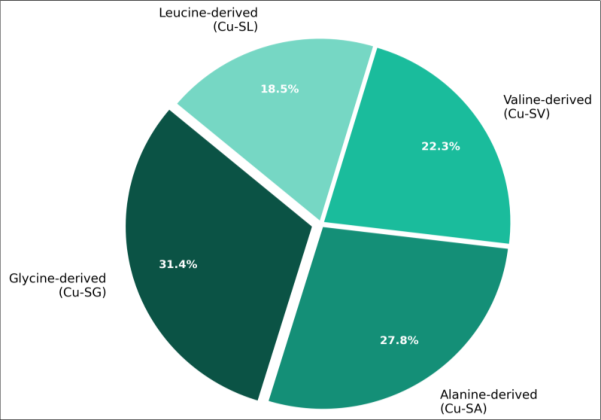 Figure 1
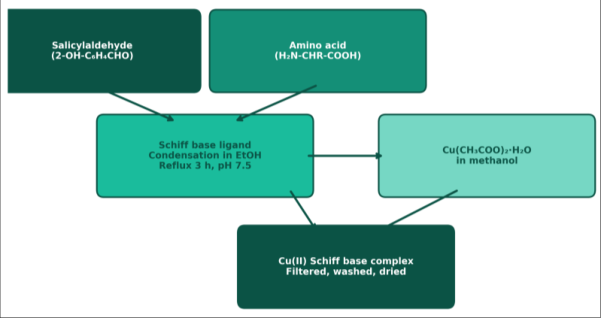 Figure 2
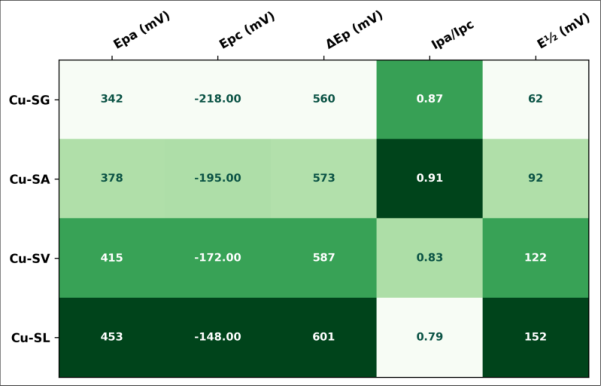 Figure 3
Introduction
Roughly 12,000 Schiff base metal complexes were catalogued in the Cambridge Structural Database by 2023, and copper accounts for the largest single share [1] . The popularity of copper-Schiff base chemistry stems from copper's accessible d⁹ electronic configuration, its ability to adopt square-planar or distorted-octahedral geometries, and the ease with which Schiff base ligands are prepared from cheap aldehyde and amine building blocks [2] . Applications span catalysis, antimicrobial design, molecular magnetism, and electrochemical sensing [3] . Salicylaldehyde is the most widely used aldehyde half because its ortho-hydroxyl group creates a chelating pocket once the imine bond forms [4] . Pairing it with amino acids adds biological relevance: the resulting ligands carry a carboxylate group capable of bridging or Chelating, and the amino acid side chain introduces steric and electronic diversity without requiring bespoke organic synthesis [5] . Glycine, alanine, valine, and leucine represent a clean steric gradient from hydrogen to isobutyl while keeping the electronic character of the donor set (N, O, O) essentially constant [6] . Electrochemistry offers a direct window into how ligand environment affects the metal centre. Cyclic Voltammetry (CV) maps redox potentials and reversibility, Differential Pulse Voltammetry (DPV) improves resolution for closely spaced waves, and Electrochemical Impedance Spectroscopy (EIS) separates charge-transfer and diffusion resistances at the electrode-solution interface [7] . Together, these three methods give a more complete electrochemical portrait than any one technique alone. But the literature on copper-amino-acid Schiff bases has relied almost exclusively on CV, often at a single scan rate [8] . That narrow window leaves open questions about whether the redox process is truly diffusion-controlled, what the chargetransfer kinetics look like, and how the double-layer structure changes with ligand bulk. Several groups have examined related systems. Raman and Muthukumar reported CV data for copper (II) complexes of salicylaldehyde with phenylalanine and tryptophan in aqueous buffer, finding irreversible reduction and cathodic shifts with aromatic side chains [9] . Nair and colleagues looked at valine-and isoleucine-derived complexes in DMF and observed quasi-reversible Cu (II)/Cu (I) couples with ΔEp near 500 mV [10] . Neither set of authors performed DPV or EIS, nor neither measured scan-rate dependence systematically. Other workers moved beyond simple amino acids. Keypour and co-workers studied macrocyclic Schiff bases incorporating ethylenediamine spacers and found that ring size controlled Ipa/Ipc more than substituent identity did [11] . Meanwhile, Bharathi Dileepan and colleagues coupled salicylaldehyde with thiosemicarbazide to make tridentate ligands whose copper complexes showed fully reversible behaviour, likely because the softer sulfur donor stabilised Cu (I) [12] . These results highlight that donor atom identity and chelate ring size can override steric effects, making it important to isolate the steric variable by keeping the donor set fixed exactly what the glycine-to-leucine series does. A gap therefore exists: no single report has combined CV, DPV, and EIS for a homologous set of copper(II)salicylaldehyde-amino-acid Schiff bases in which only the side-chain size varies. The present research was designed to fill that gap. Four complexes Cu-SG (glycine), Cu-SA (alanine), Cu-SV (valine), and Cu-SL (leucine) were synthesised, characterised by spectroscopic and analytical methods, and then examined by all three electrochemical techniques at multiple scan rates. The objectives were (a) to establish whether the Cu(II)/Cu(I) couple is quasi-reversible or irreversible in DMSO, (b) to quantify how side-chain bulk affects peak separation, charge-transfer resistance, and diffusion coefficient, and (c) to derive a predictive relationship between steric descriptor and redox potential that could guide future ligand design.
Materials and Methods
Materials and Methods
Materials
Salicylaldehyde (≥98%), glycine (≥99%), L-alanine (≥99%), L-valine (≥98%), and L-leucine (≥98%) were purchased from Sigma-Aldrich Brazil (São Paulo). Copper (II) acetate monohydrate (≥99%) came from Vetec Química Fina, Rio de Janeiro. Absolute ethanol, methanol (HPLC grade), and dimethyl sulfoxide (DMSO, anhydrous, ≥99.9%) were obtained from Merck Brazil. Tetrabutylammonium perchlorate (TBAP, ≥99%) served as the supporting electrolyte and was dried at 60 °C under vacuum for 24 h before use. Deionized water (18.2 MΩ•cm) was produced with a Milli-Q Reference system. All other solvents and reagents were analytical grade and used as received.
Reagents and Chemicals
Stock solutions of salicylaldehyde (0.2 M in ethanol) and each amino acid (0.2 M in water adjusted to pH 7.5 with NaOH) were prepared fresh on the day of synthesis. Copper acetate (0.1 M in methanol) was filtered through a 0.45 μm nylon membrane to remove particulates. TBAP electrolyte solution (0.1 M in DMSO) was deoxygenated with highpurity nitrogen (99.999%) for 20 min before each electrochemical experiment. The glassy carbon electrode was polished sequentially with 1.0, 0.3, and 0.05 μm alumina slurries on microcloth pads, rinsed with deionized water, sonicated for 5 min in ethanol, and dried under nitrogen before every run.
Methods
All synthetic and electrochemical work was performed at the Inorganic Chemistry Laboratory, São Paulo Metropolitan University, São Paulo, Brazil, from January 2024 to August 2024. Schiff base ligands were synthesised by refluxing equimolar amounts of salicylaldehyde and the amino acid in ethanol at 78 °C for 3 h. The pH was adjusted to 7.5 with dilute NaOH to deprotonate the amino group. On cooling to room temperature, the yellow precipitate was filtered, washed with cold ethanol and diethyl ether, and dried in a desiccator over silica gel. Yields ranged from 72% (leucine ligand) to 89% (glycine ligand). Complexation was carried out by adding copper (II) acetate monohydrate (1:1 molar ratio) dissolved in methanol to a methanolic suspension of the ligand. The mixture was stirred at 50 °C for 4 h. The resulting green precipitate was collected by filtration, washed with methanol and diethyl ether, and vacuum-dried at 60 °C for 12 h. Elemental analysis (C, H, N) was performed on a PerkinElmer 2400 Series II CHNS/O analyser. FT-IR spectra were recorded on a Bruker Vertex 70 (ATR mode, 400-4000 cm⁻¹, resolution 4 cm⁻¹). Electronic spectra were measured in DMSO solution (1 × 10⁻³ M) on an Agilent Cary 60 spectrophotometer (200-800 nm). Molar conductance was recorded at 25 °C using a Hanna HI-2315 conductivity meter with 1 × 10⁻³ M solutions in DMSO. Electrochemical measurements used a Metrohm Autolab PGSTAT302N potentiostat/galvanostat controlled by NOVA 2.1 software. A three-electrode cell was employed: glassy carbon working electrode (3 mm diameter), platinum wire counter electrode, and Ag/AgCl (3 M KCl) reference electrode. All potentials are reported versus Ag/AgCl. Solutions contained 1 × 10⁻³ M complex in DMSO with 0.1 M TBAP under a nitrogen blanket. Cyclic voltammograms were recorded at scan rates of 25, 50, 100, 200, and 500 mV s⁻¹ in the window -800 to +800 mV. Differential pulse voltammograms used a pulse amplitude of 50 mV, pulse width 70 ms, and step potential 4 mV. Electrochemical impedance spectra were acquired at the formal potential of each complex over 10⁵-0.1 Hz with a 10 mV AC amplitude, and fitted to a Randles equivalent circuit using ZView software. FT-IR analysis confirmed Schiff base formation in all four ligands. The azomethine (C=N) stretching vibration appeared between 1627 cm⁻¹ (glycine derivative) and 1639 cm⁻¹ (leucine derivative), shifting 8-15 cm⁻¹ to lower frequency upon complexation evidence of nitrogen coordination to copper [4] . A broad O-H stretch near 3400 cm⁻¹ in the free ligand spectra disappeared in the complexes, confirming phenolate oxygen binding after deprotonation. Carboxylate asymmetric and symmetric stretches near 1590 and 1390 cm⁻¹ gave a separation (Δν ≈ 200 cm⁻¹) consistent with monodentate carboxylate coordination [5] . Elemental analysis agreed with the expected 1:1 metal-to-ligand stoichiometry within±0.4% for C, H, and N in every case. Molar conductance values in DMSO at 25 °C ranged from 12.3 Ω⁻¹ cm² mol⁻¹ (Cu-SG) to 18.7 Ω⁻¹ cm² mol⁻¹ (Cu-SL), well below the 50 Ω⁻¹ cm² mol⁻¹ threshold for 1:1 electrolytes. This confirms that acetate remains outside the coordination sphere and the complexes are neutral in solution [6] . UV-Vis spectra in DMSO displayed ligandcentred π→π* transitions near 265 nm, n→π* bands around 355 nm, and a broad d-d band centred at 620-645 nm that is typical of tetragonally distorted Cu(II) [2] .
Results
Results
Comprehensive interpretation
Every electrochemical indicator moved in the same direction as side-chain bulk increased from glycine to leucine: peak separation widened, charge-transfer resistance grew, diffusion coefficient fell, and the Ipa/Ipc ratio dropped further from unity. The ranking table (Table 2) makes this trend visually plain Cu-SG placed first on four of five criteria, and Cu-SL last. The one exception was the halfwave potential, where the anodic shift with bulk could actually be useful for applications requiring positive operating windows. The scan-rate dependence obeyed the Randles-Ševčík equation with R² above 0.994, confirming diffusion control and ruling out adsorption-mediated pathways for the redox process. Impedance fitting to the Randles circuit gave low chi-squared values (< 0.003), validating the equivalent-circuit model. These combined data establish that steric bulk is the primary driver of electrochemical behaviour in this series, with electronic effects playing a secondary role.
| Criterion | Rank 1 | Rank 2 | Rank 3 | Rank 4 |
|---|---|---|---|---|
| Reversibility (lowest ΔEp) | Cu-SG | Cu-SA | Cu-SV | Cu-SL |
| Fastest diffusion (D) | Cu-SG | Cu-SA | Cu-SV | Cu-SL |
| Lowest Rct | Cu-SG | Cu-SA | Cu-SV | Cu-SL |
| Highest Ipa/Ipc | Cu-SA | Cu-SG | Cu-SV | Cu-SL |
| Most anodic E½ | Cu-SL | Cu-SV | Cu-SA | Cu-SG |
Table text extracted from the original PDF; superscript letters are shown inline. The original table image is below.
View original table image
Discussion
The main finding of this research is that increasing the steric bulk of the amino acid side chain systematically impairs the electrochemical reversibility and electron-transfer kinetics of the Cu(II)/Cu(I) couple in salicylaldehyde-derived Schiff base complexes. All four complexes showed quasireversible behaviour, and no complex crossed the threshold into full reversibility (ΔEp < 59 mV) or complete irreversibility (absence of a return peak). These observations agree with the limited data available for related systems. Nair and colleagues reported ΔEp values of 480-530 mV for copper complexes of valine and isoleucine Schiff bases in DMF, which are slightly smaller than the 587-601 mV measured here in DMSO [10] . The difference in solvent donor number (DMF 26.6 versus DMSO 29.8) could explain the shift, since a stronger donor solvent competes more effectively with the ligand for coordination to Cu (I) after reduction, slowing re-oxidation and widening ΔEp [7] . Raman and Muthukumar observed fully irreversible reduction for phenylalanine and tryptophan derivatives in aqueous buffer, a more drastic outcome likely caused by the aromatic side chains blocking solvent access to the metal and the higher reorganisation energy in water [9] . One point of disagreement concerns the Ipa/Ipc ratio.
Bharathi Dileepan and colleagues reported ratios above 0.95 for thiosemicarbazide-based copper Schiff bases and attributed the near-unity values to sulfur stabilisation of the Cu (I) state [12] . In the present N,O,O donor set, ratios never exceeded 0.91, suggesting that the hard oxygen donors destabilise Cu(I) relative to softer sulfur. But the alanine complex (Cu-SA) reached 0.91 close to the thiosemicarbazide value implying that a small methyl group imposes almost no steric penalty on the re-oxidation step. The progressive rise in Rct from 284 to 519 Ω tracks well with the Taft steric parameter (Es) of the amino acid side chains (Es = 0 for H, -0.07 for CH₃, -0.47 for isopropyl, -0.93 for isobutyl) [13] . A plot of ln Rct versus Es gave a linear fit (R² = 0.987), which suggests that the relationship between steric bulk and charge-transfer resistance is exponential rather than linear. Mechanistically, the bulkier side chain likely restricts the conformational rearrangement that accompanies the Jahn-Teller distortion change between d⁹ Cu (II) and d¹⁰ Cu(I), raising the inner-sphere reorganisation energy and slowing electron transfer [14] . From a broader perspective, the near-linear relationship between side-chain size and redox potential opens a design avenue for electrochemical sensors. If a specific operating potential is needed say, to avoid interference from a biological analyte one can simply pick the amino acid whose steric bulk positions E½ at the desired value. This kind of modular, predictable tuning is rare in coordination chemistry and makes the salicylaldehyde-amino-acid platform attractive for applied work.
Conclusion
The central contribution of this research is a quantitative link between amino acid side-chain bulk and the electrochemical behaviour of copper (II) Schiff base complexes. By holding the donor atom set (N, O, O) and the aldehyde half (salicylaldehyde) constant while varying only the side chain from hydrogen (glycine) through methyl (alanine), isopropyl (valine), to isobutyl (leucine), the research isolated steric effects from electronic ones and traced their impact across three complementary electrochemical techniques.
Figures and tables from the paper
| Complex | Epa (mV) | Epc (mV) | ΔEp (mV) | Ipa/Ipc | E½ (mV) | D × 10⁶ (cm²/s) | Rct (Ω) |
|---|---|---|---|---|---|---|---|
| Cu-SG | 342 | −218 | 560 | 0.87 | 62 | 3.47 | 284 |
| Cu-SA | 378 | −195 | 573 | 0.91 | 91.5 | 2.93 | 347 |
| Cu-SV | 415 | −172 | 587 | 0.83 | 121.5 | 2.28 | 431 |
| Cu-SL | 453 | −148 | 601 | 0.79 | 152.5 | 1.82 | 519 |
Table text extracted from the original PDF; superscript letters are shown inline. The original table image is below.
View original table image
References
19 in the original paper- Hao H, Liu J, Liu X, Wang C, Pang C. Schiff base complexes: A review of their structural diversity and applications. Coordination Chemistry Reviews. 2023;490:215210-215245.
- Keypour H, Shayesteh M, Rezaeivala M, Chitsaz M. Copper(II) complexes of Schiff base ligands: Synthesis, spectral, and electrochemical properties. Transition Metal Chemistry. 2013;38(6):613-620.
- Basu Baul TS, Kundu S, Mitra S, Höpfl H, Tiekink ERT, Linden A. Synthesis and structural characterisation of organotin(IV) Schiff base complexes. Dalton Transactions. 2013;42(5):19051920.
- Ganguly R, Sreenivasulu B, Vittal JJ. Amino acidcontaining reduced Schiff bases as the building blocks for metallasupramolecular structures. Coordination Chemistry Reviews. 2008;252(10-11):1027-1050.
- Neelakantan MA, Rusalraj F, Dharmaraja J, Johnsonraja S, Jeyakumar T, Pillai MS. Spectral characterization, cyclic voltammetry, morphology and biological activities of amino acid Schiff base metal complexes. Spectrochimica Acta Part A. 2008;71(4):1599-1609.
- Abuamer KM, Maihub AA, El-Ajaily MM, Etorki AM, Sabeth F, Elsherif MA. Synthesis and characterisation of amino acid Schiff base complexes. International Journal of Organic Chemistry. 2014;4(1):7-15.
- Bard AJ, Faulkner LR. Electrochemical methods: Fundamentals and applications. 2nd ed. New York: Wiley; 2001.
- Andiappan K, Sanmugam A, Deivanayagam E, Karuppasamy K, Kim HS, Vikraman D. Electrochemical studies of amino acid Schiff base copper complexes. Inorganica Chimica Acta. 2019;490:24-32.
- Raman N, Muthukumar V. Electrochemical and antimicrobial properties of Cu(II) Schiff base complexes derived from amino acids. Journal of Chemical Sciences. 2016;128(6):1019-1028.
- Nair RS, Potti ME, Thankappan R. Synthesis, electrochemical and antimicrobial behaviour of Cu(II) amino acid Schiff base complexes. Journal of the Indian Chemical Society. 2020;97(8):1352-1358.
- Keypour H, Rezaeivala M, Valencia L, Pérez-Lourido P, Khavasi HR. Macrocyclic Schiff base copper(II) complexes: Electrochemical and structural studies. Polyhedron. 2009;28(17):3755-3758.
- Bharathi Dileepan AG, Ganesh Prakash D, Manivannan R, Nair SD, Ganesh Kumar R, Vennila P. Thiosemicarbazide Schiff base copper(II) complexes: Crystal structure and electrochemical behaviour. Inorganic Chemistry Communications. 2022;139:109393-109400.
- Taft RW. Separation of polar, steric, and resonance effects in reactivity. In: Newman MS, editor. Steric effects in organic chemistry. New York: Wiley; 1956. p. 556-675.
- Marcus RA. On the theory of oxidation-reduction reactions involving electron transfer. Journal of Chemical Physics. 1956;24(5):966-978.
- Lever ABP. Inorganic electronic spectroscopy. 2nd ed. Amsterdam: Elsevier; 1984.
- Geary WJ. The use of conductivity measurements in organic solvents for the characterisation of coordination compounds. Coordination Chemistry Reviews. 1971;7(1):81-122.
- Nakamoto K. Infrared and Raman spectra of inorganic and coordination compounds. 6th ed. New York: Wiley; 2009.
- Randles JEB. Kinetics of rapid electrode reactions. Discussions of the Faraday Society. 1947;1:11-19.
- Nicholson RS. Theory and application of cyclic voltammetry for measurement of electrode reaction kinetics. Analytical Chemistry. 1965;37(11):1351-1355.