
Research article · 2026 · Full text
International Journal of Agriculture and NutritionMillet-based cropping systems as climate-resilient alternatives in dryland agriculture
Volume 8(5) · Pages 07–17 · DOI: 10.33545/26646064.2026.v8.i5a.635 ↗
Research areasClimate change impacts on agricultureAgronomic Practices and Intercropping SystemsAgricultural Productivity and Crop Improvement
Abstract
Author-writtenBackground: Dryland agriculture, which encompasses over 40% of the world's land area, is increasingly threatened by erratic rainfall, prolonged drought spells, and progressive soil degradation attributable to climate change. Millets-including pearl millet (Pennisetum glaucum), finger millet (Eleusine coracana), sorghum (Sorghum bicolor), foxtail millet (Setaria italica), and small millets-are ancient grain crops endowed with exceptional drought tolerance, thermal resilience, and minimal input requirements. Methods: This review synthesizes evidence from over 180 peer-reviewed studies, experimental field trials, national crop surveys, IPCC reports, and FAO databases published between 1990 and 2024 to evaluate the agro-ecological, physiological, socio-economic, and climate adaptation dimensions of millet-based cropping systems in dryland contexts globally, with emphasis on South Asia and sub-Saharan Africa. Results: Millets demonstrate superior water-use efficiency (2-5 g DM kg⁻¹ H₂O), thermotolerance up to 42°C, and robust performance on marginal soils with low nutrient inputs. Millet-based intercropping ad relay systems increase land equivalent ratios (LER 1.2-1.7), enhance system-level productivity, and diversify smallholder income. Carbon sequestration potential, nutritional superiority over cereals, and integration with livestock systems further amplify their climate-smart value proposition. Conclusion: Millet-based cropping systems represent scientifically validated, climate-resilient alternatives for sustainable dryland agriculture. Policy-level mainstreaming, seed system reforms, market linkages, and value-chain development are critical to scaling adoption and ensuring food and nutritional security under future climate scenarios.
Summary
Source-checkedPlain-language reading of the full paper, prepared with AI and checked against the text. Each point links to the authors' own words.
Why it matters
- Dryland agriculture covers more than 40% of global land but faces increasing threats from climate-driven soil degradation, drought, and erratic rainfall. View evidence ↗
- Standard cereal crops like rice and wheat suffer significant yield losses when exposed to high temperatures and water shortages. View evidence ↗
- Millets are ancient grains characterized by low input needs and high resilience to heat and drought. View evidence ↗
The question
- The authors aim to evaluate the physiological, agro-ecological, socio-economic, and climate adaptation aspects of millet-based cropping systems in global drylands. View evidence ↗
What they did
- The review is based on a synthesis of over 180 peer-reviewed studies, FAO databases, IPCC reports, national surveys, and field trials from 1990 to 2024. View evidence ↗
- The analysis focuses on global dryland contexts, with a specific emphasis on sub-Saharan Africa and South Asia. View evidence ↗
What they found
- Pearl millet is highly thermotolerant, capable of germinating at soil temperatures up to 55°C and growing in mean daily temperatures of 35-40°C. View evidence ↗
- Intercropping pearl millet with cowpea in West Africa results in Land Equivalent Ratios (LER) of 1.18-1.55, meaning resource use is 18-55% more efficient than sole cropping. View evidence ↗
- Millet cultivation produces 60-80% fewer greenhouse gas emissions per kilogram of grain than irrigated rice and wheat. View evidence ↗
- By 2050, pearl millet yields in India are projected to change by -5% to +10%, whereas wheat yields are projected to decline by 15-25%. View evidence ↗
- In variable rainfall conditions, pearl millet has a higher benefit-cost ratio (1.8-2.8) than irrigated wheat (1.2-1.5). View evidence ↗
What it means
- The authors conclude that millet-based cropping systems are scientifically and economically viable, ecologically sound alternatives for resilient dryland farming. View evidence ↗
- To scale adoption, the authors recommend seed system reforms, market linkage development, value-chain improvements, and policy-level mainstreaming. View evidence ↗
- A significant challenge is the persisting social stigma of millets as 'poor people's food,' which limits market growth and middle-class consumption. View evidence ↗
- There is a wide gap in mechanization, specifically a lack of affordable, small-scale dehulling solutions for smallholder farmers. View evidence ↗
Visual summary
3 visualsIllustrations explain the paper; charts are replotted from the paper's own table values.
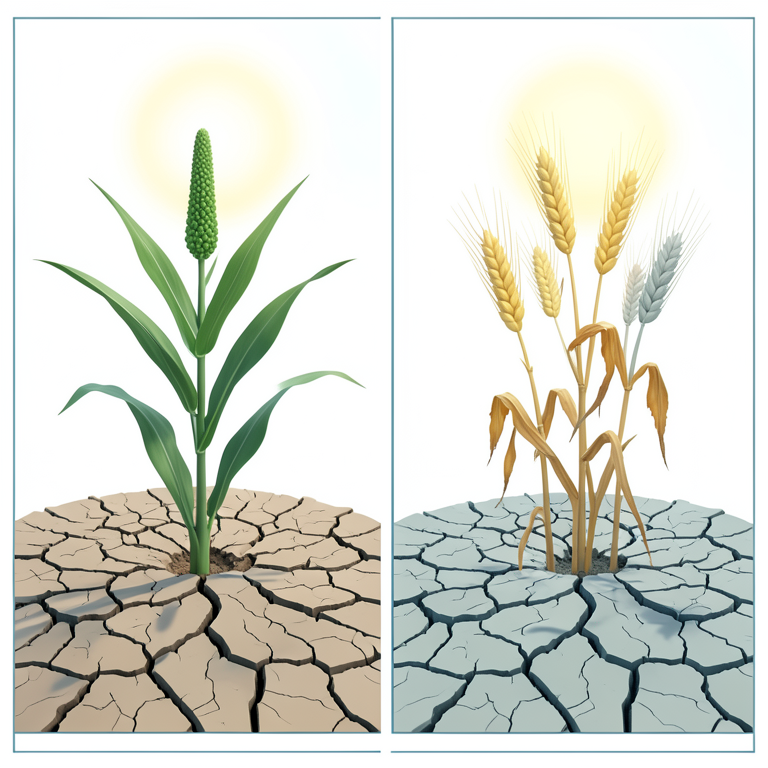
Climate Resilience Comparison
AI-generated conceptual illustration (pearl millet and wheat plants in dryland soil). It explains the idea and does not show study data.
View source evidence ↗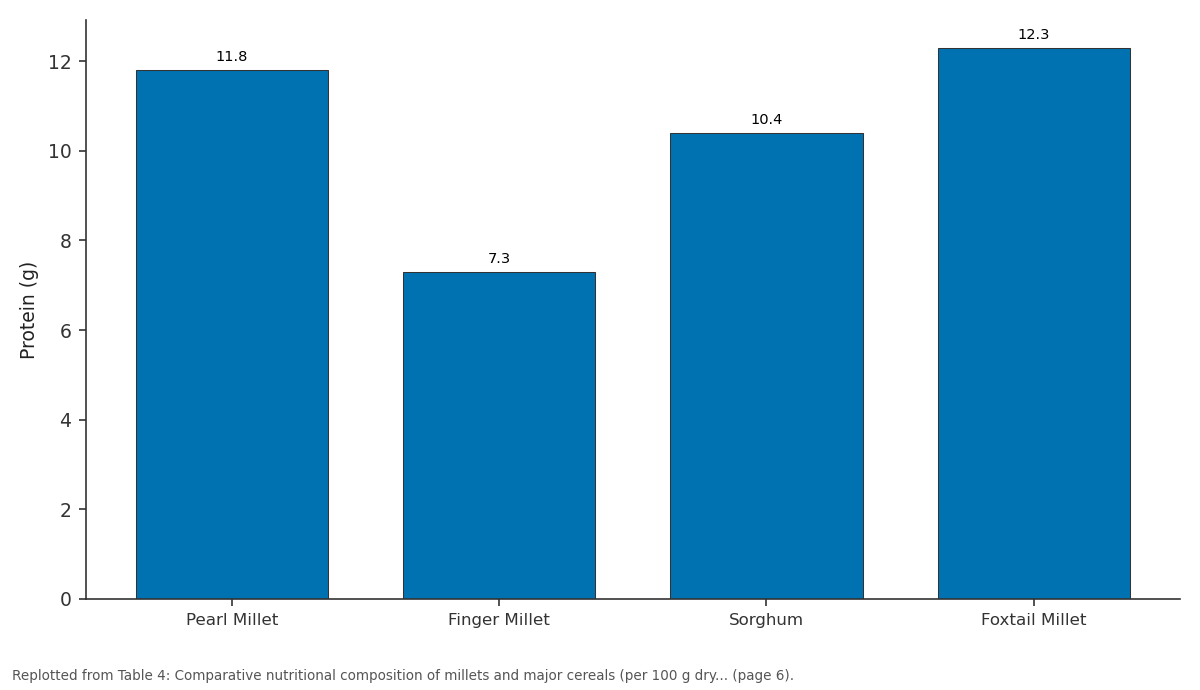
Protein (g): Pearl Millet vs Finger Millet vs Sorghum vs Foxtail Millet
Replotted from Table 4 (page 6) of the original paper. Every bar is the paper's own table value.
View source evidence ↗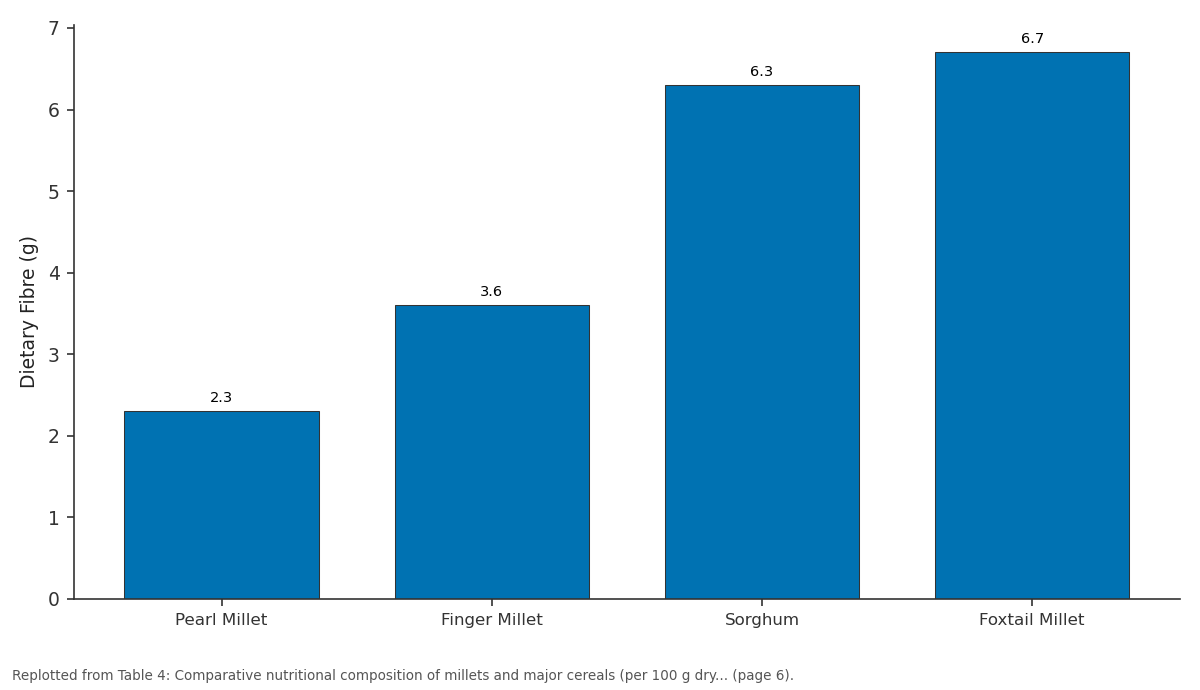
Dietary Fibre (g): Pearl Millet vs Finger Millet vs Sorghum vs Foxtail Millet
Replotted from Table 4 (page 6) of the original paper. Every bar is the paper's own table value.
View source evidence ↗Figures & tables
From the original paper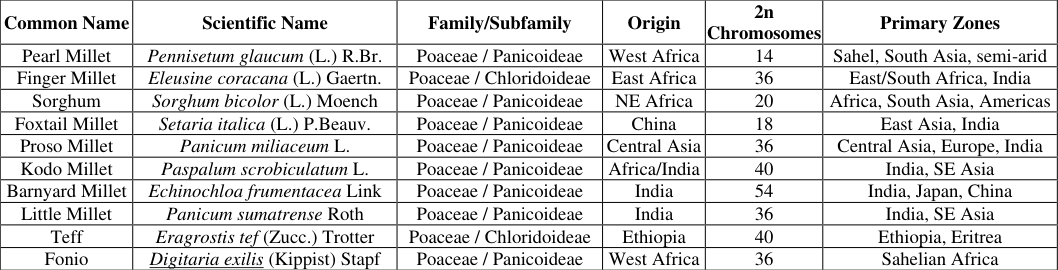 Table 1
 Table 2
 Table 3
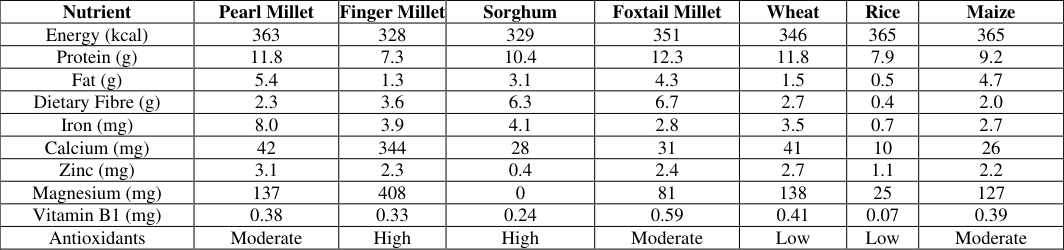 Table 4
Introduction
Dryland agriculture, broadly defined as rain-fed farming in arid, semi-arid, and dry subhumid zones, sustains the livelihoods of over 2.5 billion people worldwide, particularly in sub-Saharan Africa, South Asia, and parts of Latin America (FAO, 2023) [17] . These regions, characterized by low and highly variable precipitation (250-800 mm annually), high evapotranspiration, and shallow or nutrient-poor soils, are increasingly exposed to the compound effects of anthropogenic climate change. The Intergovernmental Panel on Climate Change (IPCC) Sixth Assessment Report (2021) [24] projects that mean temperatures in dryland zones will increase by 1.5-3.5°C by 2050, with concurrent reductions in growingseason rainfall and heightened frequency of extreme drought events. Against this backdrop of climatic stress, conventional cereal crops-particularly wheat and rice-face serious yield penalties under water deficit and high-temperature conditions (Lobell et al., 2011; Challinor et al., 2014) [28,10] . The Green Revolution paradigm, while dramatically increasing food production in irrigated systems, has left dryland smallholders largely underserved, with crop improvement programs historically underinvesting in drought-tolerant, low-input crops adapted to marginal environments (Shiferaw et al., 2011) [36] . The result is a growing vulnerability gap: smallholders in dryland regions face declining productivity, increasing food insecurity, and escalating poverty in the very era when climate stress is intensifying.
Millets-a polyphyletic group of small-seeded grasses belonging predominantly to the Poaceae family-represent an evolutionarily and agronomically distinctive response to these challenges. Domesticated in the semi-arid tropics over 5,000-10,000 years ago, millets have been shaped by millennia of natural and human selection under water-limited and nutrient-poor conditions (Harlan, 1975; Baltensperger, 2002) [20,5] . The group includes pearl millet (Pennisetum glaucum [L.] R.Br.), finger millet (Eleusine coracana [L.] Gaertn.), sorghum (Sorghum bicolor [L.] Moench), foxtail millet (Setaria italica [L.] P.Beauv.), proso millet (Panicum miliaceum L.), kodo millet (Paspalum scrobiculatum L.), barnyard millet (Echinochloa frumentacea Link), little millet (Panicum sumatrense Roth ex Roem. and Schult.), and browntop millet (Brachiaria ramosa [L.] Stapf), each with distinct agro-ecological niches and nutritional profiles. Globally, millets are cultivated on approximately 80-90 million hectares, with production concentrated in India (highest pearl millet area), Nigeria, Niger, Mali, Burkina Faso, China, and Ethiopia (FAOSTAT, 2023) [17] . India alone accounts for about 50% of global small millet production, with cultivation predominantly in the states of Rajasthan, Maharashtra, Gujarat, Karnataka, Andhra Pradesh, and Tamil Nadu. However, millet area has declined sharply-by over 50% in India between 1970 and 2020largely as a consequence of policy neglect, market distortions favoring wheat and rice, dietary transitions, and the perception of millets as subsistence or poor peoples' crops (Balasubramanian et al., 2013; Dayakar Rao et al., 2021) [4,13] . The convergence of climate stress, food system fragility, and nutritional insecurity has reinvigorated scientific, policy, and consumer interest in millets. The United Nations declaration of 2023 as the International Year of Millets catalyzed unprecedented attention to the role of these crops in sustainable food systems. Scientific literature on millet agronomy, physiology, genomics, and food science has burgeoned, providing a rich evidence base for evaluating millet-based cropping systems as climate-resilient agricultural alternatives. This comprehensive review synthesizes current knowledge on: (1) the physiological and biochemical mechanisms underpinning drought and heat tolerance in millets; (2) the agronomic performance of major millet species under dryland conditions; (3) millet-based cropping systemsincluding sole cropping, intercropping, relay cropping, and integrated systems; (4) soil health and ecosystem services;
(5) socio-economic dimensions and food security implications; (6) climate change adaptation potential; and (7) policy and institutional challenges and opportunities for scaling millet-based farming in dryland agriculture.
Botany, Taxonomy, and Agro-ecological Distribution 2.1 Taxonomic Overview
The term 'millet' is a vernacular designation applied to a diverse group of small-seeded annual grasses cultivated primarily for their grain. Unlike wheat, rice, or maize, which each belong to a single genus, millets span multiple genera within the Poaceae family. This taxonomic diversity reflects distinct evolutionary histories, C4 photosynthetic pathways (common to most millets), and adaptations to contrasting environments. Table 1 summarizes the key species, their chromosomal constitution, geographic origin, and primary production zones. [17]
| Common Name | Scientific Name | Family/Subfamily | Origin | 2n Chromosomes | Primary Zones |
|---|---|---|---|---|---|
| Pearl Millet | Pennisetum glaucum (L.) R.Br. | Poaceae / Panicoideae | West Africa | 14 | Sahel, South Asia, semi-arid |
| Finger Millet | Eleusine coracana (L.) Gaertn. | Poaceae / Chloridoideae | East Africa | 36 | East/South Africa, India |
| Sorghum | Sorghum bicolor (L.) Moench | Poaceae / Panicoideae | NE Africa | 20 | Africa, South Asia, Americas |
| Foxtail Millet | Setaria italica (L.) P.Beauv. | Poaceae / Panicoideae | China | 18 | East Asia, India |
| Proso Millet | Panicum miliaceum L. | Poaceae / Panicoideae | Central Asia | 36 | Central Asia, Europe, India |
| Kodo Millet | Paspalum scrobiculatum L. | Poaceae / Panicoideae | Africa/India | 40 | India, SE Asia |
| Barnyard Millet | Echinochloa frumentacea Link | Poaceae / Panicoideae | India | 54 | India, Japan, China |
| Little Millet | Panicum sumatrense Roth | Poaceae / Panicoideae | India | 36 | India, SE Asia |
| Teff | Eragrostis tef (Zucc.) Trotter | Poaceae / Chloridoideae | Ethiopia | 40 | Ethiopia, Eritrea |
| Fonio | Digitaria exilis (Kippist) Stapf | Poaceae / Panicoideae | West Africa | 36 | Sahelian Africa |
Table text extracted from the original PDF; superscript letters are shown inline. The original table image is below.
View original table image
Agro-Ecological Zones of Millet Cultivation
Millets thrive in environments where major cereals fail. Pearl millet is optimally cultivated in the extremely hot and dry agro-ecological zones (AEZs) of the Sahel and the Indian Thar Desert, tolerating soil temperatures up to 55 ^ °C at germination and atmospheric temperatures exceeding 42 °C during grain filling (Tomas-Barberan et al., 2020). Finger millet is adapted to the mid-altitude humid zones of East Africa and the semi-arid Deccan Plateau of India, often cultivated on red, lateritic soils with limited water-holding capacity. Sorghum, the most widely grown dryland cereal globally, spans the broadest ecological range-from the Sudan Savanna to the semi-arid tropics of India and the American Great Plains. The production geography of millets closely mirrors the distribution of smallholder farming systems in marginal environments. In India, millet production is concentrated in the states of Rajasthan (pearl millet), Karnataka (ragi/finger millet), Maharashtra, Gujarat, Andhra Pradesh, and Tamil Nadu (small millets). In sub-Saharan Africa, the Sahel beltstretching from Senegal to Sudan-accounts for over 65% of pearl millet production, where it is sown on sandy, lowfertility Arenosols and Lixisols unsuitable for other crops (Amadou et al., 2013) [1] . Altitude also shapes millet distribution. Finger millet extends from sea level to 2,200 m altitude in East Africa, demonstrating remarkable adaptability across a 4°C range in mean annual temperature. Teff, cultivated almost exclusively in Ethiopia, is an outlier among millets in occupying both highland (up to 2,400 m) and lowland environments, and its exceptional nutritional profile-rich in iron, calcium, and resistant starch-has driven recent global demand.
Physiological and Biochemical Basis of Stress Tolerance 3.1 Drought Tolerance Mechanisms
The drought tolerance of millets is not attributable to a single mechanism but emerges from a complex network of morphological, physiological, and molecular adaptations that operate across developmental stages. These can be broadly categorized as drought escape, drought avoidance, and drought tolerance sensu stricto.
Drought Escape
Pearl millet and sorghum possess short growing cycles (60-120 days depending on variety) that allow them to complete their reproductive phase before the most severe water deficits develop. This phenological plasticity is genetically diverse and has been exploited extensively in breeding programs. Stay-green varieties of sorghum-where green leaf area is maintained during grain filling even under terminal drought-represent a key adaptation trait linked to higher grain yield under post-anthesis drought (Borrell et al., 2014) [9] .
Root Architecture and Water Extraction
Millets, particularly pearl millet and sorghum, develop deep, extensive root systems capable of accessing subsoil moisture. Pearl millet roots can penetrate to 180-200 cm depth in sandy soils (Dardanelli et al., 2004) [12] , far exceeding the rooting depth of most wheat varieties under comparable conditions. Root length density (RLD) in pearl millet ranges from 1.5 to 4.0 cm cm-3 in the upper 30 cm of soil, contributing to efficient capture of rainfall and dew deposition. The root-to-shoot ratio in pearl millet under drought conditions is significantly higher than in maize, reflecting a resource allocation strategy favoring water acquisition over above-ground biomass production.
Stomatal Regulation and Water-Use Efficiency
Millets exhibit superior water-use efficiency (WUE) compared to C3 cereals, owing to their C4 photosynthetic pathway. The CO₂-concentrating mechanism of C4 photosynthesis reduces photorespiration and enables higher rates of carbon assimilation per unit of water transpired. Measured WUE values for pearl millet range from 2.5 to 5.0 g dry matter kg-1H2O; , compared to 1.5-2.5 g kg-1 for wheat under comparable conditions (Craufurd et al., 2000) [11] . Stomatal conductance in pearl millet declines rapidly in response to declining leaf water potential (ψ), and recovery upon rehydration is swift, limiting oxidative damage during intermittent drought ₗ cycles.
Osmotic Adjustment
Osmotic adjustment (OA)-the active accumulation of compatible solutes (proline, glycine betaine, trehalose, polyols) in response to declining water potential-is welldocumented in millets. In finger millet, proline accumulation under drought stress reaches 3-5-fold baseline levels, contributing to maintenance of turgor pressure and membrane stability (Ramegowda et al., 2014) [33] . Trehalose metabolism, regulated by the trehalose-6-phosphate synthase (TPS) pathway, has been identified as a key signal integrator linking carbon status, stomatal opening, and drought response in sorghum and pearl millet.
Heat Stress Tolerance
High temperature is a co-occurring and compounding stress with drought in dryland environments. Pearl millet is among the most thermotolerant of all cultivated crops, germinating at soil temperatures up to 55 ^ °C and completing its life cycle under mean daily temperatures of 35-40°C (Ashraf and Hafeez, 2004) [3] . Heat tolerance in millets operates through: (i) constitutive expression of heat shock proteins (HSPs), particularly HSP70 and small HSPs that stabilize protein folding; (ii) maintenance of membrane integrity through altered lipid composition at elevated temperatures; (iii) enhanced antioxidant enzyme activity (SOD, CAT, APX) scavenging reactive oxygen species (ROS); and (iv) thermostable Rubisco activase enzyme variants. Pollen viability under heat stress is a critical determinant of grain set in cereals. Studies by Kakani et al. (2005) [25] demonstrated that sorghum pollen retains higher viability at 36-38 °C compared to maize, and pearl millet shows minimal decline in pollen germination up to 40°C. This thermotolerance at fertilization directly translates to yield stability under high-temperature conditions prevalent in dryland environments.
Salinity and Soil Acidity Tolerance
Soil salinity and acidity are widespread constraints in dryland soils, particularly in arid zones with poor drainage and in humid dryland interfaces where aluminum toxicity in acidic soils is prevalent. Pearl millet demonstrates moderate salinity tolerance (threshold ECe 6-8 dS m¹), ⁻ with salttolerant accessions identified in the ICRISAT core collection showing electrical conductivity thresholds up to 10-12 dS m ¹. Sorghum is likewise classified as moderately salt-⁻ tolerant among cereals. Finger millet's adaptation to acidic soils of the Deccan Plateau and East African highlands is well-established. It grows on soils with pH as low as 4.5-5.0 where aluminum toxicity is significant, with natural exclusion of Al from root apices through exudation of organic acids (Ligaba et al., 2004) [27] . This capability is of particular importance in Alfisols and Ultisols that dominate large areas of dryland India and sub-Saharan Africa.
Molecular Genetic Bases of Stress Tolerance
Advances in genomics and molecular biology have elucidated many of the genetic determinants of millet stress tolerance. The pearl millet genome was sequenced in 2017 (Varshney et al., 2017) [44] , enabling genome-wide association studies (GWAS) and QTL mapping for drought tolerance traits. Multiple QTLs for terminal drought tolerance, grain yield under stress, root architecture, and WUE have been identified and are being introgressed into elite backgrounds through marker-assisted backcrossing (MABC) and genomic selection (GS) programs at ICRISAT and national agricultural research systems (NARS). Transcriptomic analyses of pearl millet under drought and heat stress have identified stressresponsive genes including NAC, DREB, MYB, and bZIP transcription factors, LEA proteins, dehydrins, and aquaporin channels as key regulators of the stress response network (Srivastava et al., 2019) [39] . CRISPR-Cas9-based gene editing is being applied to accelerate the development of climate-resilient pearl millet varieties by precisely modifying drought-responsive regulatory regions identified through GWAS.
Agronomic Performance under Dryland Conditions 4.1 Yield Potential and Yield Stability
One of the defining characteristics of millet-based cropping systems is their yield stability under conditions of climatic stress and poor resource endowment. While the absolute yield potential of millets under optimal conditions is lower than that of wheat and rice, their yield decline under drought and heat stress is substantially smaller, resulting in superior stress-adjusted yield and higher probability of positive economic returns for smallholder farmers. Pearl millet yields in farmers' fields across the Indian semiarid zone range from 0.8 to 2.5 t ha ¹, depending on variety, season, and rainfall. Under research conditions with optimal ⁻ management, hybrid pearl millet varieties can yield 4-6 t ha ¹, representing a 3-4× yield gap ⁻ attributed to management, input access, and climate variability (Bidinger et al., 2007) [7] . Improved open-pollinated varieties (OPVs) released through ICRISAT-led programs, such as ICMV 221, ICMV 155, and HHB 67, have consistently demonstrated 20-40% yield advantage over local landraces under farmer conditions in India and West Africa. A critical metric for climate resilience is the stability index (Eberhart and Russell, 1966), measuring the consistency of a variety's performance across diverse environments. Metaanalysis of multi-environment trials (METs) for pearl millet across 12 years of ICRISAT trials in India demonstrated that improved hybrids maintained significantly higher stability coefficients than maize under rainfall below 400 mm (Hash et al., 2006) [21] . Finger millet, while lower yielding, shows exceptional yield stability on red lateritic soils across Karnataka and the East African highlands, where it consistently outperforms sorghum and maize under erratic monsoons. [17] , Craufurd et al. (2000) [11] , and Vadez et al. (2012) [43]
Soil Fertility Management in Millet Systems
Dryland soils supporting millet cultivation are typically low in nitrogen (< 0.1% organic N), phosphorus (< 5 mg kg ¹ available P), and organic carbon (< 0.5% SOC in many Sahelian ⁻ soils). Millets have evolved to function under these constraints but respond positively to judicious nutrient management. The fertilizer use efficiency (FUE) of pearl millet for nitrogen is 2-3× higher than that of wheat under low-nitrogen conditions, owing to efficient internal cycling and translocation of nutrients (Pande et al., 2005) [31] . Integration of organic matter-crop residues, farmyard manure, compost-with strategic mineral fertilizer application follows the Integrated Soil Fertility Management (ISFM) paradigm and has shown 30-60% yield benefits over sole mineral fertilization in West African millet systems (Zougmore et al., 2014) [47] . Phosphorus solubilizing bacteria (PSB) and arbuscular mycorrhizal fungi (AMF) associated with millet rhizospheres enhance P acquisition from poorly soluble soil phosphates, reducing the crop's dependence on expensive mineral P fertilizers. No-till and conservation tillage systems, increasingly adopted in millet-growing areas of India and West Africa, help preserve soil structure, reduce evaporative water loss, and maintain soil organic carbon. Studies in Niger demonstrated that pearl millet yields under tied ridging or zai pit systems-traditional water harvesting techniquesexceeded those in conventional tillage by 25-35% in years of below-average rainfall, highlighting the importance of insitu rainwater management in stabilizing millet yields.
Pest and Disease Management
While millets are generally less susceptible to many economically important pests and diseases affecting wheat and rice, several biotic stresses constrain productivity. Downy mildew (Sclerospora graminicola) is the most devastating disease of pearl millet, capable of causing 30-100% crop losses in epidemic years. Striga hermonthica (witchweed) parasitism is a major constraint in pearl millet and sorghum fields across sub-Saharan Africa, with infestation levels exceeding 50% of fields in the Sudan Savanna zone (Ejeta, 2007) [15] . Resistance breeding, particularly the development of hostplant resistance (HPR) to downy mildew through ICRISAT's multi-environment testing network, has produced pearl millet hybrids with durable resistance. ICMH 356, HHB 67 (Improved), and Pusa Composite 383 are examples of varieties combining high yield with downy mildew resistance. For Striga control, integrated approaches combining resistant varieties, low-dose imazapyr-coated seeds (IR-maize extended to millets), Striga-composting, and precision hand-weeding have been validated across sub-Saharan Africa.
Millet-based Cropping Systems 5.1 Sole Cropping Systems
Sole cropping of pearl millet dominates dryland farming systems in the Sahel, the Indian Thar Desert, and parts of southern Africa. In these ultra-arid environments (annual rainfall 200-350 mm), the risk of crop failure and the extremely short growing season (< 90 days) make pearl millet the only viable cereal crop. Pearl millet sole crops in the Indian arid zone under 250-300 mm rainfall situations routinely yield 800-1,200 kg ha ¹ with minimal inputs, providing essential ⁻ grain and straw for household food security and livestock feed.
Sole cropping of sorghum is prevalent in the semi-arid tropics (SAT) of India-particularly Maharashtra, Karnataka, and Andhra Pradesh-where rabi sorghum (post-rainy season variety) exploits residual soil moisture in black cotton soils (Vertisols). Rabi sorghum typically yields 1.5-2.5 t ha ¹ with zero irrigation, relying entirely on moisture stored in deep, clay-rich Vertisols from ⁻ the kharif season. This system, practiced across approximately 5 million hectares in peninsular India, exemplifies the climatic adaptation of millet crops to soil-based buffering of moisture stress.
Intercropping Systems
Intercropping the simultaneous cultivation of two or more crops on the same piece of land is the predominant system in millet-based dryland farming across South Asia and sub-Saharan Africa. The ecological rationale for intercropping is rooted in niche complementarity: crop mixtures use space, light, water, and nutrients more efficiently than sole crops, as evidenced by land equivalent ratios (LER) consistently greater than 1.0 for optimized millet intercropping systems.
Pearl Millet-Cowpea Intercropping
The pearl millet-cowpea (Vigna unguiculata) intercropping system is one of the most widely practiced and studied combinations in the Sahel and dryland India. Cowpea, a nitrogenfixing legume adapted to high temperatures and low moisture, contributes 30-80 kg N ha ¹ year ¹ ⁻ ⁻ through biological nitrogen fixation (BNF), partially offsetting the N requirements of the subsequent millet crop in rotational sequences (Bidinger and Johansen, 1993) [6] . LER values for pearl millet-cowpea intercrops range from 1.18 to 1.55 across site-year combinations in West Africa, indicating 18-55% higher resource use efficiency compared to sole crops (Amede et al., 2019) [2] .
Sorghum-Pigeon Pea Intercropping
The sorghum-pigeon pea (Cajanus cajan) intercropping system is a cornerstone of dryland farming systems in peninsular India (Maharashtra, Karnataka, Andhra Pradesh) and parts of East Africa. Pigeon pea's deep root system and long growing season (150-200 days) complement the shorter-season sorghum, enabling extraction of moisture and nutrients from deeper soil horizons after sorghum harvest. The deep roots of pigeon pea also improve soil porosity and water infiltration. Studies in Andhra Pradesh demonstrated that sorghum-pigeon pea intercrops yielded 25-35% more total grain equivalent yield (GEY) per hectare than either sole crop, with the pigeon pea component providing significant BNF (40-120 kg N ha ¹ year ¹) benefiting subsequent crops. ⁻ ⁻
Finger Millet-Legume Intercrops
In the moist semi-arid zones of East Africa and the Deccan Plateau of India, finger millet-legume intercrops (finger millet + groundnut, finger millet + beans, finger millet + horse gram) provide food, nutritional, and income security for smallholder families. The finger millet-groundnut system, widely practiced in Karnataka, Tamil Nadu, and Andhra Pradesh, has demonstrated LER values of 1.25-1.60 in on-farm trials, with significantly higher protein and fat content per unit area compared to sole finger millet. A study by Govinden (2004) [19] across 120 smallholder farms in Karnataka documented that finger millet-groundnut intercrops reduced household food insecurity by 35-40% compared to sole finger millet farms, owing to the diversified production portfolio and income from groundnut sales. [41] Source: Author's compilation from cited literature
Relay Cropping Systems
Relay cropping-sowing a second crop before the first is harvested-is practiced in millet systems primarily to maximize use of growing season length and residual moisture. In the semiarid Deccan, sorghum relay-sown with rabi legumes (chickpea, safflower) after the main kharif crop allows two crops per year on residual Vertisol moisture without irrigation. This system, studied extensively by ICRISAT and CRIDA (Central Research Institute for Dryland Agriculture, Hyderabad), has demonstrated that relay chickpea after kharif sorghum yields 400-600 kg ha ¹⁻ with zero supplemental irrigation on deep black soils, substantially boosting household food and income security. In West Africa, relay cowpea into standing pearl millet is widely practiced, with cowpea sown 6-8 weeks after pearl millet emergence and harvested 3-4 weeks after pearl millet, effectively extending the productive period of the field while the cowpea benefits from residual moisture and nutrients. Studies in Niger by Tabo et al. (2011) [40] demonstrated that relay cowpea into pearl millet significantly reduced weed pressure in pearl millet through canopy closure while producing 200-400 kg cowpea grain ha ¹ as a bonus crop. ⁻
Rotation Systems
Crop rotation is fundamental to maintaining soil health and breaking pest and disease cycles in millet-based systems. Pearl millet-groundnut rotation is the dominant rotation system in dryland India (Rajasthan, Gujarat) and West Africa, where groundnut as a pre-millet crop provides BNFderived nitrogen, improves soil structure through residue addition, and breaks the downy mildew cycle. Research in Gujarat demonstrated that pearl millet following groundnut yielded 12-18% more than pearl millet after pearl millet due to residual N benefits and reduced soil-borne disease pressure.
In southern African dryland systems, rotation of sorghum with cowpea or velvet bean (Mucuna pruriens) as a fallow green manure crop is an increasingly validated soil fertility improvement strategy. Mucuna green manure biomass of 3-6 t ha ¹ incorporated before sorghum ⁻ sowing improved grain yield by 30-60% over no-rotation controls in on-farm trials in Zimbabwe and Malawi, reducing synthetic fertilizer requirements by 50-70 kg N ha ¹. ⁻
Integrated Millet-Livestock Systems
The inseparable linkage between millet cultivation and livestock rearing in dryland farming systems is a defining feature of their sustainability. In the Sahel and semi-arid India, cattle, goats, and sheep graze on millet and sorghum stover following harvest, and dung from these animals is returned to fields as organic matter-a classical circular agriculture loop. Pearl millet produces 3-5 t ha ¹ dry stover with relatively high digestibility (30-45% IVDMD) and crude protein content ⁻ (5-8%), making it a critical dryseason feed resource in livestock-integrated systems. Sorghum stover, while more abundant (4-8 t ha ¹), contains varying levels of tannins that ⁻ reduce digestibility. Tanninfree and low-tannin sorghum varieties developed at ICRISAT have significantly improved stover quality for livestock, enhancing the integration of sorghum cultivation with cattle production. Economic analyses from ICRISAT (Blümmel et al., 2010) [8] demonstrated that the livestock revenue derived from sorghum stover contributed 20-35% of total farm income in medium semi-arid India, underscoring the critical function of stover value in the economics of millet-based systems.
Soil Health and Ecosystem Services 6.1 Soil Organic Carbon and Microbial Activity
Millet crops contribute to soil organic carbon (SOC) both directly through root biomass and rhizodeposition, and indirectly by supporting a diverse soil microbial community that drives organic matter decomposition and nutrient cycling. Pearl millet allocates approximately 20-30% of assimilated carbon to the rhizosphere, supporting high microbial biomass carbon (MBC) in the root zone (Paustian et al., 2016) [32] . Studies comparing millet-based rotations with maize monoculture in West African Alfisols found 15-25% higher SOC stocks under millet systems after five years, attributed to greater root biomass, improved aggregate stability, and reduced tillage intensity in millet farming. The diversity of arbuscular mycorrhizal fungi (AMF) associated with millet root systems is significantly higher than that found with wheat or rice roots under comparable soil conditions. AMF colonization rates in pearl millet of 40-70% of root length under low-P soils are common, contributing to phosphorus uptake equivalent to 20-40 kg bf P2O5 ha ¹-a substantial reduction in P ⁻ fertilizer requirements. The AMF-millet symbiosis also enhances aggregate stability and waterstable aggregate formation, improving soil physical health in sandy dryland soils.
Carbon Sequestration and Climate Mitigation
Millet-based cropping systems contribute to climate change mitigation through carbon sequestration in above-ground biomass, root systems, and soil organic matter. Comparative LCA (Life Cycle Assessment) analyses have shown that millet cultivation emits 60-80% less greenhouse gas per kg of grain produced compared to irrigated wheat and rice, owing to zero methane emissions (no flooded conditions), lower mathbf N2mathbf O emissions from reduced synthetic fertilizer use, and lower energy inputs for irrigation. The potential for biochar production from millet stover as a soil amendment is increasingly recognized. Biochar from pearl millet and sorghum stover has been shown to increase SOC by 0.5-1.5tC ha -ye ar ^ -, improve soil water retention, and reduce N2O emissions by 20-40% in pot and field experiments (Kammann et al., 2017) [26] . Given the large volume of millet stover produced annually in India and sub-Saharan Africa, biochar integration into millet-based farming systems represents a significant opportunity for climate mitigation at scale.
Biodiversity and Agroecological Services
Millet-based intercropping systems support significantly higher levels of above-ground and soil biodiversity compared to sole crop monocultures. Floral diversity in millet intercrops attracts pollinators and natural enemies of crop pests, contributing to biological control. Studies in Karnataka demonstrated that finger millet + legume intercrops harbored 2.5-3.5× more beneficial arthropod species and 40-60% fewer aphid pests than sole millet crops, reducing pesticide use requirements. The structural diversity of millet canopies where tall and short crop species intermix provides diverse microhabitats that support avian biodiversity and predator-prey interactions that regulate herbivore pressure.
Nutritional Profile and Food Security 7.1 Nutritional Composition
Millets are nutritional powerhouses that compare favourably with, and in several parameters surpass, the major staple cereals (wheat, rice, maize) in terms of micronutrient density, dietary fibre, and bioactive compound content. Table 4 presents a comparative nutritional analysis of millets and major cereals. [23] , USDA Food Data Central (2023), Shobana et al. (2011) [37] Finger millet is exceptionally rich in calcium (344 mg/100g)-among the highest calcium content of any cereal crop making it critically important for bone health, particularly for women and children in populations where dairy consumption is low. This calcium bioavailability is enhanced by traditional fermentation and malting processes (Nkhata et al., 2018) [30] . Teff, cultivated exclusively in Ethiopia, contains 180 mg Ca/100g and high iron content (7.6 mg/100g), properties that have driven its global popularity as a health food and 'super grain'. Pearl millet's high iron and zinc content is of particular importance for combating the widespread iron deficiency anaemia and zinc deficiency in women and children of sub-Saharan Africa and South Asia. Biofortification of pearl millet for elevated iron and zinc has been a key research priority at HarvestPlus and ICRISAT. Iron-biofortified pearl millet varieties (e.g., ICTP 8203-Fe) containing 71-90 mg Fe kg ¹-2-3× the iron content of conventional varietieshave been ⁻ validated in India and West Africa and shown to significantly reduce iron deficiency prevalence in target populations (Finkelstein et al., 2015) [18] .
| Nutrient | Pearl Millet | Finger Millet | Sorghum | Foxtail Millet | Wheat | Rice | Maize |
|---|---|---|---|---|---|---|---|
| Energy (kcal) | 363 | 328 | 329 | 351 | 346 | 365 | 365 |
| Protein (g) | 11.8 | 7.3 | 10.4 | 12.3 | 11.8 | 7.9 | 9.2 |
| Fat (g) | 5.4 | 1.3 | 3.1 | 4.3 | 1.5 | 0.5 | 4.7 |
| Dietary Fibre (g) | 2.3 | 3.6 | 6.3 | 6.7 | 2.7 | 0.4 | 2.0 |
| Iron (mg) | 8.0 | 3.9 | 4.1 | 2.8 | 3.5 | 0.7 | 2.7 |
| Calcium (mg) | 42 | 344 | 28 | 31 | 41 | 10 | 26 |
| Zinc (mg) | 3.1 | 2.3 | 0.4 | 2.4 | 2.7 | 1.1 | 2.2 |
| Magnesium (mg) | 137 | 408 | 0 | 81 | 138 | 25 | 127 |
| Vitamin B1 (mg) | 0.38 | 0.33 | 0.24 | 0.59 | 0.41 | 0.07 | 0.39 |
| Antioxidants | Moderate | High | High | Moderate | Low | Low | Moderate |
Table text extracted from the original PDF; superscript letters are shown inline. The original table image is below.
View original table image
Millets and Diet Diversification
Millets are consumed in diverse traditional food formsflatbreads (roti/bhakri), porridges (ugali, tô), fermented beverages (opaque beer, fura de nono), steamed cakes, and puffed snacksthat have been central to the food cultures of dryland farming communities across millennia. However, dietary transitions associated with urbanization, income growth, and changing consumer preferences have led to declining per capita millet consumption in both India and sub-Saharan Africa since the 1980s. Reintegrating millets into mainstream food systems requires innovation in processing and product development. Recent advances in millet food technology have produced milletbased noodles, pasta, bread, breakfast cereals, baby foods, health bars, and beverages that meet contemporary consumer expectations for taste, texture, and convenience (Nambiar et al., 2011) [29] . The growing global market for gluten-free foods-driven by coeliac disease prevalence and noncoeliac gluten sensitivity-provides a significant commercial opportunity for millet-based products, as all millets are naturally gluten-free.
Climate Change Adaptation and Resilience
Climate Change Adaptation and Resilience
Projected Climate Change Impacts on Dryland Agriculture
Climate change is projected to profoundly alter the productivity and stability of dryland agriculture. IPCC AR6 (2021) [24] projects that: [1] temperatures in the semi-arid tropics will increase by 1.5-3.5°C by 2050 relative to the 1981-2010 baseline; [2] rainfall seasonality will intensify, with longer dry spells interspersed with more intense rain events; [3] heat waves during the crop growing season will become more frequent, longer, and more intense; and [4] CO2 concentrations will reach 550-850 ppm by 2100 under different emission scenarios. These changes have distinct implications for crop productivity. Modelling studies project yield losses in major cereals under climate change: wheat yields in South Asia are projected to decline 6-25% by 2050 (Lobell et al., 2011) [28] , rice yields 10-20%, and maize 20-40% in sub-Saharan Africa under Representative Concentration Pathway (RCP) 4.5 scenarios.
In contrast, millet crop models project much smaller yield losses or even marginal gains under elevated CO2 (the CO2 fertilization effect being less pronounced in C4 crops than C3 crops) and moderate warming. DSSAT-based crop model simulations for pearl millet in India under CMIP [5] climate projections (A1B scenario) indicate yield changes ranging from -5% to +10% by 2050, depending on region and adaptation options, compared to -15 to -25% for wheat under similar scenarios.
Millets as Climate-Smart Crops
The concept of 'climate-smart agriculture' (CSA), articulated by FAO (2013) [16] , comprises three dimensions: [1] sustainably increasing productivity and incomes; [2] building resilience and adapting to climate change; and [3] reducing or removing greenhouse gas emissions. Millet-based cropping systems excel across all three dimensions and represent exemplary CSA systems for dryland environments. The drought and heat tolerance of millets directly addresses the adaptation dimension of CSA. Their low input requirements and absence of irrigation needs reduce GHG emissions per unit product. Their integration with legumes enhances soil carbon and reduces synthetic N fertilizer demand-a win-win for both adaptation and mitigation. Multiple case studies from India, West Africa, and East Africa have validated the CSA potential of millet-based systems through the lens of productivity, resilience, and mitigation triple wins (Zougmore et al., 2016) [46] . Specific climate-smart practices validated in millet systems include: [1] conservation agriculture with millet-no-till or minimum-till sowing of pearl millet with mulching significantly reduces soil temperature, evaporative loss, and runoff while improving infiltration; [2] water harvestingtraditional zai pits, half-moon catchments, and tied ridges concentrated around pearl millet hills capture scarce rainfall in the West African Sahel with documented yield benefits of 50-100% in dry years; [3] agroforestry integration-parkland agroforestry systems where Faidherbia albida trees are retained in pearl millet and sorghum fields are the predominant land use system of the Sahel, with shade, nitrogen fixation, and organic matter contribution of Faidherbia increasing millet yields by 20-40% in a 2-3 km radius from tree stems.
Genetic Adaptation to Future Climates
The genetic diversity within millet germplasm collections-ICRISAT holds the world's largest millet germplasm collection with over 21,000 pearl millet accessions, 7,000+ sorghum accessions, and 12,000+ small millet accessions provides a rich genetic reservoir for breeding climateadapted varieties. Characterization of this diversity under heat, drought, and combined stress environments has identified exceptional donors for thermotolerance (e.g., ICMR 1201 for heat tolerance during pollen development), extreme drought tolerance (e.g., Tichit landraces from Niger), and long-season adaptation for changing monsoon patterns. Next-generation breeding approaches-marker-assisted recurrent selection (MARS), genomic selection, and speed breeding-are accelerating the development and release of climateadapted millet varieties. Genomic selection models for pearl millet, trained on approximately 300 diverse accessions phenotyped across multiple stress environments, have shown predictive ability (r = 0.45-0.65) for complex traits like terminal drought tolerance and grain yield under heat stress, enabling pre-selection of genotypes before resource-intensive phenotyping.
Socio-economic Dimensions 9.1 Economic Analysis of Millet-Based Systems
The economic case for millet-based farming in drylands is grounded in risk-adjusted returns rather than gross productivity. While the absolute gross value of output per hectare may be lower in millet systems compared to irrigated wheat or rice, the probability of total crop failure is dramatically reduced, providing what economists term 'downside risk protection' of immense value to resourcepoor smallholders with no social safety nets (Walker and Ryan, 1990) [45] . Field-level econometric analyses from dryland India demonstrate that benefit-cost ratios of pearl millet cultivation range from 1.8 to 2.8 under variable rainfall conditions, compared to 1.2-1.5 for irrigated wheat in the same regions when accounting for irrigation cost and water scarcity risk. The economics of millet-based intercropping systems show even more compelling returns. A comprehensive economic analysis of sorghum-pigeon pea intercropping systems across 300 farms in Maharashtra by Rao et al. (2011) [34] documented net returns of INR 12,000-18,000 per hectare-25-40% higher than sole sorghum-attributable to diversified production, reduced input costs through legume N fixation, and premium prices for pigeon pea. The risk-reducing function of crop diversification was quantified through a 40% reduction in income variance over a 10-year period compared to sole cropping systems.
Gender Dimensions
Millet cultivation has important gender dimensions in many dryland farming societies. In West Africa, pearl millet is frequently managed by women, who exercise significant control over millet production, processing, and household food allocation. Women's control over millet-based food systems is associated with better child nutritional outcomesa well-established relationship in the nutrition-sensitive agriculture literature. Studies in Niger demonstrated that female control over millet granaries was positively correlated with child dietary diversity scores, iron intake adequacy, and lower stunting rates (Diiro et al., 2017) [14] . However, millet production is also associated with high drudgery in post-harvest processing-dehulling and grinding of millet grains is among the most physically demanding food preparation activities in rural households of sub-Saharan Africa and South Asia. Development of affordable, small-scale millet threshers, dehullers, and mills has been identified as a critical intervention for reducing women's labor burden and increasing their participation in value addition activities.
Value Chain Development
Transformation of millet from subsistence crop to commercial value chain is a key lever for incentivizing expanded cultivation and investment in improved varieties and practices. The millet value chain encompasses: [1] input supply (improved seed, fertilizer, crop protection); [2] production; [3] primary processing (threshing, dehulling, milling); [4] secondary processing (flour, flakes, popped grain, fermented products); [5] marketing and distribution; and [6] consumption. Value chain analyses in India and West Africa reveal significant inefficiencies-particularly in primary processing where manual dehulling losses of 15-25% reduce market margins and product quality (Dayakar Rao et al., 2021) [13] . The emergence of organized retail, direct-to-consumer ecommerce platforms, and healthfood market segments has created new demand for value-added millet products in India, driving premium prices. Urban consumers in India's Tier-1 and Tier-2 cities are increasingly purchasing milletbased health foods-multi-millet atta, millet cookies, milletbased baby foods-at price premiums of 30-60% over conventional cereals. Connecting rural millet producers to these growing urban markets through farmer producer organizations (FPOs), cooperative processing units, and digital market platforms is essential for sustainable value chain development.
Policy Framework and Institutional Support 10.1 Historical Policy Neglect
Despite their agronomic importance and nutritional value, millets were largely marginalized in national agricultural policies of India and many African countries following the Green Revolution. Minimum support price (MSP) policies in India historically favored wheat and rice, directing procurement, storage, and distribution systems toward these crops and away from millets. Public investment in millet research and extension was similarly concentrated on Green Revolution crops, leaving millet breeding and agronomy programs underresourced compared to rice and wheat programs.
The consequences of this policy asymmetry were predictable: Millet area in India declined from approximately 38 million hectares in the early 1970s to approximately 14-16 million hectares by 2020, as farmers on more productive dryland soils switched to cotton, soybean, and other commercial crops wherever market access improved. In West Africa, the area under pearl millet has been more stable, owing to the absence of viable alternative crops in extremely arid zones, but productivity has remained stagnant at 600-800 kg ha ¹ due to inadequate investment in seed ⁻ systems and agronomy.
Policy Revitalization
The convergence of climate change concerns, food and nutrition security imperatives, and growing consumer interest in healthy, sustainable foods has driven a significant policy shift toward millets in recent years. In India, the Government of India declared 2018 as the National Year of Millets and successfully lobbied the United Nations to declare 2023 as the International Year of Millets (IYM 2023)-a milestone that catalyzed unprecedented global awareness and policy momentum. Under India's Atmanirbhar Bharat and National Food Security policies, millets have been included in the public distribution system (PDS), with several state governments (Karnataka, Odisha, Jharkhand, Maharashtra) implementing millet procurement and distribution programs. The POSHAN Abhiyaan (National Nutrition Mission) of India has identified millets as a key food group for addressing malnutrition, integrating millet-based foods into mid-day meal schemes, anganwadi nutrition programs, and POSHAN Maah awareness campaigns. Several state governments have launched dedicated millet missions-notably Karnataka's Raita Siri Dhanya Scheme and Andhra Pradesh's Nutri Farm initiative-that provide production subsidies, guaranteed procurement, and market linkage support to millet farmers.
Research and Development Priorities
To fully realize the potential of millet-based systems as climate-resilient dryland agriculture alternatives, strategic R&D investment is required across several priority areas. Yield improvement through genetics remains paramount-the 3-5× yield gap between research and farmers' fields indicates significant untapped yield potential achievable through improved varieties and management. Biofortification programs for iron, zinc, and vitamin A in pearl millet and sorghum should be accelerated and integrated with nutrition programs. Crop model development for millets needs strengthening to support climate impact assessment and adaptation planning at regional scales. The integration of digital technologies-remote sensing for crop monitoring, machine learning for yield prediction, mobile advisory platforms for real-time agronomic guidance-with millet agronomy is an emerging priority. Digital advisory services tailored for millet farmers, such as the ICRISAT-led SAARC Millet App and state-level Kisan Call Centres in India, are showing promise in disseminating improved practices at scale. Strengthening national and regional seed systems for millets-ensuring timely availability of high-quality seed of improved varieties at affordable prices to smallholder farmers-is a critical institutional bottleneck requiring sustained attention.
Challenges and Future Perspectives 11.1 Key Challenges
Despite the compelling case for millet-based systems, several challenges constrain their expansion and contribution to climate-resilient agriculture. First, the social stigma associated with millets as 'poor peoples' food' persists in many societies, discouraging consumption among aspiring middle-class populations and limiting market development. Overcoming this stigma requires sustained awareness campaigns, celebrity endorsements, and integration of millets into mainstream cuisine and food service. Second, the mechanization gap in millet production and processing remains wide. Millet dehulling, in particular, lacks efficient small-scale solutions affordable to smallholder farmers, adding significant labor timepredominantly women's labor-to food preparation. Investment in appropriate technology development and distribution channels for millet processing equipment is urgently needed. Third, climate adaptation itself is a dynamic target: as temperatures and drought stress intensify beyond current varieties' tolerance envelopes, continuous genetic improvement will be necessary to maintain millet yield stability, requiring sustained funding for millet genomics, phenomics, and breeding.
Emerging Opportunities
The future of millet-based systems is, however, substantially more promising than at any point in the post-Green Revolution era. The global health food market-valued at USD 850 billion in 2022 and growing at 6-8% annuallyrepresents a transformational commercial opportunity for millet value chains. The climate crisis narrative is driving consumers and institutions alike toward lower-carbon, water-efficient food systems, and millets with their minimal water footprint, low GHG emission profile, and adaptability to marginal lands are well-positioned as climate-smart food choices. Precision fermentation and food processing technologies are enabling the development of novel millet-based productshigh-protein millet concentrates, fermented millet beverages with probiotic properties, and millet-based alternative protein ingredients-that tap into premium global market segments. The potential for millet-based nutraceuticals and functional foods, exploiting the polyphenol, phenolic acid, and flavonoid content of millets with documented antioxidant, antiinflammatory, and anti-diabetic properties, is increasingly being realized by food technology companies in India, Europe, and North America.
Conclusion
This comprehensive review synthesizes scientific evidence demonstrating that millet-based cropping systems constitute scientifically validated, economically viable, and ecologically sound climate-resilient alternatives for dryland agriculture. The physiological, agronomic, ecological, and socioeconomic evidence reviewed overwhelmingly supports the following key conclusions: Millets possess an exceptional suite of drought and heat tolerance mechanisms-deep roots, superior WUE, osmotic adjustment, pollen thermotolerance, and rapid drought escape-that ensure yield stability in the variable and stressful environments where over 40% of the world's agricultural land is situated. Millet-based intercropping and rotation systems deliver Land Equivalent Ratios of 1.2-1.7, demonstrating 20-70% higher resource use efficiency than monocultures while delivering multiple ecosystem services including nitrogen fixation, soil carbon accumulation, and biodiversity enhancement. Climate model projections indicate substantially smaller yield reductions for millets compared to wheat and rice under the temperature and rainfall changes projected for dryland regions by 2050, confirming millets as priority crops for climate adaptation in these zones. The nutritional superiority of millets-particularly their iron, calcium, zinc, dietary fibre, and bioactive compound content-positions them as key contributors to addressing hidden hunger and diet-related non-communicable diseases (NCDs) in both rural and urban populations. Policy mainstreaming through MSP parity, PDS inclusion, school feeding programs, and dedicated millet missions has created enabling conditions for millet revival in India, offering lessons for other millet-growing nations. The convergence of climate urgency, nutritional imperatives, and growing global health food markets creates an unprecedented opportunity for millets to transition from neglected subsistence crops to premium climate-smart commodities that simultaneously support smallholder livelihoods and planetary health. Realizing this potential requires coordinated action across research, policy, private sector, and civil societyaccelerating genetic improvement, scaling adoption of climate-smart agronomy, developing efficient processing and value chain infrastructure, strengthening seed systems, and building consumer awareness. Millet-based cropping systems are not simply a legacy of the past; they are an essential foundation for food and nutritional security, climate adaptation, and sustainable livelihoods in the drylands of the 21 st century.
Acknowledgement
AcknowledgementsThe authors acknowledge the support of Bharatiya Engineering Science & Technology Innovation University, Andhra Pradesh, India. Grateful acknowledgement is extended to ICRISAT, ICAR-CRIDA, and FAO for making primary datasets and technical publications accessible. The authors declare no conflict of interest related to this review.
Figures and tables from the paper
| Crop | Optimal Temp (°C) | Min. Rainfall (mm) | Avg. Yield (t/ha) | WUE (g DM/kg H2O) | Drought Score |
|---|---|---|---|---|---|
| Pearl Millet | 28-42 | 200-350 | 1.5-3.5 | 2.5-5.0 | Very High |
| Finger Millet | 20-30 | 300-500 | 1.0-2.5 | 2.0-3.5 | High |
| Sorghum | 26-34 | 250-400 | 2.0-4.5 | 2.0-4.0 | High |
| Foxtail Millet | 20-30 | 300-500 | 1.2-2.8 | 2.0-3.5 | Moderate-High |
| Kodo/Little Millet | 20-35 | 200-350 | 0.8-1.8 | 1.8-3.0 | High |
| Wheat | 15-22 | 400-600 | 2.5-5.0 | 1.2-2.0 | Low-Moderate |
| Maize | 22-30 | 500-800 | 3.0-7.0 | 1.5-2.5 | Low |
Table text extracted from the original PDF; superscript letters are shown inline. The original table image is below.
View original table image
| System | Location | LER | Yield Advantage (%) | Key Benefit | Reference |
|---|---|---|---|---|---|
| Pearl millet + Cowpea | Sahel, West Africa | 1.18-1.55 | 18-55 | N fixation, food diversification | Amede et al. (2019) [2] |
| Sorghum + Pigeon pea | Peninsular India | 1.25-1.45 | 25-45 | Deep rooting, N fixation | Rao et al. (2011) [35] |
| Finger millet + Groundnut | Karnataka, India | 1.25-1.60 | 25-60 | Nutritional diversity, income | Govinden (2004) [19] |
| Pearl millet + Cluster bean | Rajasthan, India | 1.20-1.40 | 20-40 | Drought tolerance, fodder | Singh et al. (2018) |
| Sorghum + Cowpea | East Africa | 1.15-1.35 | 15-35 | Protein supply, market access | Blümmel et al. (2010) [8] |
| Foxtail millet + Sesame | Andhra Pradesh, India | 1.10-1.30 | 10-30 | Oilseed income, soil cover | Reddy et al. (2015) [25] |
| Teff + Pulse crops | Ethiopia | 1.20-1.50 | 20-50 | Food security, highlands | Tefera et al. (2016) [41] |
Table text extracted from the original PDF; superscript letters are shown inline. The original table image is below.
View original table image
References
46 in the original paper- Amadou I, Gounga ME, Le GW. Millets: nutritional composition, some health benefits and processing -a review. Emirates Journal of Food and Agriculture. 2013;25(7):501-508.
- Amede T, Auricht C, Boffa JM, Dixon J, Mallano U, Mwendera E, et al. A food systems framework for strengthening integration of intercropping in Southern African farming systems. Frontiers in Sustainable Food Systems. 2019;3:52.
- Ashraf M, Hafeez M. Thermotolerance of pearl millet and maize at early growth stages: growth and nutrient relations. Biologia Plantarum. 2004;48(1):81-86.
- Balasubramanian V, Nagesh CS, Subramanian S. Millets cultivation in India: a perspective on nutrient security. Indian Journal of Agricultural Research. 2013;47(3):181-195.
- Baltensperger DD. Progress with proso, pearl and other millets. In: Janick J, Whipkey A, editors. Trends in New Crops and New Uses. Alexandria: ASHS Press; 2002. p. 100-103.
- Bidinger FR, Johansen C. Physiology of drought tolerance in pearl millet. ICRISAT Research Bulletin No. 1993.
- Bidinger FR, Weltzien-Rattunde HFW, Touré A, Rattunde HFW. Inferring the genome-phenotype connection for drought tolerance in pearl millet: a modeling perspective. Field Crops Research. 2007;105:9-18.
- Blümmel M, Rao PP, Reddy BVS, Hassan Z, Bidinger FR. Improving livestock feed quality of sorghum. In: Reddy BVS, editor. Sorghum Improvement in the New Millennium. Patancheru: ICRISAT; 2010.
- Borrell AK, van Oosterom EJ, Mullet JE, GeorgeJaeggli B, Jordan DR, Klein PE, et al. Stay-green alleles individually enhance grain yield in sorghum under drought by modifying canopy development and water use. New Phytologist. 2014;203(3):817-830.
- Challinor AJ, Watson J, Lobell DB, Howden SM, Smith DR, Chhetri N. A meta-analysis of crop yield under climate change and adaptation. Nature Climate Change. 2014;4(4):287-291.
- Craufurd PQ, Wheeler TR, Ellis RH, Summerfield RJ, Williams JH. Effect of temperature and CO₂ on phenology and yield of groundnut and sorghum. Experimental Agriculture. 2000;36:461-474.
- Dardanelli JL, Ritchie JT, Calmon M, Andriani JM, Collino DJ. An empirical model for root water uptake. Field Crops Research. 2004;87:59-71.
- Dayakar Rao B, Bhaskarachary K, Arlene Christina GD, Devi GS, Vilas AT, Tonapi A. Nutritional and health benefits of millets. Hyderabad: ICAR-Indian Institute of Millets Research; 2021. p. 1-112.
- Diiro GM, Seymour G, Kassie M, Muricho G, Muriithi BW. Women's empowerment in agriculture and agricultural productivity: evidence from rural maize farmer households in western Kenya. PLOS ONE. 2017;12(11):e0188367.
- Ejeta G. The Striga scourge in Africa: a growing pandemic. In: Ejeta G, Gressel J, editors. Integrating New Technologies for Striga Control. Singapore: World Scientific; 2007. p. 3-16.
- Food and Agriculture Organization. Climate-Smart Agriculture Sourcebook. Rome: Food and Agriculture Organization; 2013.
- Food and Agriculture Organization. FAOSTAT Database. Rome: Food and Agriculture Organization; 2023. Available from: FAOSTAT Database
- Finkelstein JL, Mehta S, Udipi SA, Ghugre PS, Luna SV, Wenger MJ, et al. A randomized trial of ironbiofortified pearl millet in school children in India. Journal of Nutrition. 2015;145(7):1576-1581.
- Govinden N. Intercropping of groundnut and cereal crops in the semi-arid zones of the Deccan Plateau. Tropical Agriculture. 2004;81:144-152.
- Harlan JR. Crops and Man. Madison: American Society of Agronomy; 1975.
- Hash CT, Sharma A, Kolesnikova-Allen MA, Singh SD, Thakur RP, Bhasker Raj AG, et al. Teamwork delivers biotechnology products to smallholder sorghum and pearl millet farmers in dryland India. SAT eJournal. 2006;2(1):1-11.
- Witcombe JR. Teamwork delivers biotechnology products to smallholder sorghum and pearl millet farmers in dryland India. SAT eJournal. 2006;2(1):1-11.
- Intergovernmental Panel on Climate Change. Climate Change 2021: The Physical Science Basis. Contribution of Working Group I to the Sixth Assessment Report of the IPCC. Cambridge: Cambridge University Press; 2021.
- Kakani VG, Reddy KR, Koti S, Wallace TP, Prasad PVV, Reddy VR, et al. Differences in in vitro pollen germination and pollen tube growth of cotton cultivars in response to high temperature. Annals of Botany. 2005;96(1):59-67.
- Kammann CI, Ratering S, Eckhard C, Müller C. Biochar and hydrochar effects on greenhouse gas (carbon dioxide, nitrous oxide, and methane) fluxes from soils. Journal of Environmental Quality. 2017;41(4):1052-1066.
- Ligaba A, Yamaguchi M, Shen H, Sasaki T, Yamamoto Y, Matsumoto H. Phosphorus deficiency enhances plasma membrane H+-ATPase activity and citrate exudation in greater purple bladderwort (Utricularia purpurea). Functional Plant Biology. 2004;31(11):1011-1020.
- Lobell DB, Schlenker W, Costa-Roberts J. Climate trends and global crop production since 1980. Science. 2011;333(6042):616-620.
- Nambiar VS, Dhaduk JJ, Sareen N, Shahu T, Desai R. Potential functional implications of pearl millet International Journal of Agriculture and Nutrition https://www.agriculturejournal.net (Pennisetum glaucum) in health and disease. Journal of Applied Pharmaceutical Science. 2011;1(10):62-67.
- Nkhata SG, Ayua E, Kamau EH, Shingiro JB. Fermentation and germination improve nutritional value of cereals and legumes through activation of endogenous enzymes. Food Science and Nutrition. 2018;6(8):2446-2458.
- Pande S, Rao JN, Sharma M. Dryland crops and soil management. In: Proceedings of the Dryland Agriculture Workshop, CRIDA, Hyderabad; 2005. p. 45-62.
- Paustian K, Lehmann J, Ogle S, Reay D, Robertson GP, Smith P. Climate-smart soils. Nature. 2016;532(7597):49-57.
- Ramegowda V, Senthil-Kumar M, Nataraja KN, Reddy MK, Mysore KS, Udayakumar M. Expression of a finger millet transcription factor, EcNAC1, in tobacco confers abiotic stress-tolerance. PLOS ONE. 2014;9(7):e101542.
- Rao PP, Birthal PS, Reddy BVS, Rai KN, Ramesh S. Diagnostics of sorghum and pearl millet grains-based nutrition in India. International Sorghum and Millets Newsletter. 2011;47:93-96.
- Reddy PR, Prasuna VG, Reddy YV. Performance of foxtail millet (Setaria italica L.) under intercropping with sesame in southern Andhra Pradesh. Indian Journal of Agricultural Research. 2015;49(4):362-366.
- Shiferaw B, Smale M, Braun HJ, Duveiller E, Reynolds M, Muricho G. Crops that feed the world 10. Past successes and future challenges to the role played by wheat in global food security. Food Security. 2013;5(3):291-317.
- Shobana S, Krishnaswamy K, Sudha V, Malleshi NG, Anjana RM, Palaniappan L, et al. Finger millet (Ragi, Eleusine coracana L.): a review of its nutritional properties, processing, and plausible health benefits. Advances in Food and Nutrition Research. 2011;69:139.
- Singh P, Boote KJ, Kadiyala MDM, Nedumaran S, Gupta SK, Srinivas K, et al. An assessment of yield gains under climate change due to genetic modification of pearl millet. Science of the Total Environment. 2017;601:1226-1237.
- Srivastava RK, Singh RB, Pujarula VL, Bollam S, Pusuluri M, Chellapilla TS, et al. Genome-wide association studies and genomic selection in pearl millet: advances and prospects. Frontiers in Genetics. 2019;10:1389.
- Tabo R, Bationo A, Diallo MK, Hassane O, Koala S, Ndjeunga J. Cropping systems and crop management. In: Bationo A, editor. Innovations as Key to the Green Revolution in Africa. Dordrecht: Springer; 2011. p. 613-624.
- Tefera H, Assefa K, Hundera K, Teklesenbet G. Teff improvement in Ethiopia: achievements and future prospects. In: Proceedings of the 2nd International Teff Research Conference, Addis Ababa; 2016. p. 1-18.
- Upadhyaya HD, Gowda CLL, Pundir RPS, Reddy VG, Singh S. Development of core subset of finger millet germplasm using species diversity and informative SSR markers. Genome. 2006;49:1298-1306.
- Vadez V, Rao JS, Kholova J, Krishnamurthy L, Kashiwagi J, Ratnakumar P, et al. Root research for drought tolerance in legumes. Journal of Food Legumes. 2012;25(1):1-11.
- Varshney RK, Shi C, Thudi M, et al. Pearl millet genome sequence provides a resource to improve agronomic traits in arid environments. Nature Biotechnology. 2017;35:969-976.
- Walker TS, Ryan JG. Village and Household Economics in India's Semi-Arid Tropics. Baltimore: Johns Hopkins University Press; 1990.
- Zougmore RB, Ouédraogo M, Partey ST, Thornton PK. Potential of 13 technologies for climate-smart agricultural transformation in West Africa. Cahiers Agricultures. 2016;25:64001.
- Zougmore R, Jalloh A, Diekkrüger B. Context-specific integrated soil and water management options: a review of evidence in West Africa. International Journal of Agricultural Sustainability. 2014;12(4):418-435.