
Research article · 2026 · Full text
International Journal of Biology SciencesNutritional Strategies for Stress Mitigation and Performance Enhancement in Swine
Volume 8(5) · Pages 40–47 · DOI: 10.33545/26649926.2026.v8.i5a.826 ↗
Research areasAnimal Nutrition and PhysiologyAnimal Behavior and Welfare StudiesVeterinary medicine and infectious diseases
Abstract
Author-writtenStress is an unavoidable component of modern swine production and arises from multiple environmental, physiological, and management-related factors, including weaning, heat exposure, transportation, and social interactions. These stressors disrupt homeostasis and adversely affect growth performance, immune function, reproductive efficiency, and overall animal welfare, leading to significant economic losses. Increasing evidence highlights oxidative stress as a central mechanism underlying stress-induced damage in pigs, emphasizing the need for effective mitigation strategies. This review synthesizes current knowledge on the role of nutrition in modulating stress responses in swine. Key nutritional strategies discussed include the use of functional amino acids, low-protein diets, plant-derived bioactive compounds, organic acids, prebiotics, probiotics, and essential micronutrients such as vitamins and trace minerals. These interventions exert their beneficial effects through multiple mechanisms, including enhancement of antioxidant capacity, modulation of gut microbiota, improvement of intestinal integrity, and regulation of immune and metabolic functions. The review further emphasizes the importance of integrated and precision nutrition approaches tailored to specific stressors and production stages, which can provide synergistic benefits and improve overall resilience. Advances in nutrigenomics and microbiome research offer promising opportunities for developing targeted feeding strategies. In conclusion, nutritional modulation represents a practical, sustainable, and effective approach to mitigating stress in swine production systems, contributing to improved animal welfare, productivity, and system efficiency.
Summary
Source-checkedPlain-language reading of the full paper, prepared with AI and checked against the text. Each point links to the authors' own words.
Why it matters
- Stress is an inevitable part of modern pig farming, caused by factors such as weaning, heat, transport, and social dynamics. View evidence ↗
- Stress disrupts the animal's internal balance, which harms growth, immunity, and reproduction, resulting in major economic losses. View evidence ↗
- Oxidative stress is identified as a primary mechanism that causes damage in pigs during stressful events. View evidence ↗
The question
- The paper aims to synthesize current knowledge regarding how nutritional strategies can modulate stress responses in swine. View evidence ↗
What they did
- The review examines several nutritional interventions, including functional amino acids, low-protein diets, plant bioactives, organic acids, prebiotics, probiotics, and micronutrients. View evidence ↗
What they found
- Supplementing weaned piglets with approximately 0.4% arginine helps mitigate heat stress by improving feed efficiency and average daily gain. View evidence ↗
- Reducing dietary crude protein (CP) to 13.5% in heat-stressed growing crossbred pigs improves overall performance by enhancing nutrient digestibility and intestinal morphology. View evidence ↗
- Administering 400 mg/kg of curcumin to neonatal piglets with growth retardation reduces oxidative damage and boosts antioxidant capacity. View evidence ↗
- Including around 25 mg/kg of oregano oil in the diet of finishing pigs is effective in reducing stress caused by transportation. View evidence ↗
- Chito-oligosaccharides (COS) at a dose of 158.8 mg/kg have been shown to alleviate stress during weaning in piglets. View evidence ↗
- Using Lactobacillus plantarum at 2.5 × 10⁷ CFU/mL in female crossbred piglets significantly improves their immune response under stress. View evidence ↗
- Supplementing finishing pigs with 200 µg/kg of chromium improves growth performance and lowers physiological stress markers. View evidence ↗
- Administering 150 mg/kg of Vitamin C to weaning piglets reduces their oxidative stress. View evidence ↗
What it means
- The authors conclude that nutritional modulation is a practical and sustainable way to reduce stress, which improves productivity and animal welfare. View evidence ↗
- The authors recommend using integrated precision nutrition tailored to specific production stages and stressors to achieve synergistic benefits. View evidence ↗
Visual summary
1 visualsIllustrations explain the paper; they do not show study data.
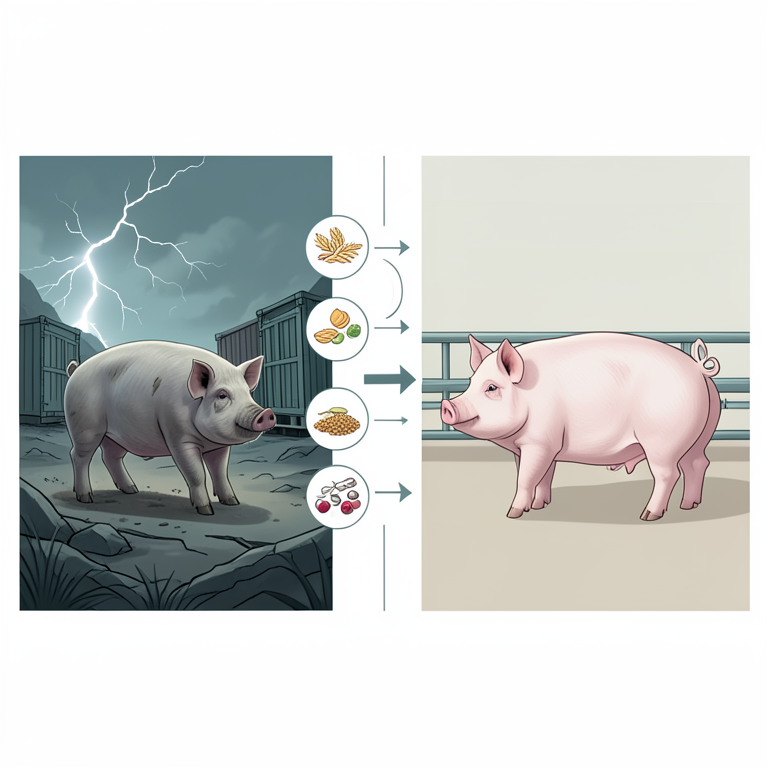
Nutritional Mitigation of Swine Stress
AI-generated conceptual illustration (domestic pigs). It explains the idea and does not show study data.
View source evidence ↗Introduction
Stress in swine, first conceptualized by Hans Selye as "a non-specific response of the body to any change," represents a complex physiological and behavioural reaction to internal and external challenges. It is an inevitable component of modern swine production systems, arising from a variety of environmental, physiological, and management-related factors such as weaning, transportation, regrouping, thermal extremes, and disease challenges. These stressors disrupt homeostasis and trigger complex neuroendocrine, immune, and metabolic responses mediated primarily through the hypothalamic-pituitary-adrenal (HPA) axis and sympathetic nervous system (Martínez-Miró et al 2016) [1] . As a consequence, stress negatively affects feed intake, growth performance, reproductive efficiency, immune competence, and meat quality, thereby causing substantial economic losses in pig production systems. In practical swine production systems, animals are exposed to multiple stressors that can significantly impair performance and welfare. Common stress factors include longdistance transportation, vaccination and disease challenges, abrupt temperature fluctuations, weaning, pregnancy and parturition, and suboptimal housing management. These stressors negatively influence feed intake, immune competence, growth rate, and reproductive efficiency. Consequently, various forms of stress reduce the animal's resistance to diseases, compromise productivity, and adversely affect reproductive traits. Understanding the nature, classification, and impact of stress is therefore essential for developing effective management and nutritional strategies to enhance resilience and optimize overall swine production efficiency (Martínez-Miró et al., 2016; Renaudeau et al., 2011; Pluske et al., 2018) [1,2,27] . In recent years, there has been increasing recognition of the role of oxidative stress as a central mechanism underlying stress-induced damage in swine. Oxidative stress results from an imbalance between reactive oxygen species (ROS) production and antioxidant defence systems, leading to cellular dysfunction, impaired immunity, and reduced productivity (Bacou et al., 2021) [4] . Nutritional stressors, including poor-quality feed ingredients, mycotoxins, and imbalanced diets, further exacerbate this condition and compromise animal health and performance. [5,6,7] [8,9,10] . In response to growing concerns regarding antimicrobial resistance and food safety, regulatory restrictions on antibiotic use have intensified, thereby necessitating the development and adoption of sustainable and environmentally friendly alternatives in modern swine production systems (Landers et al., 2012) [11] . Nutritional interventions have emerged as a promising and sustainable approach to alleviate stress and improve resilience in swine. These strategies include the use of functional amino acids, antioxidants, plant-derived bioactive compounds, probiotics, prebiotics, organic acids, vitamins, and trace minerals, which act through modulation of gut health, immune function, and antioxidant capacity (Wang et al., 2023) [6] . Therefore, anti-stress nutrition strategies represent an essential tool in modern pig production, aiming not only to enhance animal welfare but also to improve productivity and sustainability. Understanding the mechanisms and applications of these nutritional interventions is critical for developing effective feeding programs to combat stressrelated challenges in swine.
Types of Stress in Swine Production
Types of Stress in Swine Production
Heat Stress
Pigs are highly susceptible to heat stress due to their limited capacity for evaporative cooling, as they lack functional sweat glands and possess a relatively thick subcutaneous fat layer. Their thermoneutral zone is narrow, and exposure to high ambient temperatures results in marked reductions in voluntary feed intake, growth performance, and reproductive efficiency (Renaudeau et al., 2011) [2] . Heat stress also alters endocrine and metabolic functions, characterized by increased secretion of cortisol and adrenocorticotropic hormone (ACTH), reduced thyroid hormone (thyroxine) levels, and impaired insulin sensitivity, all of which contribute to decreased nutrient utilization efficiency (Pearce et al., 2013) [15] . In addition, heat stress negatively impacts intestinal integrity by disrupting tight junction proteins, leading to increased gut permeability ("leaky gut") and reduced nutrient absorption (Johnson et al., 2015; Pearce et al., 2013) [15,16] . This condition is often accompanied by systemic inflammation and oxidative stress, further compromising animal health and performance. Consequently, heat stress represents one of the most economically significant challenges in swine production, particularly in tropical and subtropical regions.
Oxidative Stress
Oxidative stress is a critical physiological condition resulting from an imbalance between the production of reactive oxygen species (ROS) and the antioxidant defense system. Excess ROS can damage lipids, proteins, and nucleic acids, leading to cellular dysfunction and impaired metabolic processes. In swine, oxidative stress is closely associated with reduced growth performance, compromised immune function, reproductive inefficiency, and increased susceptibility to diseases (Bacou et al., 2021; Surai, 2016) [4,17] . Multiple factors contribute to oxidative stress in pigs, including environmental challenges (e.g., heat stress), dietary imbalances, mycotoxin contamination, and high metabolic demands during rapid growth or reproduction. For instance, oxidative stress during gestation can impair placental function and fetal development, while in growing pigs it may reduce feed efficiency and muscle quality (Rooke et al., 2010) [18] . Furthermore, oxidative stress is often interlinked with other stressors, amplifying their negative effects on overall productivity. Therefore, maintaining an optimal antioxidant balance through nutritional strategies is essential for mitigating oxidative damage and enhancing resilience in swine production systems.
Nutritional Strategies to Mitigate Stress 3.1 Functional Amino Acids
Functional amino acids play critical roles beyond protein synthesis, including regulation of metabolism, immune responses, and antioxidant defence mechanisms. Arginine is essential for nitric oxide synthesis, immune modulation, and reproductive function. Supplementation (0.4%) has been shown to alleviate heat stress effects in weaned piglets by improving average daily gain and feed efficiency, while higher levels (0.8-1.0%) enhance antioxidant capacity and semen quality in boars (Yun et al., 2020) [19] . Glutamate and glutamine are vital for maintaining intestinal integrity and serve as precursors for glutathione, a key intracellular antioxidant. Leucine, a branched-chain amino acid, has been reported to reduce post-weaning diarrhoea and improve growth performance under stress conditions by modulating protein synthesis and immune signalling pathways. The application of functional amino acids has emerged as an effective nutritional strategy to enhance stress resistance in swine, with multiple studies demonstrating their beneficial roles across different physiological stages and stress conditions. Arginine, one of the most extensively studied functional amino acids, has been shown to improve antioxidant status and mitigate oxidative stress in sows when supplemented at levels of 33-36 g/day. In weaned piglets, dietary arginine inclusion at approximately 0.4% alleviates heat stress by improving average daily gain and feed efficiency, while higher supplementation levels (0.8-1.0%) in boars enhance reproductive performance and antioxidant capacity under heat stress conditions (Yun et al., 2020) [19] . Furthermore, combined supplementation of arginine and lysine (2%) in finishing pigs has been reported to reduce the adverse effects of transportation stress, highlighting the synergistic role of amino acids in stress mitigation (Li et al., 2018). Glutamate also plays a critical role in stress resistance by supporting intestinal integrity and antioxidant defence (Wu, 2013). Supplementation in piglets, boars, and weaned pigs has been associated with improved resilience against oxidative stress, primarily through its role as a precursor for glutathione synthesis (Rezaei et al., 2013; Wu et al., 2010) [22] . Similarly, monosodium glutamate supplementation at 4% in post-weaning pigs has been shown to alleviate weaning stress by enhancing feed intake and gut health (Rezaei et al., 2013) [22] . Branched-chain amino acids such as leucine have also demonstrated significant benefits; supplementation at 1% in weaned piglets reduces immune stress and improves growth performance, while inclusion at 0.5% in growing pigs enhances tolerance to heat stress (Li et al., 2007; Rhoads et al., 2006) [25] . Additionally, methionine supplementation (0.145%) in nursery pigs contributes to improved antioxidant capacity and reduced oxidative damage, owing to its role in methylation reactions and glutathione metabolism (Martínez et al., 2017) [1] . Collectively, these findings underscore the importance of functional amino acids in modulating physiological responses to various stressors in swine. Their roles in enhancing antioxidant defense, maintaining gut integrity, improving immune function, and supporting growth and reproduction highlight their potential as key components of anti-stress nutritional strategies in modern pig production systems.
Low-Protein Diets
The application of low-protein (LP) diets supplemented with balanced essential amino acids has gained considerable attention as an effective nutritional strategy to enhance stress resilience in swine. High-protein diets often result in excess undigested protein in the hindgut, promoting the growth of pathogenic bacteria and increasing the risk of diarrhoea (Heo et al., 2013) [27] . A reduction of dietary crude protein by 3 percentage units below National Research Council (1998) recommendations did not compromise growth performance or alter blood biochemical profiles in weanling crossbred (Yorkshire × Zovawk) pigs, suggesting the feasibility of protein optimization without negative physiological consequences (Lallawmawmi et al., 2025) [28] Evidence from multiple studies indicates that moderate reductions in dietary crude protein (CP) can alleviate physiological stress, improve gut health, and enhance overall performance without compromising growth. For instance, dietary CP levels of approximately 17.25% in weaned piglets (LWY × Landrace) have been shown to reduce oxidative stress by improving antioxidant status and minimizing the accumulation of undigested protein in the hindgut. More pronounced reductions in CP have demonstrated benefits under specific stress conditions. In growing crossbred pigs exposed to heat stress, lowering dietary CP to 13.5% significantly improves intestinal morphology, enhances nutrient digestibility, and reduces metabolic heat production, thereby improving overall performance (Heo et al., 2009; Yue and Qiao, 2008) [27,31] . Likewise, in weaned pigs, a CP level of around 17% has been associated with reduced incidence of post-weaning diarrhoea and improved gut integrity under weaning stress conditions (Wellock et al., 2008; Nyachoti et al., 2006) [32,33] . In breeding animals, particularly sows of Huzhu Bamei pigs, further reduction of CP to approximately 12% has been reported to alleviate weaning-related stress, likely through improved nitrogen utilization efficiency and reduced metabolic burden (Dourmad et al., 1999; Wu et al., 2014) [34] . Collectively, these findings highlight that strategic reduction of dietary protein, when coupled with adequate amino acid supplementation, can effectively mitigate various forms of stress-including oxidative, heat, and weaning stress-in swine. The underlying mechanisms include reduced substrate availability for pathogenic bacteria in the gut, improved intestinal barrier function, decreased nitrogen excretion, and lower metabolic heat increment. Therefore, low-protein feeding strategies represent a sustainable and environmentally friendly approach to improving animal welfare and production efficiency in modern swine systems.
Plant Extracts
The use of plant-derived bioactive compounds has gained considerable attention as a natural and sustainable approach to enhance stress resistance in swine production systems. These phytogenic additives, including polyphenols, flavonoids, and essential oils, exert their beneficial effects through antioxidant, anti-inflammatory, and antimicrobial mechanisms, thereby improving animal health and performance under various stress conditions (Liu et al., 2018; Windisch et al., 2008) [37] . Silymarin supplementation has been shown to enhance antioxidant enzyme activity and improve reproductive performance in gestating sows, while grape seed proanthocyanidins improve intestinal morphology and reduce oxidative stress. Oregano essential oil, rich in carvacrol and thymol, has demonstrated efficacy in mitigating transport-induced oxidative damage and improving immune responses. These phytogenic additives also enhance feed palatability and digestion. Resveratrol, a polyphenolic compound, has been shown to mitigate oxidative stress in weaned piglets when supplemented at approximately 100 mg/kg. Its protective effects are primarily attributed to the activation of antioxidant enzymes and reduction of lipid peroxidation. Similarly, curcumin, administered at 400 mg/kg in neonatal piglets experiencing growth retardation, enhances antioxidant capacity and reduces oxidative damage by modulating inflammatory pathways and improving cellular defence systems (Niu et al., 2019) [39] . Essential oils such as oregano oil, rich in bioactive components like carvacrol and thymol, have demonstrated efficacy in reducing transportation-induced stress in finishing pigs at inclusion levels of around 25 mg/kg. These compounds improve immune responses and reduce oxidative damage during handling and transport (Zou et al., 2016) [40] . Quercetin, another potent flavonoid, is also recognized for its antioxidant and anti-inflammatory properties, although its application in swine requires further dose optimization studies. Betaine, a methyl donor and osmolyte, plays a crucial role in maintaining cellular water balance and metabolic stability. Supplementation at 1 g/kg in growing pigs has been shown to alleviate heat stress by improving thermoregulation, enhancing feed intake, and reducing oxidative stress. Grape seed proanthocyanidins, administered at approximately 250 mg/kg, have been reported to improve intestinal morphology, enhance antioxidant enzyme activity, and reduce weaning stress in gilts and barrows. Furthermore, Eucommia ulmoides, a traditional medicinal plant, has demonstrated promising results in alleviating weaning stress in piglets when included at 0.5% of the diet. Its bioactive constituents contribute to improved gut health, immune function, and antioxidant status (Peng et al., 2019) [41] . Collectively, these studies highlight the potential of plant extracts as effective alternatives to antibiotics, offering multifaceted benefits in mitigating oxidative, heat, transportation, and weaning stress in swine production systems.
Organic Acids
Organic acids, including short-chain fatty acids (SCFA), medium-chain fatty acids (MCFA), and organic acids such as lactic, formic, and propionic acid, play a pivotal role in maintaining gastrointestinal health and enhancing feed efficiency in swine. Their primary mode of action involves reducing the pH of the gastrointestinal tract, thereby creating an unfavorable environment for pathogenic microorganisms such as Escherichia coli and Salmonella spp., while simultaneously promoting the proliferation of beneficial microbiota (Partanen & Mroz, 1999; Dibner & Buttin, 2002) [42,43] . This acidification also improves the activity of digestive enzymes, particularly pepsin, leading to enhanced protein digestion and nutrient utilization. In addition to their antimicrobial effects, SCFAsespecially butyrate-serve as an important energy source for intestinal epithelial cells, promoting villus growth, improving mucosal integrity, and strengthening the intestinal barrier function (Guilloteau et al., 2010) [44] . Butyrate also exhibits anti-inflammatory properties by modulating cytokine production and reducing oxidative stress. MCFA, such as caprylic and capric acids, possess strong antimicrobial activity due to their ability to disrupt bacterial cell membranes, thereby reducing pathogen load and improving gut health (Hanczakowska et al., 2013) [45] . Lactic acid further contributes by lowering gastric pH and enhancing mineral solubility and absorption. Sodium butyrate, a key SCFA, has been shown to reduce inflammatory cytokine expression, improve intestinal barrier integrity, and promote epithelial cell proliferation. MCFA improves energy utilization and immune response, while lactic acid enhances gastric digestion and microbial balance. Organic acids are widely recognized as effective alternatives to antibiotic growth promoters in swine diets (Ren et al., 2014) [29] . Moreover, organic acids have been shown to improve growth performance, feed conversion ratio, and overall health status in pigs, particularly during critical periods such as weaning when animals are highly susceptible to digestive disturbances. Their inclusion in diets is widely recognized as an effective alternative to antibiotic growth promoters, contributing to sustainable and safe swine production systems (Partanen & Mroz, 1999; Upadhaya et al., 2014) [1,42] .
Prebiotics
Prebiotics are non-digestible dietary components that selectively stimulate the growth and activity of beneficial gut microbiota. Common prebiotics include fructooligosaccharides (FOS), mannan-oligosaccharides (MOS), and chito-oligosaccharides (COS) (Gibson & Roberfroid, 1995) [47] . Research into the application of prebiotics in swine nutrition has demonstrated their potential to mitigate various forms of physiological stress, including immune, oxidative, weaning, and transportation stress. Several classes of prebiotics-such as fructooligosaccharides (FOS), chitooligosaccharides (COS), γ-aminobutyric acid (GABA), inulin, microalgae-derived compounds, and mannan-oligosaccharides (MOS)-have been evaluated across different stages of pig development. (Czech et al., 2009) [49] . For instance, supplementation with FOS in weaned piglets was shown to enhance immune resilience under stress conditions (Liu et al., 2020) [50] . Similarly, COS has been investigated in both weaning piglets and sows. At a dosage of 158.8 mg/kg, COS alleviated weaning stress in piglets (Liu et al., 2018) [36] , while a lower dose of 30 mg/kg improved antioxidant capacity in sows experiencing oxidative stress (Xie et al., 2016) [51] . GABA has also demonstrated promising antistress effects. In weaned piglets, supplementation at 20 mg/kg improved immune responses. In growing-finishing pigs, a higher dose of 30 mg/kg helped mitigate transportation-induced stress (Bi et al., 2020). Inulin, administered at 4% of the diet, was found to enhance immune function in piglets (Tako et al., 2008) [53] . Additionally, microalgae supplementation at 3.12% in pregnant sows showed protective effects against oxidative stress (Lee et al., 2019) [54] . MOS, provided at 8 g/day, also improved oxidative stress parameters in sows (Czech et al., 2009) [49] . Overall, these findings indicate that prebiotic supplementation can play a significant role in improving stress resistance in swine, with effects varying depending on the type of prebiotic, dosage, and physiological stage of the animal.
Probiotics
Probiotics, including Lactobacillus, Bacillus, and Bifidobacterium species, improve gut health and stress resilience by modulating microbial balance and enhancing host immunity. They function through competitive exclusion of pathogens, production of antimicrobial metabolites, and stimulation of immune signaling pathways. Probiotics also activate antioxidant pathways such as Nrf2-Keap1 and MAPK, thereby reducing oxidative stress and improving intestinal integrity. Their supplementation has been associated with improved growth performance, reduced diarrhea incidence, and enhanced immune responses in pigs. Probiotic supplementation has been increasingly explored as a nutritional strategy to enhance stress resistance in swine, particularly during critical production stages such as weaning, growth, and transportation (Wang et al., 2018) [55] . Various microbial strains, including Lactobacillus spp. and Saccharomyces boulardii, have demonstrated beneficial effects in alleviating immune and oxidative stress. For example, administration of Lactobacillus plantarum to female crossbred piglets at a concentration of 2.5 × 10⁷ CFU/mL significantly improved immune responses under stress conditions, suggesting its role in modulating host immunity (Shin et al., 2019) [48] . Similarly, supplementation with Lactobacillus fermentum at 1 × 10⁹ CFU/mL in growingfinishing pigs was shown to reduce oxidative stress, likely through enhancement of antioxidant defence systems (Wang et al., 2013) [22] . The probiotic yeast Saccharomyces boulardii has also been evaluated in weaned piglets. At a dosage of 1 × 10⁸ CFU/kg, it effectively alleviated oxidative stress, potentially by stabilizing gut microbiota and improving intestinal health (Zhang et al., 2020) [57] . In addition, Lactobacillus reuteri, administered at 3.0 × 10⁶ CFU/g in weaning piglets, demonstrated efficacy in mitigating weaning stress, a critical period associated with immune suppression and intestinal dysfunction. Collectively, these findings highlight the strain-specific and dose-dependent effects of probiotics in improving stress resilience in swine. Their mechanisms of action are often linked to modulation of gut microbiota, enhancement of immune function, and reduction of oxidative damage.
Minerals and Vitamins
Micronutrients play a crucial role in mitigating stress by supporting immune function and antioxidant defence systems. Selenium and vitamin E act synergistically to protect cellular components from oxidative damage by enhancing glutathione peroxidase activity (Surai, 2016) [17] . Dietary supplementation of minerals and vitamins plays a crucial role in enhancing stress tolerance in swine by improving antioxidant capacity, immune function, and metabolic stability under challenging environmental and physiological conditions. Chromium supplementation has been widely studied for its role in alleviating heat stress in finishing pigs. At a dietary inclusion level of 200 µg/kg, chromium has been shown to improve growth performance and reduce physiological stress markers, likely through its involvement in glucose metabolism and insulin sensitivity (Mayorga et al., 2019) [58] . Iron is particularly important in neonatal piglets, where rapid growth and limited iron reserves predispose them to oxidative stress. Supplementation at 60 mg/kg has been reported to enhance antioxidant status and reduce oxidative damage, thereby supporting early-life health and development. Selenium, a key component of antioxidant enzymes such as glutathione peroxidase, has demonstrated broad protective effects across different categories of pigs, including boars, gilts, and sows. At a supplementation level of 1 mg/kg, selenium has been shown to mitigate both oxidative and heat stress by enhancing cellular antioxidant defenses and maintaining redox balance (Wang et al., 2023) [6] . Vitamin A plays a significant role in maintaining epithelial integrity and immune competence. Supplementation at 13,500 IU/kg in weaned piglets has been associated with improved resilience to weaning stress, a critical period characterized by intestinal and immunological challenges (Hu et al., 2020) [59] . Vitamin C, a potent watersoluble antioxidant, has been shown to reduce oxidative stress in weaning piglets when administered at 150 mg/kg. Its ability to scavenge free radicals and regenerate other antioxidants contributes to improved stress resistance (Shi et al., 2017) [61] . Vitamin E, a lipid-soluble antioxidant, is particularly effective in protecting cell membranes from oxidative damage. In growing pigs, supplementation at varying levels (50, 100, and 200 IU/kg) has been demonstrated to alleviate heat stress by improving antioxidant status and reducing lipid peroxidation. Similarly, in multiparous sows, dietary inclusion of 200 IU/kg vitamin E has been shown to mitigate oxidative stress and improve reproductive and physiological performance (Wang et al., 2023) [6] . Overall, these findings highlight the importance of targeted mineral and vitamin supplementation strategies in improving stress resilience in swine, with effects depending on nutrient type, dosage, and physiological stage.
Integrated Nutritional Approaches
While individual nutritional interventions provide measurable benefits, integrated strategies that combine functional amino acids, prebiotics, probiotics, organic acids, and micronutrients are more effective due to synergistic interactions. Such approaches simultaneously target multiple physiological pathways, including oxidative stress, immune function, and gut health. Precision nutrition, tailored to specific stressors (e.g., heat stress, weaning stress), production stages, and environmental conditions, is increasingly recognized as a key strategy for optimizing swine performance. Advances in nutrigenomics and microbiome research are further enhancing the ability to design targeted dietary interventions that improve stress resilience, animal welfare, and production efficiency (Dawson et al., 2021; Wang et al., 2023) [62,6] .
Conclusion
Nutrition plays a critical role in modulating stress responses in swine by supporting gut health, immune function, and antioxidant capacity. Dietary interventions-including prebiotics, probiotics, and key micronutrients such as selenium, chromium, and vitamins A, C, and E-have been shown to effectively mitigate physiological and environmental stressors, particularly during weaning, heat exposure, and transportation. The efficacy of these strategies depends on appropriate formulation, dosage, and the physiological stage of the animal, highlighting the importance of targeted and precision nutrition. Overall, optimized nutritional management represents a practical and sustainable approach to improving stress resilience, animal welfare, and productivity in swine production systems.
References
60 in the original paper- Martínez-Miró S, Tecles F, Ramón M, Escribano D, Hernández F, Madrid J, et al. Causes, consequences and biomarkers of stress in swine: an update. BMC Vet Res. 2016;12:171-186. DOI:10.1186/s12917-016-0791-8 International Journal of Biology Sciences https://www.biologyjournal.net
- Renaudeau D, Gourdine JL, St-Pierre NR. A metaanalysis of the effects of high ambient temperature on growth performance of growing-finishing pigs. J Anim Sci. 2011;89(7):2220-2230. DOI:10.2527/jas.2010-3155
- Pluske JR, Turpin DL, Kim JC. Gastrointestinal tract (gut) health in the young pig. Anim Prod Sci. 2018;58(9):1291-1303. DOI:10.1071/AN17281
- Bacou E, Walk CL, Rider SA, Litta G, Perez-Calvo E. Dietary oxidative distress: a review of nutritional challenges as models for poultry, swine and fish. Antioxidants (Basel). 2021;10(4):525-541. DOI:10.3390/antiox10040525
- Fouhse JM, Zijlstra RT, Willing BP. The role of gut microbiota in the health and disease of pigs. Anim Front. 2016;6(3):30-36. DOI:10.2527/af.2016-0031
- Wang L, Wang C, Peng Y, Zhang G, Li X, Liu Y. Research progress on anti-stress nutrition strategies in swine. Anim Nutr. 2023;13:342-360. DOI:10.1016/j.aninu.2023.02.004
- Westrom BR, Arévalo Sureda E, Pierzynowski SG. The immature gut barrier and its importance in neonatal health. J Anim Sci. 2020;98(Suppl 1):S50-S58. DOI:10.1093/jas/skaa053
- Ubeda C, Taur Y, Jenq RR, Equinda MJ, Son T, Samstein M, et al. Vancomycin-resistant Enterococcus domination of intestinal microbiota. J Clin Invest. 2010;120(12):4332-4341. DOI:10.1172/JCI43918
- Looft T, Johnson TA, Allen HK, Bayles DO, Alt DP, Stedtfeld RD, et al. In-feed antibiotic effects on the swine intestinal microbiome. Proc Natl Acad Sci U S A. 2012;109(5):1691-1696. DOI:10.1073/pnas.1120238109
- Perez-Cobas AE, Gosalbes MJ, Friedrichs A, Knecht H, Artacho A, Eismann K, et al. Gut microbiota disturbance during antibiotic therapy. Genome Biol. 2013;14:R43-R58. DOI:10.1186/gb-2013-14-4-r43
- Landers TF, Cohen B, Wittum TE, Larson EL. A review of antibiotic use in food animals. Public Health Rep. 2012;127(1):4-22. DOI:10.1177/003335491212700103
- Verdon M, Hansen CF, Rault JL, Jongman E, Hansen LU, Plush K, et al. Effects of group size and density on pig welfare. Appl Anim Behav Sci. 2007;104(1-2):1-13. DOI:10.1016/j.applanim.2006.04.019
- Campbell JM, Crenshaw JD, Polo J. The biological stress of early weaned piglets. J Anim Sci Biotechnol. 2013;4:19-30. DOI:10.1186/2049-1891-4-19
- Sutherland MA, McDonald A, McGlone JJ. Effects of transport duration on stress responses in pigs. Anim Prod Sci. 2012;52(3):201-206. DOI:10.1071/AN11079
- Pearce SC, Gabler NK, Ross JW, Escobar J, Patience JF, Rhoads RP, et al. The effects of heat stress on intestinal integrity. J Anim Sci. 2013;91(11):51835193. DOI:10.2527/jas.2013-6759
- Johnson JS, Sanz-Fernandez MV, Gutierrez NA, et al. Effects of heat stress on physiology and metabolism in pigs. J Anim Sci. 2015;93(9):412-423. DOI:10.2527/jas.2014-8615
- Surai PF. Antioxidant systems in animal body. Anim Nutr. 2016;2(1):1-16. DOI:10.1016/j.aninu.2015.12.005
- Rooke JA, et al. Oxidative stress and reproduction in livestock. Reprod Domest Anim. 2010;45(Suppl 3):2329. DOI:10.1111/j.1439-0531.2010.01669.x
- Yun W, Song M, Lee J, Oh H, An J, Kim G, et al. Arginine addition in a diet for weaning pigs can improve the growth performance under heat stress. J Anim Sci Technol. 2020;62(4):460-467. DOI:10.5187/jast.2020.62.4.460
- Li Y, Liu H, Zhang L, Yang Y, Lin Y, Zhuo Y, et al. Effects of arginine and lysine supplementation on stress response in finishing pigs. Anim Feed Sci Technol. 2018;246:14-21. DOI:10.1016/j.anifeedsci.2018.09.004
- Rezaei R, Wang W, Wu Z, Dai Z, Wang J, Wu G. Biochemical and physiological bases for utilization of dietary amino acids by young pigs. J Anim Sci Biotechnol. 2013;4:7-21. DOI:10.1186/2049-1891-4-7
- Wu X, Ruan Z, Gao Y, Yin Y, Zhou X, Wang L, et al. Dietary supplementation with L-arginine enhances intestinal development and antioxidant capacity in pigs. Amino Acids. 2010;39(4):1205-1215. DOI:10.1007/s00726-010-0593-0
- Rhoads RP, Baumgard LH, Suagee JK, Sanders SR. Nutritional interventions to alleviate heat stress in livestock. J Anim Sci. 2006;84(E Suppl):E44-E57. DOI:10.2527/2006.8413_supplE44x
- Martínez Y, Li X, Liu G, Bin P, Yan W, Más D, et al. The role of methionine on metabolism, oxidative stress, and diseases. Amino Acids. 2017;49(12):2091-2098. DOI:10.1007/s00726-017-2494-2
- Heo JM, Opapeju FO, Pluske JR, Kim JC, Hampson DJ, Nyachoti CM. Gastrointestinal health and function in weaned pigs: a review of feeding strategies to control post-weaning diarrhoea without in-feed antimicrobials. J Anim Physiol Anim Nutr (Berl). 2013;97(2):207-237. DOI:10.1111/j.1439-0396.2012.01284.x
- Lallawmawmi S, Samanta AK, Thianlala N. Effects of low crude protein diets supplemented with synthetic amino acids on growth performance and blood biochemical profile of growing cross-bred (Yorkshire × Zovawk) pigs. Int J Adv Biochem Res. 2025;9(4 Suppl):301-305. DOI:10.33545/26174693.2025.v9.i4Sd.4140
- Ren W, Yin J, Wu M, Liu G, Yang G, Xiong Y, et al. Serum amino acid profiles and oxidative stress in pigs: effects of dietary protein reduction. Br J Nutr. 2014;111(4):634-642.
- Heo JM, Kim JC, Hansen CF, Mullan BP, Hampson DJ, Pluske JR. Effects of dietary protein level and zinc oxide supplementation on the incidence of postweaning diarrhoea in weaner pigs. Anim Feed Sci Technol. 2009;149(3-4):270-280. DOI:10.1016/j.anifeedsci.2008.06.011
- Yue LY, Qiao SY. Effects of low-protein diets supplemented with crystalline amino acids on performance and intestinal morphology of growing pigs. Livest Sci. 2008;115(2-3):206-214. DOI:10.1016/j.livsci.2007.07.018
- Wellock IJ, Fortomaris PD, Houdijk JGM, Kyriazakis I. The consequences of dietary protein supply on the performance of weaned pigs: a review. Animal. 2008;2(3):407-418. DOI:10.1017/S1751731107001304
- Nyachoti CM, Omogbenigun FO, Rademacher M, Blank G. Performance responses and indicators of gastrointestinal health in early-weaned pigs fed lowprotein amino acid-supplemented diets. J Anim Sci. 2006;84(1):125-134. DOI:10.2527/2006.841125x
- Dourmad JY, Étienne M, Noblet J. Measuring and modelling nitrogen excretion in pigs: effect of dietary protein intake. Livest Prod Sci. 1999;58(2):157-168. DOI:10.1016/S0301-6226(98)00215-1
- Wu G. Dietary requirements of synthesizable amino acids by animals: a paradigm shift in protein nutrition. J Anim Sci Biotechnol. 2014;5:34-42. DOI:10.1186/2049-1891-5-34
- Liu Y, Espinosa CD, Abelilla JJ, Casas GA, Lagos LV, Lee SA, et al. Non-antibiotic feed additives in diets for pigs: a review. Anim Nutr. 2018;4(2):113-125. DOI:10.1016/j.aninu.2018.01.007
- Windisch W, Schedle K, Plitzner C, Kroismayr A. Use of phytogenic products as feed additives for swine and poultry. J Anim Sci. 2008;86(14 Suppl):E140-E148. DOI:10.2527/jas.2007-0459
- Han M, Song P, Huang C, Rezaei A, Farrar S, Brown MA, et al. Dietary grape seed proanthocyanidins (GSPs) improve weaned intestinal microbiota and mucosal barrier using a piglet model. Oncotarget. 2016;7(49):80313-80326. DOI:10.18632/oncotarget.13450
- Niu Y, He J, Zhao Y, Shen M, Zhang L, Zhong X, et al. Effect of curcumin on growth performance, inflammation, insulin level, and lipid metabolism in weaned piglets with IUGR. Animals (Basel). 2019;9(12):1098-1112. DOI:10.3390/ani9121098
- Zou Y, Hu XM, Zhang T, Wei HK, Zhou YF, Zhou ZX, et al. Effects of dietary oregano essential oil and vitamin E supplementation on meat quality, stress response and intestinal morphology in pigs following transport stress. J Vet Med Sci. 2017;79(2):328-335. DOI:10.1292/jvms.16-0576
- Peng M, Wang Z, Peng S, Zhang M, Duan Y, Li F, et al. Dietary supplementation with the extract from Eucommia ulmoides leaves changed epithelial restitution and gut microbial community and composition of weanling piglets. PLoS One. 2019;14(9):e0223002. DOI:10.1371/journal.pone.0223002
- Partanen KH, Mroz Z. Organic acids for performance enhancement in pig diets. Nutr Res Rev. 1999;12(1):117-145. DOI:10.1079/095442299108728884
- Dibner JJ, Buttin P. Use of organic acids as a model to study gut microflora. J Appl Poult Res. 2002;11(4):453463. DOI:10.1093/japr/11.4.453
- Guilloteau P, Martin L, Eeckhaut V, Ducatelle R, Zabielski R, Van Immerseel F. From the gut to peripheral tissues: effects of butyrate. Nutr Res Rev. 2010;23(2):366-384. DOI:10.1017/S0954422410000247
- Hanczakowska E, Szewczyk A, Okoń K. Caprylic and capric acids improve gut health. Ann Anim Sci. 2013;13(3):545-556. DOI:10.2478/aoas-2013-0023
- Upadhaya SD, Lee KY, Kim IH. Protected organic acids in pig diets. Anim Feed Sci Technol. 2014;188:18. DOI:10.1016/j.anifeedsci.2013.09.007
- Gibson GR, Roberfroid MB. Dietary modulation of the human colonic microbiota: introducing the concept of prebiotics. J Nutr. 1995;125(6):1401-1412. DOI:10.1093/jn/125.6.1401
- Shin D, Chang SY, Bogere P, Won KH, Choi JY, Choi YJ, et al. Beneficial roles of probiotics on the modulation of gut microbiota and immune response in pigs. PLoS One. 2019;14(8):e0220843. DOI:10.1371/journal.pone.0220843
- Czech A, Mokrzycka A, Grela ER, Pejsak Z. Influence of mannanoligosaccharides additive to sows diets on blood parameters of sows and their piglets. Bull Vet Inst Pulawy. 2009;53:89-95.
- Liu L, Chen D, Yu B, Yin H, Huang Z, Luo Y, et al. Fructooligosaccharides improve growth performance and intestinal function in weaned pigs. Food Funct. 2020;11:9599-9612.
- Xie C, Wu X, Long C, Wang Q, Fan Z, Li S, et al. Chitosan oligosaccharide affects antioxidant defense capacity and placental amino acids transport of sows. BMC Vet Res. 2016;12:243-255. DOI:10.1186/s12917-016-0872-8
- Bi C, Yin J, Yang W, Shi B, Shan A. Effects of dietary $\gamma$-aminobutyric acid supplementation on antioxidant status, blood hormones and meat quality in growing-finishing pigs undergoing transport stress. J Anim Physiol Anim Nutr (Berl). 2020;104(2):590-596. DOI:10.1111/jpn.13280
- Tako E, Glahn RP, Welch RM, Lei X, Yasuda K, Miller DD. Dietary inulin affects the expression of intestinal enterocyte iron transporters, receptors and storage protein and alters the microbiota in the pig intestine. British Journal of Nutrition. 2008;99(3):472-480. DOI:10.1017/S0007114507825128
- Lee AV, You L, Oh SY, Li Z, Fisher-Heffernan RE, Regnault TRH, et al. Microalgae supplementation to late gestation sows and its effects on the health status of weaned piglets fed diets containing high-or low-quality protein sources. Vet Immunol Immunopathol. 2019;218:109937-109949. DOI:10.1016/j.vetimm.2019.109937
- Wang J, Ji H, Wang S, Liu H, Zhang W, Zhang D, et al. Probiotic Lactobacillus plantarum promotes intestinal barrier function by strengthening tight junctions. J Anim Sci Biotechnol. 2018;9:59-71. DOI:10.1186/s40104-018-0263-9
- Wang AN, Cai CJ, Zeng XF, Zhang FR, Zhang GL, Thacker PA, Wang JJ, Qiao SY. Dietary supplementation with Lactobacillus fermentum I5007 improves the anti-oxidative activity of weanling piglets challenged with diquat. J Appl Microbiol. 2013;114(6):1582-1591. DOI:10.1111/jam.12188
- Zhang W, Bao C, Wang J, Zang J, Cao Y. Administration of Saccharomyces boulardii mafic-1701 improves feed conversion ratio, promotes antioxidant capacity, alleviates intestinal inflammation and modulates gut microbiota in weaned piglets. J Anim Sci Biotechnol. 2020;11(1):112-125. DOI:10.1186/s40104-020-00516-4
- Mayorga EJ, Kvidera SK, Seibert JT, Horst EA, Abuajamieh M, Al-Qaisi M, et al. Effects of dietary International Journal of Biology Sciences https://www.biologyjournal.net chromium propionate on growth performance, metabolism, and immune biomarkers in heat-stressed finishing pigs. J Anim Sci. 2019;97(3):1185-1197. DOI:10.1093/jas/sky484
- Pu Y, Li S, Xiong H, Zhang X, Wang Y, Du H. Iron promotes intestinal development in neonatal piglets. Nutrients. 2018;10(6):726-738. DOI:10.3390/nu10060726
- Hu Y, Zhang L, Zhang Y, Xiong H, Wang F, Wang Y, et al. Effects of starch-and gelatin-encapsulated vitamin A on growth performance, immune status and antioxidant capacity in weaned piglets. Anim Nutr. 2020;6(2):130-133. DOI:10.1016/j.aninu.2020.01.005
- Shi B, Su Y, Chang S, Sun Y, Meng X, Shan A. Vitamin C protects piglet liver against zearalenoneinduced oxidative stress by modulating expression of nuclear receptors PXR and CAR. Food Funct. 2017;8(10):3675-3687. DOI:10.1039/c7fo01301a
- Dawson KA, et al. Understanding the role of the gut microbiome in livestock production: implications for nutrition and health. Anim Front. 2021;11(2):18-27. DOI:10.1093/af/vfab011
Social Stress
Social stress in swine arises primarily from regrouping, high stocking density, social isolation, and the establishment of dominance hierarchies. Such conditions intensify aggressive interactions, including biting and fighting, and increase competition for feed, water, and space, ultimately impairing welfare and performance. Elevated stocking density has been consistently associated with reduced growth rates, poorer feed efficiency, and increased injury incidence (Verdon et al., 2007) [12] . Among all social stressors, weaning is considered one of the most critical events in a piglet's life, as it involves abrupt maternal separation, transition from milk to solid feed, and exposure to unfamiliar pen mates. These combined challenges often result in reduced feed intake, intestinal dysfunction, postweaning diarrhoea, and compromised immunity (Pluske et al., 2018; Campbell et al., 2013) [27,13] . Transportation further exacerbates stress through handling, mixing, feed and water deprivation, and environmental fluctuations. It induces physiological disturbances such as elevated cortisol levels, dehydration, and altered energy metabolism. Interestingly, evidence suggests that pigs subjected to shorter transport durations may exhibit more acute stress responses compared to those transported for longer periods, possibly due to adaptive habituation mechanisms (Sutherland et al., 2012) [14] . Overall, social stressors significantly influence behavioural responses, immune competence, and productivity in swine systems.