
Research article · 2026 · Full text
International Journal of Horticulture and Food ScienceOverview of polyherbal formulation in diabetes management containing black seed and white melon
Volume 8(5) · Pages 06–10 · DOI: 10.33545/26631067.2026.v8.i5a.745 ↗
Research areasNatural Antidiabetic Agents StudiesNigella sativa pharmacological applicationsMedicinal Plant Research
Abstract
Author-writtenDiabetes mellitus is one of the most common metabolic disorders worldwide, characterized by persistent hyperglycemia resulting from impaired insulin secretion, insulin resistance, or both. The increasing prevalence of diabetes has encouraged the search for safer and cost-effective alternative therapies. Polyherbal formulations have gained significant attention because they combine multiple medicinal plants to produce synergistic therapeutic effects. Among these, formulations containing black seed (Nigella sativa) and white melon (Benincasa hispida) show promising potential in diabetes management. Both plants possess hypoglycemic, antioxidant, anti-inflammatory, and lipid-lowering properties. This paper provides an overview of the role of these two herbal ingredients in the development of polyherbal formulations for diabetes control.
Summary
Source-checkedPlain-language reading of the full paper, prepared with AI and checked against the text. Each point links to the authors' own words.
Why it matters
- Diabetes mellitus is a widespread metabolic disorder defined by persistent high blood sugar caused by insulin resistance or impaired insulin secretion. View evidence ↗
- Poorly managed diabetes can lead to severe complications, including heart and kidney diseases, vision loss, and a shorter life expectancy. View evidence ↗
- While current medications are effective, their cost, side effects, and the need for long-term multi-drug regimens make alternative therapies desirable. View evidence ↗
The question
- The study aims to create and evaluate polyherbal tablets made from black seeds and white melon for the treatment of diabetes. View evidence ↗
- A primary objective of the research is to ensure the cost-effectiveness of the developed herbal medicine. View evidence ↗
What they did
- The research process involved selecting raw materials, preparing extracts, developing the formulation, and evaluating its antidiabetic activity. View evidence ↗
- Experimental data were reported as mean ± standard deviation and analyzed for significance using ANOVA and post hoc tests. View evidence ↗
What they found
- Laboratory tests showed that the formulation has acceptable stability, physical characteristics, and contains key phytochemicals. View evidence ↗
- In vitro assays suggest the formulation can delay the absorption of glucose and the digestion of carbohydrates. View evidence ↗
- In vivo studies indicated that the formulation may reduce blood glucose levels and improve biochemical parameters compared to diabetic control groups. View evidence ↗
What it means
- The authors conclude that the black seed and white melon formulation is a valuable natural alternative or addition to diabetes management and deserves further investigation. View evidence ↗
- A significant limitation is the variation in raw material quality caused by differences in climate, cultivation, harvesting, and storage. View evidence ↗
- The authors note that human clinical evidence is limited because many findings are based on in vitro or animal models. View evidence ↗
Visual summary
1 visualsIllustrations explain the paper; they do not show study data.
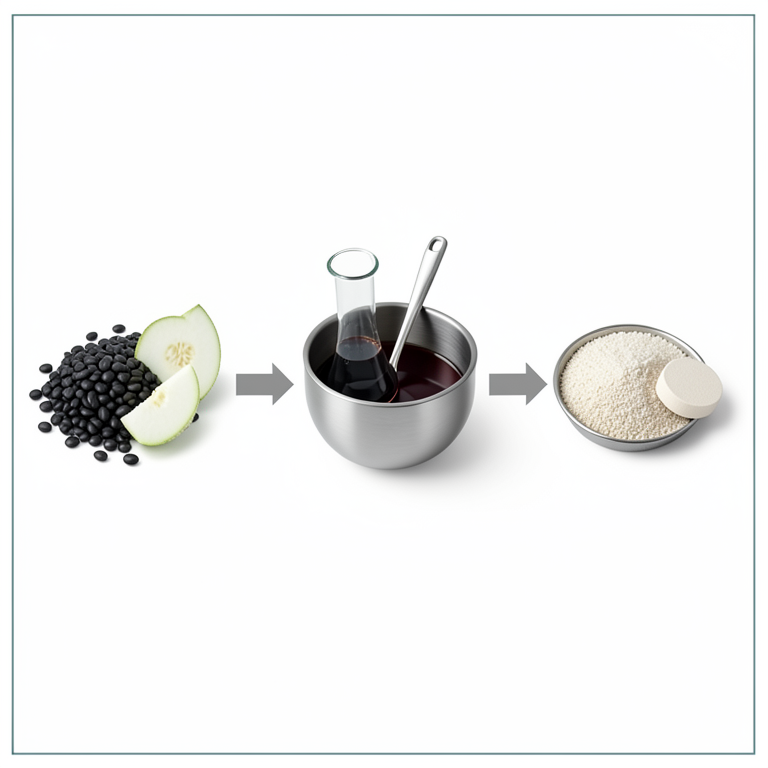
Polyherbal Tablet Development Workflow
AI-generated conceptual illustration (black seeds and white melon fruit). It explains the idea and does not show study data.
View source evidence ↗Introduction
Diabetes Mellitus is a chronic metabolic condition characterized by the inability of the body to regulate the blood sugar level effectively. It occurs if there is insufficient production of insulin, inadequate sensitivity to insulin on the part of the cells, or both. It is a globally emerging problem due to an increase in incidence rate annually. Diet modification, inactivity, obesity, stressful environment, and genetic factors contribute to the increased occurrence of this medical condition. The poorly regulated diabetes can cause complications ranging from heart diseases to kidney disorders, nervous system dysfunction, vision problems, delayed wound recovery, and reduced life expectancy. However, management of diabetes can be accomplished by adopting healthy practices and using medication to regulate the body's glucose levels. Even though current diabetic medication can prove effective, extended periods of treatment, unwanted side effects, expenses involved, and the use of several types of medication can make following the treatment difficult for certain patients. This need for alternative therapy methods led researchers to explore the natural realm and develop diabetes medication from plants. Medicinal plants are widely used for their therapeutic potential in many ancient systems of medicine. Medicinal plants such as Ayurveda and Unani were commonly used to treat the symptoms of diabetes including frequent urination, weakness, intense thirst, etc. This occurs due to the fact that each herb acts through a different pathway within the body's biological system, and their combination creates an additive effect that is difficult to achieve using a single herb. These herbs can address various factors associated with diabetes, such as enhancing insulin sensitivity, oxidative stress, digestive problems, obesity, and lipid balance. Kalonji, also known as Nigella sativa, is a medicinal seed that has been widely utilized since antiquity as a panacea to enhance health and cure various illnesses. The herb contains essential volatile and fixed oils, alkaloids, and phenolic compounds. Thymoquinone is a compound found in Kalonji seeds and exhibits antioxidant activity. Recent scientific studies have shown that black seeds may have hypoglycemic effects and promote insulin sensitivity, thus protecting the pancreas from oxidative injury. It could be an excellent choice for incorporating into herbal formulations to manage diabetes. Another type of food that possesses medicinal qualities is ash gourd (Benincasa hispida, white melon). This edible fruit contains mostly water, fiber, vitamins, minerals, and phytochemicals. Black seeds have insulin-like properties and antioxidant actions, whereas white melon fruit promotes digestion, hydration, and slow metabolism of glucose. Combined, they can contribute to metabolic balance and reducing some factors related to complications of diabetes. Regarding administration, tablets show their high efficiency because they are easy to use, transportable, and have prolonged action time compared to other dosage forms. Polyherbal tablets are preferred more than powders, juices, and decoctions. They are also better tolerated and facilitate adherence to the treatment regimen. Proper hardness, good disintegration, and stability of medicines depend on successful development. The project will be focused on creation and evaluation of polyherbal tablets containing black seeds and white melon fruits to treat diabetes. The interplay between ingredients in this combination will be explored, as well as their processing into tablets and their further evaluation of quality characteristics and possible antidiabetic action. Costeffectiveness of an herbal medicine will be the main objective.
Black Seed (Nigella sativa) and Its Antidiabetic Potential
Black seed, commonly known as kalonji, has been used in traditional medicine for centuries. Its major bioactive constituent is thymoquinone, along with fixed oils, proteins, and alkaloids.
Mechanisms of Action
Stimulates pancreatic beta cells for insulin release Improves insulin sensitivity in peripheral tissues Reduces oxidative stress by scavenging free radicals Decreases hepatic glucose production Improves serum lipid profile Several experimental studies have reported a reduction in fasting blood glucose and glycated hemoglobin levels after administration of black seed extracts.
White Melon (Benincasa hispida) and Its Antidiabetic
Role: White melon, also known as ash gourd or winter melon, is a nutritious fruit rich in dietary fiber, minerals, and antioxidants. It is traditionally valued for cooling, diuretic, and rejuvenating properties.
Mechanisms of Action
Slows glucose absorption due to fiber content Helps regulate body weight Reduces oxidative damage associated with diabetes Supports renal function and hydration Improves metabolic balance Animal studies have shown that extracts of white melon may reduce blood glucose levels and improve antioxidant enzyme activity.
Significance of Polyherbal Formulation
Combining black seed and white melon in a polyherbal formulation may provide complementary therapeutic effects. Black seed mainly improves insulin activity and pancreatic protection, while white melon supports metabolism and reduces glucose absorption.
Advantages of the Combination
Better control of blood glucose levels Protection against diabetic complications Improvement in lipid metabolism Reduced oxidative stress Potential reduction in dosage-related side effects Such formulations may also include other herbs like fenugreek, bitter gourd, neem, or gymnema for enhanced action.
Methodology
The present study was designed to develop and evaluate a polyherbal formulation for diabetes management containing black seed (Nigella sativa) and white melon (Benincasa hispida). The methodology included selection of raw materials, preparation of extracts, formulation development, and evaluation of antidiabetic activity.
Collection and Authentication of Plant Materials
Black seeds and fresh white melon fruits were collected from a local herbal market. The plant materials were cleaned, dried, and authenticated by a qualified botanist or pharmacognosist. Foreign particles and impurities were removed before further processing.
Preparation of Raw Materials
Black seeds were washed, shade dried, and powdered using a mechanical grinder. White melon fruits were peeled, seeds removed, sliced into small pieces, and dried under shade or tray dryer. The dried material was then pulverized into coarse powder.
Extraction Process
The powdered materials were extracted separately using suitable solvents such as distilled water, ethanol, or hydroalcoholic solution by maceration or Soxhlet extraction method.
Black seed powder was extracted for 6-8 hours White melon powder was extracted similarly under controlled temperature. The obtained extracts were filtered and concentrated using a rotary evaporator or water bath. Dried extracts were stored in airtight containers.
Preparation of Polyherbal Formulation
Measured quantities of black seed extract and white melon extract were mixed in different ratios to prepare the polyherbal formulation. Excipients such as starch, lactose, or gum acacia were added if tablet or capsule dosage form was prepared.
Example ratio
Black seed extract -50% White melon extract -50%
Phytochemical Screening
The prepared extracts were subjected to preliminary phytochemical tests for the presence of:
b) Antidiabetic Activity
The antidiabetic activity was assessed using in vitro methods.
In vitro studies Alpha-amylase inhibition assay Alpha-glucosidase inhibition assay
Statistical Analysis
Data obtained from experiments were expressed as mean ± standard deviation. Statistical significance was analyzed using ANOVA followed by suitable post hoc tests.
Materials Required
Materials Required
Weighing
Accurately weigh all ingredients according to formula.
Mixing
Mix black seed powder, white melon powder, and diluent uniformly in a mortar or blender.
Granulation
Prepare starch paste or PVP binder solution. Add binder slowly to powder blend while mixing until damp mass forms.
Screening
Pass damp mass through sieve no. 16 or 20 to make granules.
Drying
Dry granules in tray dryer/hot air oven at 45-50°C until moisture removed.
Resieving
Pass dried granules through sieve no. 20 to break lumps and obtain uniform granules.
Lubrication
Add talc and magnesium stearate to dried granules. Mix gently for 3-5 minutes.
Compression
Compress granules into tablets using tablet punching machine. Set desired hardness and weight.
Evaluation of Tablets
Evaluation of Tablets
Safety and Limitations
The polyherbal formulation containing black seed (Nigella sativa) and white melon/ash gourd (Benincasa hispida) is generally considered safe when prepared hygienically and used in appropriate doses. Both ingredients have a long history of use in traditional medicine and as food materials. Black seed possesses antioxidant, anti-inflammatory, and antidiabetic properties, while white melon is known for its cooling, nutritive, and protective effects. During laboratory preparation, proper handling of raw materials is essential to avoid contamination by dust, microbes, pesticides, or heavy metals. Plant materials should be washed, dried, and stored in clean airtight containers. Extraction procedures must be carried out under controlled temperature conditions to preserve active constituents. Use of clean glassware, gloves, masks, and sterilized equipment is recommended during formulation. In experimental studies, doses should be selected carefully according to body weight and toxicity guidelines. Animals used for in-vivo studies must be handled according to ethical committee regulations. Blood glucose monitoring should be done regularly to prevent severe hypoglycemia. Stability studies are necessary to ensure shelf life and safety during storage. Although herbal products are considered natural, excessive use may cause unwanted effects such as gastric irritation, allergy, nausea, or interaction with other antidiabetic medicines. Therefore, medical supervision is advised, especially in diabetic patients already taking insulin or oral hypoglycemic drugs.
Limitations
The major limitation of polyherbal formulations is variation in the quality of raw materials due to differences in cultivation area, climate, harvesting time, and storage conditions. This may affect the concentration of active phytochemicals and lead to inconsistent therapeutic effects. Another limitation is the lack of standardized dosage and formulation methods. Different extraction techniques may produce different results. Clinical evidence in humans may also be limited, as many studies are based on animal experiments or in-vitro models. Herbal formulations may require a longer duration of treatment compared with synthetic drugs. Some patients may also experience poor compliance because of taste, odor, or multiple daily doses. In addition, possible herb-drug interactions cannot be ignored.
Conclusion
The present study concludes that the polyherbal formulation containing black seed (Nigella sativa) and white melon/ash gourd (Benincasa hispida) has promising potential in the management of diabetes mellitus. Both medicinal plants are well known for their nutritional and therapeutic properties and have been traditionally used for promoting health. The combination of these two herbal ingredients may provide a synergistic effect due to the presence of various bioactive constituents such as flavonoids, phenolic compounds, alkaloids, essential oils, and antioxidants. Black seed is recognized for its antihyperglycemic, antiinflammatory, and antioxidant activities, mainly due to active components such as thymoquinone. White melon is valued for its cooling, nutritive, and protective properties and may help in reducing oxidative stress, improving metabolism, and supporting pancreatic function. When combined in a suitable formulation, these herbs may contribute to better blood glucose regulation, improved lipid profile, and reduction in diabetic complications. The laboratory evaluation of the formulation indicates acceptable physical characteristics, stability, and the presence of important phytochemicals. In-vitro studies such as α-amylase and α-glucosidase inhibition assays suggest that the formulation may help delay carbohydrate digestion and glucose absorption. In-vivo studies also indicate a possible reduction in blood glucose levels and improvement in biochemical parameters when compared with diabetic control groups. One of the major advantages of this polyherbal approach is the use of natural plant materials that are easily available, economical, and generally considered safe when used in recommended doses. It may serve as a supportive therapy along with lifestyle modification, balanced diet, and regular medical treatment. However, proper standardization, quality control, dose optimization, and long-term toxicity studies are necessary before large-scale therapeutic use. Human clinical trials are also required to confirm efficacy and safety. In conclusion, the polyherbal formulation of black seed and white melon represents a valuable natural alternative or adjunct approach for diabetes management and warrants further scientific investigation for future pharmaceutical development.
References
24 in the original paper- American Diabetes Association. Standards of care in diabetes 2024. Diabetes Care. 2024;47(Suppl 1):S1S350.
- World Health Organization. Diabetes fact sheet. Geneva: WHO; 2023.
- Ahmad A, Husain A, Mujeeb M, Khan SA, Najmi AK, Siddique NA, et al. A review on therapeutic potential of Nigella sativa: A miracle herb. Asian Pac J Trop Biomed. 2013;3(5):337-352.
- Randhawa MA, Alghamdi MS. Antidiabetic effect of Nigella sativa: A review. Int J Health Sci. 2011;5(2):344-354.
- Bamosa AO, Kaatabi H, Lebdaa FM, Elq AM, AlSultan A. Effect of Nigella sativa seeds on glycemic control of type 2 diabetic patients. Indian J Physiol Pharmacol. 2010;54(4):344-354.
- Sultan MT, Butt MS, Karim R, et al. Nigella sativa supplementation modulates hyperglycemia in diabetic rats. Hum Exp Toxicol. 2009;28(11):705-711.
- Yadav JP, Saini S, Kalia AN, Dangi AS. Hypoglycemic activity of Benincasa hispida fruit extract. J Med Plants Res. 2010;4(20):2244-2248.
- Grover JK, Yadav S, Vats V. Medicinal plants with antidiabetic potential. J Ethnopharmacol. 2002;81(1):81-100.
- Nadkarni KM. Indian Materia Medica. Vol. 1. Mumbai: Popular Prakashan; 2009.
- Kokate CK, Purohit AP, Gokhale SB. Pharmacognosy. 50th ed. Pune: Nirali Prakashan; 2014.
- Harborne JB. Phytochemical Methods. 3rd ed. London: Chapman and Hall; 1998.
- Khandelwal KR. Practical Pharmacognosy. 19th ed. Pune: Nirali Prakashan; 2008.
- Trease GE, Evans WC. Pharmacognosy. 16th ed. London: Saunders Elsevier; 2009.
- OECD. Guidelines for the Testing of Chemicals. Paris: OECD Publishing; 2022.
- Sharma B, Balomajumder C, Roy P. Hypoglycemic effects of medicinal plant extracts in diabetic rats. J Nat Med. 2008;62:196-202.
- Gupta R, Sharma AK, Dobhal MP. Antioxidant activity of herbal formulations in diabetes management. Pharmacogn Res. 2011;3(2):85-92.
- Patel DK, Kumar R, Laloo D. Diabetes mellitus: Herbal treatment strategies. Asian Pac J Trop Dis. 2012;2(2):81-90.
- Modak M, Dixit P, Londhe J, Ghaskadbi S, Devasagayam T. Indian herbs and herbal drugs used for treatment of diabetes. J Clin Biochem Nutr. 2007;40(3):163-173.
- Chauhan A, Sharma PK, Srivastava P. Evaluation of polyherbal antidiabetic formulation. Int J Pharm Sci Rev 2010;5(2):45-50.
- Singh LW. Traditional medicinal plants used in diabetes treatment. J Ethnopharmacol. 2009;123(2):325-331.
- Kumar S, Narwal S, Kumar V, Prakash O. Alphaamylase inhibition studies of medicinal plants. J Adv Pharm Technol Res. 2011;2(1):66-69.
- Rao MU, Sreenivasulu M, Chengaiah B, Reddy KJ, Chetty CM. Herbal medicines for diabetes mellitus: A review. Int J PharmTech Res. 2010;2(3):1883-1892.
- Ali BH, Blunden G, Tanira MO, Nemmar A. Some phytochemical, pharmacological and toxicological properties of Nigella sativa. Phytother Res. 2008;22(4):307-326.
- Eddouks M, Maghrani M, Lemhadri A, Ouahidi ML, Jouad H. Ethnopharmacological survey of medicinal plants used for diabetes treatment. J Ethnopharmacol. 2005;97(2):255-268.