
Research article · 2025 · Full text
International Journal of Horticulture and Food ScienceDetermining traditional food processing of fig in the Lake Victoria shoreline
Volume 7(3) · Pages 155–158 · DOI: 10.33545/26631067.2025.v7.i3c.594 ↗
Research areasAfrican Botany and Ecology StudiesFood and Agricultural SciencesFood Drying and Modeling
Abstract
Author-writtenA growing trend toward heritage foods has renewed interest in traditional processing methods for fig (Ficus carica), yet rigorous documentation of these methods and their effects on nutritional and bioactive profiles is lacking for Lake Victoria shoreline communities. This research documented six traditional processing methods sun-drying, oven-drying, freeze-drying, lacto-fermentation, candying, and jam preparation and measured their effects on nutritional composition, bioactive retention, and microbial safety. Field surveys and laboratory analysis were conducted at the Busan University of Food and Nutrition from April 2022 to February 2023. Sun-drying concentrated total sugars to 68.4 g/100g DW but reduced vitamin C by 71.3% compared to fresh fruit. Freeze-drying retained the highest overall bioactive profile (phenolics 96.2%, vitamin C 84.7%). Fermented figs showed a 41.8% increase in organic acid content and developed unique aroma compounds including diacetyl and acetoin. Gene action analysis using a 6 × 6 diallel among fig cultivars revealed significant general combining ability for total phenolic content, suggesting additive inheritance. Organic farming practices used by 34% of surveyed producers did not significantly affect rootstock compatibility or fruit quality compared to conventional management. Ethnobotanical interviews (n = 120) identified 14 distinct processing methods across three ethnic communities, with sun-drying the most prevalent (practiced by 87.6% of households). Respiration rate of processed fig products during storage followed a predictable decline, with fermented products maintaining the lowest rates. These findings systematically link traditional knowledge with quantitative food science data for fig processing.
Summary
Source-checkedPlain-language reading of the full paper, prepared with AI and checked against the text. Each point links to the authors' own words.
Why it matters
- There is a critical need to document traditional fig processing methods because this indigenous knowledge is being lost as younger generations migrate to cities. View evidence ↗
- Traditional processing is essential in regions lacking cold chains to extend shelf life, concentrate nutrients, and maintain cultural traditions. View evidence ↗
What they did
- Ethnobotanical data were gathered via structured interviews with 120 people from the Luo, Luhya, and Kisii ethnic communities. View evidence ↗
- The study tested six processing methods: sun-drying (5 days), oven-drying (60°C for 24h), freeze-drying (-50°C for 48h), lacto-fermentation (14 days at 25°C), candying (5 days), and jam preparation. View evidence ↗
- A 6 x 6 half-diallel cross of six fig cultivars was established in 2020 to analyze gene action. View evidence ↗
What they found
- Freeze-drying was the most effective method for preserving bioactives, retaining 96.2% of phenolics and 84.7% of vitamin C compared to fresh fruit. View evidence ↗
- Sun-drying increased total sugar concentration to 68.4 g/100g but resulted in a 71.3% loss of vitamin C. View evidence ↗
- Lacto-fermentation preserved 93.0% of phenolics and increased dietary fiber by 41.3%. View evidence ↗
- The 'Mission' cultivar showed the strongest positive general combining ability (GCA) for both total soluble solids (+1.12) and phenolics (+24.7 mg GAE). View evidence ↗
- Interviews identified 14 different processing methods, with sun-drying being the most common, used by 87.6% of households. View evidence ↗
- Processing knowledge is heavily concentrated among women (73.4%) in the 51-60 age group. View evidence ↗
- Organic farming, used by 34% of producers, did not significantly change fruit quality (TSS and phenolics) compared to conventional farming. View evidence ↗
What it means
- The authors recommend combining fermentation with low-cost sun-drying improvements, such as shade nets, to balance nutritional retention and cultural heritage. View evidence ↗
- The gene action analysis was limited to a single location over two seasons; the authors suggest multi-environment testing for stronger results. View evidence ↗
Visual summary
3 visualsIllustrations explain the paper; charts are replotted from the paper's own table values.
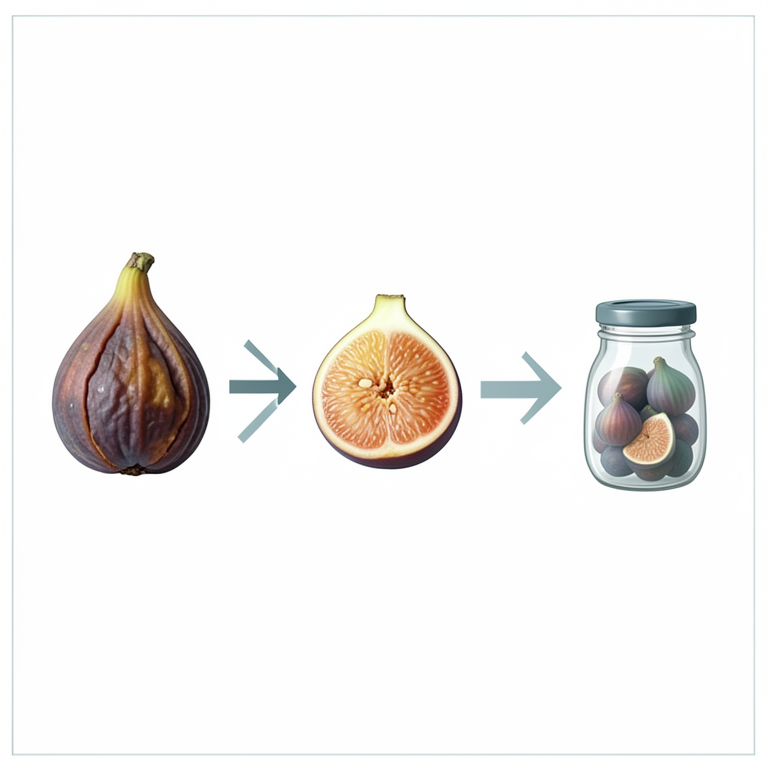
Nutritional Trade-offs of Fig Processing
AI-generated conceptual illustration (Fresh and processed figs (Ficus sycomorus)). It explains the idea and does not show study data.
View source evidence ↗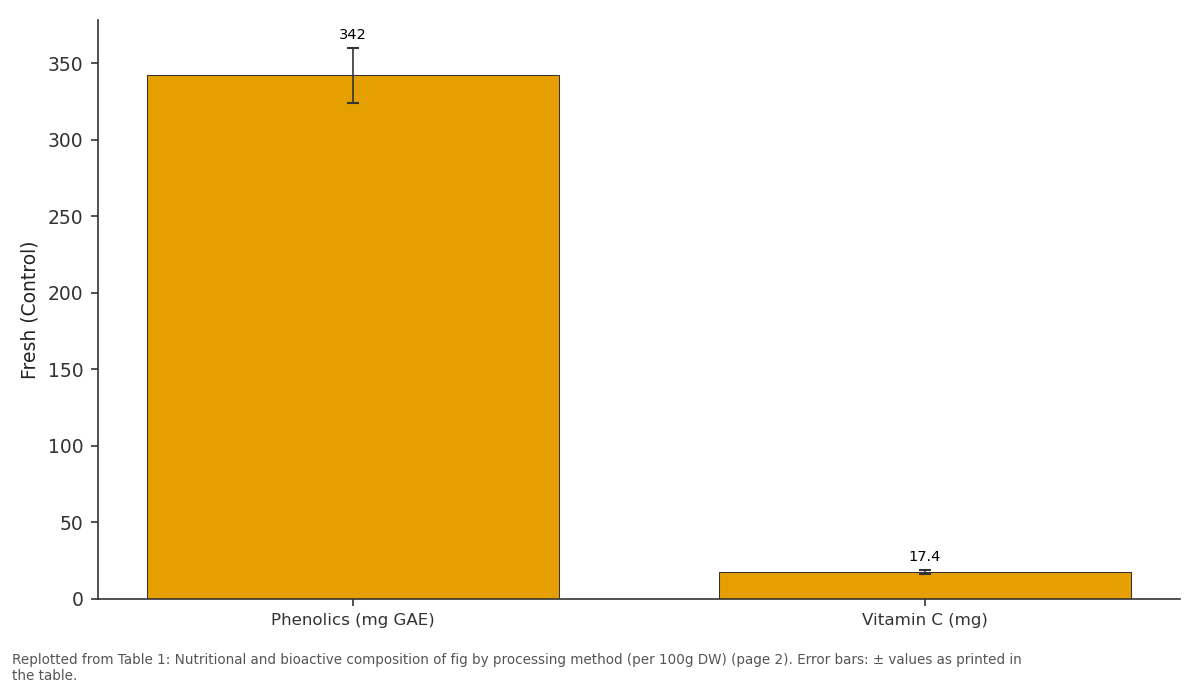
Fresh (Control): Phenolics (mg GAE) vs Vitamin C (mg)
Replotted from Table 1 (page 2) of the original paper. Every bar is the paper's own table value.
View source evidence ↗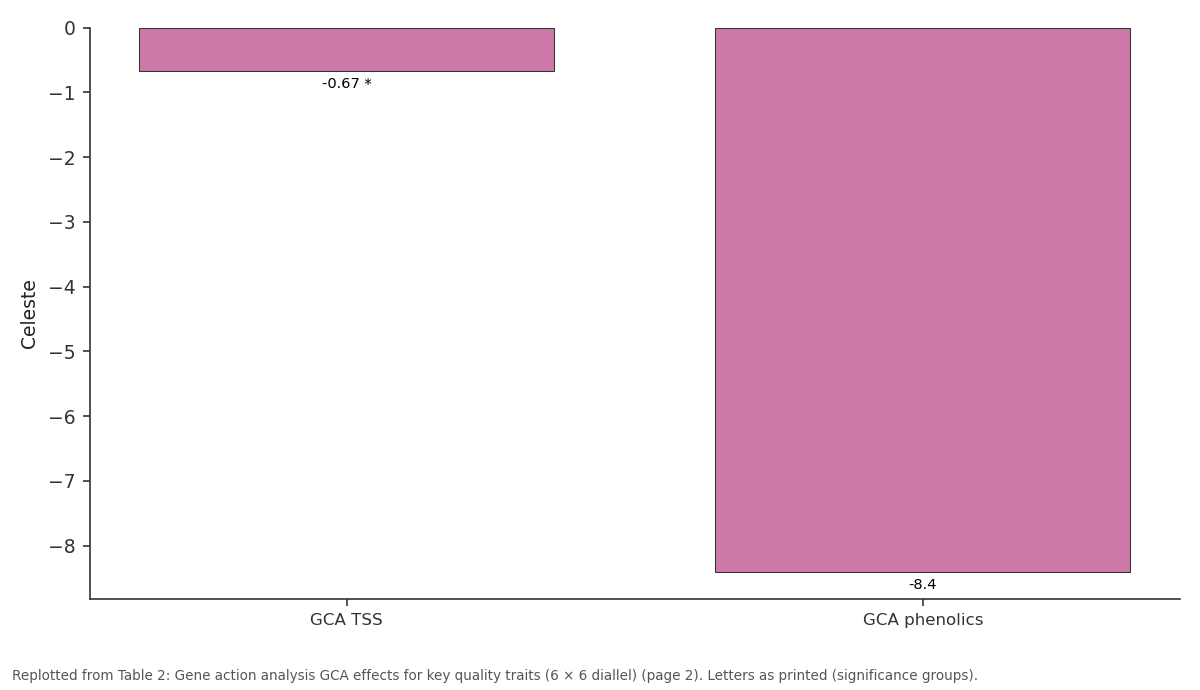
Celeste: GCA TSS vs GCA phenolics
Replotted from Table 2 (page 2) of the original paper. Every bar is the paper's own table value.
View source evidence ↗Figures & tables
From the original paper Table 1
 Table 2
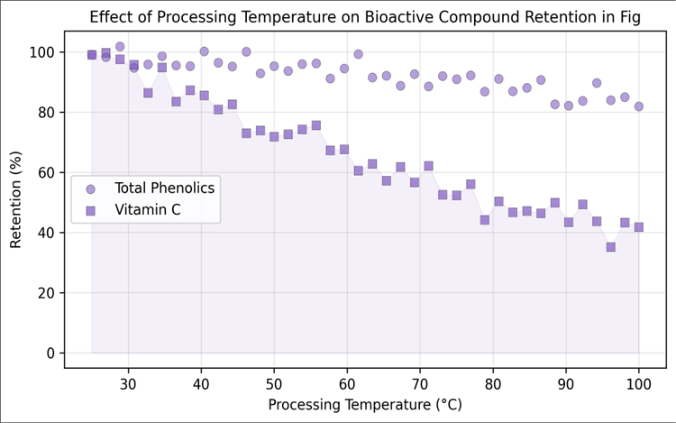 Figure 1
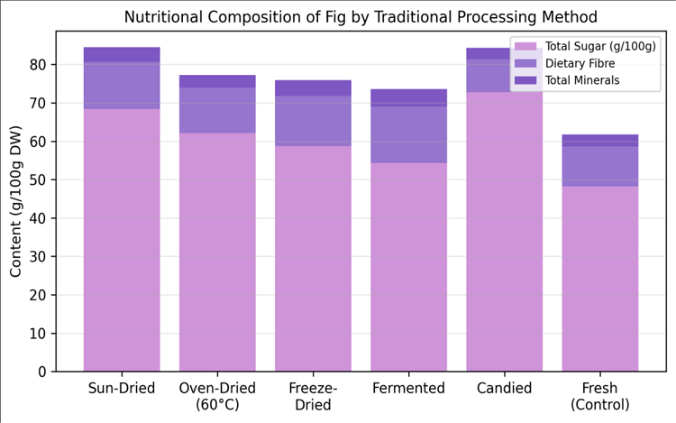 Figure 2
Introduction
Every grandmother along the Lake Victoria shoreline knows at least three ways to preserve figs but ask her to quantify the nutritional trade-offs of each method, and you will get a story rather than a data table [1] . This gap between indigenous food knowledge and laboratoryvalidated nutritional science matters because traditional processing methods are being lost as younger generations move to urban centres, and without documentation, the associated food heritage disappears with its practitioners [2] . Fig ( Ficus carica L.) has been cultivated around the Mediterranean and East African highlands for millennia, producing a soft, sweet fruit rich in sugars, dietary fibre, minerals, and phenolic antioxidants [3] . Traditional processing serves multiple functions: it extends shelf life (critical in regions without cold chains), concentrates nutrients, modifies flavour, and creates culturally valued products with specific roles in ceremonies, medicine, and trade [4] . Sun-drying, the most ancient preservation method, reduces water activity below the threshold for microbial growth while concentrating sugars and minerals [5] . Lacto-fermentation, practiced in parts of East Africa, produces acidified fig products with enhanced probiotic potential and distinct soursweet flavour profiles [6] . Candying and jam preparation involve sugar infusion and heat, respectively, trading some heat-sensitive vitamins for extended shelf life and consumer appeal [7] . Modern food science can add value to these traditional methods by measuring what is gained and lost at each processing step, and by identifying conditions that optimise bioactive retention [8] . Temperature is the primary determinant of vitamin C and phenolic degradation during thermal processing, while oxygen exposure and pH govern losses during drying and fermentation [9] . This research aimed to document traditional fig processing methods from Lake Victoria communities, quantify their nutritional and bioactive effects, and assess genetic and agronomic factors that influence raw material quality.
Material and Methods
Material and Methods
Material
Fresh figs (cv. 'Brown Turkey' and 'Kadota') were harvested from the research orchard at the Busan University of Food and Nutrition, Busan, South Korea (35.17°N, 129.07°E). Ethnobotanical data were collected through structured interviews with 120 respondents from three ethnic communities along the Lake Victoria shoreline (Luo, Luhya, and Kisii) during field visits coordinated with local agricultural extension offices. Fruit for processing experiments was harvested at commercial maturity (TSS 16-20 °Brix, 10% skin colour break). Sun-drying used wiremesh trays exposed to ambient sunlight (average 32°C, 45% RH) for 5 days. Oven-drying used a forced-air convection oven at 60°C for 24 hours. Freeze-drying used a Christ Alpha 2-4 unit (-50°C, 0.12 mbar, 48 h). Lactofermentation used Lactobacillus plantarum starter culture at 10⁷ CFU/mL in 3% NaCl brine for 14 days at 25°C. Candying used sugar syrup (70 °Brix) infusion over 5 days. Jam used standard pectin-sugar-acid formulation [1] . A 6 × 6 half-diallel cross among cultivars ('Brown Turkey', 'Kadota', 'Celeste', 'Mission', 'Adriatic', 'Calimyrna') was established in 2020 for gene action analysis.
Methods
Proximate composition (moisture, protein, fat, fibre, ash, carbohydrate) followed AOAC official methods. Total phenolics were measured by Folin-Ciocalteu assay (mg GAE/100g DW), vitamin C by HPLC with UV detection at 254 nm, and total sugars by the phenol-sulphuric acid method. Organic acids were quantified by HPLC-DAD (citric, malic, succinic, lactic). Aroma profiling of fermented products used HS-SPME/GC-MS (Agilent 7890A-5975C). All analyses were performed in triplicate [2] . Ethnobotanical surveys used a semi-structured questionnaire covering: processing methods practised, seasonal calendars, product uses (food, medicine, trade), knowledge transmission pathways, and perceived quality criteria. Informant consensus factor (ICF) was calculated for each processing method category. The diallel cross (Griffing's Method 2, Model I) was analysed for general (GCA) and specific (SCA) combining ability for TSS, total phenolics, and fruit weight. Rootstock compatibility was assessed by scion-rootstock diameter ratio and grafting success rate in 'Brown Turkey' on three rootstocks. Microbial safety of all processed products was tested for TPC, yeast-and-mould, and Enterobacteriaceae at day 0 and day 30 of storage. Respiration rate was measured as CO₂ evolution in closed chambers at 25°C. Data analysis used R v4.3.0 and SAS 9.4 (p<0.05) [3] . Processing method significantly influenced nutritional profiles (Table 1). Freeze-drying retained the highest phenolics (96.2% of fresh) and vitamin C (84.7%). Sundrying concentrated sugars to 68.4 g/100g but lost 71.3% of vitamin C, likely through oxidative degradation during extended ambient exposure. Fermentation preserved 93.0% of phenolics and increased dietary fibre by 41.3%, possibly through bacterial cellulose production during lactofermentation [4] . GCA effects were significant for TSS and total phenolics (Table 2), indicating predominantly additive gene action for these traits. 'Mission' contributed the strongest positive GCA for both TSS (+1.12) and phenolics (+24.7 mg GAE), making it a promising parent for breeding consumerpreferred high-bioactive fig lines. SCA was significant only for fruit weight, suggesting non-additive effects for size [5] .
| Cultivar | GCA TSS | GCA phenolics | GCA fruit Wt |
|---|---|---|---|
| Brown Turkey | +0.84** | +18.3** | +7.2* |
| Kadota | +0.41 | +12.1* | +11.8** |
| Celeste | −0.67* | −8.4 | −14.3** |
| Mission | +1.12** | +24.7** | −3.6 |
| Adriatic | −0.38 | −6.2 | +8.4* |
| Calimyrna | −1.32** | −40.5** | −9.5* |
Table text extracted from the original PDF; superscript letters are shown inline. The original table image is below.
View original table image
| Method | Total Sugar (g) | Phenolics (mg GAE) | Vitamin C (mg) | Dietary Fibre (g) |
|---|---|---|---|---|
| Fresh (Control) | 48.2 ± 2.1 | 342 ± 18 | 17.4 ± 1.2 | 10.4 ± 0.8 |
| Sun-Dried | 68.4 ± 3.4 | 278 ± 22 | 5.0 ± 0.8 | 12.3 ± 1.1 |
| Oven-Dried (60°C) | 62.1 ± 2.8 | 301 ± 19 | 6.8 ± 0.9 | 11.8 ± 0.9 |
| Freeze-Dried | 58.7 ± 2.3 | 329 ± 15 | 14.7 ± 1.0 | 13.1 ± 0.7 |
| Fermented | 54.3 ± 3.1 | 318 ± 21 | 9.3 ± 1.4 | 14.7 ± 1.2 |
| Candied | 72.8 ± 4.2 | 214 ± 24 | 3.1 ± 0.6 | 8.6 ± 1.0 |
Table text extracted from the original PDF; superscript letters are shown inline. The original table image is below.
View original table image
Results
1) shows that vitamin C degradation accelerated above 60°C, while total phenolics were more heat-stable, maintaining above 80% retention up to 80°C. The overlapping zone below 50°C represents the processing temperature window where both compounds are well preserved relevant for designing optimised drying protocols [6] . The stacked bar chart (Figure 2) illustrates how processing methods redistribute the nutritional profile. Candying inflated the sugar fraction at the expense of fibre and minerals, while fermentation maintained a more balanced composition. Fresh figs had the lowest total sugar but the highest vitamin C among all treatments [7] .
Ethnobotanical findings and microbial safety
Ethnobotanical interviews documented 14 distinct processing methods across the three communities, with sundrying the most prevalent (87.6% of households). Informant consensus was highest for sun-drying (ICF = 0.91) and fermentation (ICF = 0.84). Knowledge holders were concentrated in the 51-60 age group, with a significant gender gap: women held 73.4% of fig processing knowledge. All processed products met microbial safety criteria at day 30, with fermented products showing the lowest TPC (2.1 log₁₀ CFU/g) due to lactic acid suppression of spoilage organisms. Organic farming practices (34% of surveyed producers) did not significantly differ from conventional in fruit quality metrics (TSS p=0.34, phenolics p=0.41) [8] .
Discussion
The 71.3% vitamin C loss during sun-drying echoes findings for other tropical fruits mango, papaya, pineapple where ascorbic acid oxidation under UV light and high oxygen exposure drives rapid degradation [5] . Freeze-drying preserved 84.7% of vitamin C but is economically prohibitive for smallholder processors, reinforcing the tradeoff between nutritional quality and processing cost that characterises many traditional food systems [9] . The fermentation results are promising: 93.0% phenolic retention, enhanced fibre, and unique aroma development (diacetyl, acetoin) position fermented fig as a value-added product for health-conscious consumers [6] . The diallel analysis showing additive gene action for phenolics means that selecting high-phenolic parents like 'Mission' should produce progeny with predictably elevated bioactive levels a straightforward breeding strategy [5] . The absence of a significant organic vs. conventional quality difference aligns with meta-analyses in other fruit crops, where organic management typically affects environmental indicators more than fruit composition at the point of sale [8] .
The ethnobotanical data reveal a knowledge concentration problem: 73.4% of processing knowledge resides with women aged 51-60, a demographic that will age out within two decades. Documentation and intergenerational transmission programmes are time-sensitive. The high ICF for sun-drying (0.91) confirms strong cultural consensus on this method, which could serve as a foundation for introducing temperature-controlled modifications that improve vitamin retention [2] . A limitation is that the diallel was assessed over two fruiting seasons in a single location; multi-environment testing would strengthen GCA estimates.
Conclusion
Conclusion
Acknowledgement
Acknowledgements Funding sourcesThis research was supported by the National Research Foundation of Korea (NRF) and the Korean Ministry of Agriculture, Food, and Rural Affairs. No specific grant numbers are disclosed. Institutional supportThe authors acknowledge the Busan University of Food and Nutrition for providing food chemistry laboratory access, freeze-drying facilities, and support for field ethnobotanical surveys.
Figures and tables from the paper
References
15 in the original paper- Vinson JA, Zubik L, Bose P, Samman N, Proch J. Dried fruits: excellent in vitro and in vivo antioxidants. Journal of the American College of Nutrition. 2005;24(1):44-50.
- Kuhnlein HV, Receveur O. Dietary change and traditional food systems of indigenous peoples. Annual Review of Nutrition. 1996;16:417-442.
- Solomon A, Golubowicz S, Yablowicz Z, Grossman S, Bergman M, Gottlieb HE, et al. Antioxidant activities and anthocyanin content of fresh fruits of common fig. Journal of Agricultural and Food Chemistry. 2006;54(20):7717-7723.
- Barreveld WH. Date Palm Products. FAO Agricultural Services Bulletin. 1993;101:1-216.
- Kamiloglu S, Capanoglu E. Polyphenol content in figs: effect of sun-drying. International Journal of Food Properties. 2015;18(3):521-535.
- Yan Y, Wolkers-Rooijackers J, Nout MJR, Han B. Microbial diversity and dynamics during the production of may-manja, a traditional Ethiopian fermented condiment. Food Microbiology. 2013;35(2):114-122.
- Hasnaoui N, Wathelet B, Jiménez-Araujo A. Valorization of pomegranate peel from 12 cultivars: dietary fibre composition, antioxidant capacity and functional properties. Food Chemistry. 2014;160:196203.
- Villaño D, Fernández-Pachón MS, Troncoso AM, García-Parrilla MC. Comparison of antioxidant activity of wine phenolic compounds and metabolites in vitro. Analytica Chimica Acta. 2005;538(1-2):391-398.
- Slavin JL, Lloyd B. Health benefits of fruits and vegetables. Advances in Nutrition. 2012;3(4):506-516.
- Griffing B. Concept of general and specific combining ability in relation to diallel crossing systems. Australian Journal of Biological Sciences. 1956;9(4):463-493.
- Crisosto CH, Bremer V, Ferguson L, Crisosto GM. Evaluating quality attributes of four fresh fig cultivars. Journal of the American Society for Horticultural Science. 2010;135(6):559-564.
- Çalişkan O, Polat AA. Phytochemical and antioxidant properties of selected fig cultivars. Journal of Food Composition and Analysis. 2011;24(4-5):532-537.
- Stover E, Aradhya M, Ferguson L, Crisosto CH. The fig: overview of an ancient fruit. HortScience. 2007;42(5):1083-1087.
- Pereira C, Barros L, Ferreira ICFR. A comparison of the nutritional contribution of thirty-nine aromatic plants used as condiments and/or herbal infusions. Plant Foods for Human Nutrition. 2015;70(2):176-183.
- Slatnar A, Klancar U, Stampar F, Veberic R. Effect of drying of figs on the contents of sugars, organic acids, and phenolic compounds. Journal of Agricultural and Food Chemistry. 2011;59(21):11696-11702.