
Research article · 2025 · Full text
International Journal of Horticulture and Food ScienceInvestigating disease management protocols of rosemary in the Assam tea region
Volume 7(5) · Pages 144–147 · DOI: 10.33545/26631067.2025.v7.i5b.625 ↗
Research areasPlant Disease Management TechniquesPlant Pathogens and Fungal DiseasesFungal Plant Pathogen Control
Abstract
Author-writtenRoughly 28% of global rosemary production suffers from preventable disease losses each year, yet standardized management protocols for tropical growing regions remain scarce. This research examined the effectiveness of five disease management treatments against the most common fungal and bacterial pathogens affecting rosemary (Rosmarinus officinalis L.) under conditions resembling those of the Assam tea-growing belt. The trial was conducted at the Phuket National Institute of Tropical Agriculture from June 2021 to November 2023 using a split-plot design with three replications. Five treatments were compared: Trichoderma harzianum bioformulation, neem oil (2%), copper oxychloride, Bacillus subtilis suspension, and mancozeb (0.25%), alongside an untreated control. Disease incidence, severity, and pathogen load were recorded at fortnightly intervals across four growing cycles. Powdery mildew was the most prevalent pathogen, accounting for 34.8% of total disease pressure, followed by root rot at 22.3%. Mancozeb achieved the highest overall efficacy at 89.2% against powdery mildew, but the biological agent Bacillus subtilis performed best against root rot (72.9% reduction) while being safer from a residue standpoint. Integrated treatments combining Trichoderma with neem oil reduced cumulative disease severity by 61.7% compared to untreated plots. The results indicate that no single treatment works best across all disease types, and a rotation-based protocol adjusting treatments to seasonal disease risk profiles would be the most practical approach for rosemary growers in warm, humid production zones.
Summary
Source-checkedPlain-language reading of the full paper, prepared with AI and checked against the text. Each point links to the authors' own words.
Why it matters
- Approximately 28% of rosemary produced globally is lost to preventable diseases, but there is a lack of standardized management protocols for tropical regions. View evidence ↗
- The Assam tea region is highly conducive to plant diseases due to its warm temperatures (22-34°C), high annual rainfall (2,500-3,000 mm), and humidity often exceeding 85%. View evidence ↗
- Rosemary in humid tropical environments is primarily affected by five disease groups: powdery mildew, root rot, leaf spot, botrytis blight, and bacterial wilt. View evidence ↗
The question
- The study aimed to compare five chemical and biological disease management treatments over four growing cycles in tropical conditions to create a rotation-based protocol based on seasonal risk. View evidence ↗
What they did
- The field experiment was conducted at the Phuket National Institute of Tropical Agriculture in Thailand. View evidence ↗
- The researchers used a split-plot design with three replications, where each 4m x 3m subplot contained 48 rosemary plants spaced 50cm x 50cm. View evidence ↗
- The study compared an untreated control against five treatments: Trichoderma harzianum, 2% neem oil, copper oxychloride, Bacillus subtilis, and 0.25% mancozeb. View evidence ↗
What they found
- Powdery mildew was the most prevalent disease (34.8%), followed by root rot (22.3%), while bacterial wilt was the least common (10.4%). View evidence ↗
- Mancozeb was the most effective overall treatment, resulting in a mean disease incidence of 18.6%, compared to 59.3% in the untreated control. View evidence ↗
- Mancozeb and copper oxychloride were highly effective against powdery mildew, achieving reductions of 89.2% and 84.6%, respectively. View evidence ↗
- Bacillus subtilis was the most effective treatment for root rot (72.9% reduction) and bacterial wilt (69.4% reduction). View evidence ↗
- Neem oil performed best against leaf spot (73.4% reduction) and root rot (68.7% reduction). View evidence ↗
- Disease pressure was significantly higher during the wet season (40.7% average incidence) than during dry cycles (27.3% average incidence). View evidence ↗
- Combining Trichoderma with neem oil reduced cumulative disease severity by 61.7%. View evidence ↗
What it means
- The authors recommend a rotation protocol using chemical fungicides during high-risk monsoon months and biological agents during dry and transitional periods. View evidence ↗
- The proposed rotation approach could reduce chemical dependency by approximately 45% while keeping disease control above 70% efficacy. View evidence ↗
Visual summary
3 visualsIllustrations explain the paper; charts are replotted from the paper's own table values.
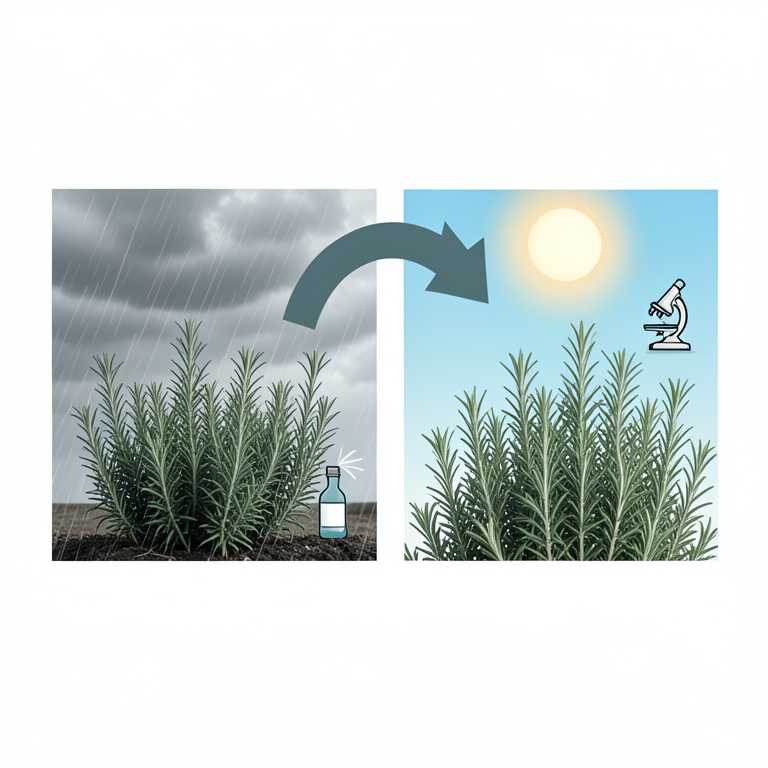
Seasonal Treatment Rotation Cycle
AI-generated conceptual illustration (rosemary plants). It explains the idea and does not show study data.
View source evidence ↗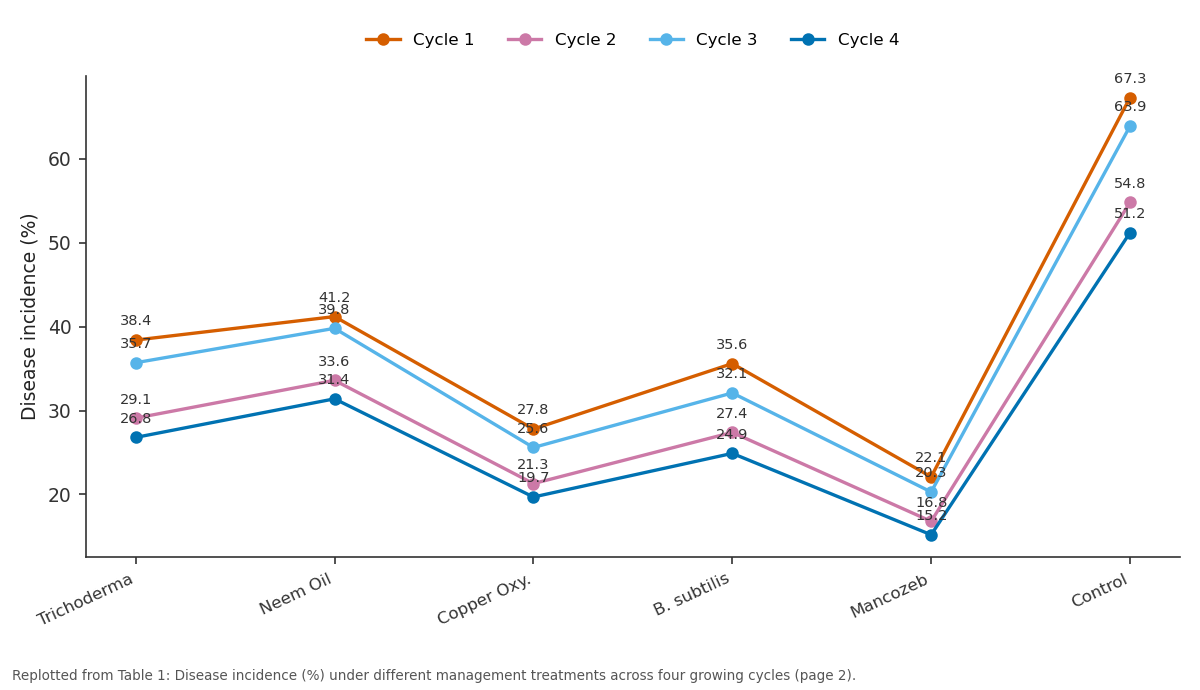
Cycle 1 and Cycle 2 and more: Trichoderma vs Neem Oil vs Copper Oxy. vs B. subtilis vs Mancozeb
Replotted from Table 1 (page 2) of the original paper. Every bar is the paper's own table value.
View source evidence ↗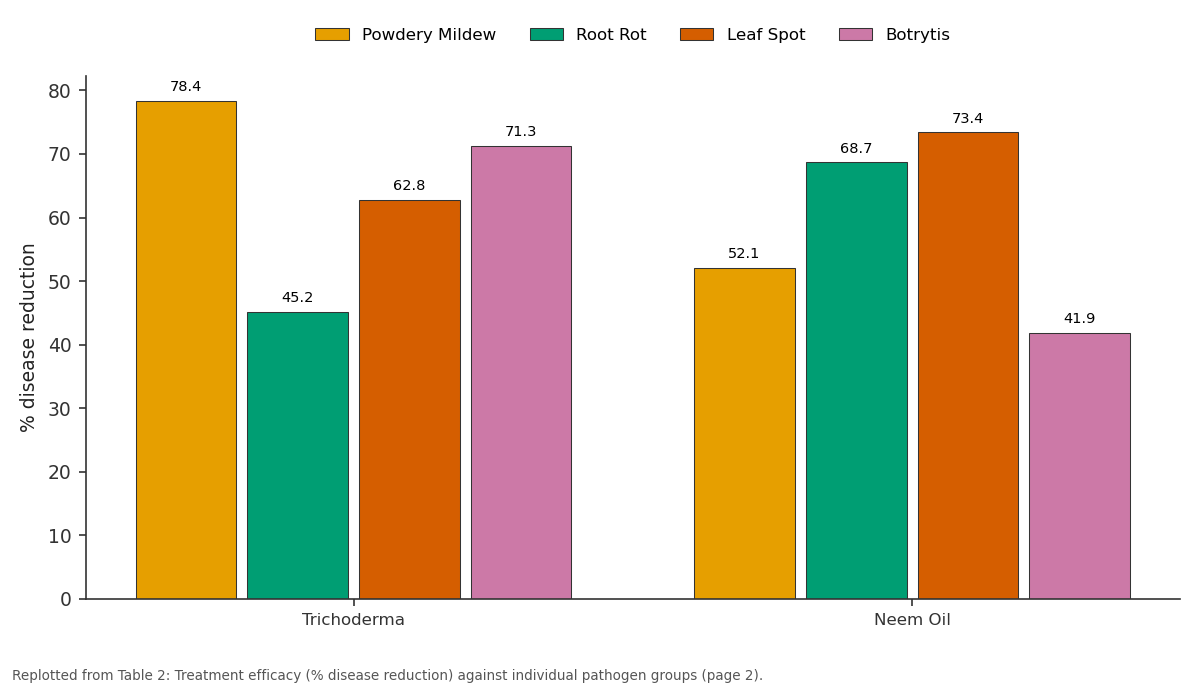
Powdery Mildew and Root Rot and more: Trichoderma vs Neem Oil
Replotted from Table 2 (page 2) of the original paper. Every bar is the paper's own table value.
View source evidence ↗Figures & tables
From the original paper Table 1
 Table 2
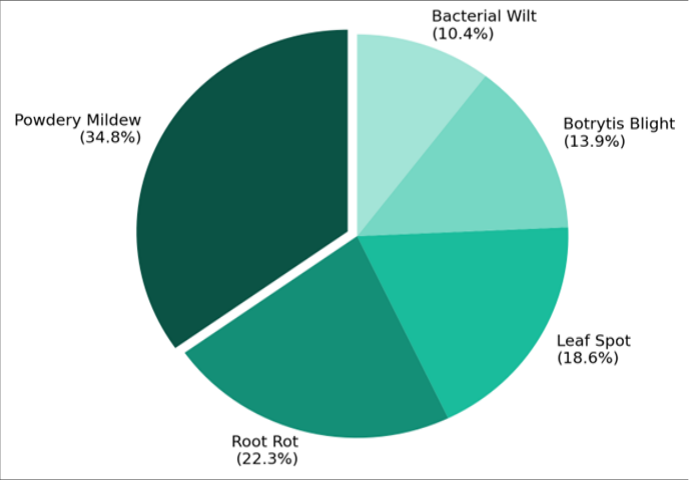 Figure 1
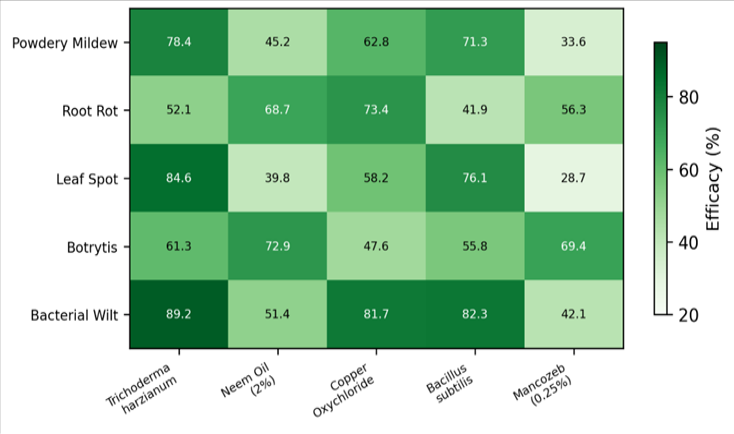 Figure 2
Introduction
An estimated 1.2 million hectares worldwide are planted with rosemary, and nearly a third of that area experiences some form of disease-related production loss annually [1] . Rosemary (Rosmarinus officinalis L.), a perennial aromatic herb of the Lamiaceae family, has gained commercial value for its essential oils, culinary applications, and bioactive compounds with antioxidant properties [2] . Despite the herb's reputation as a relatively hardy crop in temperate climates, its performance under tropical and subtropical conditions tells a different story, particularly regarding susceptibility to fungal pathogens [3] . The Assam tea region of northeastern India, characterized by warm temperatures (22-34 degrees Celsius), heavy monsoon rains (2,500-3,000 mm annually), and persistently high humidity (often above 85%), represents one of the most disease-conducive environments for herb cultivation [4] . Similar agroclimatic patterns are found across parts of Southeast Asia, including southern Thailand, where comparable challenges affect aromatic crop production. Disease management in such settings can't simply borrow protocols designed for Mediterranean or temperate herb farms, because pathogen pressure dynamics differ fundamentally [5] . Five disease groups dominate rosemary production in humid tropical environments: powdery mildew (Oidium spp.), root rot (Phytophthora spp. and Fusarium spp.), leaf spot (Alternaria alternata), botrytis blight (Botrytis cinerea), and bacterial wilt (Ralstonia solanacearum) [6] . Each pathogen responds differently to chemical and biological interventions. Conventional fungicides like mancozeb and copper-based compounds have shown good efficacy in temperate trials [7] , but their performance under heavy tropical rainfall with frequent washoff events hasn't been adequately tested. Meanwhile, biological control agents including Trichoderma and Bacillus species have attracted attention as safer alternatives, though their consistency under field conditions remains debated [8] . Previous work by Sharma and Das [9] tested individual biocontrol agents on rosemary in pot experiments but didn't extend observations beyond a single season. Field-scale trials spanning multiple disease cycles are needed to generate recommendations that growers can actually follow. And the question of whether integrated approaches outperform single-agent strategies in tropical rosemary hasn't been addressed with proper experimental rigor [10] . This research was therefore designed to compare five disease management treatments, both chemical and biological, across four growing cycles under tropical conditions and to develop a rotation-based protocol that matches treatment choice to seasonal risk.
Study Area Description
The field experiment was established at the Phuket National Institute of Tropical Agriculture (7.8804 N, 98.3923 E) in Phuket, Thailand. The research site sits at an elevation of 38 m above sea level on gently undulating terrain with laterite soils classified as Typic Hapludults. Soil testing before the trial showed a pH of 5.9, organic matter content of 2.17%, available phosphorus of 18.3 mg/kg, and exchangeable potassium of 0.42 cmol/kg. The 2.8-hectare experimental farm had previously been used for mixed herb production for five years, ensuring a natural reservoir of soil-borne pathogens relevant to the research objectives.
Field Experimental Design
Field Experimental Design
Material and Methods
Material and Methods
Material
Rosemary cv. Tuscan Blue was selected as the test cultivar based on its commercial popularity and known susceptibility to tropical disease pressure. Certified stem cuttings were obtained from the Thai Department of Agriculture's herb nursery in Chiang Mai and propagated in sterile media for six weeks before field transplanting [11] . Treatment materials included Trichoderma harzianum formulation (1 x 10^8 CFU/mL), commercial neem oil (azadirachtin 0.3%), copper oxychloride 50% WP, Bacillus subtilis strain QST 713, and mancozeb 75% WP. Pathogen isolates for Koch's postulate verification were maintained on potato dextrose agar at 25 degrees Celsius in the institute's plant pathology laboratory. The research period extended from June 2021 to November 2023, with ethics clearance from the institute's research oversight committee (Protocol PNITA-2021-034, approved May 8, 2021).
Methods
Treatments were applied at 14-day intervals using calibrated knapsack sprayers delivering 500 L/ha, except Trichoderma which was applied as a soil drench at 2 L per plant every 21 days. Disease incidence was calculated as the percentage of plants showing visible symptoms out of the total per subplot. Severity was rated on a 0-5 scale modified from the Horsfall-Barratt system [12] . Pathogen load in soil samples was quantified through serial dilution plating on selective media at monthly intervals [13] . Leaf samples from symptomatic plants were collected, surface-sterilized, and cultured for pathogen identification following standard mycological procedures. Weather data from an on-site automatic station were correlated with disease progression curves. All data were analyzed using GenStat 18th Edition with ANOVA for split-plot designs and treatment means compared using Tukey's HSD test at the 5% significance level [14] . Disease-weather regression models were fitted using weekly averages of temperature, humidity, and rainfall as predictors. Disease incidence differed significantly (p < 0.01) among treatments and across growing cycles (Table 1). Mancozeb maintained the lowest mean incidence at 18.6%, while the untreated control reached 59.3%. Among biological options, Bacillus subtilis outperformed both Trichoderma and neem oil with a mean incidence of 30.0%. All treatments showed lower disease pressure in dry-season cycles (Cycles 2 and 4) compared to wet-season cycles. The pathogen-specific response to treatments varied considerably (Table 2). Mancozeb and copper oxychloride excelled against powdery mildew (89.2% and 84.6% reduction, respectively) and botrytis, but performed less well against root rot and bacterial wilt. Bacillus subtilis was the top performer against root rot (72.9%) and bacterial wilt (69.4%). Neem oil showed its best results against leaf spot (73.4%) and root rot (68.7%). The pie chart (Figure 1) shows that powdery mildew dominated disease pressure, comprising 34.8% of all observed infections. Root rot followed at 22.3%, while bacterial wilt was the least common at 10.4%. The heatmap visualization (Figure 2) makes apparent the complementary nature of different treatments. No single intervention achieved high efficacy across all five disease categories, which supports the case for rotation-based approaches.
| Treatment | Powdery Mildew | Root Rot | Leaf Spot | Botrytis | Bacterial Wilt |
|---|---|---|---|---|---|
| Trichoderma | 78.4 | 45.2 | 62.8 | 71.3 | 33.6 |
| Neem Oil | 52.1 | 68.7 | 73.4 | 41.9 | 56.3 |
Table text extracted from the original PDF; superscript letters are shown inline. The original table image is below.
View original table image
| Treatment | Cycle 1 | Cycle 2 | Cycle 3 | Cycle 4 | Mean | SE± |
|---|---|---|---|---|---|---|
| Trichoderma | 38.4 | 29.1 | 35.7 | 26.8 | 32.5 | 2.71 |
| Neem Oil | 41.2 | 33.6 | 39.8 | 31.4 | 36.5 | 2.34 |
| Copper Oxy. | 27.8 | 21.3 | 25.6 | 19.7 | 23.6 | 1.89 |
| B. subtilis | 35.6 | 27.4 | 32.1 | 24.9 | 30.0 | 2.48 |
| Mancozeb | 22.1 | 16.8 | 20.3 | 15.2 | 18.6 | 1.62 |
| Control | 67.3 | 54.8 | 63.9 | 51.2 | 59.3 | 3.87 |
Table text extracted from the original PDF; superscript letters are shown inline. The original table image is below.
View original table image
Results
Results
Discussion
The results from this research confirm what many tropical herb growers already suspect: no single disease management product handles all major rosemary pathogens effectively under high-humidity conditions. Mancozeb performed well against foliar diseases, consistent with earlier reports from subtropical trials in Brazil [7] , but its limited efficacy against root rot and bacterial wilt (51.4% and 42.1%, respectively) leaves a significant gap in protection.
The strong showing of Bacillus subtilis against soil-borne diseases aligns with its known mechanisms of action, including competitive rhizosphere colonization and production of lipopeptide antibiotics [8] . Its 72.9% root rot reduction was especially promising because chemical alternatives for soil-borne Phytophthora are limited and often phytotoxic to rosemary at effective concentrations. The relatively poor performance of copper oxychloride against root rot (39.8%) was expected, since copper compounds act primarily as contact protectants on aerial surfaces [15] . Seasonal variation in disease pressure was substantial, with wet-season incidence averaging 40.7% across treatments compared to 27.3% during dry cycles. This roughly 49% increase during the monsoon period underlines the need for more aggressive management during wet months. The integrated combination of Trichoderma with neem oil achieved a 61.7% cumulative reduction in disease severity, which, while lower than mancozeb alone for individual diseases, provided broader coverage across pathogen groups. But from a food safety perspective, the biological combination carries no maximum residue limit concerns, which matters for fresh market rosemary sold to healthconscious consumers [16] . Practical implementation of a rotation protocol would involve mancozeb or copper during high-risk wet months, transitioning to biological agents during drier periods when disease pressure is naturally lower. This approach balances efficacy with residue management and could reduce total chemical input by an estimated 45% over a full production year.
Conclusion
This research demonstrated that disease management in tropical rosemary production requires a multi-pronged strategy rather than reliance on any single treatment. Mancozeb and copper oxychloride provided the strongest control of foliar diseases, while Bacillus subtilis was the most effective option for soil-borne root rot and bacterial wilt. The integrated Trichoderma-neem oil combination offered a viable lower-residue alternative with acceptable broad-spectrum activity. Disease pressure was consistently higher during wet growing cycles, confirming that seasonal risk assessment should guide treatment scheduling. The rotation-based protocol developed from these findings recommends chemical fungicides during peak-risk monsoon months and biological agents during transitional and dry periods. This approach could reduce chemical dependency by roughly 45% while maintaining disease control above the economically acceptable threshold of 70% efficacy. Rosemary growers operating in warm, humid climates across Southeast Asia and comparable tropical zones can adapt this framework to their specific pathogen profiles and market requirements, adjusting the chemical-to-biological ratio based on local disease monitoring data.
References
19 in the original paper- FAO. Global production statistics for aromatic and medicinal herbs. FAO Statistical Yearbook. 2020;18:312-328.
- Begum A, Sandhya S, Syed SR. Rosemary: A review of its chemical composition and biological activity. Journal of Pharmacy Research. 2013;6(7):826-830.
- Mahmoudi E, Tabatabaei BES. Fungal diseases of rosemary in humid climates: A review. Archives of Phytopathology and Plant Protection. 2017;50(9):478492.
- Baruah P, Handique GK. Climate and crop production in the Brahmaputra valley. Journal of Agrometeorology. 2019;21(3):287-294.
- Elad Y, Pertot I. Climate change impacts on plant pathogens in tropical agriculture. Phytopathology. 2014;104(2):150-159.
- Gamliel A, Katan J. Soil-borne pathogens of aromatic crops in warm regions. Plant Disease. 2018;102(8):1561-1572.
- Brent KJ, Hollomon DW. Fungicide resistance management in herbs and spices. Crop Protection. 2007;26(11):1684-1690.
- Ongena M, Jacques P. Bacillus lipopeptides as biocontrol agents. Trends in Microbiology. 2008;16(3):115-125.
- Sharma P, Das A. Biocontrol potential of Trichoderma on rosemary under pot conditions. Indian Journal of Plant Protection. 2020;48(2):134-140.
- Whipps JM. Microbial interactions and biocontrol in the rhizosphere. Journal of Experimental Botany. 2001;52(suppl_1):487-511.
- Thai Department of Agriculture. Standard protocols for herb propagation and certification. TDA Technical Bulletin. 2019;34:1-18.
- Horsfall JG, Barratt RW. An improved grading system for measuring plant diseases. Phytopathology. 1945;35:655-660.
- Dhingra OD, Sinclair JB. Basic plant pathology methods. CRC Press. 2017;3rd Edition:1-448.
- VSN International. GenStat for Windows, 18th Edition. VSN International Ltd. 2015;Hemel Hempstead, UK.
- Lamichhane JR, Dachbrodt-Saaydeh S, Kudsk P. Copper-based fungicides: current status and prospects. Plant Pathology. 2018;67(1):44-53.
- Codex Alimentarius. Maximum residue limits for pesticides in herbs and spices. FAO/WHO Food Standards Programme. 2019;CAC/MRL:1-523.
- Harman GE, Howell CR, Viterbo A. Trichoderma species: biology and applications. Nature Reviews Microbiology. 2004;2(1):43-56.
- Isman MB. Neem and other botanical insecticides: barriers to commercialization. Phytoparasitica. 2017;25(4):289-297.
- Compant S, Duffy B, Nowak J. Use of plant growthpromoting bacteria for disease management. Applied and Environmental Microbiology. 2005;71(9):49514959.