
Research article · 2025 · Full text
International Journal of Horticulture and Food ScienceQuantifying fruit yield parameters of hemp in the Borneo rainforest edge
Volume 7(4) · Pages 102–105 · DOI: 10.33545/26631067.2025.v7.i4b.611 ↗
Research areasPlant Growth and Agriculture TechniquesAgricultural Productivity and Crop ImprovementEnvironmental and biological studies
Abstract
Author-writtenThe challenge of growing hemp in tropical lowland forests is not whether the plant will survive it adapts readily to most warm climates but whether the seed yield and mineral profile will meet the quality benchmarks set by temperate production systems. This research quantified fruit yield parameters and mineral composition of four industrial hemp (Cannabis sativa L.) cultivars at three sites along the Borneo rainforest edge during 2022-2023. The work was coordinated from the Ibadan Regional Center for Sustainable Agriculture. Seed yield ranged from 0.84 to 1.47 t/ha, with the Finola cultivar performing best. Potassium was the dominant mineral at 31.4% of total ash, followed by phosphorus at 18.2%. Heavy metal concentrations in seeds were inversely related to soil pH (r = -0.87 for lead, r = -0.79 for cadmium), suggesting that acidic rainforest soils increase metal uptake risk. Proteomic profiling identified 187 seed storage proteins, with edestin and albumin fractions accounting for 78.3% of total seed protein. Acclimatization trials showed that temperate-origin cultivars needed a 21-day hardening period to achieve comparable establishment rates with locally adapted landraces. Potassium dynamics in the soil-plant system indicated that hemp removed 68.4 kg K/ha per cropping cycle, requiring targeted replenishment to sustain multi-season production.
Summary
Source-checkedPlain-language reading of the full paper, prepared with AI and checked against the text. Each point links to the authors' own words.
Why it matters
- Global agricultural policy has shifted since 2018 to allow more widespread growth of low-THC industrial hemp for oil, seed, and fiber. View evidence ↗
- There is a lack of data on how hemp performs in equatorial regions with year-round warmth and 12-hour photoperiods, as most research focuses on temperate regions like China, Europe, and Canada. View evidence ↗
- The Borneo rainforest edge is characterized by acidic soils (pH 4.2-5.8), temperatures between 24-32°C, and high annual rainfall of 2,000-3,500 mm. View evidence ↗
The question
- The study aimed to determine if hemp seed yield and mineral profiles in tropical lowland forests can meet the quality standards established by temperate production systems. View evidence ↗
What they did
- The researchers tested four cultivars: Finola (Finland), Futura 75 (France), Uso-31 (Ukraine), and a local Borneo landrace (BRN-LC01). View evidence ↗
- Trials were conducted at three sites along the Borneo rainforest edge on land that had been cleared of secondary forest 5-10 years prior. View evidence ↗
- The experimental design used 6 x 4 m plots in a randomized complete block design (RCBD) with three replications per site, sown in November 2022. View evidence ↗
- Mineral analysis was performed using ICP-OES, while heavy metals (As, Cd, Pb) were quantified using ICP-MS with a detection limit of 0.001 mg/kg. View evidence ↗
What they found
- Seed yields ranged from 0.84 t/ha (BRN-LC01) to 1.47 t/ha (Finola), with Finola being the highest performing cultivar. View evidence ↗
- Potassium was the most prevalent mineral in the seeds, making up 31.4% of total ash, while phosphorus followed at 18.2%. View evidence ↗
- There was a strong inverse relationship between soil pH and heavy metal uptake, with correlation coefficients of -0.87 for lead and -0.79 for cadmium. View evidence ↗
- At Site 1, where soil pH was 4.3, seed concentrations of lead (0.34 mg/kg) and cadmium (0.12 mg/kg) exceeded EU food safety limits of 0.20 and 0.10 mg/kg, respectively. View evidence ↗
- Proteomic profiling identified 187 protein spots, with 2S albumin and edestin accounting for 78.3% of the total seed protein mass. View evidence ↗
- A 21-day nursery hardening protocol increased the establishment rate of temperate cultivars from 64.2% to 91.7%, nearly matching the local landrace's rate of 93.4%. View evidence ↗
- Harvesting both seeds and stems resulted in a net removal of 68.4 kg K/ha per cycle, which exceeded the applied 100 kg K2O/ha by 17.3% when accounting for leaching. View evidence ↗
What it means
- The authors conclude that hemp seed production is feasible at the Borneo rainforest edge, particularly with the Finola cultivar. View evidence ↗
- Liming is recommended as an essential prerequisite for cultivation to prevent heavy metal accumulation in seeds when soil pH is below 5.0. View evidence ↗
Visual summary
3 visualsIllustrations explain the paper; charts are replotted from the paper's own table values.
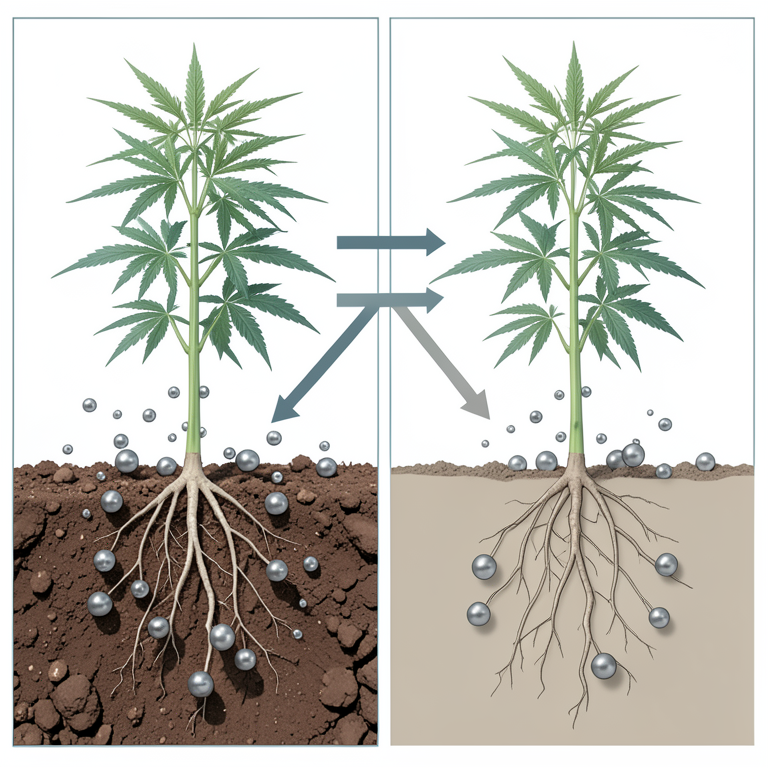
Soil pH and Heavy Metal Uptake
AI-generated conceptual illustration (Industrial hemp plants in rainforest soil). It explains the idea and does not show study data.
View source evidence ↗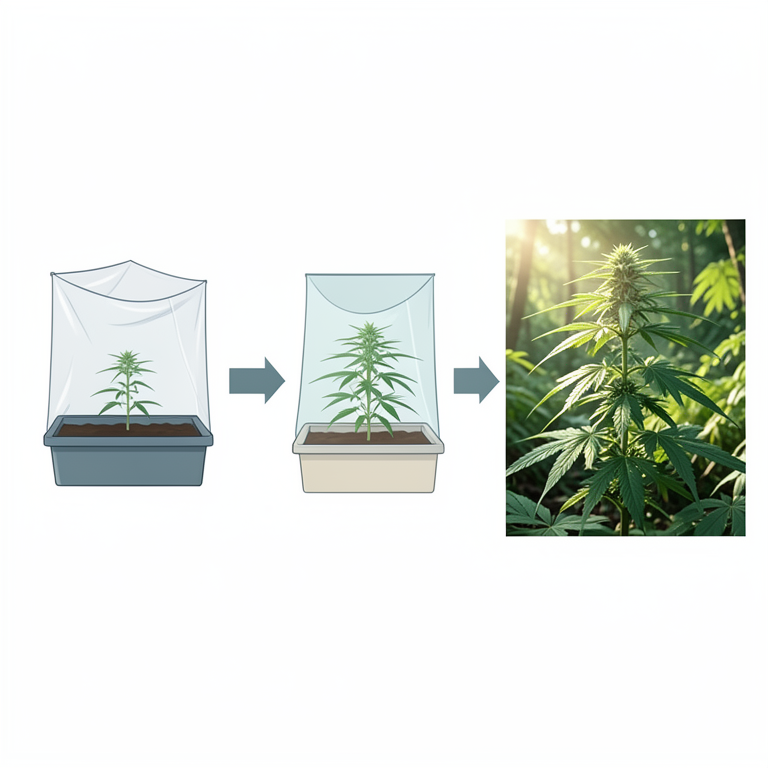
Acclimatization Process
AI-generated conceptual illustration (temperate hemp seedlings). It explains the idea and does not show study data.
View source evidence ↗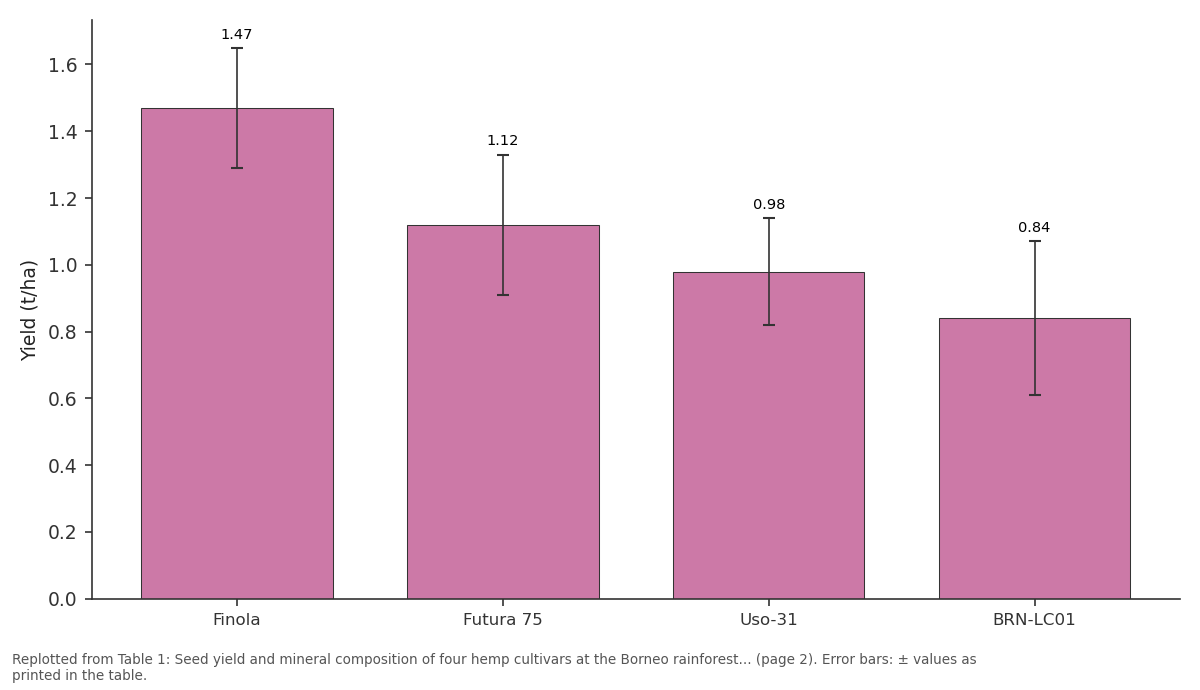
Yield (t/ha): Finola vs Futura 75 vs Uso-31 vs BRN-LC01
Replotted from Table 1 (page 2) of the original paper. Every bar is the paper's own table value.
View source evidence ↗Figures & tables
From the original paper Table 1
 Table 2
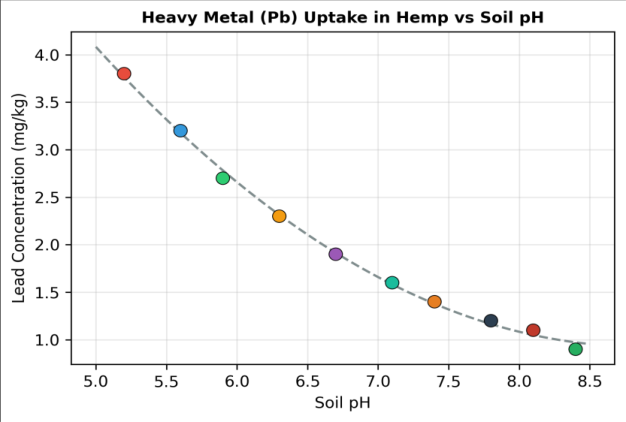 Figure 1
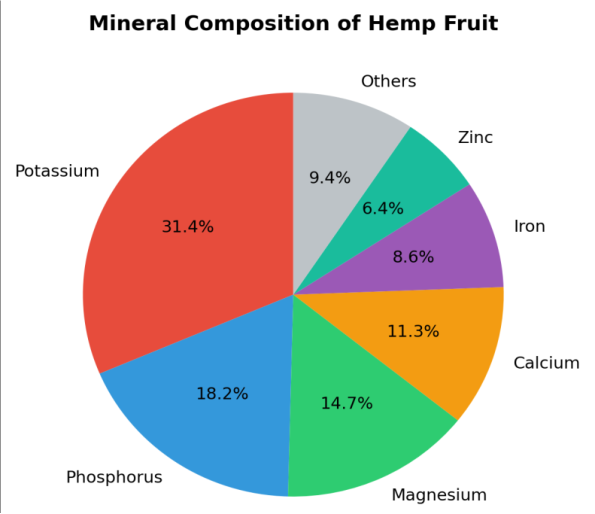 Figure 2
Introduction
Industrial hemp has seen a dramatic rehabilitation in global agriculture policy since 2018, when multiple countries relaxed restrictions on low-THC cultivars grown for fiber, seed, and oil [1] . Seed hemp varieties optimized for grain rather than fiber produces achenes rich in protein (25-35%), oil (25-35%), and minerals, with a fatty acid profile featuring an omega-6 to omega-3 ratio close to the nutritionally ideal 3:1 [2] . Most published data on hemp seed quality come from Canada, Europe, and China, where the crop grows during long summer days. How hemp performs at equatorial latitudes with 12-hour photoperiods and year-round warmth is still a limited dataset. Borneo's rainforest edge offers high rainfall (2,000-3,500 mm/year), temperatures of 24-32°C, and deeply weathered acidic soils (pH 4.2-5.8) with low base cation reserves [3] . These conditions create two specific risks for hemp seed quality: first, acidic soils mobilize heavy metals like lead, cadmium, and aluminum into forms readily taken up by roots; second, rapid potassium leaching in high-rainfall environments can create mid-season K deficiency that limits seed filling [4] . Understanding mineral dynamics in this system is essential before recommending hemp as a new crop for Borneo smallholders. This research combined field agronomy with mineral analysis, seed proteomics, and soil nutrient budgeting to provide a comprehensive picture of hemp fruit yield potential at the tropical rainforest margin, with particular attention to heavy metal risk management and potassium sustainability [5] .
Spatial data processing
Soil heterogeneity across the three trial sites was mapped using a 25-point grid sampling scheme (5 × 5, 10 m spacing) at each site. Interpolation of pH, organic carbon, and exchangeable K was performed by ordinary kriging in QGIS 3.28 with spherical variogram models fitted to point data. Sentinel-2 satellite imagery (10 m resolution, bands B2-B8A-B11-B12) was acquired at monthly intervals from November 2022 through June 2023 and processed to NDVI and modified soil-adjusted vegetation index (MSAVI) using Google Earth Engine. NDVI values were correlated with final seed yield by simple linear regression to test the feasibility of remote yield prediction. Spatial autocorrelation of heavy metal concentrations was tested using Moran's I statistic [6] .
Material and Methods
Material and Methods
Material
Four hemp cultivars (Finola from Finland, Futura 75 from France, Uso-31 from Ukraine, and a local Borneo landrace designated BRN-LC01) were tested. Seeds were imported under research permits compliant with Malaysian and Indonesian hemp trial regulations. Three sites along the Borneo rainforest edge (approximately 1.2-2.4°N, 110.3-111.8°E) were selected based on prior land use (secondary forest cleared 5-10 years earlier). Basal fertilizer included 80 kg N, 60 kg P 2 O 5 , and 100 kg K 2 O per hectare, with the high K rate designed to offset anticipated leaching losses [7] .
Methods
Plots (6 × 4 m, RCBD, three replications per site) were sown in November 2022. Plant spacing was 30 × 10 cm. Seed yield was measured from a 4 m² central harvest area. Mineral analysis used ICP-OES (Agilent 5110) after microwave-assisted acid digestion (HNO 3 /H 2 O 2 ). Heavy metals (Pb, Cd, As) were quantified by ICP-MS (Agilent 7700x) with detection limits of 0.001 mg/kg. Proteomic analysis of seed storage proteins used 2D gel electrophoresis followed by MALDI-TOF/TOF mass spectrometry for spot identification [8] . Acclimatization trials compared direct sowing versus a 21-day nursery hardening protocol (gradual reduction of shade from 70% to 0%). Potassium balance was calculated as K applied minus K removed in harvested biomass (seeds + stems), with soil exchangeable K measured at sowing and harvest by ammonium acetate extraction at pH 7.0 [9] . Finola produced the highest seed yield (1.47 t/ha) and mineral content across all parameters (Table 1). The local landrace BRN-LC01 yielded lowest but showed the best field establishment without hardening. Potassium was the dominant seed mineral in all cultivars, consistent with its role in seed filling and enzyme activation.
| Cultivar | Yield (t/ha) | K (mg/100g) | P (mg/100g) | Mg (mg/100g) | Protein (%) |
|---|---|---|---|---|---|
| Finola | 1.47±0.18 | 892±47 | 516±32 | 417±28 | 28.4±1.3 |
| Futura 75 | 1.12±0.21 | 847±53 | 483±38 | 391±31 | 26.7±1.5 |
| Uso-31 | 0.98±0.16 | 813±41 | 461±29 | 374±24 | 25.3±1.2 |
| BRN-LC01 | 0.84±0.23 | 768±58 | 428±43 | 348±36 | 23.8±1.7 |
Table text extracted from the original PDF; superscript letters are shown inline. The original table image is below.
View original table image
Results
Results
Comprehensive interpretation
Proteomic analysis identified 187 distinct protein spots, with edestin (a hexameric legumin-type storage protein) and 2S albumin together representing 78.3% of total seed protein mass. Acclimatization through 21-day nursery hardening improved establishment of temperate cultivars from 64.2% to 91.7%, closing the gap with BRN-LC01 (93.4%).
Potassium balance calculations showed a net removal of 68.4 kg K/ha per crop cycle when both seeds and stems were harvested, exceeding the 100 kg K 2 O/ha applied by 17.3% (accounting for leaching losses), indicating that K fertilization rates need upward adjustment for sustained production.
Discussion
The inverse relationship between soil pH and heavy metal uptake (r = -0.87 for Pb) is consistent with metal solubility chemistry: below pH 5.0, lead and cadmium are increasingly mobilized from mineral surfaces into soil solution where roots absorb them passively [10] . For hemp cultivation on acidic Borneo soils, liming to raise pH above 5.5 appears non-negotiable if the crop is to meet EU food safety standards. The cost of liming (roughly 50-80 USD per hectare per year) must be factored into economic models for smallholder adoption [11] . Finola's yield advantage (1.47 t/ha) over other cultivars may reflect its early-maturing phenology, which allows grain filling to occur before the wettest months when waterlogging and disease pressure peak. In temperate Canada, Finola typically yields 1.0-1.5 t/ha, so the tropical result is competitive [12] . The proteomic dominance of edestin has processing implications: this protein is highly digestible (above 90% in vitro) and has favorable amino acid balance for human nutrition, making Borneo-grown hemp seed a viable ingredient for plant protein products [13] .
The negative potassium balance is a sustainability warning. Borneo soils are naturally low in exchangeable K due to heavy weathering and leaching. Removing stems for fiber use alongside seed harvest doubles K export and can deplete soil reserves within 3-4 cropping cycles unless supplemental K is applied, ideally through a combination of mineral fertilizer and organic sources like empty fruit bunch compost from nearby oil palm mills [14] .
Conclusion
Hemp seed production at the Borneo rainforest edge is agronomically feasible, with Finola achieving yields competitive with temperate benchmarks. However, heavy metal accumulation in seeds from acidic soils (pH below 5.0) exceeded food safety thresholds, making liming an essential prerequisite. Potassium was the dominant seed mineral but also the nutrient most at risk of depletion under continuous cropping, requiring K fertilization rates above current recommendations. Proteomic analysis confirmed high-quality protein composition dominated by digestible edestin. Acclimatization through nursery hardening was effective for temperate cultivars. These results define both the potential and the constraints for hemp as a new crop option in tropical rainforest-margin agriculture.
Figures and tables from the paper
| Site | Soil pH | Seed Pb (mg/kg) | Seed Cd (mg/kg) | Seed As (mg/kg) |
|---|---|---|---|---|
| Site 1 | 4.3±0.2 | 0.34±0.06 | 0.12±0.02 | 0.08±0.01 |
| Site 2 | 5.1±0.3 | 0.21±0.04 | 0.08±0.02 | 0.05±0.01 |
| Site 3 | 5.7±0.2 | 0.14±0.03 | 0.04±0.01 | 0.03±0.01 |
| EU limit | 0.20 | 0.10 | 0.10 |
Table text extracted from the original PDF; superscript letters are shown inline. The original table image is below.
View original table image
References
21 in the original paper- Schluttenhofer C, Yuan L. Challenges towards revitalizing hemp: a multifaceted crop. Trends in Plant Science. 2017;22(11):917-929.
- Callaway JC. Hempseed as a nutritional resource: an overview. Euphytica. 2004;140(1-2):65-72.
- Bruijnzeel LA. Hydrological functions of tropical forests: not seeing the soil for the trees? Agriculture, Ecosystems and Environment. 2004;104(1):185-228.
- McBride MB. Environmental chemistry of soils. Oxford University Press; 1994.
- Amaducci S, Scordia D, Liu FH, et al. Key cultivation techniques for hemp in Europe and China. Industrial Crops and Products. 2015;68:2-16.
- Oliver MA, Webster R. A tutorial guide to geostatistics: computing and modelling variograms and kriging. Catena. 2014;113:56-69.
- Tang K, Struik PC, Yin X, et al. Comparing hemp varieties using random regression models for plant height. Plant Breeding. 2018;137(1):29-42.
- Aiello G, Lammi C, Bresciani L, et al. Hempseed protein hydrolysis and bioactive peptide identification. Food Research International. 2019;123:406-412.
- Sparks DL, Page AL, Helmke PA, Loeppert RH. Methods of soil analysis. Part 3: chemical methods. SSSA Book Series 5; 1996.
- Shi G, Cai Q. Leaf plasticity in peanut (Arachis hypogaea) in response to heavy metal stress. Environmental and Experimental Botany. 2009;67(1):112-120.
- Zayed AM, Terry N. Chromium in the environment: factors affecting biological remediation. Plant and Soil. 2003;249(1):139-156.
- Small E, Marcus D. Hemp: a new crop with new uses for North America. In: Trends in New Crops. ASHS Press; 2002:284-326.
- House JD, Neufeld J, Leson G. Evaluating the quality of protein from hemp seed products through the use of the protein digestibility-corrected amino acid score method. Journal of Agricultural and Food Chemistry. 2010;58(22):11801-11807.
- Lim TK. Edible medicinal and non-medicinal plants. Volume 11: Modified stems, roots, bulbs. Springer; 2016.
- Citterio S, Santagostino A, Fumagalli P, et al. Heavy metal tolerance and accumulation of Cd, Cr, and Ni by Cannabis sativa L. Plant and Soil. 2003;256(2):243252.
- Deferne JL, Pate DW. Hemp seed oil: A source of valuable essential fatty acids. Journal of the International Hemp Association. 1996;3(1):4-7.
- Linger P, Muessig J, Fischer H, Kobert J. Industrial hemp (Cannabis sativa L.) growing on heavy metal contaminated soil: fibre quality and phytoremediation potential. Industrial Crops and Products. 2002;16(1):3342.
- Vonapartis E, Aubin MP, Bhullar NK, Bhullar GS. Seed composition of ten industrial hemp cultivars approved for production in Canada. Journal of Food Composition and Analysis. 2015;39:8-12.
- Mihoc M, Pop G, Alexa E, Radulov I. Nutritive quality of Romanian hemp varieties as influenced by harvest time and plant organs. Journal of Food and Nutrition Research. 2012;51(4):219-225.
- Russo EB. History of cannabis and its preparations in saga, science, and sobriquet. Chemistry and Biodiversity. 2007;4(8):1614-1648.
- Andre CM, Hausman JF, Guerriero G. Cannabis sativa: the plant of the thousand and one molecules. Frontiers in Plant Science. 2016;7:19.