
Research article · 2026 · Full text
International Journal of Geography Geology and EnvironmentInfluence of wastewater irrigation on soil characterestics
Volume 8(5) · Pages 01–06 · DOI: 10.22271/27067483.2026.v8.i5a.746 ↗
Research areasWastewater Treatment and ReuseEngineering and Agricultural InnovationsIrrigation Practices and Water Management
Abstract
Author-writtenThis study analyses the soil chemical properties before and after the irrigation of wastewater, soil sample was collected and analyzed. Before irrigation of wastewater, the result showed that pH of the soil was 6.82 acidic in nature. The electrical conductivity of the soil was 0.69 d Sm-1 and the organic carbon content in soil was 0.41 per cent. The available nitrogen, available phosphorus and available potassium content was 228.00 kg/ha, 13.20 kg/ha and 210.00 kg/ha respectively in experimental soil. After irrigation of wastewater, the sewage wastewater irrigated soil recorded the neutral PH (7.01), electrical conductivity of 0.91 dS m-1 and 0.58 per cent organic carbon. The sewage wastewater irrigated soil had 240 kg/ha of available nitrogen, 16 kg/ha of available phosphorus and 215 kg/ha of available potassium respectively. The paper mill wastewater irrigated soil recorded the moderately alkaline PH (6.95), electrical conductivity of 0.85 dS m-1 and organic carbon content 0.55 per cent was recorded. The paper mill wastewater irrigated soil had 245 kg/ha of available nitrogen, 16.5 kg/ha of available phosphorus and 218 kg/ha of available potassium respectively. The reeling wastewater irrigated soil recorded the moderately alkaline PH (6.85), electrical conductivity of 0.78 dS m-1 and organic carbon content 0.56 per cent was recorded. The reeling wastewater irrigated soil had 252 kg/ha of available nitrogen, 17 kg/ha of available phosphorus and 225 kg/ha of available potassium respectively.
Summary
Source-checkedPlain-language reading of the full paper, prepared with AI and checked against the text. Each point links to the authors' own words.
Why it matters
- Water scarcity and the need for higher agricultural production have led many developing countries to use raw wastewater for irrigation. View evidence ↗
- Wastewater irrigation is often chosen because it is more cost-effective and accessible than municipal or dam water. View evidence ↗
- Using wastewater for irrigation can significantly change a soil's pH, nutrient balance, and general fertility. View evidence ↗
The question
- The study aimed to analyze how soil chemical properties change before and after irrigation with different types of wastewater. View evidence ↗
What they did
- The researchers used three types of wastewater from the Coimbatore district: sewage wastewater (Ukkadam), paper mill wastewater (Thekkampatti), and reeling wastewater (Vadavalli). View evidence ↗
- Soil pH and electrical conductivity were measured using a 1:2.5 soil-to-water ratio, and organic carbon was determined via the Walkley and Black wet oxidation method. View evidence ↗
- Available nitrogen, phosphorus, and potassium were measured using the alkaline permanganate method, Brays No.1 method, and flame photometry, respectively. View evidence ↗
What they found
- Initial soil characteristics showed a pH of 6.82 (acidic), electrical conductivity of 0.69 d Sm-1, organic carbon of 0.41%, and available N, P, and K levels of 228.00 kg/ha, 13.20 kg/ha, and 210.00 kg/ha. View evidence ↗
- Sewage wastewater irrigation increased soil pH to 7.01 (neutral), electrical conductivity to 0.91 dS m-1, organic carbon to 0.58%, and available N, P, and K to 240 kg/ha, 16 kg/ha, and 215 kg/ha. View evidence ↗
- Paper mill wastewater irrigation resulted in a pH of 6.95, electrical conductivity of 0.85 dS m-1, organic carbon of 0.55%, and available N, P, and K of 245 kg/ha, 16.5 kg/ha, and 218 kg/ha. View evidence ↗
- All three types of wastewater (sewage, paper mill, and reeling) increased the soil's pH, electrical conductivity, organic carbon, and available nitrogen, phosphorus, and potassium. View evidence ↗
What it means
- The authors concluded that applying these wastewaters sustained soil fertility and improved the productivity and nutrient use efficiency of Mulberry leaves. View evidence ↗
Visual summary
1 visualsIllustrations explain the paper; they do not show study data.
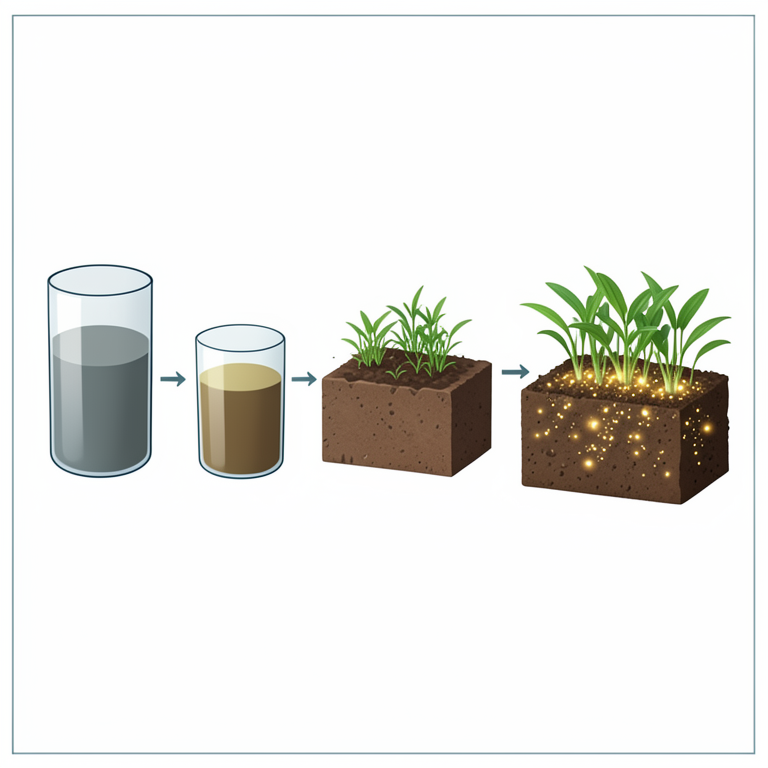
Wastewater Irrigation Workflow
AI-generated conceptual illustration (Agricultural soil samples irrigated with industrial and municipal wastewater). It explains the idea and does not show study data.
View source evidence ↗Figures & tables
From the original paper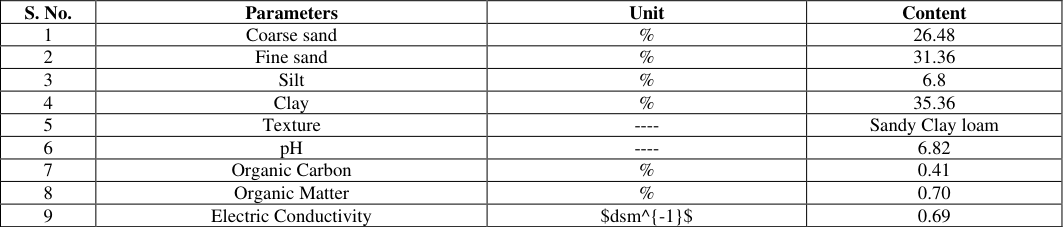 Table 1
 Table 2
Introduction
Soil is the thin, uppermost layer of the Earth's crust, forming a dynamic, living, and natural medium composed of minerals, organic matter, air, and water. Irrigation of wastewater significantly alters the physico-chemical properties of soil, affecting its pH, nutrient balance and overall fertility. Globally, the increasing demand for agricultural production combined with widespread water scarcity has prompted many developing nations to adopt raw wastewater irrigation. Wastewater, as articulated by Ahmed et al. (2019) [2] and Khan et al. (2019) [21] , refers to water significantly compromised in quality due to anthropogenic activities, including both industrial and municipal sources. This water is characterized by various contaminants such as heavy metals and organic pollutants, posing substantial environmental and health risks. This practice is primarily driven by economic factors as wastewater is often more accessible and costeffective than municipality and dam water (Mishra et al., 2023) [25] . This heightened acidity disrupts microbial activity and nutrient availability which are essential for sustaining soil fertility. Soil fertility is further compromised by alterations in nutrient levels and the accumulation of heavy metals. Wastewater often contains elevated levels of nutrients such as nitrogen (N), phosphorus (P) and potassium (K) which can initially enhance soil fertility. However, prolonged use of wastewater can lead to nutrient imbalances and toxicity. For instance, nitrogen levels can increase from a typical range of 0.1-0.2% to 0.3-0.5%, phosphorus from 20-30 mg/kg to 50-70 mg/kg and potassium from 100-200 mg/kg to 300-400 mg/kg (Habibi, 2019; Gatta et al., 2015) [13,15] . Electrical conductivity (EC) is another critical parameter affected by wastewater irrigation. The EC of soil can escalate from a normal range of 0.2-0.4 d S/m to 1.5-2.0 d S/m indicating heightened salinity levels which can adversely affect plant growth and soil structure (Ahmed et al., 2019) [2] . Organic matter content can rise from 2-3% to 4-6% initially improving soil structure but potentially leading to excessive organic load over time (Habibi, 2019). Cation exchange capacity (CEC) and cation saturation levels are also influenced by wastewater irrigation. CEC can increase from 10-15 meq/100g to 20-25 meq/100g enhancing the soil's capacity to retain essential nutrients. However, this can also result in the accumulation of harmful cations such as sodium (Na) and heavy metals like lead (Pb), cadmium (Cd) and chromium (Cr). For example, lead levels can rise from 0.1-0.3 mg/kg to 10-20 mg/kg, cadmium from 0.01-0.1 mg/kg to 1-5 mg/kg and chromium from 0.05-0.1 mg/kg to 5-15 mg/kg (Abegunrin et al., 2016; Khan et al., 2023) [1,20] . The texture and buffering capacity of soil are also affected. Wastewater irrigation can lead to soil compaction and reduced porosity altering the soil texture and diminishing its buffering capacity making the soil more susceptible to p H fluctuations and nutrient leaching (Sdiri et al., 2023) [32] . From the present findings, was observed that application of different types of wastewater helped to enhance the growth of Mulberry leaves by providing essential nutrients required for the plant. The application of different wastewater proved to sustain the soil fertility, improved the Mulberry productivity, enhanced the nutrient use efficiency and soil fertility.
Methods and Materials
The experimental materials for the current study is three types of wastewater samples such as reeling wastewater from Vadavalli, paper mill wastewater from Thekkampatti and sewage wastewater from Ukkadam in Coimbatore district.
Soil characteristics Soil texture
Soil texture was determined by using International pipette method developed by Piper (1966) [28] .
pH
The pH of soil sample was determined by using Systronic pH meter model 361 having combined electrode using 1:2.5 soil: water suspension ratio (Jackson, 1973) [17] .
Electrical Conductivity (EC)
Electrical Conductivity was determined with the help of Electrical Conductivity Meter using 1:2.5 soils: water suspension ratio (Jackson, 1973) [17] .
Organic Carbon (OC)
Organic carbon in the soil sample was determined according to the Walkley and Black wet oxidation method given by (Black, 1965) [6] .
Available nitrogen
Available nitrogen in the soil samples were determined by alkaline permanganate (0.32% KMnO4) method described by (Subbaiah, 1956) [36] .
Available phosphorus
Available phosphorus in the soil sample was determined by Brays No.1 method suggested by (Black, 1965) [6] .
Available potassium
Available potassium was estimated in a Flame-photometer, using neutral-normalammonium acetate as per the procedure outlined by (Jackson, 1973) [17] .
Exchangeable calcium and magnesium
The exchangeable calcium and magnesium were determined titrimetrically by using 0.01N Ethylene Di-amine Tetra Acetic Acid (Versenate Method) as suggested by Lindsay and Norvell (1978) [23] .
Sodium
The sodium content of the wastewater sample was determined by using flame photometer with sodium filter as described by (Jackson, 1973) [17] .
Micronutrients
DTPA extractable micronutrient viz., Fe, Cu, Zn and Mn were determined using Atomic Absorption Spectrophotometer (Lindsay and Norvell 1978) [23] .
Results
Results
Initial soil characteristics
Initial soil sample was collected and analyzed for the soil type, pH, organic carbon, organic matter, electrical conductivity and available nutrients like nitrogen, phosphorus, potassium, exchangeable calcium, exchangeable magnesium, exchangeable sodium, DTPA iron, DTPA manganese, DTPA cupper and DTPA zinc (Table 1). The results showed that experimental soil had coarse sand, fine sand, silt and clay of 26.48 per cent, 31.36 per cent, 6.8 per cent and 35.36 per cent respectively. The soil texture was sandy clay loam. The pH of the soil was 6.82, acidic in nature and electrical conductivity of the soil was 0.69 d Sm-1. The organic carbon and organic matter of soil was 0.41 per cent and 0.70 per cent respectively. The available nitrogen, available phosphorus and available potassium content of the soil was 228.00 kg/ha, 13.20 kg/ha and 210.00 kg/ha respectively. The exchangeable calcium, magnesium and sodium content of soil was 3.20 C.mol (p+) kg, 1.70 C.mol (p+) kg and 1.80 C.mol (p+) kg respectively. The DTPA iron, DTPA manganese, DTPA copper and DTPA zinc content of experimental soil was 12.80 mg/kg, 5.80 kg/ha, 1.60 kg/ha and 3.80 kg/ha respectively.
| S. No. | Parameters | Unit | Content |
|---|---|---|---|
| 1 | Coarse sand | % | 26.48 |
| 2 | Fine sand | % | 31.36 |
| 3 | Silt | % | 6.8 |
| 4 | Clay | % | 35.36 |
| 5 | Texture | ---- | Sandy Clay loam |
| 6 | pH | ---- | 6.82 |
| 7 | Organic Carbon | % | 0.41 |
| 8 | Organic Matter | % | 0.70 |
| 9 | Electric Conductivity | $dsm^{-1}$ | 0.69 |
Table text extracted from the original PDF; superscript letters are shown inline. The original table image is below.
View original table image
Discussion
In an experiment, initial soil sample were collected and analyzed for physical and chemical properties and it was observed that the pH of the soil was 6.82, acidic in nature. The similar findings of acidic soil bf PH had been reported by Solanki et al. (2012) [35] and Bharti et al. (2013) [5] . The electrical conductivity of the soil was 0.69 d mathsf S mathsf m-1 and the organic carbon content in soil was 0.41 per cent, it might be due to the presence of soil microorganism for decomposition of organic matter. This is in line with findings of Ingavale at el. (2012) [16] . Elayarajan et al. (2009) [10] conducted field survey for studying influence of paper board mill effluent on soil properties like pH: electrical conductivity, organic carbon, available nitrogen, phosphorus, potassium, exchangeable calcium, magnesium, sodium and copper, iron, manganese, zinc. The microbial population of bacteria, actinomycetes and fungi were also enumerated. Their results were revealed that bf PH bf Λ; Λ, electrical conductivity, organic carbon, available nutrients, exchangeable cations (calcium, magnesium, sodium, potassium), exchangeable sodium percentage, Sodium adsorption ratio and cation exchangeable capacity were high in wastewater irrigated soils in and around the factory regions compared to the Bhavani river water irrigated soils due to continuous application of wastewater. Kumar and Chopra (2011) [22] studied the influence of paper mill effluent on the physicochemical properties of soils at Haridwar. Results revealed that among various concentrations of paper mill effluent application with 100 percentage effluent concentration decreased moisture content, water holding capacity, bulk density and increases the boldsymbol pH,, electric conductivity, cation exchange capacity, chloride, organic carbon, carbonates, bicarbonates, sodium, potassium, calcium, magnesium, iron, total nitrogen, nitrate, phosphate, sulphate, zinc, copper, cadmium, lead and chromium in the soil. Arora et al. (2014) [34] studied the impact of pulp and paper mill effluent on physicochemical properties of soil and concluded that pulp and paper mill effluent discharge on land in Yamuna nagar contained high biological oxygen demand, chemical oxygen demand, total dissolved solids, total hardness and suspended solids which were increasing the boldsymbol pH;, nitrogen, phosphorous, sodium, potassium and heavy metals in the soil. It will increase the soil fertility due to the presence of some available nutrients. Dhevagi and Oblisami (2000) [8] studied that, the effect of different concentrations of paper mill wastewater on maize. Among these, treatment receiving 25 per cent effluent concentration showed highest germination percentage and was on par with 50 per cent effluent concentration and control. Wastewater concentration at 100 per cent reduced germination percentage, root length, shoot length and vigour index over control. Similar results were reported in case of soybean, black gram, green gram and castor though in case of sunflower, statistically no significant differences were observed between different treatments on germination percentage, root length, shoot length and vigour index of the seedlings. Application with Tamil Nadu Paper Mill Limited (TNPL) wastewater increases the oil content of ground nut crop than well water. They also reported that treated TNPL effluent application resulted in higher pod yield than well water application (Udayasoorian et al. 2004) [38] . Doke et al. (2011) [9] concluded that, the higher concentrations of sugar mill effluent decreased germination percentage, vegetative parameters of the green gram plants. In higher concentrations of sugar mill effluent contains high amount of organic and inorganic compounds, it becomes toxic to plants. Ezhilvannan et al. (2011) [12] conducted the pot culture experiment for the investigation of effect of paper mill wastewater on changes of growth and biochemical content in maize (Zea mays L.) plants. The higher sugar mill effluent concentrations (> 40 per cent) were found to affect the plant growth and decreased amino acids and protein contents, but diluted effluent (up to 40 per cent) favored the plant growth and biochemical contents. The lower concentration of sugar mill effluent (10 per cent) promoted the germination of green gram. It may be due to the presence of optimum level of nutrients in this effluent concentration. Similar, observations were recorded by many researchers (Rathore, Iqbal, and Pawan 2000) [30] ; (Vaithiyanathan et al. 2014) [37] . Kamlesh (2016) [18] observed that, a higher concentration of wastewater as adversely affect the growth parameters but lower concentration of wastewater helps for better germination in the coriander varieties. Galavi et al. (2010) [14] also reported similar rise in organic carbon due to sewage application. Mohammad and Mazahreh (2003) [26] conducted field experiments for studying the changes in soil fertility parameters in response to application of forage crops with secondary treated sewage wastewater. The results of field experiment showed that sewage wastewater application increased soil phosphorus (P), potassium (K), iron (Fe), and manganese (Mn) content and the continuous application of secondary wastewater may lead to nutrient imbalance in the soil. Malik et al. (2004) [24] conducted experiment with the help of micro nutrients and heavy metals content in sewageirrigated soils and crops. It showed that the pH, electrical conductivity, organic carbon and calcium carbonate of different locations were 7.2-8.9, 0.1-1.4 dS/m, 0.1-1.4 per cent and 0.3-6.8 per cent, respectively. Prakash et al. (2010) [29] attempted to determine the spatial distribution of heavy metals and micronutrients such as lead, cadmium, chromium, nickel, iron, manganese, zinc and copper in soils irrigated with sewage wastewater. Soil samples were collected along the east and west sewage flowing systems of Bangalore at two depths i.e. 0-15 cm and 15-30 cm. The order of presence of heavy metals in sub-surface samples (15-30 cm) was nickel > lead > chromium > cadmium. The plant available metals in surface samples (0-15 cm) were higher compared to subsurface samples (15-30 cm). The cadmium content was below detectable level in majority of samples. Saha et al. (2010) [31] conducted the experiment on chemical, biochemical and biological impact of untreated domestic sewage water use on vertisol and its consequences on wheat (Triticum aestivum) productivity and reported that sewage wastewater pH 7.4 nearly neutral in reaction, electrical conductivity (0.83 mS/cm) are non-saline, increased total organic carbon available soil nitrogen, phosphorus and potassium contents in soils to an extent of 214, 27, 22, and 23 mg/l respectively. Average contents of heavy metals like zinc, copper, lead, cadmium, chromium, and nickel were 70, 15, 11, 1, 27, and 15 μg/l, respectively at wheat crop in Bhopal. The pot experiment with four Mulberry varieties viz., V1, S36, S13 & M5 treating with sewage and bore well water to study the influence of sewage water on diversity and population of microflora of rhizosphere soil. They concluded that a significant reduction in fungi population and percentage root colonization with AM fungi in the Mulberry varieties treated with sewage water, besides a change in fungal diversity and the bacterial population was significantly higher on sewage water treatment, though similar groups of bacterial colonies were found in both the treatment (Ambika, 2010) [4] . Chikkaswamy and Paramanik (2014b) revealed that application of sewage wastewater to the soil shows high soil pH, Electric Conductivity, Phosphorus, Potassium, Iron, Zinc, Manganese and Copper were also found increased in sewage wastewater treated plot compared to bore well water plot. El-Sawaf (2005) [11] studied the performance of fodder sorghum plant spp. Sorghu durra and Sorghum dochna under three different kinds of sewage water (raw sewage water, primary treated sewage water and secondary treated sewage water). The results showed significant increases in shoot length, number of leaves per plant, total leaf area per plant and dry weights of shoot and root of S. durra irrigated with sewage wastewater, more so in plants irrigated with raw sewage wastewater. The accumulation of nutrients in different crops like bottle gourd, aubergine, radish, spinach and pawpaw grown in sewage wastewater irrigated area studied by Paul et al. (2006) [27] . The vegetables grown by irrigated sewage showed higher nutrient uptake than tube well watered vegetables. Plant fruit bearing parts (pawpaw, bottle gourd and aubergine) showed sufficient accumulation of all the nutrients tested like nitrogen, phosphorus, potassium, iron, copper, manganese, zinc among this Spinach and radish showed high nutrient concentration in their vegetative (edible) parts. Sewage wastewater irrigated land produced grains with higher protein (12.8 per cent) compared to grains obtained from bore well irrigated land (12.2 per cent) which could be due to high availability of nutrients especially nitrogen in soil (240 kg/ha) and nitrogen content in grain (2.05 per cent). Nitrogen is a major component of amino acids. The concentration of nitrogen in both soil and plant was significantly higher in sewage wastewater irrigated land (Salakinkop, 2008) [33] . Khan et al. (2010) [19] studied the effect of treated sewage wastewater and equivalent basal fertilizer on growth, yield and nutrient quality of sorghum (Sorghum bicolar L. Moench) under field conditions. The treated wastewater significantly increased plant height, stem thickness, number of grains / panicle, grain weight/ panicle and 1000 grain weight of sorghum, while basal fertilizer only elevated grain/ panicle compared to control. Al-Karaki (2011) [3] investigated the effects of application with tertiary sewage treated wastewater (WW), tap water (TW) or mixed wastewater with tap water (WW mix) on barley (Hordeum vulgare L.) feed yield, quality, and water use proficiency (WUE) under hydroponic conditions. The results showed that sewage wastewater used for application has effectively increased the yields of green and dry fodder, and the green forage yields obtained were 224 tons/ha in tap water, 276 tons/ha in wastewater mix and 320 tons/ha in wastewater under application respectively.
Conclusion
The experimental soil was characterized before and after the experiment. The chemical properties viz., pH, electrical conductivity, organic carbon, organic matter, available nutrients like nitrogen, phosphorus, potassium, exchangeable calcium, exchangeable magnesium, exchangeable sodium, DTPA iron, DTPA manganese, DTPA cupper and DTPA zinc were found at an increased level in soil, after the experiment due to wastewater application. In the present experiments, it was observed that application of different types of wastewater helped to enhance the growth of Mulberry leaves by providing essential nutrients required for the plant. The application of different wastewater proved to sustain the soil fertility, improved the Mulberry productivity, enhanced the nutrient use efficiency and soil fertility.
Figures and tables from the paper
| Parameters | Unit | Content | — | — |
|---|---|---|---|---|
| SWW | PMWW | RWW | ||
| $P^H$ | - | 7.01 | 6.95 | 6.85 |
| Electrical conductivity | $dSm^{-1}$ | 0.91 | 0.85 | 0.78 |
| Organic carbon | % | 0.58 | 0.55 | 0.56 |
| Available Nitrogen | Kg/ha | 240 | 245 | 252 |
| Available Phosphorus | Kg/ha | 16 | 16.5 | 17 |
| Available Potassium | Kg/ha | 215 | 218 | 225 |
Table text extracted from the original PDF; superscript letters are shown inline. The original table image is below.
View original table image
References
38 in the original paper- Abegunrin TP, Awe GO, Idowu DO, Adejumobi MA. Impact of wastewater irrigation on soil physicochemical properties, growth and water use pattern of two indigenous vegetables in southwest Nigeria. CATENA. 2016;139:167-178.
- Ahmed M, Matsumoto M, Ozaki A, Van Thinh N, Kurosawa K. Heavy metal contamination of irrigation water, soil, and vegetables and the difference between dry and wet seasons near a multi-industry zone in Bangladesh. Water. 2019;11(3):583.
- Al-Karaki GN. Utilization of treated sewage wastewater for green forage production in a hydroponic system. Emirates Journal of Food and Agriculture. 2011;23:80-94.
- Ambika SR. Crop growth and soil properties affected by sewage water application-A review. Agricultural Reviews. 2010;31(3):161-167.
- Bharti PK, Singh P, Vijender. Impact of industrial effluents on groundwater and soil quality in the vicinity of industrial area of Panipat city, India. Journal of Applied and Natural Science. 2013;5(1):132-136.
- Black CTA. Methods of soil analysis, part II. Amer. Soc. Inc. Pub., Madison, USA. 1965:770-779.
- Chandraju S, Girija Nagendraswamy, Chidan Kumar CS. Yields of Bombyx mori L. races cocoons CSR19, Kolar gold and CSR2xCSR4 reared fed with V1 variety of mulberry leaves cultivated by spentwash application. Journal of Chemical and Pharmaceutical Research. 2012;4(3):1812-1814.
- Dhevagi P, Oblisami G. Effect of paper mill effluent on germination of agricultural crops. Journal of Ecobiology. 2000;12(4):243-249.
- Doke KM, Khan EM, Rapolu J, Shaikh A. Physicochemical analysis of sugar industry effluent and its effect on seed germination of Vigna angularis, Vigna cylindrical and Sorghum cernum. Annals of Environmental Science. 2011;5(1):2.
- Elayarajan M, Udayasoorian C, Murugesa Boopathi P. Influence of paper board mill effluent on soil properties. Madras Agricultural Journal. 2009;96(1/6):173-178.
- El-Sawaf N. Response of Sorghum spp. to sewage wastewater application. International Journal of Agriculture and Biology. 2005;7(6):869-874.
- Ezhilvannan D, Sharavanan PS, Vijayaragavan M. Effect of sugar mill effluent on changes of growth and amino acid and protein contents of maize (Zea mays L.) plants. Journal of Ecobiotechnology. 2011.
- Gatta G, Libutti A, Gagliardi A, Beneduce L. Treated agro-industrial wastewater irrigation of tomato crop: Effects on qualitative/quantitative characteristics of production and microbiological properties of the soil. Agricultural Water Management. 2015;149:33-43.
- Galavi M, Jalali A, Ramroodi M, Mousavi SR, Galavi H. Effects of treated municipal wastewater on soil chemical properties and heavy metal uptake by sorghum (Sorghum bicolor L.). Journal of Agricultural Science. 2010;2(3):235.
- Habibi S. A long-term study of the effects of wastewater on some chemical and physical properties of soil. Applied Water Science. 2019;9:156-161.
- Ingavale, Mohite, Shinde, Jadhav, Raut. Studies on physico-chemical characteristics of soil of Bhagawati river bank in Kolhapur district, Maharashtra. 2012.
- Jackson ML. Soil Chemical Analysis. Prentice Hall of India Private Limited, New Delhi. 1973:498.
- Kamlesh K. Impact of paper mill effluent on seed germination and seedling growth of coriander (Coriandrum sativum) varieties. International Journal of Environment, Agriculture and Biotechnology. 2016;1(4).
- Khan MA, Shaukat SS, Hany O, Jabeen S. Application of sorghum crop with waste stabilization pond effluent: Growth and yield responses. Pak. J. Bot. 2010;42(3):1665-1674.
- Khan MN, Aslam MA, Bin Muhsinah A, Uddin J. Heavy metals in vegetables: Screening health risks of irrigation with wastewater in peri-urban areas of Bhakkar, Pakistan. Toxics. 2023;11(5):460.
- Khan ZS, Rizwan M, Hafeez M, Ali S, Javed MR, Adrees M. The accumulation of cadmium in wheat (Triticum aestivum) as influenced by zinc oxide nanoparticles and soil moisture conditions. Environmental Science and Pollution Research. 2019;26(19):19859-19870.
- Kumar V, Chopra AK. Alterations in physico-chemical characteristics of soil after application with paper mill effluent. Journal of Chemical and Pharmaceutical Research. 2011;3(6):7-22.
- Lindsay WL, Norvell WA. Development of a DTPA soil test for zinc, iron, manganese, and copper 1. Soil Science Society of America Journal. 1978;42(3):421428.
- Malik RS, Kala R, Gupta SP, Dahiya SS. Background levels of micronutrients and heavy metals in sewageirrigated soils and crops in Haryana. Indian Journal of Agricultural Science. 2004;74(3):156-158.
- Mishra S, Kumar R, Kumar M. Use of treated sewage or wastewater as an irrigation water for agricultural purposes: Environmental, health, and economic impacts. Total Environment Research Themes. 2023;6:100051.
- Mohammad MJ, Mazahreh N. Changes in soil fertility parameters in response to application of forage crops with secondary treated wastewater. Communications in Soil Science and Plant Analysis. 2003;34(9-10):12811294.
- Paul PP, Sarkar D, Sahoo AK, Bhattacharya B, Gupta SK. Accumulation of nutrients in vegetables grown in sewage irrigated area. Indian Journal of Fertilizers. 2006;1(12):51.
- Piper CS. Soil and Plant Analysis: A Laboratory Manual of Methods for the Examination of Soils and the Determination of the Inorganic Constituents of Plants. Hans Publications, Bombay. 1966.
- Prakash UHB, Parama VRR, Rashmi I, Atifa M. Heavy metals contamination in the soils of peri-urban Bangalore irrigated with sewage and industrial effluents. Journal of Soils and Crops. 2010;20(1):10-15.
- Rathore NP, Iqbal SA, Pawan KS. Role of sugar industry effluent in agriculture. Indian J. Appl. Pure Biol. 2000;19:91-94.
- Saha JK, Panwar N, Srivastava A, Biswas AK, Kundu S, Rao AS. Chemical, biochemical, and biological impact of untreated domestic sewage water use on Vertisol and its consequences on wheat (Triticum aestivum) productivity. Environmental Monitoring and Assessment. 2010;161(1-4):403-412.
- Sdiri W, AlSalem HS, Al-Goul ST, Binkadem MS, Ben Mansour H. Assessing the effects of treated wastewater irrigation on soil physico-chemical properties. Sustainability. 2023;15(7):5793.
- Salakinkop SR. Influence of long term utilization of domestic sewage on performance of wheat and health of farmers. J Ecobiol. 2008;22(1):45-51.
- Sharma V, Garg UK, Arora D. Impact of pulp and paper mill effluent on physico-chemical properties of soil. Arch Appl Sci Res. 2014;6(2):12-17.
- Solanki HA, Chavda NH. Physico-Chemical Analysis With Reference To Seasonal Changes In Soils Of Victoria Park Reserve Forest, Bhavnagar (Gujarat). Life Sciences Leaflets. 2012;30:62-68.
- Subbaiah BV. A rapid procedure for estimation of available nitrogen in soil. Curr. Sci. 1956;25:259-260.
- Vaithiyanathan T, Soundari M, Sundaramoorthy P. Response of black gram (Vigna mungo L.) to sugar mill effluent treatment. International Journal of Research in Botany. 2014;4(1):15-18.
- Udayasoorian C, Prabu PC, Mini K. Influence of composted bagasse pith and treated paper mill effluent application on groundnut. Madras Agric J. 2004;91:126-129.