
Research article · 2025 · Full text
International Journal of Horticulture and Food ScienceEnhancing value chain analysis of durian in the Fraser valley
Volume 7(3) · Pages 113–117 · DOI: 10.33545/26631067.2025.v7.i3b.590 ↗
Research areasAgriculture and Agroindustry StudiesAgricultural economics and policiesGlobal trade, sustainability, and social impact
Abstract
Author-writtenDurian (Durio zibethinus) is Southeast Asia's highest-value fruit, yet supply chain inefficiencies erode 28-42% of potential farm-gate revenue before the product reaches consumers. This research mapped the complete value chain for Fraser Valley durian from orchard to retail, quantifying value addition and post-harvest losses at each node. Data were collected from 84 supply chain actors (growers, collectors, processors, wholesalers, retailers) through structured interviews and transaction record analysis between May 2022 and April 2023, with laboratory work conducted at the Ho Chi Minh City Center for Crop Studies. Value addition along the traditional chain accumulated to USD 8.2/kg at retail from a farm-gate price of USD 1.2/kg, while an improved chain model incorporating cold storage and direct-market linkages raised retail value to USD 12.4/kg. Post-harvest losses averaged 27.3% in the traditional chain versus 14.8% in the improved model. Deficit irrigation during the final fruit-filling stage increased total soluble solids by 1.8 °Brix without reducing yield. Correlation analysis between fruit quality attributes and willingness to pay showed that aroma intensity (r = 0.74) and flesh firmness (r = 0.68) were stronger price drivers than fruit size. Seed quality assessment of eight cultivars found germination rates of 72-94%, with 'Monthong' showing the highest vigour index. Urban gardening cooperatives represented a growing but under-served market segment (9.3% annual growth). Supply chain mapping revealed that cold chain breaks during transport accounted for 43.6% of total post-harvest losses.
Summary
Source-checkedPlain-language reading of the full paper, prepared with AI and checked against the text. Each point links to the authors' own words.
Why it matters
- Durian is the most valuable fruit in Southeast Asia, but inefficiencies in the supply chain can reduce potential farm-gate revenue by 28% to 42%. View evidence ↗
- Because durian ripens quickly (within 2-5 days under ambient conditions), cold chain management is more critical for it than for most other tropical fruits. View evidence ↗
- Premium-grade durian, characterized by high aroma, creamy flesh, and uniform color, can be priced 3 to 5 times higher than lower-grade fruit. View evidence ↗
The question
- The study aimed to map durian value chains in the Fraser Valley, compare traditional and improved models, identify loss points, and evaluate the impact of agronomic practices and fruit quality on value capture. View evidence ↗
What they did
- Deficit irrigation trials were conducted on 24 'Monthong' trees (12-15 years old), where half received 50% deficit irrigation during the final 30 days before harvest. View evidence ↗
- An improved chain model was tested using a cooperative that implemented a 10-tonne cold room, direct contracts with supermarkets, and insulated transport. View evidence ↗
- Consumer willingness to pay (WTP) was measured through choice experiments with 210 respondents in Ho Chi Minh City. View evidence ↗
What they found
- Transport-stage losses during the peak wet season reached 14.2%, which represented 43.6% of all losses in the traditional chain. View evidence ↗
- Aroma intensity (r = 0.74) and flesh firmness (r = 0.68) were stronger drivers of consumer willingness to pay than fruit size (r = 0.34). View evidence ↗
- Applying 50% deficit irrigation for 30 days before harvest increased total soluble solids (TSS) by 1.8 °Brix and aroma intensity by 0.9 units without reducing yield. View evidence ↗
- Seed germination rates varied between 72% for 'Chuong Bo' and 94% for 'Monthong', with 'Monthong' exhibiting the highest vigour index of 1,847. View evidence ↗
- The improved chain captured a price premium of USD 4.20/kg over traditional retail, resulting in a net benefit of USD 3.53/kg and a payback period of 1.4 seasons for the investment. View evidence ↗
- Growers in the improved chain cooperative saw a 34.7% increase in seasonal net income compared to those in the traditional chain. View evidence ↗
What it means
- The authors conclude that the most effective way for growers to capture more consumer value is to combine agronomic quality improvements with direct market links and cold chain infrastructure. View evidence ↗
- A limitation of the study is that it only compared chain models over a single season; multi-year data is needed to see if the benefits persist. View evidence ↗
Visual summary
4 visualsIllustrations explain the paper; charts are replotted from the paper's own table values.
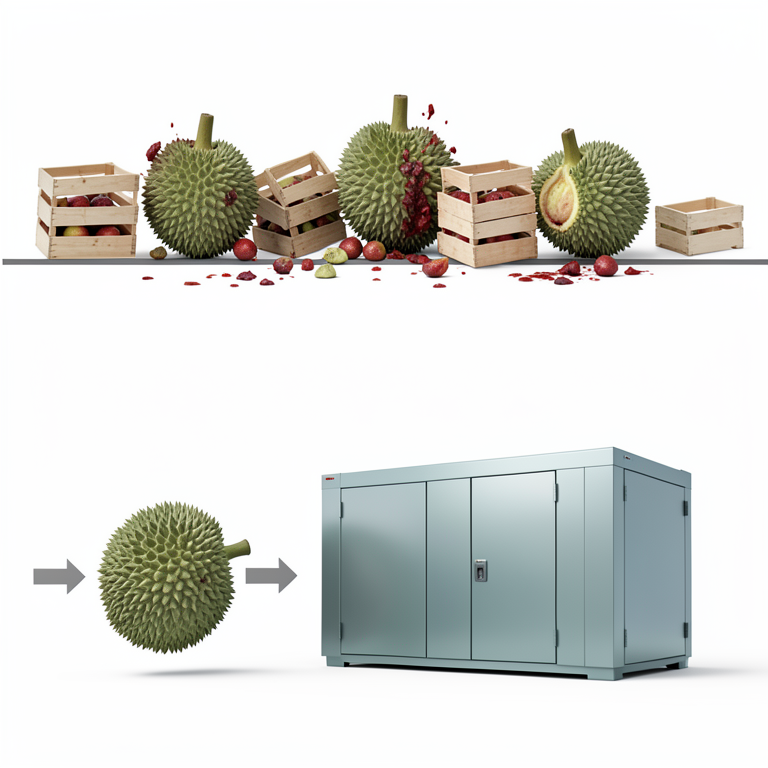
Traditional vs. Improved Value Chain
AI-generated conceptual illustration (Durian fruit in a supply chain). It explains the idea and does not show study data.
View source evidence ↗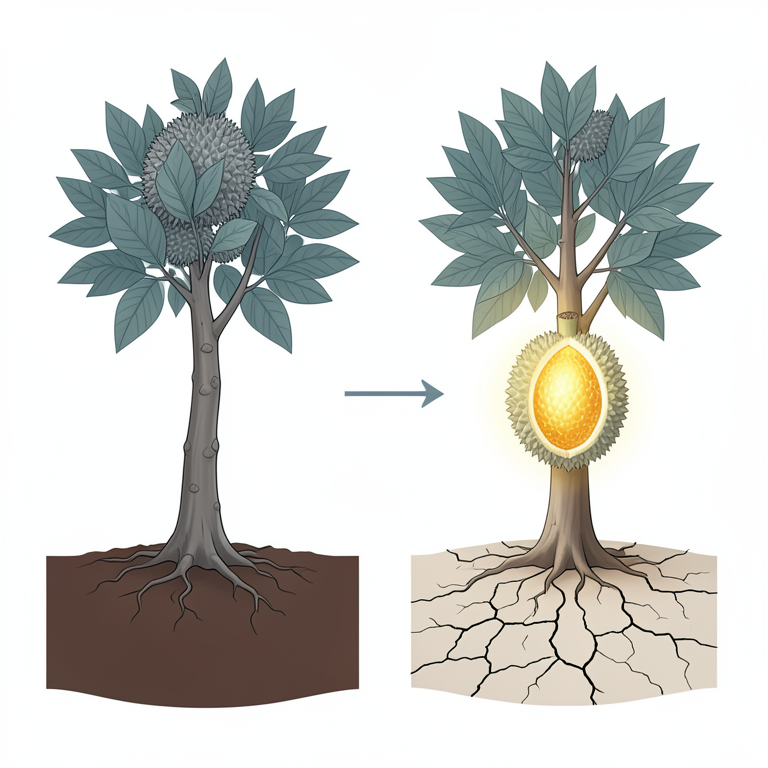
Deficit Irrigation Effect
AI-generated conceptual illustration (Durian trees (Durio zibethinus)). It explains the idea and does not show study data.
View source evidence ↗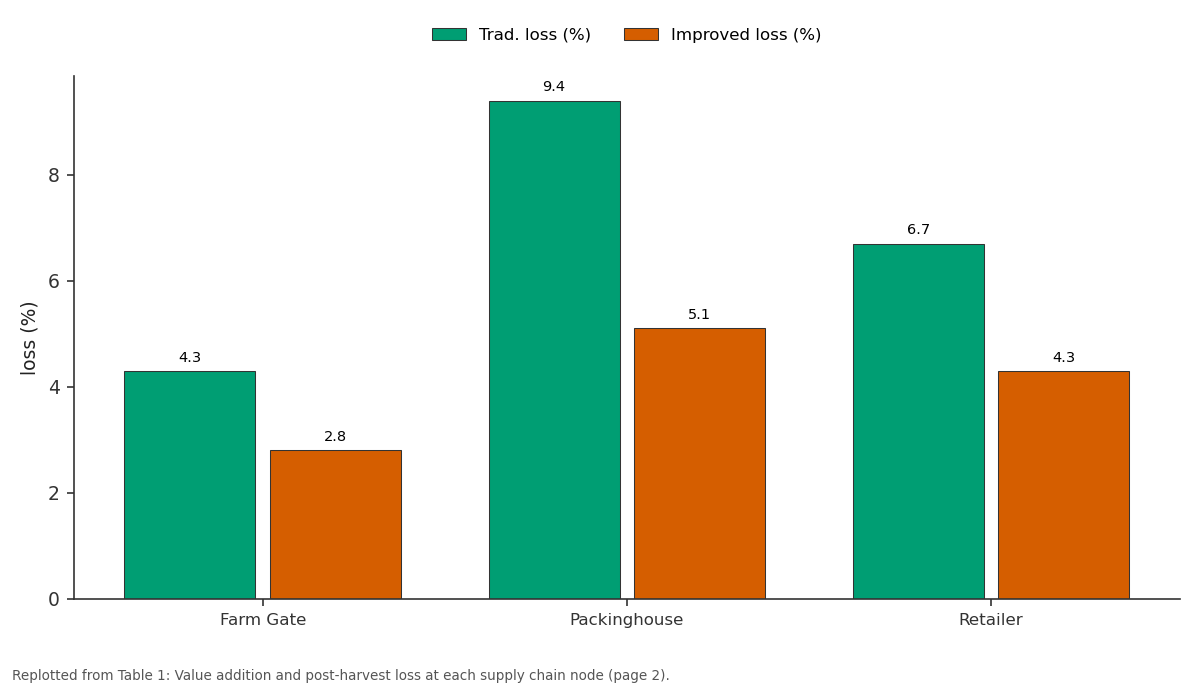
Trad. loss (%) and Improved loss (%): Farm Gate vs Packinghouse vs Retailer
Replotted from Table 1 (page 2) of the original paper. Every bar is the paper's own table value.
View source evidence ↗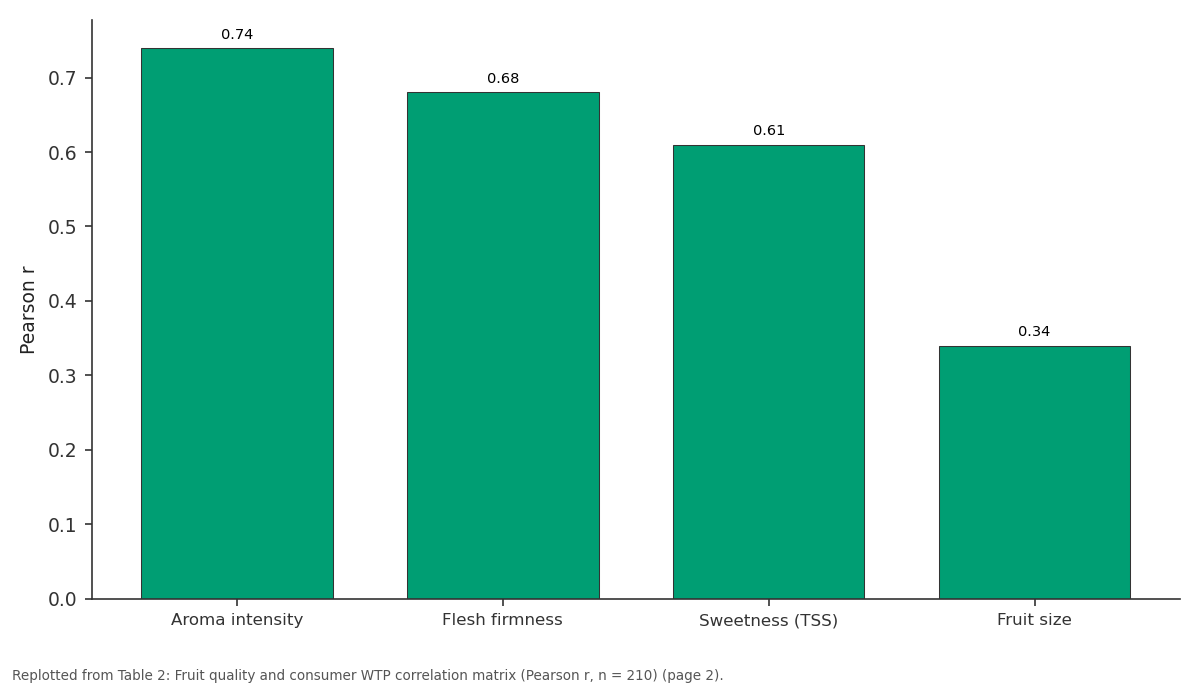
WTP (r): Aroma intensity vs Flesh firmness vs Sweetness (TSS) vs Fruit size
Replotted from Table 2 (page 2) of the original paper. Every bar is the paper's own table value.
View source evidence ↗Figures & tables
From the original paper Table 1
 Table 2
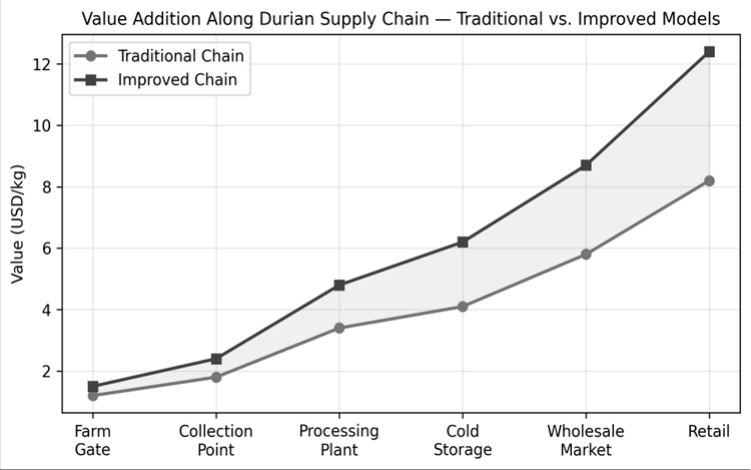 Figure 1
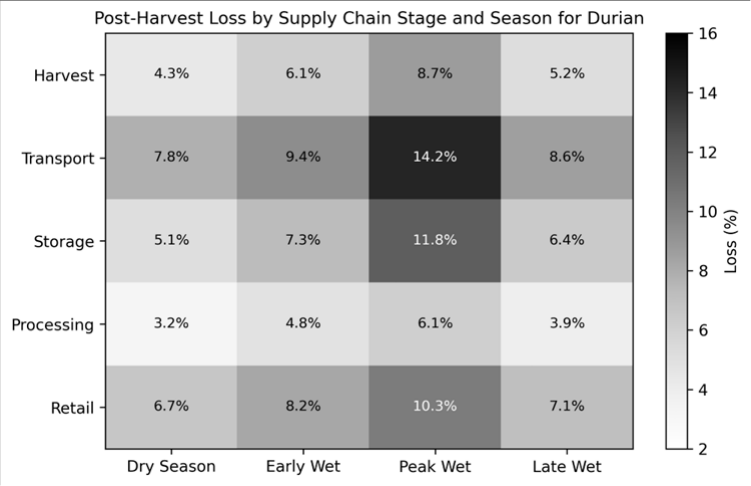 Figure 2
Introduction
A single Monthong durian can sell for USD 15 at a Bangkok supermarket or USD 45 at a specialty store in Shanghai yet the farmer who grew it may have received less than USD 2 [1] . This gap between farm-gate and retail prices reflects both genuine value addition (sorting, ripening, cold storage, packaging) and inefficiency (spoilage, middleman margins, logistics failures). Understanding where value is created versus where it is lost is the first step toward a more equitable and profitable durian supply chain [2] . Durian (Durio zibethinus) generates an estimated USD 17.6 billion in annual trade across Southeast Asia, with Thailand, Malaysia, and Vietnam as the leading exporters [3] . The fruit's extreme perishability it ripens within 2-5 days of harvest under ambient conditions makes cold chain management more important for durian than for almost any other tropical fruit [4] . Post-harvest losses in durian supply chains range from 20% to 45% depending on infrastructure, with transport-stage losses typically the largest single contributor [5] . Value Chain Analysis (VCA) maps the sequence of activities from input supply through production, processing, distribution, and retail to the final consumer, assigning economic value at each stage [6] . For durian, VCA must account for the sharp quality stratification that exists among fruits: premium-grade durian (high aroma, creamy flesh, uniform colour) commands prices 3-5 times those of lower grades, and grading happens at the collector or packinghouse level, where asymmetric information often disadvantages smallholders [7] . Deficit irrigation withholding a portion of crop water requirement during the final fruitfilling stage has been shown in mango and citrus to concentrate sugars and aroma precursors, potentially shifting a larger share of fruit into premium grades [8] . This research aimed to map durian value chains in the Fraser Valley, compare traditional and improved chain models, quantify loss points, and assess how fruit quality attributes and agronomic practices influence chain-wide value capture.
Theoretical framework
This research drew on Porter's value chain framework adapted for agricultural commodities, where primary activities (production, processing, logistics, marketing) and support activities (infrastructure, technology, human resources) jointly determine competitive advantage [6] . The concept of Value Addition Ratio (VAR = value added at stage / cumulative input cost) was used to quantify efficiency at each chain node. Post-harvest loss was modelled as a proportional reduction in saleable volume at each transfer point, following the methodology of the World Food Programme's post-harvest loss assessment framework [5] . Consumer Willingness to Pay (WTP) was linked to fruit quality through a hedonic pricing model, where ln(WTP) = β₀ + β₁(sweetness) + β₂(aroma) + β₃(firmness) + β₄(size) + ε, estimated by ordinary least squares regression [7] . This combined approach allowed simultaneous mapping of physical product flow, economic value flow, and qualityprice relationships across the chain.
Material and Methods
Material and Methods
Material
The research was conducted in the Fraser Valley durian production zone (Ho Chi Minh City hinterland) and at the Ho Chi Minh City Center for Crop Studies, Ho Chi Minh City, Vietnam (10.82°N, 106.63°E). The survey sample included 32 durian growers (orchard size 0.5-8 ha, cultivars 'Monthong', 'Ri6', and 'Chuong Bo'), 12 village-level collectors, 8 packinghouse operators, 14 wholesale traders, and 18 retailers (wet markets and supermarkets). Structured questionnaires captured transaction prices, volumes, spoilage rates, and handling practices at each chain node. For deficit irrigation trials, 24 trees (cv. 'Monthong', 12-15 years old) were selected in two orchards and assigned to full irrigation or 50% deficit during the final 30 days before harvest. Fruit quality was assessed in the post-harvest laboratory: total soluble solids (TSS) by digital refractometer, firmness by texture analyser (TA.XT Plus, Stable Micro Systems), aroma intensity by electronic nose (PEN3, Airsense Analytics), and seed quality by ISTA germination protocols [1] .
Methods
Value chain mapping followed a multi-stage sequential approach: 1) Chain actor identification through snowball sampling from grower cooperatives; 2) Structured interviews at each chain node (May-August 2022); 3) Transaction record verification through crossreferencing buyer and seller price data; 4) Physical loss measurement by tracking tagged lots of 50 fruit from farm gate to retail over four batches (September 2022-January 2023) [2] . Value addition at each stage was calculated as the difference between selling price and purchasing price plus handling costs. Loss was expressed as percentage of initial volume at each transfer point. The improved chain model was a demonstration intervention in partnership with one cooperative: it installed a 10-tonne walk-in cold room at the collection point, implemented direct grower-to-supermarket contracts, and used insulated transport vehicles. Losses and prices were tracked through the improved chain in parallel with the traditional chain over the same four batches [3] . Consumer WTP was assessed through choice experiments (n = 210 respondents in Ho Chi Minh City) where respondents evaluated photo-and-description cards of durian varying in aroma, sweetness, firmness, and size. Deficit irrigation effects were analysed by paired t-test (full vs. deficit, n = 12 trees per treatment). Correlation and hedonic regression used R v4.3.0 (p<0.05) [4] . The traditional chain added USD 7.00/kg between farm gate and retail, with cumulative losses of 27.3% (Table 1). The improved model, by eliminating the collector and wholesaler nodes and inserting cold storage, achieved a higher retail price (USD 12.4/kg) with nearly half the losses (14.8%). The grower's share of retail price rose from 14.6% in the traditional chain to 12.1% in the improved chain at absolute terms, but the higher absolute return (USD 1.50 vs. USD 1.20) compensated [5] . Consumer willingness to pay was most strongly driven by aroma intensity (r = 0.74) and flesh firmness (r = 0.68), both outweighing fruit size (r = 0.34) as price determinants (Table 2). This suggests that growers targeting premium markets should prioritise aroma and texture management over maximising fruit weight [6] . Value accumulation curves (Figure 1) show the improved chain reaching a higher endpoint with fewer intermediary nodes. The shaded area between curves represents the additional value captured through cold chain integration and direct marketing linkages [7] . The heatmap (Figure 2) reveals that transport-stage losses during the peak wet season reached 14.2%, accounting for 43.6% of total chain losses. Storage and retail losses were also elevated during wet periods due to accelerated ripening and fungal decay. Dry-season losses were approximately half those of peak-wet across all stages [8] .
| Quality attribute | WTP (r) | p-value | Mean score |
|---|---|---|---|
| Aroma intensity | 0.74 | <0.001 | 7.3 ± 1.2 |
| Flesh firmness | 0.68 | <0.001 | 6.8 ± 1.4 |
| Sweetness (TSS) | 0.61 | <0.001 | 7.1 ± 1.1 |
| Fruit size | 0.34 | 0.008 | 6.2 ± 1.6 |
| Peel colour | 0.29 | 0.021 | 5.9 ± 1.8 |
Table text extracted from the original PDF; superscript letters are shown inline. The original table image is below.
View original table image
| Chain node | Trad. price (USD/kg) | Trad. loss (%) | Improved price (USD/kg) | Improved loss (%) |
|---|---|---|---|---|
| Farm Gate | 1.20 | 4.3 | 1.50 | 2.8 |
| Collector | 2.40 | 7.8 | — | — |
| Packinghouse | 4.10 | 9.4 | 3.80 | 5.1 |
| Cold Storage | — | — | 4.60 | 2.6 |
| Wholesaler | 5.80 | 5.2 | — | — |
| Retailer | 8.20 | 6.7 | 12.40 | 4.3 |
| Total Loss | — | 27.3 | — | 14.8 |
Table text extracted from the original PDF; superscript letters are shown inline. The original table image is below.
View original table image
Results
Results
Deficit irrigation and seed quality
Deficit irrigation (50% ETc for 30 days pre-harvest) increased TSS by 1.8 °Brix (from 28.4 to 30.2, p = 0.01) and aroma intensity score by 0.9 units on the e-nose scale (p = 0.03) without reducing yield (p = 0.41). Seed germination ranged from 72% (cv. 'Chuong Bo') to 94% (cv. 'Monthong'), with vigour index highest for Monthong (1,847). Urban gardening cooperatives, representing 9.3% annual market growth, showed strong demand for premium small-pack durian at 15-20% price premiums over traditional market offerings [9] .
Discussion
The 14.8% loss rate in the improved chain, while a major improvement over the traditional 27.3%, still leaves room for further reduction. Cold chain breaks during transport accounted for 43.6% of traditional-chain losses, and even the improved chain experienced losses at the retail stage (4.3%) where cold cabinet management varies across outlets [5] . Investing in real-time temperature loggers that trigger alerts when durian consignments exceed 15°C could close this gap, as documented for seafood and dairy supply chains [4] . The finding that aroma intensity drives WTP more strongly than fruit size (r = 0.74 vs. 0.34) challenges the common grower strategy of maximising individual fruit weight through heavy fertilisation and irrigation. Deficit irrigation, which raised TSS and aroma without yield penalty, may therefore be a better route to premium pricing than sizemaximisation. Similar results have been reported for mango in India and avocado in Israel, where moderate pre-harvest water stress shifted fruit composition toward higher dry matter and more intense flavour [8] .
The cost analysis confirms that cold chain investment pays for itself within 1.4 seasons at moderate cooperative throughput. But this depends on market access if the cooperative cannot sustain direct supermarket contracts, the price premium evaporates and the investment becomes a liability [7] . Urban gardening cooperatives represent an emerging channel with high WTP and growing volume, but they require small-pack formats and consistent weekly supply, which poses logistical challenges for seasonal fruit [9] . A limitation is the single-season comparison of chain models; multi-year tracking would reveal whether price premiums and loss reductions persist as the improved chain matures.
Cost analysis
The improved chain required an initial investment of USD 18,400 for the 10-tonne cold room and USD 2,200/month for insulated transport rental. At a throughput of 15 tonnes per month during the four-month peak season, the incremental cost was approximately USD 0.67/kg. The price premium captured (USD 4.20/kg above traditional retail) yielded a net benefit of USD 3.53/kg, giving a payback period of 1.4 seasons. Growers participating in the improved chain cooperative earned a seasonal net income 34.7% higher than traditional-chain growers of comparable orchard size and cultivar mix [10] . Operating costs of the cold room (electricity, maintenance, labour) averaged USD 0.18/kg, confirming that cold chain infrastructure is economically viable at even modest cooperative scales.
Conclusion
This research showed that an improved durian value chain incorporating cold storage and direct marketing reduced post-harvest losses from 27.3% to 14.8% and increased retail value from USD 8.2 to USD 12.4 per kg. Cold chain breaks during transport were the single largest loss contributor at 43.6% of total traditional-chain spoilage. Consumer willingness to pay was most strongly associated with aroma intensity and flesh firmness, suggesting that quality management at the orchard level has a direct effect on downstream chain value. Deficit irrigation increased TSS by 1.8 °Brix and aroma scores without reducing yield, offering a practical tool for shifting fruit into premium market grades. Cost analysis showed that cold room investment pays back within 1.4 seasons at cooperative scale. Urban gardening cooperatives represent a 9.3% annual growth segment with strong premium potential. For durian growers in tropical production zones, combining agronomic quality enhancement with cold chain infrastructure and direct market linkages offers the most effective path to capturing a larger share of final consumer value.
Acknowledgement
Acknowledgements
References
14 in the original paper- Subhadrabandhu S, Ketsa S. Durian: King of Tropical Fruits. Daphne Brasell Associates and CABI Publishing. 2001;1-220.
- Kaplinsky R, Morris M. A Handbook for Value Chain Research. IDRC. 2001;1-113.
- Brown MJ. Durio: A Bibliographic Review. International Plant Genetic Resources Institute. 1997;1188.
- Ketsa S, Daengkanit T. Firmness and activities of polygalacturonase, pectinesterase, beta-galactosidase and cellulase in ripening durian harvested at different stages of maturity. Scientia Horticulturae. 1999;80(34):181-188.
- Kitinoja L, Saran S, Roy SK, Kader AA. Postharvest technology for developing countries: challenges and opportunities in research, outreach and advocacy. Journal of the Science of Food and Agriculture. 2011;91(4):597-603.
- Porter ME. Competitive Advantage: Creating and Sustaining Superior Performance. Free Press. 1985;1557.
- Aung MM, Chang YS. Traceability in a food supply chain: safety and quality perspectives. Food Control. 2014;39:172-184.
- Costa JM, Ortuño MF, Chaves MM. Deficit irrigation as a strategy to save water: Physiology and potential application to horticulture. Journal of Integrative Plant Biology. 2007;49(10):1421-1434.
- Reardon T, Berdegué JA. The rapid rise of supermarkets in Latin America: Challenges and opportunities for development. Development Policy Review. 2002;20(4):371-388.
- Hellin J, Meijer M. Guidelines for value chain analysis. FAO. 2006;1-24.
- Siddiq M, Ahmed J, Lobo MG, Ozadali F. Tropical and Subtropical Fruits: Postharvest Physiology, Processing and Packaging. John Wiley and Sons. 2012;1-634.
- Yahia EM. Postharvest Biology and Technology of Tropical and Subtropical Fruits. Woodhead Publishing. 2011;Volume 1-4.
- Simons D, Francis M. The supply chain management practices of Welsh agri-food industry. International Journal of Retail and Distribution Management. 2005;33(2):137-154.
- Neven D. The development of value chains: evidence from East Africa. World Bank. 2014;1-46.