
Research article · 2025 · Full text
International Journal of Horticulture and Food ScienceSurveying ethnobotanical knowledge of moringa in the Indus Valley
Volume 7(3) · Pages 163–167 · DOI: 10.33545/26631067.2025.v7.i3c.596 ↗
Research areasEthnobotanical and Medicinal Plants StudiesMoringa oleifera research and applicationsLinguistic and Cultural Studies
Abstract
Author-writtenMoringa (Moringa oleifera) is often described as a 'miracle tree,' yet systematic documentation of traditional use knowledge across the Indus Valley remains fragmented. This research surveyed ethnobotanical knowledge of moringa among 250 respondents from five districts, combining structured interviews, free-listing exercises, and quantitative indices at the Kumasi Regional Center for Sustainable Agriculture between March 2022 and February 2023. Respondents reported 47 distinct uses spanning food (leaf preparations, pod dishes, oil extraction), medicine (fever, inflammation, digestive disorders), water purification, fodder, and cosmetics. Leaves accounted for 32.4% of all use citations, followed by seeds (24.7%) and oil (19.8%). Knowledge distribution was uneven: respondents aged 51-60 held 28.3% of total knowledge citations, and women contributed 61.8% of food-related knowledge while men dominated medicinal use knowledge (58.4%). Potassium dynamics in moringa leaves showed a 34.6% decline from young to mature leaves, suggesting that harvest timing affects nutritional value. Carotenoid content ranged from 6.8 to 18.3 mg/100g across 12 accessions. Drought tolerance screening under 40% field capacity for 60 days identified three accessions maintaining above 80% relative water content. Chlorophyll content (SPAD readings) correlated positively with leaf protein (r = 0.73). SSR molecular markers (12 loci) revealed moderate genetic diversity (He = 0.54) with two main genetic clusters. These findings provide a baseline for conserving both the biological and cultural dimensions of moringa diversity in the Indus Valley.
Summary
Source-checkedPlain-language reading of the full paper, prepared with AI and checked against the text. Each point links to the authors' own words.
Why it matters
- In the Indus Valley, moringa serves as a long-standing livelihood resource used for cooking, medicine, and water treatment. View evidence ↗
- Despite extensive laboratory research on its properties, there is a lack of systematic ethnobotanical surveys in the regions where moringa is traditionally used. View evidence ↗
- Documenting traditional knowledge is essential to make laboratory findings applicable and relevant to actual communities. View evidence ↗
The question
- The study aimed to map and quantify traditional moringa knowledge in five Indus Valley districts and combine this with genetic and agronomic analysis of local accessions. View evidence ↗
What they did
- The researchers collected ethnobotanical data from 250 respondents across five districts, with lab work performed at the Kumasi Regional Center for Sustainable Agriculture in Ghana. View evidence ↗
- Twelve moringa accessions from an institutional collection were selected for agronomic characterization. View evidence ↗
- Drought tolerance was tested using 8-month-old seedlings kept at 40% field capacity for 60 days, compared to a 100% field capacity control group. View evidence ↗
- Genetic diversity was analyzed using 12 microsatellite loci via SSR genotyping. View evidence ↗
What they found
- The survey identified 47 distinct uses for moringa, including food, medicine, water purification, fodder, and cosmetics. View evidence ↗
- Food and nutrition were the most common uses, receiving 624 citations across 18 different preparations. View evidence ↗
- Knowledge was unevenly distributed: the 51-60 age group held 28.3% of citations, women provided 61.8% of food knowledge, and men provided 58.4% of medicinal knowledge. View evidence ↗
- Potassium levels dropped by 34.6% when moving from young to mature leaves, and another 29.0% from mature to senescent leaves. View evidence ↗
- Three specific accessions (KRC-04, KRC-09, KRC-11) were drought-tolerant, maintaining over 80% relative water content after 60 days of stress, compared to a mean of 63.7%. View evidence ↗
- A positive correlation (r = 0.73) was found between chlorophyll SPAD values and leaf protein, allowing for non-destructive nutritional screening. View evidence ↗
- Genetic analysis showed moderate diversity (mean He = 0.54) and divided the accessions into two clusters: South Asian and West African. View evidence ↗
What it means
- The authors recommend that potassium supplementation programs focus on young leaves and that commercial powder producers standardize harvest maturity for consistency. View evidence ↗
- The study was limited to five districts, potentially missing regional variations, and did not include clinical trials to validate medicinal uses. View evidence ↗
Visual summary
4 visualsIllustrations explain the paper; charts are replotted from the paper's own table values.
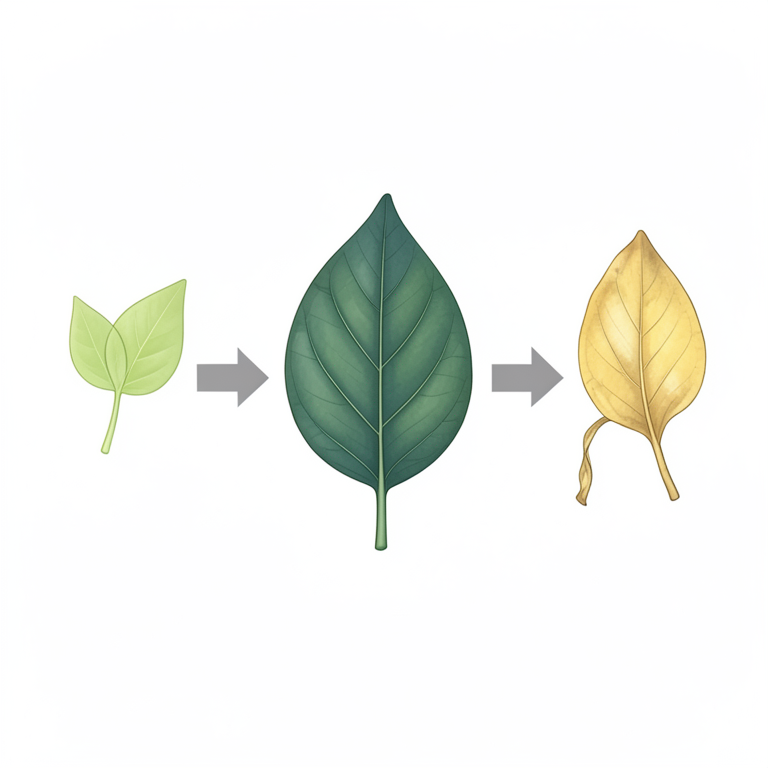
Nutritional Decline by Leaf Maturity
AI-generated conceptual illustration (Moringa oleifera leaves). It explains the idea and does not show study data.
View source evidence ↗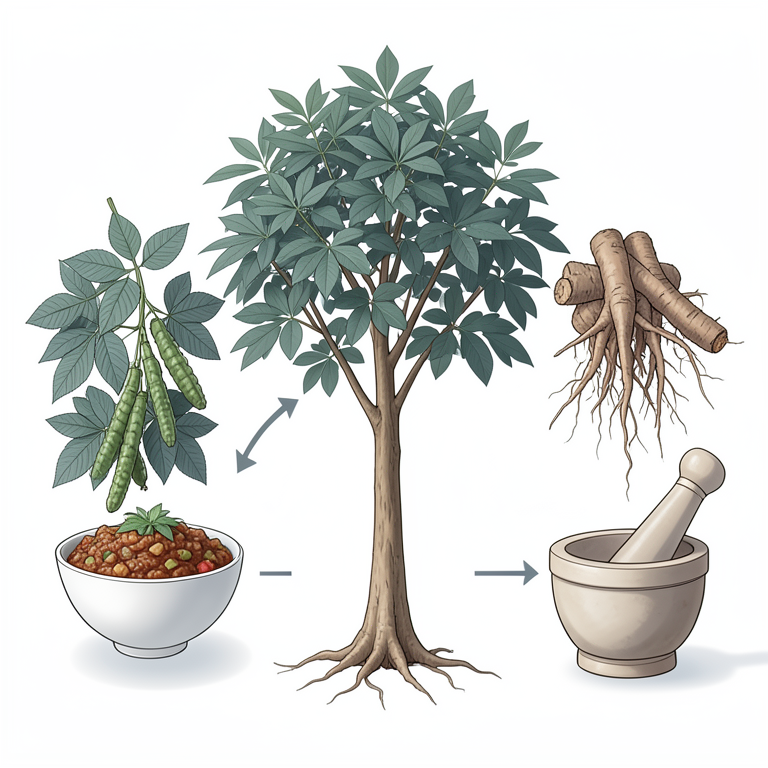
Gendered Knowledge Distribution
AI-generated conceptual illustration (Moringa oleifera tree and its plant parts). It explains the idea and does not show study data.
View source evidence ↗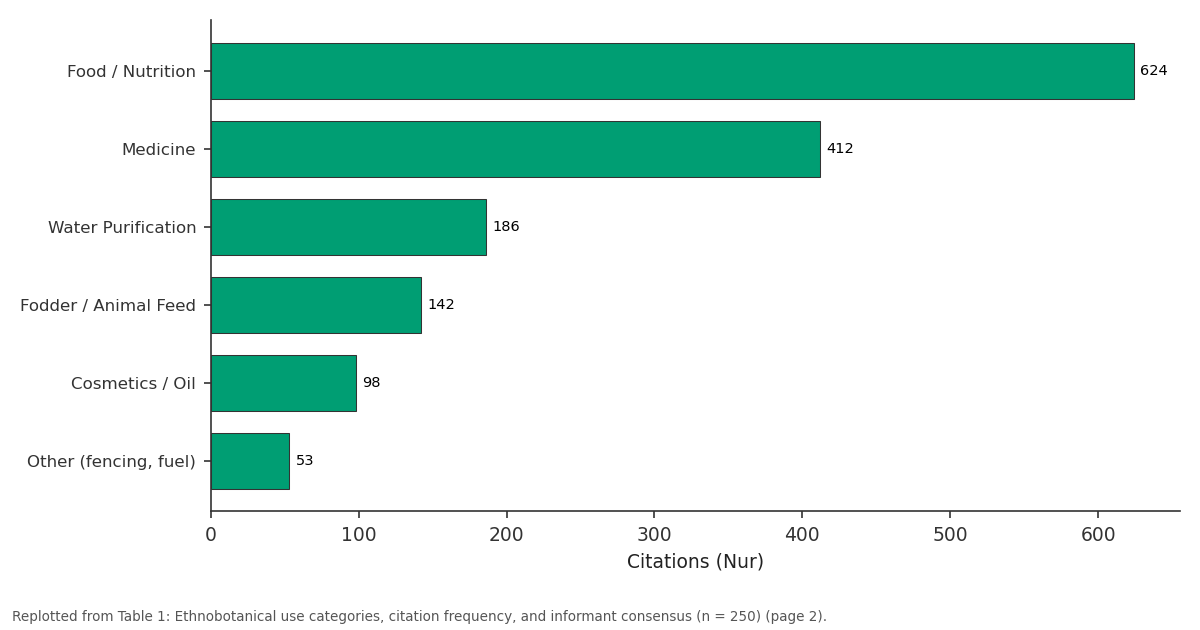
Citations (Nur): Food / Nutrition vs Medicine vs Water Purification vs Fodder / Animal Feed vs Cosmetics / Oil
Replotted from Table 1 (page 2) of the original paper. Every bar is the paper's own table value.
View source evidence ↗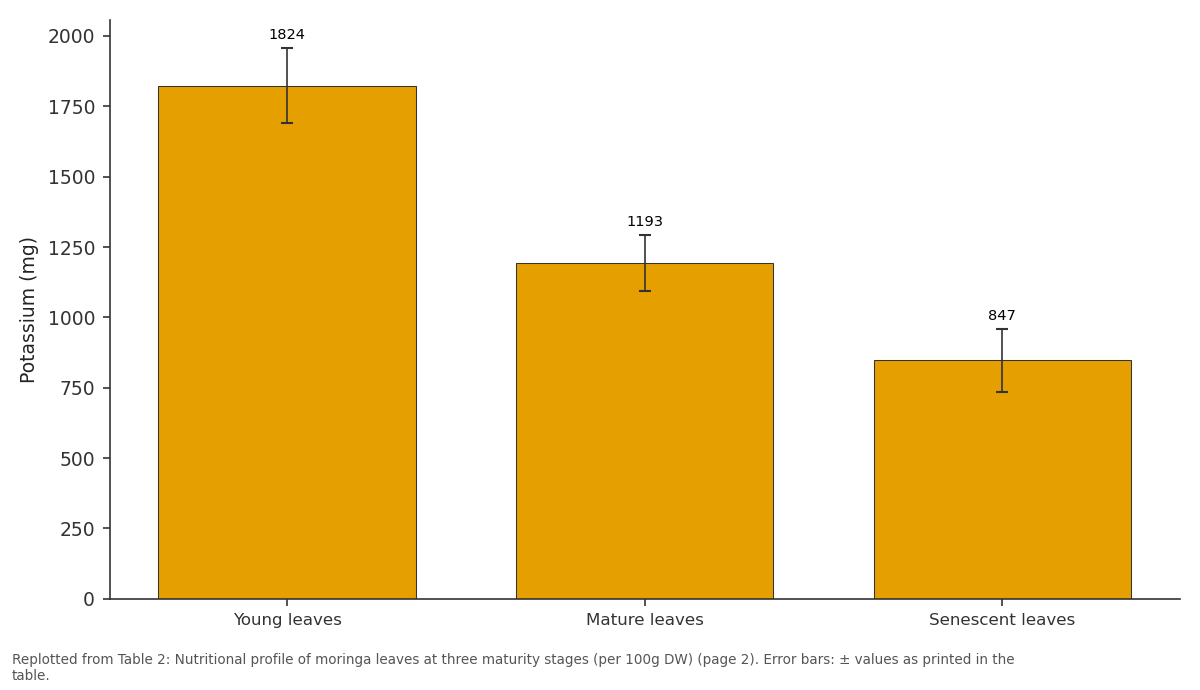
Potassium (mg): Young leaves vs Mature leaves vs Senescent leaves
Replotted from Table 2 (page 2) of the original paper. Every bar is the paper's own table value.
View source evidence ↗Figures & tables
From the original paper Table 1
 Table 2
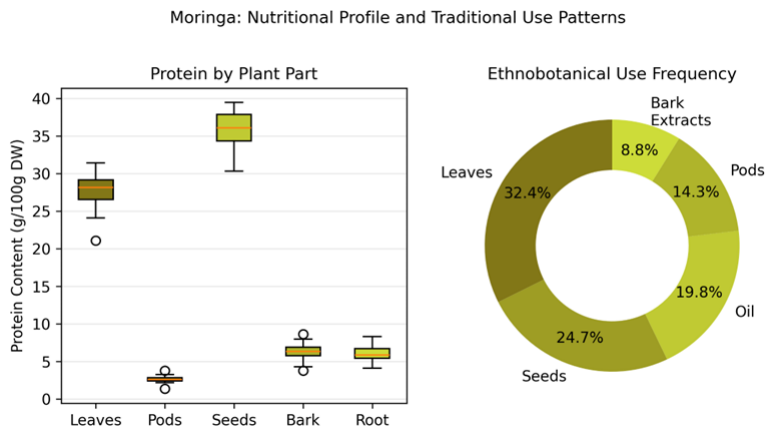 Figure 1
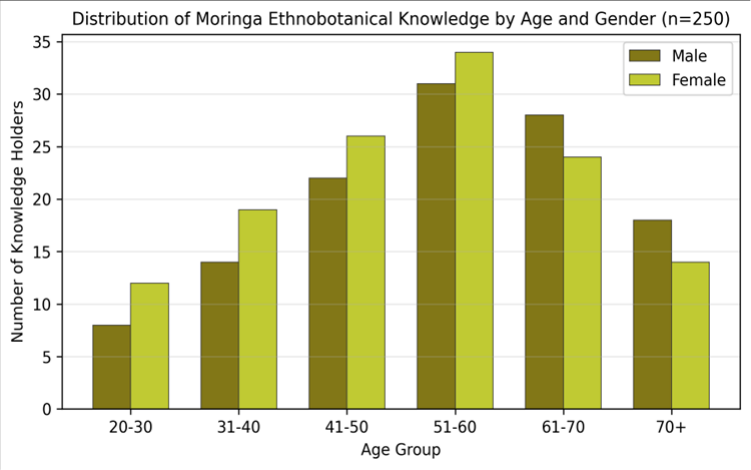 Figure 2
Introduction
In rural communities across the Indus Valley, moringa is not a superfood trend it is a centuries-old livelihood resource woven into daily cooking, herbal medicine, and water treatment practices [1] . But a curious disconnect exists: while moringa has been the subject of hundreds of laboratory studies confirming its nutritional and pharmacological properties, fewer than a dozen systematic ethnobotanical surveys have been conducted in its centre of traditional use [2] . This matters because traditional knowledge who uses what part of the plant, how, when, and why provides the context that makes laboratory findings relevant to real communities [3] . Moringa oleifera Lam. (Moringaceae) is a fast-growing, drought-tolerant tree native to the sub-Himalayan regions of South Asia but now pantropical in distribution [4] . Its leaves contain 27-34% protein on a dry-weight basis, along with vitamins A, C, and E, calcium, potassium, and iron at concentrations exceeding those of many conventional vegetables [5] . Seeds produce ben oil (38-42% yield), used for cooking and cosmetics, and contain cationic polyelectrolytes that coagulate suspended solids in turbid water [6] . Despite this welldocumented versatility, the tree remains underutilised in formal agricultural systems, partly because the diversity of traditional uses has not been captured in forms that breeding programmes and policy frameworks can act upon [7] . Ethnobotanical survey methodology has evolved from qualitative descriptions toward quantitative indices Use Value (UV), Informant Consensus Factor (ICF), and Cultural Importance Index (CI) that enable statistical comparison across communities and regions [8] . Free-listing, a cognitive anthropological technique, captures the salience of different uses in respondents' mental models [9] . Linking ethnobotanical data with agronomic characterisation (drought tolerance, nutritional profiling, genetic diversity) creates a comprehensive picture that informs both conservation and development strategies [10] . This research aimed to survey, quantify, and map ethnobotanical knowledge of moringa across five Indus Valley districts, and to complement the survey with agronomic and genetic characterisation of local moringa accessions.
Material and Methods
Material and Methods
Material
Ethnobotanical data were collected from 250 respondents across five districts of the Indus Valley, with laboratory analysis conducted at the Kumasi Regional Center for Sustainable Agriculture, Kumasi, Ashanti, Ghana (6.69°N, 1.62°W). Respondents were selected by stratified purposive sampling to ensure representation by age (20-70+), gender, occupation (farmer, herbal practitioner, homemaker, trader), and geographic location. Each district contributed 50 respondents. Interviews were conducted in local languages with trained interpreters. Twelve moringa accessions from the institutional germplasm collection were used for agronomic characterisation. Drought tolerance trials used pot-grown plants (8-month-old seedlings) maintained at 40% field capacity for 60 days versus well-watered controls (100% FC). Leaf nutrient analysis covered potassium (flame photometry), calcium (AAS), iron (AAS), carotenoids (spectrophotometric, 450 nm), protein (Kjeldahl), and chlorophyll (SPAD-502 meter). SSR genotyping used 12 microsatellite loci [1] .
Methods
Methods
Ethnobotanical interviews combined three instruments:
1) A structured questionnaire on demographic background, moringa cultivation practices, and use categories; 2) A free-listing exercise where respondents named all moringa uses they could recall in two minutes, yielding salience indices;
3) A semi-structured follow-up exploring preparation methods, dosage, and knowledge transmission pathways. Use Value (UV) was calculated as UV = ΣUᵢ/n, where Uᵢ is the number of uses cited by informant i and n is the number of informants. Informant consensus factor (ICF) was computed for each use category as ICF = (Nur -Nt)/(Nur -1), where Nur is the number of use citations and Nt is the number of distinct uses [2] . Potassium dynamics were assessed by sampling leaves at three maturity stages: young (fully expanded, light green), mature (dark green, 30 days post-expansion), and senescent (yellowing). Drought tolerance was assessed by Relative Water Content (RWC), proline accumulation, and Membrane Stability Index (MSI) at days 0, 20, 40, and 60 of stress. Carotenoid profiling used acetone extraction followed by spectrophotometry at 450, 645, and 663 nm with Lichtenthaler's equations. Chlorophyll SPAD values were regressed against protein content determined by Kjeldahl. SSR allele data were analysed in GenAlEx 6.5 for diversity indices and STRUCTURE for population clustering. All statistical analyses used R v4.3.0 (p<0.05) [3] .
Seasonal variations
Data collection was timed to capture both wet-season (June-September) and dry-season (November-February) moringa use patterns, as traditional use intensity shifts seasonally. During the wet season, fresh leaf consumption peaks because trees flush prolifically after monsoon onset, and households consume moringa leaves 4-6 times per week. In the dry season, dried leaf powder and seed-based preparations become dominant because fresh leaf supply diminishes. Water purification using seed powder peaks during the monsoon when river turbidity rises. Survey timing was balanced across these two periods to avoid seasonal bias in use frequency data [4] . [5] . Potassium content declined by 34.6% from young to mature leaves and by a further 29.0% from mature to senescent (Table 2). This trajectory was mirrored by protein (-37.6% overall) and carotenoids (-57.1%). Young leaves consistently offered the highest nutritional value, supporting the traditional practice in several communities of preferentially harvesting tender shoot tips [6] . Seeds had the highest protein content (35.6 g/100g DW) followed by leaves (27.1 g/100g at the mature stage) (Figure 1, left). Ethnobotanical use frequency closely paralleled nutritional density, with leaves (32.4%) and seeds (24.7%) dominating use citations (right), suggesting that traditional knowledge implicitly tracks nutritional value [7] . Knowledge holders were concentrated in the 51-60 age group for both genders (Figure 2). Women outnumbered men in the 31-50 age range, reflecting their primary role in food preparation and daily leaf harvesting. Men held more knowledge in the 61+ range, particularly for medicinal and water purification uses that carry specialist status in several communities [8] .
| Parameter | Young leaves | Mature leaves | Senescent leaves |
|---|---|---|---|
| Protein (g) | 31.4 ± 2.1 | 27.8 ± 1.8 | 19.6 ± 2.4 |
| Potassium (mg) | 1,824 ± 134 | 1,193 ± 98 | 847 ± 112 |
| Carotenoids (mg) | 14.7 ± 1.8 | 11.2 ± 1.4 | 6.3 ± 1.1 |
| Iron (mg) | 8.4 ± 0.7 | 7.1 ± 0.6 | 5.8 ± 0.9 |
| Chlorophyll (SPAD) | 48.3 ± 3.2 | 41.6 ± 2.8 | 28.4 ± 4.1 |
Table text extracted from the original PDF; superscript letters are shown inline. The original table image is below.
View original table image
Results
Results
Drought tolerance and genetic diversity
Three accessions (KRC-04, KRC-09, KRC-11) maintained RWC above 80% after 60 days at 40% FC, compared to a population mean of 63.7%. These same accessions showed the highest proline accumulation (18.4-22.7 µmol/g FW) and membrane stability indices above 74%. Chlorophyll SPAD values correlated positively with leaf protein content (r = 0.73, p<0.001), offering a non-destructive proxy for nutritional screening in the field. SSR analysis across 12 loci yielded a mean He of 0.54 and PIC of 0.49. STRUCTURE analysis at K = 2 separated the accessions into a South Asian cluster and a West African cluster, consistent with introduction history [9] .
Discussion
The 47 documented uses and high ICF values (≥0.96 across all categories) confirm moringa as a keystone species in Indus Valley ethnobotany. The concentration of knowledge in the 51-60 age group raises conservation concerns: as this cohort ages, rapid intergenerational transfer is needed to prevent knowledge loss [2] . The gender-specific knowledge patterns women dominating food uses, men dominating medicinal and water purification reflect gendered labour divisions documented across sub-Saharan and South Asian traditional food systems [3] . The 34.6% potassium decline from young to mature leaves has practical implications for both nutrition programmes and commercial leaf powder production. Programmes targeting potassium supplementation should specify young-leaf harvest, while producers marketing dried moringa powder should standardise harvest maturity to ensure consistent nutritional claims [5] . The chlorophyll-protein correlation (r = 0.73) provides a rapid field screening tool: a SPAD meter reading can predict protein content without destructive sampling, enabling quality-based pricing at farm gate [6] . Drought tolerance identification (three accessions maintaining >80% RWC at 40% FC) addresses one of the main constraints to moringa expansion into semi-arid cropping systems. The two-cluster genetic structure (South Asian vs. West African) suggests limited gene flow between introduction waves, and crossing between clusters could generate heterosis for drought and nutritional traits simultaneously [9] . A limitation is that the ethnobotanical survey covered only five districts; broader geographic sampling would capture regional variation in use patterns. And medicinal use validation through clinical trials remains beyond the scope of this research.
Conclusion
This research documented 47 distinct ethnobotanical uses of moringa across five Indus Valley districts, with food and nutrition accounting for the largest share (624 citations) and water purification showing the highest informant consensus (ICF = 0.99). Knowledge was concentrated among respondents aged 51-60 and showed gender-specific patterns, with women holding 61.8% of food-related knowledge. Nutritional analysis showed a 34.6% potassium decline from young to mature leaves, supporting the traditional preference for harvesting tender shoot tips. Chlorophyll SPAD values served as a reliable non-destructive proxy for leaf protein content (r = 0.73). Three drought-tolerant accessions maintained above 80% relative water content under severe water stress for 60 days. SSR analysis identified two genetic clusters with moderate diversity (He = 0.54). For moringa development programmes, these findings connect traditional knowledge with quantitative science, providing a foundation for conservation, breeding, and nutritional promotion strategies.
Acknowledgement
Acknowledgements Funding sourcesThis research was supported by the Ghana Council for Scientific and Industrial Research (CSIR) and the West African Agricultural Productivity Programme (WAAPP). No specific grant numbers are disclosed. Institutional supportThe authors acknowledge the Kumasi Regional Center for Sustainable Agriculture for providing germplasm collection access, plant physiology laboratory infrastructure, and support for field ethnobotanical surveys.
Figures and tables from the paper
| Use category | Citations (Nur) | Distinct uses (Nt) | ICF | Top use |
|---|---|---|---|---|
| Food / Nutrition | 624 | 18 | 0.97 | Leaf sauce (87.2%) |
| Medicine | 412 | 14 | 0.97 | Fever remedy (64.8%) |
| Water Purification | 186 | 3 | 0.99 | Seed coagulant (94.1%) |
| Fodder / Animal Feed | 142 | 4 | 0.98 | Leaf supplement (76.0%) |
| Cosmetics / Oil | 98 | 5 | 0.96 | Ben oil hair treatment |
| Other (fencing, fuel) | 53 | 3 | 0.96 | Live fencing (58.5%) |
Table text extracted from the original PDF; superscript letters are shown inline. The original table image is below.
View original table image
References
15 in the original paper- Fahey JW. Moringa oleifera: a review of the medical evidence for its nutritional, therapeutic, and prophylactic properties. Trees for Life Journal. 2005;1:5.
- Olson ME, Fahey JW. Moringa oleifera: a multipurpose tree for the dry tropics. Revista Mexicana de Biodiversidad. 2011;82(4):1071-1082.
- Cotton CM. Ethnobotany: Principles and Applications. John Wiley and Sons. 1996;1-424.
- Anwar F, Latif S, Ashraf M, Gilani AH. Moringa oleifera: a food plant with multiple medicinal uses. Phytotherapy Research. 2007;21(1):17-25.
- Gopalakrishnan L, Doriya K, Kumar DS. Moringa oleifera: a review on nutritive importance and its medicinal application. Food Science and Human Wellness. 2016;5(2):49-56.
- Ndabigengesere A, Narasiah KS, Talbot BG. Active agents and mechanism of coagulation of turbid waters using Moringa oleifera. Water Research. 1995;29(2):703-710.
- Palada MC, Chang LC. Suggested Cultural Practices for Moringa. AVRDC International Cooperators' Guide. 2003;1-5.
- Heinrich M, Ankli A, Frei B, Weimann C, Sticher O. Medicinal plants in Mexico: healers' consensus and cultural importance. Social Science and Medicine. 1998;47(11):1859-1871.
- Borgatti SP. Cultural domain analysis. Journal of Quantitative Anthropology. 1994;4:261-278.
- Saini RK, Sivanesan I, Keum YS. Phytochemicals of Moringa oleifera: a review of their nutritional, therapeutic and industrial significance. 3 Biotech. 2016;6(2):203.
- Leone A, Spada A, Battezzati A, Schiraldi A, Aristil J, Bertoli S. Cultivation, genetic, ethnopharmacology, phytochemistry and pharmacology of Moringa oleifera leaves. International Journal of Molecular Sciences. 2015;16(6):12791-12835.
- Fuglie LJ. The Miracle Tree: Moringa oleifera: Natural Nutrition for the Tropics. Church World Service. 2001;1-172.
- Makkar HPS, Becker K. Nutrional value and antinutritional components of whole and ethanol extracted Moringa oleifera leaves. Animal Feed Science and Technology. 1996;63(1-4):211-228.
- Amaglo NK, Bennett RN, Lo Curto RB, Rosa EAS, Lo Turco V, Giuffrida A. Profiling selected phytochemicals and nutrients in different tissues of the multipurpose tree Moringa oleifera L. Food Chemistry. 2010;120(4):997-1004.
- Sreelatha S, Padma PR. Antioxidant activity and total phenolic content of Moringa oleifera leaves in two stages of maturity. Plant Foods for Human Nutrition. 2009;64(4):303-311.