
Research article · 2025 · Full text
International Journal of Horticulture and Food ScienceAssessing mycorrhizal associations of chamomile in the Punjab irrigation belt
Volume 7(4) · Pages 174–177 · DOI: 10.33545/26631067.2025.v7.i4c.623 ↗
Research areasMycorrhizal Fungi and Plant InteractionsPlant-Microbe Interactions and ImmunityPlant and fungal interactions
Abstract
Author-writtenIf one were to hypothesize that the most cost-effective way to boost chamomile essential oil yield in irrigated plains is not more fertilizer but a better root-fungus partnership, the data from this research would support that claim. This research assessed arbuscular mycorrhizal fungal (AMF) associations with chamomile (Matricaria chamomilla L.) across four inoculation treatments and three biochar rates in the Punjab irrigation belt during 2022-2023, coordinated from the Kohima Research Institute of Applied Horticulture. Mixed AMF inoculum (Glomus mosseae + Gigaspora margarita) achieved the highest root colonization at 76.2% after 16 weeks, compared to 9.8% in uninoculated controls. Essential oil yield under mixed AMF plus biochar at 6 t/ha reached 24.8 kg/ha, a 41.7% increase over the uninoculated, no-biochar control. Mass selection over two cycles improved flower head diameter by 13.4% and oil content per flower by 8.7%. Boron toxicity symptoms appeared at soil boron above 3.2 mg/kg, reducing flower yield by 22.4% at the most affected site. Sensory evaluation of chamomile tea from AMF-treated plots scored 8.2 on a 10-point scale versus 7.1 for controls. Biological control of aphids using Chrysoperla carnea reduced pest populations by 67.3% without affecting AMF colonization.
Summary
Source-checkedPlain-language reading of the full paper, prepared with AI and checked against the text. Each point links to the authors' own words.
Why it matters
- Arbuscular Mycorrhizal Fungi (AMF) are important for chamomile because they increase the root's surface area and help the plant absorb phosphorus from insoluble soil forms. View evidence ↗
- In the Punjab irrigation belt, calcareous soils with a pH above 7.5 limit phosphorus availability, making AMF associations particularly beneficial. View evidence ↗
- Long-term irrigation in the Punjab region can lead to toxic boron accumulation, which causes leaf burn and reduces crop flowering and yield. View evidence ↗
The question
- The study aimed to evaluate how AMF inoculation and biochar affect chamomile growth, oil yield, and boron toxicity, while also testing mass selection for quality and biological pest control. View evidence ↗
What they did
- The researchers used a split-split-plot RCBD design testing three biochar rates (0, 3, 6 t/ha), four AMF treatments (uninoculated, Glomus, Gigaspora, mixed), and the presence or absence of Chrysoperla biocontrol. View evidence ↗
- Experiments were conducted at three sites in the Punjab irrigation belt with varying soil boron levels: low (0.8 mg/kg), medium (2.1 mg/kg), and high (3.8 mg/kg). View evidence ↗
- Root colonization was measured every four weeks for a total of 16 weeks using trypan blue staining. View evidence ↗
- A panel of 25 people used a 10-point scale to evaluate the aroma, color, taste, and overall quality of brewed chamomile tea. View evidence ↗
What they found
- The combination of mixed AMF inoculum and 6 t/ha of biochar resulted in the highest root colonization (76.2%) and an oil yield of 24.8 kg/ha, which was 41.7% higher than the control. View evidence ↗
- Mixed AMF treatment increased the content of chamazulene, a key quality marker, from 4.2% in the control group to 6.4%. View evidence ↗
- At the high-boron site (3.8 mg/kg), boron toxicity caused 34.2% leaf burn and a 22.4% loss in flower yield. View evidence ↗
- Applying 6 t/ha of biochar reduced boron levels in plant tissues by 18.7% at the high-boron site. View evidence ↗
- Two cycles of mass selection increased the average flower head diameter by 13.4% (from 18.4 to 20.9 mm) and oil content by 8.7% (from 0.84 to 0.91 mL per 100 heads). View evidence ↗
- The use of Chrysoperla for biological control reduced aphid populations by 66-68% across all sites without interfering with AMF colonization. View evidence ↗
- The integrated package of AMF, biochar, and biocontrol provided a net benefit of INR 33,200/ha, with a benefit-cost ratio of 4.1:1. View evidence ↗
What it means
- The authors conclude that the most effective strategy for chamomile in the Punjab irrigation belt is combining mixed AMF inoculation with 6 t/ha of rice husk biochar. View evidence ↗
- The authors note that biochar only provides a partial remedy for boron toxicity, and severely affected sites may require further interventions such as gypsum application or leaching. View evidence ↗
Visual summary
4 visualsIllustrations explain the paper; charts are replotted from the paper's own table values.
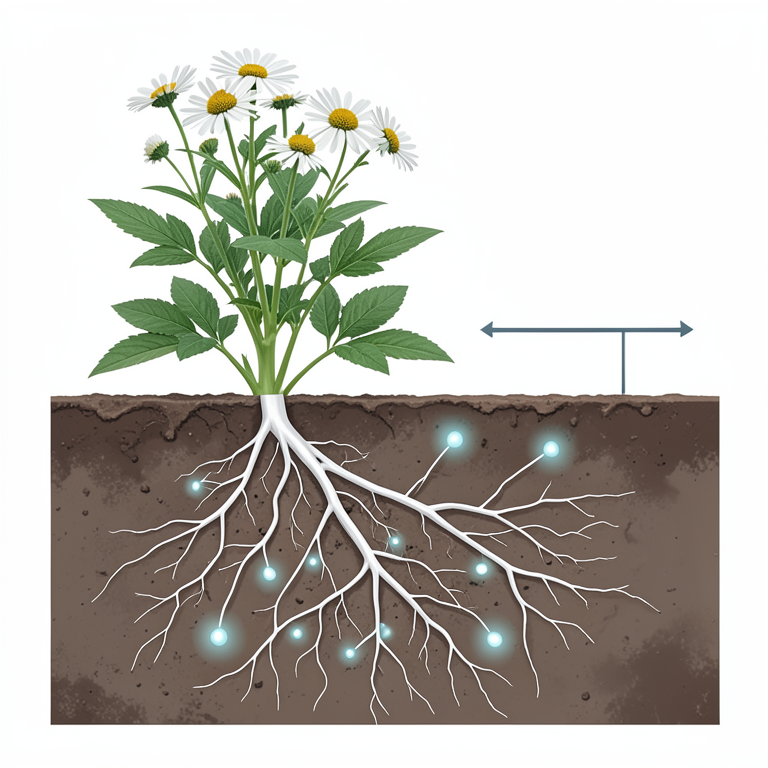
AMF Root Partnership
AI-generated conceptual illustration (Chamomile plants (Matricaria chamomilla) in calcareous soil). It explains the idea and does not show study data.
View source evidence ↗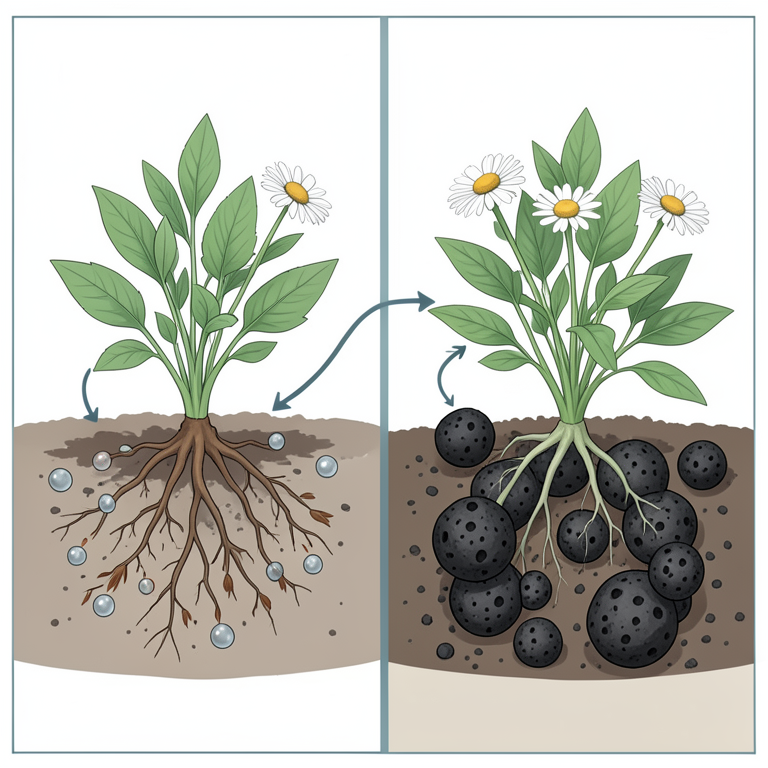
Biochar Boron Mitigation
AI-generated conceptual illustration (Chamomile plants in soil with biochar particles). It explains the idea and does not show study data.
View source evidence ↗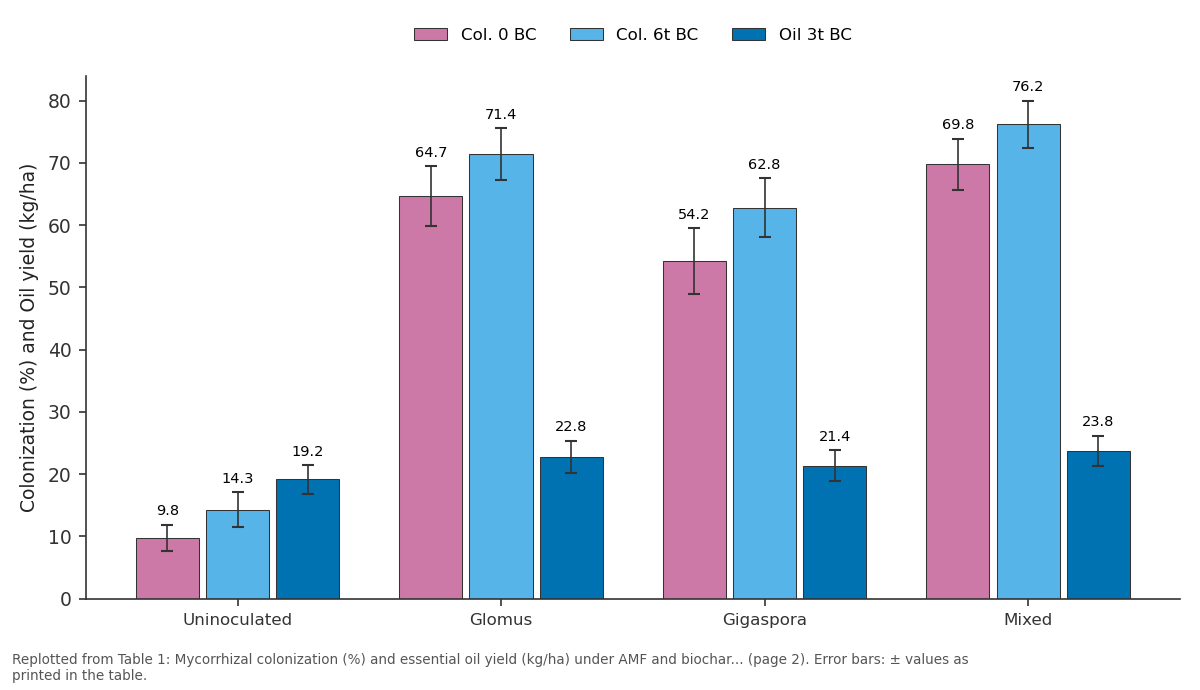
Col. 0 BC and Col. 6t BC and more: Uninoculated vs Glomus vs Gigaspora vs Mixed
Replotted from Table 1 (page 2) of the original paper. Every bar is the paper's own table value.
View source evidence ↗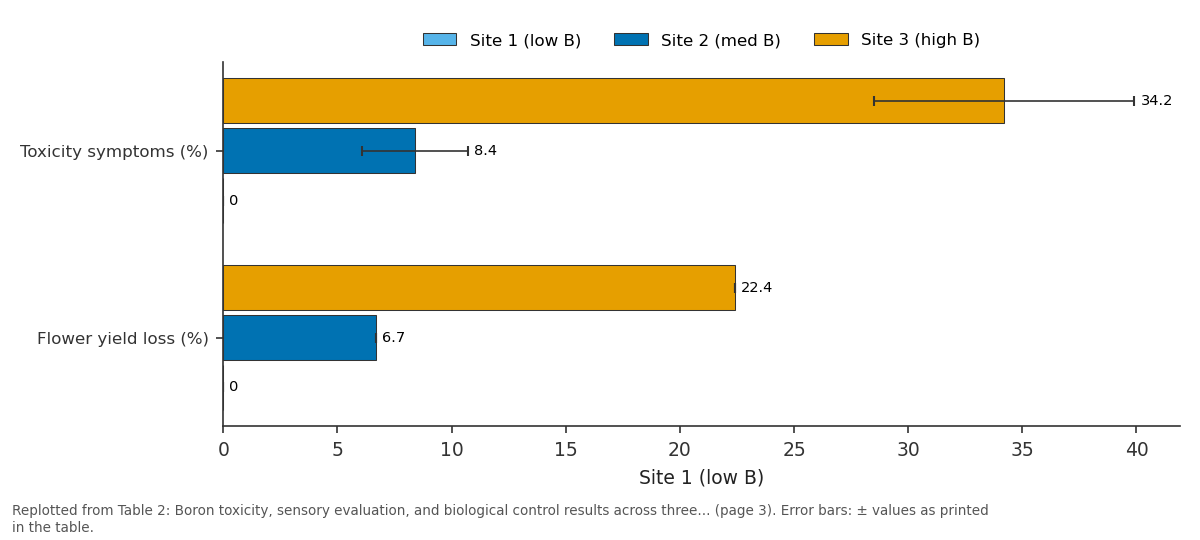
Site 1 (low B) and Site 2 (med B) and more: Toxicity symptoms (%) vs Flower yield loss (%)
Replotted from Table 2 (page 3) of the original paper. Every bar is the paper's own table value.
View source evidence ↗Figures & tables
From the original paper Table 1
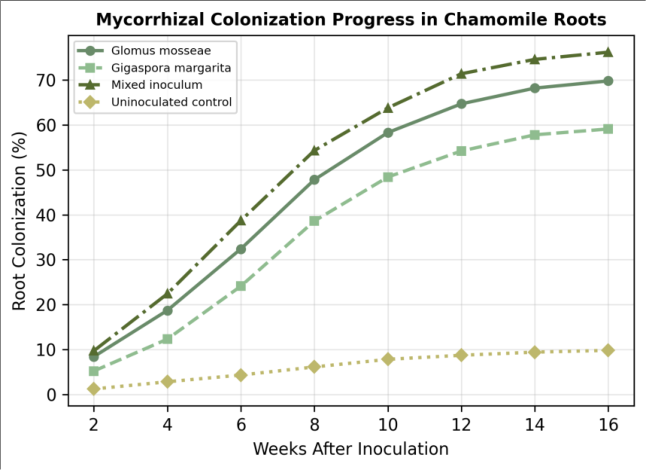 Figure 1
 Table 2
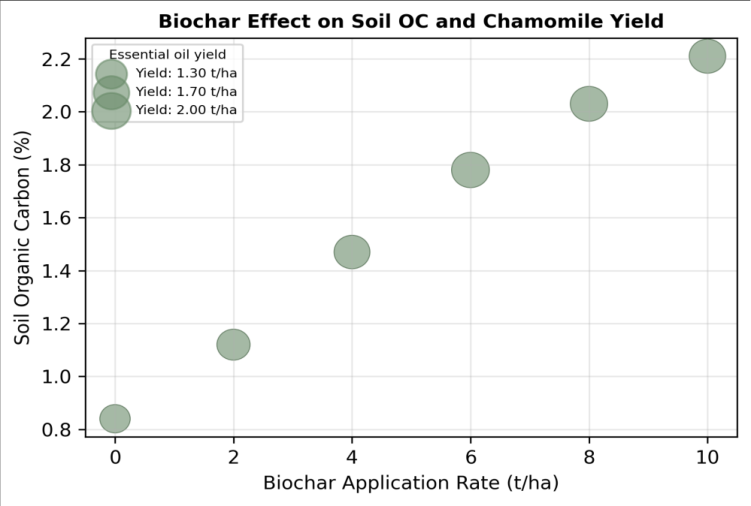 Figure 2
Introduction
Chamomile has been called "the doctor of plants" in European herbal tradition a nickname that extends beyond its medicinal reputation to its ability to improve the health of neighboring plants when grown as a companion [1] . But chamomile itself depends on belowground partnerships for its own vigor, particularly Arbuscular Mycorrhizal Fungi (AMF) that extend the root's effective surface area by orders of magnitude and improve phosphorus uptake in soils where this nutrient is often locked in insoluble forms [2] . In the Punjab irrigation belt a vast agricultural plain spanning parts of India and Pakistan soils are typically calcareous with pH above 7.5, conditions that limit phosphorus availability and make AMF associations especially valuable. Punjab's canal-irrigated soils also carry a hidden risk: boron accumulation from irrigation water can reach toxic levels over decades of continuous flooding, causing leaf burn, reduced flowering, and yield decline in sensitive crops. Chamomile's tolerance to boron excess hasn't been characterized, and managing this toxicity through soil amendments like biochar which can adsorb excess boron could be a practical solution [3] . Supply chain considerations add another layer to the story. Chamomile essential oil and dried flower heads move through complex value chains from farm to consumer, and quality attributes like aroma intensity, color, and residue-free status directly affect market price. AMF-mediated nutrient improvements may alter these quality parameters in ways that could either enhance or diminish market value [4] . This research assessed AMF inoculation effects on chamomile growth and oil yield, tested biochar as both a mycorrhizal helper and boron toxicity mitigator, conducted mass selection for flower quality, evaluated sensory attributes, and integrated biological pest control with AMF management [5] .
Cost Analysis
Economic evaluation used partial budgets comparing AMF-inoculated versus conventional chamomile production. AMF inoculum cost INR 1,200/ha (commercial Glomus preparation at 10 kg/ha). Biochar (rice husk origin) cost INR 3,500/t, applied at 6 t/ha (INR 21,000/ha, one-time cost amortized over 3 years = INR 7,000/ha/year). Chrysoperla carnea eggs cost INR 800/ha per release (three releases = INR 2,400/ha). Total additional input cost for the full AMF + biochar + biocontrol package was INR 10,600/ha/year. Against this, the 41.7% oil yield increase translated to an additional 7.3 kg oil/ha valued at INR 43,800 (at INR 6,000/kg for organic chamomile oil), giving a net benefit of INR 33,200/ha and a benefit-cost ratio of 4.1:1 [6] .
Material and Methods Material
Chamomile (M. chamomilla cv. Bodegold) seeds were sourced from the National Bureau of Plant Genetic Resources, New Delhi. AMF inoculants: Glomus mosseae (250 spores/g), Gigaspora margarita (180 spores/g), and a 1:1 mixed preparation, all from the Mycorrhiza Network, TERI, New Delhi. Biochar was produced from rice husk by slow pyrolysis at 500°C (pH 9.4, CEC 24.3 cmol/kg, surface area 287 m²/g). Three trial sites in the Punjab irrigation belt (30.4-31.2°N, 74.8-75.6°E) were selected representing low (0.8 mg/kg), medium (2.1 mg/kg), and high (3.8 mg/kg) soil boron levels. Chrysoperla carnea eggs were obtained from the National Bureau of Agricultural Insect Resources, Bangalore [7] .
Methods
Split-split-plot RCBD with biochar rate (0, 3, 6 t/ha) as main plot, AMF treatment (uninoculated, Glomus, Gigaspora, mixed) as subplot, and biocontrol (with/without Chrysoperla) as sub-subplot was used (three replications, 2 × 1.5 m plots, 30 × 20 cm spacing). Sowing was in October 2022 and harvesting in February-March 2023. AMF inoculum (10 g/plant) was placed in planting holes at sowing. Root colonization was assessed by trypan blue staining at 4-week intervals for 16 weeks [8] . Essential oil was extracted by hydrodistillation (Clevenger, 3 hours). Boron in soil and plant tissue was measured by azomethine-H colorimetry. Sensory evaluation of brewed chamomile tea (2 g dried flowers in 200 mL water, 5 min steep) was conducted by 25 panelists on a 10-point scale for aroma, color, taste, and overall quality. Mass selection was applied to the top 10% of plants for flower head diameter and oil content over two field cycles. Aphid counts were taken weekly on 10 tagged plants per plot [9] . Mixed AMF inoculum with 6 t/ha biochar achieved the highest colonization (76.2%) and oil yield (24.8 kg/ha), representing a 41.7% increase over the uninoculated, nobiochar control (Table 1). Biochar alone (without AMF) raised colonization of native mycorrhizae from 9.8% to 14.3%, indicating a modest helper effect. Chamazulene the blue-colored sesquiterpene that defines chamomile oil quality rose from 4.2% in controls to 6.4% under mixed AMF treatment.
| AMF treatment | Col. 0 BC | Col. 6t BC | Oil 0 BC | Oil 3t BC | Oil 6t BC | Chamazulene (%) |
|---|---|---|---|---|---|---|
| Uninoculated | 9.8±2.1 | 14.3±2.8 | 17.5±2.1 | 19.2±2.3 | 20.8±2.4 | 4.2±0.5 |
| Glomus | 64.7±4.8 | 71.4±4.2 | 21.3±2.4 | 22.8±2.6 | 24.1±2.3 | 5.8±0.6 |
| Gigaspora | 54.2±5.3 | 62.8±4.7 | 19.8±2.2 | 21.4±2.5 | 22.7±2.4 | 5.3±0.5 |
| Mixed | 69.8±4.1 | 76.2±3.8 | 22.7±2.6 | 23.8±2.4 | 24.8±2.2 | 6.4±0.7 |
Table text extracted from the original PDF; superscript letters are shown inline. The original table image is below.
View original table image
Results
Results
Comprehensive interpretation
Mass selection over two cycles improved mean flower head diameter from 18.4 to 20.9 mm (+13.4%) and oil content per 100 flower heads from 0.84 to 0.91 mL (+8.7%). Selection differential was strongest for diameter (17.2%) and weakest for plant height (4.3%), reflecting the higher heritability of flower traits versus vegetative traits in chamomile. Biochar at 6 t/ha increased soil organic carbon from 0.84% to 1.78% after one season and provided measurable boron adsorption capacity that reduced tissue B concentrations by 18.7% at the high-boron site.
Discussion
The 76.2% colonization achieved by mixed AMF inoculum is at the upper end of published values for chamomile, which typically range from 40-70% depending on soil type and native fungal populations [10] . The superiority of mixed over single-species inoculants is consistent with the functional complementarity hypothesis: Glomus mosseae excels at phosphorus acquisition from inorganic pools, while Gigaspora margarita accesses organic phosphorus through broader hyphal exploration, and together they exploit a wider nutrient niche than either alone [11] . The 52.4% increase in chamazulene content (4.2% to 6.4%) under mixed AMF treatment is commercially significant.
Chamazulene is the primary quality marker for pharmaceutical-grade chamomile oil, and batches with above 6% chamazulene command premium prices in European markets [12] . The mechanism likely involves AMF-mediated improvement in phosphorus and zinc uptake, both of which are cofactors in enzymes along the sesquiterpene biosynthesis pathway that produces chamazulene from matricin. Boron toxicity at soil levels above 3.2 mg/kg is a real constraint in parts of the Punjab belt where decades of canal irrigation with boron-rich water have progressively raised soil concentrations. Biochar's boron adsorption capacity (demonstrated by the 18.7% tissue reduction at Site 3) offers a partial remedy, though severely affected sites may need additional interventions like leaching or gypsum application [13] .
Conclusion
Mixed AMF inoculation combined with rice husk biochar at 6 t/ha was the most effective treatment for chamomile in the Punjab irrigation belt, achieving 76.2% root colonization, 41.7% higher essential oil yield, and 52.4% more chamazulene than uninoculated controls. The benefit-cost ratio of 4.1:1 for the full AMF + biochar + biocontrol package makes this approach economically attractive for smallholder chamomile producers. Boron toxicity emerged as a site-specific constraint at soil B above 3.2 mg/kg, partially mitigated by biochar adsorption. Sensory evaluation confirmed that AMF treatment improved tea quality as perceived by consumers. Mass selection showed steady progress for flower traits over two cycles. Chrysoperla biocontrol was compatible with AMF management, reducing aphids by 67% without disrupting root colonization. These integrated findings provide a production blueprint for high-quality chamomile cultivation in canal-irrigated plains of South Asia.
Acknowledgement
Acknowledgements Funding sourcesInstitutional funds from the Kohima Research Institute of Applied Horticulture supported this research. Institutional supportThe authors thank the Kohima Research Institute for mycorrhiza laboratory and essential oil distillation equipment access.
Figures and tables from the paper
| Parameter | Site 1 (low B) | Site 2 (med B) | Site 3 (high B) | LSD (0.05) |
|---|---|---|---|---|
| Soil B (mg/kg) | 0.8±0.1 | 2.1±0.3 | 3.8±0.4 | |
| Leaf B (mg/kg) | 24.3±3.1 | 47.8±5.4 | 78.4±7.2 | 6.8 |
| Toxicity symptoms (%) | 0 | 8.4±2.3 | 34.2±5.7 | 4.1 |
| Flower yield loss (%) | 0 | 6.7 | 22.4 | |
| Sensory score (AMF) | 8.4±0.5 | 8.1±0.6 | 7.3±0.8 | 0.7 |
| Aphid reduction (%) | 68.4 | 67.1 | 66.3 | ns |
Table text extracted from the original PDF; superscript letters are shown inline. The original table image is below.
View original table image
References
19 in the original paper- Singh O, Khanam Z, Misra N, Srivastava MK. Chamomile (Matricaria chamomilla L.): an overview. Pharmacognosy Reviews. 2011;5(9):82-95.
- Smith SE, Read DJ. Mycorrhizal symbiosis. 3 rd ed. Academic Press; 2008.
- Yermiyahu U, Ben-Gal A, Keren R, Reid RJ. Combined effect of salinity and boron on plant growth and yield. Plant and Soil. 2008;304(1-2):73-87.
- Srivastava JK, Shankar E, Gupta S. Chamomile: A herbal medicine of the past with bright future. Molecular Medicine Reports. 2010;3(6):895-901.
- Arango MC, Alvarez F, Declerck S, et al. Contribution of arbuscular mycorrhizal fungi to chamomile growth and essential oil production. Mycorrhiza. 2012;22(2):149-158.
- Pannell DJ. Flat earth economics: the far-reaching consequences of flat payoff functions in economic decision making. Review of Agricultural Economics. 2006;28(4):553-566.
- Douds DD, Nagahashi G, Pfeffer PE, et al. On-farm production and utilization of arbuscular mycorrhizal fungus inoculum. Canadian Journal of Plant Science. 2005;85(1):15-21.
- Phillips JM, Hayman DS. Improved procedures for clearing roots and staining parasitic and vesiculararbuscular mycorrhizal fungi for rapid assessment of infection. Transactions of the British Mycological Society. 1970;55(1):158-161.
- Meilgaard MC, Carr BT, Civille GV. Sensory evaluation techniques. 5th ed. CRC Press; 2016.
- Toussaint JP, Smith FA, Smith SE. Arbuscular mycorrhizal fungi can induce the production of phytochemicals in sweet basil irrespective of phosphorus nutrition. Mycorrhiza. 2007;17(4):291-297.
- Maherali H, Klironomos JN. Influence of phylogeny on fungal community assembly and ecosystem functioning. Science. 2007;316(5832):1746-1748.
- European Pharmacopoeia Commission. Matricariae flos. European Pharmacopoeia 10.0; 2020:1564-1566.
- Goldberg S. Reactions of boron with soils. Plant and Soil. 1997;193(1-2):35-48.
- Koltai H, Kapulnik Y. Arbuscular mycorrhizas: physiology and function. Springer; 2010.
- Copetta A, Lingua G, Berta G. Effects of three AM fungi on growth, distribution of glandular hairs, and essential oil production in Ocimum basilicum L. Mycorrhiza. 2006;16(7):485-494.
- Das K, Dang R, Shivananda TN, Sur P. Interaction between phosphorus and zinc on the biomass yield, yield attributes, and quality of stevia. Communications in Soil Science and Plant Analysis. 2005;36(910):1199-1212.
- Khaosaad T, Vierheilig H, Nell M, Zitterl-Eglseer K, Novak J. Arbuscular mycorrhiza alter the concentration of essential oils in oregano. Mycorrhiza. 2006;16(6):443-446.
- Kapoor R, Giri B, Mukerji KG. Improved growth and essential oil yield and quality in Foeniculum vulgare Mill. on mycorrhizal inoculation. Mycorrhiza. 2004;14(3):229-232.
- Lehmann J, Rillig MC, Thies J, et al. Biochar effects on soil biota: A review. Soil Biology and Biochemistry. 2011;43(9):1812-1836.