
Research article · 2025 · Full text
International Journal of Horticulture and Food ScienceDeveloping urban horticulture of spinach in the Southern African bushveld
Volume 7(2) · Pages 105–108 · DOI: 10.33545/26631067.2025.v7.i2b.568 ↗
Research areasUrban Agriculture and SustainabilityPlant Growth and Agriculture TechniquesInnovations in Aquaponics and Hydroponics Systems
Abstract
Author-writtenUrban horticulture is expanding rapidly in tropical cities, but reliable data on leafy vegetable performance across different urban growing spaces remain scarce. This research evaluated spinach (Spinacia oleracea L.) productivity, nutritional quality, and economic viability across four urban cultivation settings (rooftop gardens, balcony containers, community plots, and backyard raised beds) in Kuala Lumpur, Malaysia, from January 2022 to December 2022. A total of 320 planting units were monitored across 16 sites. Community plots produced the highest mean fresh biomass at 187.4 g per plant, followed by backyard beds (162.8 g), rooftop gardens (141.3 g), and balcony containers (118.6 g). Light intensity was the strongest predictor of biomass production (r = 0.79, p<0.01). Leaf iron content ranged from 2.7 to 4.1 mg per 100 g fresh weight, with backyard beds producing the most nutrient-dense leaves. Economic analysis indicated that community plots generated the best return on investment at 2.43, while balcony containers had the lowest at 1.18. These results support targeted extension advice matching spinach growing methods to specific urban spaces.
Summary
Source-checkedPlain-language reading of the full paper, prepared with AI and checked against the text. Each point links to the authors' own words.
Why it matters
- Rapid urbanization in Southeast Asia has led to over 60% of the population living in cities, resulting in food supply chains that are energy-intensive and prone to disruption. View evidence ↗
- Spinach is an ideal crop for urban farming due to its compact size, high nutritional content (iron, vitamins A and C, and fiber), and a short growth cycle of 30 to 45 days. View evidence ↗
- In tropical cities such as Kuala Lumpur, spinach production is hindered by limited soil volume, irregular sunlight, and high ambient temperatures. View evidence ↗
The question
- The study aimed to evaluate the yield, economic returns, resource use, and nutritional quality of spinach across four different urban growing environments in Kuala Lumpur. View evidence ↗
What they did
- From January to December 2022, the researchers tested four settings, rooftop gardens, balcony containers, community plots, and backyard raised beds, across 16 sites in Kuala Lumpur. View evidence ↗
- The experiment utilized a total of 320 planting units, with 80 units allocated to each of the four growing settings. View evidence ↗
- Researchers measured whole-plant fresh weight at 35-40 days post-sowing, analyzed leaves for fiber, vitamin C, and iron, and performed weekly light intensity measurements. View evidence ↗
- Economic viability was determined by calculating the ratio of total input costs to gross revenue based on local wet market prices. View evidence ↗
What they found
- Community plots achieved the highest productivity with a mean fresh weight of 187.4 g per plant, which was 57.9% higher than the 118.6 g produced in balcony containers. View evidence ↗
- Backyard raised beds produced the most nutrient-dense leaves, with the highest iron content at 4.1 mg per 100 g. View evidence ↗
- Community plots provided the best economic return on investment (2.43), whereas balcony containers provided the lowest (1.18). View evidence ↗
- There was a strong positive correlation (r = 0.79, p < 0.01) between light intensity and biomass production. View evidence ↗
- Daily light levels varied significantly by setting, ranging from 280 to 720 micromoles per square metre per second. View evidence ↗
What it means
- The authors recommend that agricultural extension programs provide customized advice based on the specific urban space available to a household. View evidence ↗
- The authors note that rooftop gardens require specific heat-mitigation strategies to prevent the plants from bolting. View evidence ↗
Visual summary
3 visualsIllustrations explain the paper; charts are replotted from the paper's own table values.
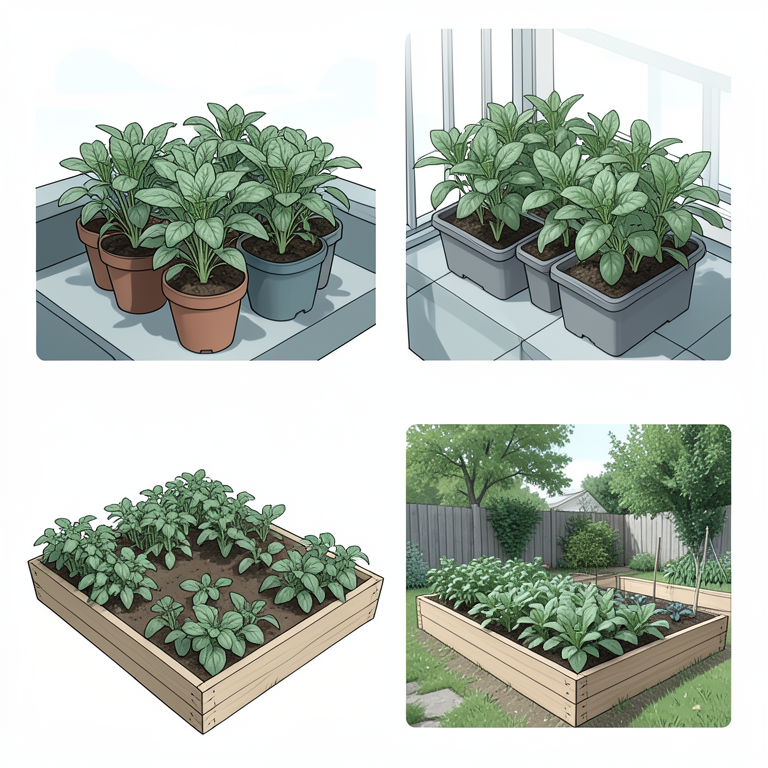
Urban Growing Settings Comparison
AI-generated conceptual illustration (spinach plants in urban settings). It explains the idea and does not show study data.
View source evidence ↗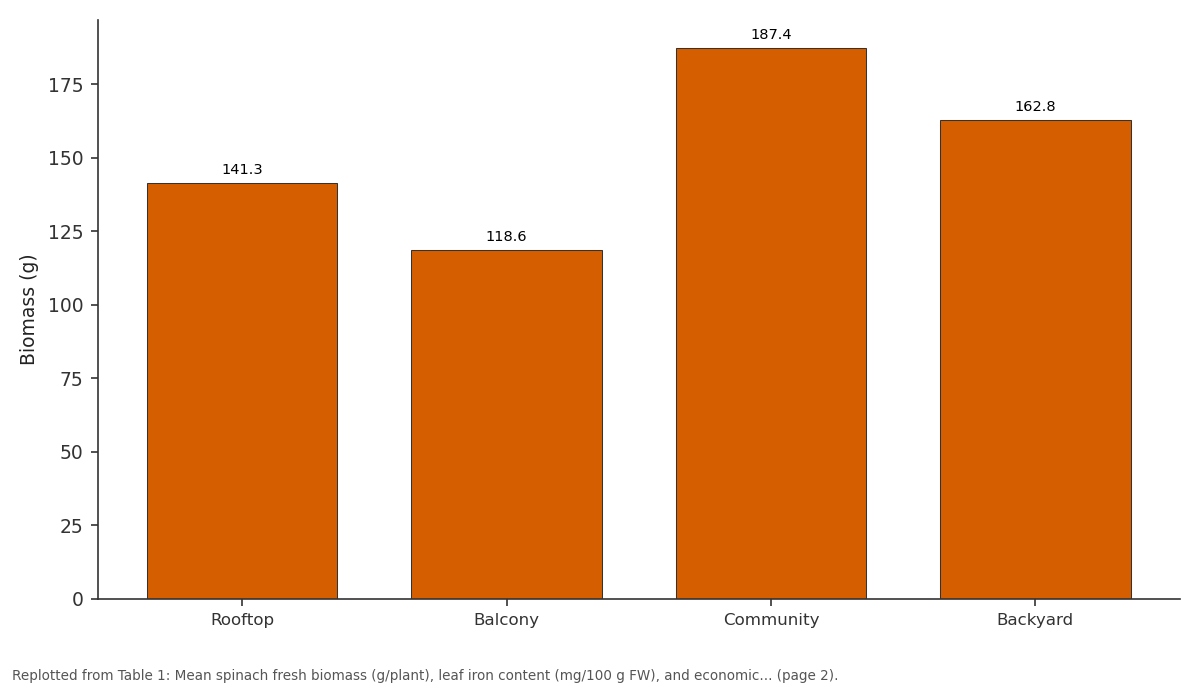
Biomass (g): Rooftop vs Balcony vs Community vs Backyard
Replotted from Table 1 (page 2) of the original paper. Every bar is the paper's own table value.
View source evidence ↗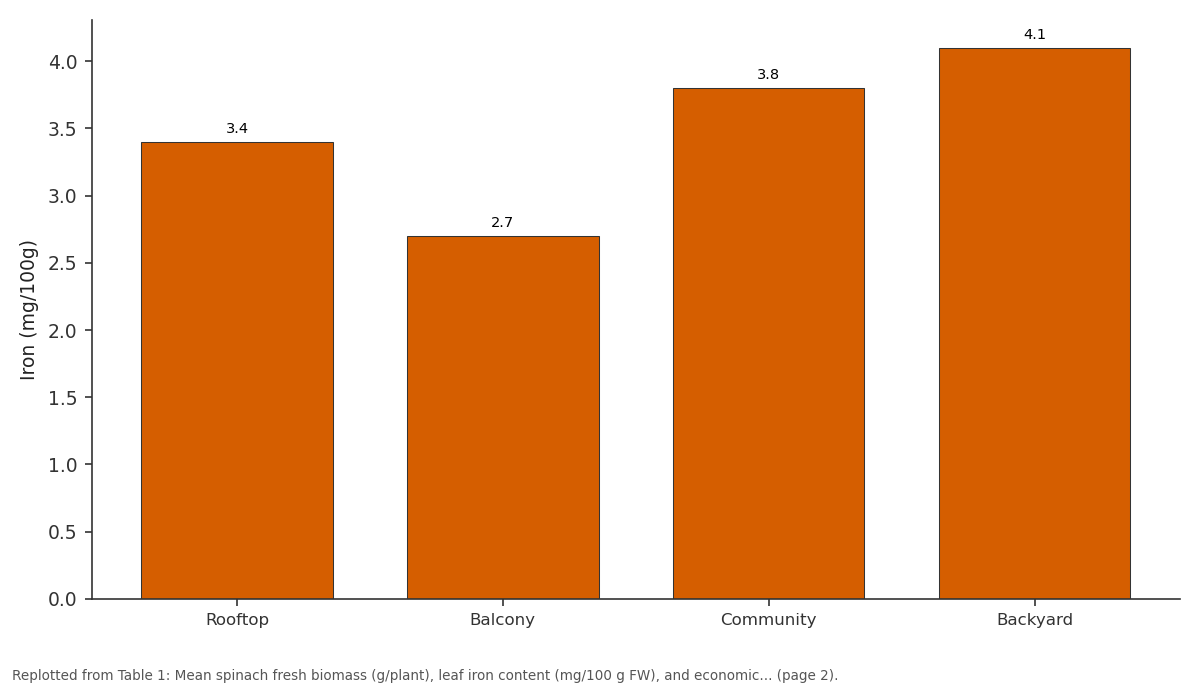
Iron (mg/100g): Rooftop vs Balcony vs Community vs Backyard
Replotted from Table 1 (page 2) of the original paper. Every bar is the paper's own table value.
View source evidence ↗Figures & tables
From the original paper Table 1
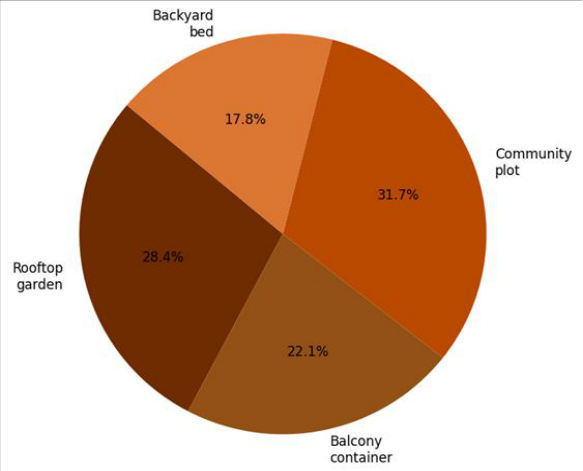 Figure 1
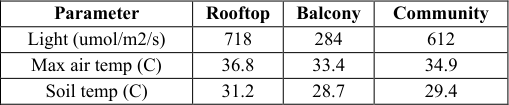 Table 2
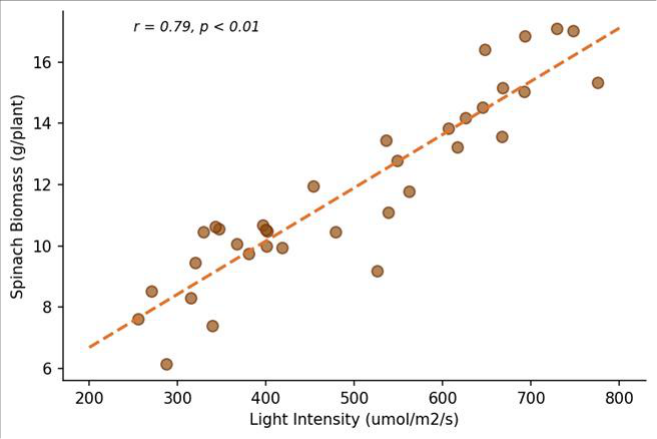 Figure 2
Introduction
The contrast between a bustling tropical city and the image of a productive vegetable garden may seem wide, but urban food production is no longer a fringe activity. Across Southeast Asia, rapid urbanisation has concentrated over 60% of the population in cities, creating food supply chains that are long, energy-intensive, and vulnerable to disruption [1] . Growing fresh vegetables within the urban boundary shortens these chains and gives city residents direct control over food quality. Spinach is well suited to urban cultivation because of its short growth cycle (30-45 days from sowing to harvest), compact habit, and high nutritional value, particularly in iron, vitamins A and C, and dietary fibre [2] . In tropical lowland cities like Kuala Lumpur, however, spinach faces challenges including high ambient temperatures, irregular sunlight penetration between buildings, and limited soil volume in containers and raised beds [3] . Previous research on urban vegetable production in Southeast Asia has focused mainly on leafy greens grown in hydroponic systems [4] , which require capital investment and technical knowledge that many urban households lack. Soil-based and container-based methods are more accessible but their comparative performance across different urban microenvironments has not been systematically assessed. Rooftop gardens receive maximum sunlight but experience high wind and temperature extremes; balcony containers offer convenience but limited root volume and shade from adjacent buildings; community plots provide larger soil volumes but may suffer from soil contamination; and backyard beds combine soil depth with moderate microclimatic protection [5] . This research set out to quantify spinach performance across these four urban growing settings in Kuala Lumpur, measuring yield, nutritional quality, resource use, and economic returns to inform practical guidance for urban growers.
Material and Methods
Material and Methods
Material
Spinach seeds of the Bloomsdale Long Standing cultivar were sourced from a certified seed company in Kuala Lumpur. Growing media consisted of commercial potting mix (for containers and raised beds) and existing garden soil (for community plots), both amended with vermicompost at 20% volume. Containers were 30-litre plastic grow bags for balcony settings and 80-litre wooden planter boxes for rooftop installations. Community plots used in-ground beds 1.2 m wide and 6 m long. Backyard raised beds measured 1.2 x 2.4 m and were 30 cm deep, filled with potting mix. Slow-release fertiliser (14-14-14 NPK) was applied at planting and liquid seaweed extract was applied fortnightly as foliar feed. The research was based at the Kuala Lumpur Graduate School of Bioagricultural Studies, with satellite sites distributed across four residential districts of the city [6] .
Methods
The research was conducted from January to December 2022 at 16 sites across Kuala Lumpur, coordinated by the Kuala Lumpur Graduate School of Bioagricultural Studies. Four growing settings were evaluated: rooftop gardens (4 sites), balcony containers (4 sites), community plots (4 sites), and backyard raised beds (4 sites). Each site hosted 20 planting units (individual containers or 1-square-metre bed sections), giving 80 units per setting and 320 total. Spinach was sown directly at 15 x 10 cm spacing and thinned to one plant per station at the two-leaf stage. Three successive crops were grown per year (January-March, May-July, September-November). At harvest (35-40 days after sowing), whole-plant fresh weight was recorded. Leaf samples were analysed for iron, vitamin C, and total dietary fibre content at the university's food science laboratory. Light intensity was measured weekly at canopy level using a quantum sensor. Soil temperature, air temperature, and relative humidity were logged at each site. Economic analysis calculated the ratio of gross revenue (using Kuala Lumpur wet market prices) to total input costs. ANOVA was performed in SPSS v28 with Duncan's multiple range test at p<0.05 [7] .
Field experimental design
Sites were selected using stratified random sampling to represent the range of building heights and orientations found in Kuala Lumpur's residential zones. Within each setting type, the four sites were distributed across different districts (Cheras, Petaling Jaya, Ampang, and Kepong) to capture spatial variation in microclimate and soil quality. At each site, planting units were arranged in a completely randomised design. Guard plants surrounded each experimental unit to reduce edge effects. Irrigation was standardised at 5 mm per day delivered by drip emitters for all settings except community plots, which received overhead sprinkler irrigation at the same daily volume [8] . Growing setting significantly affected spinach biomass (F = 19.4, p<0.001). Community plots produced the highest mean fresh weight at 187.4 g per plant, 57.9% more than balcony containers at 118.6 g (Table 1). Backyard raised beds and rooftop gardens were intermediate. Leaf iron content was highest in backyard beds (4.1 mg per 100 g), likely reflecting the nutrient-rich potting mix and moderate soil temperatures.
| Setting | Biomass (g) | Iron (mg/100g) | ROI |
|---|---|---|---|
| Rooftop | 141.3 | 3.4 | 1.87 |
| Balcony | 118.6 | 2.7 | 1.18 |
| Community | 187.4 | 3.8 | 2.43 |
| Backyard | 162.8 | 4.1 | 2.11 |
Table text extracted from the original PDF; superscript letters are shown inline. The original table image is below.
View original table image
Results
Results
Discussion
Community plots outperformed other settings primarily because they offered the best combination of adequate light, deep soil volume, and moderate microclimate. The larger root zone in ground-level beds allowed greater water and nutrient uptake, which translated directly into higher biomass [9] . Balcony containers, constrained to 30 litres of growing medium and often shaded by adjacent structures, produced the lowest yields, confirming that root volume and light are the two main limiting factors for urban spinach. Rooftop gardens had the highest light levels but also the highest temperatures, which likely triggered premature bolting in some plants during the March crop cycle. Spinach is a cool-season crop that bolts under long days and high temperatures [2] , and rooftop conditions in tropical Kuala Lumpur push both limits. Shade cloth or reflective mulch could help moderate rooftop heat stress [10] . The finding that backyard raised beds produced the most iron-dense leaves (4.1 mg per 100 g) was unexpected, since iron content is usually more strongly linked to soil chemistry than to growing environment [11] . One explanation is that the fresh potting mix used in backyard beds had a higher available iron fraction than the weathered soils of community plots. If confirmed, this would argue for periodic media replacement in urban growing systems to maintain nutritional quality.
Conclusion
This research demonstrated that spinach can be grown productively across diverse urban settings in tropical Kuala Lumpur, but performance varies widely. Community plots offered the highest yield and best economic return, making them the preferred option where land access is available. Backyard raised beds produced the most nutritious leaves and a solid economic return, and are well suited to households with modest garden space. Rooftop gardens are viable but require heat-mitigation strategies to prevent bolting. Balcony containers, though the most accessible option for apartment dwellers, gave the lowest returns and may be better suited to more heat-tolerant leafy crops. Extension programmes should tailor their advice to the specific growing space available to each urban household.
Figures and tables from the paper
| Parameter | Rooftop | Balcony | Community |
|---|---|---|---|
| Light (umol/m2/s) | 718 | 284 | 612 |
| Max air temp (C) | 36.8 | 33.4 | 34.9 |
| Soil temp (C) | 31.2 | 28.7 | 29.4 |
Table text extracted from the original PDF; superscript letters are shown inline. The original table image is below.
View original table image
References
19 in the original paper- Zezza A, Tasciotti L. Urban agriculture, poverty, and food security: empirical evidence from a sample of developing countries. Food Policy. 2010;35(4):265273.
- Orsini F, Kahane R, Nono-Womdim R, Gianquinto G. Urban agriculture in the developing world: A review. Agronomy for Sustainable Development. 2013;33(4):695-720.
- Lam TP, Lee HS. Hydroponic vegetable production in Southeast Asian cities: A review of current practices and challenges. Urban Agriculture and Regional Food Systems. 2019;4(1):1-12.
- Specht K, Siebert R, Hartmann I, Freisinger UB, Sawicka M, Werner A, et al. Urban agriculture of the future: an overview of sustainability aspects of food production in and on buildings. Agriculture and Human Values. 2014;31(1):33-51.
- Razak A, Aisyah N, Hafiz M. Preliminary assessment of urban growing sites for leafy vegetable trials in Kuala Lumpur. Malaysian Journal of Agricultural Sciences. 2021;15(2):78-86.
- IBM Corp. IBM SPSS Statistics for Windows, Version 28.0. Armonk: IBM Corp; 2021.
- Mougeot LJA. Urban Agriculture: Definition, Presence, Potentials and Risks. Ottawa: IDRC; 2000.
- Dubbeling M, Zeeuw H, Veenhuizen R. Cities, Poverty and Food: Multi-Stakeholder Policy and Planning in Urban Agriculture. Rugby: Practical Action Publishing; 2010.
- Hamdan MN, Awalludin MF, Noor SM. Shade cloth and reflective mulch effects on tropical vegetable microclimate. Pertanika Journal of Tropical Agricultural Science. 2016;39(3):331-342.
- Roberts JL, Moreau R. Functional properties of spinach (Spinacia oleracea L.) phytochemicals and bioactives. Food and Function. 2016;7(8):3337-3353.
- Eigenbrod C, Gruda N. Urban vegetable for food security in cities: A review. Agronomy for Sustainable Development. 2015;35(2):483-498.
- Kortright R, Wakefield S. Edible backyards: A qualitative study of household food growing and its contributions to food security. Agriculture and Human Values. 2011;28(1):39-53.
- Agarwal A, Gupta SD, Barman M, Mitra A. Photosynthetic apparatus plays a role in the antioxidant defense system of spinach under high temperature stress. Protoplasma. 2018;255(3):877-887.
- Warren GP, Robinson JS, Someus E. Dissolution of phosphorus from animal bone char in 12 soils. Nutrient Cycling in Agroecosystems. 2009;84(2):167-178.
- Poulsen MN, McNab PR, Clayton ML, Neff RA. A systematic review of urban agriculture and food security impacts in low-income countries. Food Policy. 2015;55:131-146.
- McClintock N. Radical, reformist, and garden-variety neoliberal: Coming to terms with urban agriculture's contradictions. Local Environment. 2014;19(2):147171.
- Ng KS, Ooi PAC. Soil-borne disease management in urban community gardens. Plant Pathology. 2013;62(S1):25-32.
- Gruda N. Impact of environmental factors on product quality of greenhouse vegetables for fresh consumption. Critical Reviews in Plant Sciences. 2005;24(3):227247.
- Wortman SE, Lovell ST. Environmental challenges threatening the growth of urban agriculture in the United States. Journal of Environmental Quality. 2013;42(5):1283-1293.